CONTENTS
About Yama
Concept
“Yama,” located in Shirokane, Tokyo, is a unique “dessert restaurant” that sets itself apart from typical patisseries or cafés. Centered around a course of assiette desserts (plated desserts), the experience unfolds through a composition of 8–9 dishes that highlight the seasonal character and individuality of ingredients, especially fruits.
Rather than simply layering sweetness, the course introduces a savory dish to create rhythm, weaving a narrative through contrasts in temperature, aroma, and texture. The team carefully judges each fruit’s ripeness and fragrance, seeking the best possible expression at that moment rather than being bound by fixed recipes.
In the intimate counter-centered space, every detail—from lighting to tableware—is thoughtfully considered, allowing guests to encounter dishes that can only exist in that moment. The restaurant’s name, “Yama” (meaning “mountain”), chosen by the chef from Yamanashi, embodies his hometown roots, curiosity, and determination to keep climbing.
About the Chef
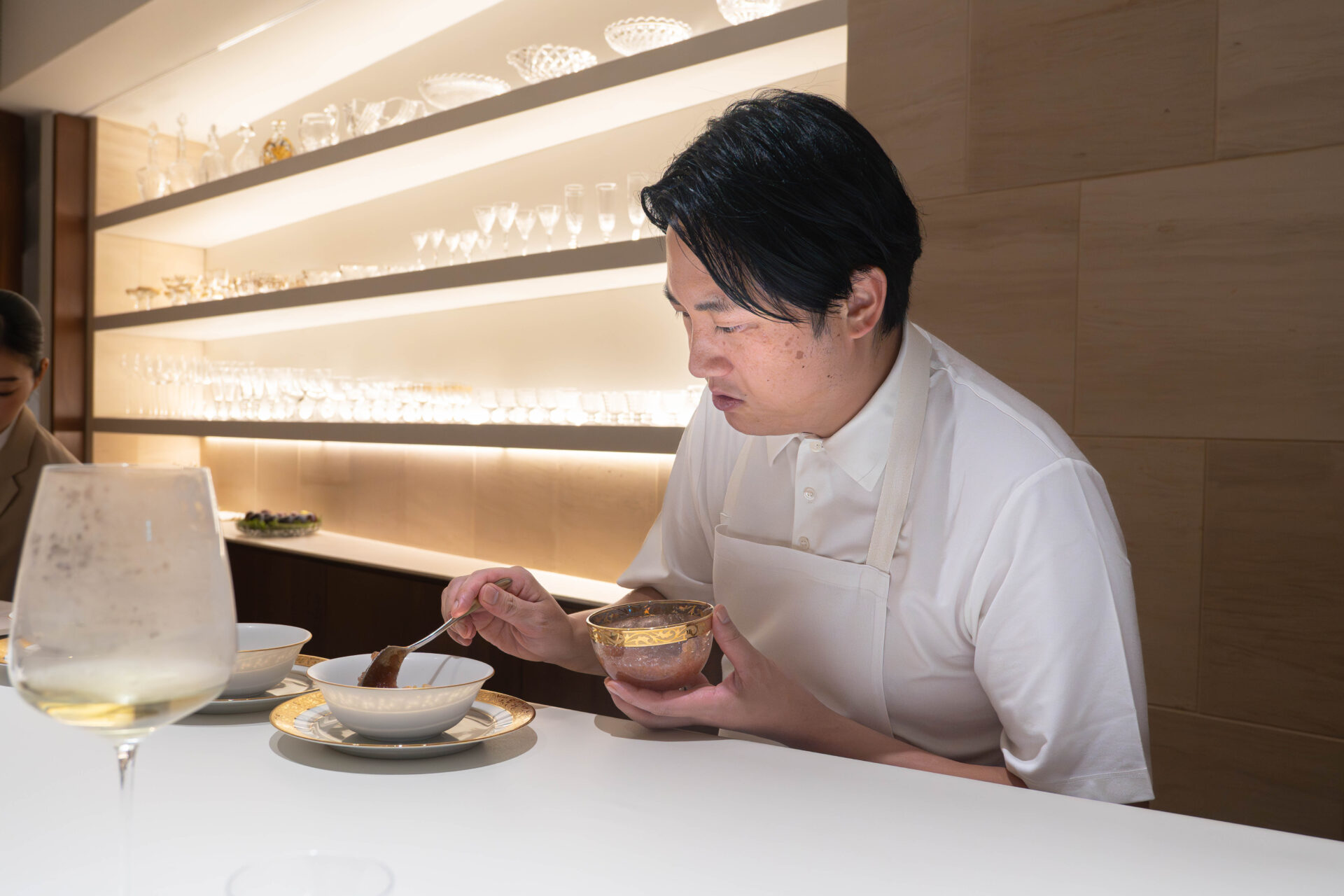
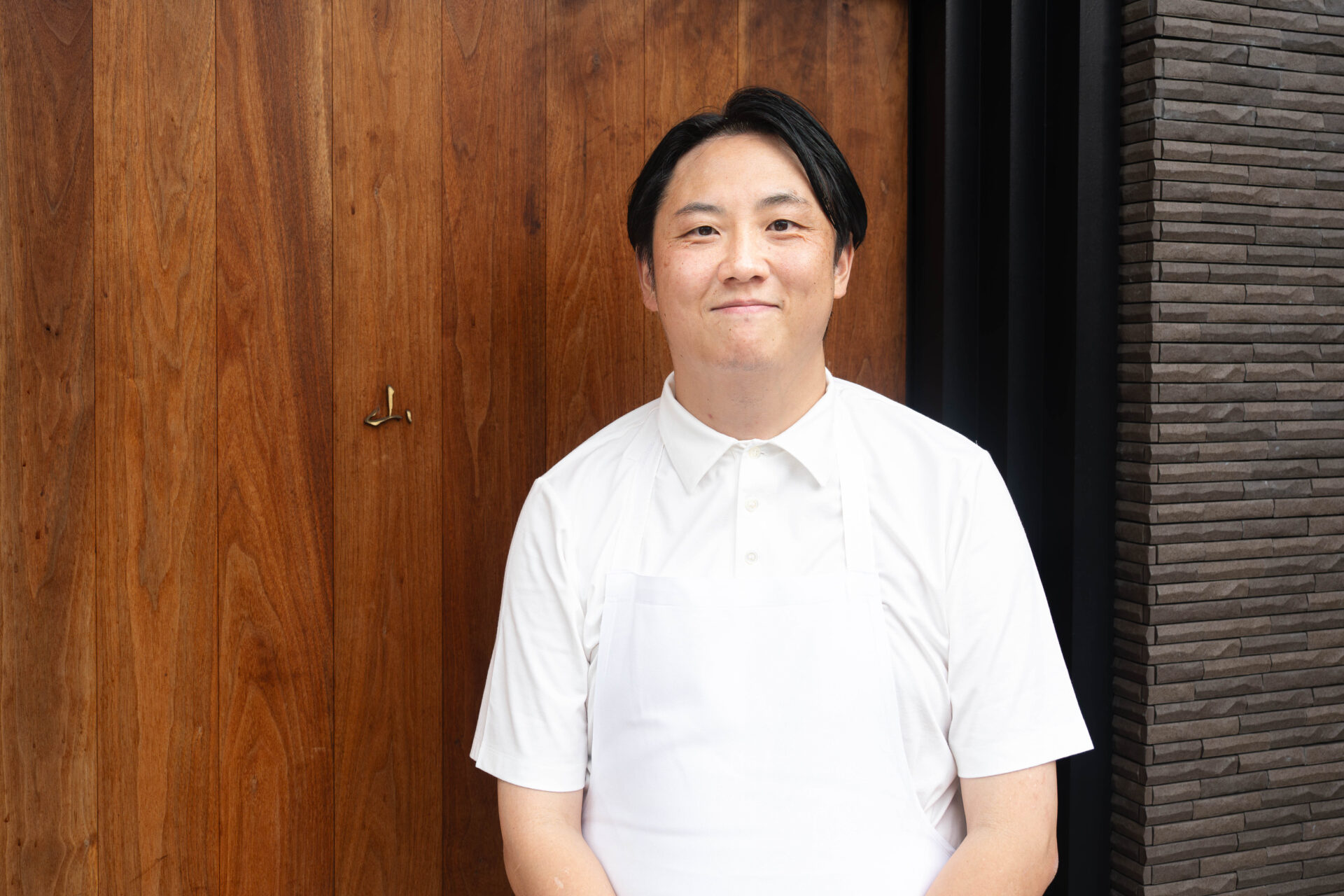
The chef leading “Yama” is Koichi Katsumata, originally from Fujiyoshida City in Yamanashi Prefecture. Born in 1985 into a family of necktie artisans, he naturally grew up surrounded by craftsmanship. After studying pastry at École Tsuji Tokyo, he trained at the Nagoya Marriott Associa Hotel, Ginza’s “Marquise,” and Minami-Aoyama’s “En Cachette.” He also gained international experience in Paris, serving as chef pâtissier at “Sola.”
In 2019, he opened his own shop in Ebisu before relocating to Shirokane. Centering his creations around fruit, he established a style that listens to the ingredients—respecting their condition and aroma on any given day when composing each dish. His meticulous approach designs not only flavor but also temperature and aromatic expression, combining cold ice cream, warm sauces, gels, and foams.
In 2025, the restaurant earned one Michelin star in the Michelin Guide Tokyo, becoming the first dessert-course specialty restaurant to receive this distinction. Chef Katsumata continues to challenge the notion of dessert as merely a “sweet ending,” presenting it instead as a fully realized culinary course.
Restaurant Recognition
“Yama” gained major attention after becoming the first dessert-course restaurant to receive one Michelin star in the Michelin Guide Tokyo 2025. It marked the first time in Japan that a restaurant centered on assiette desserts received a star, recognizing its achievement in establishing dessert not as an after-meal sweet, but as a standalone course experience.
The restaurant is also highly rated on review sites and in media coverage. Critics especially praise its creative approach to maximizing the ripeness and aroma of fruit, the meticulous design of temperature and texture, and the elegant presentation. The small counter-focused space tucked away in quiet Shirokane enhances the sense of intimacy with the chef, contributing to high satisfaction with both service and atmosphere.
On the other hand, visits can be difficult due to the fully reservation-only system and limited seating, sometimes requiring lottery-based reservations. Opportunities to experience the restaurant are extremely limited. Even so, many guests describe it as “an experience worthy of that one seat,” and it continues to earn acclaim for expanding sweets into a new culinary genre.
Dining Prelude
Exterior & Entrance
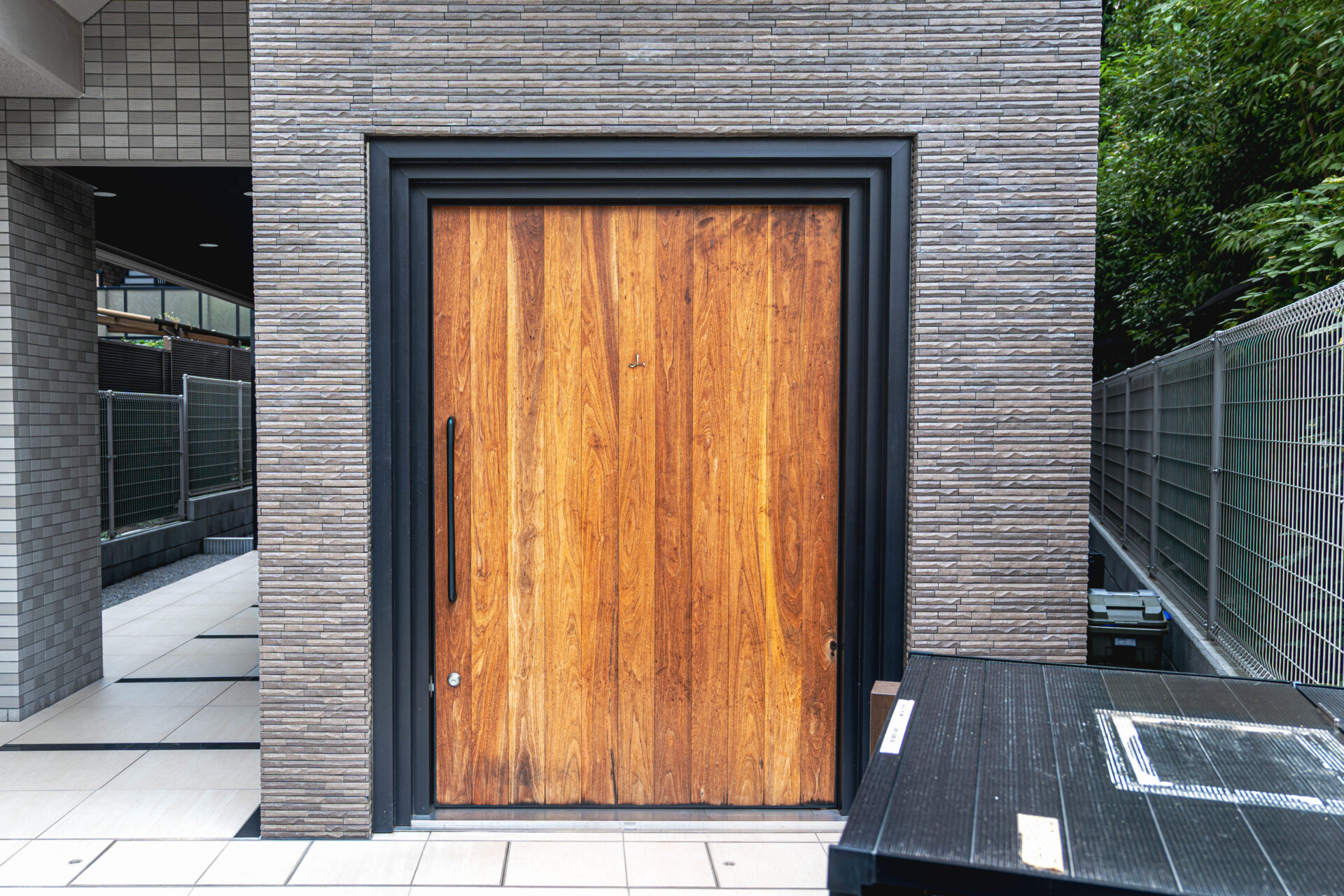
Located in a quiet residential corner of Shirokane, “Yama” has a calm presence within the neighborhood. From the outside, it avoids flashiness, presenting a restrained and refined atmosphere. A wooden door stands out, and the sign simply bears the character “山” (Yama). The simplicity itself draws attention.
The restaurant occupies a ground-floor street-facing space. The approach blends harmoniously with the surrounding streetscape and neighboring buildings, with minimal decoration. When you find it, a quiet anticipation naturally arises—as if something special lies beyond the door.
Passing through the door reveals a space defined by the warmth and texture of wood. The materials and tones gently blur the boundary between outside and inside. Light is carefully controlled: during the day, soft natural light fills the room, while at night the lighting is dimmed to create a calm ambiance. The entrance area is intentionally minimal, letting the materials themselves and their shadows create a lingering impression.
The restaurant itself is not large, and this small scale enhances the sense of privacy and exclusivity. To passersby, it appears to be a place you might easily overlook—yet once noticed, it sparks curiosity. In many ways, the entrance reflects the restaurant’s philosophy: true beauty and experience reveal themselves only after stepping inside.
Dining Space
Stepping inside, the first impression is the beauty of restraint. The space at “Yama,” quietly situated in Shirokane’s residential district, consists of just six counter seats and a small private room. The chef is close at hand, allowing guests to witness each gesture—from plating to the selection of tableware—like watching a live stage performance.
Lighting remains soft: natural daylight gently fills the room during the day, while evening illumination highlights the colors and textures of each dish. Wood textures, antique tableware, and the sparkle of glass create a refined setting without excess decoration. The private room accommodates two to four guests, offering an even more secluded atmosphere.
A quiet tension fills the room, with conversation kept subdued. The sound of plates being set down, the aromas of desserts, and the staff’s movements all become part of the experience. Though the seating is close, the arrangement thoughtfully considers sightlines and spacing to minimize interference between guests. The dining room feels both serene and warm—an ideal setting for a special moment.
Menu Presentation
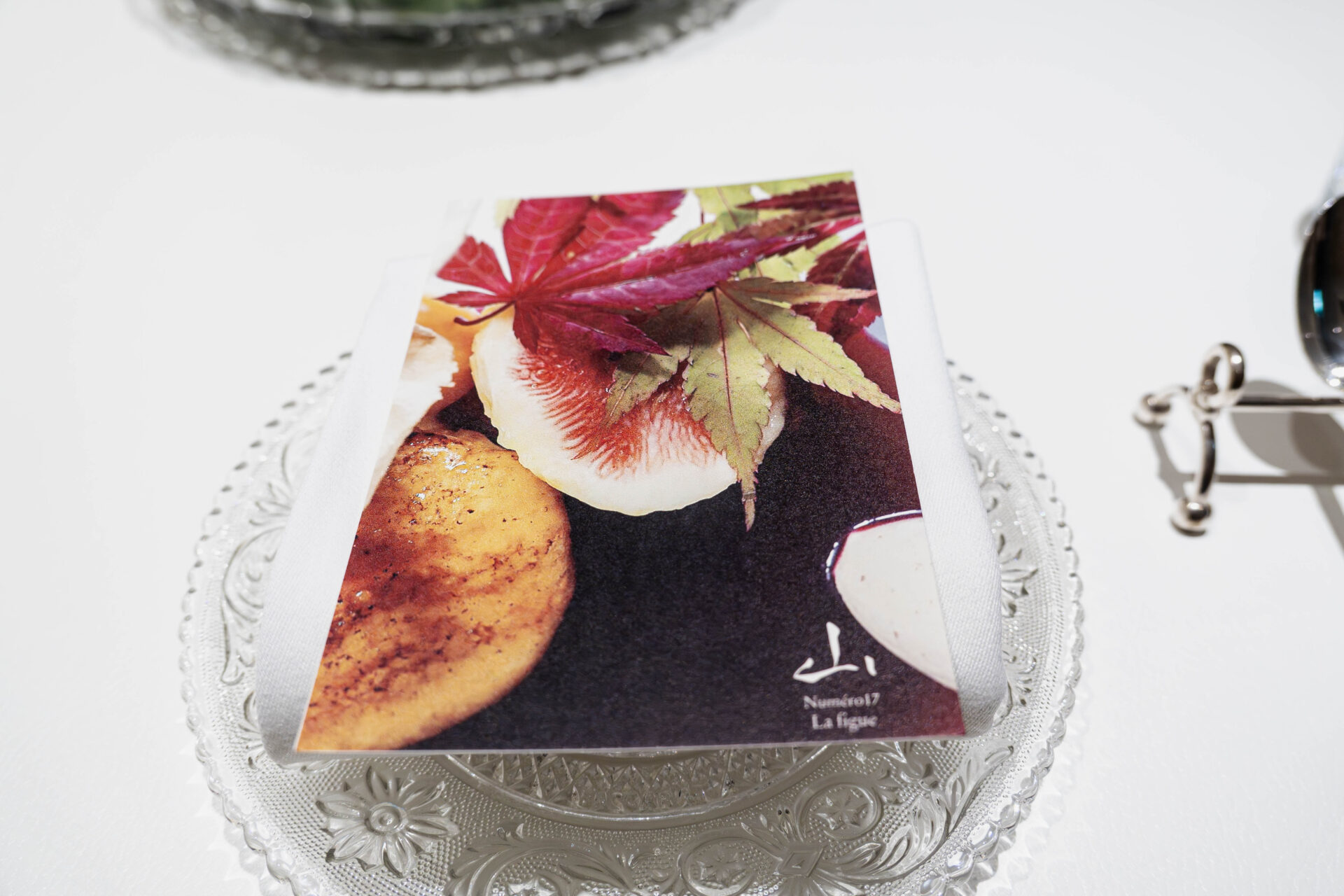
The reservation I secured coincided with a course themed around figs and seasonal ingredients. Just imagining how the juicy sweetness and rich texture of figs would be expressed through combinations of temperature and texture was enough to spark excitement.
One of the charms of “Yama” is how dramatically the course changes according to seasonal fruit. In a fig-centered course, past reviews suggest a variety of approaches—cold sorbets, warm sauces, pairings with nuts and herbs, and more. A savory dish appears midway through the course, adding anticipation for how it will guide the rhythm of sweetness.
How will the fleeting moment of seasonal fruit be captured and turned into a story? Even before the visit, the anticipation was already building.
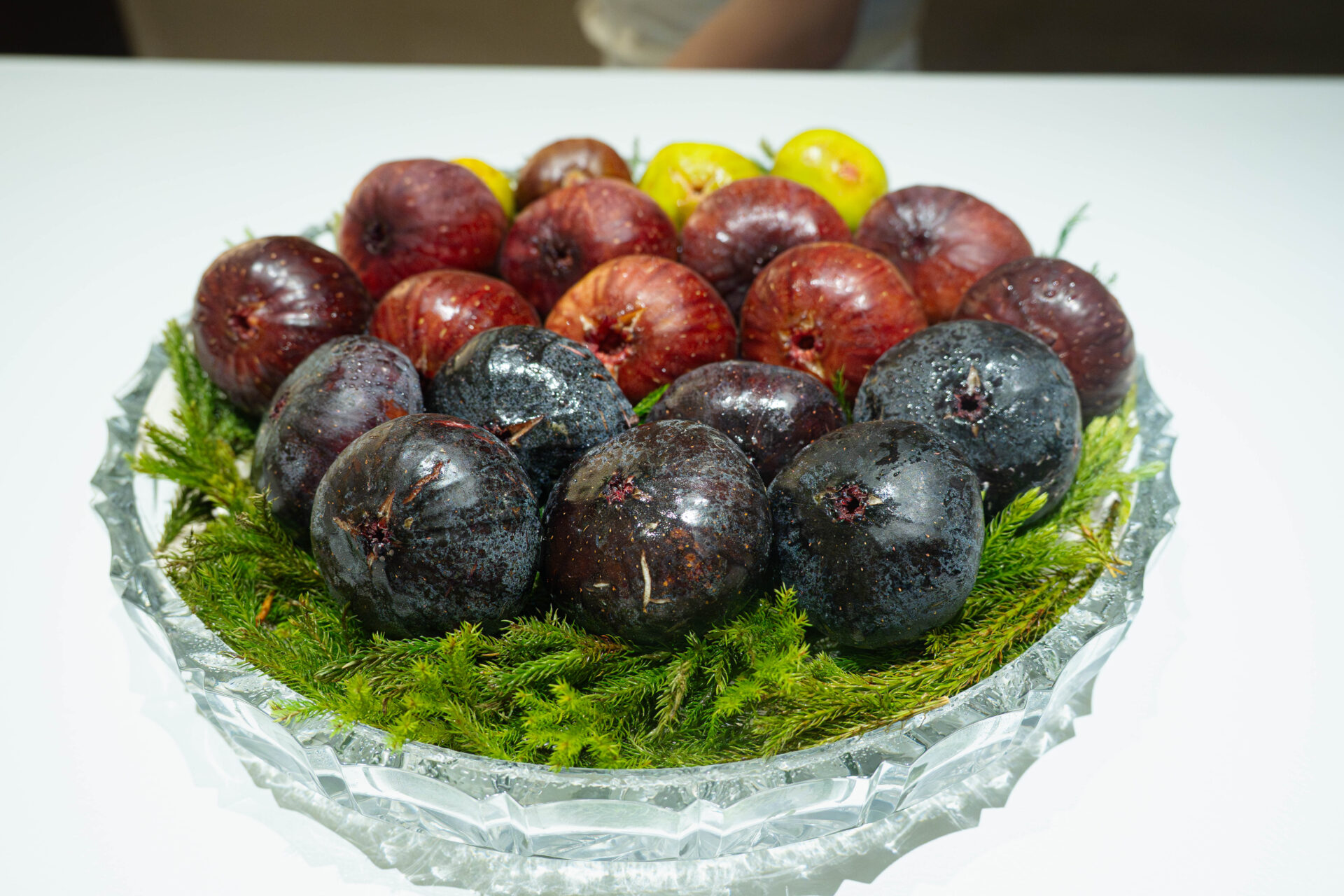
At the start of the course, a platter of beautifully ripened figs was presented. Deep purple Violette de Solliès, reddish Masui Dauphine, and several rare varieties were arranged together like a stage devoted entirely to fruit.
The glossy sheen of the slightly moist skins contrasted beautifully with the green moss used in the presentation, visually evoking the arrival of autumn. By presenting the fruit first in its natural form, rather than immediately as a processed ingredient, the philosophy of “Yama” became clear.
How these fruits would be transformed—what temperatures and aromas they would take on—made the anticipation grow instantly.
Dishes We Experienced
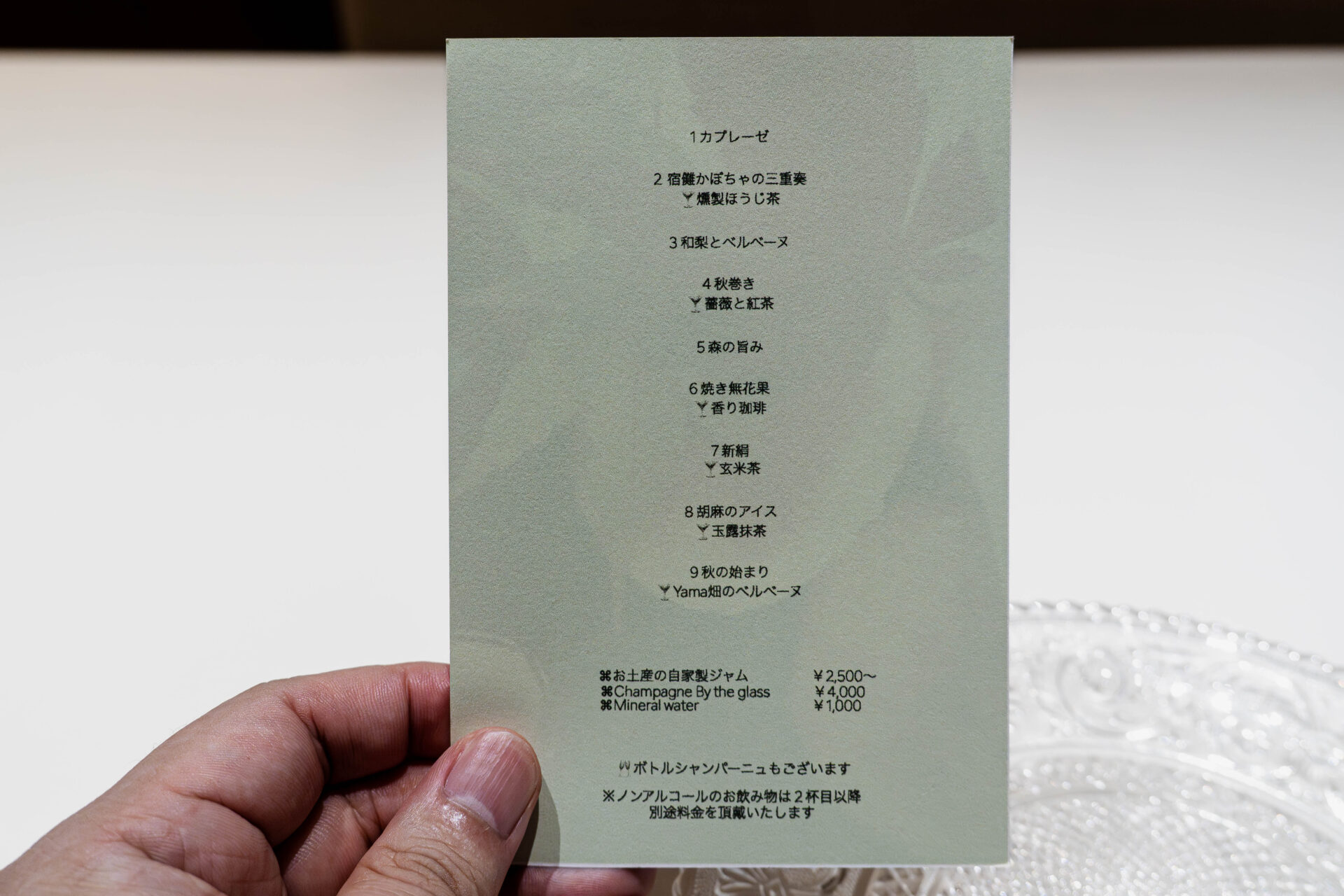
Caprese
The course began with Yama’s signature dessert, “Caprese.”
At the bottom of the glass was basil-infused panna cotta. Layers of tomato and basil were added on top, enhanced with olive oil and salt. A tomato-based confection was placed at the top, completing the composition.
The deep flavor of tomato and the refreshing aroma of basil expanded in layers, connected by the savory nuance of olive oil and salt. It was a reinterpretation of the simple Caprese as a dessert, with a balance of sweetness and saltiness that created a lively rhythm from the very first dish.
Sukuna Pumpkin Trio × Smoked Hojicha
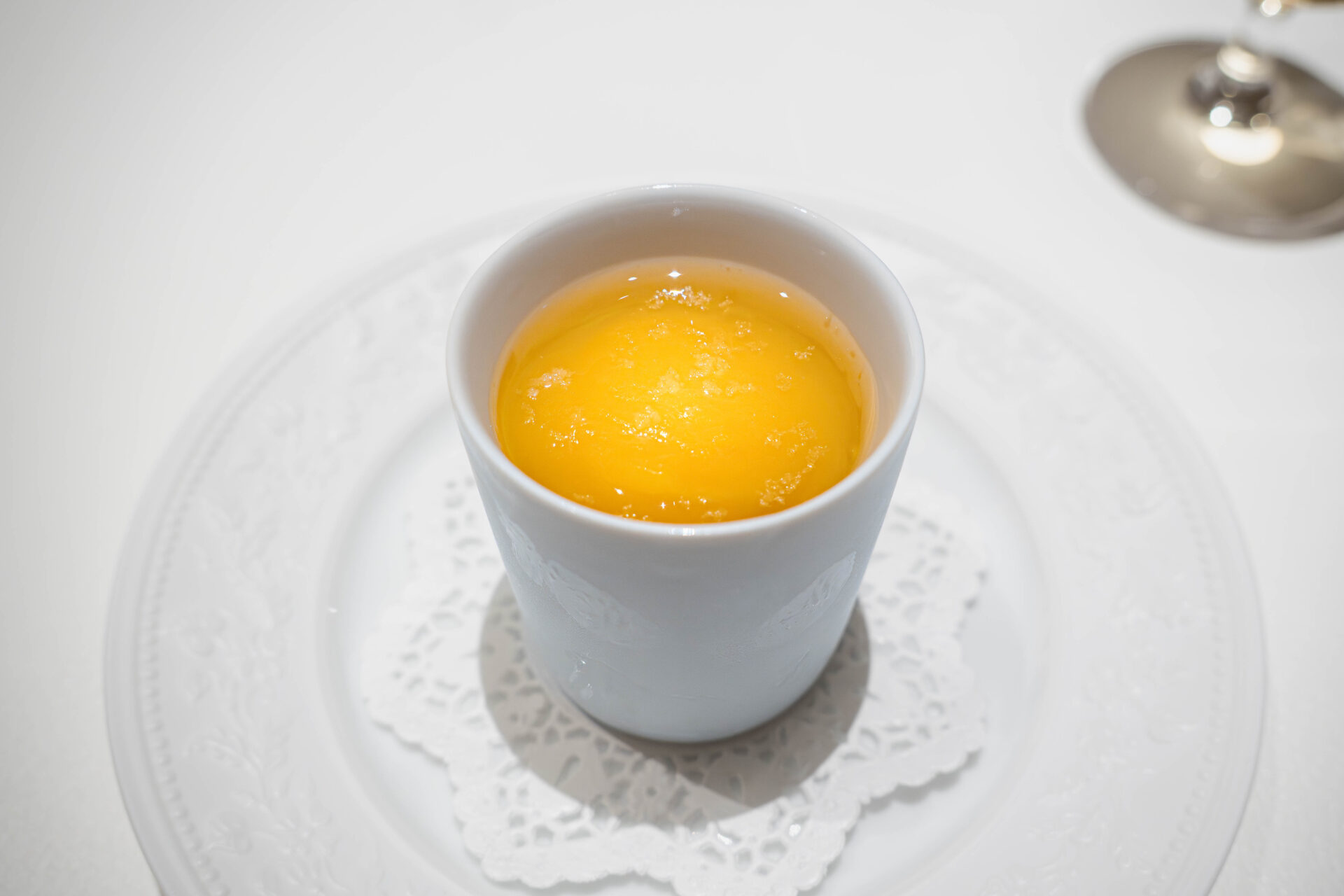
The second dish was a trio centered on Sukuna pumpkin, a traditional vegetable from Hida-Takayama in Gifu. Layers of panna cotta, pumpkin sauce, and house-made peanut oil created a combination of smoothness, richness, and nuttiness.
Sukuna pumpkin has a zucchini-like shape and a gentle flavor that pairs well with Japanese dashi culture. By avoiding the heaviness often associated with pumpkin desserts and instead keeping it light, the dish carried autumnal colors while leaving a delicate finish.
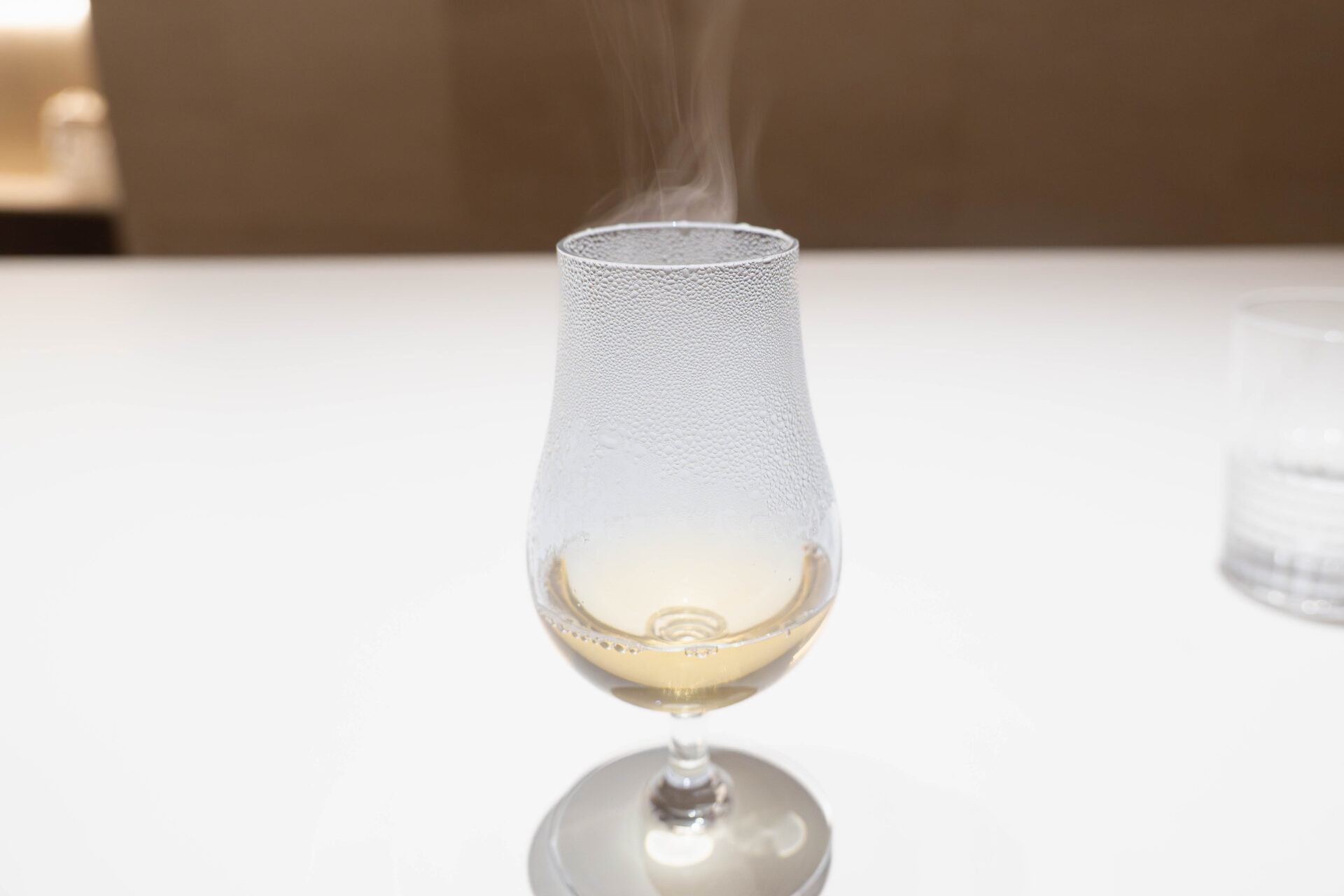
It was paired with smoked hojicha. The rising roasted aroma evoked memories of sweet potatoes grilled by a neighbor in childhood, creating a nostalgic moment that stirred not only taste but also memory.
Japanese Pear & Verbena
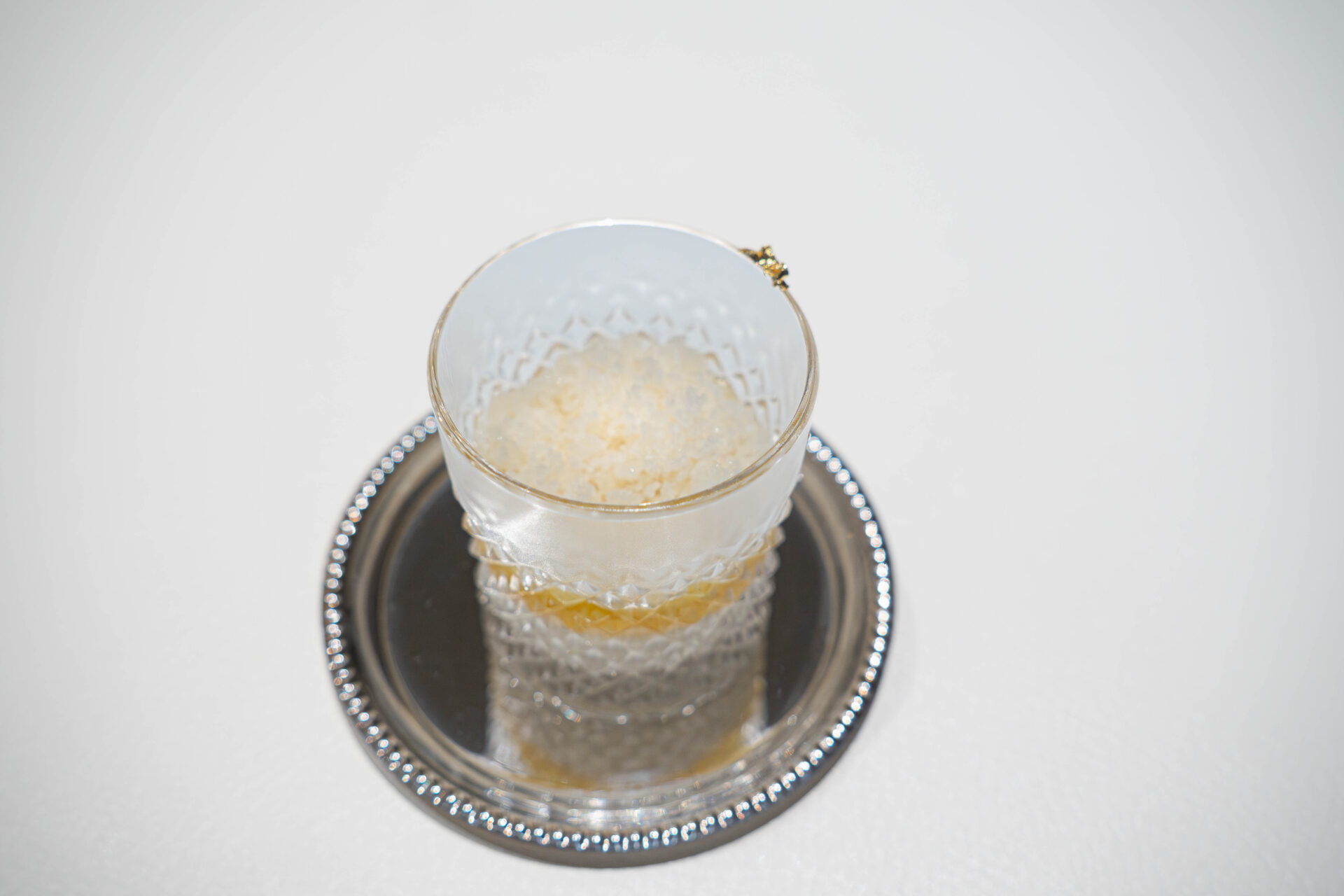
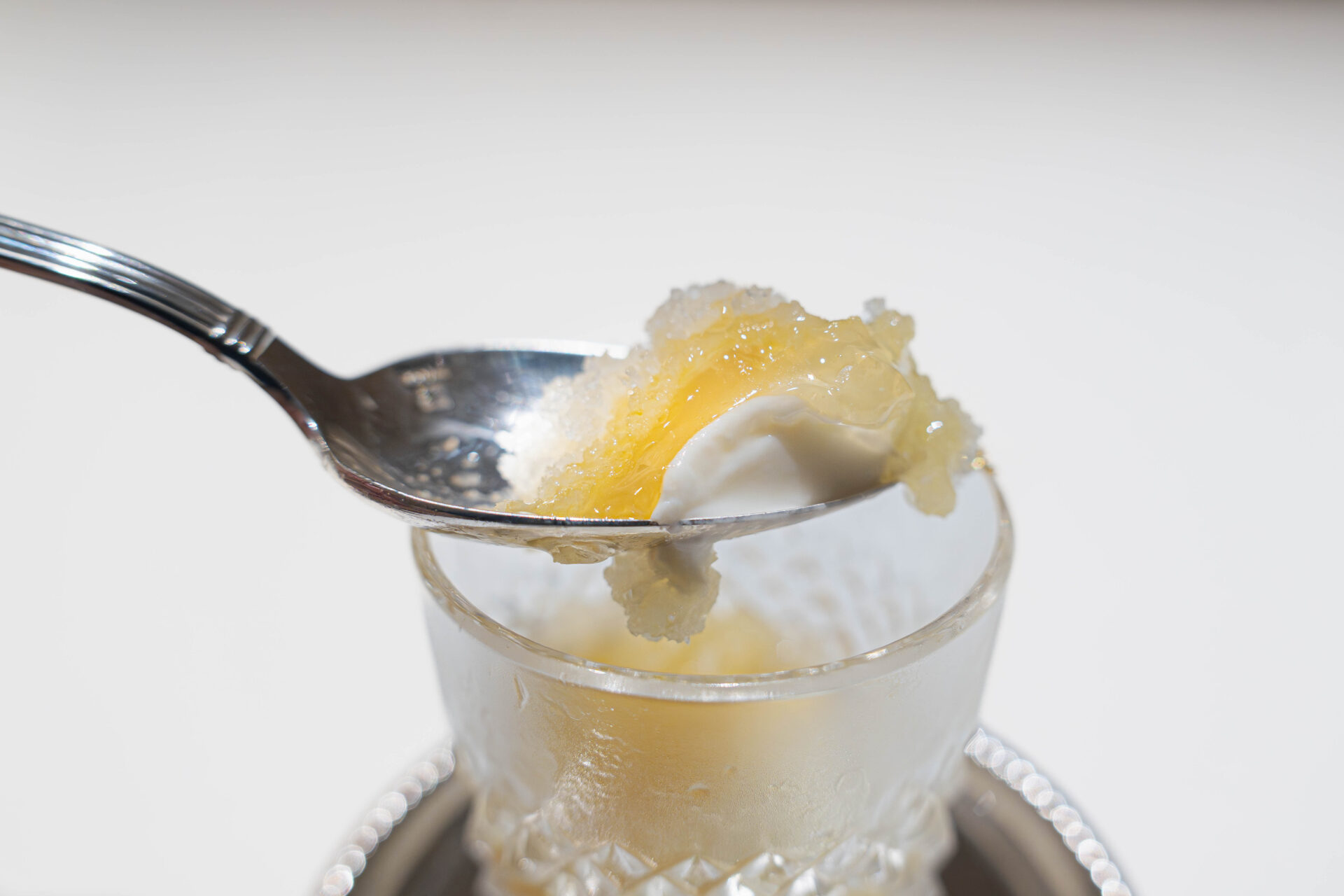
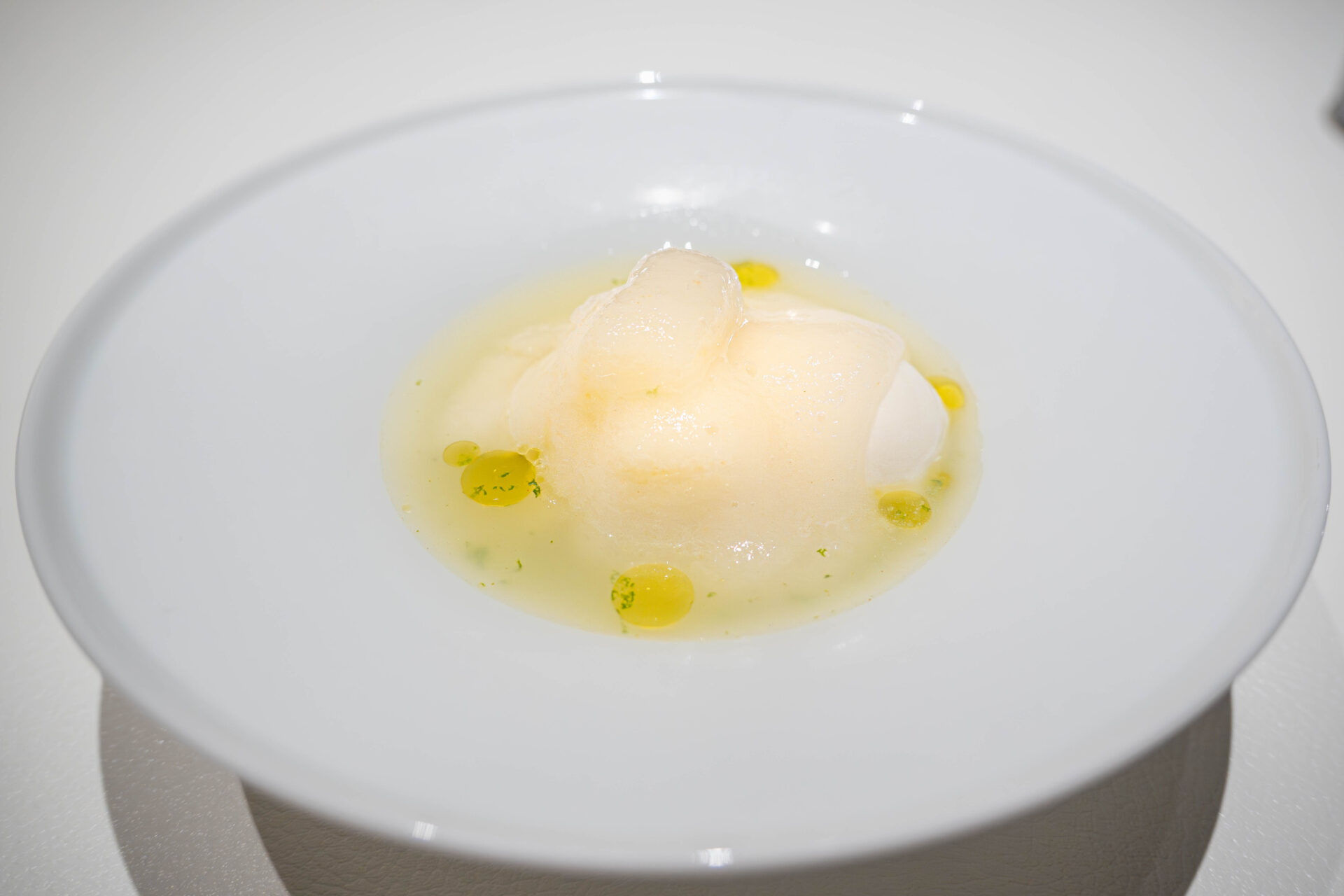
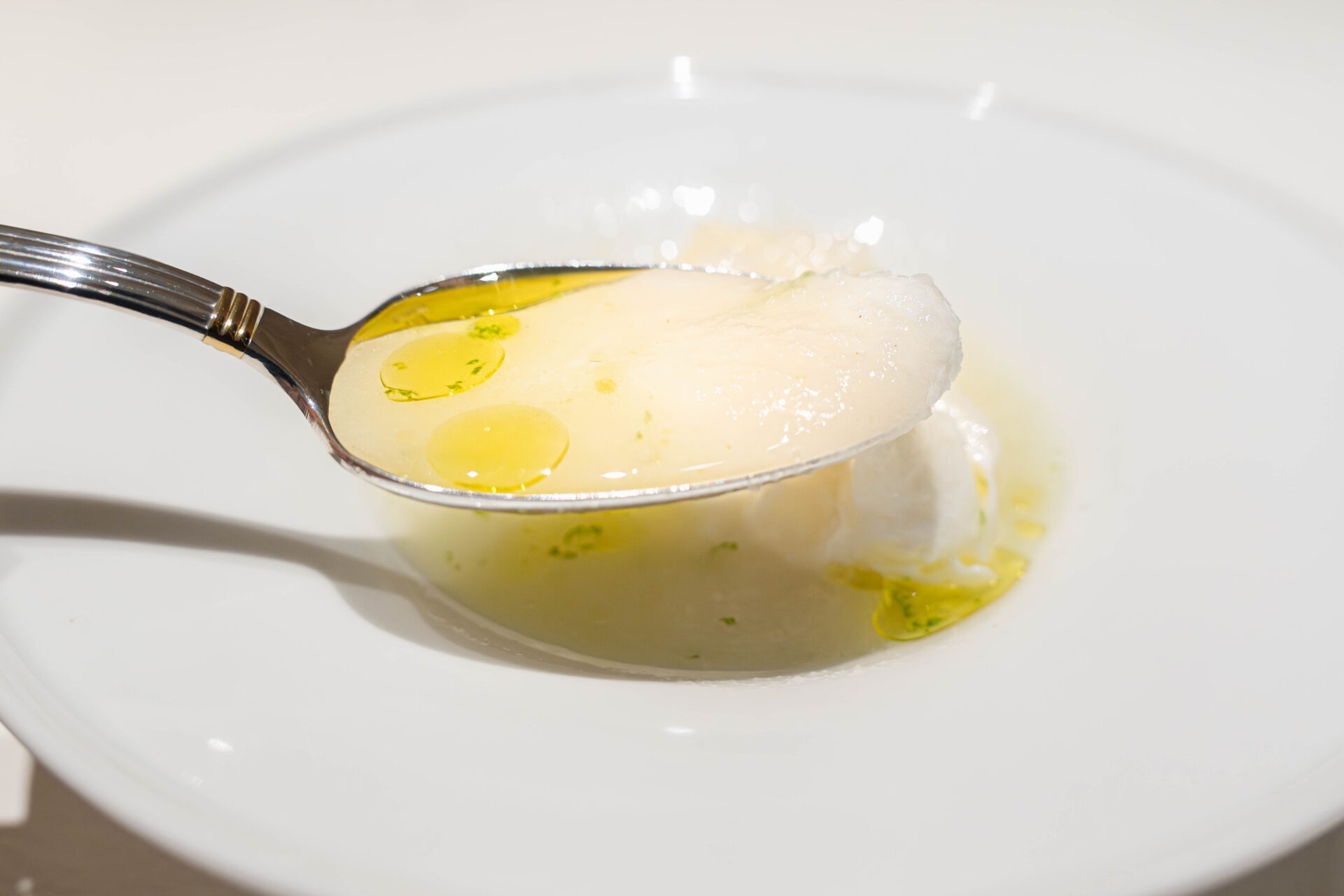
The third dish featured Japanese pear as the main ingredient. Pear and kabosu citrus were marinated, then combined with pressed juice scented with verbena grown in the restaurant’s garden. Just before serving, freshly crushed pear sauce was poured over the dish at the table.
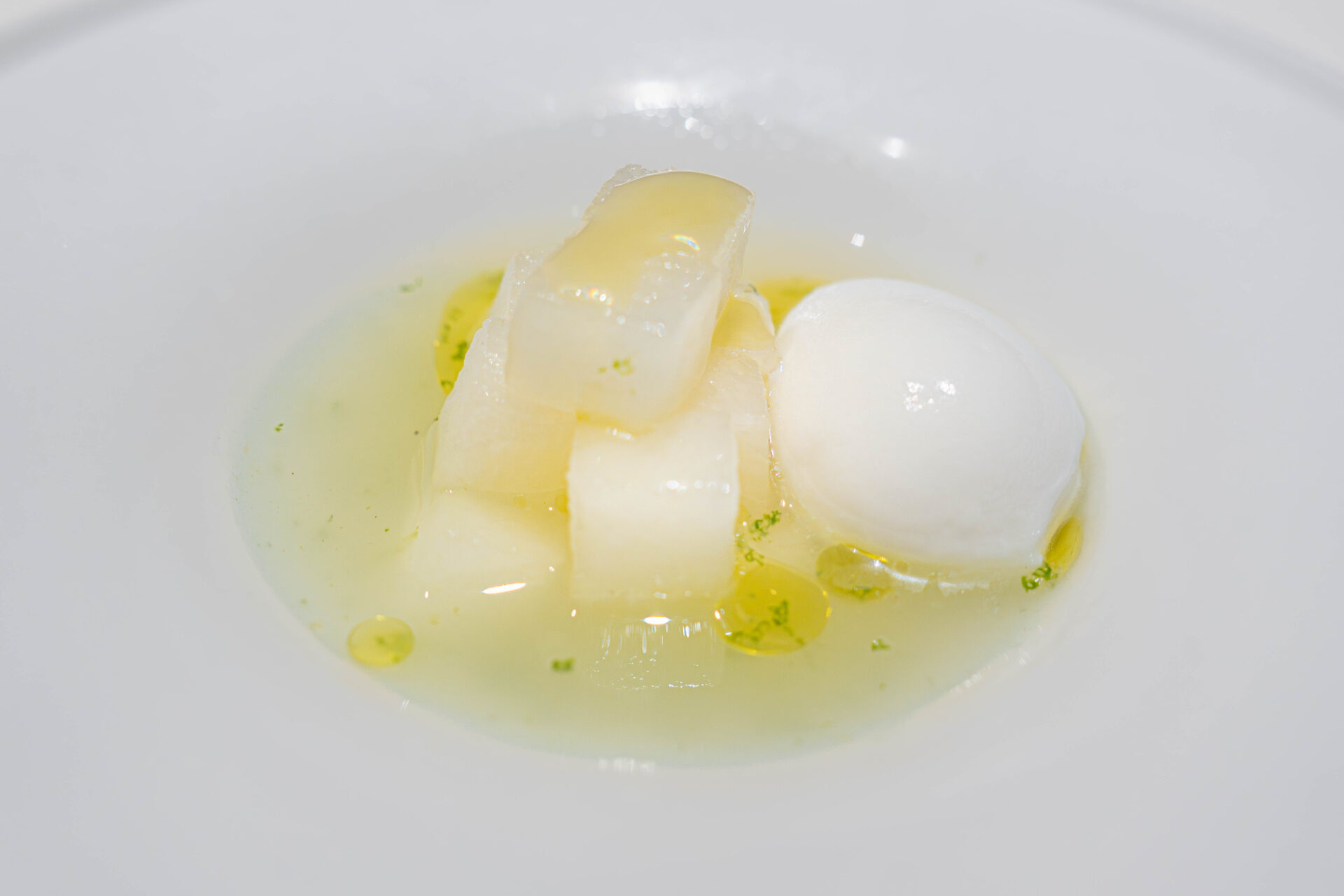
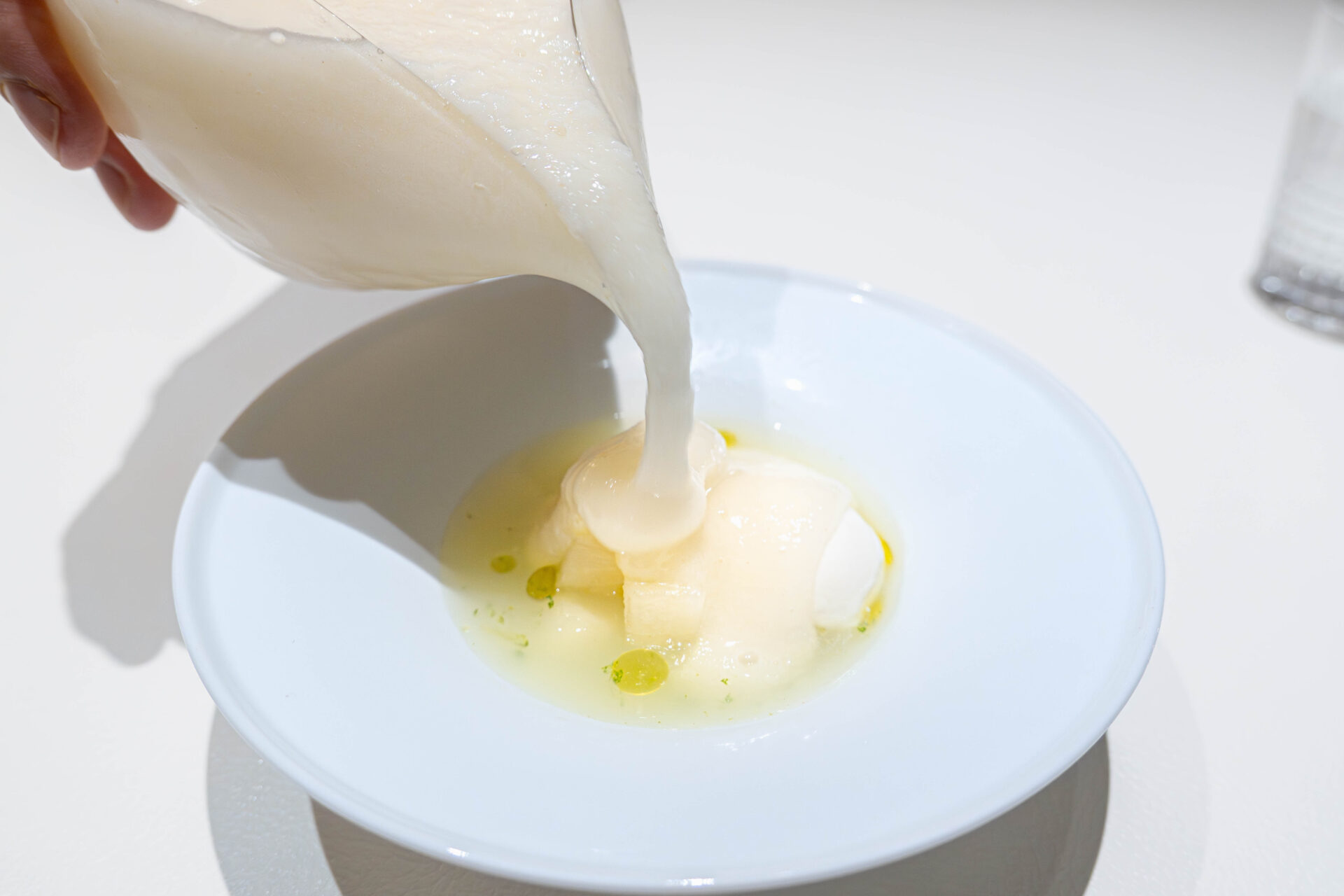
Pear is delicate: heating it removes its crisp texture, while crushing it can weaken its presence. To overcome this, the dish was served extremely cold, with a lightly frozen sauce that sharply lowered the temperature. The subtle aroma was supported by kabosu’s acidity and the refreshing note of verbena.
The chilled crispness and citrus-herb aromas layered together, evoking the sensation of biting into perfectly fresh fruit. Simple yet meticulously balanced, it reflected a sincere respect for the ingredient.
“Autumn Roll” × Japanese Black Tea & Rose
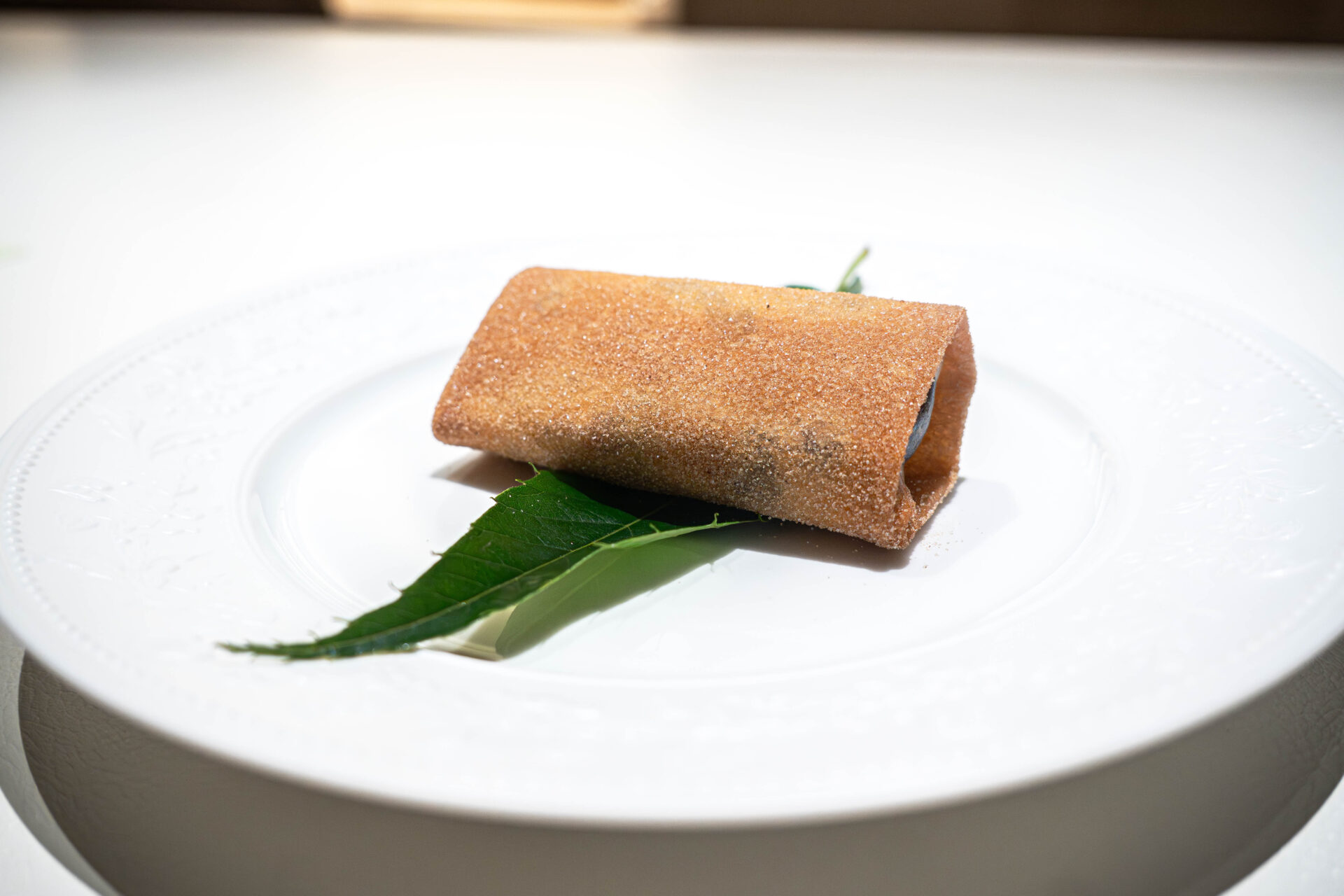
A playful twist on a spring roll, the “Autumn Roll” featured figs and Aomori cassis wrapped in a crisp fried skin. Cinnamon sugar and Chinese five-spice added aromatic depth, layering acidity, sweetness, and spice.
The filling was kept warm but not overly hot to preserve the fruit’s juiciness. A chestnut leaf wrapped around the outside served as a handle. The crisp skin and sweet-tart fruit combined with remarkable harmony.
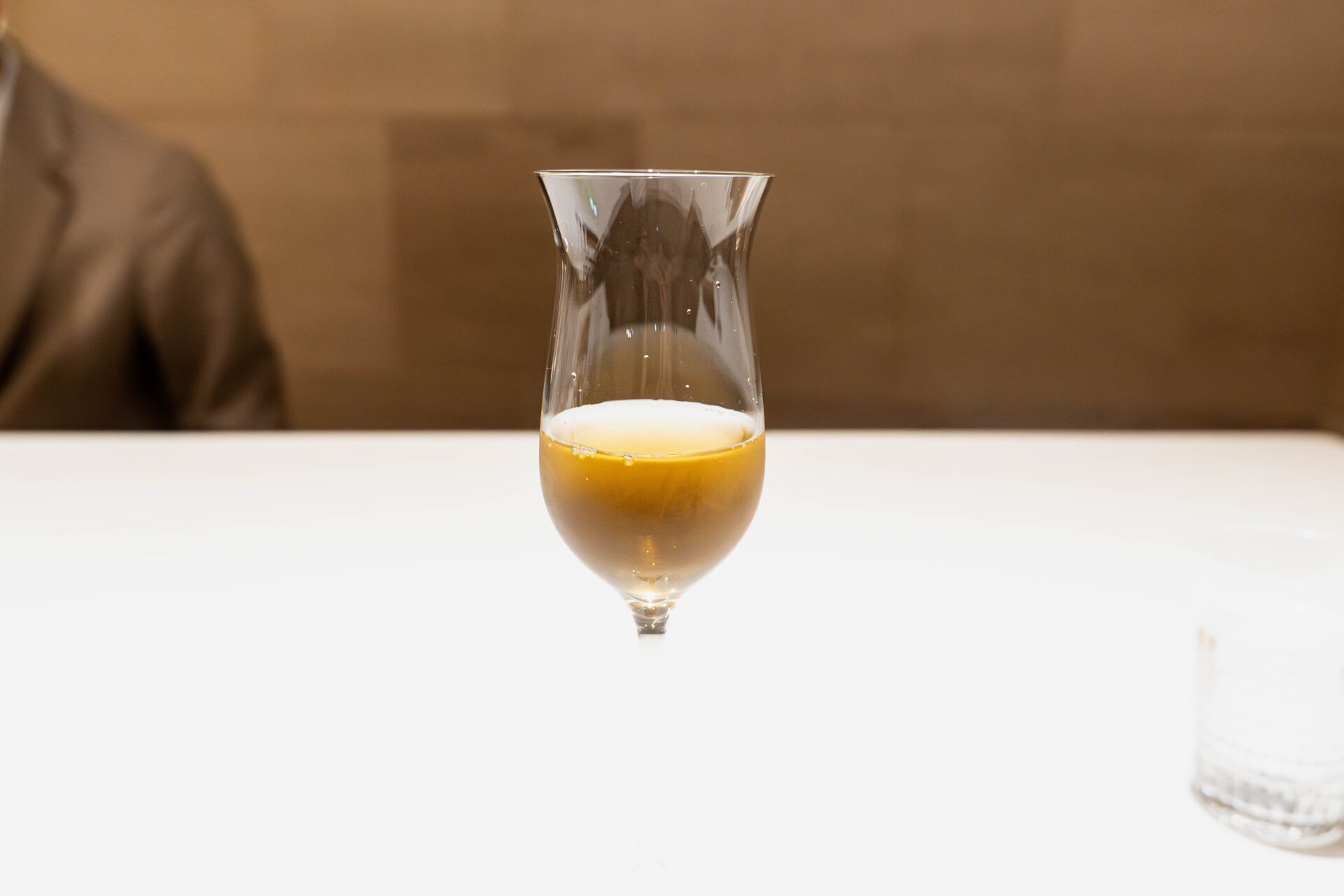
The pairing was Japanese black tea layered with rose, whose floral aroma complemented the spices and fruit.
Forest Umami
After several sweet dishes came a warm soup called “Forest Umami,” made from five types of mushrooms including maitake and enoki.
The first impression was the rich aroma and savory depth of mushrooms. It reset the lingering sweetness from the fruit dishes and evoked the damp earthiness of a forest. Light yet deeply flavorful, it served as a perfect bridge to the next course.
By inserting such an umami dish into a dessert course, the overall composition gained rhythm and contrast.
Grilled Fig & Pear × Aroma Coffee
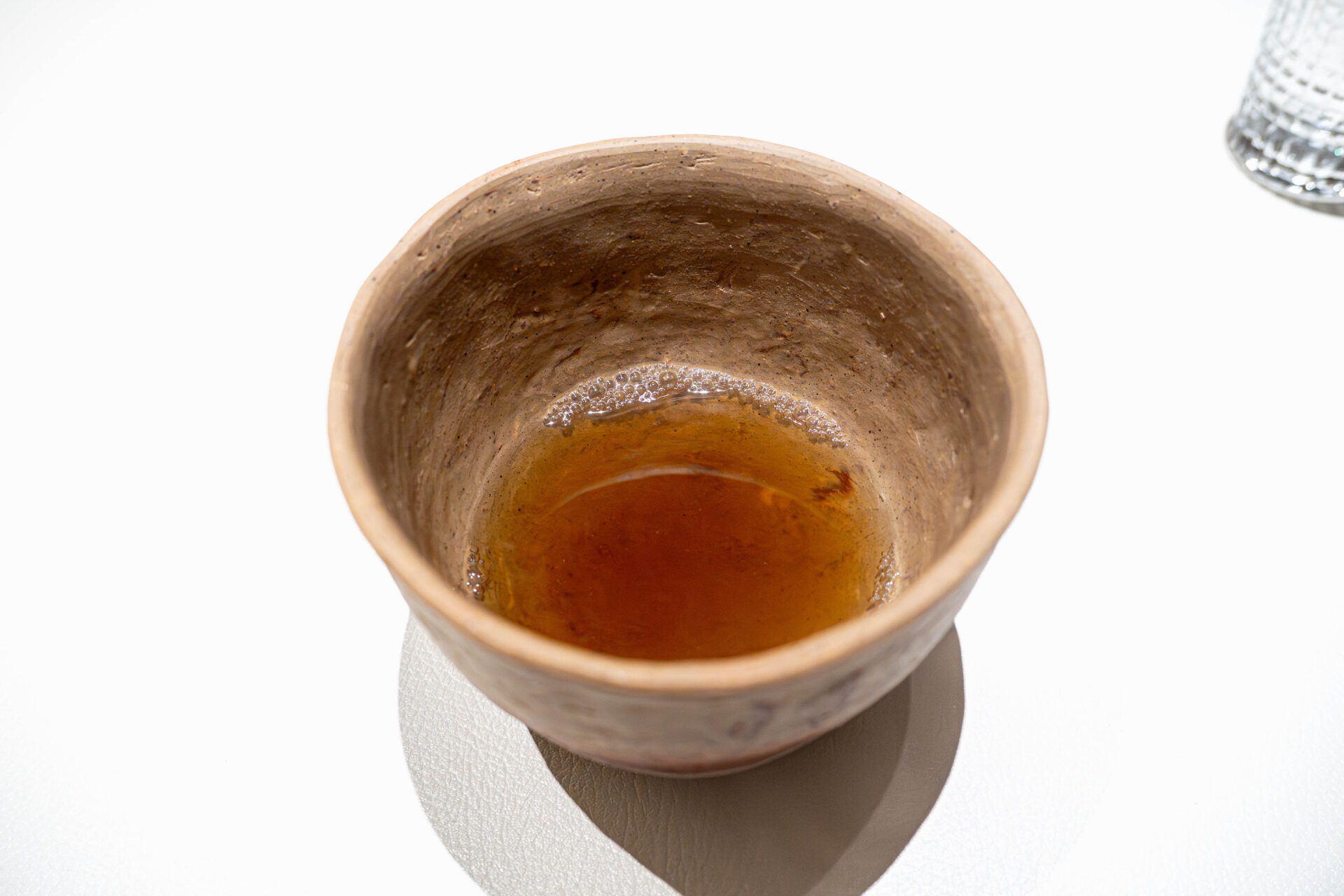
A whole fig was grilled, its skin removed and the fruit marinated in kuromitsu syrup. The heat concentrated its sweetness, producing an astonishing vanilla-like aroma. The dish was simple yet showcased the ingredient’s full potential.
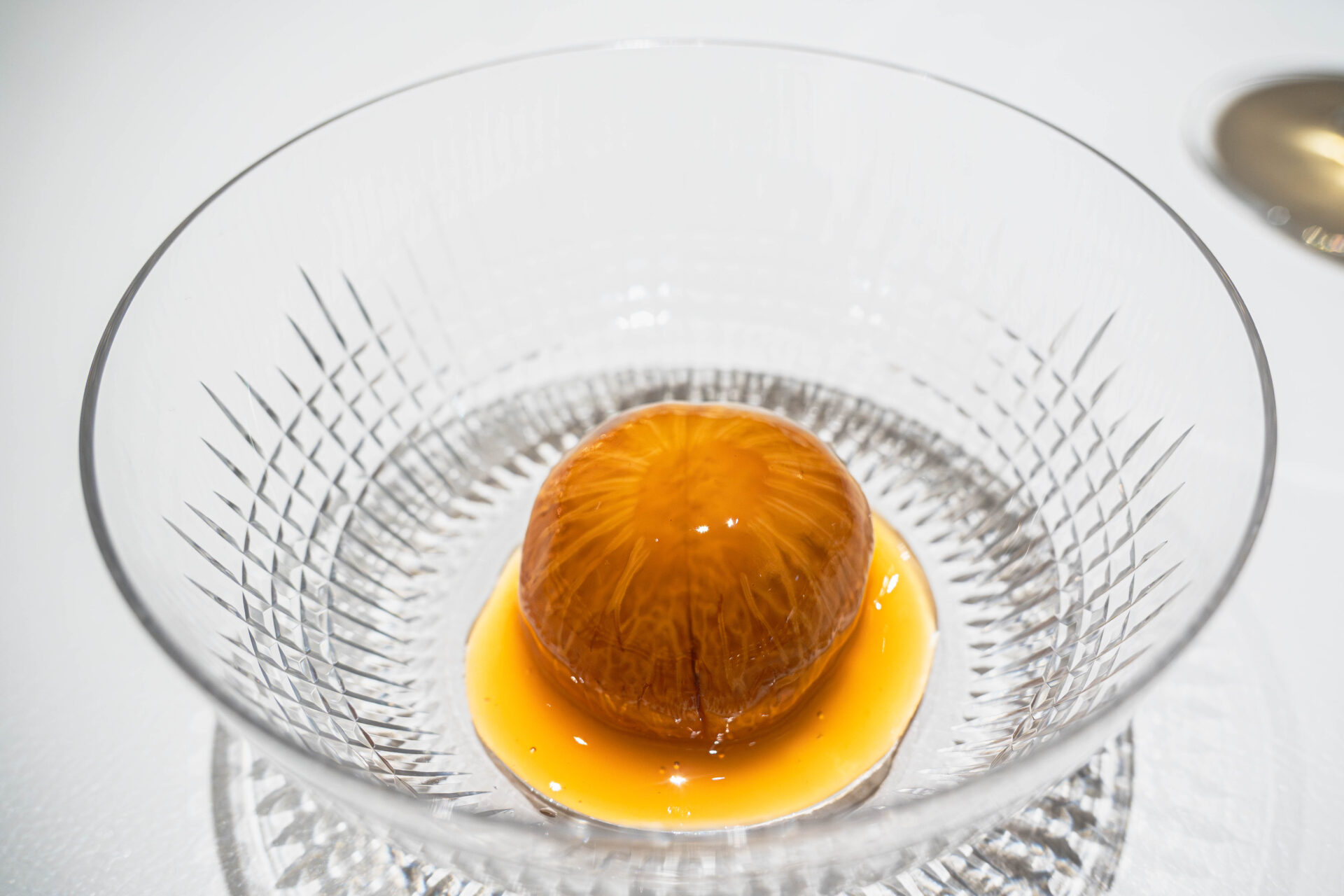
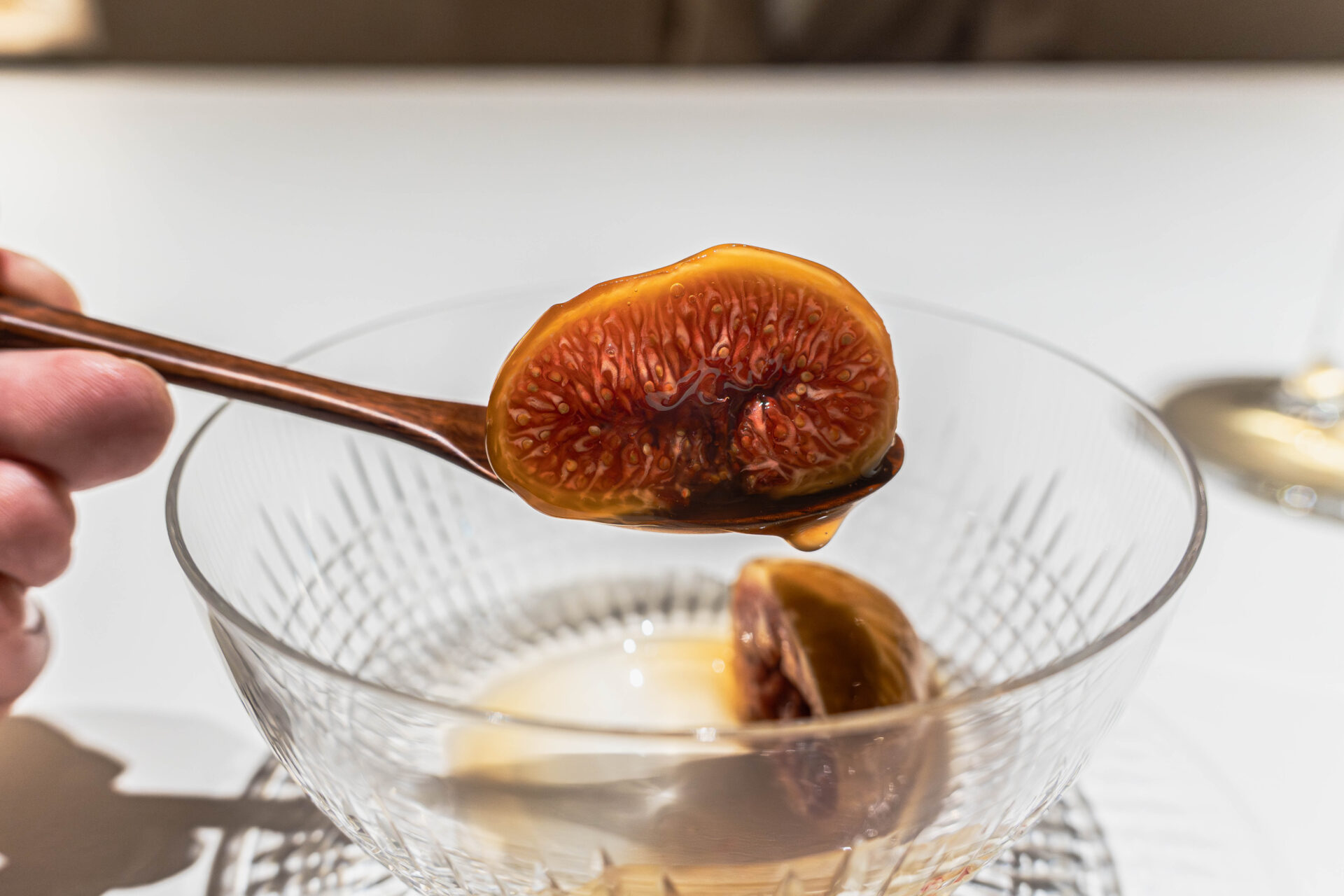
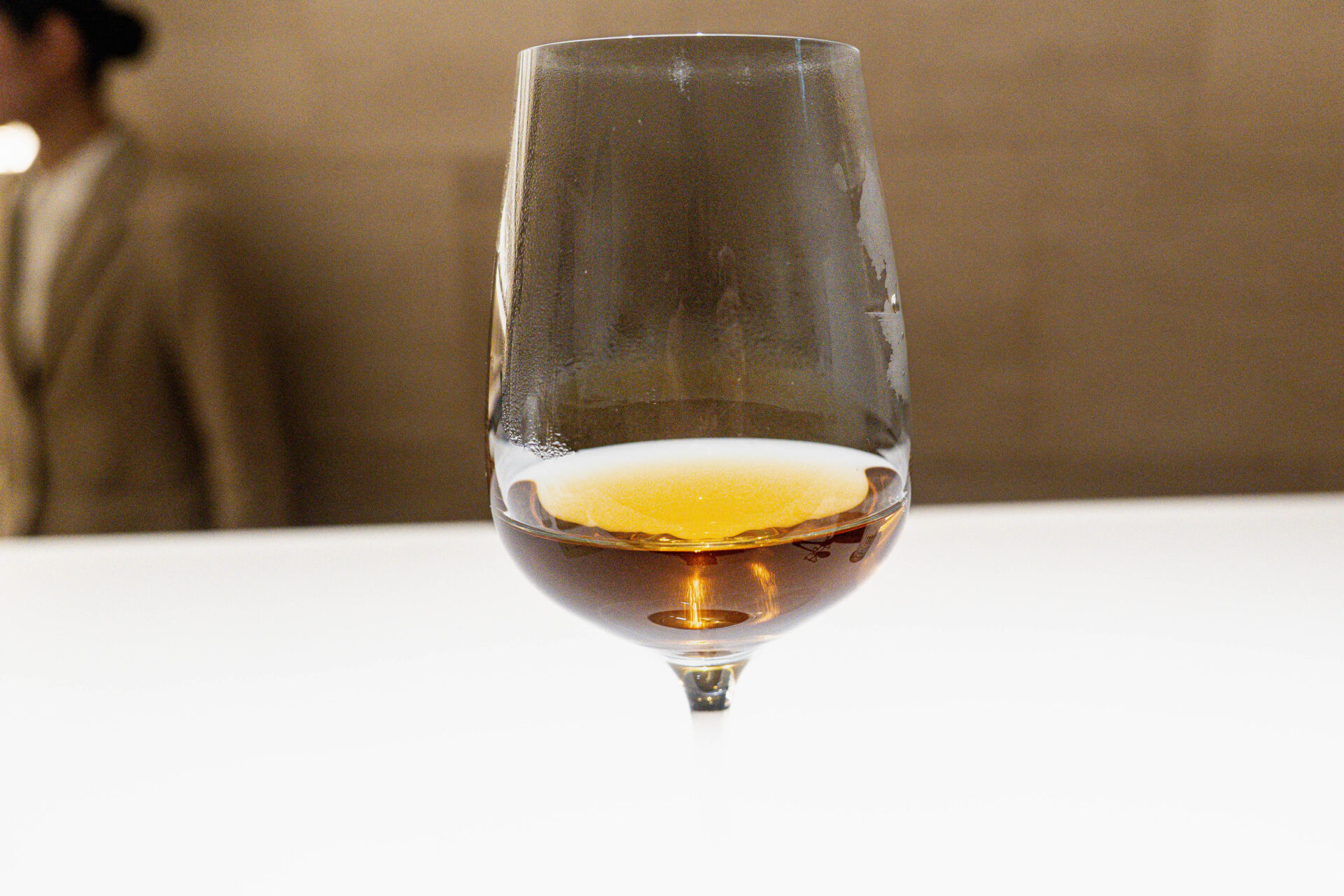
It was paired with “aroma coffee.” Freshly brewed coffee was diluted with hot water to strip away bitterness and body, leaving only the aroma. The drink felt as light as water, yet its fragrance extended the aromatic finish of the grilled fig.
Rather than adding intensity, the approach removed unnecessary elements so the fruit’s aroma could shine. It presented a fascinating new perspective on coffee.
“Shin-Kinu” × Genmaicha
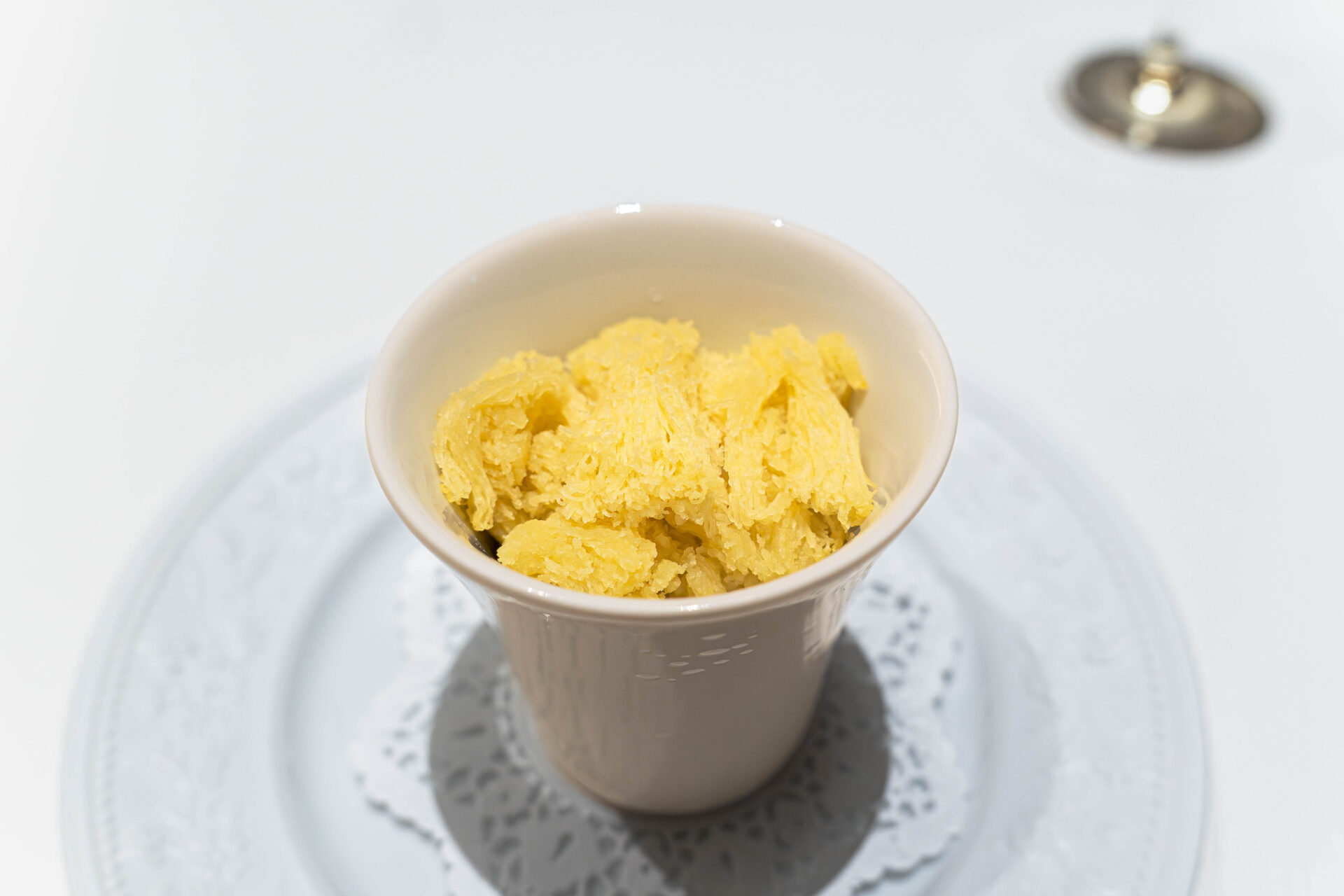
The restaurant’s famous dessert “Kinu,” made with Japanese chestnut, normally appears from November through April and is unavailable in September. To meet guests’ expectations during this period, an alternative called “Shin-Kinu” is served.
Sugar is not used at all. Instead, steamed sweet potato is carefully strained into fine threads, creating a dessert with delicate texture and natural sweetness. Beneath it lies a sweet potato pudding layered with elements of rice, adding nutty grain notes. Varieties such as Gorojima Kintoki are used to keep the sweetness balanced. The first bite evokes the richness of chestnut, yet the overall structure remains light and restrained.
This “new Kinu” was born from the idea of reinterpreting a classic rather than simply removing it. It reflects Yama’s flexible creativity and playful spirit.
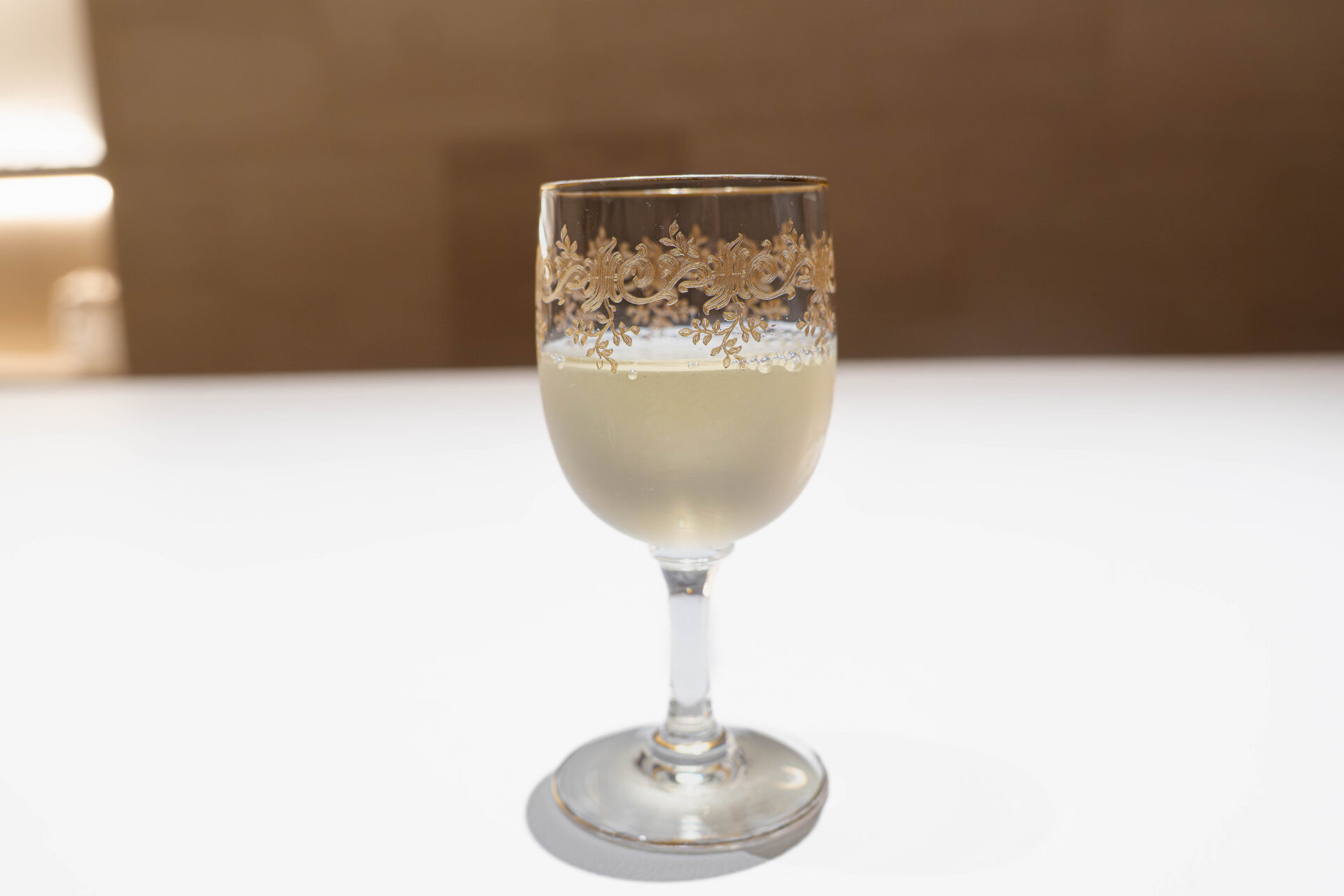
It was paired with genmaicha, whose roasted aroma neatly cut through the sweetness.
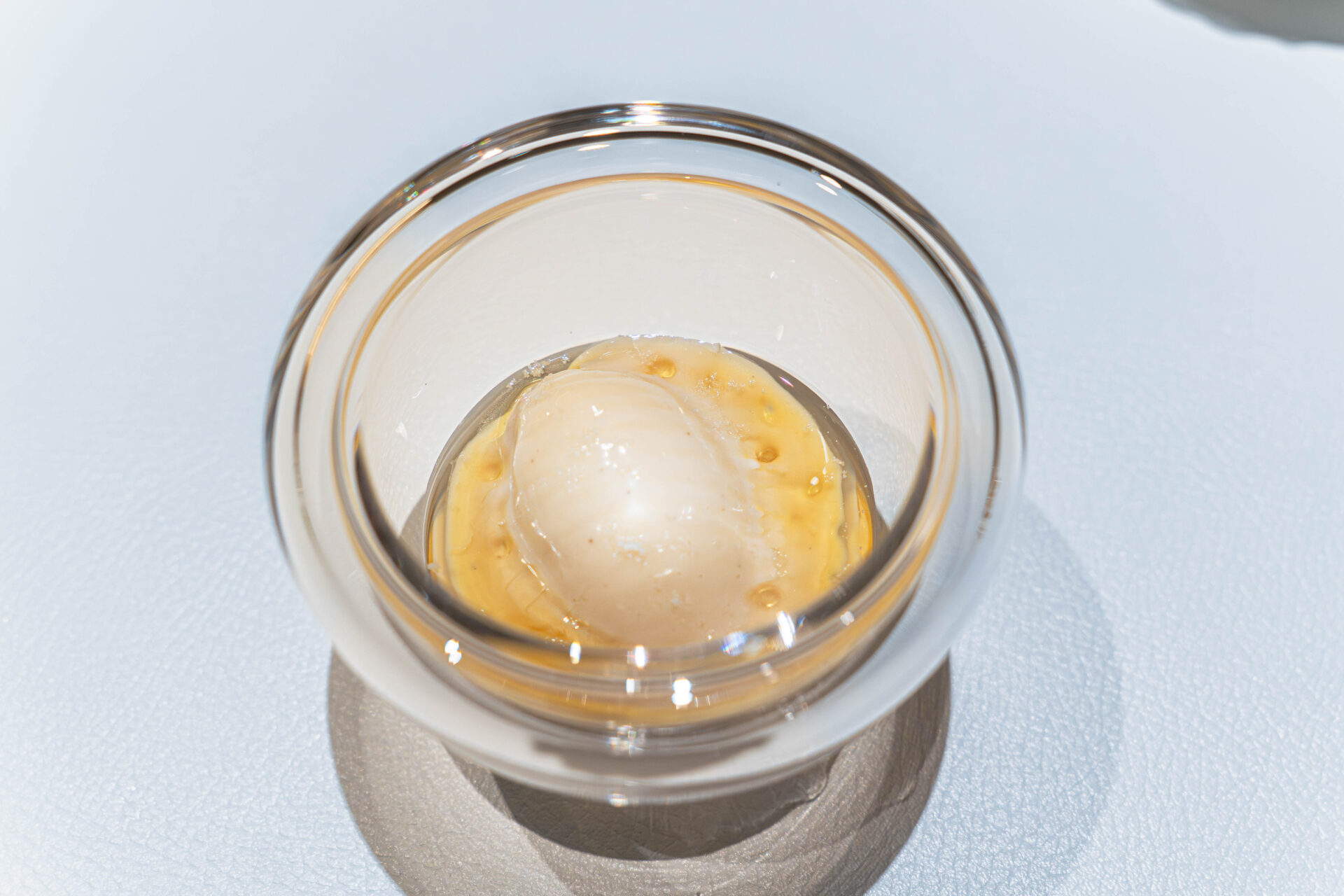
Sesame Ice Cream × Cold-Brew Gyokuro & Matcha Blend
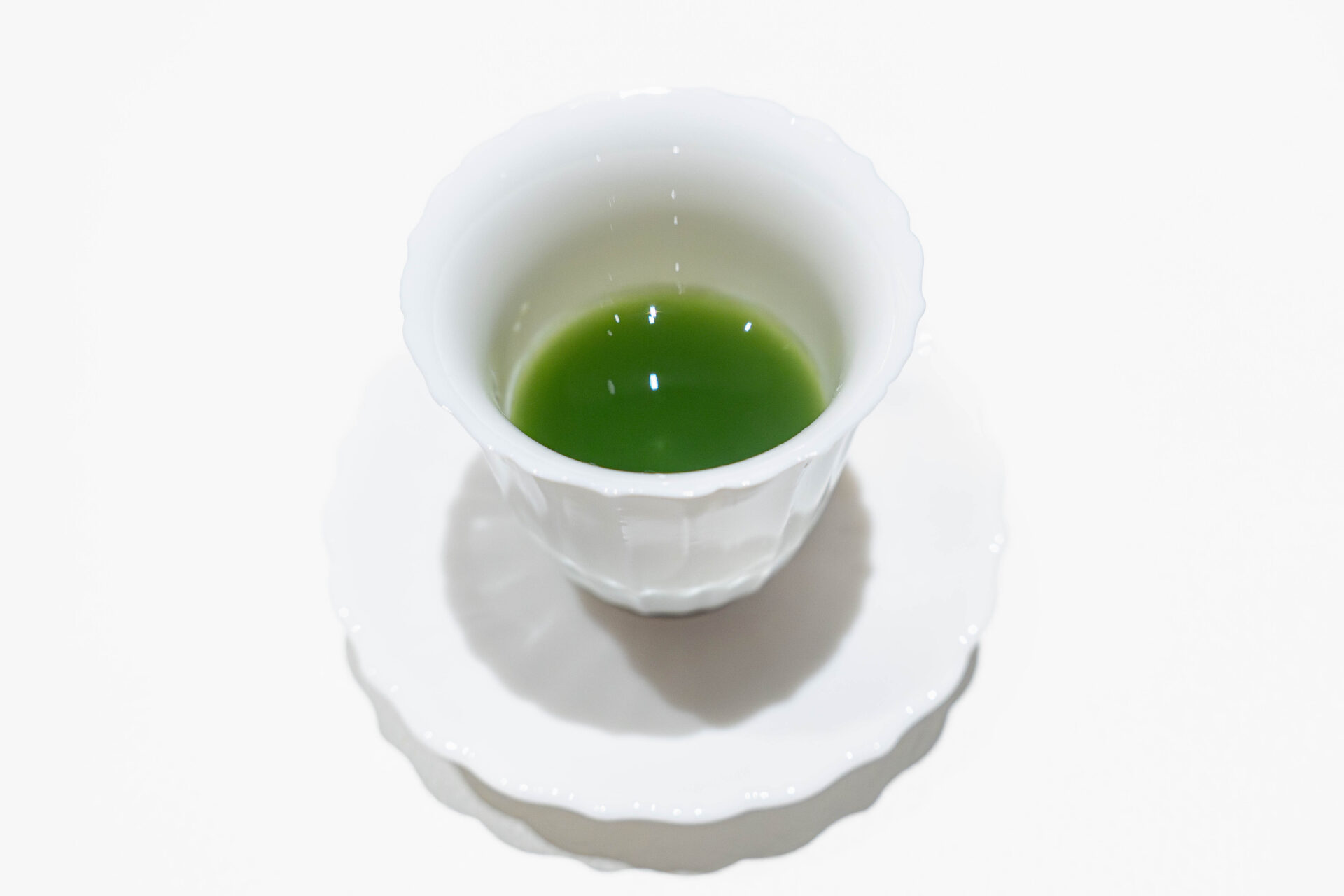
This ice cream centered on the rich flavor of sesame, paired with a cold-brew blend of gyokuro and matcha discovered in Hong Kong. By suppressing bitterness, the tea highlighted umami and fresh green aromas. A spoonful of sesame powder added at the table released an additional fragrance.
The sesame used here is an extremely rare white sesame from Kikaijima Island, accounting for less than 0.1% of Japan’s total domestic production. The variety has been preserved without breeding since before the Edo period. Roasting is kept to the absolute minimum needed to release the oil, rather than to create a roasted aroma.
The cold-brew tea tied together the richness of the sesame ice cream, extending the layered flavors into a refined autumnal finish.
Beginning of Autumn × Verbena from Yama’s Garden
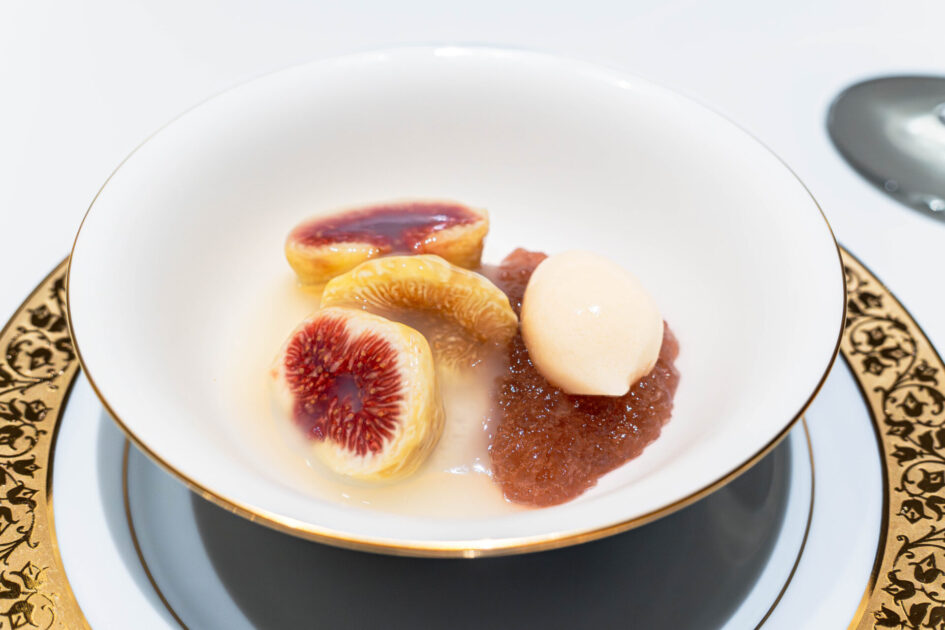
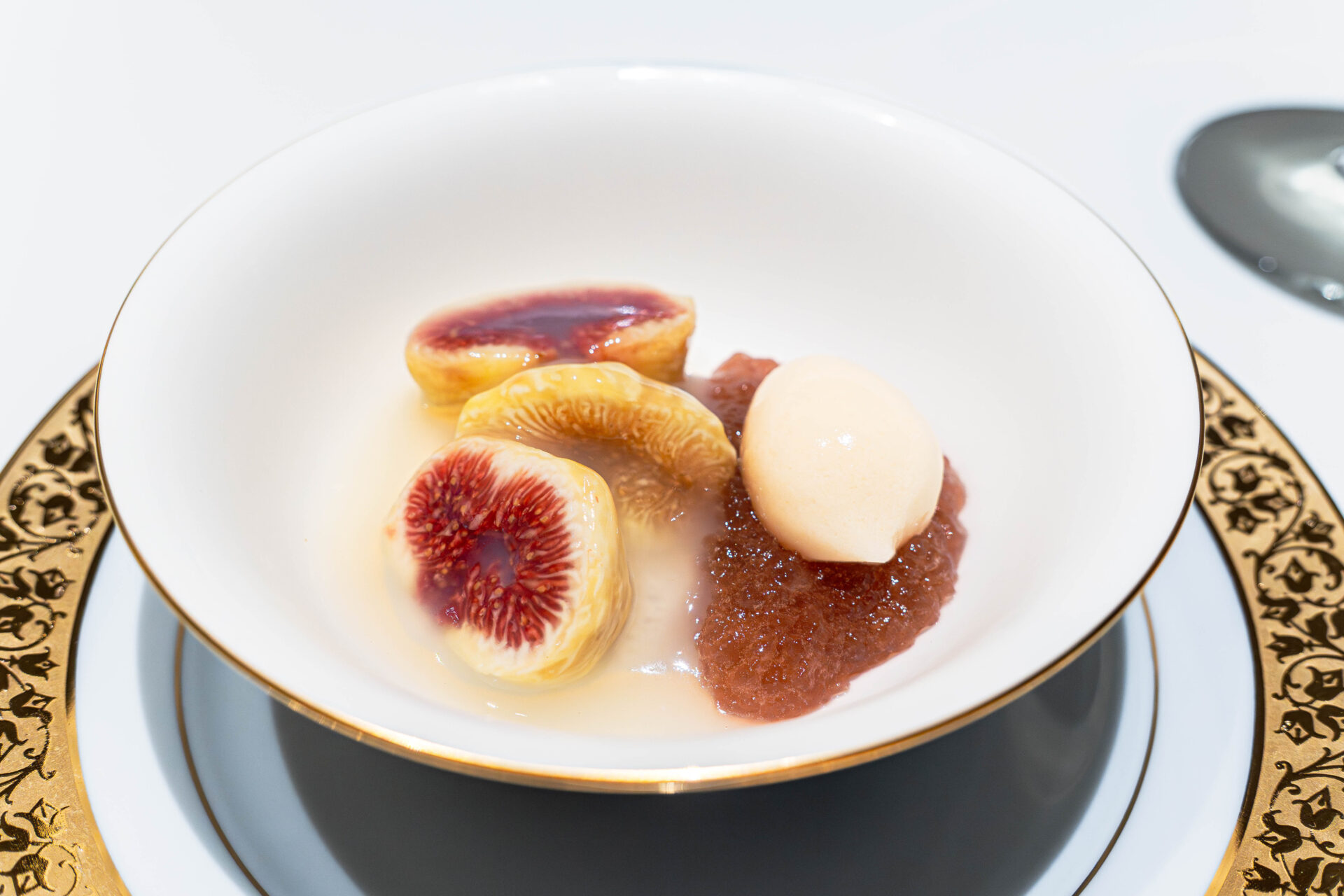
The final dish centered on chestnut, fig, and pear. At the bottom of the bowl was chestnut mousse, topped with marinated figs, with their marinade turned into a jelly. A fig-leaf sauce heightened the fruit’s aroma, and a spoonful of pear ice cream was placed on top. Guests were instructed to start with the ice cream to prepare the palate before mixing the elements.
The marinade used peel wine (wine made with fruit skins) and Japanese honey aged for 100 months, with a hint of rosemary. A small amount of fermented chestnut skin added subtle bitterness and complexity. Even the color palette—peel wine, honey, and pear—was unified in golden autumn tones.
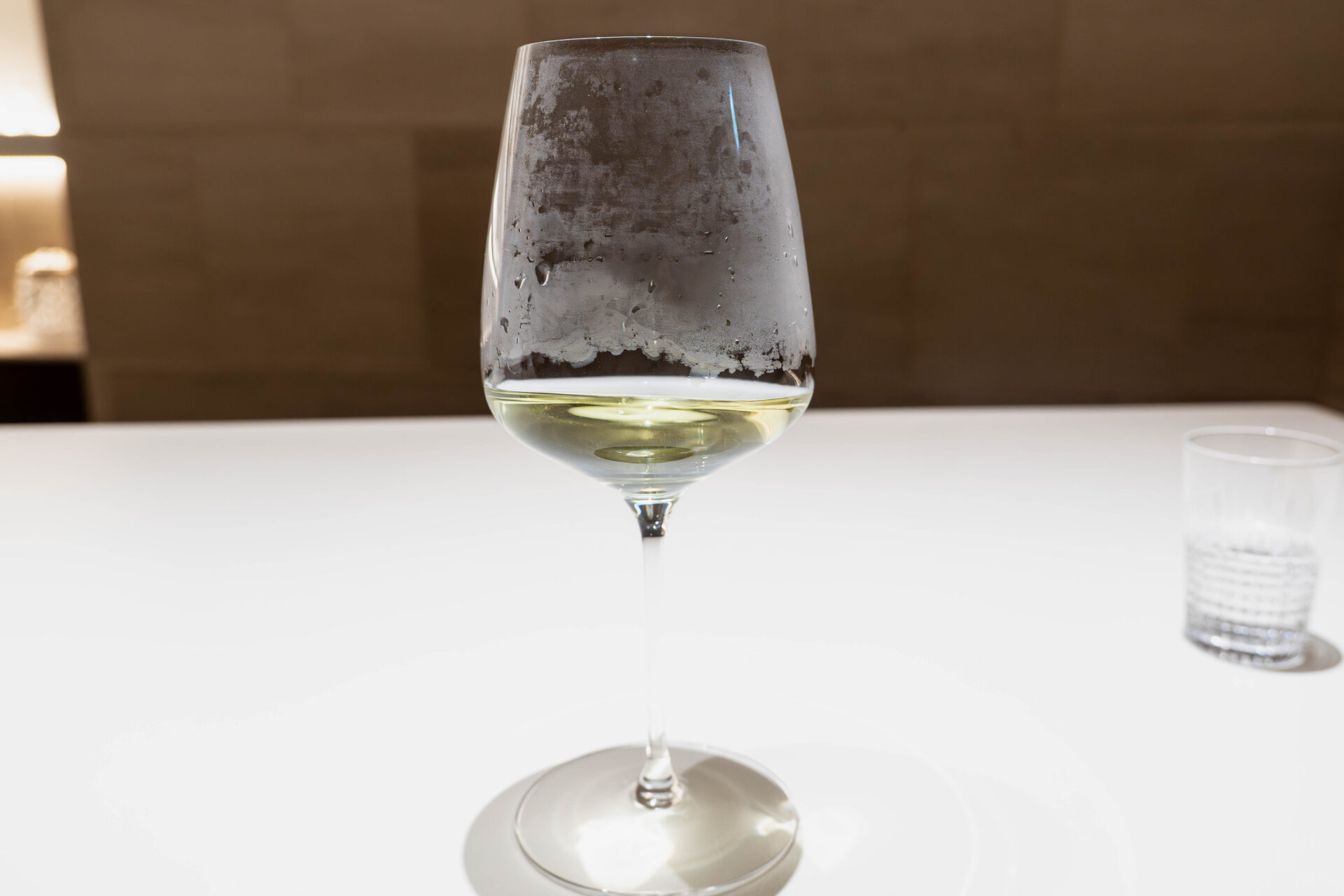
It was paired with lemon verbena herbal tea grown in the restaurant’s own garden. Because excessive heat dulls the palate, the service sequence first presented the aroma for guests to enjoy before drinking. The chef mentioned that verbena is his favorite herb. Its gentle acidity and freshness neatly closed the course, complementing the sweetness of chestnut, honey, and fig.
Finale
Special Fruit Chirashi (Takeaway)
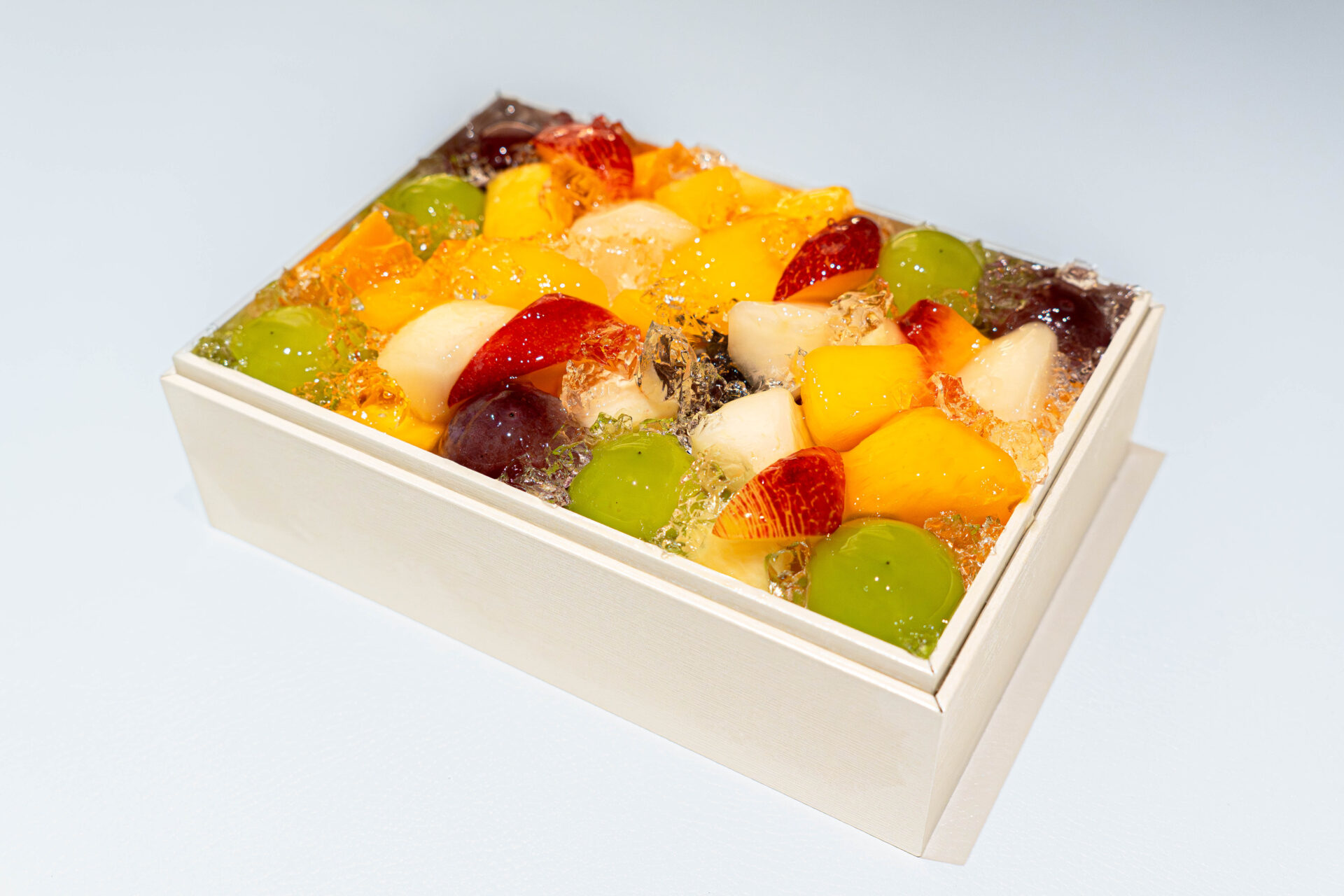
The takeaway ordered at the time of reservation was the Special Fruit Chirashi, a vibrant dessert arranged inside a white wooden box.
On the surface were two types of grapes, along with persimmon, mango, golden peach, plum (variety “Taiget”), and pear, all tightly arranged with seasonal fruit. Beneath them lay layers of curry custard and lemon, unified by a clear “white-flavor” jelly. The result was a multi-layered dessert balancing fruitiness, acidity, and creaminess.
The fruit selection changes with the seasons, expanding in autumn to include Japanese pear, Japanese chestnut, and sweet potato. Because the contents evolve with each season, a return visit—especially during chestnut season—was recommended.
Summary & Impressions
The chef’s cuisine goes beyond simply presenting seasonal ingredients. It layers ideas and memories onto them, transforming them into a distinctive culinary world. Autumn ingredients such as chestnut, fig, and sweet potato are handled not by adding sweetness but by removing unnecessary elements to maximize their natural character. At the same time, techniques such as fermentation, careful heat control, and cold-brewed tea design the aromas, temperatures, and movements on the palate.
What emerges is an experience of “eating aroma.” Pairings like aroma coffee and cold-brew gyokuro–matcha embody this concept, offering a new perspective on beverages traditionally considered indulgences.
Throughout the course, what stood out was the chef’s refined sensibility and sincerity toward ingredients. Traditional elements are reinterpreted lightly and in a modern way, yet never feel forced or gimmicky. The creativity is the crystallization of both technique and philosophy.
Each dish unfolds like a chapter in a story, with the restaurant’s worldview flowing seamlessly from one plate to the next. It was a rare experience—almost like encountering an artwork—that allowed the seasons and memories to be felt through food.
Reservations & Access
Reservations
Yama operates on a reservation-only basis, currently using a lottery application system.
Applications are accepted from 17:00 on the 1st of even-numbered months until 12:00 the following day, covering seats for the following two months. Applications can be submitted via the restaurant’s official Instagram DM or through the contact form on the official website. After entries are compiled, a reservation URL is sent, allowing applicants to select a date and confirm their booking.
With extremely limited seating, it is widely known as one of the most difficult restaurants to reserve in Tokyo.
Access
- Address: 6-16-41 Shirokane, Minato-ku, Tokyo 1F
- About 16 minutes on foot from JR Ebisu Station
- About 13 minutes on foot from Hiroo Station (Tokyo Metro Hibiya Line)
- About 14 minutes on foot from Shirokane Station (Tokyo Metro Namboku Line)
- Approximately 725 m from Shirokanedai Station
The restaurant is located in a quiet residential area of Shirokane, giving it the atmosphere of a hidden retreat.
Opening Hours
Service is offered as a two-seat course format.
- First seating: 12:00–14:00
- Second seating: 15:00–17:00
The restaurant operates Wednesday through Sunday, with Monday and Tuesday closed.
- TAGS