CONTENTS
About Hatsunezushi
Concept
Hatsunezushi, located in Kamata, Tokyo, is a long-established sushi restaurant founded in 1893. Beyond its white-walled exterior are two L-shaped counters named “Sea” and “Mountain,” where guests are welcomed primarily with a fully reservation-only omakase course.
The experience begins with rice cooked in a hagama pot and seasoned into sushi rice on the spot, with the balance of red vinegar and white vinegar adjusted delicately to fine-tune umami and acidity. The clean approach of using no sugar is meant to bring out the aroma and natural sweetness of the fish itself.
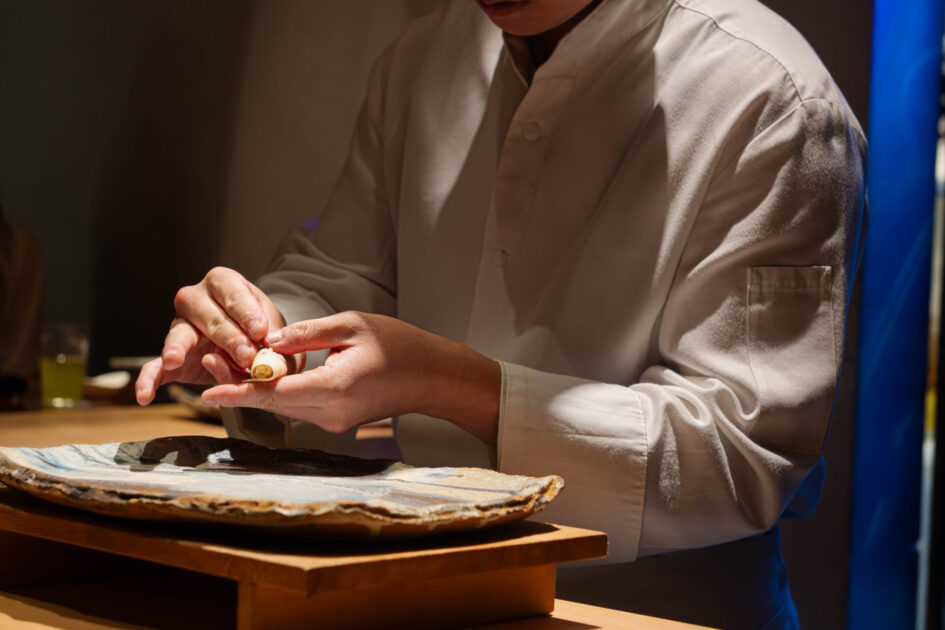
Rather than simply serving sushi, the restaurant builds the entire meal as a kind of stage performance, incorporating tastings, storytelling, and even the gesture of handing each piece directly to the guest. Its core lies in a sense of mission: to present sushi in its ideal form at every fleeting moment, with careful attention to the ingredient, the rice, the sequence, and the temperature.
That philosophy has also expanded overseas. After a pop-up in Milan, Italy, in 2023, Hatsune Sushi Milano opened as a permanent venue in 2025. The restaurant continues its challenge of bringing the full Edomae sushi experience refined in Kamata directly to a local audience and sharing it across cultures.
While preserving its legacy as a long-established restaurant, Hatsunezushi also shows flexibility in looking toward the training of the next generation of craftsmen and international expansion. Its journey can be seen as a continuous evolution in delivering sushi itself as an experience.
About Fourth-Generation Head Chef Masaru Nakaji
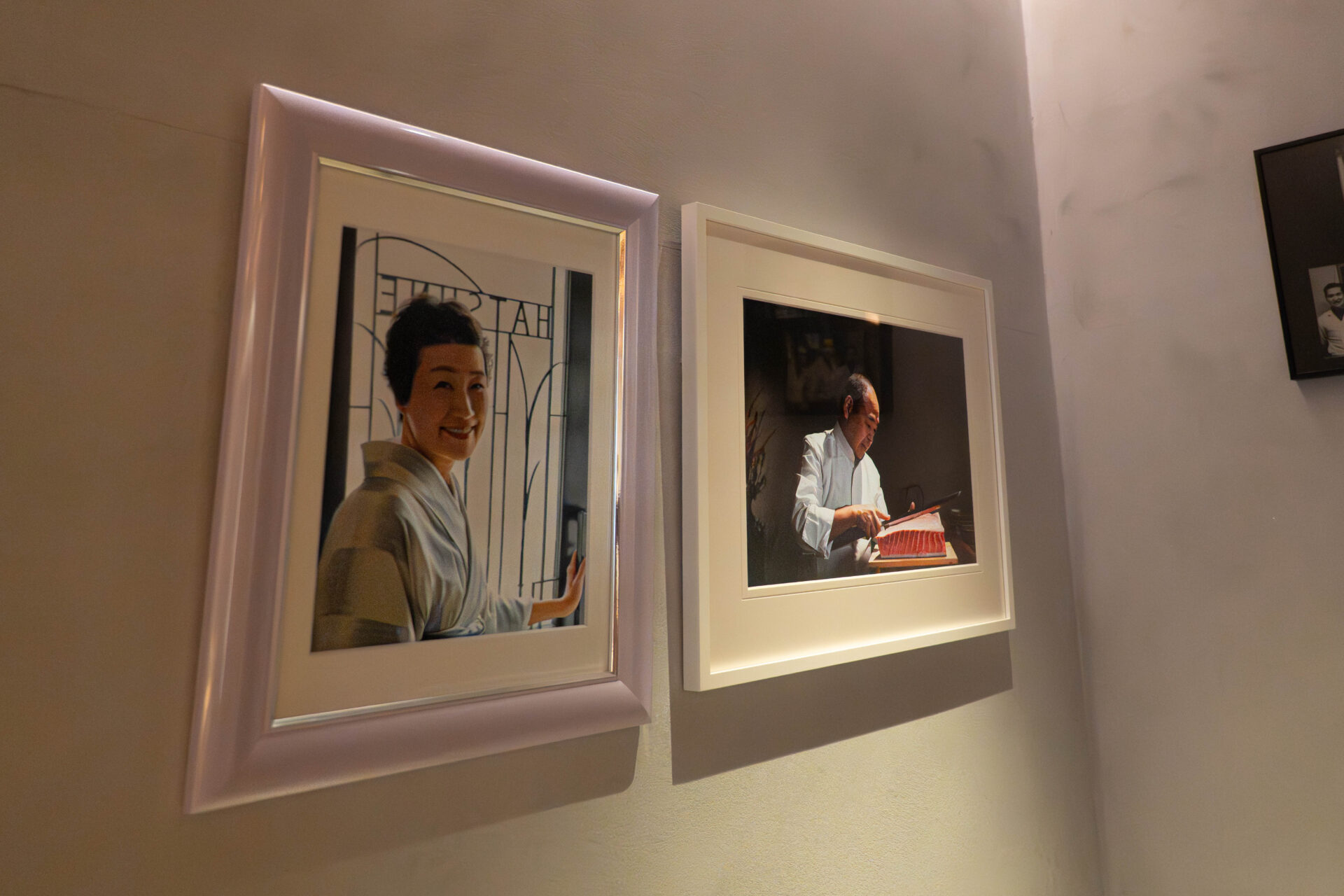
Fourth-generation owner-chef Masaru Nakaji trained at a kappo restaurant in Ginza after graduating from university, before succeeding the family business. The major turning point in his life came with his wife’s illness. Becoming deeply aware of the limited nature of time, he says his conviction to “serve the best sushi possible today” became even clearer.
Since then, he has refined every aspect of both cuisine and hospitality as an “experience,” elevating not only the sushi itself but also the cutting of freshly cooked rice, the storytelling, and the very moment of shaping each piece into part of the performance.
Nakaji speaks with warmth and ease, naturally filling the counter with laughter and anticipation. He transforms the very act of eating sushi into a special stage.
Even while maintaining two Michelin stars over many years, he is also notable for his commitment to putting younger chefs on the stage and nurturing them. While carrying the weight of a long-established restaurant, he never neglects passing the baton to the next generation. In both name and substance, he is one of Tokyo’s leading sushi masters.
Restaurant Ratings
Hatsunezushi (Kamata) has solidified its reputation not only through its long-standing acclaim within Japan, but also through its expansion overseas.
In Tokyo, it has repeatedly been selected for Tabelog’s “Sushi Hyakumeiten” and ranked in the Tabelog Awards, receiving Bronze in 2025 as well. These achievements testify to the high regard for its sushi technique, ingredients, and overall dining experience.
Meanwhile, its activity in Milan, Italy, has become a major step in raising Hatsunezushi’s international profile. From February to March 2023, it held a pop-up at RONIN in Milan, serving a small, reservation-only format for eight guests at a time from Tuesday through Saturday in the evening. Then, in January 2025, the permanent restaurant “Hatsune Sushi Milano” opened inside RONIN, marking the start of a full-fledged effort to bring an Edomae-style sushi experience into Milan’s food culture.
Even in this Milan expansion, Hatsunezushi’s style—its sushi rice, fish, gestures, omakase format, and hand-delivered nigiri at the counter—has been faithfully recreated, drawing attention from local gourmets and cultural enthusiasts, as can be seen through social media and reviews.
Across Japan and abroad, Hatsunezushi has established itself as a sushi restaurant that embodies both “tradition” and “innovation.” How the Edomae sushi techniques cultivated in Kamata are received and presented in the culturally different setting of Milan has itself become one of the pillars supporting the restaurant’s growing reputation.
Dining Prelude
Exterior & Entrance
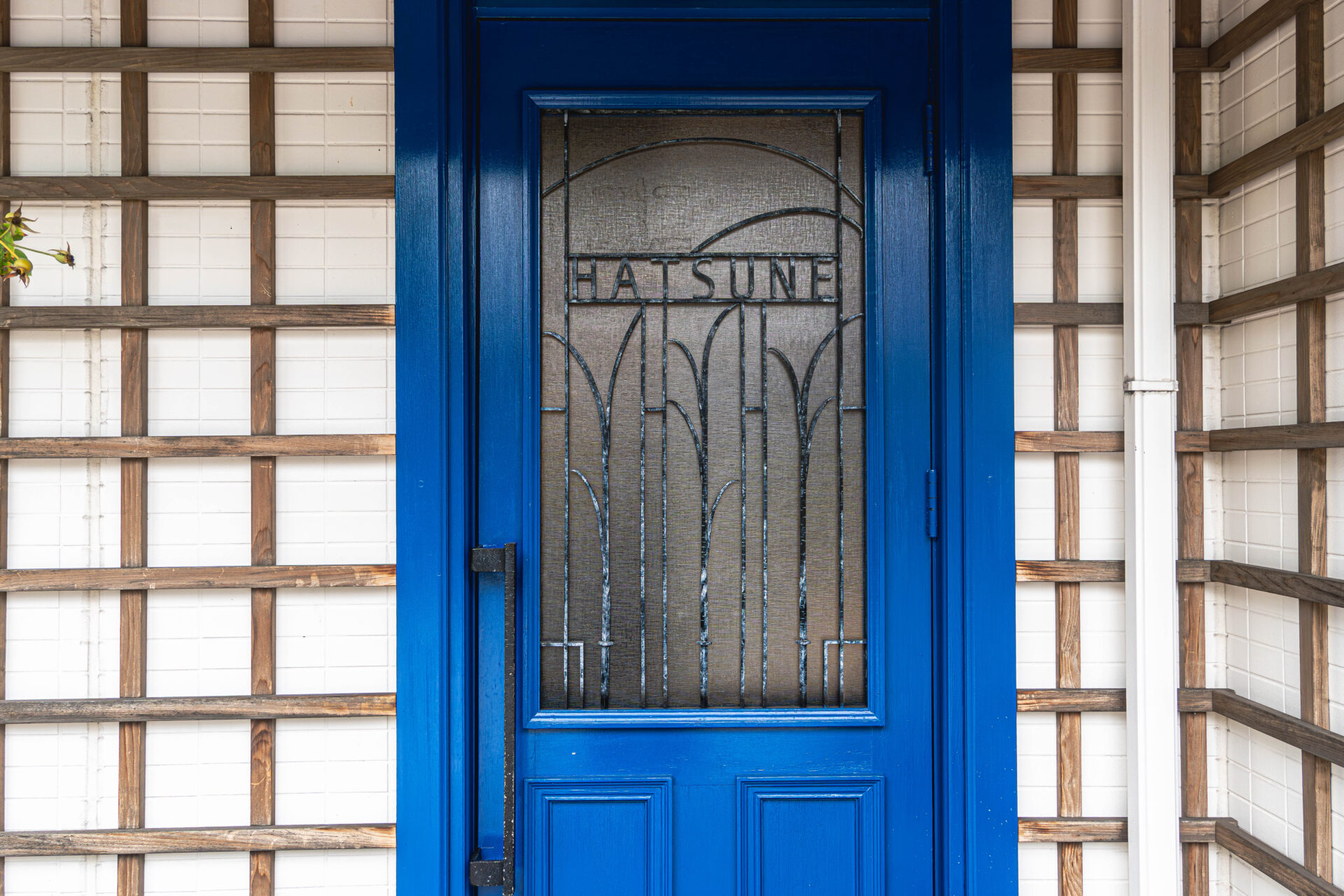
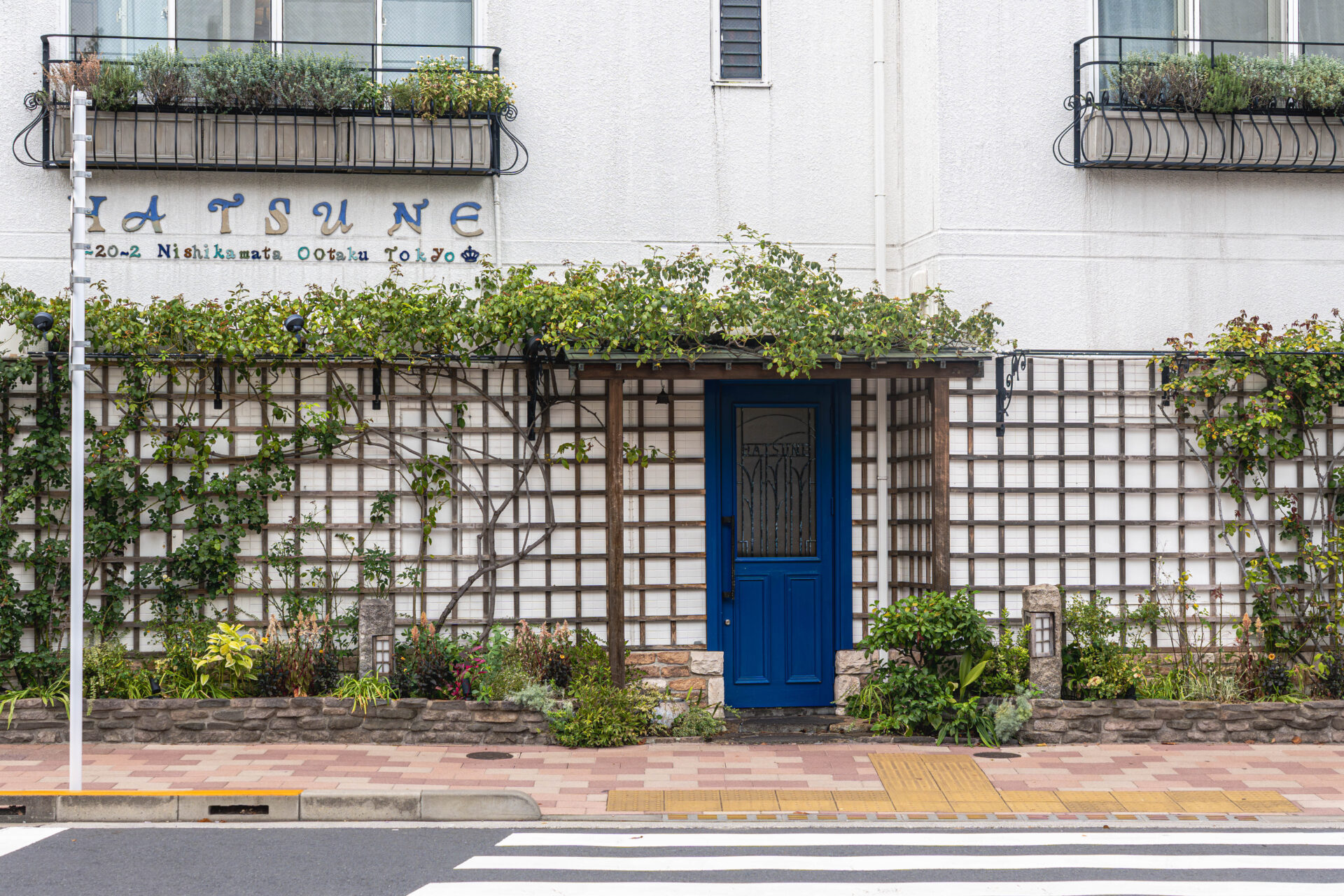
About a five-minute walk from Kamata Station. As you continue along a street where residential blocks and commercial areas blend together, a white-walled building appears. The official website also describes it as a “white-walled building surrounded by greenery,” and from the outside alone it already gives off a quiet presence.
The door incorporates a Western-style design, creating a somewhat modern impression that differs from the image of a traditional Japanese sushi shop. There is both charm and refinement in its appearance, and the facade alone signals that this is no ordinary restaurant.
The entrance area is understated rather than flashy, with a very calm atmosphere. The signage and lighting are restrained, blending into the surroundings while carefully asserting the restaurant’s presence. Warm-toned lighting softly illuminates the exterior walls, and reviews note that at night its elegance stands out even more.
Opening the entrance door, the frontage itself is not especially wide, but reviews mention a waiting space inside and a setup where guests remove their shoes before entering. Like a luxury ryokan or a traditional Japanese residence, it is designed so that the transition from “outside” to “inside” is accompanied by both tension and anticipation.
Dining Space
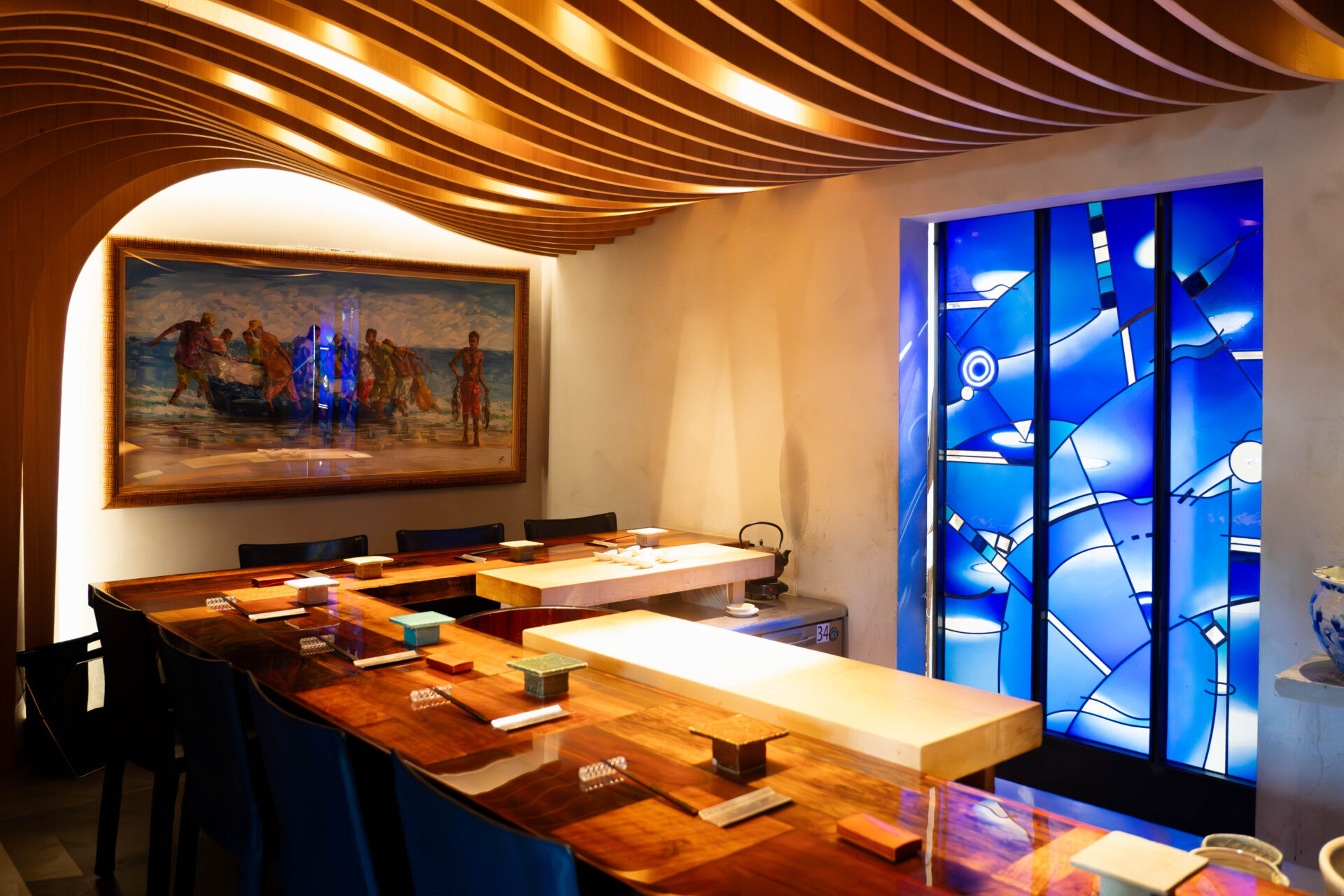
Inside, the restaurant is composed of two counter rooms. Named “Mountain” and “Sea,” both rooms center around L-shaped counters in spaces designed solely for the experience of eating sushi.
This time, we were seated in the “Sea” room. Soft lighting falls onto the pale wood counter, while the walls are adorned with motifs that evoke gentle waves. Stepping in from the quiet white exterior, an extraordinary stage unfolded inside. The steam rising from the hagama rice being cooked behind the counter, the cutting motions, and the shaping of each nigiri all took place within clear view, and every movement helped define the atmosphere of the entire room.
Where the “Mountain” room suggests a calm grandeur, the “Sea” room feels more open and somehow fresher. It is a stage designed to experience the flowing rhythm of nigiri from the very front row. Each piece served there deepened in flavor as it merged with the mood of the space itself.
Menu Presentation
Hatsunezushi’s newly introduced “Fifth Generation Omakase Course” is an initiative in which the younger chefs who will carry the next era take center stage within the restaurant’s more than 130-year history. Hayato Sunahara, Daiki Yoshike, Shogo Umeki, and Shuhei Takekawa stand at the counter to serve 15 pieces of nigiri and ara-jiru.
Beginning with the shari-kiri—seasoning freshly cooked hagama rice into sushi rice on the spot—the course carries the same theatrical quality as the head chef’s course and immediately draws guests in. Early on, classic sushi staples such as lean bluefin tuna, chutoro, kohada, and aori-ika appear in succession, while seasonal pieces like kobako-gani and kasugo-dai are woven in to shape the flow. Every piece of nigiri is handed directly to the guest, allowing them to taste that fleeting moment of umami with temperature and humidity taken into account.
Priced at 6,600 yen (tax included), it is more approachable than the master’s course. Even so, the flavor, gestures, and composition are in no way simplified; the course conveys the seriousness of the younger chefs. Inheriting the skills that support the tradition of this long-established restaurant, it is also a course that can be seen as a challenge undertaken with the future of Hatsunezushi in mind.
The Dishes We Actually Tasted
The Opening Begins with Shari-kiri
The course began the moment the lid of the hagama was lifted.
The one in charge was the newest young chef among the fifth generation. The aroma and steam of the freshly cooked rice rose all at once, spreading across the entire counter.
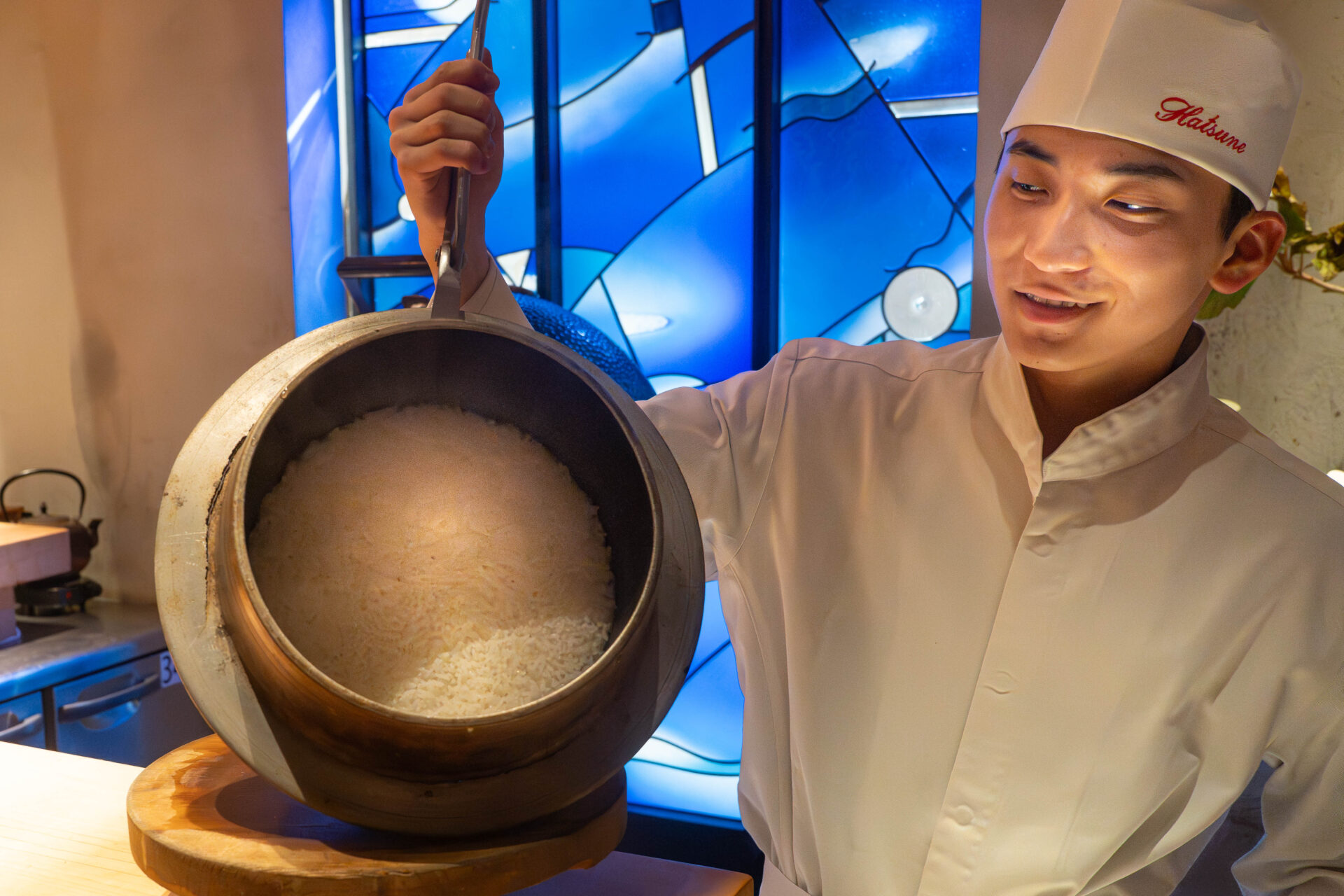
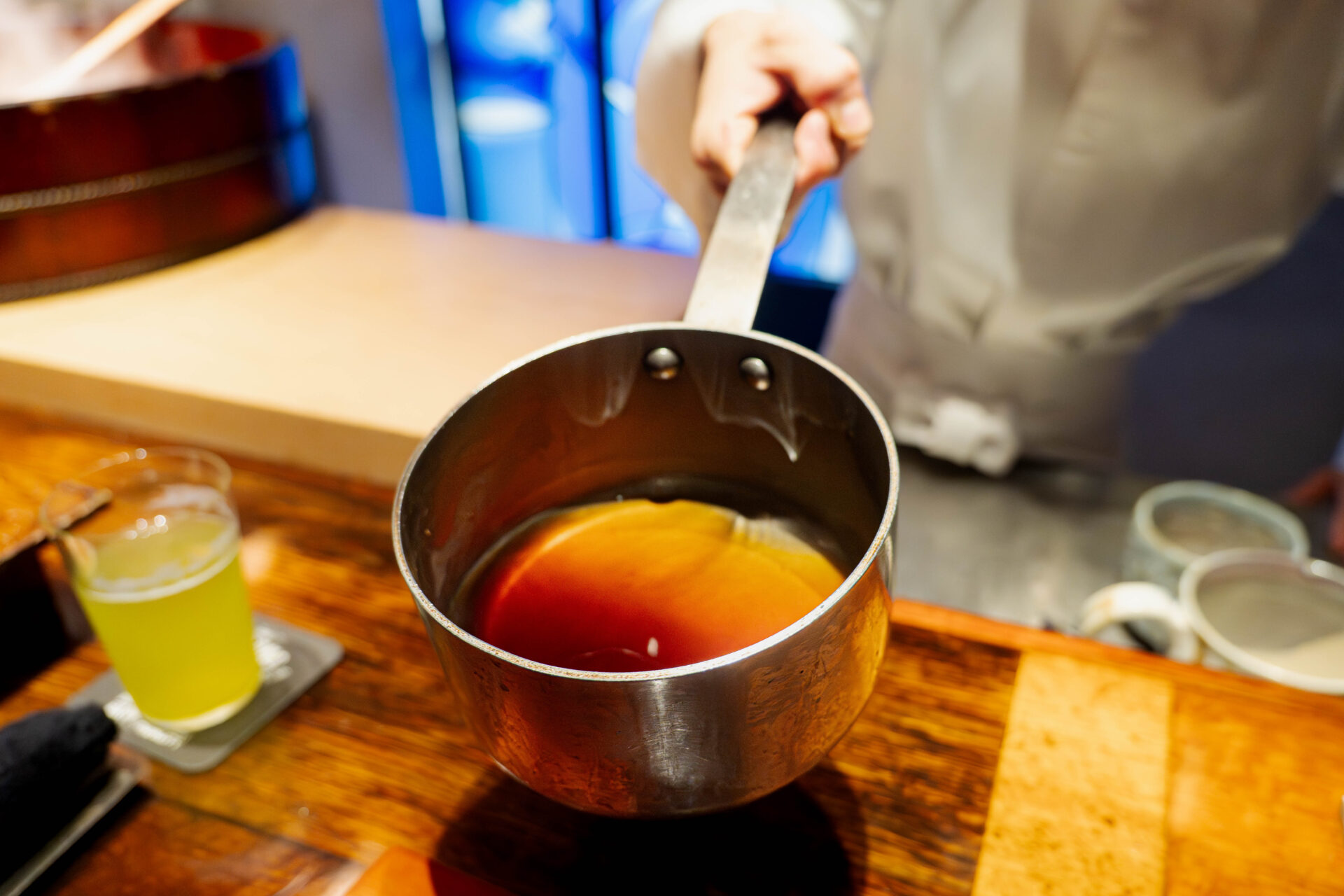
For the shari at Hatsunezushi, they use a vinegar aged for four years by Yokoi Vinegar Brewery in Shin-Kiba. It starts with a sharp edge of acidity, then gradually becomes rounder over time. Anticipating that change, the rice is carefully transferred to the hangiri immediately after cooking, and the vinegar is folded in with cutting motions.
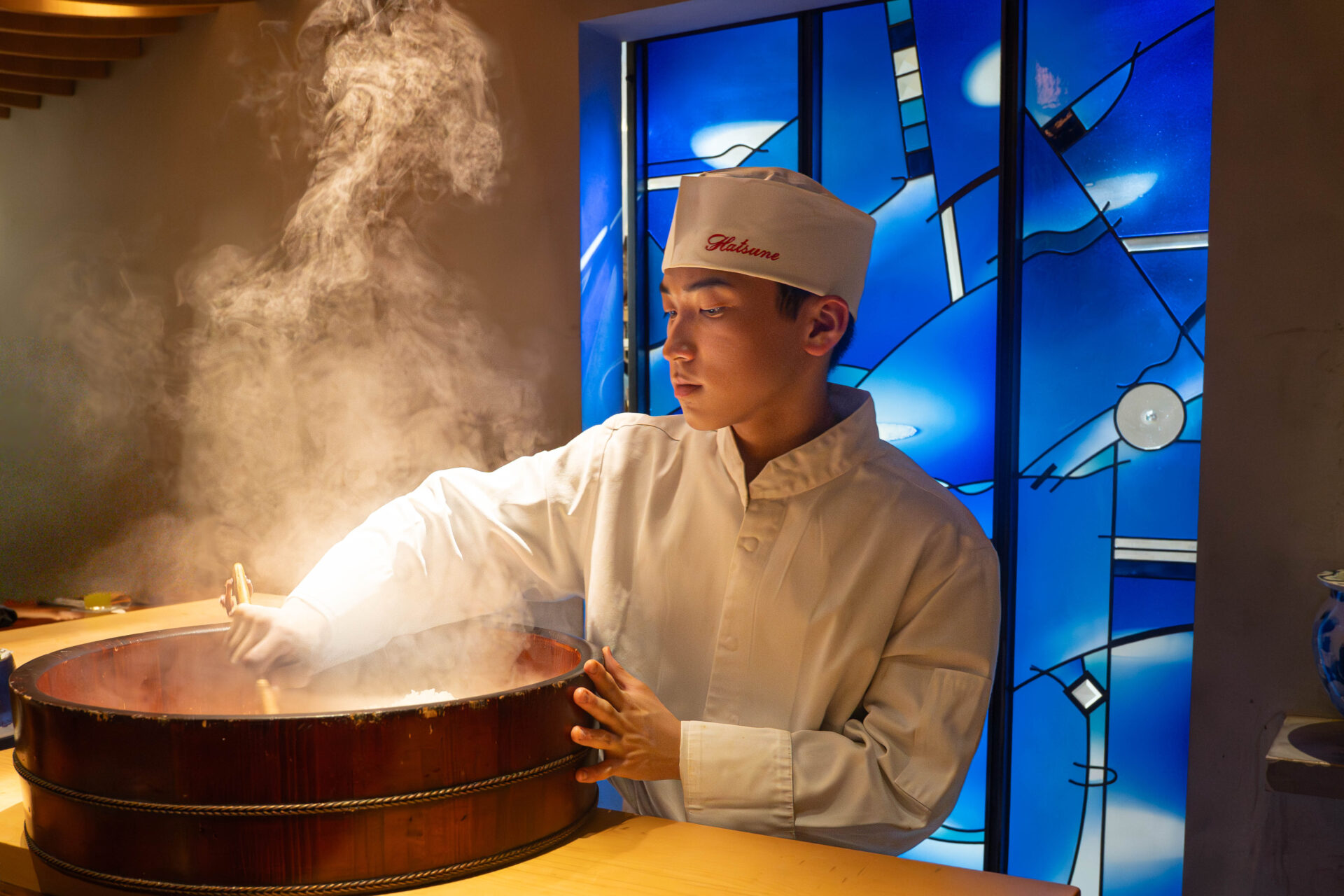
The cooking equipment itself is also distinctive. Originally a foreign-made barbecue device, it was specially adapted for rice, capable of handling temperatures from 400 to 700 degrees and cooking the rice in only about 10 minutes. With a structure resembling a steaming kettle, each grain stands upright, and when vinegar is added, layered aromas and steam rise three-dimensionally into the air.
This shari-kiri before the nigiri even begins is itself part of the stagecraft. The care and tension involved in preparing the rice—the very foundation of sushi—vividly announce the opening of the course.
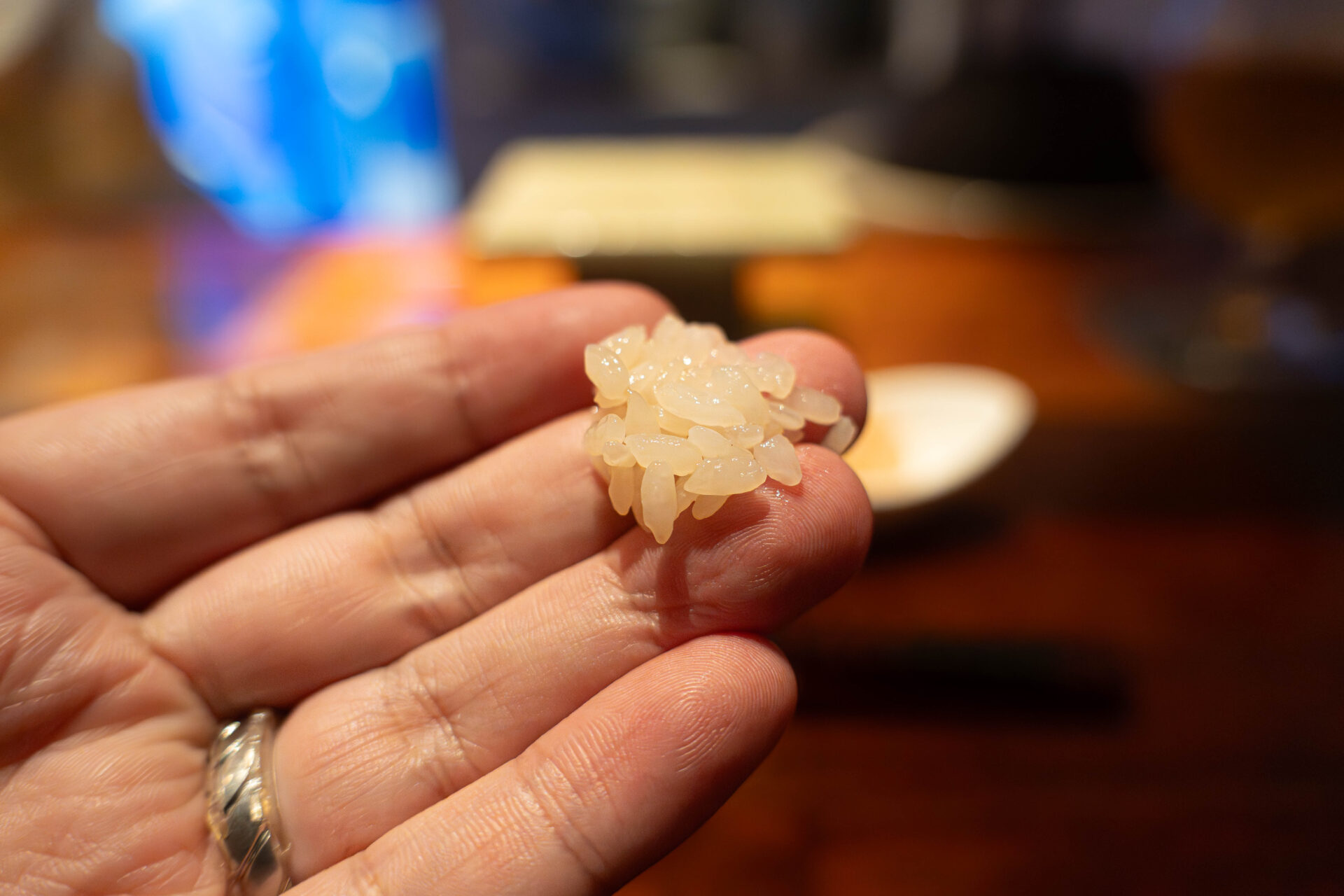
Right after the shari-kiri is finished, each guest is given just a small pinch of the freshly completed sushi rice placed on their palm. The grains still carry warmth, transmitting their heat into the hand, while the aroma of vinegar and rice rises toward the nose.
What you taste in this moment is “the flavor of the shari itself,” still untouched by fish. The lift of each grain and the acidity of Yokoi’s four-year-aged vinegar spread softly, and the sweetness of the rice follows as you chew. It is a presentation that lets you physically understand how the very foundation of the sushi is constructed.
Before moving on to the first piece of nigiri, guests are first invited to confirm the “taste of the foundation.” With that conviction in mind, the story of the sushi begins from here.
Miyagi Prefecture Shiogama Tuna
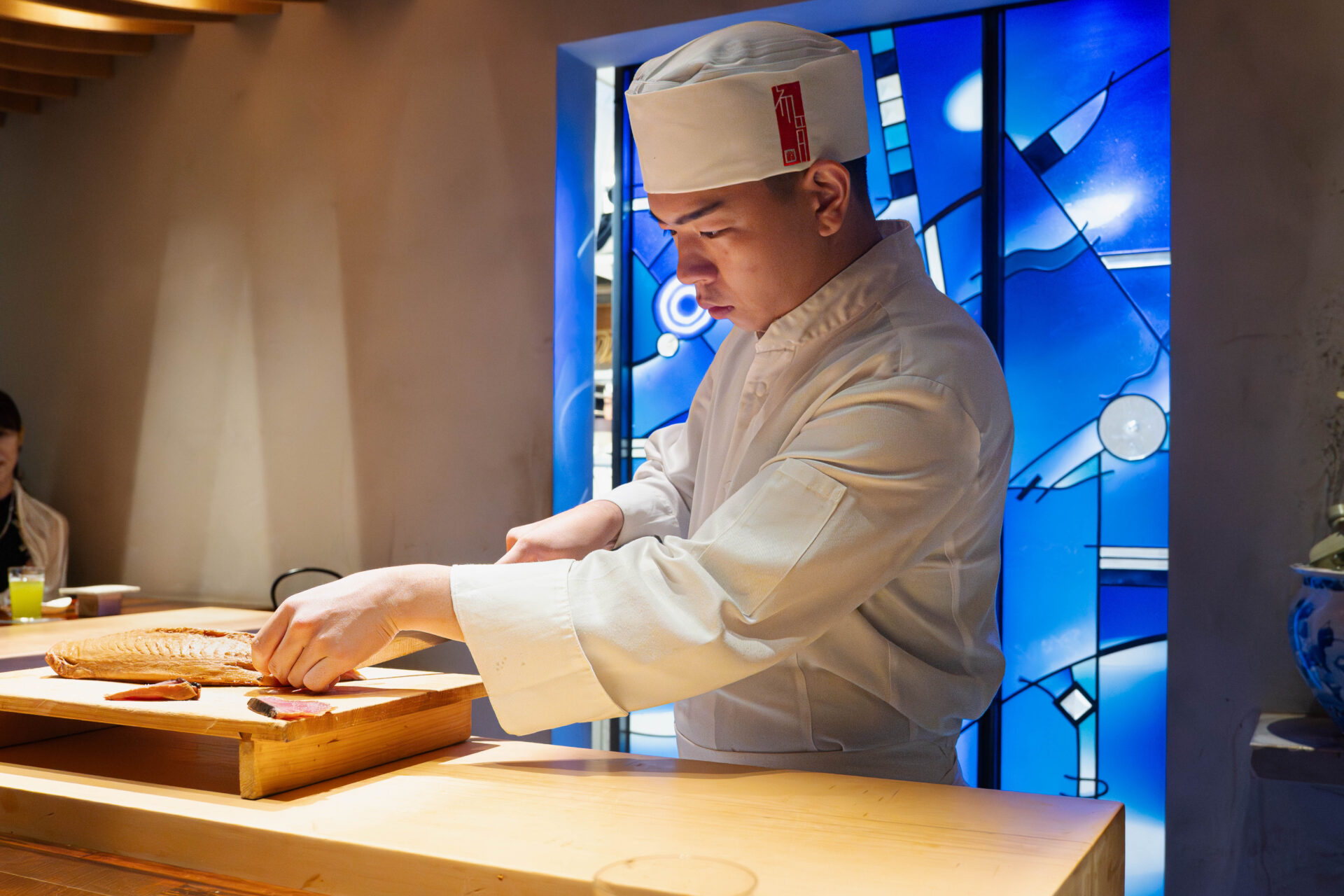
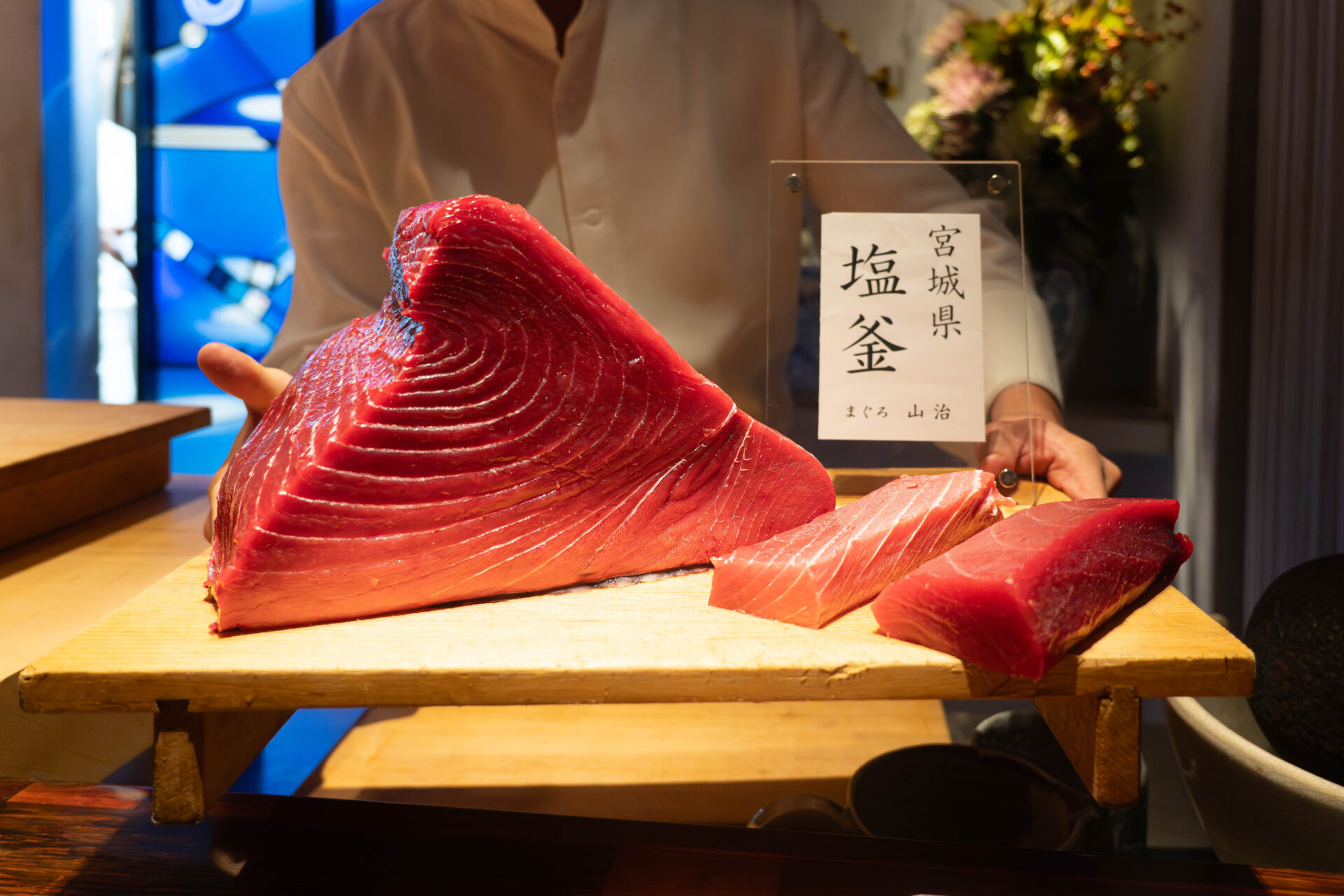
The first nigiri of the day featured tuna delivered from Shiogama in Miyagi Prefecture. A large block was placed boldly on the counter, and the act of slicing it was itself one of the highlights.
Tuna is a migratory fish, with an average body temperature said to be around 28–30°C. On the other hand, when stored, it is kept in refrigeration at around 1–2°C, which causes the fat to firm up. At Hatsunezushi, the plate is therefore warmed to about 60°C, and the tuna is placed on top. This gently melts the fat, allowing the fish’s natural umami and sweetness to emerge so that it can be eaten at its most delicious temperature—or so it is explained.
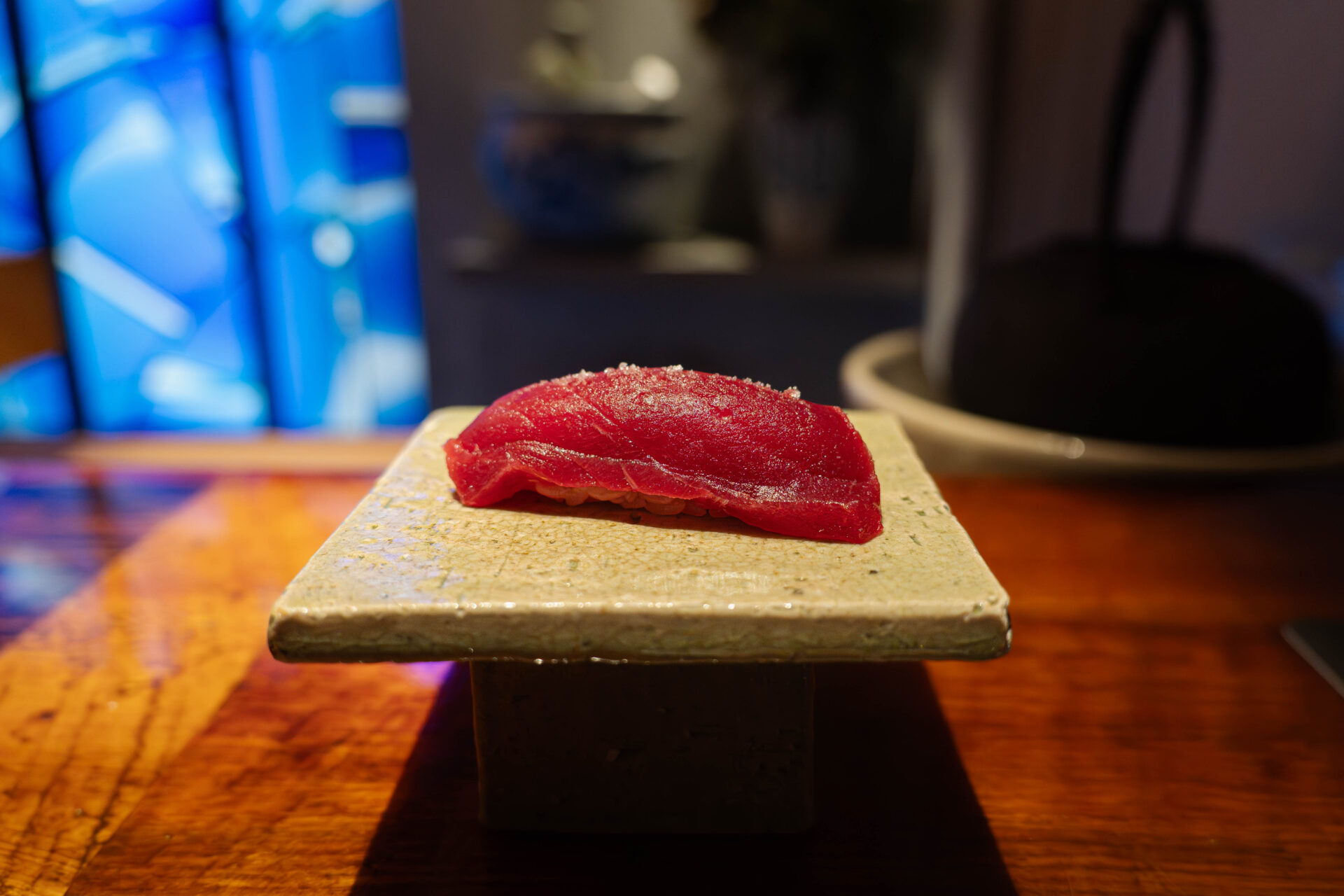
Three Preparations of Tuna — Akami, Chutoro, and Ohagi
The first piece served was lean tuna, or akami. Prepared simply with salt, the tuna from Shiogama in Miyagi lets you taste the ingredient’s natural aroma directly. As it melded with the warmth of the rice, the acidity of the vinegar and the grains of salt made the umami of the akami stand out with clarity.
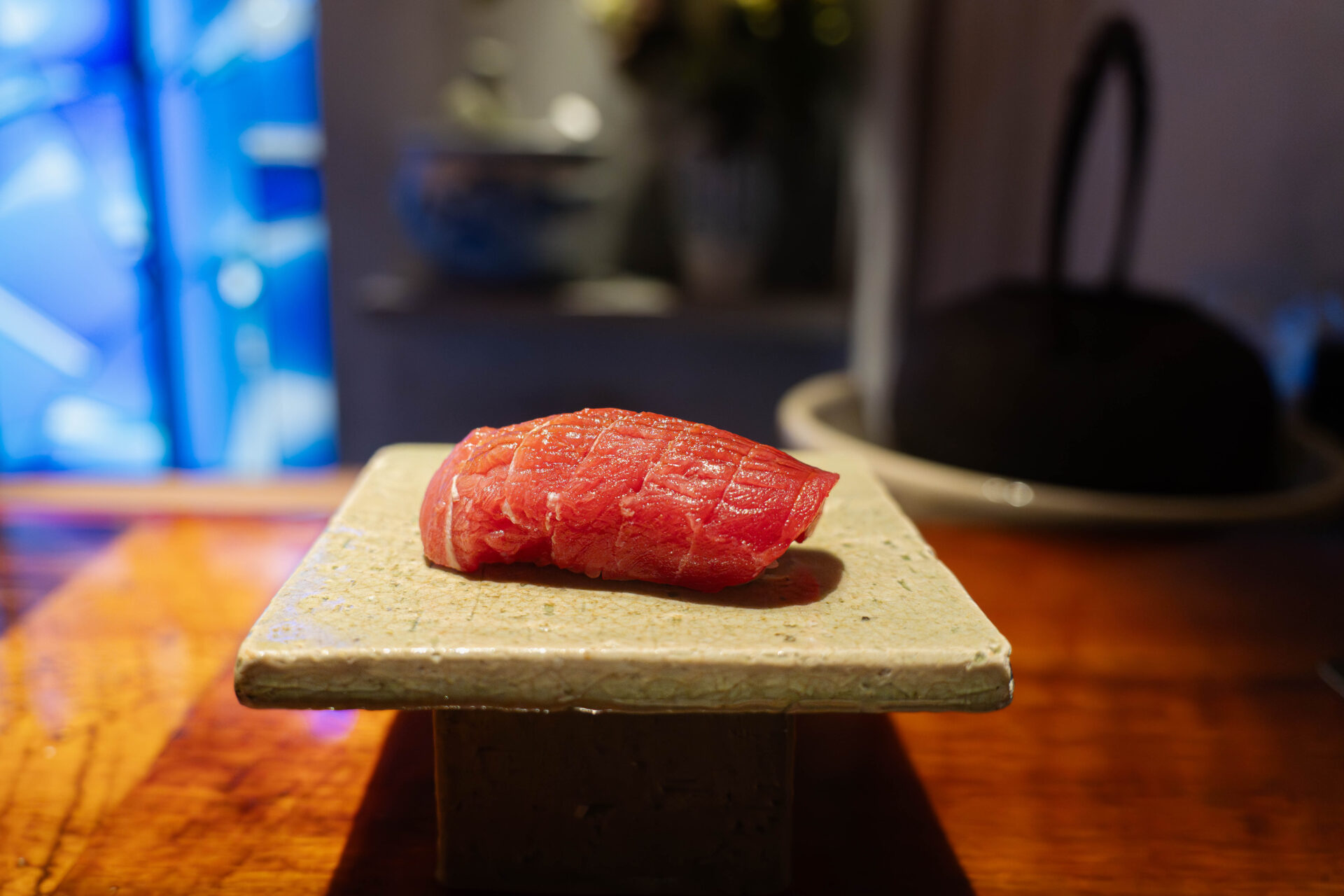
Next came chutoro, this time with soy sauce. Compared to the akami, it carried a moderate layer of fat, and the sweetness spreading across the tongue combined with the fragrant aroma of soy sauce to create a different kind of depth.
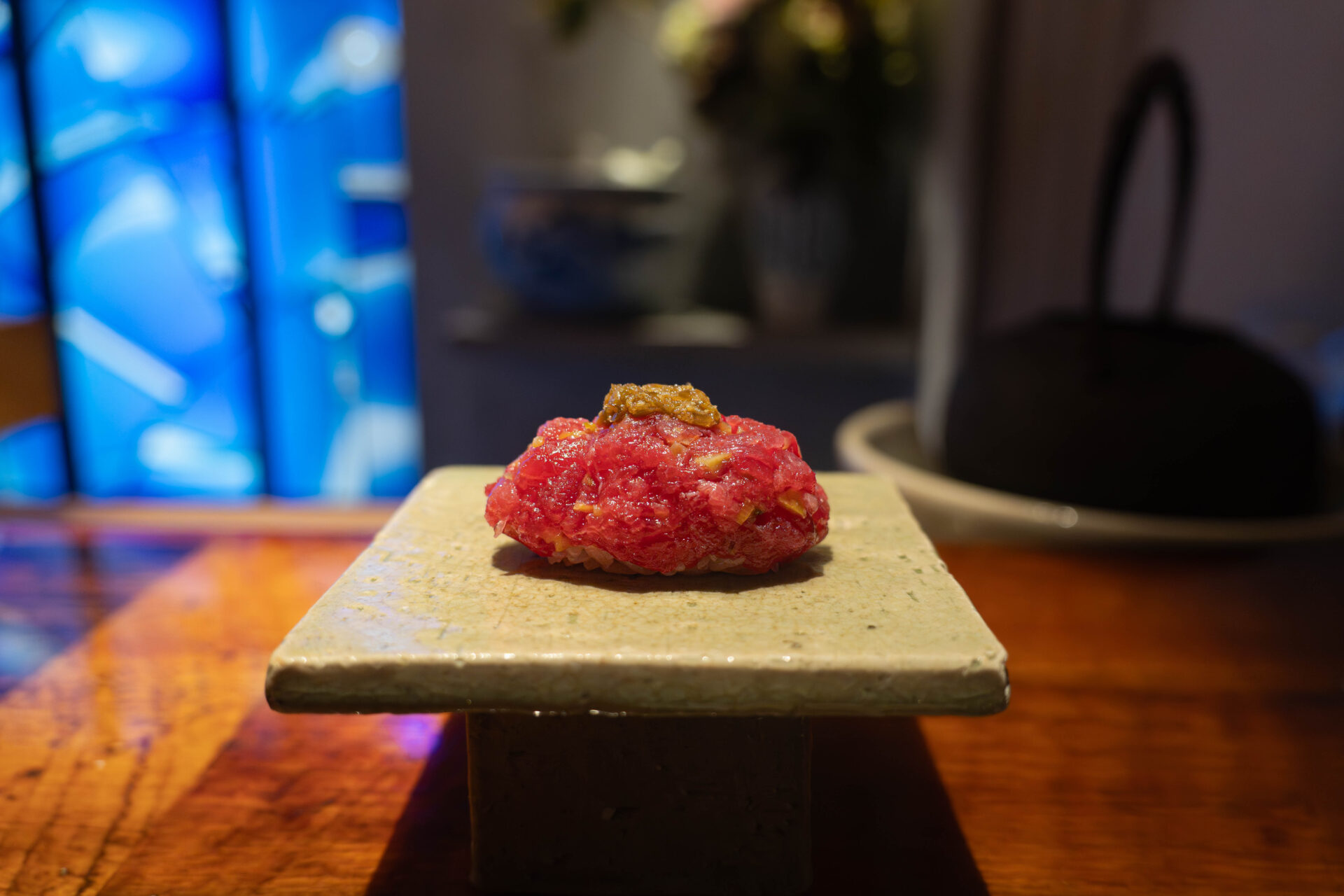
The third piece was “ohagi,” made by chopping together the trimmings of akami and chutoro. Its sticky, rich texture was accented by smoked iburigakko from Akita placed on top, layering the power of the tuna with a gentle smokiness in a single bite.
By presenting tuna in three stages, the course made you feel the many different expressions contained within the same fish.
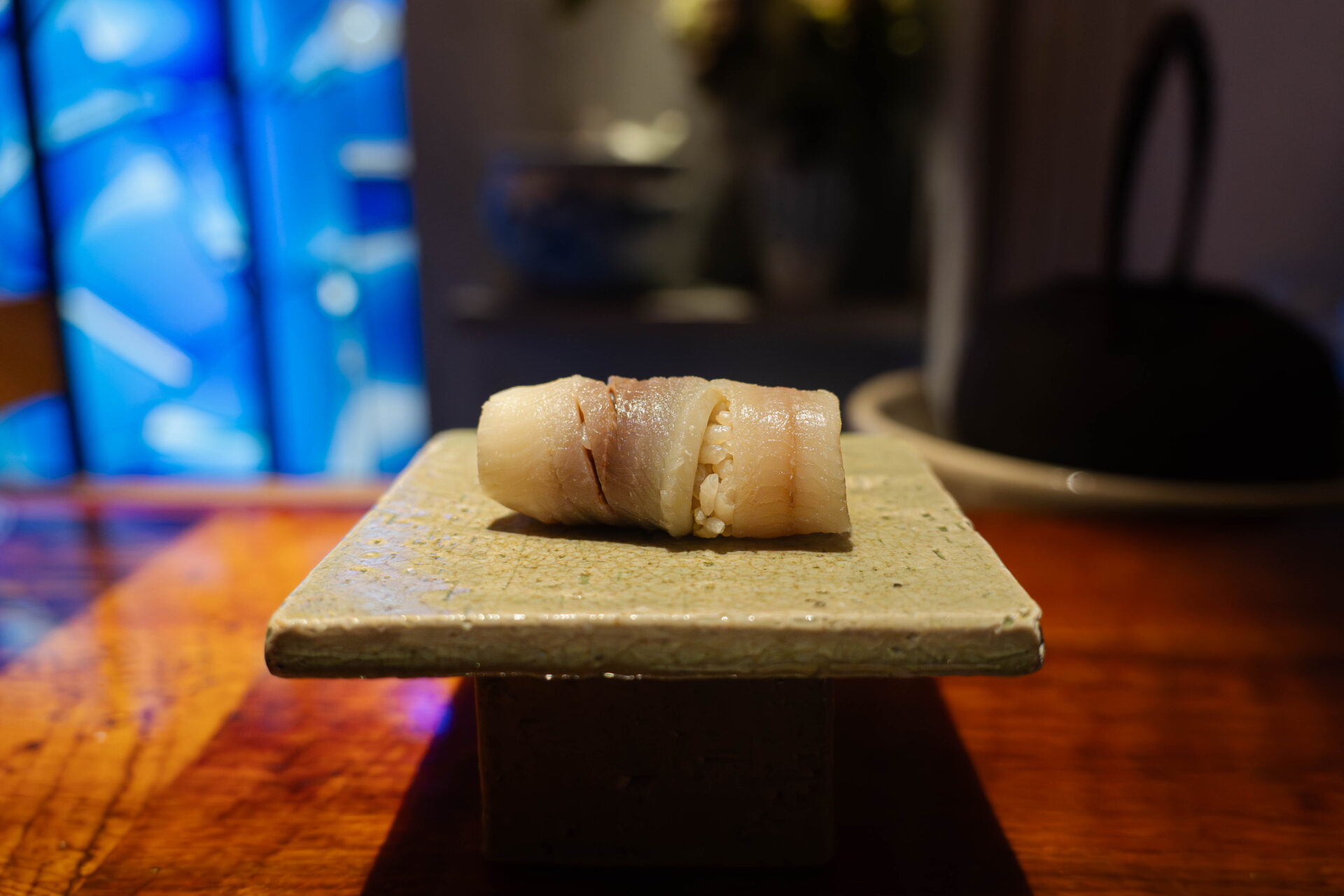
Kohada
Next came kohada, one of Hatsunezushi’s specialties.
Because it is a fish with many fine bones, it is cured and aged so that the bones are transformed into umami, prepared in a way that lets you savor even the calcium itself.
What was especially striking was the attention paid to the way it was formed. Usually kohada is often shaped with the skin side facing upward, but here it is served with the flesh side facing out. This, it is explained, is meant to avoid leaning too heavily on the flavor of the skin and instead bring out the harmony of the flesh’s sweetness and the acidity more clearly.
The plate is also slightly warmed, so that the fat softens gently at the moment it reaches the mouth, allowing the fish and shari to blend naturally. The accumulation of delicate preparation was condensed into this single piece.
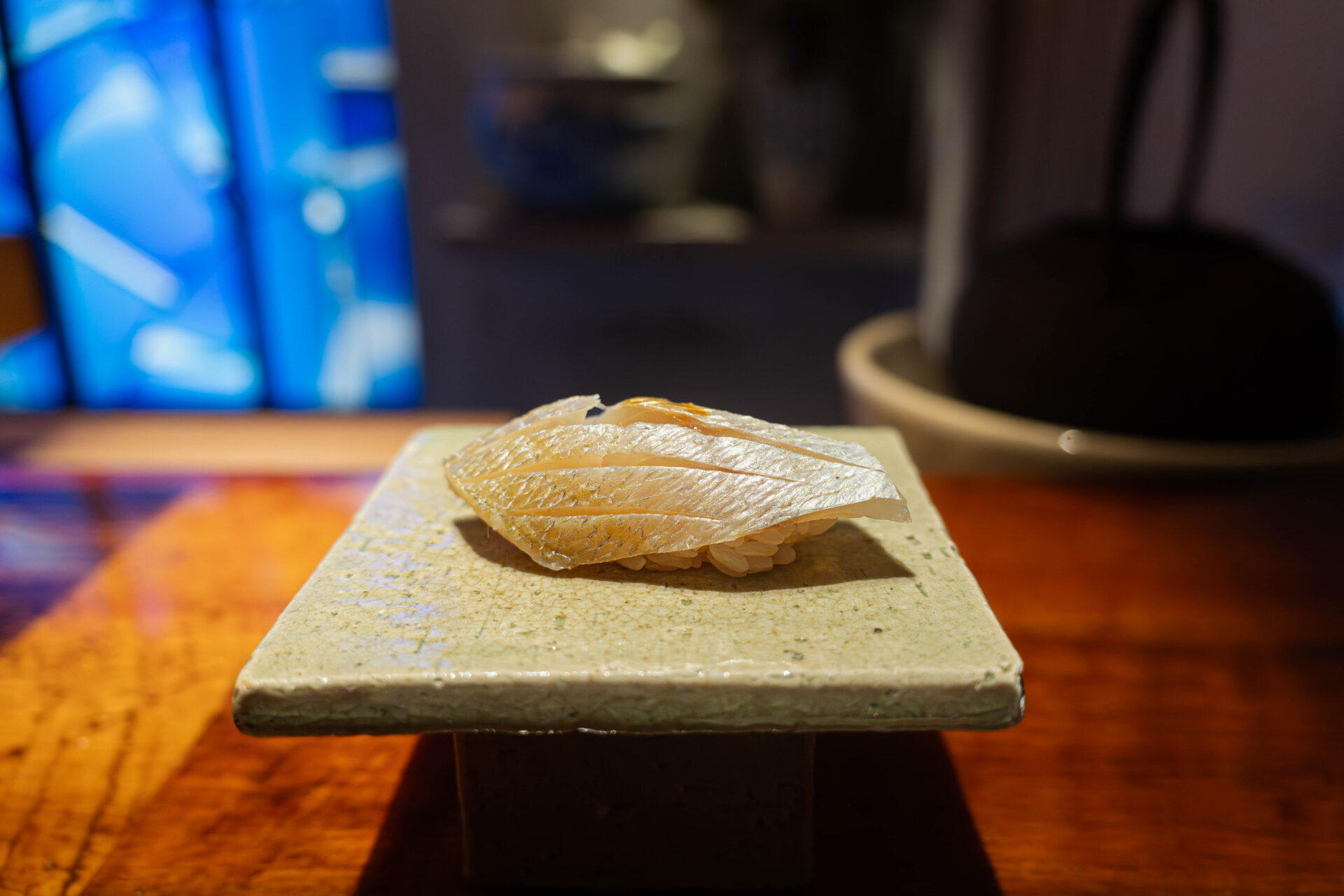
Kasugo-dai
The next piece to appear was kasugo-dai. Because it is still a small sea bream, it is not subjected to overly complex technique, but simply prepared with a gentle application of heat.
By avoiding unnecessary intervention, the delicate sweetness of the flesh and its faint aroma are brought out just as they are. It was a clean, straightforward piece made possible precisely because of the fish’s small size.
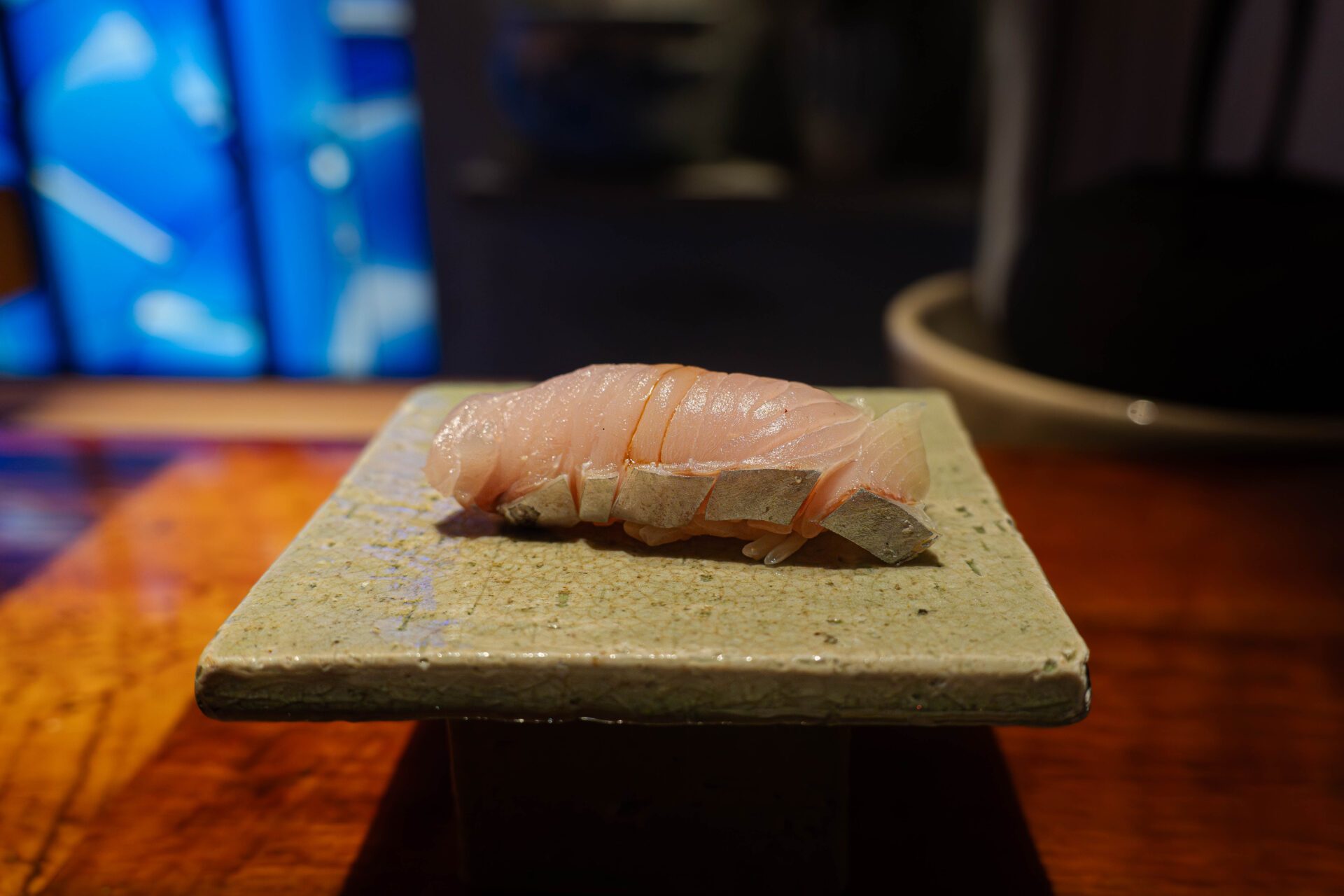
Spanish Mackerel
Next came Spanish mackerel.
Though it was a large specimen of around 5.5 kilograms that day, it was still slightly early in the season and the fat was said to be somewhat restrained. To compensate, the skin was grilled a little more assertively to add aromatic depth and bring out the subtle nature of the flesh.
The aroma rising from the seared skin spread even before it reached the mouth, and the more you chewed, the more a gentle sweetness emerged from the mild flesh. It was a piece that felt very much like Hatsunezushi—judging the condition of the ingredient and serving it in the day’s ideal form.
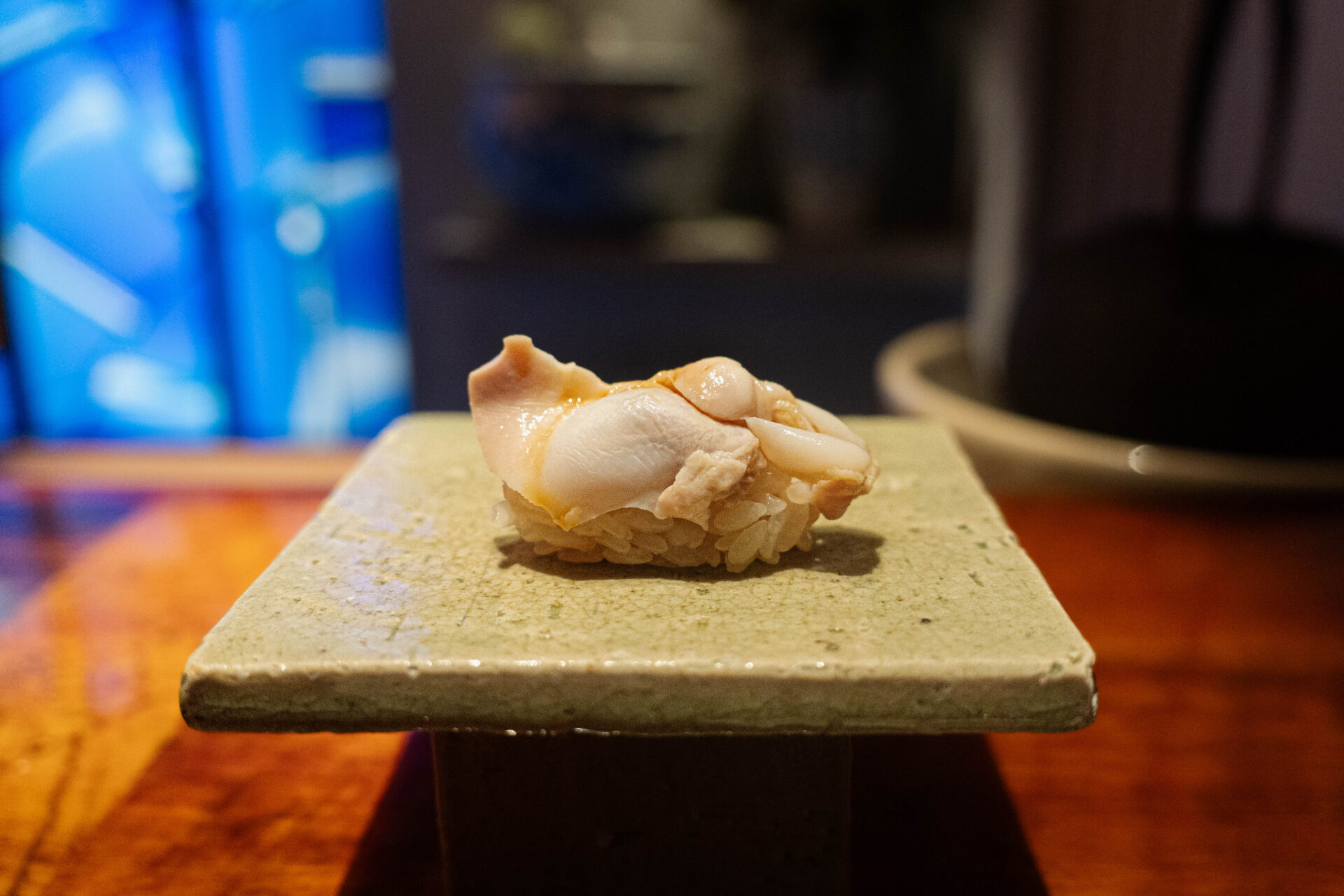
Hamaguri Clam
Next came hamaguri clam.
The first thing that stood out upon eating it was the plump thickness of the flesh. There was the springy texture unique to shellfish, and an oceanic aroma that slowly spread the more you chewed. The acidity of the shari sat alongside it, creating a finish that never felt heavy.
It was a simple yet powerful presentation of a piece that can be called one of the icons of Edomae sushi. A classic serving in true Hatsunezushi style.
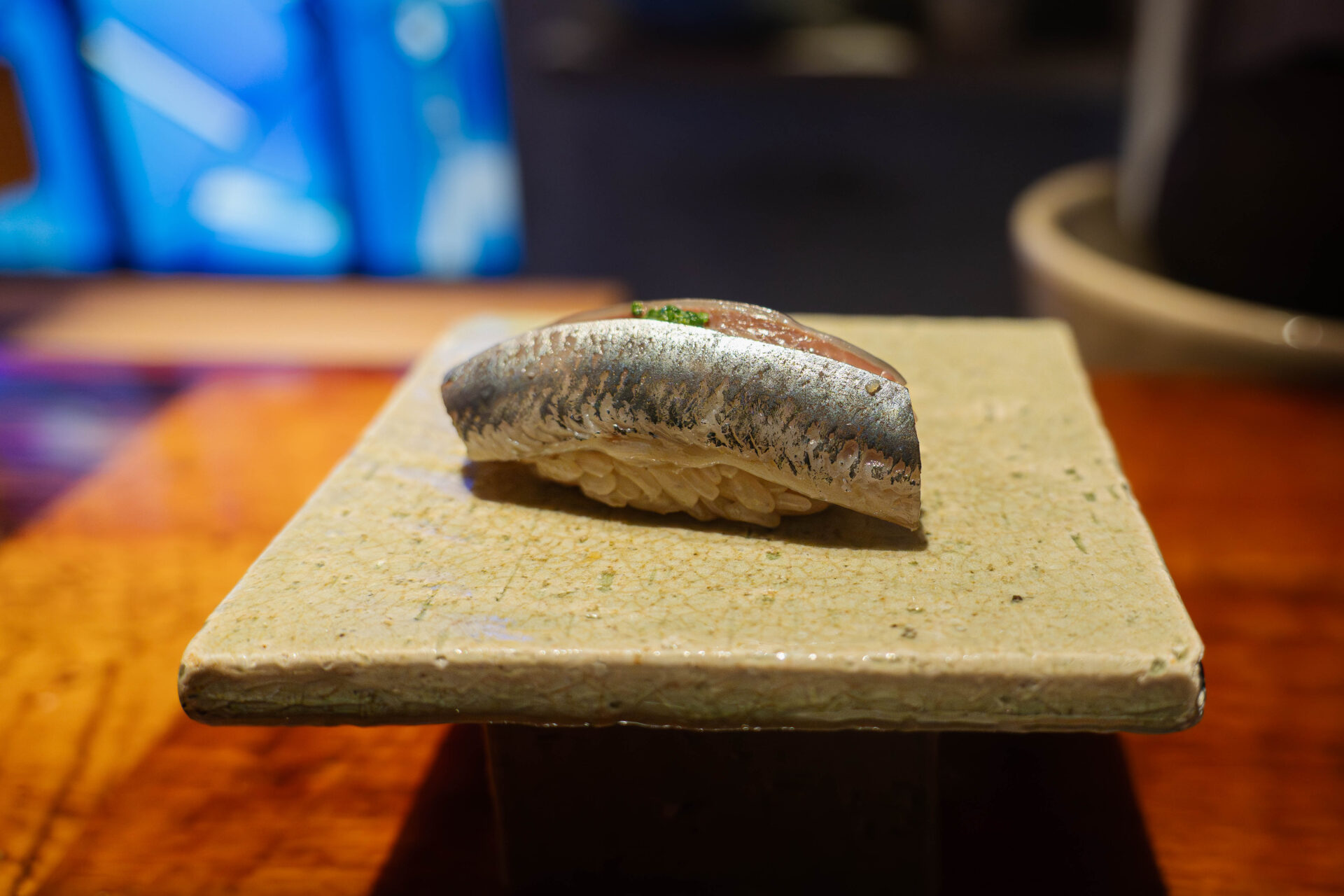
Sardine
Next to appear was sardine.
On top of the shimmering silver-skinned flesh was a garnish of scallion and ginger. The rich umami of the fatty sardine overlapped with the freshness of ginger and the aroma of scallion, creating a distinctive sense of dimension.
Rather than leaving the intensity of the fat untouched, the condiments were used to bring the balance into line. Simple though it was, it was a piece that revealed sharp skill.
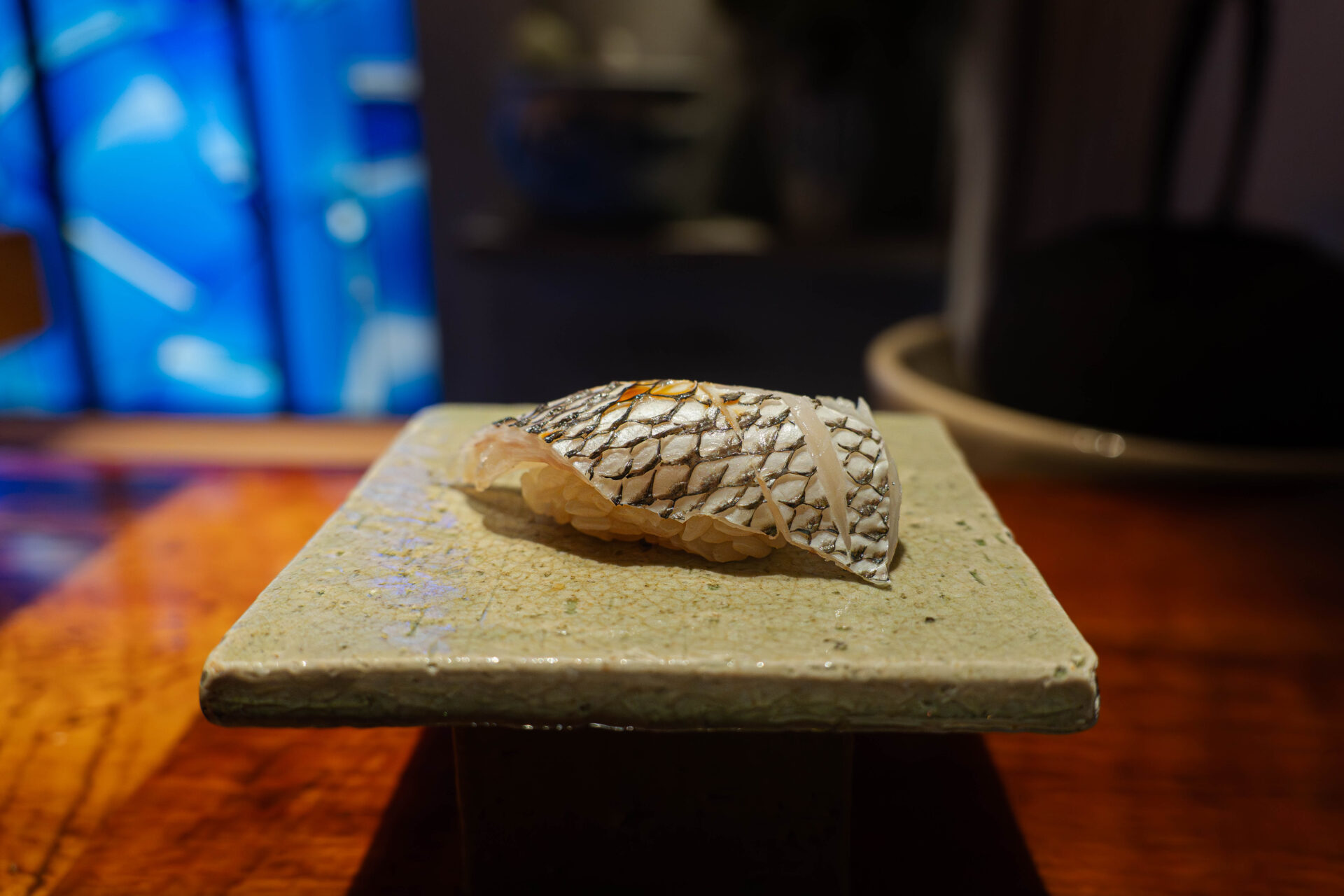
Meichidai
Next came meichidai.
Its silvery white scale pattern was beautiful, and a light sear on the skin brought out a fragrant note. Though the flesh had a firm texture, sweetness spread with each bite, and the moderate fat softened the finish.
It was a piece that combined visual elegance with depth of flavor, becoming a memorable accent within the flow of Hatsunezushi’s course.
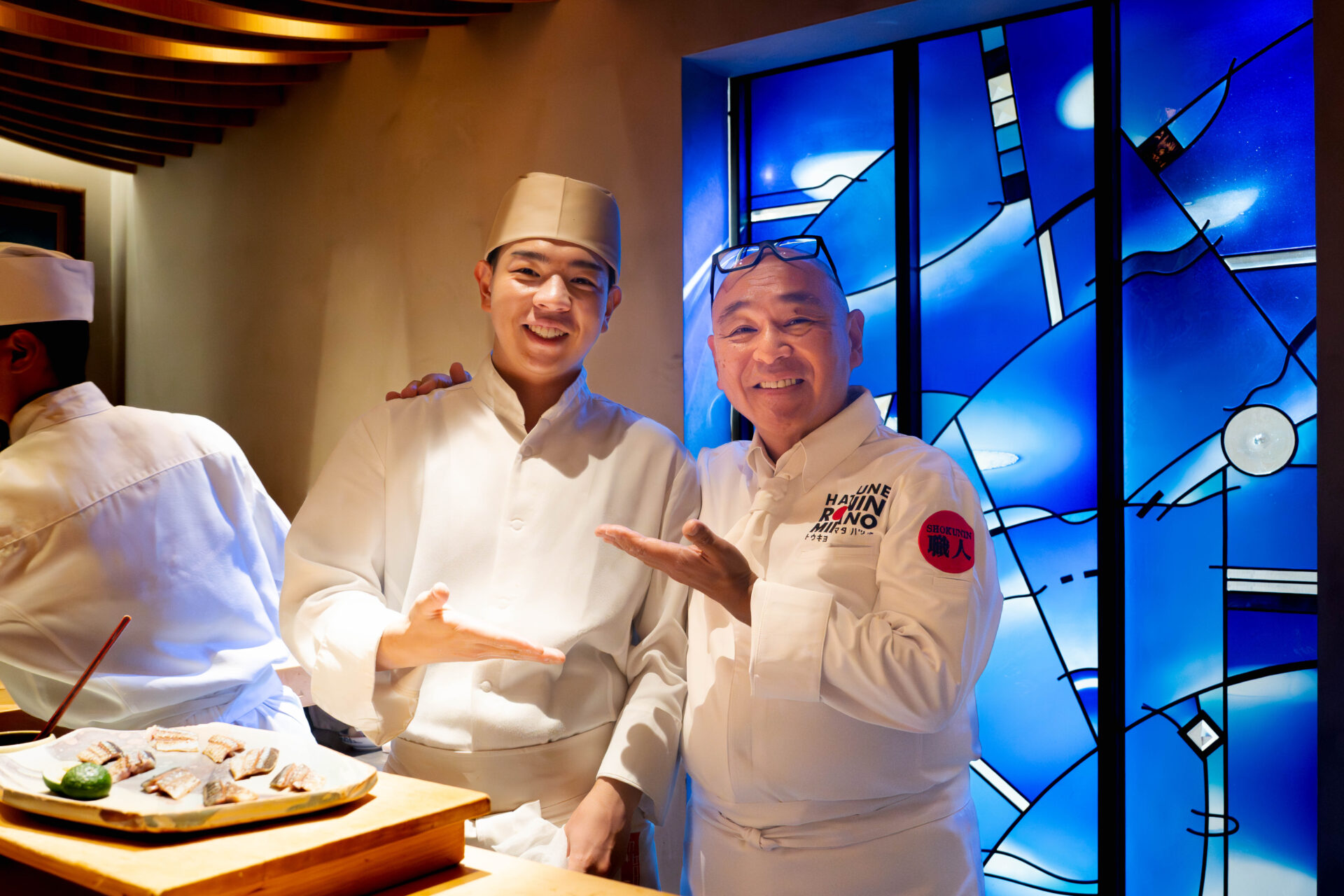
The Master Appears
At this point came an unexpected surprise.
The master of Hatsunezushi appeared to greet us. He is not always present, so this was a fortunate coincidence. He kindly agreed to photos and even personally explained the next ingredients to us.
There was a warmth that seemed to envelop the whole restaurant, along with a sense of assurance backed by many years of experience. The very moment became something special simply because the master himself stepped into the flow of the meal. It was an unexpected moment that naturally brought a smile to our faces as well.
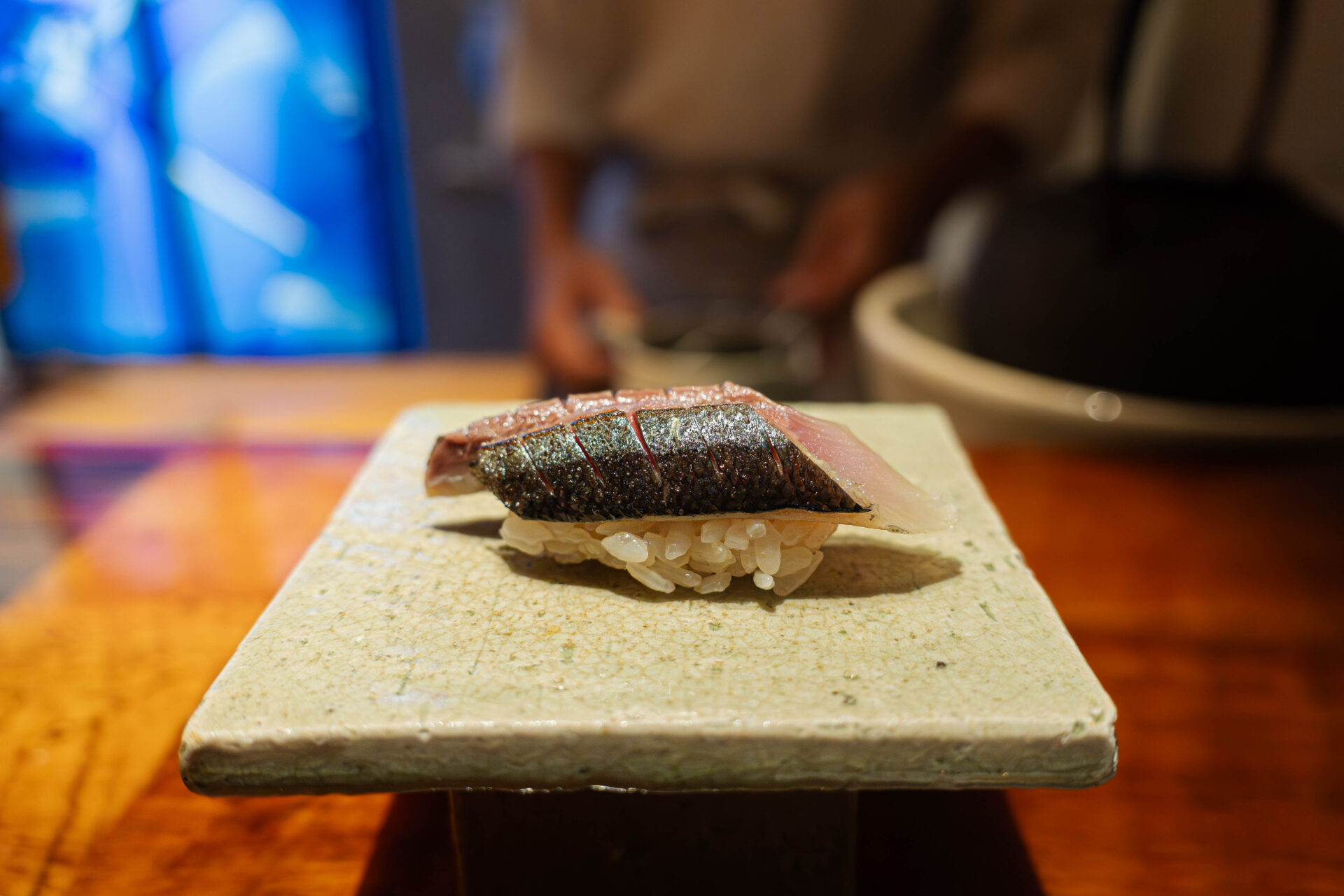
Pacific Saury
Served here was Pacific saury.
We were told that this year had been a plentiful catch and the fish was richly fatty, so it was lightly salted and then gently seared to leave a touch of fragrance. The thickly cut flesh had strong presence, and the more you chewed, the more the sweetness of the fat and the aroma of the sear spread together.
It was a luxurious piece that captured the power of the season exactly as it was and translated it into sushi.
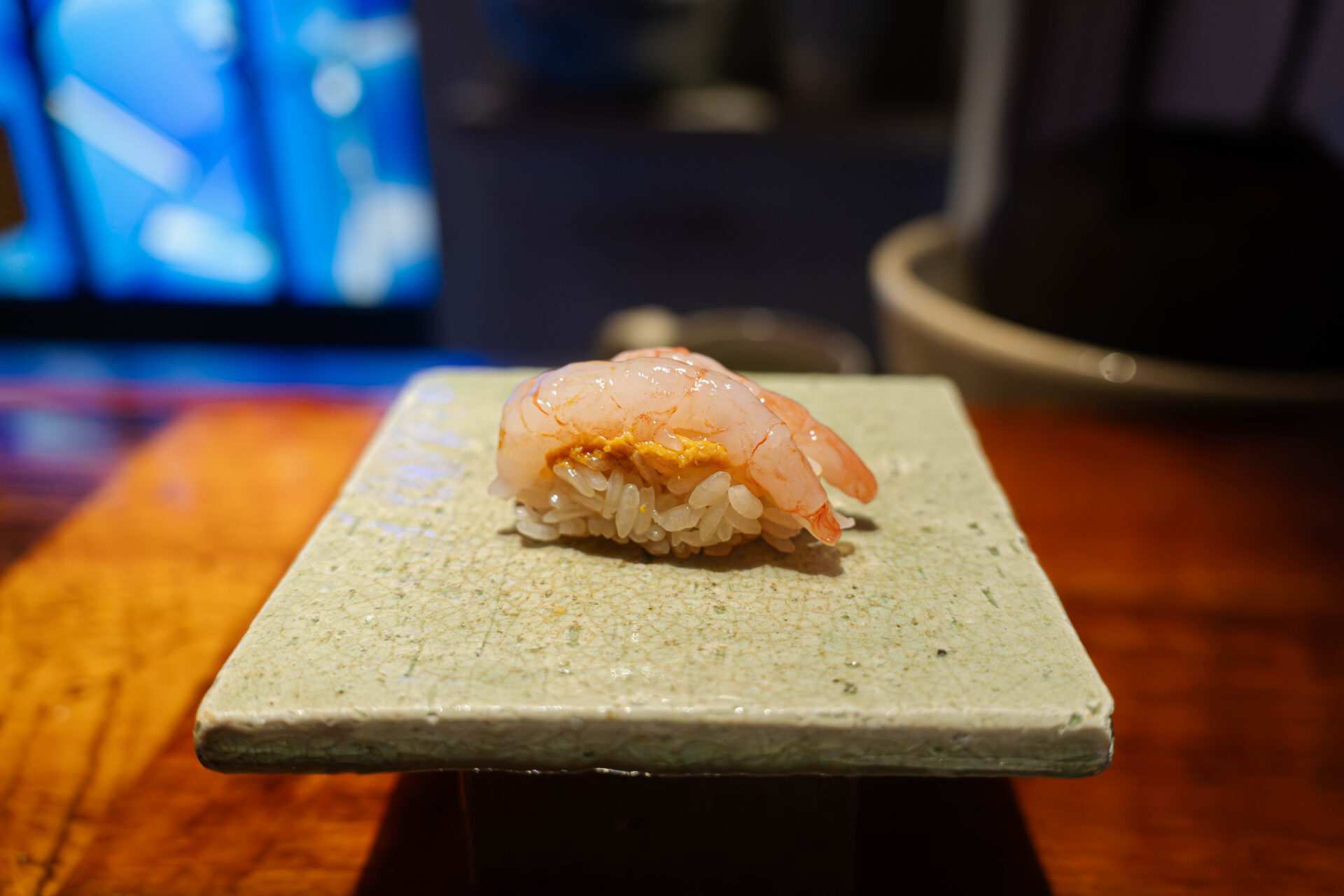
Sweet Shrimp
Next to appear was sweet shrimp.
Underneath the flesh, the shrimp miso had been lightly cooked and tucked inside. The sticky sweetness of the shrimp overlapped with the rich umami and roasted character of the miso, creating a multilayered taste in a single bite.
Rather than being simply sweet, the richness brought out by the application of heat tightened the finish. It was a piece in which a small idea greatly enhanced the presence of the sweet shrimp.
Bonito
Next came bonito so richly fatty that white fat was visible in the flesh.
For the zuke, Hatsunezushi uses a soy sauce it has preserved for 22 years. Every single day, they continue the process of heating it with 5% salt and 5% sake added, and as moisture from the fish seeps into it over time, the soy sauce itself comes to carry a deep aroma almost like scorched oil—or so we were told.
To finish, it was topped with a condiment of chopped scallion and salted wasabi, which served to tighten the richness of the fat.
The moment it entered the mouth, layers of dense umami rose up, and the memory of flavors cultivated over many years resonated vividly.
More than just a piece of sushi, it was one that made you feel the very path Hatsunezushi has taken, and it left a powerful impression.
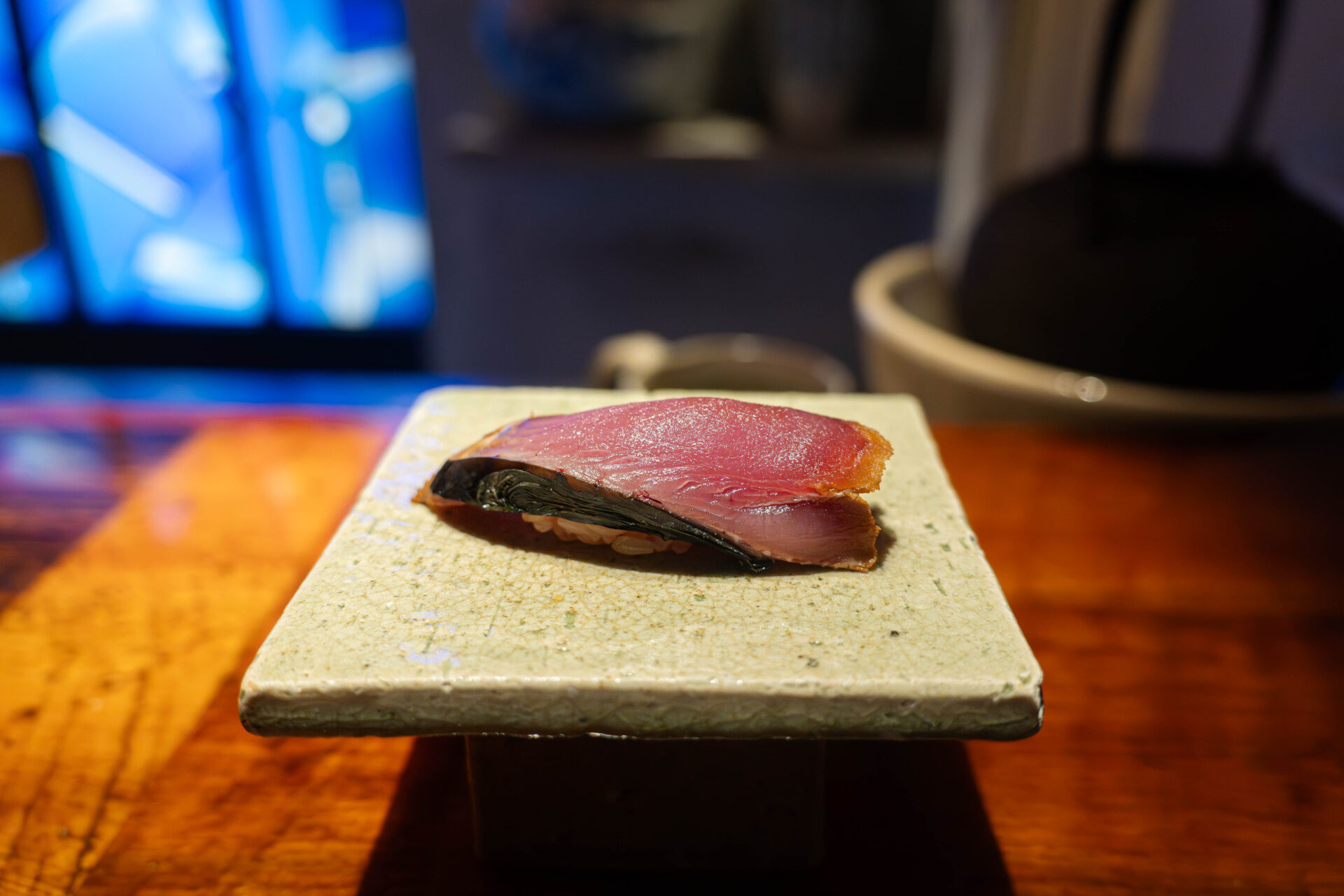
Anago
Anago appeared toward the end of the course.
The flesh, simmered until plump, was astonishingly tender, melting apart gently in the mouth. It was finished with a glossy coat of nikiri sauce, whose fragrant sweetness accompanied it softly.
It was a piece with both reassurance and elegance, perfectly suited to closing the flow of the nigiri.
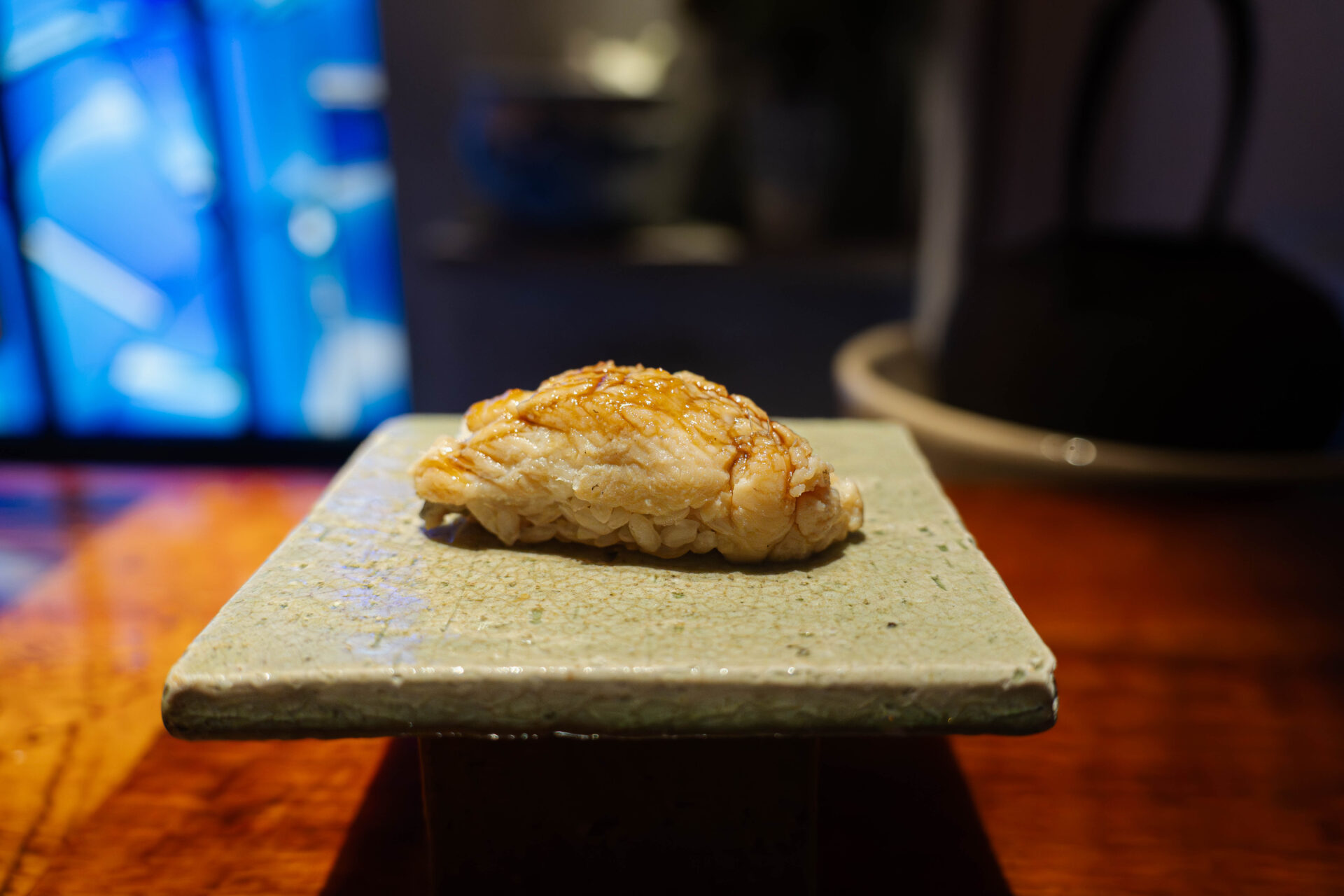
Ara-jiru
Finally, ara-jiru was served, drawing out every last bit of umami from the fish bones and trimmings.
In the richly simmered broth were smooth strands of shichimi somen, whose gentle spiciness tightened the whole bowl.
It was a bowl that gently wrapped up the lingering notes of the sushi while still leaving a clear impression to the very end.
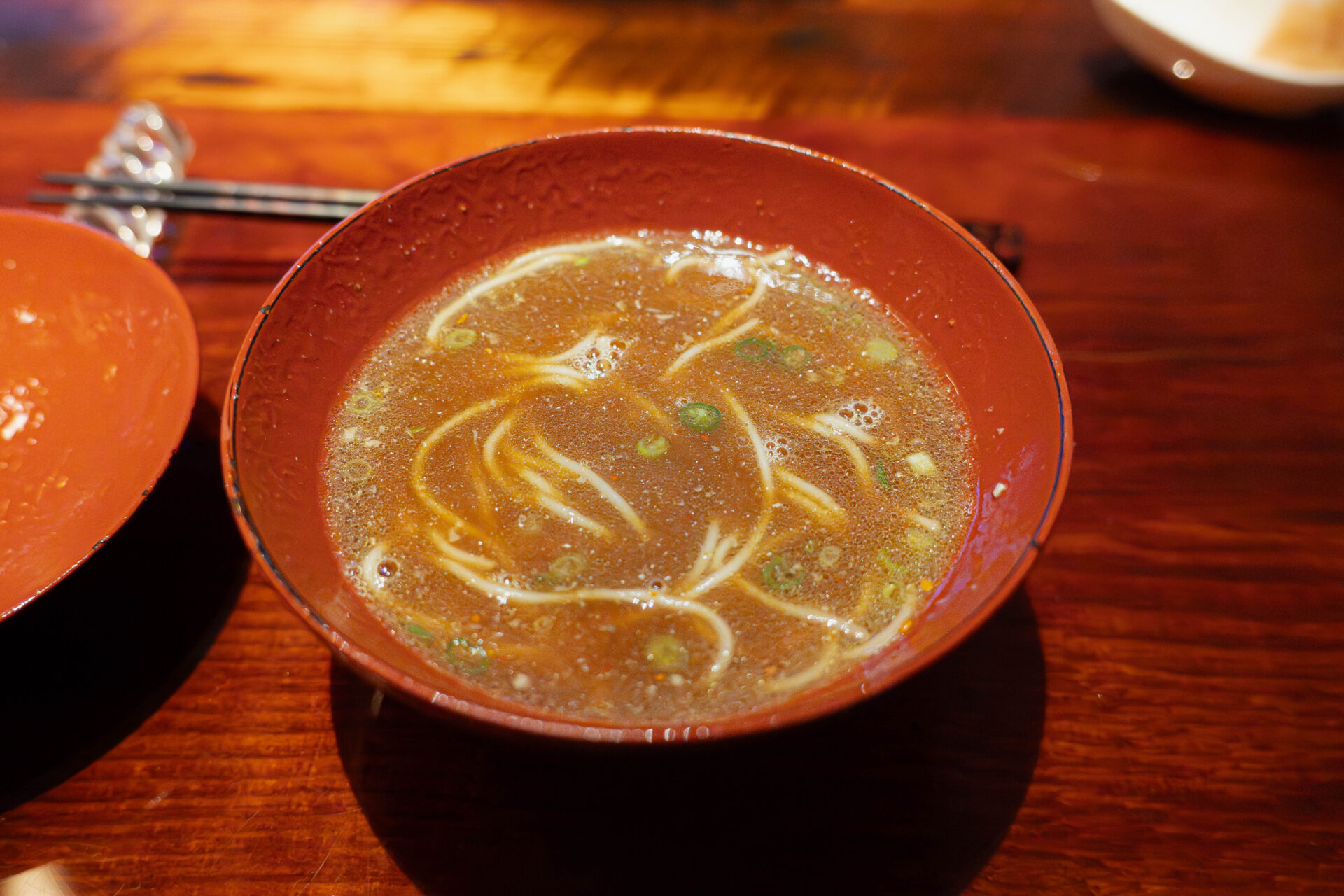
Kanpyo Roll
To finish came kanpyo roll, a classic of Edomae sushi.
Before serving, they thoughtfully confirmed whether or not each guest wanted wasabi, preparing it according to individual preference.
The roll itself was handled by another young chef, who completed it with serious, focused movements.
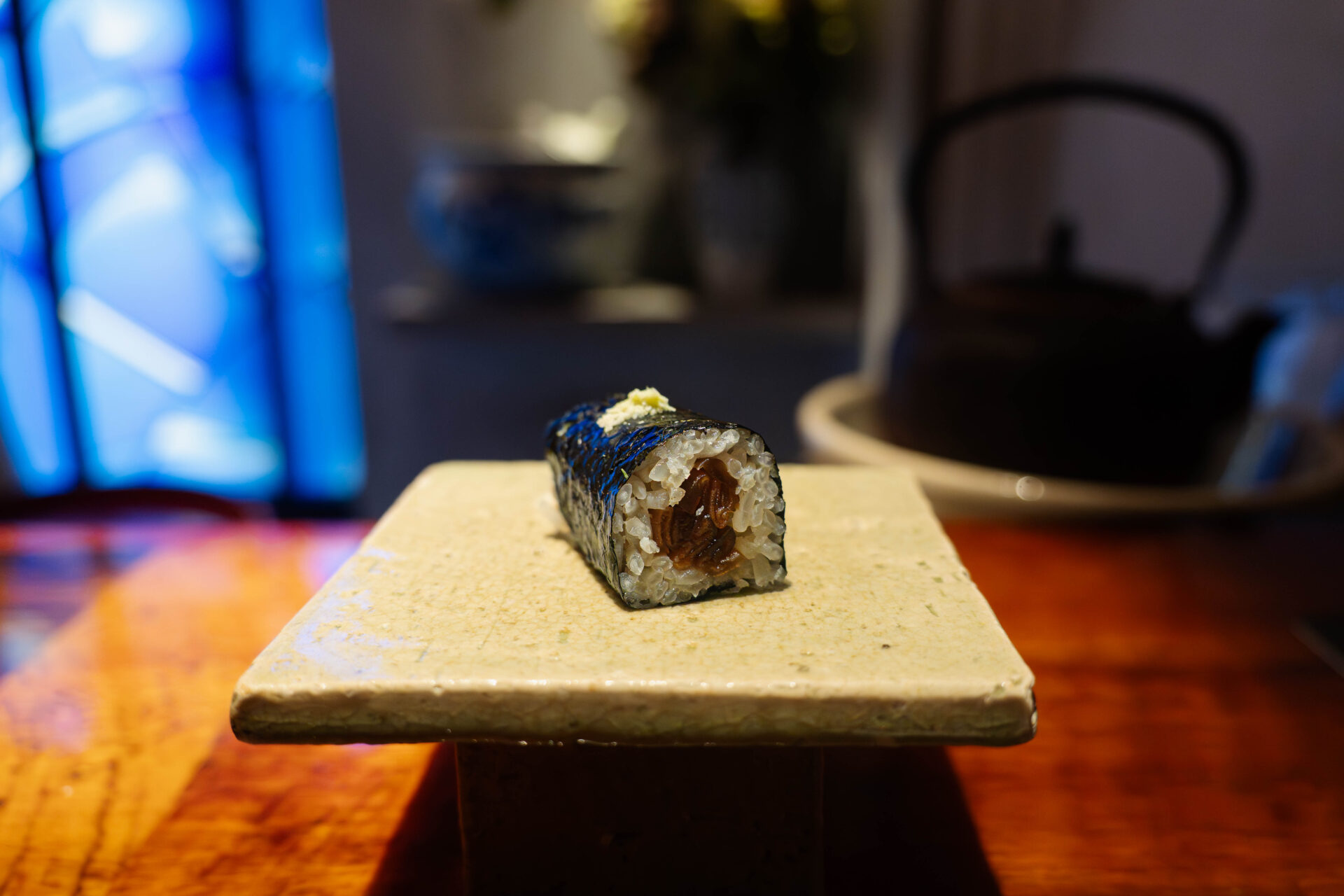
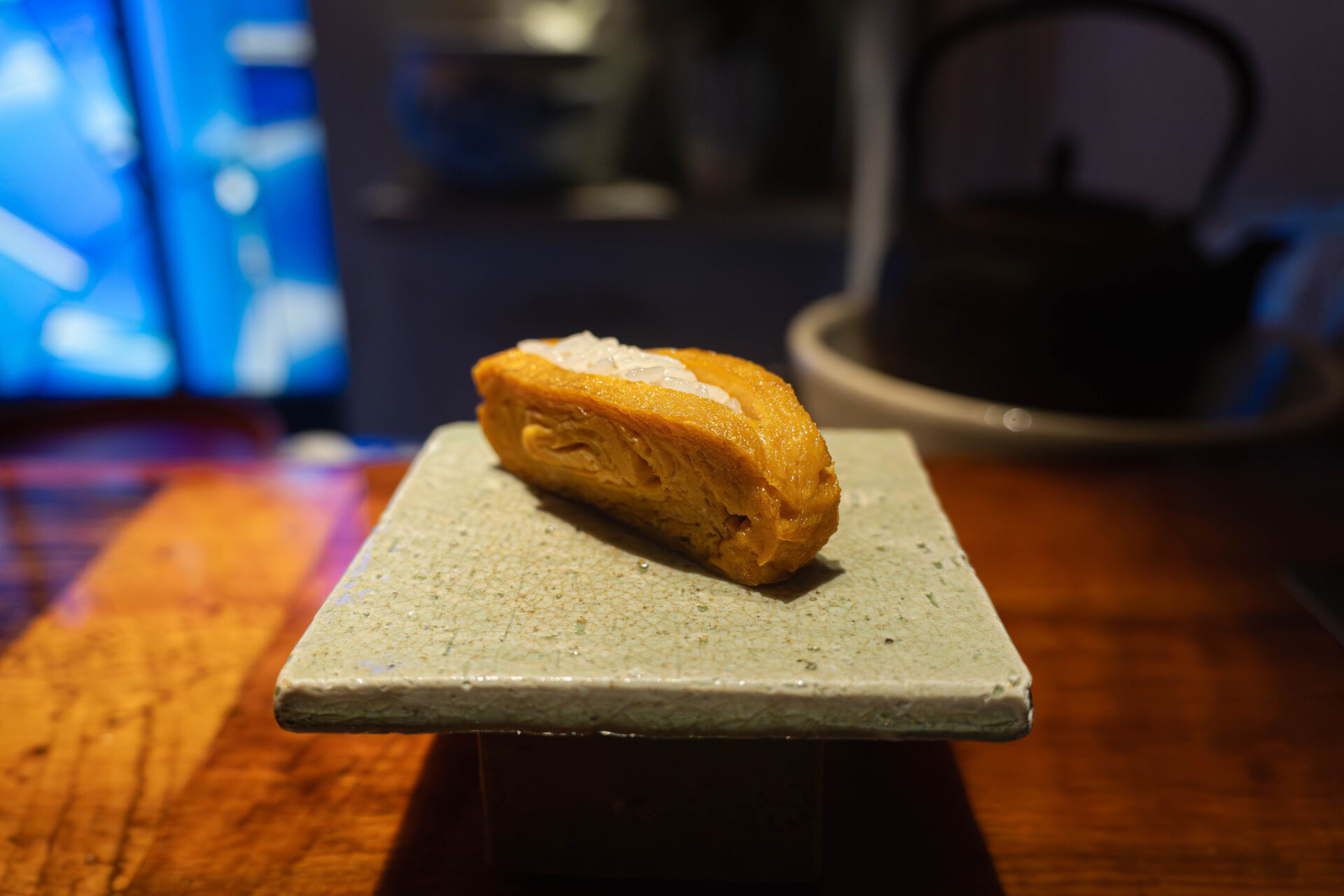
Tamagoyaki
The final item served was a slightly sweet tamagoyaki.
A standard finish in the flow of Edomae sushi, it serves to settle the aftertaste of the meal.
For guests who were already full, they would even accommodate requests for it without rice, a gesture of care that left an impression.
Summary & Impressions
This “Fifth Generation Course” was more than simply a serving of sushi; it was itself a story of passing from one generation to the next.
As the young chefs shaped each piece with seriousness, they explained the handling of ingredients, the cooking, temperature control, and even the service in their own words. In their presence, one could feel the accumulation of solid technique and knowledge.
At the same time, the master appeared at key moments, sometimes offering a few words, sometimes easing the atmosphere with a smile. Rather than carrying everything alone, he nurtures the younger chefs by entrusting them with the stage. That attitude is likely one of the reasons this restaurant has continued to be supported for so many years.
While preserving tradition, it never stops evolving, and it continues to hand the baton to a new generation. It was a time that made you feel both the weight of a long-established restaurant and hope for the future.
Beyond the experience of “eating sushi,” it felt like a special moment of witnessing “the inheritance of sushi culture.” More than anything, what stayed with me was being able to touch the future Hatsunezushi is aiming for, and the path it is taking to get there.
Reservation & Access Information
How to Reserve
Hatsunezushi is fully reservation-only. Advance booking is required to visit, with reservations accepted mainly through online booking platforms such as TableCheck. At the time of booking, a prepayment system using registered credit card details is adopted, so care is required, as there are certain restrictions on changes and cancellations after the reservation is confirmed.
Reservations are opened on a monthly basis, and in principle booking begins around the 7th of the previous month. Because it is a popular restaurant and seating is limited, places often fill quickly.
Access Information
Address: 5-20-2 Nishi-Kamata, Ota-ku, Tokyo
The nearest station is JR Kamata Station (West Exit), about a 5-minute walk. It is located in a residential area beyond the shopping street, and the white-walled building surrounded by greenery serves as the landmark.
It is also easily accessible from central Tokyo, and by using the JR Keihin-Tohoku Line, it can be reached relatively smoothly from areas such as Tokyo Station and Shinagawa Station.
Opening Hours
Open: Monday, Tuesday, Thursday, Friday, Saturday
Closed: Wednesday and Sunday
Fifth Generation Course
・Lunch: 13:00 / 15:00
・Dinner: 17:00 / 19:00
The counter operates on a simultaneous start system, with fixed starting times. Since arriving late may result in the reservation being treated as a cancellation, arriving a little early is recommended.
- TAGS