
CONTENTS
About Neighborhood
Concept
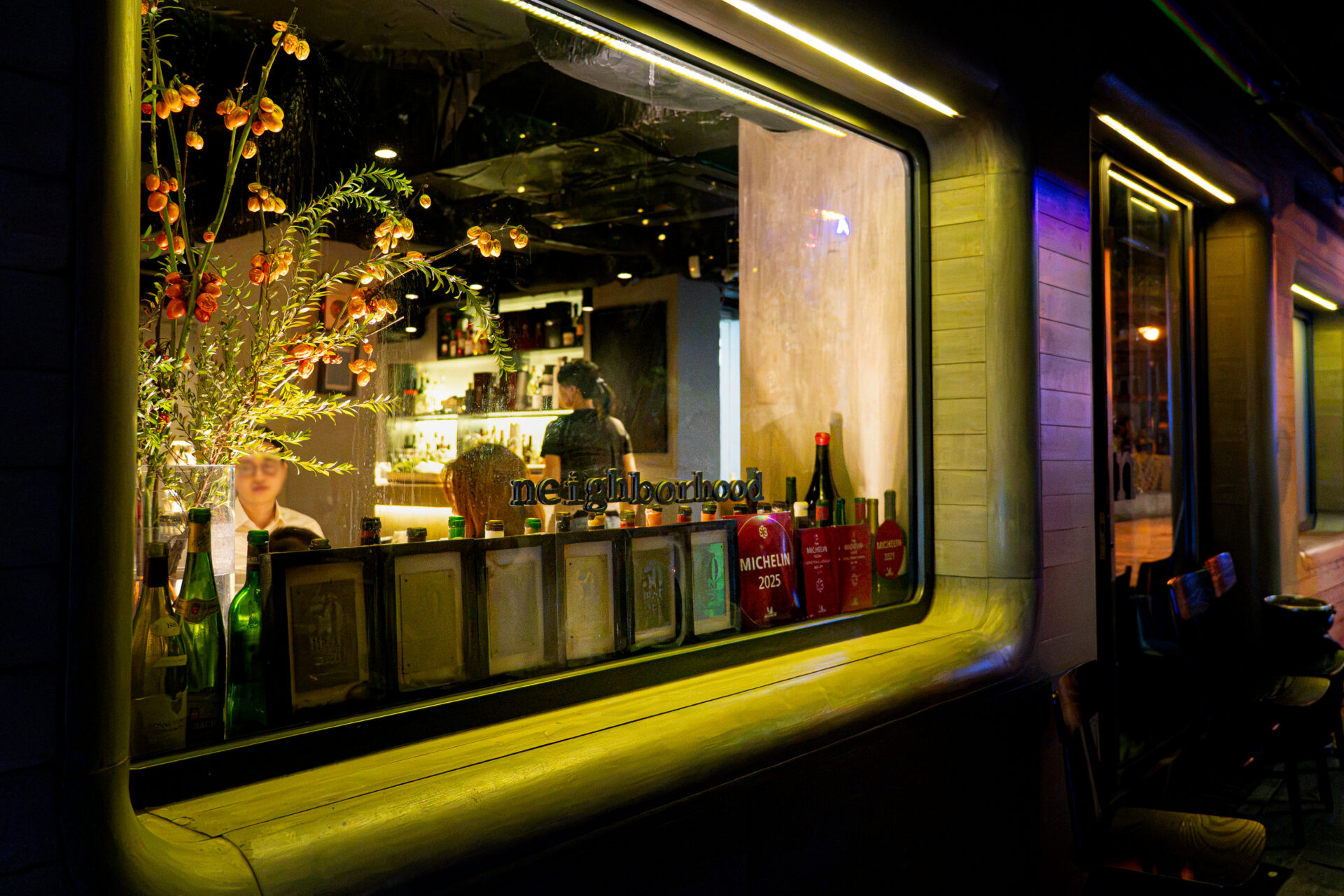
Tucked away in a quiet back alley off Hollywood Road in Central, Hong Kong, sits “Neighborhood.”
The signage is understated, and once you slip through the unassuming entrance, a calm, dimly lit space opens up before you.
The design strips away excess decoration, letting the ingredients and the food itself take center stage.
What’s served here is modern bistro cuisine built on a French foundation, woven through with Asian and Mediterranean touches.
Rather than a fixed course, the style here is to freely mix and match small plates,
with signature large-format dishes like the “Salt-Baked Chicken” and “Hokkaido Kinki Paella” requiring advance reservation and becoming must-order classics in their own right.
Every dish avoids over-the-top presentation, letting layers of aroma and umami speak for themselves.
In this hideaway just a short step from the bustle of the city, you can relax and spend time truly engaging with the food.
It’s easy to understand why industry chefs come here on their days off — this is a restaurant that “the pros frequent.”
Chef: David Lai
Owner-chef David Lai hails from Hong Kong.
He studied the fundamentals of cooking in the United States, and after returning home, honed his craft at establishments like Alain Ducasse’s “Spoon.”
While grounded in Western culinary technique and structural precision, he leans toward cooking with “room to breathe” rather than competing for sheer polish.
Lai’s philosophy is clear: “build a dish with only what it needs, without stripping away the power of the ingredient.”
He updates the menu daily according to season and provenance, and his cooking method is fundamentally one of subtraction.
Rather than flashy plating or gimmicks, he aims for dishes where the ingredients naturally speak for themselves on the plate.
The name “Neighborhood” reflects his wish for the restaurant to be
“a place anyone can drop into casually.”
He values a relationship where chef and guest meet on close terms, beyond formality or titles.
Restaurant Recognition
Despite its modest exterior, “Neighborhood” has built a solid reputation on Hong Kong’s dining scene.
It holds a Michelin star in the Hong Kong Macau Michelin Guide,
introduced as a restaurant of “high-quality cooking worth a visit.”
Notably, despite being a small back-alley bistro,
it has also ranked among Asia’s leading restaurants.
On Asia’s 50 Best Restaurants, it placed 16th in 2024 and 21st in 2025.
Even a decade after opening, it continues to be recognized at the top level.
Michelin’s review praises
the combination of seafood-centered small plates with reservation-only large-format dishes,
and highlights how the food draws out deep flavor while keeping showiness in check,
a testament to Chef David Lai’s sensibility and technical skill being recognized internationally.
The restaurant is also known as a place Hong Kong’s chefs and food enthusiasts “visit on their days off,”
trusted even by professional palates.
Because the menu changes daily, every visit brings a new discovery,
and that sense of a once-in-a-lifetime encounter is, I think, exactly why this restaurant continues to be loved.

Dining Prelude
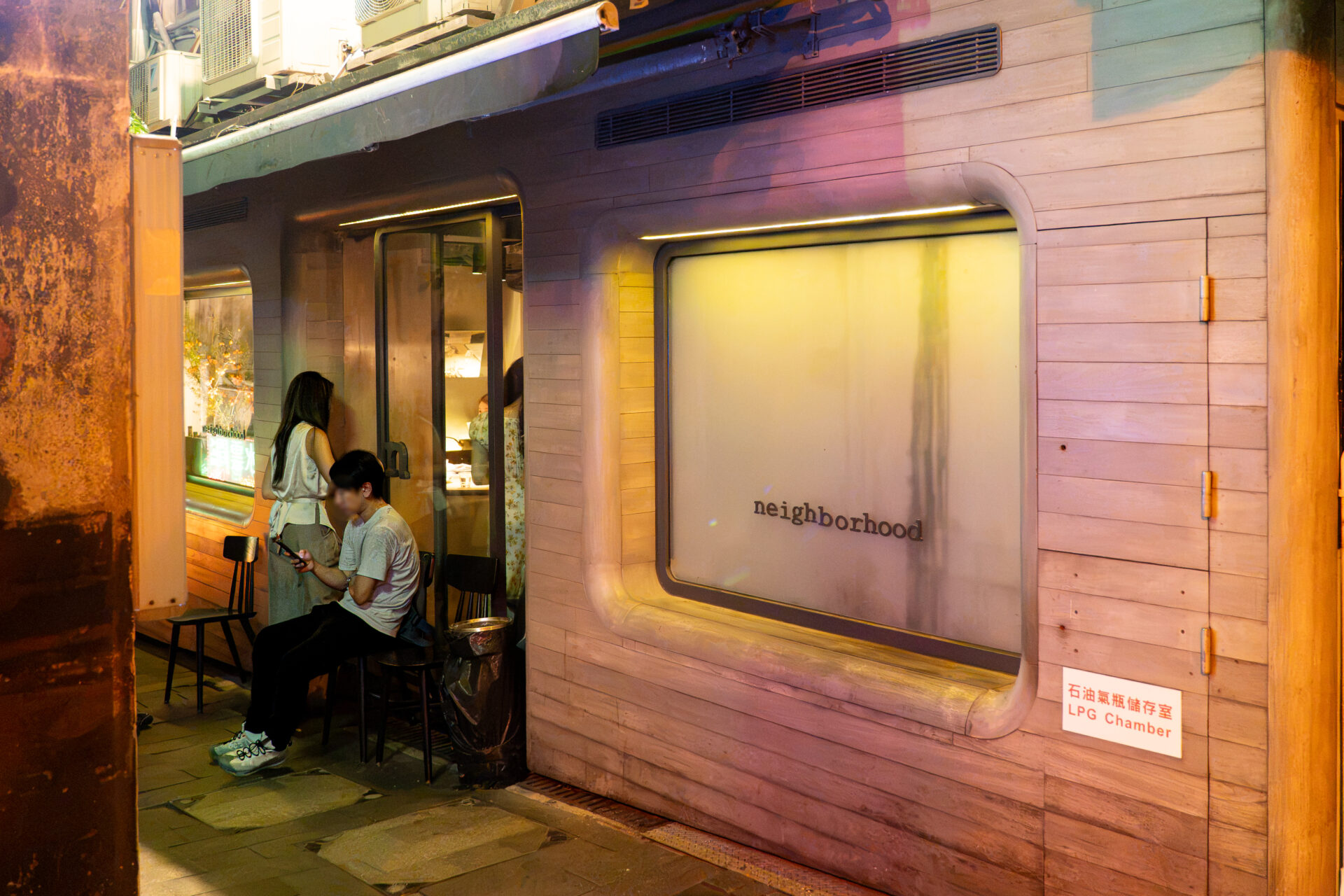
Exterior and Entrance
Behind Hollywood Road, near Peel Street and Aberdeen Street.
Step off the lively main street and a narrow alley eventually appears.
At the end of that alley, a modest gray door — searching for it, the word “hideaway” starts to feel exactly right.
From the moment visitors pass through this unassuming entrance, they already begin to feel a small distance from ordinary daily life.
The entrance itself feels like it’s quietly guarding a secret hidden within the city.
Step through the door, and calm lighting and the texture of natural materials immediately ease the eyes.
The walls are kept in pale tones, with wood and metal trim used as subtle accents.
Glass windows and openings are arranged skillfully, softening the boundary between inside and outside.
The moment the door swings open, you can feel the light, the shadow, and even the density of the air shift.
Near the entrance there’s also a small park and some greenery, and according to several reviews, the greenery visible down the passage creates a gentle sense of distance between the bustle of the street and the restaurant.
Because of this, simply passing through the entrance prepares you to immerse yourself in food and time, even while still sensing the boundary from the outside world.
True to its name “Neighborhood,” a balance of familiarity and distance is already present from the very entrance.
The Dining Space
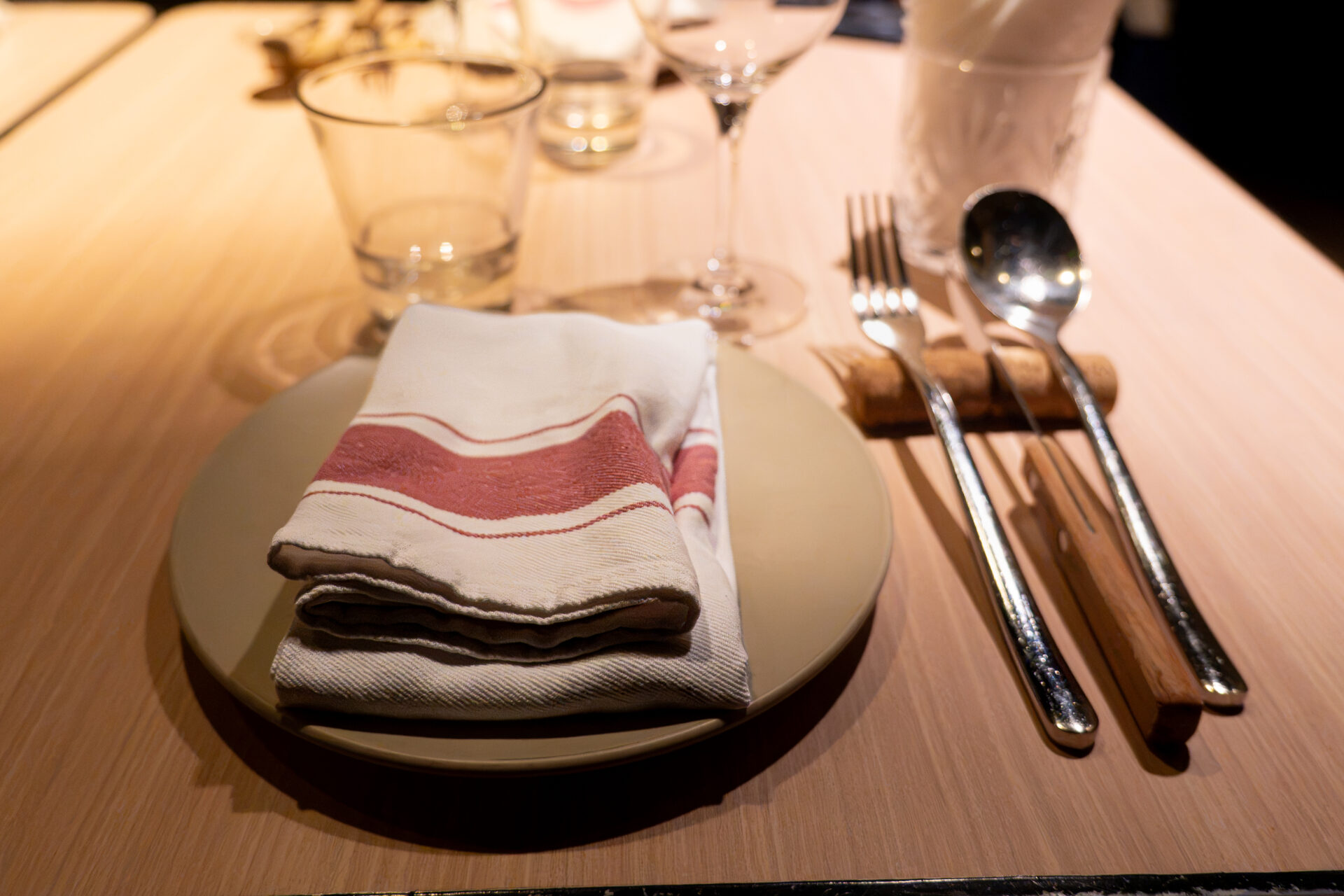
Step inside, and soft, quiet shadows of light spread gently throughout.
The ceiling is kept relatively low, and lighting is scattered so that each table gets its own quiet focal point.
Walls and ceiling are unified in matching pale tones, while wood, metal, and fabric textures blend subtly, lending the whole space a calm texture.
Seating centers around tables, though along the walls you’ll also find relaxed corner seating combining bench-style sofas with tables, suitable for groups.
The spacing between seats isn’t cramped — there’s just enough room left to sense “space between people.”
That sense of distance seems to support a moderate tension that doesn’t interrupt time spent with the food, balanced against intimacy.
What further characterizes the space is the combined seating and bar counter.
On the bar side, tall stools are arranged so that drinkers feel close to the chefs and beverage staff.
Bottles line up neatly behind the bar, their light passing through to cast a gentle shadow from behind.
This arrangement quietly signals that drinks — not just food — are also part of what the space communicates.
The interior design is by Sean Dix, with every chair, stool, and light fixture custom designed for this space.
For example, design elements referred to as the “spindle chair” (a chair with a spindle-shaped motif) and the “spindle barstool” are woven into the space as visual icons.
Material texture, tone, lighting design, and furniture form all feel unified in intent, creating a seating environment where the space and the food resonate with each other.
There’s also care given to how windows and openings are handled, with a design that slightly blurs the boundary between inside and outside. Through the placement of glass surfaces and the effect of light spilling in through openings, the space seems to strike a good balance between feeling like a “closed interior” and leaving room to “sense the scent of the outside air.”
Overall, Neighborhood’s dining space is like a vessel that quietly receives food and time.
Rather than excessive ornamentation, there’s a real presence of materials, with room left that doesn’t interrupt people’s presence or conversation.
Light and shadow, material and air, furniture and human distance — these elements seem to support a quiet stage centered on the food.
Menu Presentation
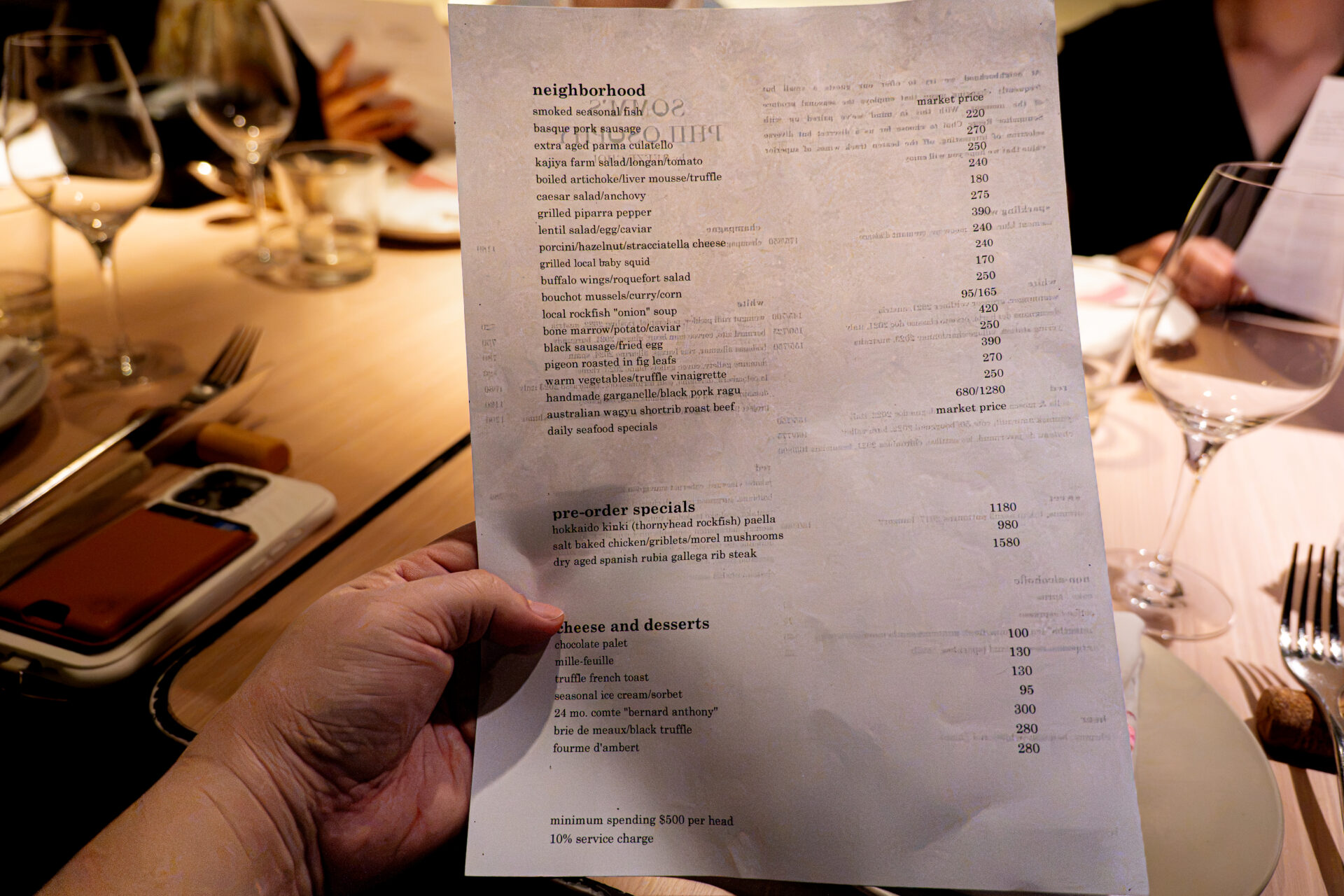
Neighborhood’s food isn’t served as a fixed course — the style is to freely mix and match small plates.
Built on a French foundation, dishes woven through with Asian and Mediterranean touches line up on the menu.
Roughly 20 dishes rotate daily,
with content changing according to the season and what’s come in that day.
At the center are seafood-based, tapas-style small plates.
Shrimp, shellfish, and local fish are grilled to a fragrant finish and lightly finished with spices and herbs.
Simple at first glance, but the aromatic construction is meticulous, calculated for pairing with wine.
Meanwhile, large-format dishes that serve as the table’s highlight are also available,
treated as special menu items requiring advance reservation.
Representative dishes include chicken slow-baked in a salt crust paired with liver and morel mushrooms,
and a paella made with Hokkaido kinki (thornyhead).
Both are meant to be shared among multiple people, and placing them at the center of the table instantly shifts the mood.
The menu is swapped out little by little, week by week and season by season,
with a handwritten single-sheet list featuring only that day’s “now” ingredients.
There’s no flashy presentation, but every update brings a surprise.
A completeness of cooking maintained alongside a freedom that feels like an extension of everyday dining.
That, I think, is the underlying philosophy supporting Neighborhood’s menu construction.
Dishes We Actually Tried
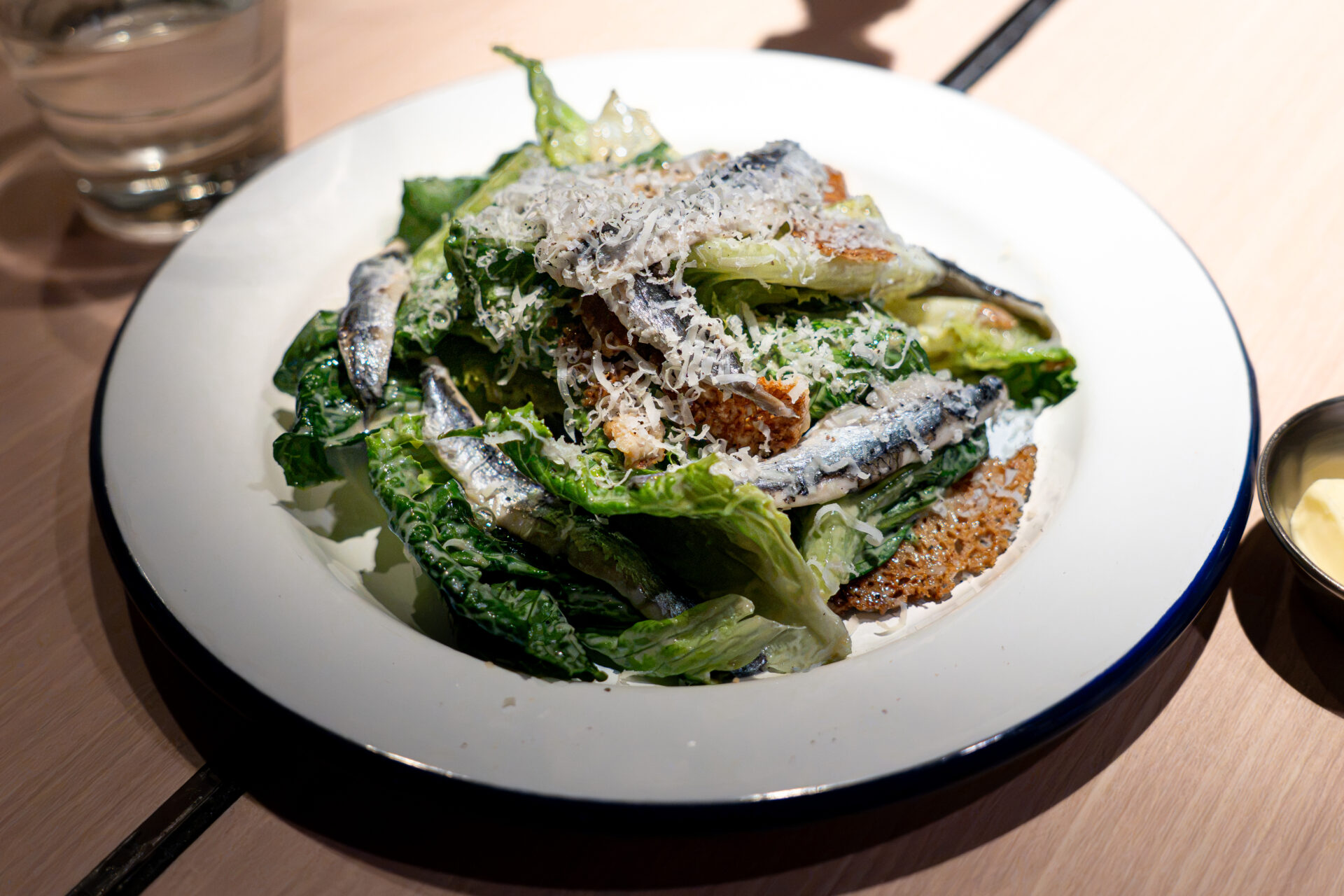
Sardine and Romaine Lettuce Salad (Sardine / Romaine Lettuce / Parmesan)
The first dish was a light, fragrant sardine salad.
The aroma of seared sardine rises up,
harmonizing refreshingly with crisp romaine lettuce and parmesan cheese.
The crunchy texture of the croutons adds an accent,
and while simple, the flavor contours are clear.
From the very first plate, it had the kind of completeness that makes you think “this is no ordinary salad.”
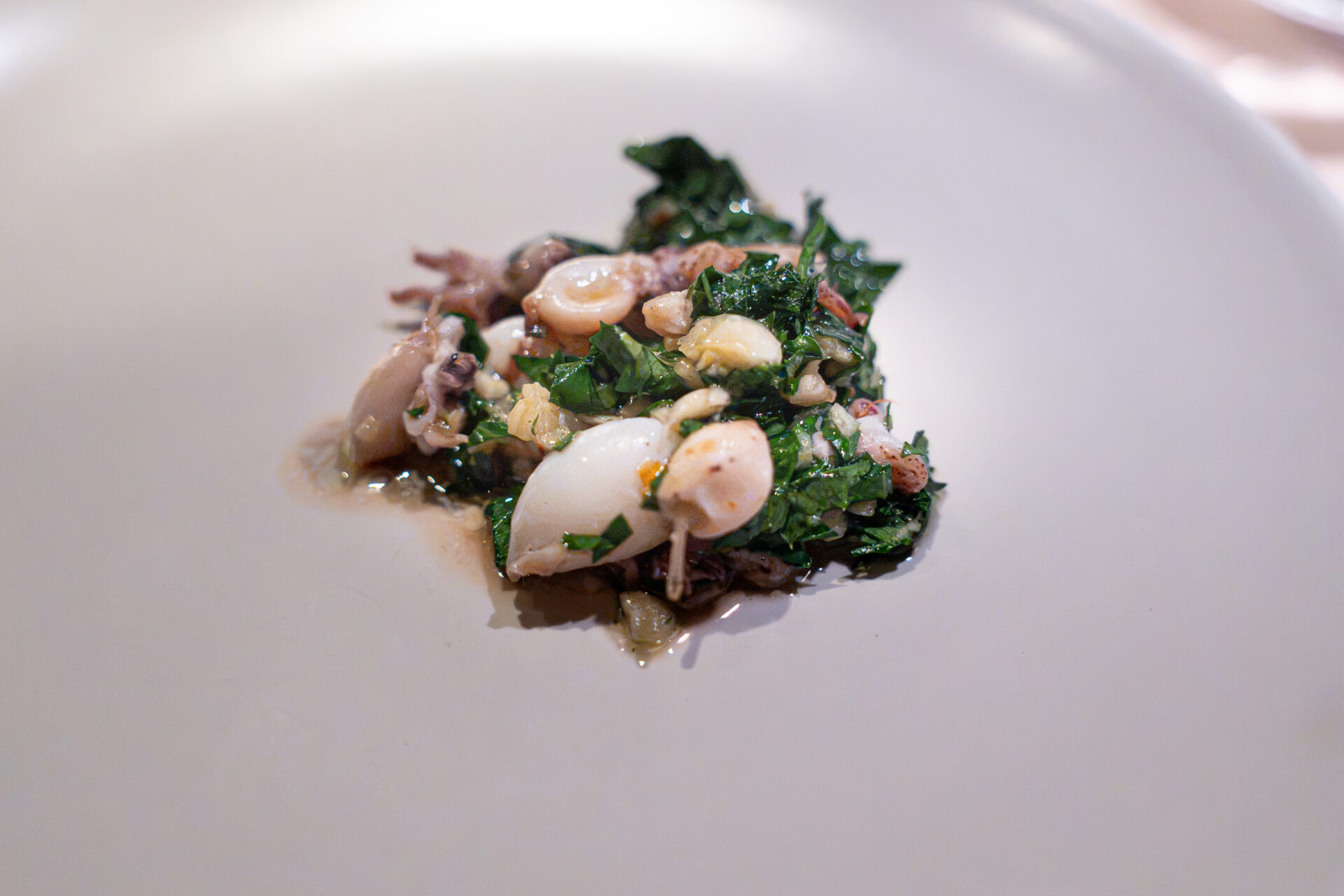
Warm Appetizer of Baby Squid and White Beans (Baby Squid / Beans / Parsley / Garlic)
Brought to the table piping hot in an iron pan, this fragrant warm appetizer.
Baby squid and white beans are sautéed generously in olive oil and garlic.
The aroma of parsley rises, and instantly the whole table feels transported to the Mediterranean.
The squid is tender, the beans fluffy.
The balance between garlicky fragrance and saltiness is superb,
a dish that makes you want to order more bread.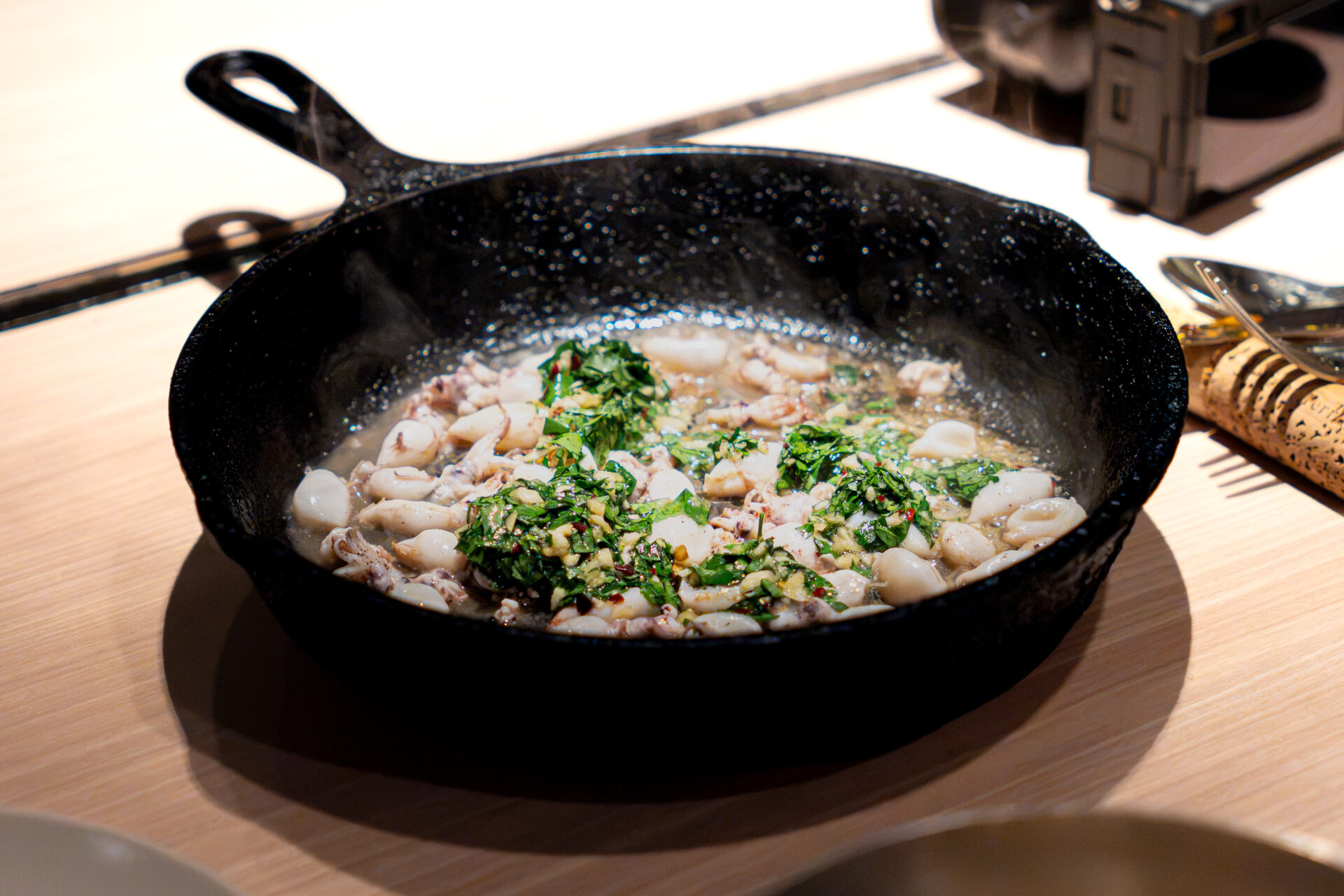
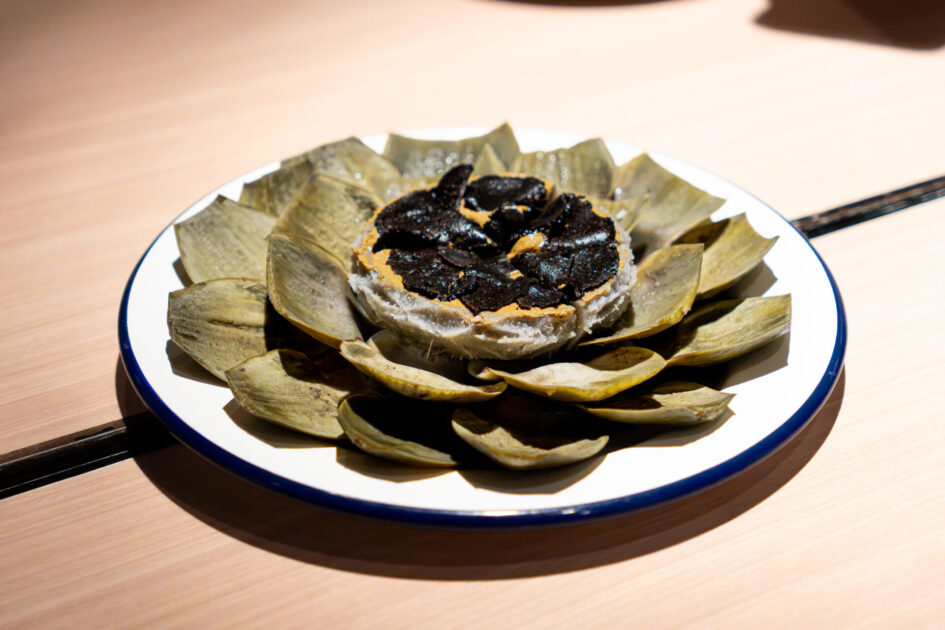
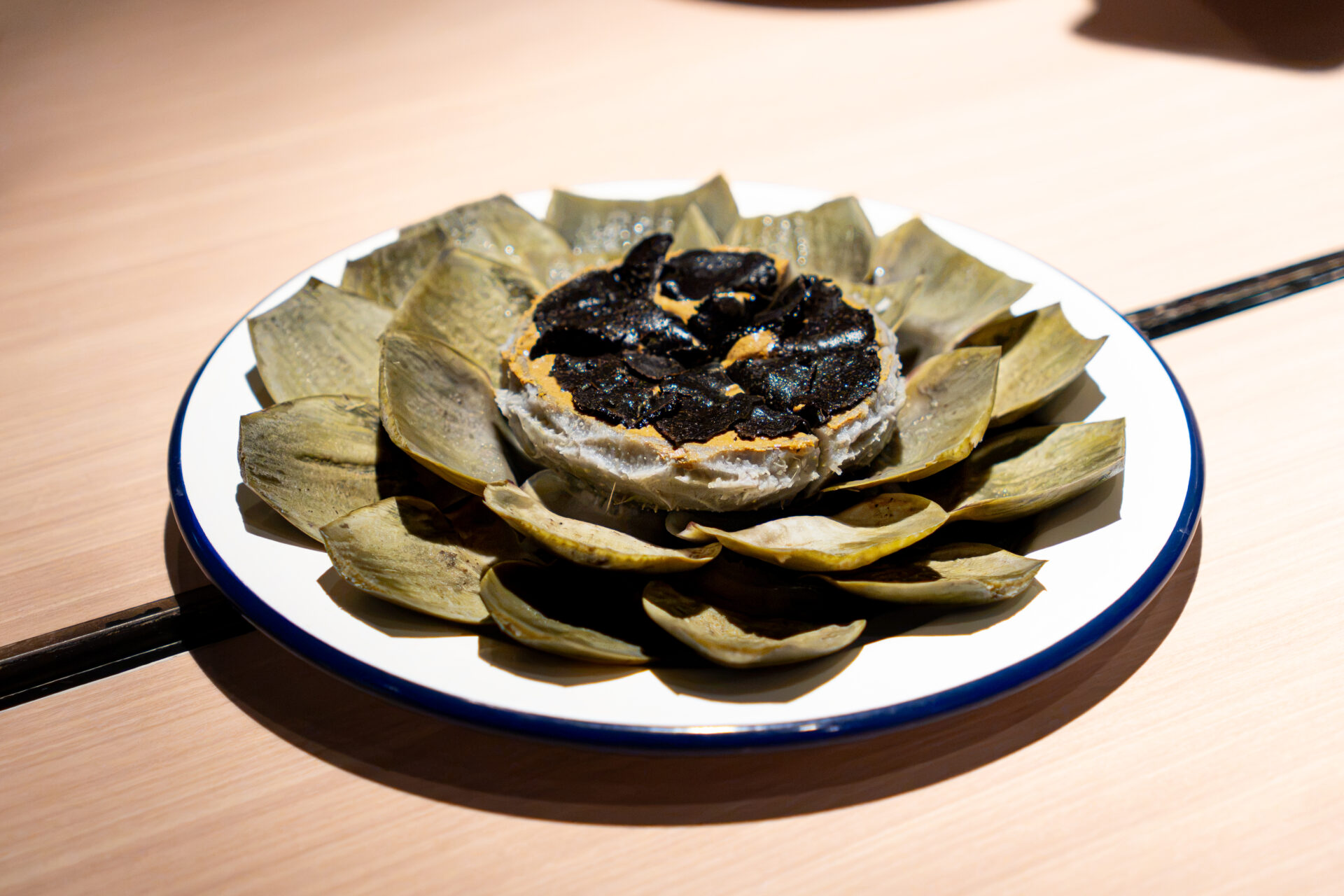
Artichoke, Liver Mousse, and Black Truffle (Artichoke / Liver Mousse / Black Truffle)
At the center of an artichoke opened like a flower,
sits a rich liver mousse and fragrant black truffle.
Each time you dig in with a fork, the aroma of truffle wafts up.
The deep richness of the liver layered with the artichoke’s slight bitterness,
creates a flavor that’s classic yet refined.
It pairs wonderfully with wine, too — a dish that leaves a quiet, lingering finish.
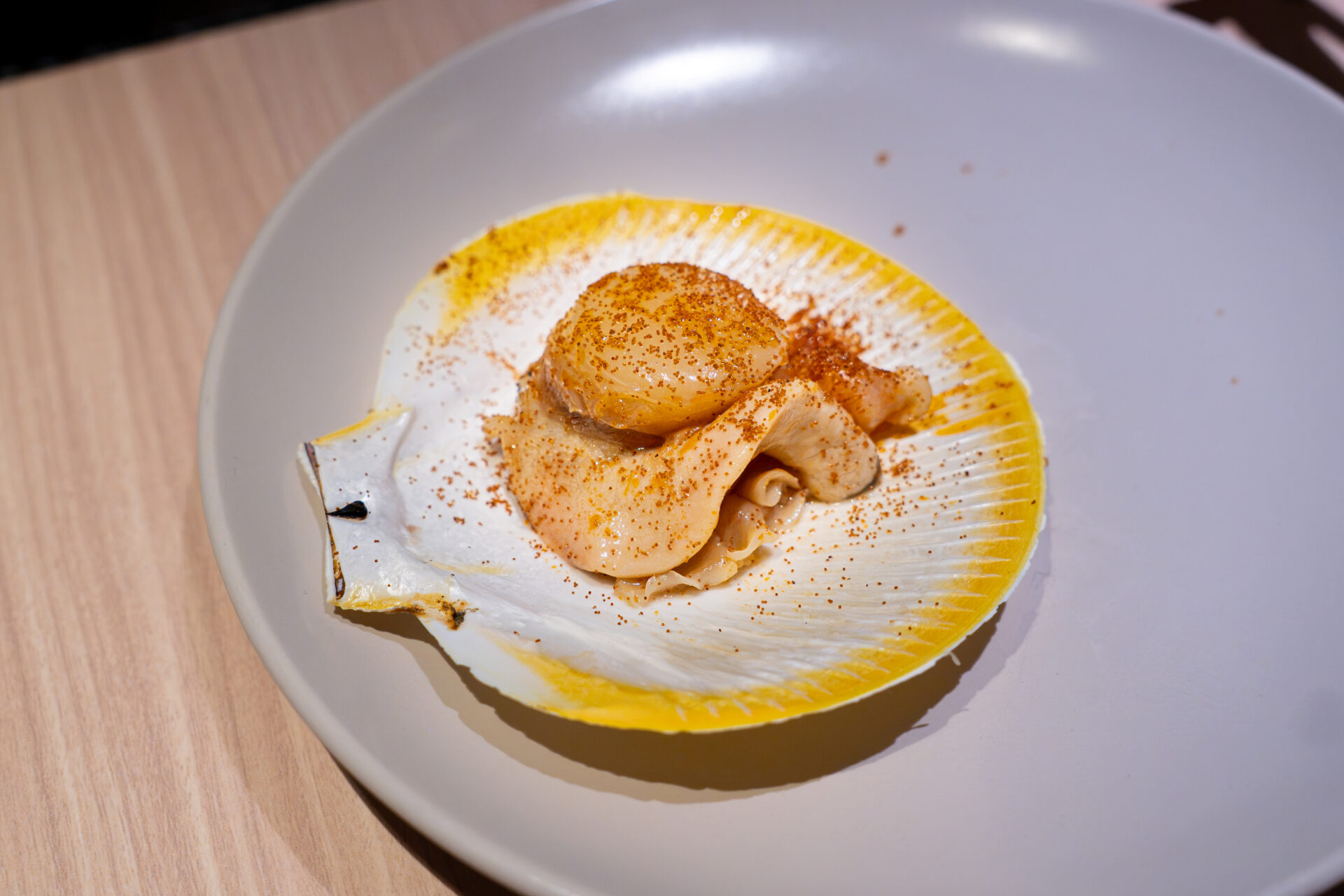
Seared Scallop in Brown Butter (Seared Scallop / Cauliflower Purée / Brown Butter)
A perfectly cooked scallop arrives fragrant with browned butter.
The surface beautifully seared, the inside melt-in-your-mouth rare.
Underneath, a cauliflower purée adds a gentle sweetness.
The aroma of butter spreads softly,
melding with the scallop’s umami in a moment that’s hard to resist.
A perfect bridge into the fish courses to follow. 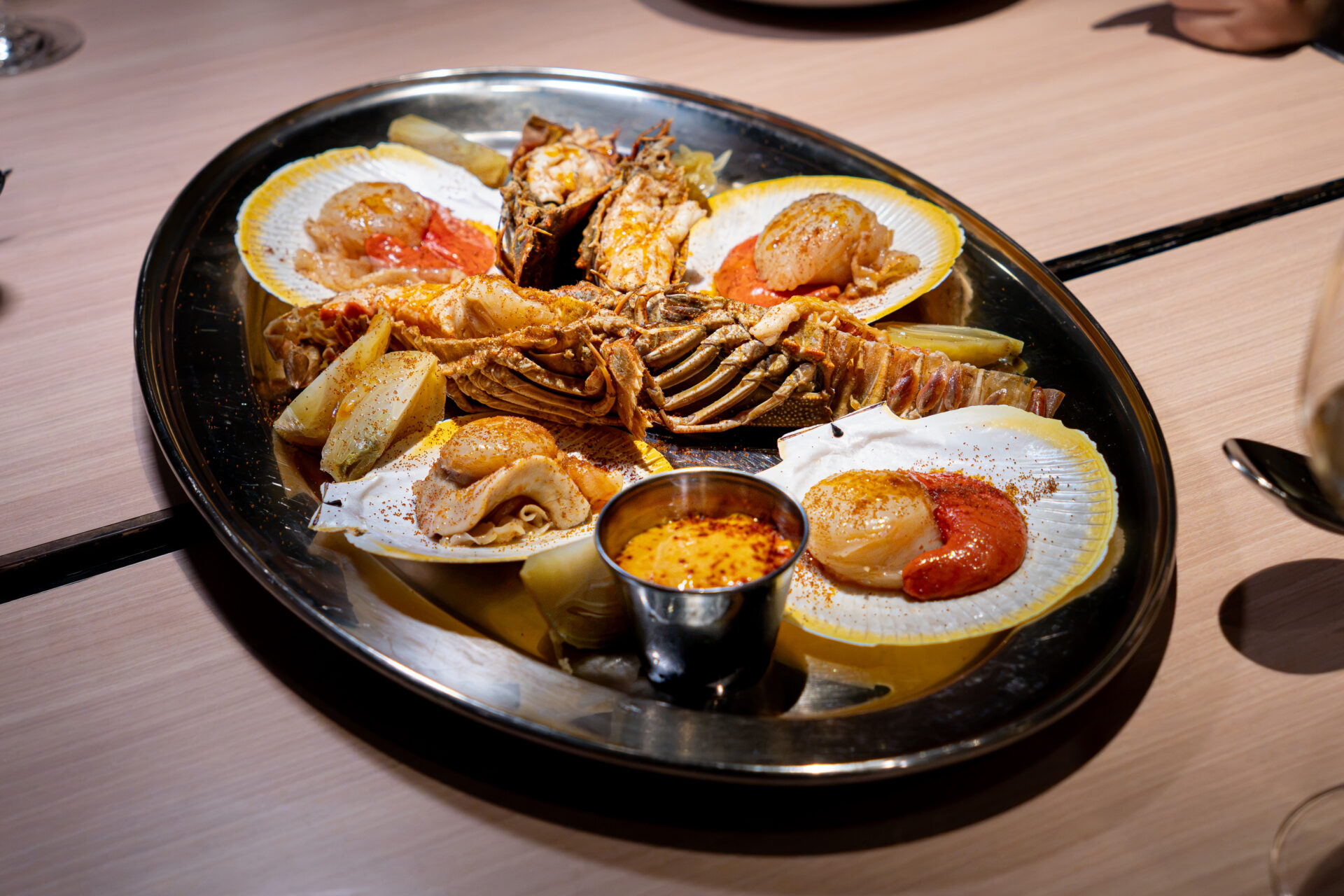
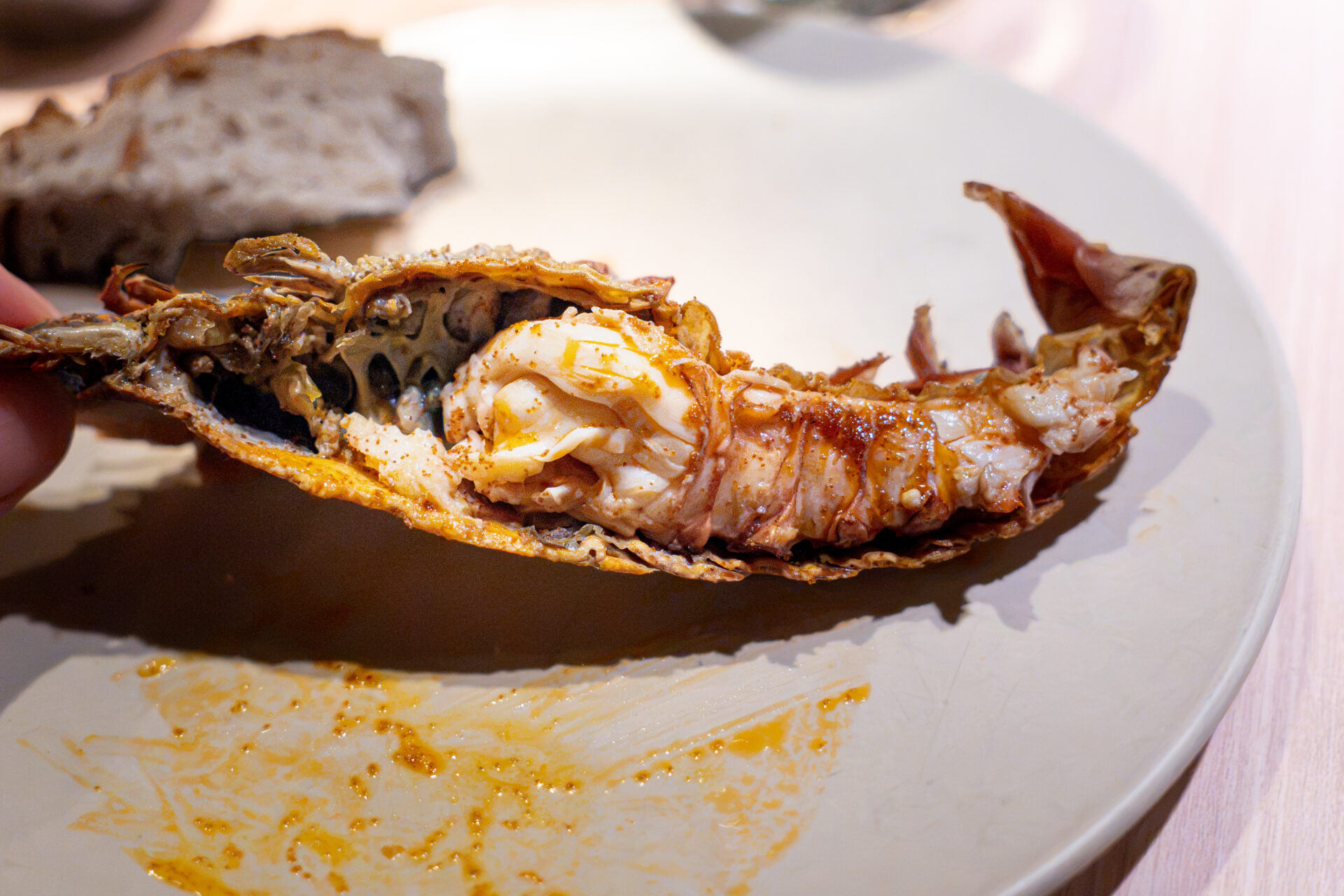
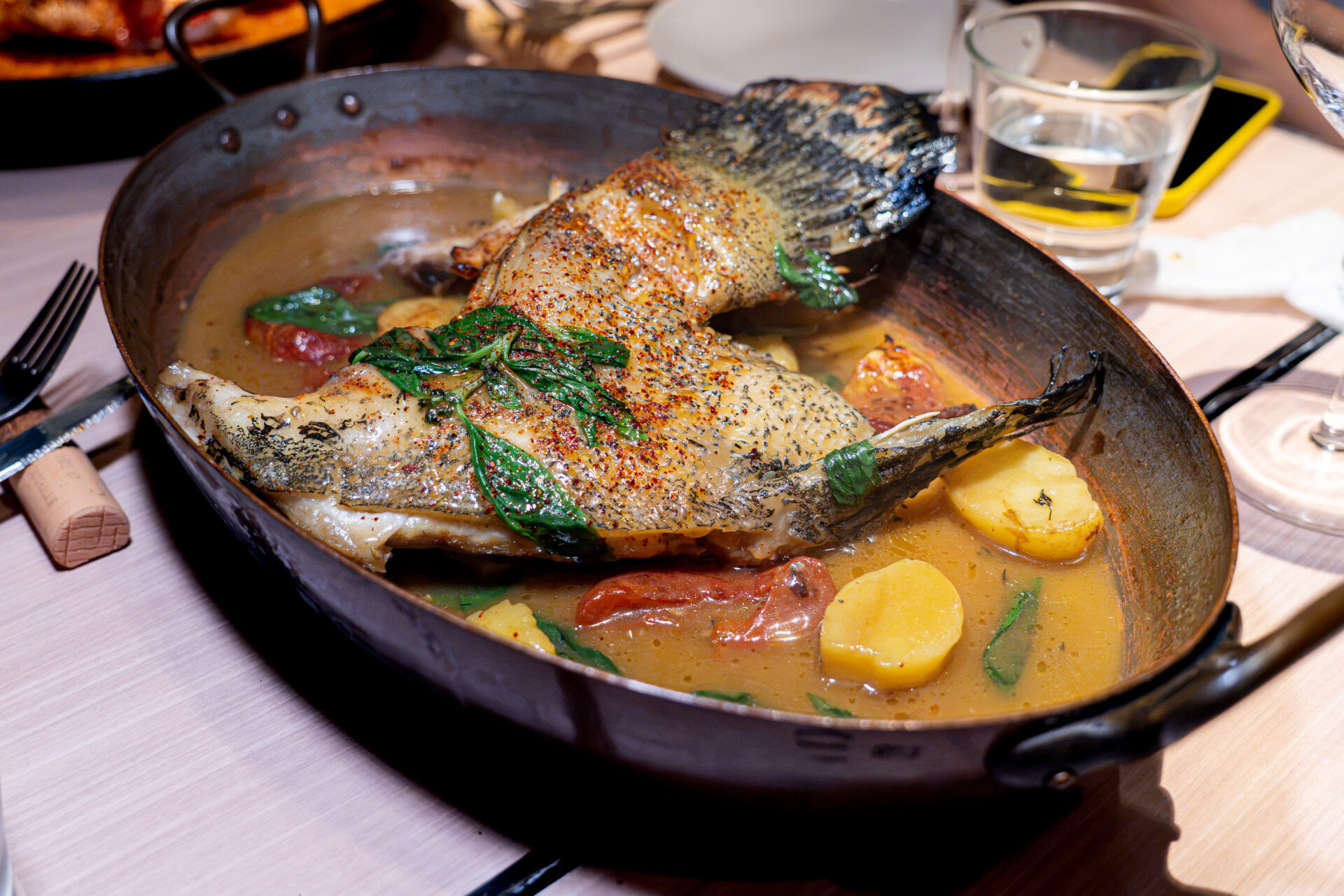
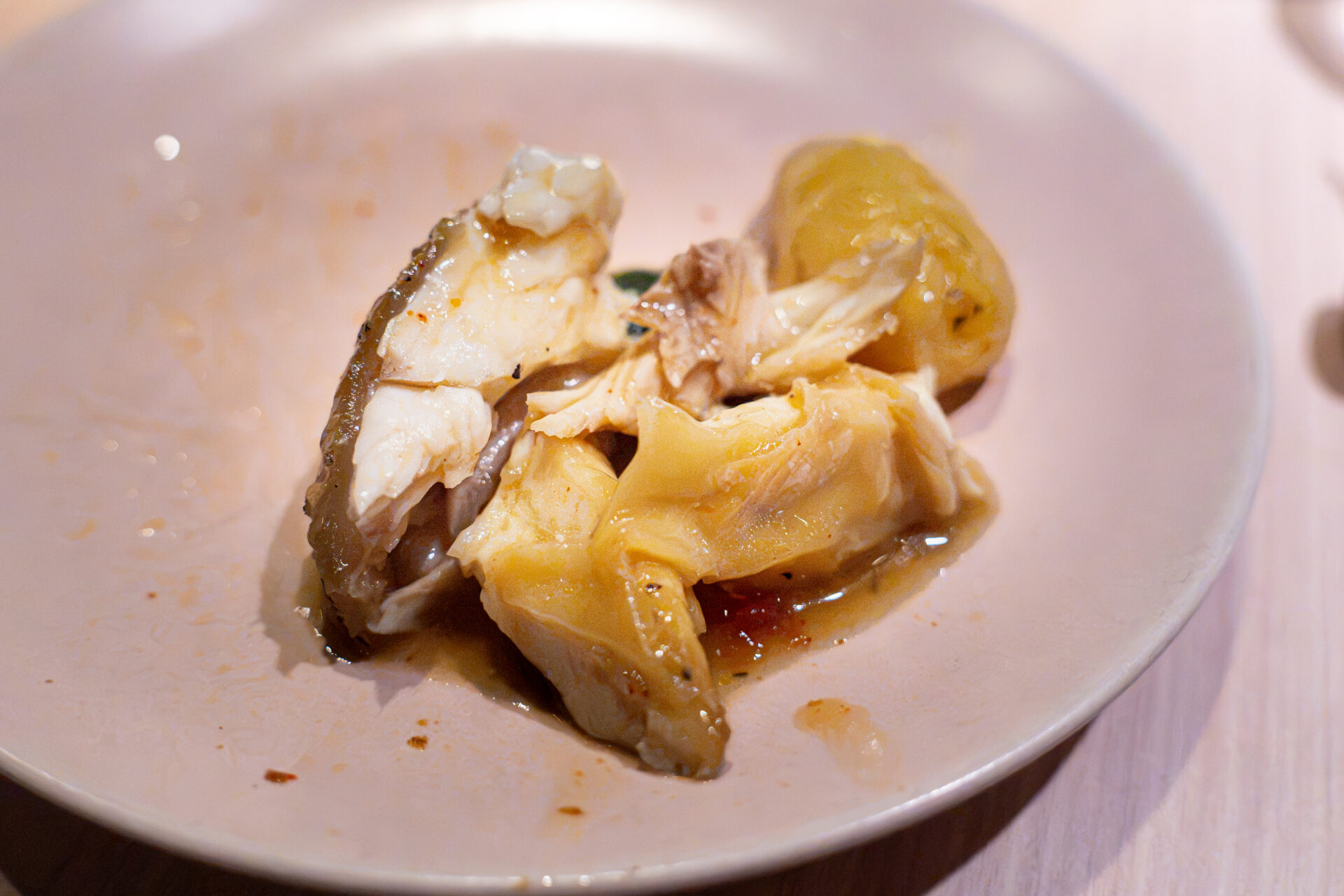
Grilled Grouper in Bouillabaisse-Style Broth (Grilled Grouper / Tomato & Saffron Broth)
The main fish course was a thick cut of grouper.
The skin grilled crisp while the flesh stayed plump and tender,
served in a bouillabaisse-style broth infused with tomato and saffron.
The fish’s umami melts into the broth,
deepening in flavor with every spoonful.
Light yet powerful — a memorable dish.
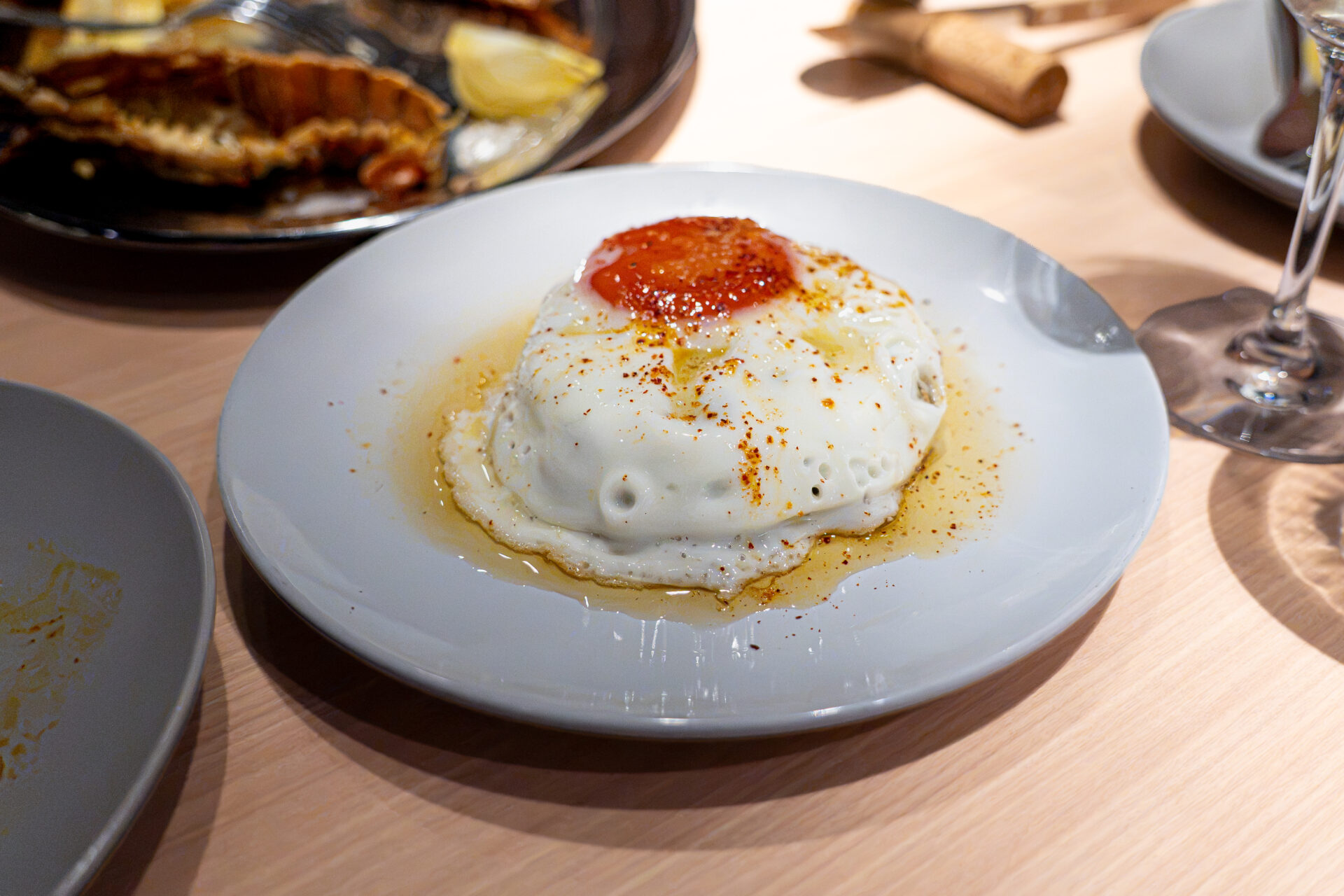
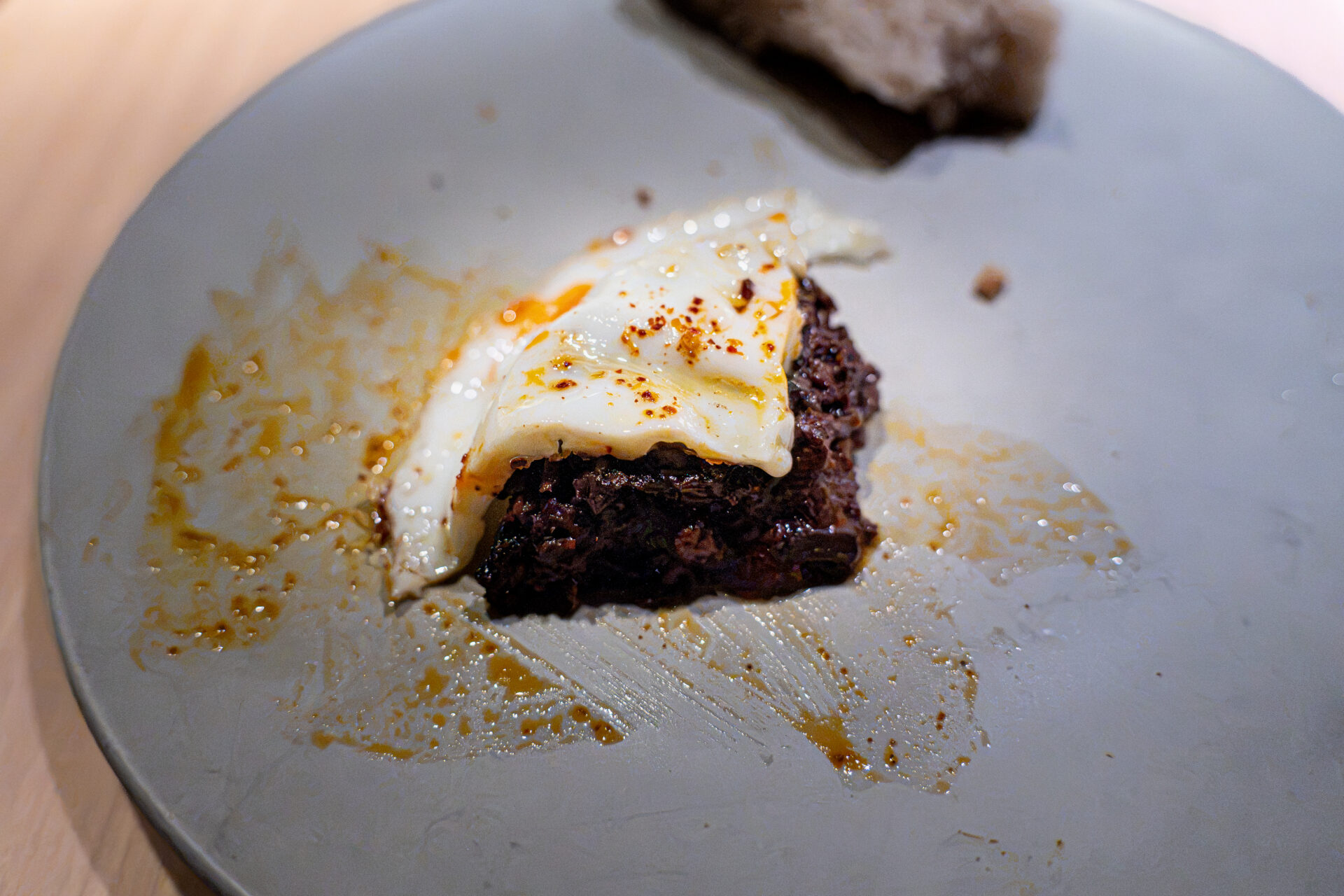
Black Sausage and Fried Egg (Black Sausage / Fried Egg)
A dish pairing black sausage (boudin noir), beloved in French and Spanish cooking, with a soft fried egg.
Cut into it and the yolk flows out, mingling with the rich sausage.
It carries a distinctive depth, and the egg brings mellowness alongside it, pairing beautifully with wine — a memorable, characterful dish.
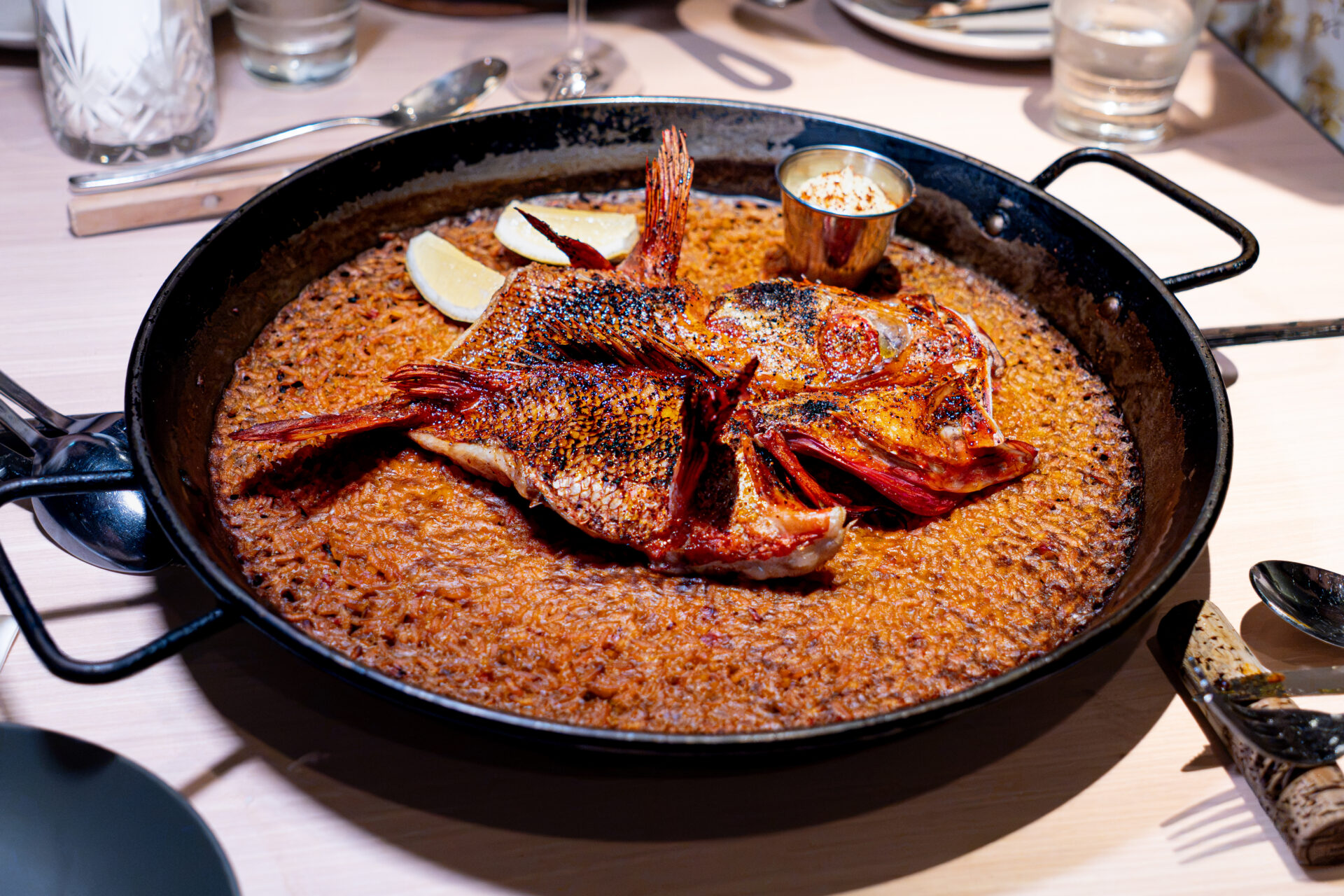
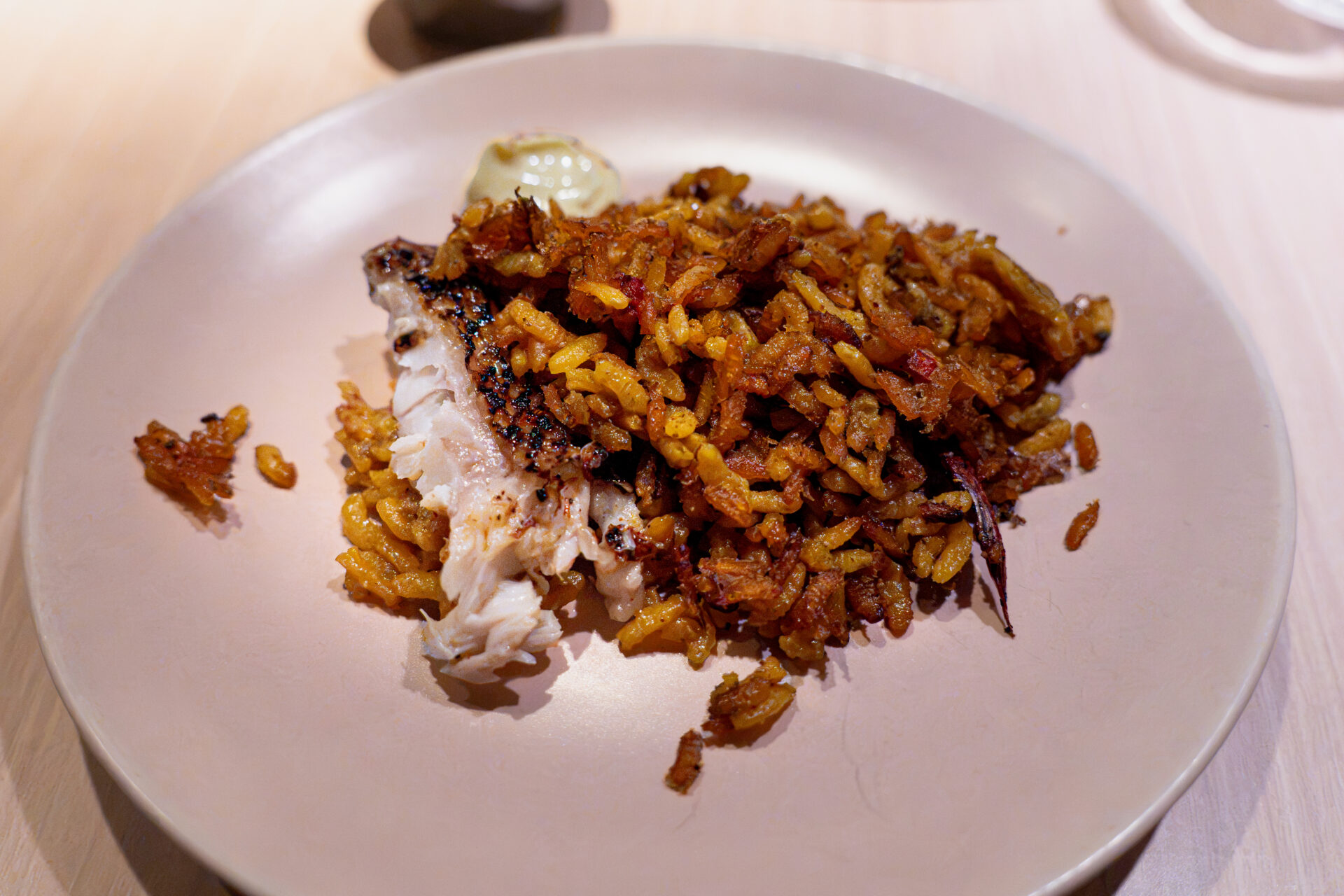
Hokkaido Kinki Paella
Served as a closing dish, this paella is made with Hokkaido kinki (thornyhead).
The rice, having soaked up the fish’s umami through and through, is seasoned to the very last grain, with fragrant crispy rice at the bottom stirring up the appetite.
The richness of the fatty kinki combined with the concentrated seafood dashi makes for a paella that provides a satisfying finish to the meal.
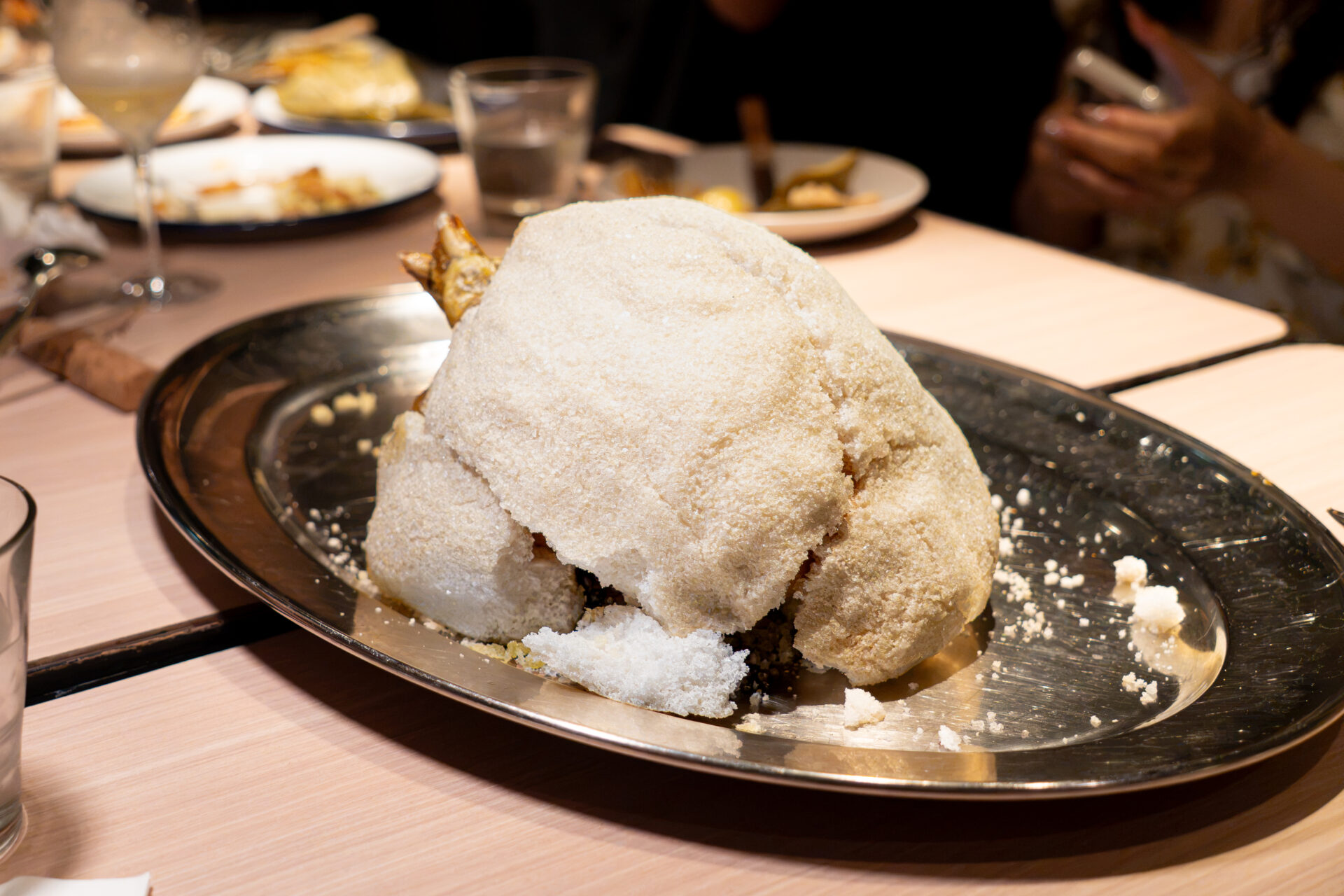
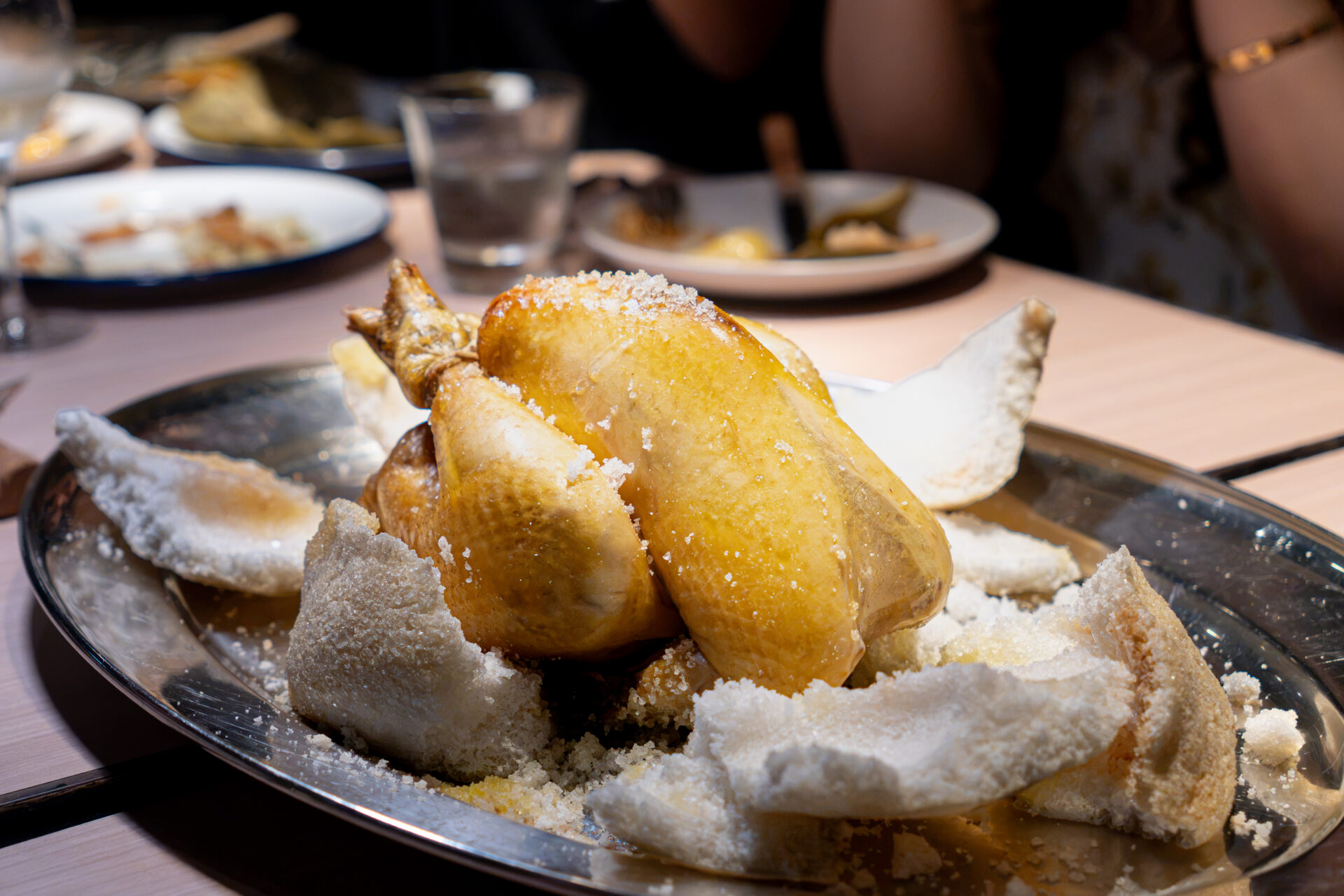
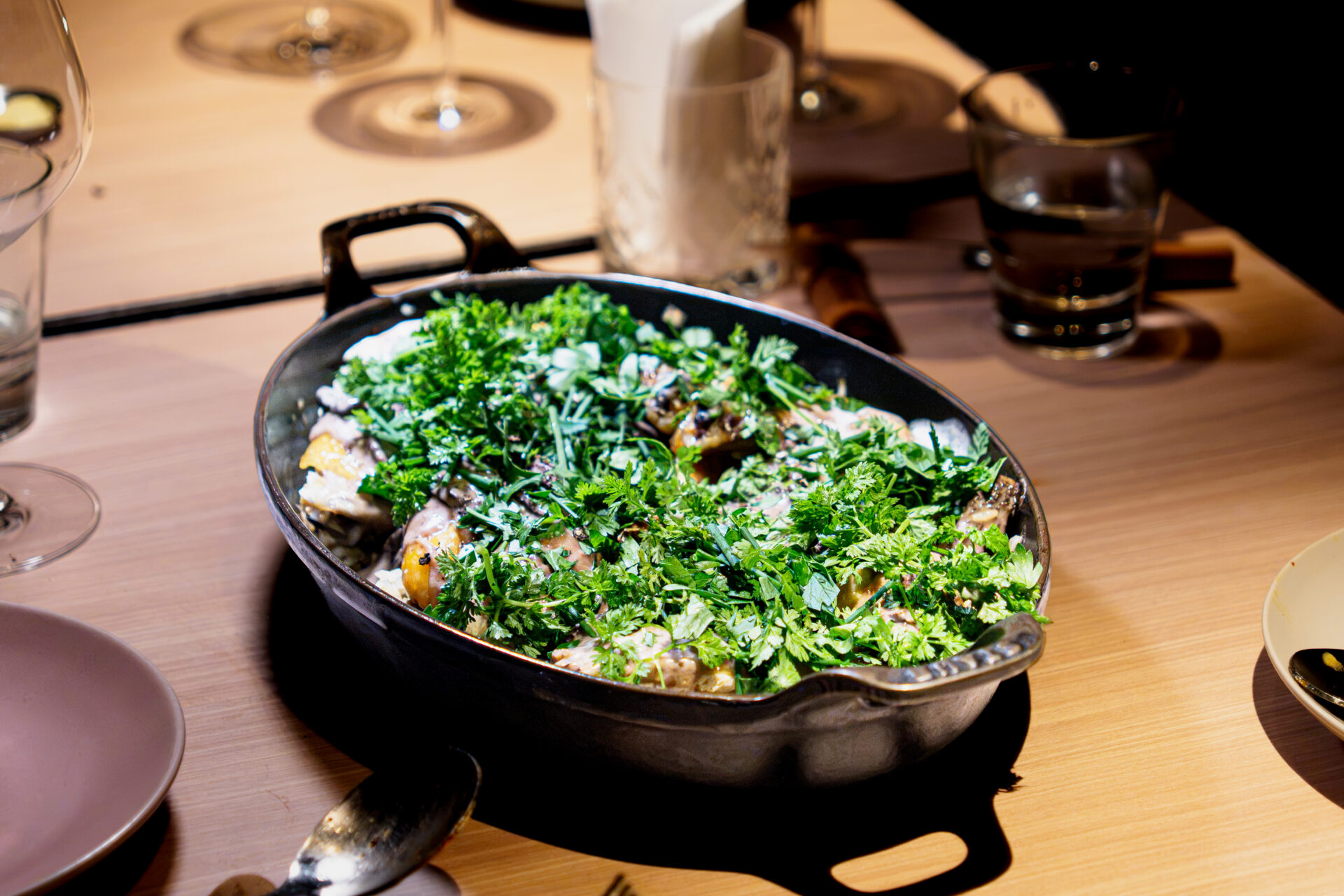
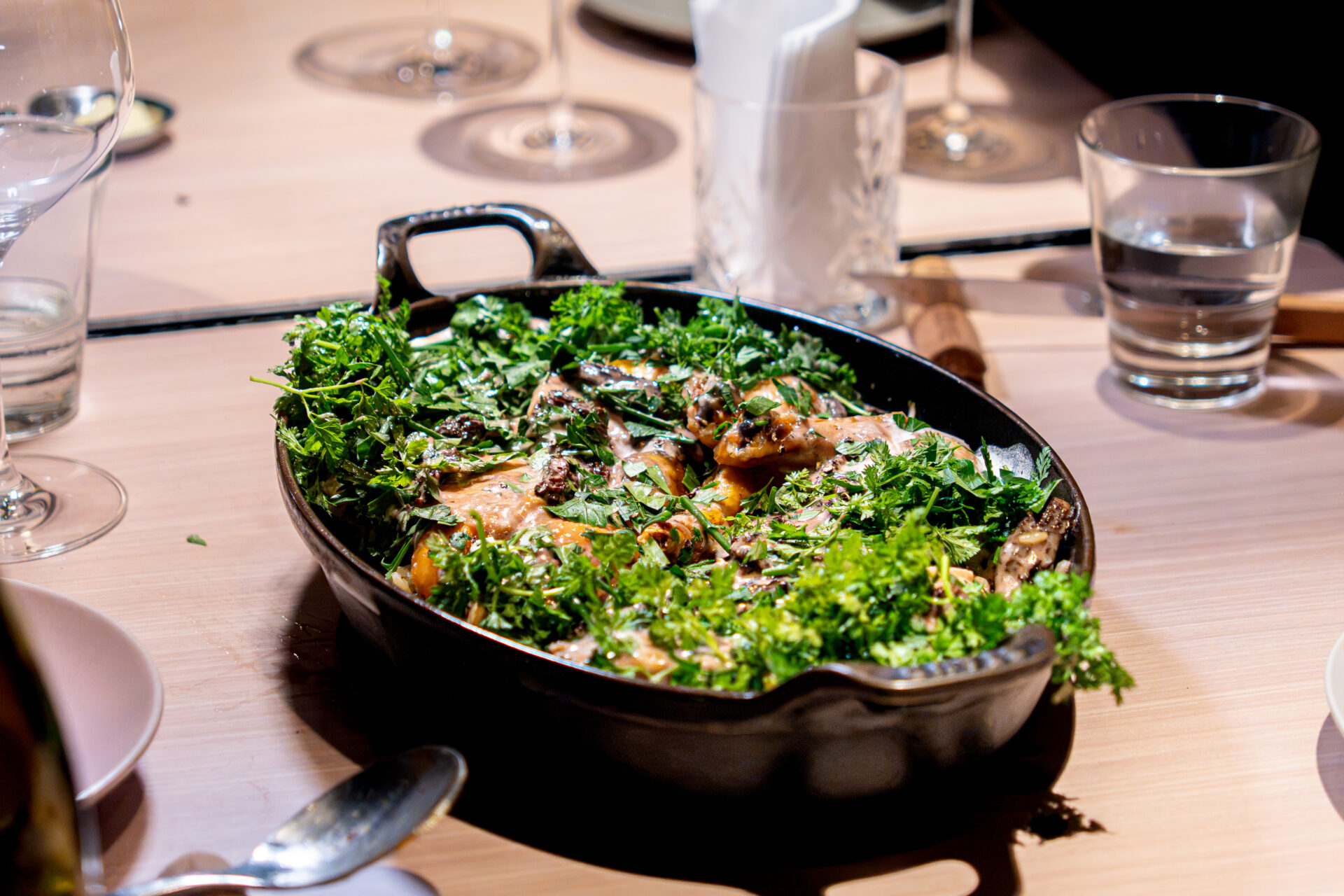
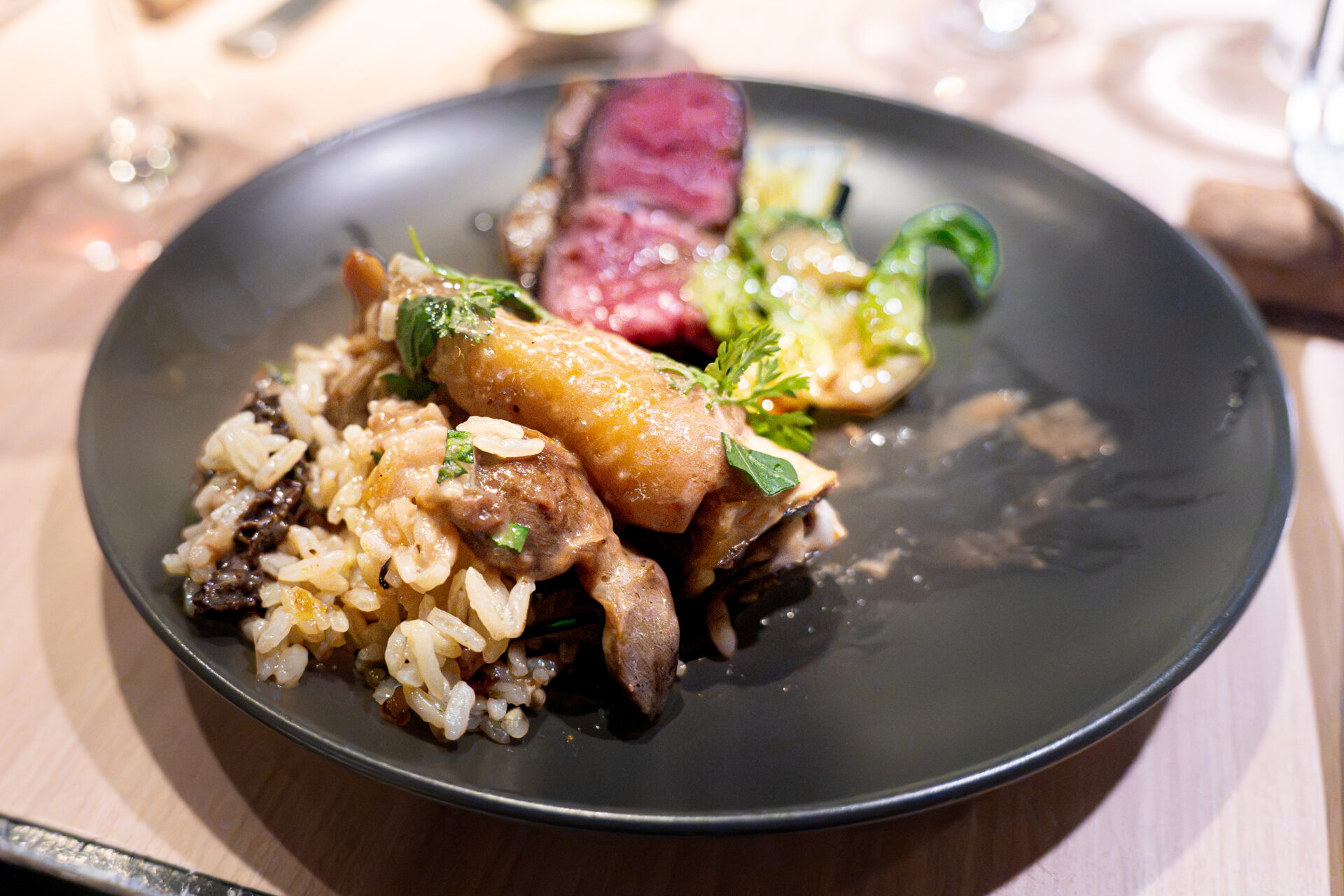
Salt-Baked Chicken with Morel Mushrooms (Baked Chicken / Giblets / Morel Mushrooms)
The restaurant’s signature specialty, complete with the tableside performance of cracking open the salt crust.
The chicken, slowly cooked within its salt casing, is remarkably moist, locking in all its umami.
A fragrant morel mushroom sauce is added, further elevating the elegant flavor of the chicken.
Aged Spanish Rubia Gallega Rib Steak
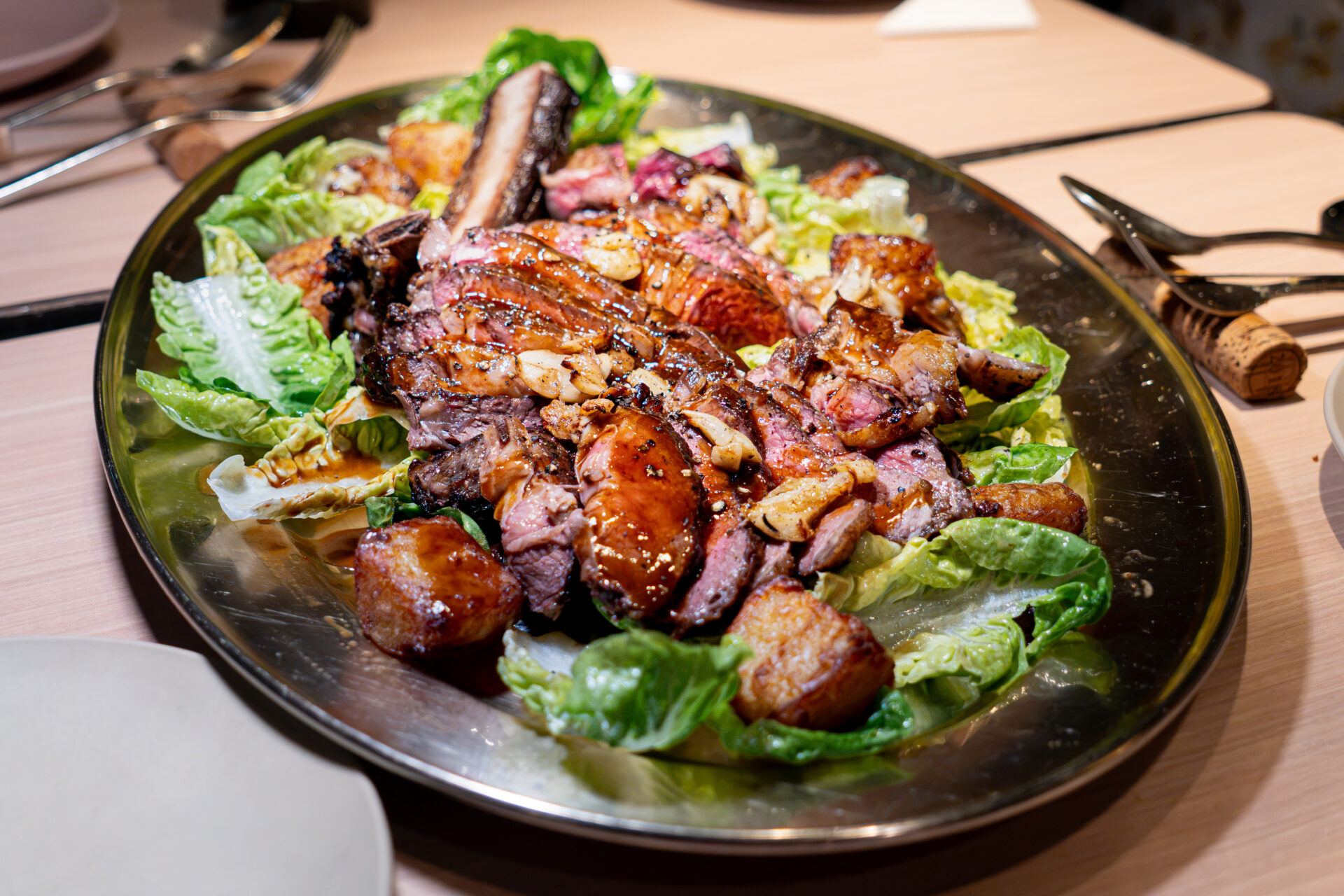
The main dish was an aged rib steak from Spanish Rubia Gallega cattle.
The outside grilled to a fragrant finish, the inside moist and juicy.
The aging concentrates the umami of the red meat and the sweetness of the fat, filling the mouth. Simple seasoning lets you fully enjoy the delicious taste of the meat itself.
Summary and Impressions
This was a place where genuine quality lives within a casual atmosphere.
Built on a French foundation and gently incorporating Mediterranean and Asian elements,
every dish was, without needing an explanation, simply delicious,
with the design of aroma and temperature precisely executed.
From salad, to seafood, to meat, to paella, everything flowed together naturally.
Even powerful dishes like the “salt-baked chicken,” “bouillabaisse,” and “kinki paella”
never felt heavy, leaving behind a quiet resonance of the ingredients.
Chef David Lai’s “sense of subtraction” runs through the whole experience,
and you can see real technique in the depth and balance of the cooking.
The dining room feels lively yet composed,
and the service is friendly with a close, approachable distance.
As a place to enjoy food freely without being confined to a single genre,
it truly captures Hong Kong’s generous spirit.
It’s a feeling different from Japanese restaurants,
a sense of quality as an extension of everyday life.
If I lived in Hong Kong, I think I’d want to come back regularly.
It was a restaurant with just that kind of warmth and genuine satisfaction.
Reservations and Access
How to Reserve
Neighborhood is one of Hong Kong’s especially popular restaurants, so advance reservations are recommended. Seating is limited, and dinner service in particular can fill up quickly. Reservations can be made through the online booking service “Inline,” or by phone (+852 2617 0891). Note that some signature large-format dishes, such as the salt-baked chicken and kinki paella, may require advance reservation, so it’s a good idea to place your order for these at the time of booking.
Access
The restaurant is located on the street level along Hollywood Road in Central, Hong Kong Island, at 61–63 Hollywood Road. The nearest MTR stations are Central Station or Hong Kong Station, about a 10-minute walk away. PMQ and Man Mo Temple are also within walking distance, making it an easy stop while exploring the Central area. As it sits down a small alley just off the main street, look for the understated exterior to find it.
Hours
Open Monday through Saturday, 6:00 PM to 11:30 PM, and closed on Sundays. There is no lunch service — dinner only. As this is a popular spot drawing guests from around the world, if your travel dates are set, early reservations are recommended.
- TAGS
 Plan Your Journey
We’ll create a journey tailored to your interests.