CONTENTS
About Wagae
Concept
Wagae sits in Hinoguchi-cho, Kagoshima City, a short walk from Tenmonkan — a hideaway of a restaurant with no sign out front. Despite its Japanese name, the food is Italian regional cooking. “Wagae” is Kagoshima dialect for “our home,” used locally in the same sense as “wagaya.” Perhaps the thinking is to serve the traditional dishes of faraway Italy as though welcoming guests into one’s own house.
The restaurant opened on September 30, 2024. It is a small, counter-only room run single-handedly by the chef.
The chef builds the menu on the cooking of Emilia-Romagna in northern Italy — home to Bologna and Modena, the heartland of hand-made pasta culture, and a region famed for ragù, charcuterie, and stuffed pastas. The stated theme is “cucina tradizionale,” or traditional cooking. Rather than chasing trends, the kitchen is respected for preserving the structure of dishes rooted in their native soil.
About the Chef
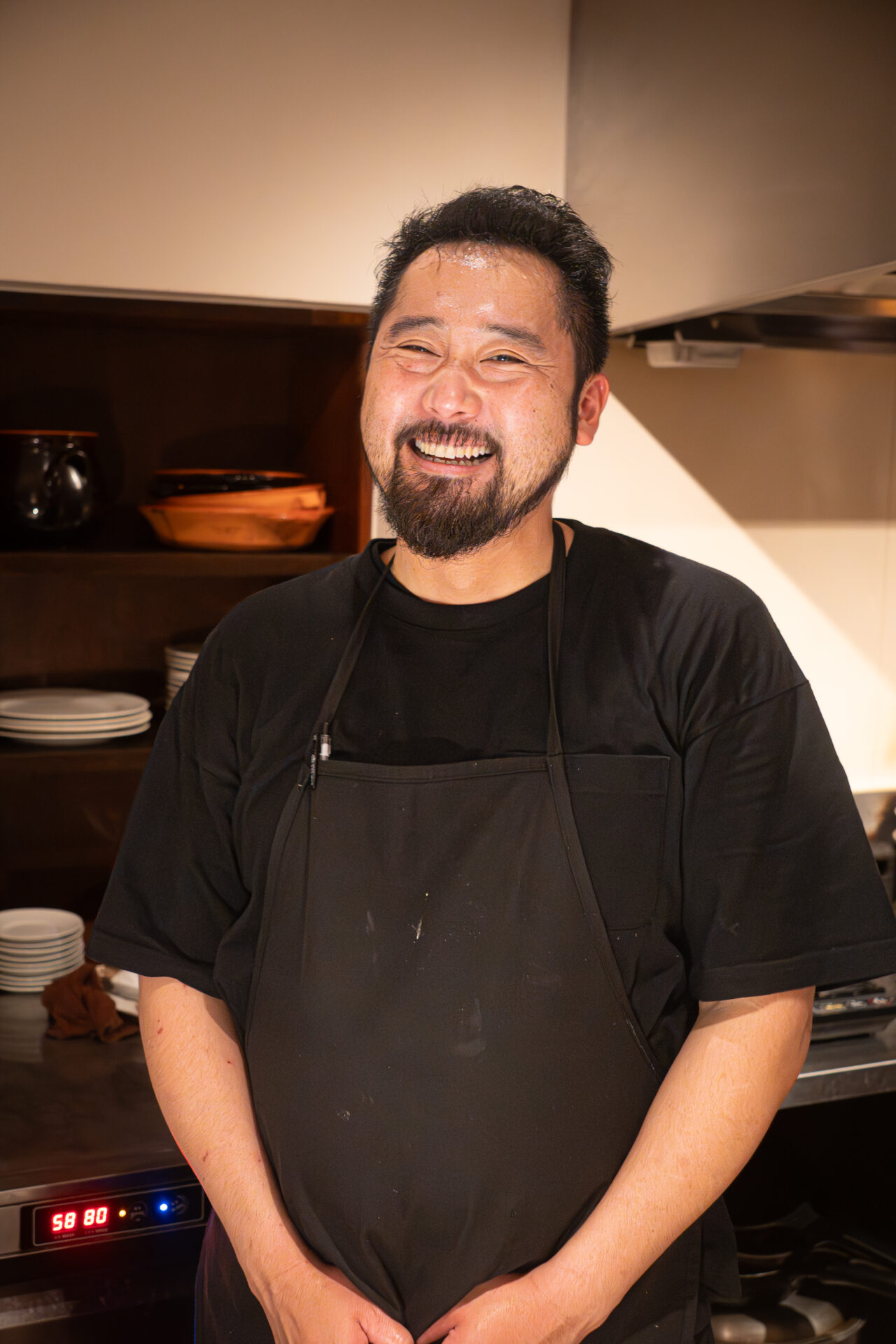
The chef is said to have trained on location in Italy and, knowing its atmosphere firsthand, to express it here in Kagoshima. One visitor described him as the type who lets his experience seep naturally into the plate rather than talking it up. Another review likewise notes a menu of hard-core regional dishes rarely seen elsewhere, content that recalls an apprenticeship in Emilia-Romagna.
What brought wide recognition to his skill is the signature dish, tortellini in brodo.
He is not strictly traditional, however, and also works in distinctly Kagoshima ingredients. A tagliata of fragrantly seared bonito with olive oil and bottarga is one example. Dishes are served à la carte, so guests can build their meal freely to taste.
Young as it is, Wagae has a clearly defined direction. As a place to taste Italian tradition in a Kagoshima “home,” it is drawing attention from food lovers beyond the prefecture.
Dining Prelude
Exterior & Entrance
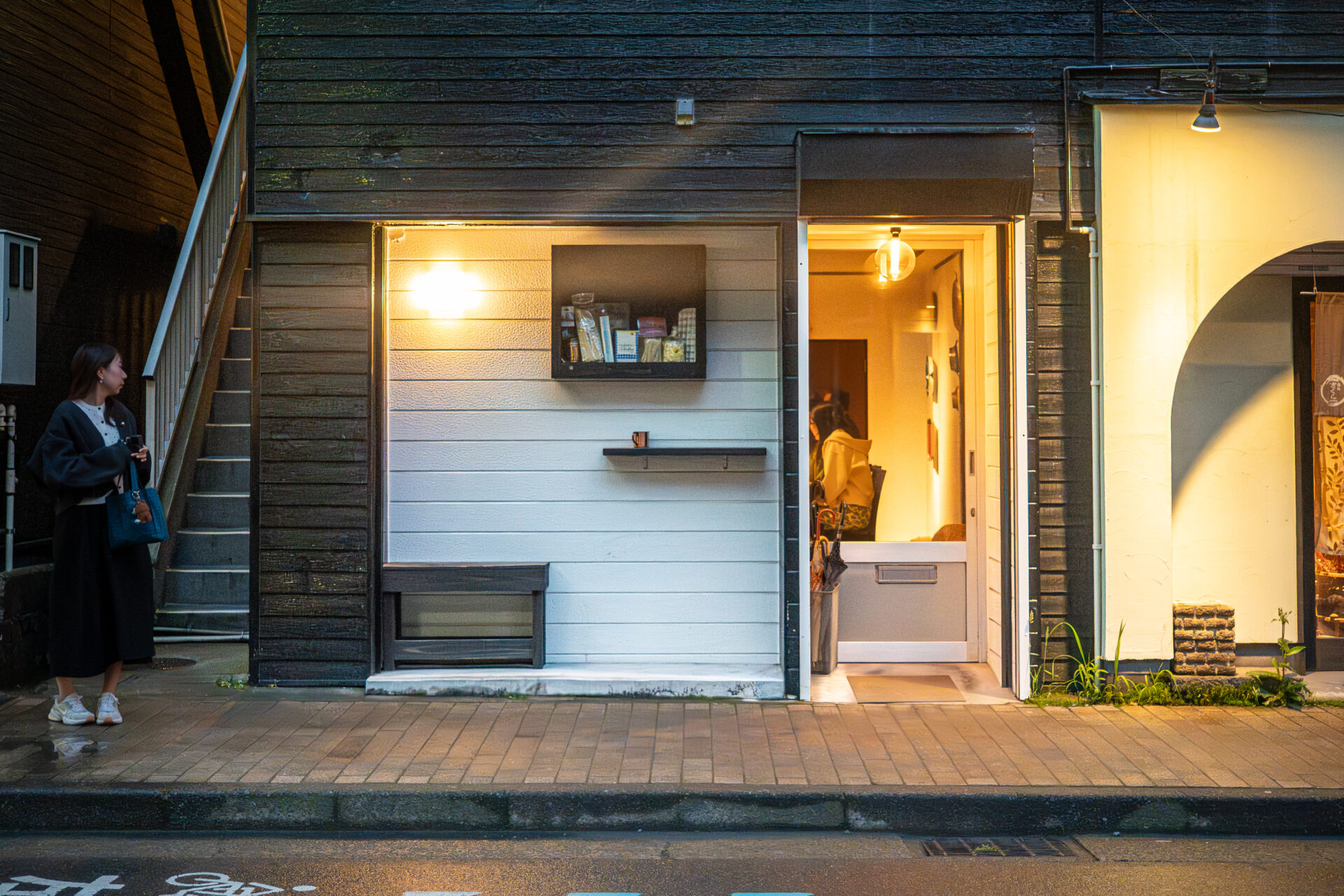
A single light glows in the night alley.
Wrapped in near-black navy Galvalume cladding, the building makes no claim on the street. There is no signboard and no flashy lighting, only an orange glow falling faintly on one corner of the white wall. That modesty is Wagae’s face.
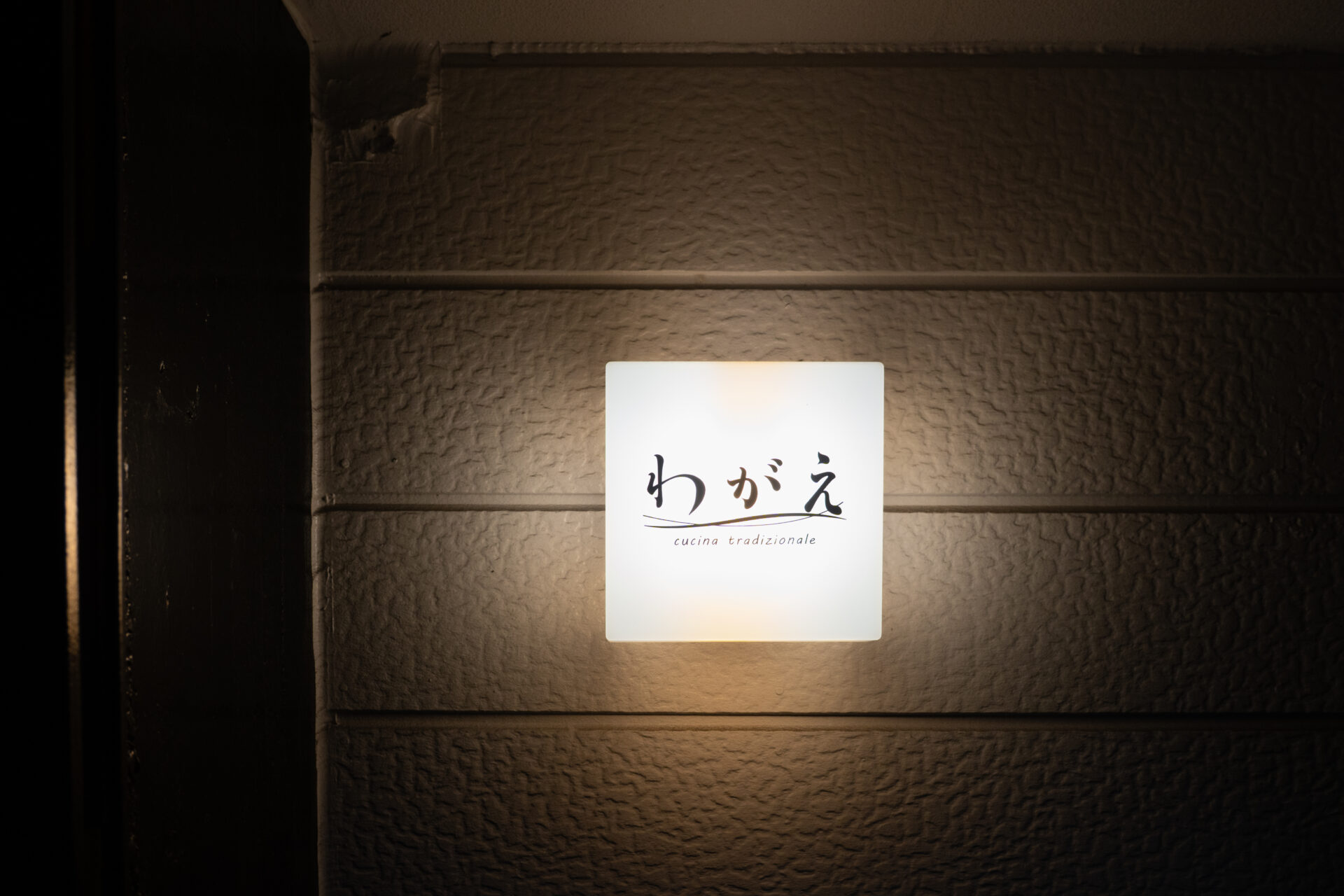
The only landmark is a small square sign set discreetly into the wall beside the entrance. The plate, with “わがえ” in brush script on white, gives off its own light yet never announces itself loudly. It feels like a quiet invitation, noticed only by those in the know.
The door stays open, and beyond it lies a space bathed in warm orange light. The contrast between the darkness of the night outside and the warmth of the light within gently raises the anticipation of anyone approaching. The silhouettes of guests seated just inside the open door are visible from the alley, evoking an intimate sense of being invited into someone’s home.
“Wagae” means “our home” in the Kagoshima dialect. True to the name, this small entrance may be a doorway to a place to come home to, set apart from everyday life.
The Dining Space
Beyond the door lies a world of nothing but a single wooden counter.
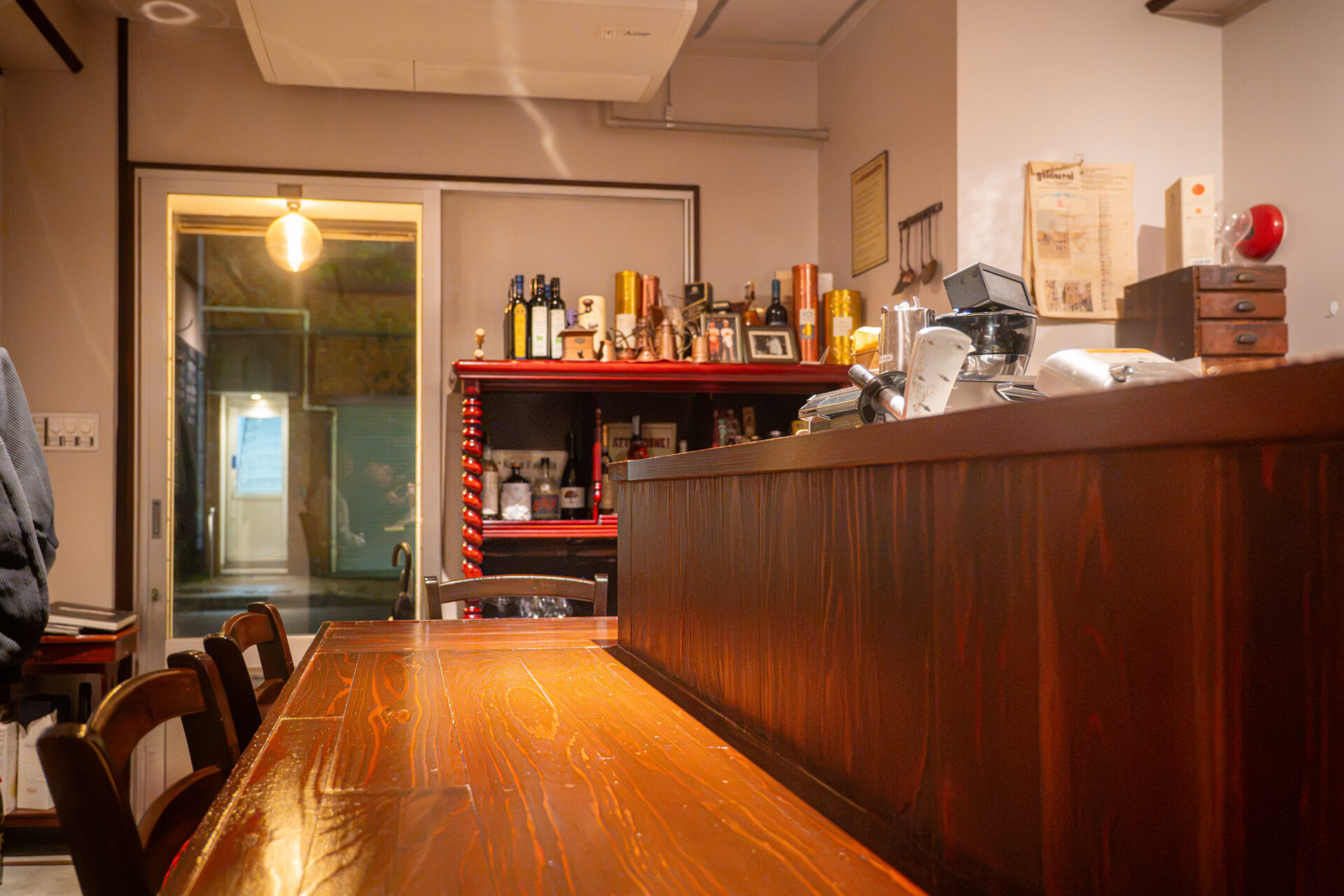
The room is ruled by a solid-wood counter polished to a deep amber. Its grain rises beautifully across the top, carrying the composure of something raised over a long span of time and quietly anchoring the space. In front, high stools pair black steel frames with dark brown seats, a simple but refined contrast.
The floor is gray concrete and the walls are mainly white, without a trace of superfluous decoration. Only in one corner, photographs of Italian landscapes and food collages are casually pinned up, the lone accent that suggests the presence of people. Downlights and track lights soften the light on the guests’ hands and the kitchen, creating a warm zone within the darkness of the night.
Past the counter, the room runs straight into an open kitchen. Shelves of neatly lined glasses, wine bottles, well-worn cooking tools: everything sits within the guests’ view, so that the moment a dish comes into being can be felt up close. A large stainless-steel hood overhead lends the functional beauty of a professional kitchen. Bundles of dried herbs hang on the wall, adding a humble fragrance and warmth reminiscent of an Italian kitchen.
Strip everything away, and what remains is the food and the people. Wagae’s dining room expresses that resolute commitment through space itself.
Menu Presentation
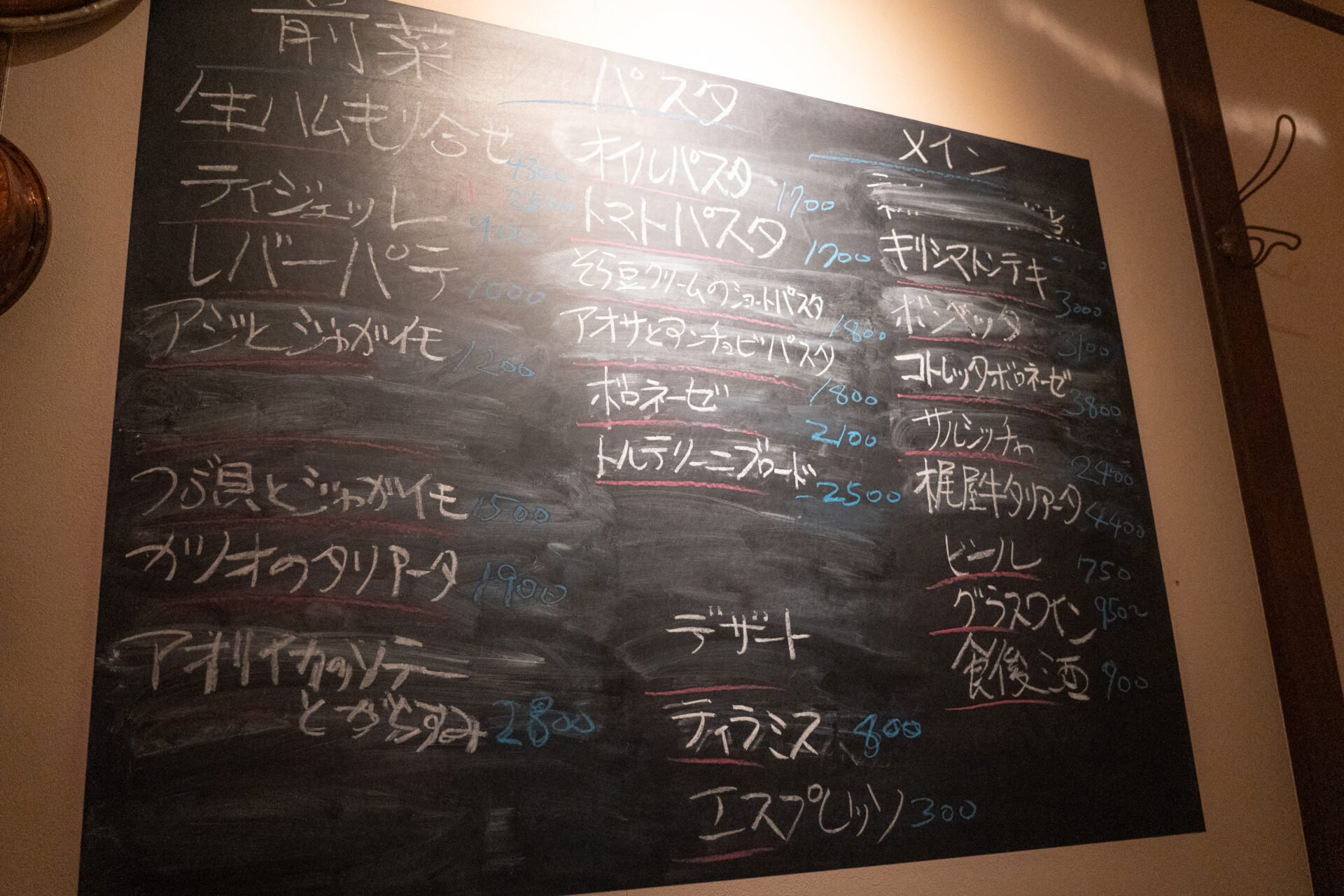
The evening’s lineup is written in white chalk on a blackboard on the wall. There is no printed menu. The day’s ingredients and their condition all live on the blackboard, rewritten the next day. Having no fixed menu is itself an expression of Wagae’s sincerity toward its cooking.
The lineup runs from antipasti through pasta and main to dessert, the very structure of an Italian meal. Traditional Emilia-Romagna dishes such as tortellini in brodo and cotoletta alla bolognese sit at the center, while ingredients distinctive to Kagoshima, such as aosa seaweed, bonito, aori squid, and Kajiwara beef, appear throughout. Elevating local produce through Italian technique: that stance is condensed into a single blackboard.
The Tasting
Prosciutto Assortment (Half) × Tigelle
A dish fitting for the start of the evening was quietly set down on the counter.
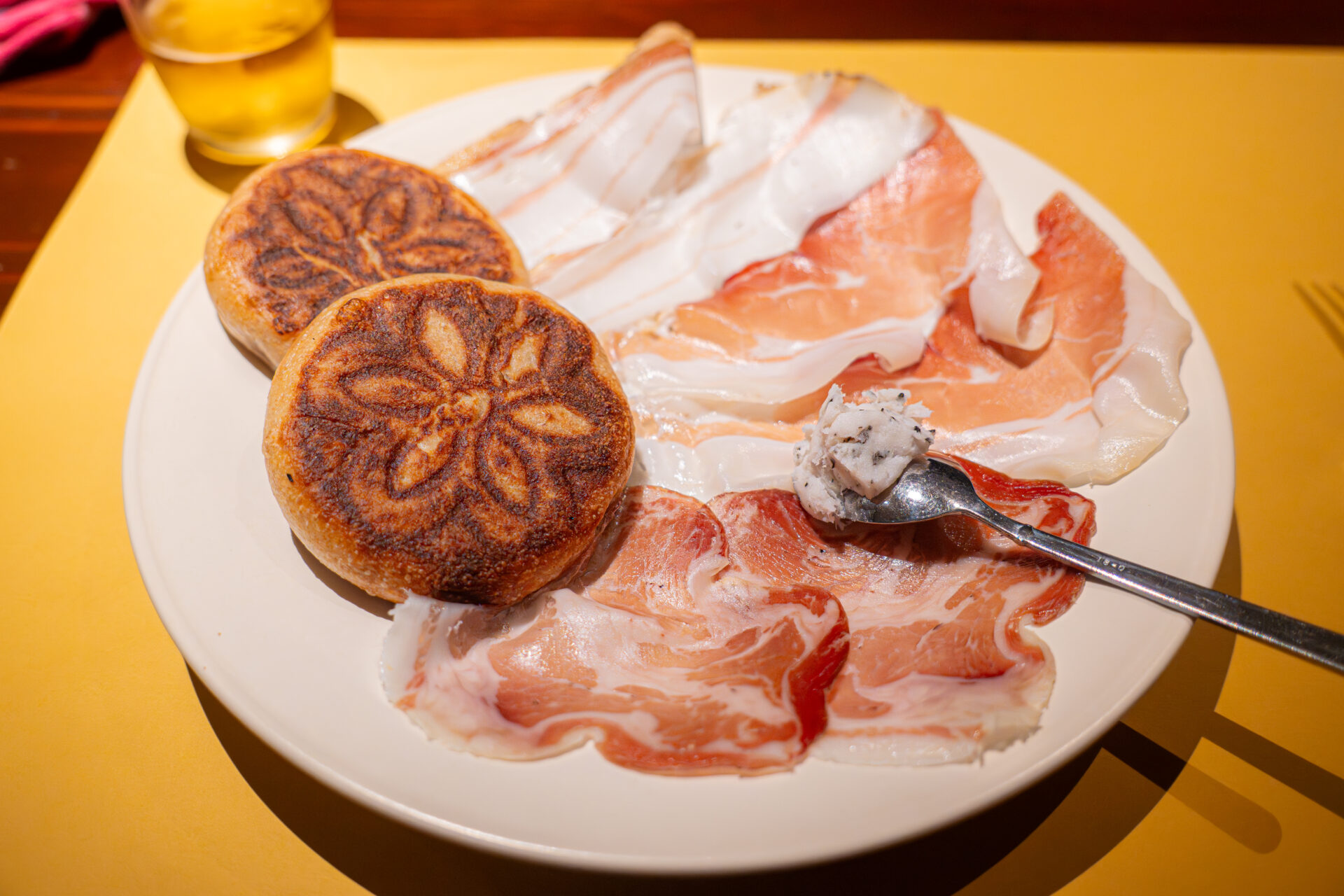
Spread across a large white plate are three cured meats from RITORNO in Gunma: prosciutto, pork-belly pancetta, and shoulder loin. Each comes from a different cut, yet each has its own character through the balance of aging and salt, and they harmonize beautifully on a single plate. The cross-sections, with glossy red layered over fat, promise umami at a glance. Beside them, a heaped spoonful of lardo, a traditional Italian delicacy of salt-cured pork back fat, melts slowly in the mouth as its concentrated richness spreads.
The star of this plate is the tigelle served alongside. These small round griddle breads have long been made in Emilia-Romagna, their surfaces stamped with a traditional flower pattern. Seared firmly on both sides on an iron plate, they are fragrantly browned outside and moist and dense within.
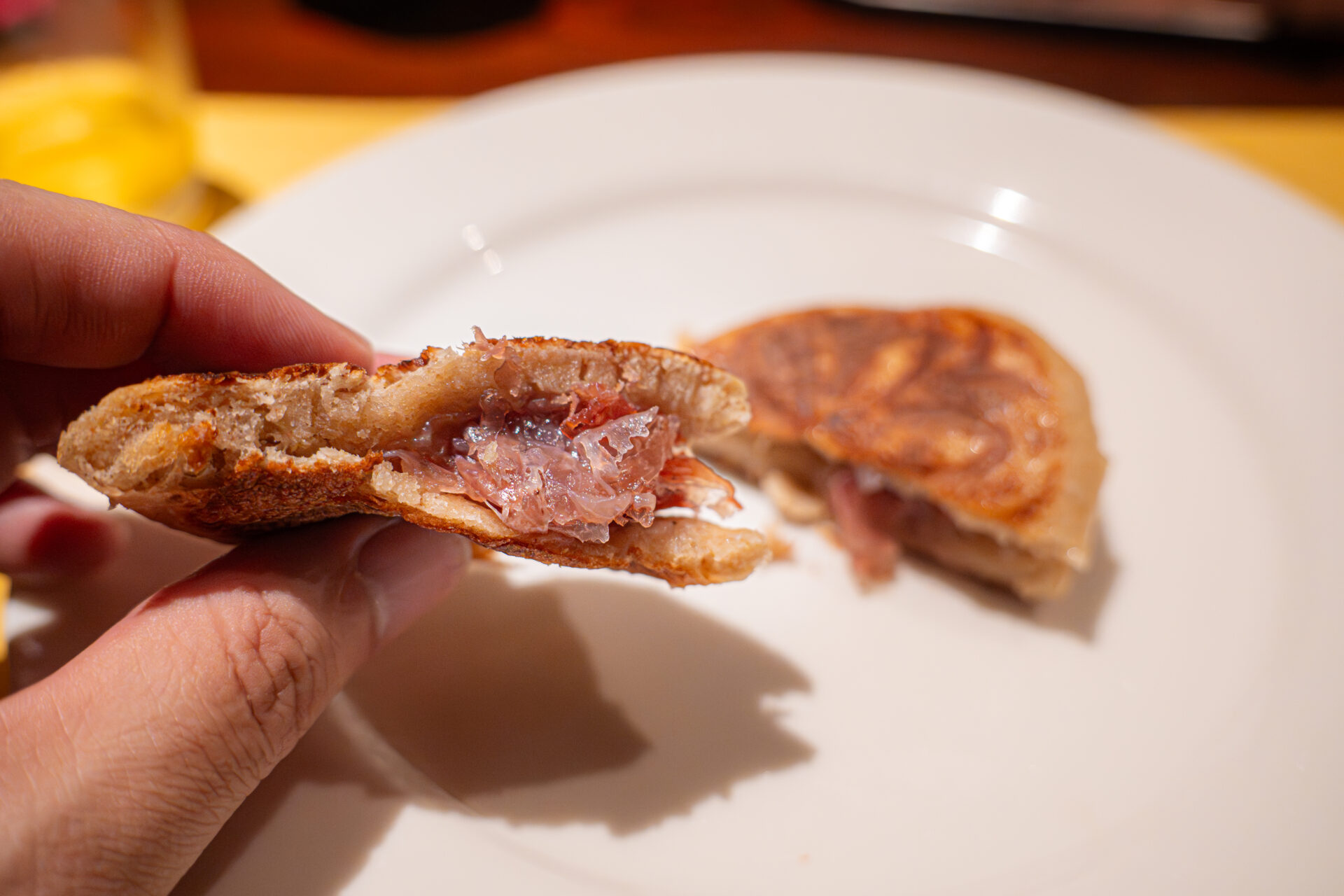
The way to eat it is simple and bold. Split the tigelle open with a knife, tuck in the cured meat, and take a bite, like an Italian take on a hamburger. The warmth of the freshly baked bread gently loosens the fat of the cold meat, and salt and umami merge as they spread through the mouth. That sensation of eating on your feet in a Modena back alley quietly returns here on a Kagoshima night.
The essence of regional cooking lies in subtraction, in ingredient and technique alike. This one plate said it eloquently.
Wine by the Glass: “Leàl” — Rebola
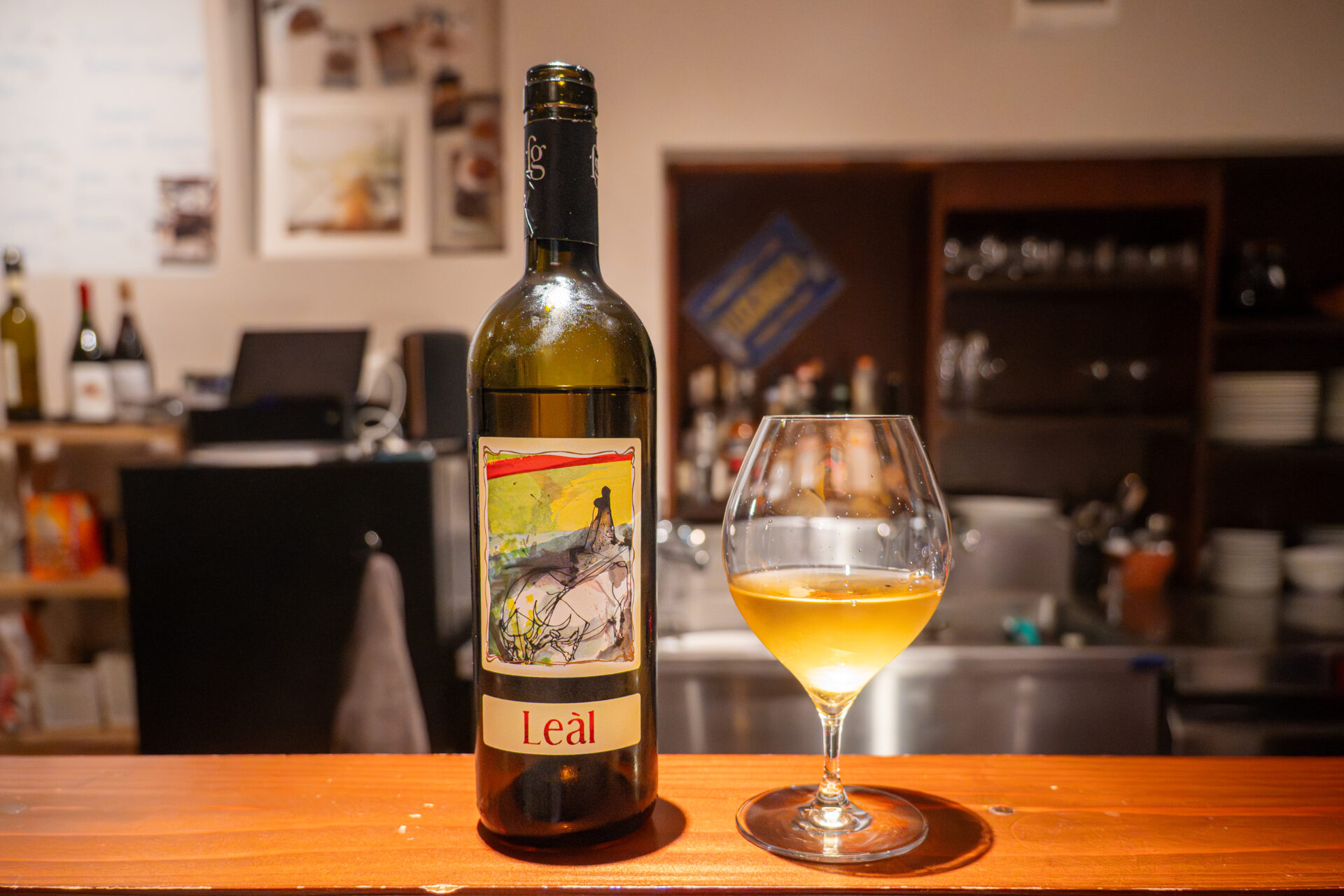
What was served was the white wine “Leàl,” handled by Disco Italia, a specialist importer of Italian wine. It is 100% Rebola at 13.5% alcohol, fermented in stainless steel tanks and then slowly aged in old barriques.
Poured into the glass, the color was a deep gold. Though a white wine made from fermented juice alone, its hue is rich enough to recall an orange wine, reflecting Rebola’s characteristic shift from hay color to amber.
Fruity, with a velvety mouthfeel and delicate fruit aromas, along with the complex fragrance and flavor that barrel aging brings, this wine resonated deeply with the evening’s dishes, beginning with the cured meats and tigelle. Emilia-Romagna grapes, Emilia-Romagna cooking: the wines Wagae chooses pour the inevitability of dish and place into a single bottle.
Whelk and Potato
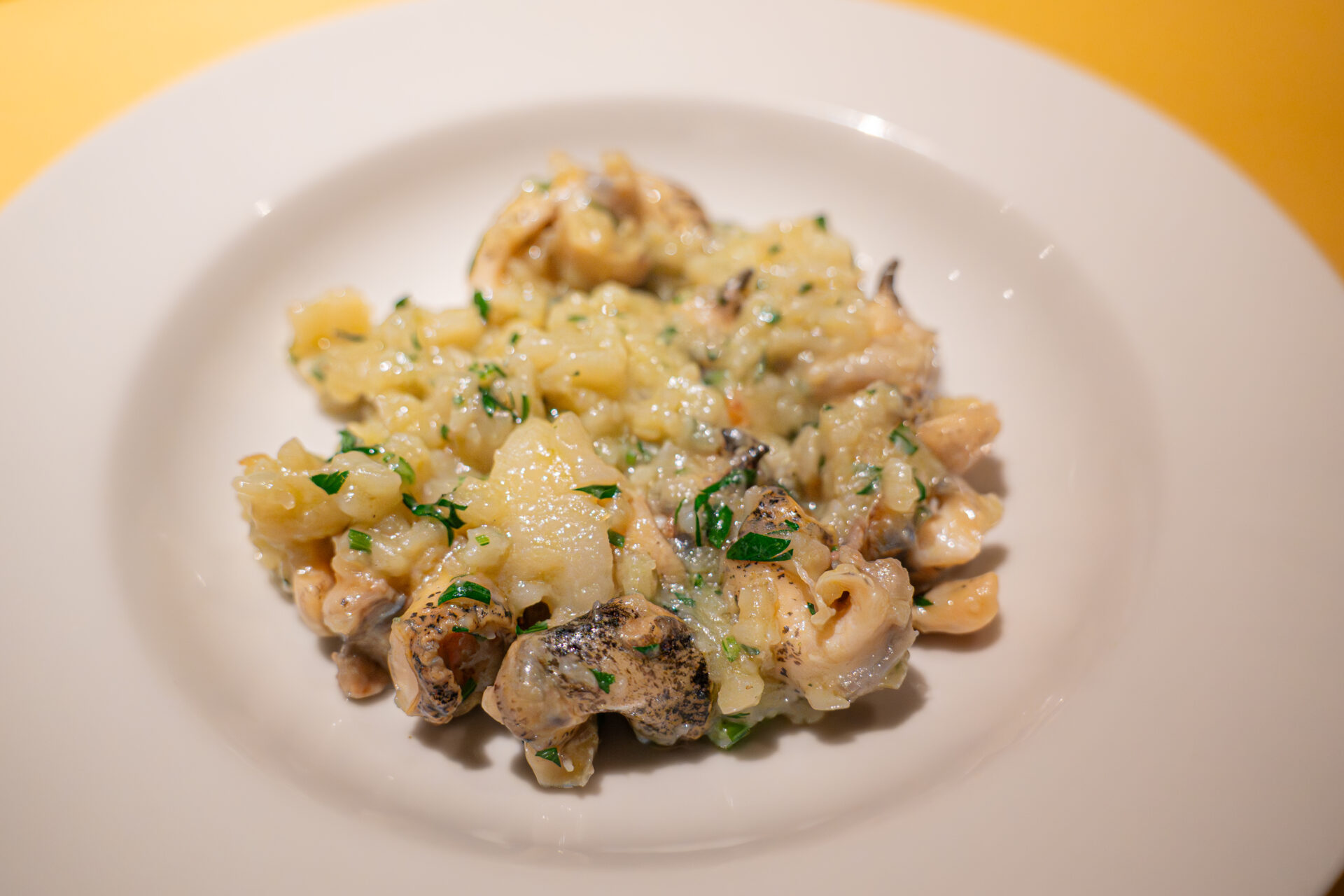
A modest mound in the center of a large white plate. It looks humble at first, but the moment it reaches your mouth, a strange pull makes you wonder, “what is this?”
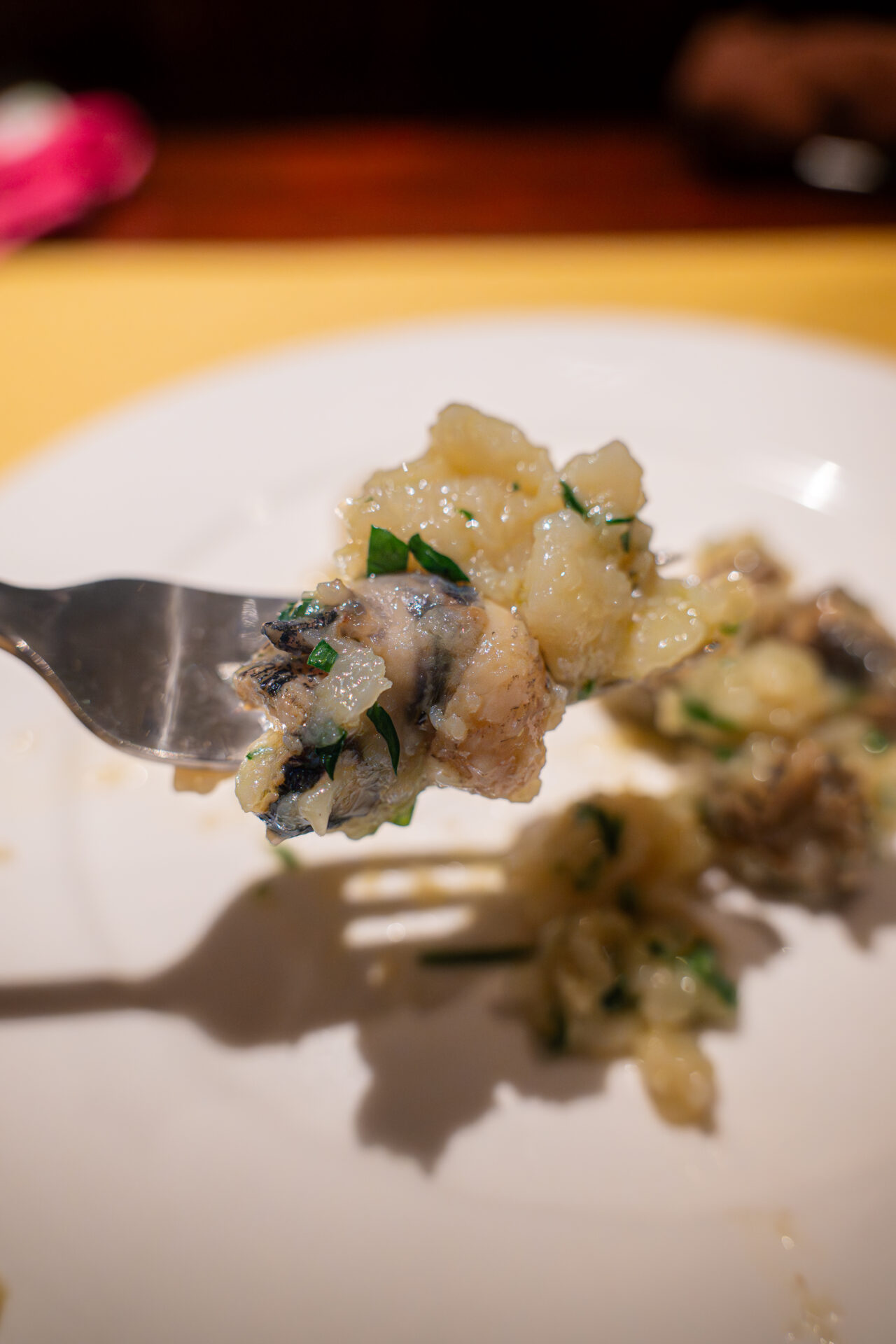
Scattered with chopped green parsley, the stars of the plate are whelk and potato. The sauce is silky and smooth, as dense as mashed potato. But that is not where the dish ends: potatoes deliberately left not fully crushed show up here and there as small grains. The melting parts and the parts that meet the teeth form a subtle gradient, changing expression with each bite.
The whelk adds springiness and the umami of the shore, and the potato’s sweetness and the sea’s salinity bring out the best in each other. No complicated technique is used. Only the judgment of how to cook the ingredients and how far to crush them creates this much depth.
Neither mash nor chunks, but a texture somewhere in between. That is the subtractive aesthetic so characteristic of Wagae.
Tortellini in Brodo
The climax of the evening was, without question, this dish.
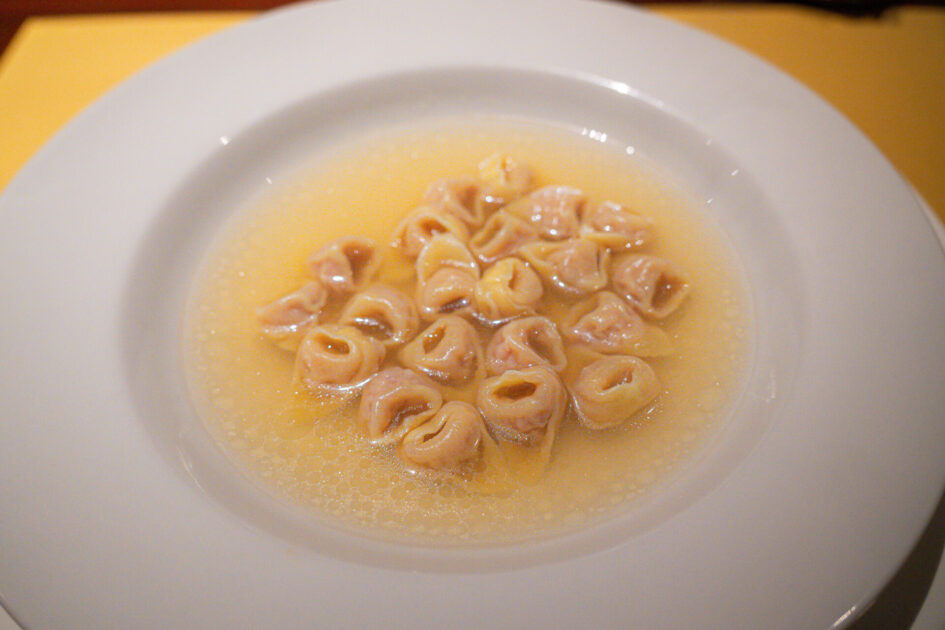
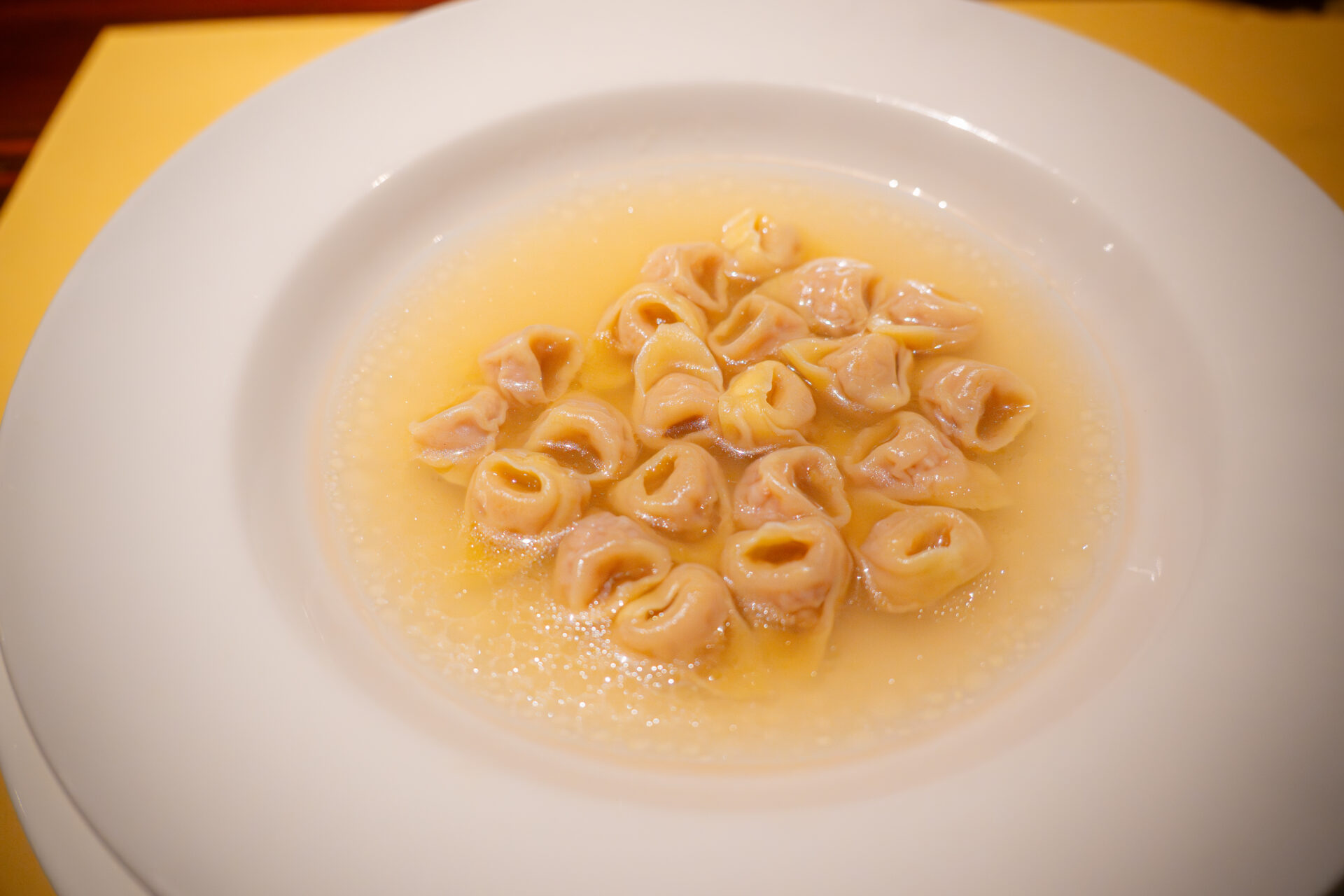
At the bottom of a deep white bowl, a golden broth gleams, and small tortellini float quietly within. There is no garnish. Only clear broth and ring-shaped pasta the size of a thumbtip. Yet the moment the bowl sits before you, a tension makes you sit up straight.
Tortellini are a regional pasta of Emilia-Romagna, born in Bologna, traditionally filled with pork loin, prosciutto, mortadella, Parmigiano-Reggiano, egg, and nutmeg, and eaten in a broth made from capon and beef. An indispensable dish on the Christmas table, it has been handed down across hundreds of years.
Lift one with the spoon and the filling shows faintly through the thin, delicate pasta. In the mouth, the dough unravels, and the umami of the filling, where meat and cheese have melted together, spreads as one with the broth. And that broth is overwhelming. The clear golden liquid has no off-notes, only pure umami, quietly deep.
“A delicate balance between a light soup and a filling that loosens in the mouth” may be a well-worn phrase, but at Wagae it lets you experience the moment a dish you thought you knew leaps to another dimension. When the world-traveling gourmand Takefumi Hamada said it “surpasses the real thing,” standing before this bowl, no word other than agreement came to mind.
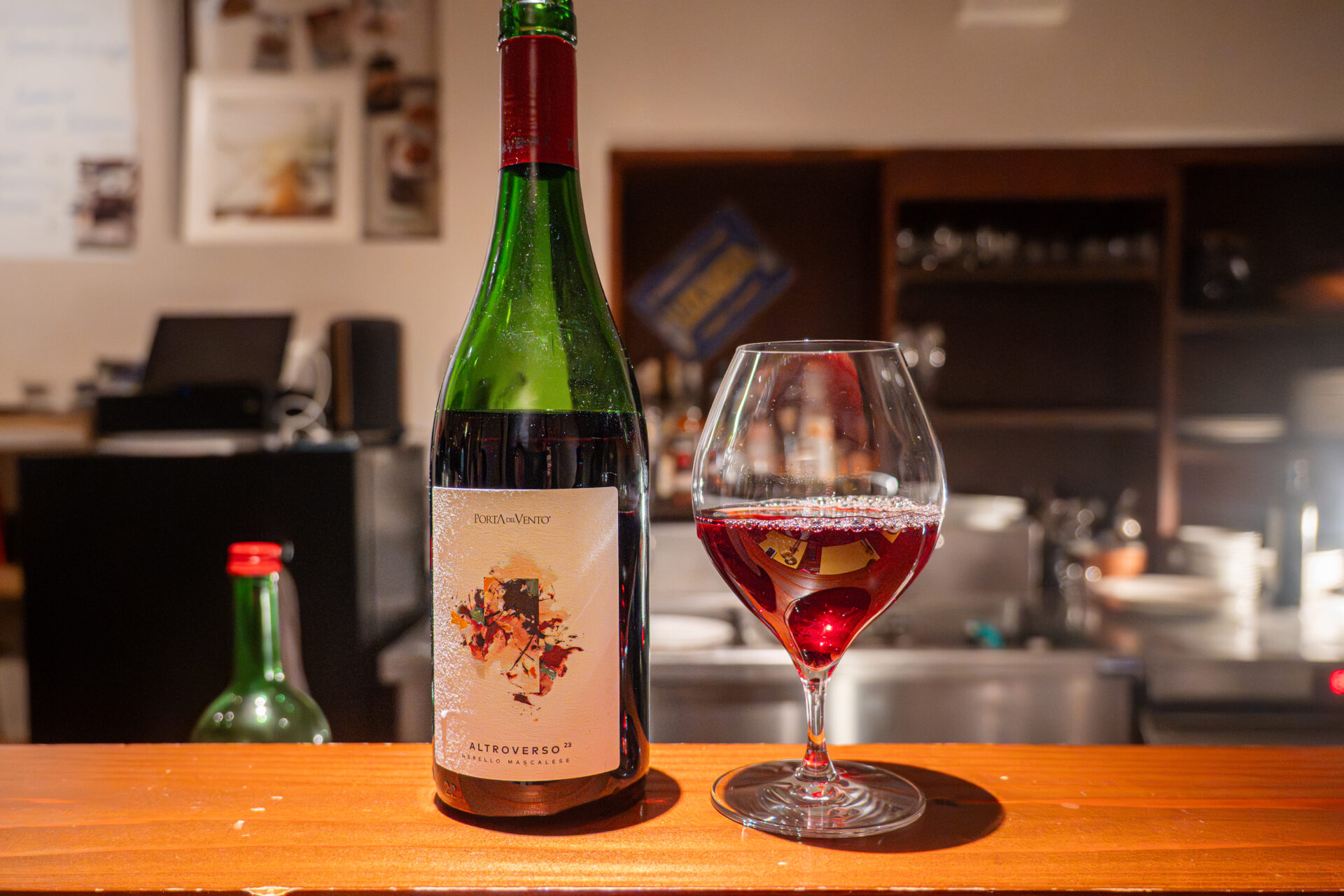
Wine by the Glass: “Altroverso ’23” — Nerello Mascalese
With the afterglow of the tortellini lingering, the next glass poured was a vivid red-violet wine.
The producer is Porta del Vento, with 20 hectares of vineyard in Camporeale, in northwestern Sicily. It is a strictly biodynamic estate run by Marco Sferlazzo, a former pharmacist.
“Altroverso” is 100% Nerello Mascalese grown on a north-facing vineyard at 600 meters. Cultivated biodynamically and organically, it embodies the character of its land as it is.
Nerello Mascalese, sometimes called “the Nebbiolo of the south,” is an indigenous Sicilian variety, a balanced medium-bodied red combining Mediterranean warmth with northern Italian elegance. In the glass, a translucent ruby sparkled like a gemstone in the orange light.
Fresh and easy to drink, with fruit flavor and lightness, this wine accompanies every stage of a meal with its distinctive character. Even after the rich tortellini broth, it rinsed the palate cleanly and invited the next bite. The wind and earth of Sicily blew quietly into the Kagoshima night.
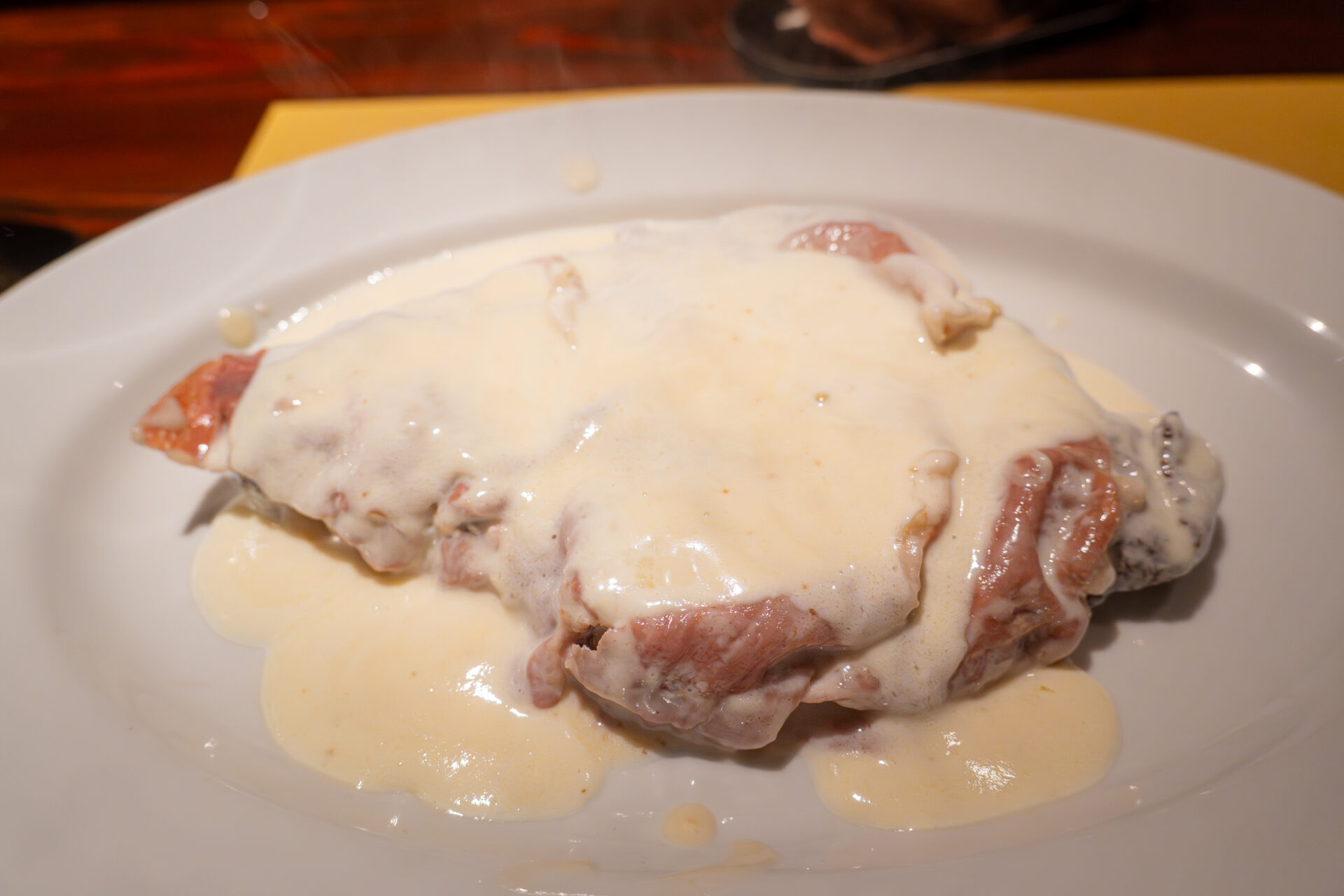
Cotoletta alla Bolognese (Pork)
The evening’s main course arrived quietly, wrapped in steam.
Cotoletta alla bolognese is one of Bologna’s signature traditional dishes. Meat fried in lard is dipped in broth, then covered with prosciutto and Parmigiano-Reggiano and finished in the oven until the cheese melts.
Wagae’s version swaps in pork. A thinly pounded pork cutlet is pan-fried, layered with plenty of prosciutto, and finished by wrapping the whole in a silky, dense cheese sauce. The sauce flows across the white plate with a glossy sheen, like snow, and a faint steam rises.
The layered composition of cutlet, ham, and cheese is substantial, and at first glance it looks like a hearty dish. One bite overturns that impression. The pork’s tender umami meets the saltiness and aged aroma of the prosciutto, and the richness of the melted cheese settles gently alongside. It is not heavy; it is abundant.
The accompanying bread does its work too. A house-made sourdough-style loaf with a crackling crust and an airy, chewy crumb. Mopping up the cheese sauce left on the plate with the bread, that scarpetta is the highest courtesy an Italian pays at the close of a meal.
Keeping the structure of tradition while reading the ingredients in a Kagoshima key: that is Wagae’s way of respecting regional cooking.
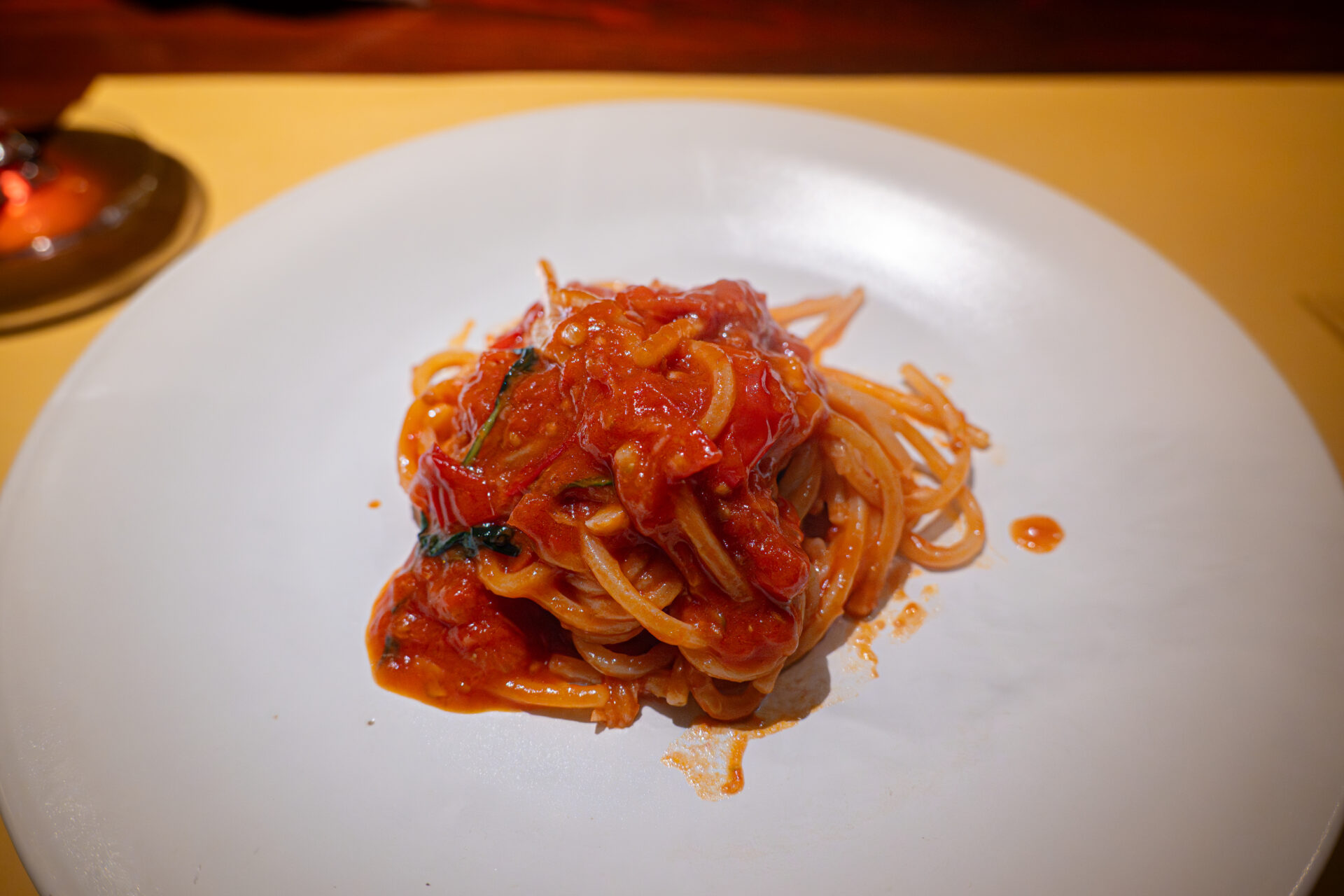
Tomato Pasta
Resolute. Simply, utterly resolute.
A vivid red is mounded in the center of a large white plate. Nothing superfluous: tomato, pasta, basil. That is all. Yet that very simplicity confronts you with the maker’s resolve. With no technique to hide behind, there is no room for deception. Ingredient and cooking alone decide everything on this plate.
The noodle is a slightly thick, flat spaghetti. The surface carries a generous coat of tomato sauce, and the red-stained strands gleam. In the mouth, a chewy spring greets the teeth first, but a firm bite remains at the core, and the sweetness of the wheat seeps out with each chew. The precision of the boil is the life of this noodle.
The sauce is thick, concentrating tomato’s acidity and sweetness. There is no wateriness at all. The umami drawn out by reduction clings to each strand and the flavor never wavers to the last bite. The green fragrance of basil serves as an accent, tightening everything lightly.
They say an Italian restaurant’s true ability shows in its tomato pasta. Wagae’s version proved that saying quietly but unmistakably.
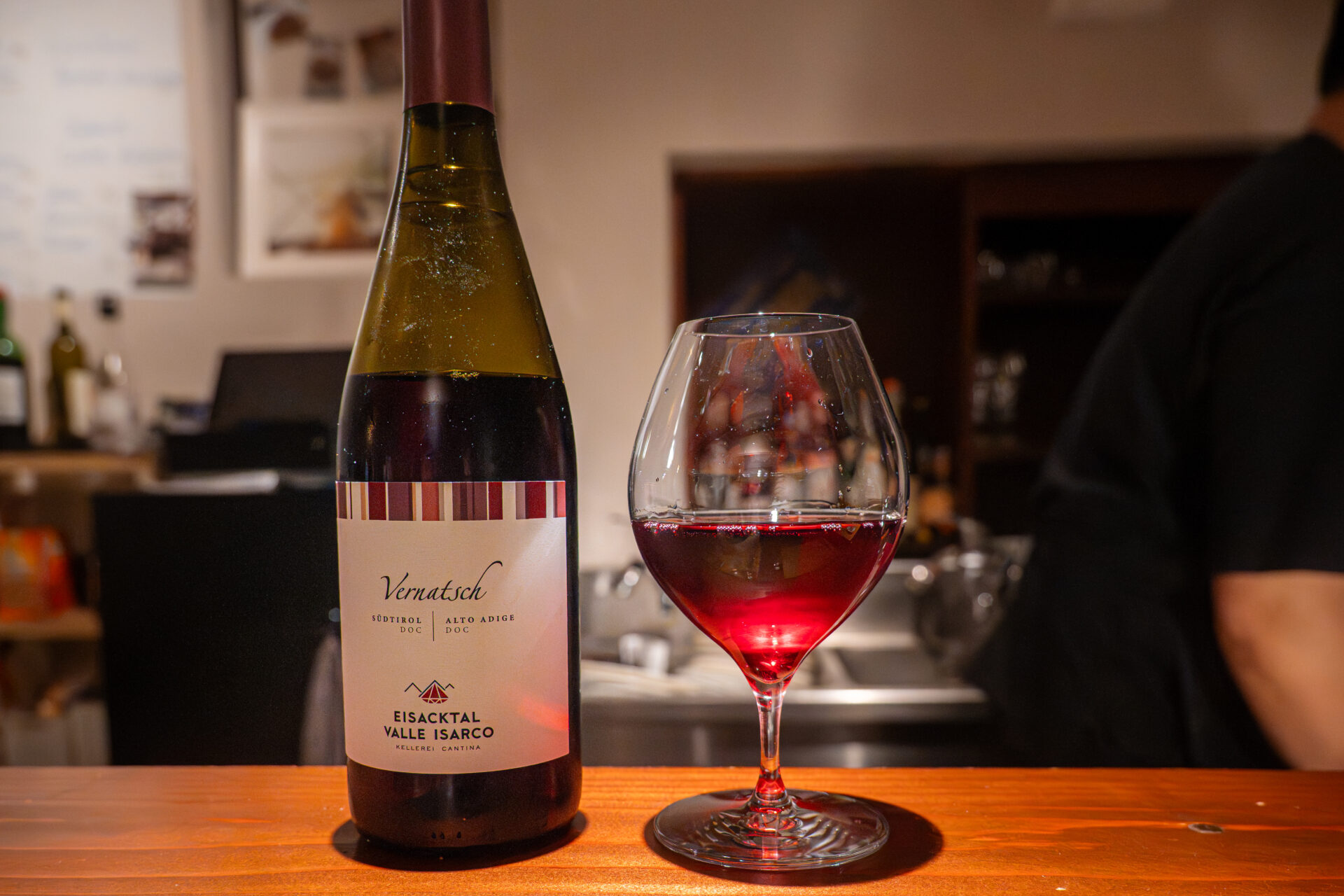
Wine by the Glass: “Vernatsch” — Cantina Valle Isarco
The evening’s last wine was unexpectedly light.
The producer is Cantina Valle Isarco (Eisacktal Kellerei), a cooperative winery in Italy’s far north, founded in 1961 and joined by 130 grower families. Located in the Isarco Valley in South Tyrol near the Austrian border, it is known for distinctive wines born of Alpine vineyards spread across steep slopes.
The variety is Vernatsch, also called Schiava in Italian, a signature indigenous red grape of South Tyrol, grown on porphyry soils at 400 to 700 meters.
Poured into the glass, the wine was a ruby so clear it caught the eye. Highly transparent, closer to rosé than to red in tone, it glowed like a gemstone in the orange light.
The mouthfeel is light with low tannin, the freshness of the fruit stands out, and a gentle almond-like aroma tickles the nose. After the rich cotoletta and the tomato pasta, the lightness and coolness of this wine brought a perfect sense of release. It felt as though an Alpine breeze had blown through the counter for a moment.
Final Thoughts
Before I knew it, I had lost track of time.
Every dish served that night was unadorned yet backed by sure technique and sincerity. The prosciutto tucked into tigelle, the whelk and potato that look like mash but keep their texture, tortellini swaying in golden broth, tomato pasta whose vivid red leaps to the eye, cotoletta alla bolognese wrapped in melting cheese: every plate was of high quality, never fawning over ingredients, never chasing trends, carefully keeping the structure of tradition. That alone creates this much satisfaction.
The owner is shy but generous in spirit. That balance is comfortable, and the unpretentious air makes the place feel so easy to settle into.
Even though we ordered wine by the glass, a new bottle was opened every time. Grateful as we were, each time we couldn’t help worrying, “Is that really okay…?” (lol).
That Kagoshima has an Italian restaurant this good is reason enough to visit the city. Wagae is a place you will surely want to return to once you’ve been.
Reservations & Access
Reserve by phone. DMs are also accepted, but replies can take time, so a phone call is the surest route. As a one-person counter restaurant, seating is limited. Be sure to book before you visit.
Hours are 17:00 to 23:00, closed Thursdays. Evenings only.
It is about a 2-minute walk from Koto Chugakko-mae Station on the city tram, and within walking distance of the center of Tenmonkan.
| Address | Rinnai Building 1F, 10-45 Hinoguchi-cho, Kagoshima City, Kagoshima Prefecture |
| Access | About a 2-minute walk from Koto Chugakko-mae Station (city tram) |
| Phone | 070-4568-1234 |
| Reservations | Phone recommended (DMs accepted; replies may take time) |
| Hours | 17:00–23:00 (closed Thursdays) |
| Average budget | ¥8,000–¥14,999 (dinner) |
| @wagae1986 | |
| Tabelog | Wagae | Tabelog |
*Hours and closing days are subject to change. Please check with the restaurant before visiting.
- TAGS
 Plan Your Journey
We’ll create a journey tailored to your interests.