CONTENTS
- Ukiha: Staying at a Roadside Station — A Gourmet Journey Through Fruit Country — Prologue
- DAY 1 | By Car from Fukuoka City to Michi-no-Eki Ukiha
- Across from the Roadside Station: “Deli☆Boy BROS. HAMBURGER”
- Seasonal Bounty as Souvenirs at Michi-no-Eki Ukiha
- Tonight’s Stay: Fairfield by Marriott Fukuoka Ukiha
- A Stroll Through Michi-no-Eki Ukiha Before Dusk
- Dinner at an Old Farmhouse: “MAHORO756 CUISINE DE MAKOTO”
- A Fruit-Kingdom Opening, Then the Bounty of River and Sea
- The Signature Pig’s Trotter Gratin, and Ukiha’s Ginjo Pork
- Closing with Chicken Soboro Rice with Red Vinegar and a Matcha Terrine
- Ending the Day with a Soak at Chikugogawa Onsen “Kiyonoya”
- DAY 2 | Woken by the Morning Sun, Breakfast from the Roadside Station
- Through the Terrace to the Roadside Station in the Morning
- Kashiwa-meshi Onigiri and Freshly Pressed Milk for Breakfast
- On to Yoshii for Lunch, a White-Walled Townscape Through the Window
- Lunch at “Maaboya,” a Mapo Tofu Specialist in the White-Walled Town
- To Ukiwa Inari Shrine, with Its Vermilion Torii Gates
- Closing the Trip at the Horse Meat Specialist “Baan Konomi”
- First, Basashi and Yukhoe to Taste the Umami of Horse Meat
- Sakura Roast, Sakura Harami, Sakura Premium Kalbi — Enjoying Horse Meat Yakiniku
- After Two Days — Ukiha, a Town in the Land of Fruit
Ukiha: Staying at a Roadside Station — A Gourmet Journey Through Fruit Country — Prologue
The green of the Minou mountain range, and the rich soil carried by the Chikugo River.
Peaches and grapes, pears and persimmons — Ukiha, the “Fruit Kingdom,” overflows with the harvest of each season.
It is only about an hour by car from central Fukuoka.
And yet, a completely different kind of time flows through this town.
The traces of a merchant town in its white-walled streetscape, the vermilion torii gates climbing a mountainside,
and the work of chefs who face the local ingredients with sincerity.
This was a two-day, one-night trip taken with my wife at the start of summer.
Using a hotel adjoining a roadside station (michi-no-eki) as our base, we explored Ukiha’s food and scenery.
Precisely because it’s so close, we took it slowly.
Let’s begin by getting behind the wheel.
DAY 1 | By Car from Fukuoka City to Michi-no-Eki Ukiha
July, when the summer sun was just beginning to strengthen.
This trip started with my wife and me setting out by car.
From central Fukuoka, we linked the urban expressway and the highway and headed straight for Ukiha.
The cluster of buildings gradually receded, and rice paddies and mountains opened up outside the window.
Chatting with my wife in the passenger seat about the day’s plans while driving is one of the pleasures of a road trip.
【Photo: scenery from the car window and the expressway】
After leaving the highway and driving for a while, the green of the Minou range drew steadily closer.
Is it possible for the air to change this much in just [about 1 hour] from the city?
With that small surprise, we arrived at our first destination, Michi-no-Eki Ukiha.

True to a fruit-growing region, the parking lot was already full of cars.
Even in the morning, it was bustling with people in search of seasonal fruit.
First, lunch. We headed to a hamburger shop right across from the roadside station.
Across from the Roadside Station: “Deli☆Boy BROS. HAMBURGER”
Looking across the street from the Michi-no-Eki Ukiha parking lot, we spotted a sign reading “HAMBURGERS” in large black letters on white, hung in front of a tile-roofed house.
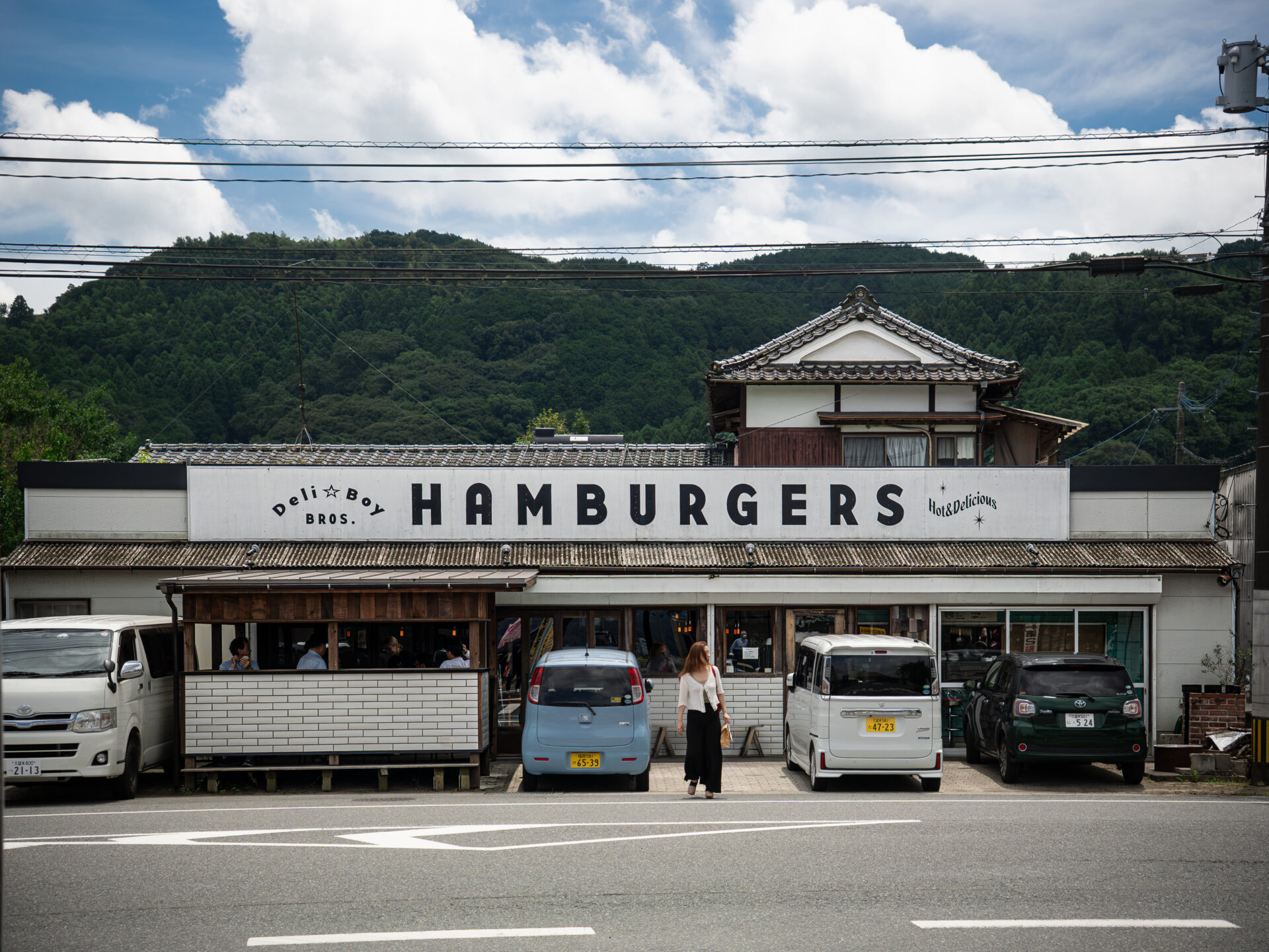
Behind it lay the deep green of the Minou range.
It felt as though an American roadside diner had suddenly appeared in the middle of the Japanese countryside —
a curious pairing that stopped us in our tracks.
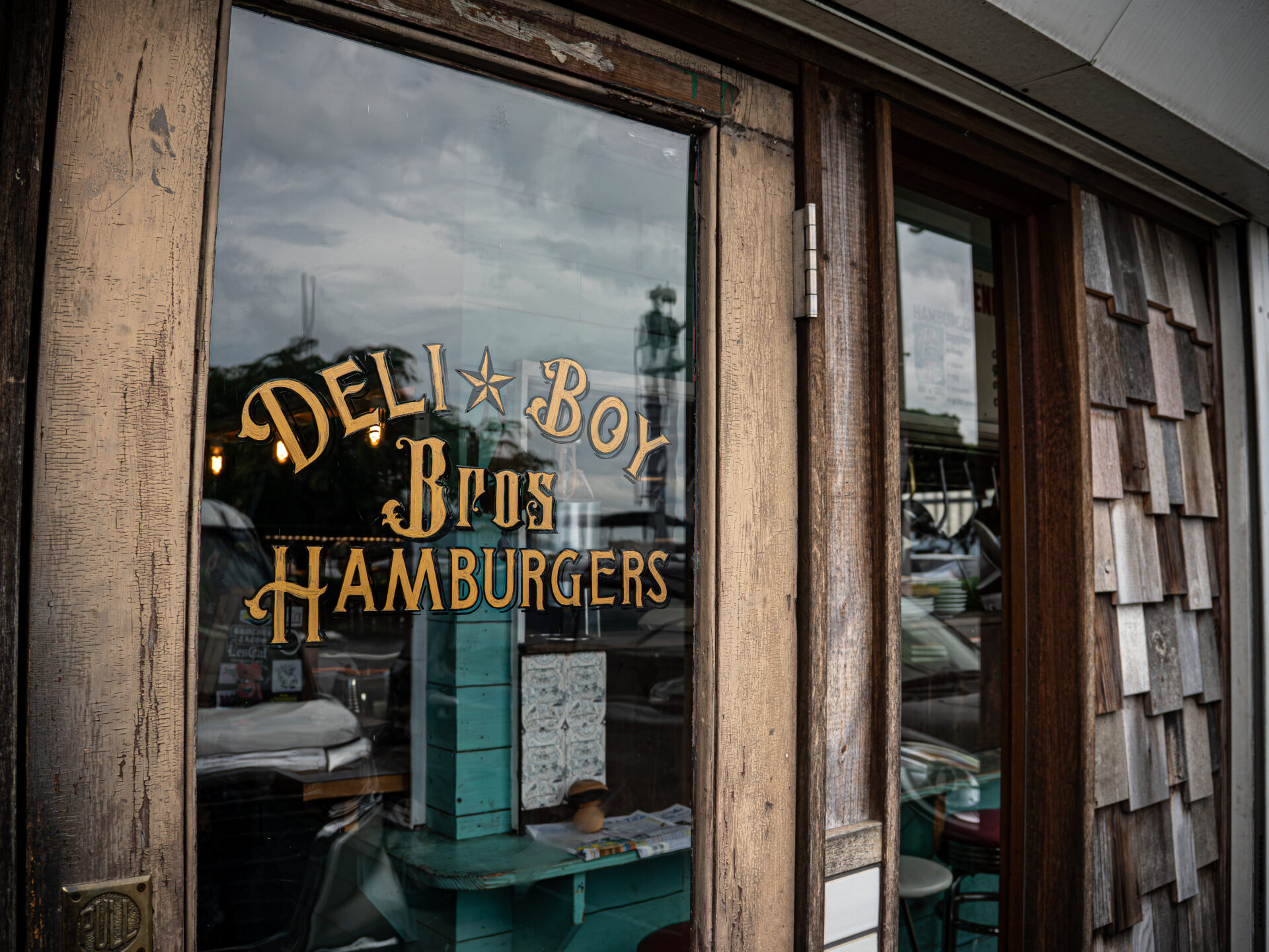
On the glass of the wooden door, the shop’s name was hand-lettered in gold.
Even before opening the door, you can tell that the owner’s attention to detail extends to every corner.
Inside, turquoise-painted plank walls and the soft glow of bare bulbs.
In the open kitchen behind the counter, the owner grills patties at a brisk rhythm.
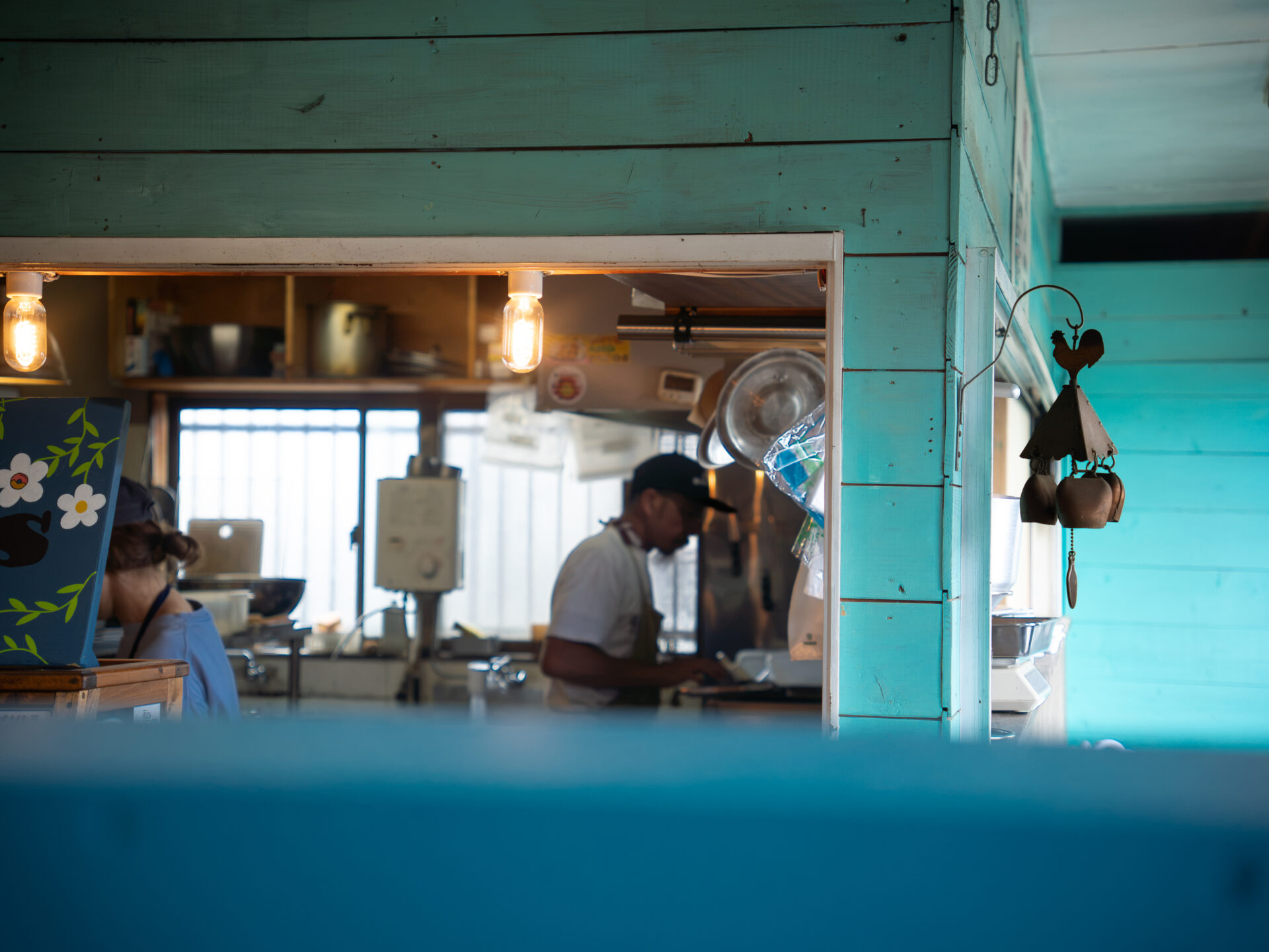
The owner trained at the popular “BROZERS'”, whose flagship is in Ningyocho, Tokyo.
It’s popular enough to fill up even on weekday lunchtimes, and the shop was lively that day too.
What we ordered was the bacon cheeseburger with a fried egg on top.
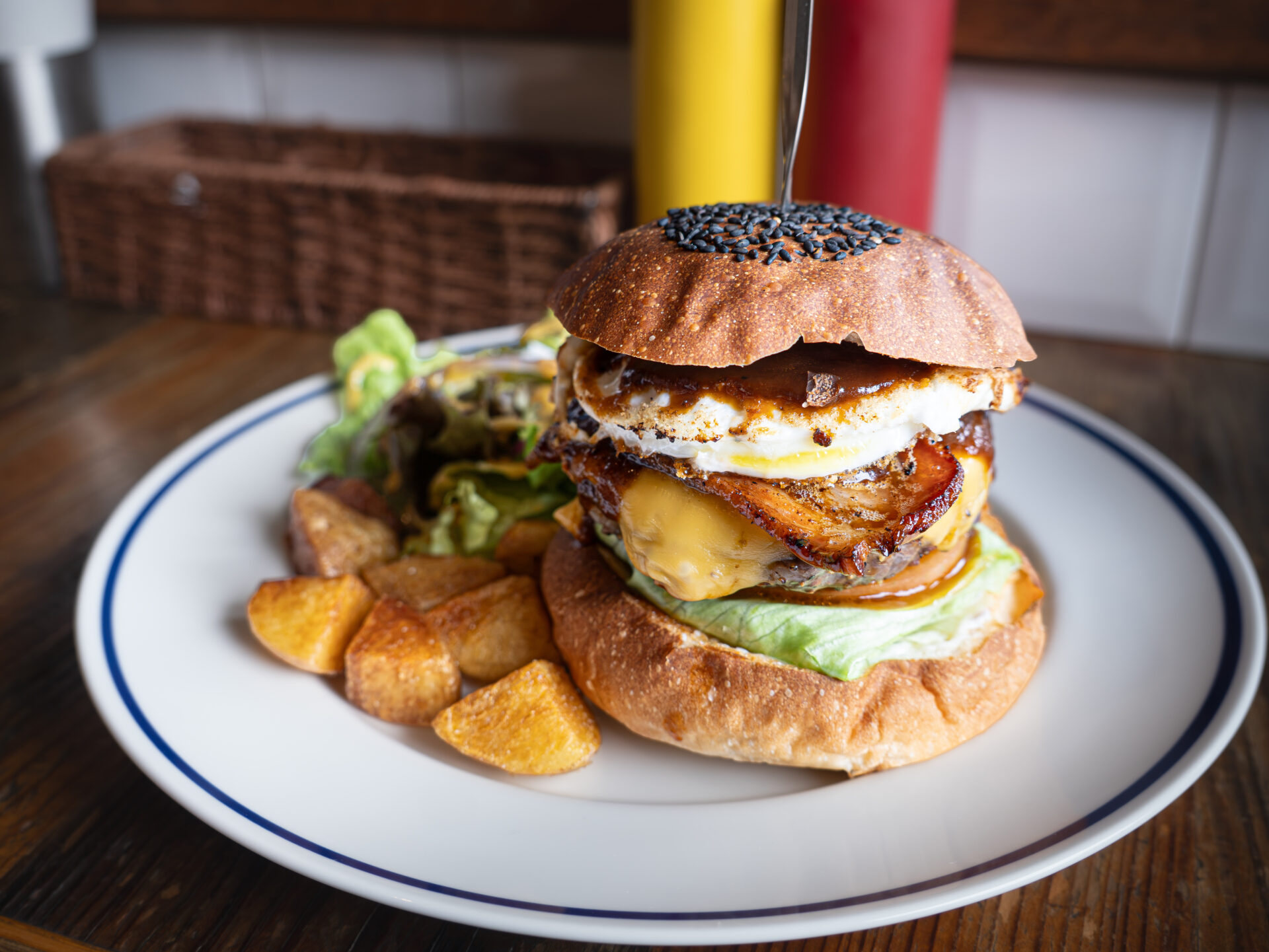
House-made bacon, house-made BBQ sauce,
and buns custom-baked by the local bakery “Pan no Mokka.”
With a fried egg stacked on melted cheese, it’s visually overwhelming from the very first glance.
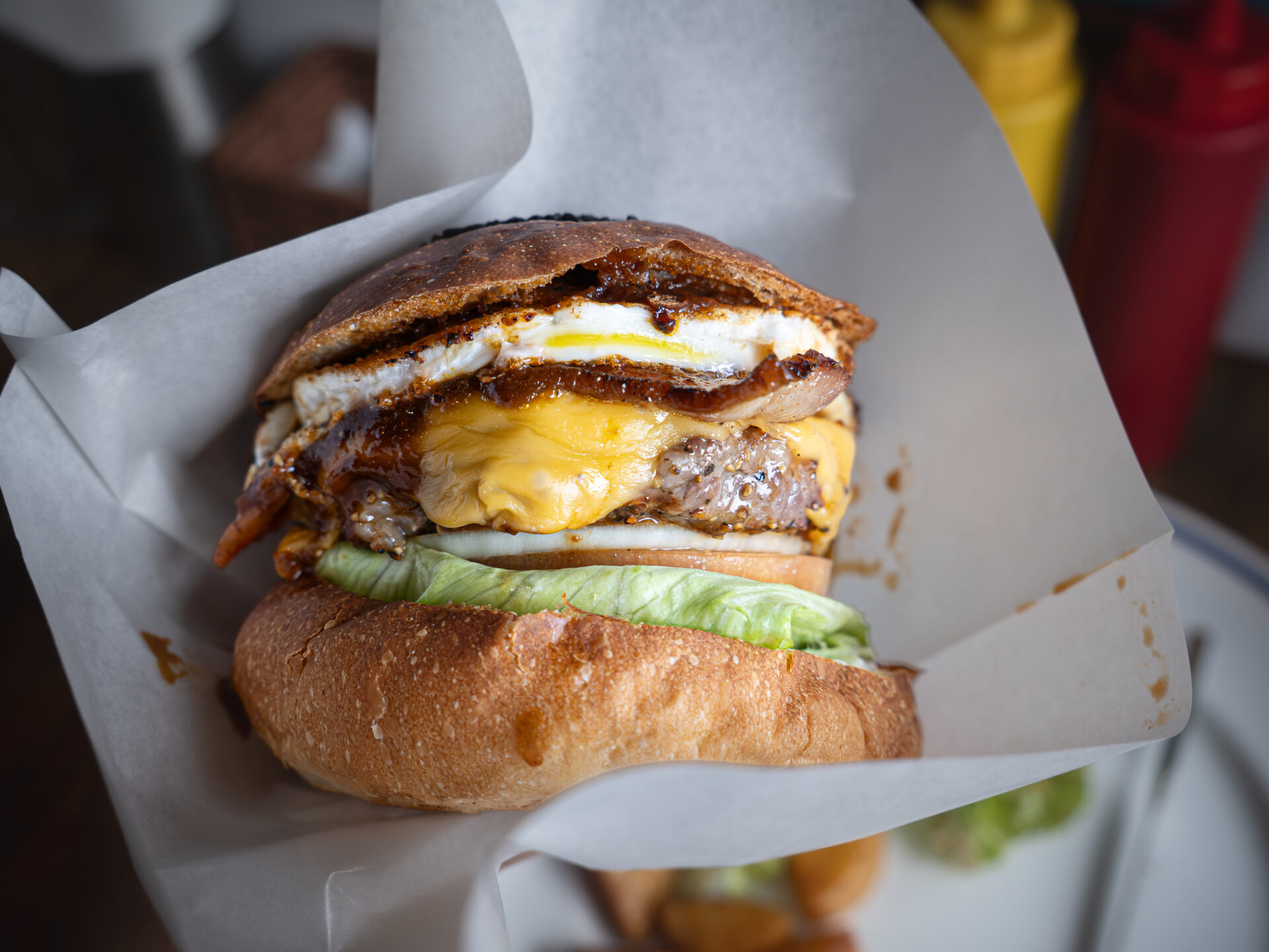
Holding it firmly with both hands and biting in, the juices of the fragrantly grilled patty meet the umami of thick-cut, smoky bacon.
The mellow richness of the yolk spreads gently, while the sweet-and-sour BBQ sauce pulls it all together.
The bun, soft yet more than able to stand up to the weight of the fillings, was excellent too.
It’s so thick that you’ll want to be careful not to open your mouth too wide (lol).
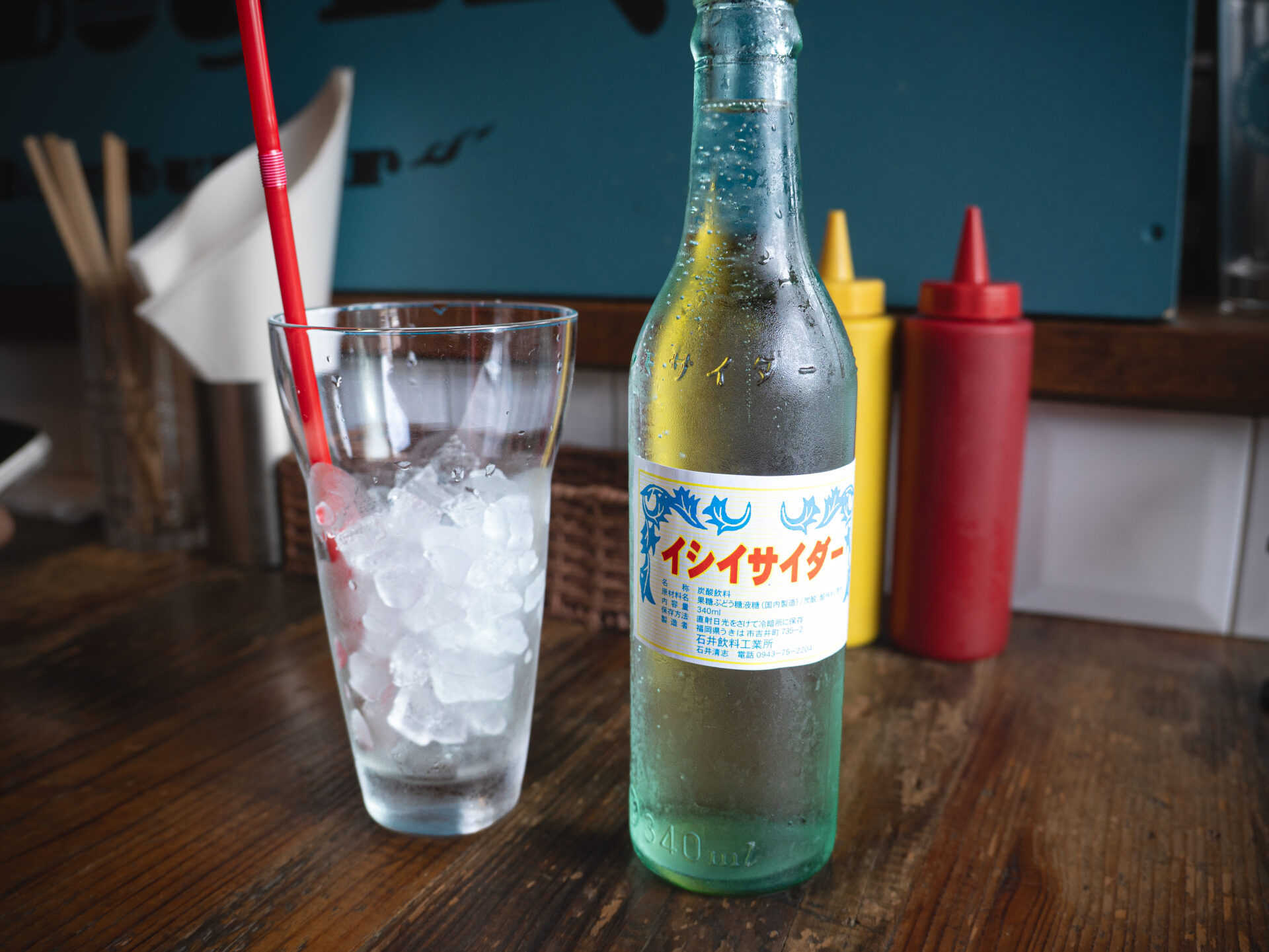
As a companion, I recommend the local fizzy drink “Ishii Cider.”
A burger really does call for something that fizzes and pops.
A spot where Ukiha’s local flavors meet authentically trained American style.
Even the very first meal of the trip made for a memorable start.
- ADDRESS
福岡県うきは市浮羽町山北1758-21
- OPEN
要確認。2023年の情報では、【火曜】11:00〜15:00 【水曜~土曜】11:00~20:00 【日曜】11:00~18:00、定休日は月曜です。
- COMMENT
- 駐車場あり。道の駅うきはの向かいにあります。
※2026年10月25日閉店予定



Seasonal Bounty as Souvenirs at Michi-no-Eki Ukiha
With our stomachs full, we crossed the street and went back to Michi-no-Eki Ukiha.
Inside, Ukiha’s fruit, processed goods, and local prepared foods lined the shelves — just looking was enough to lift the spirits.
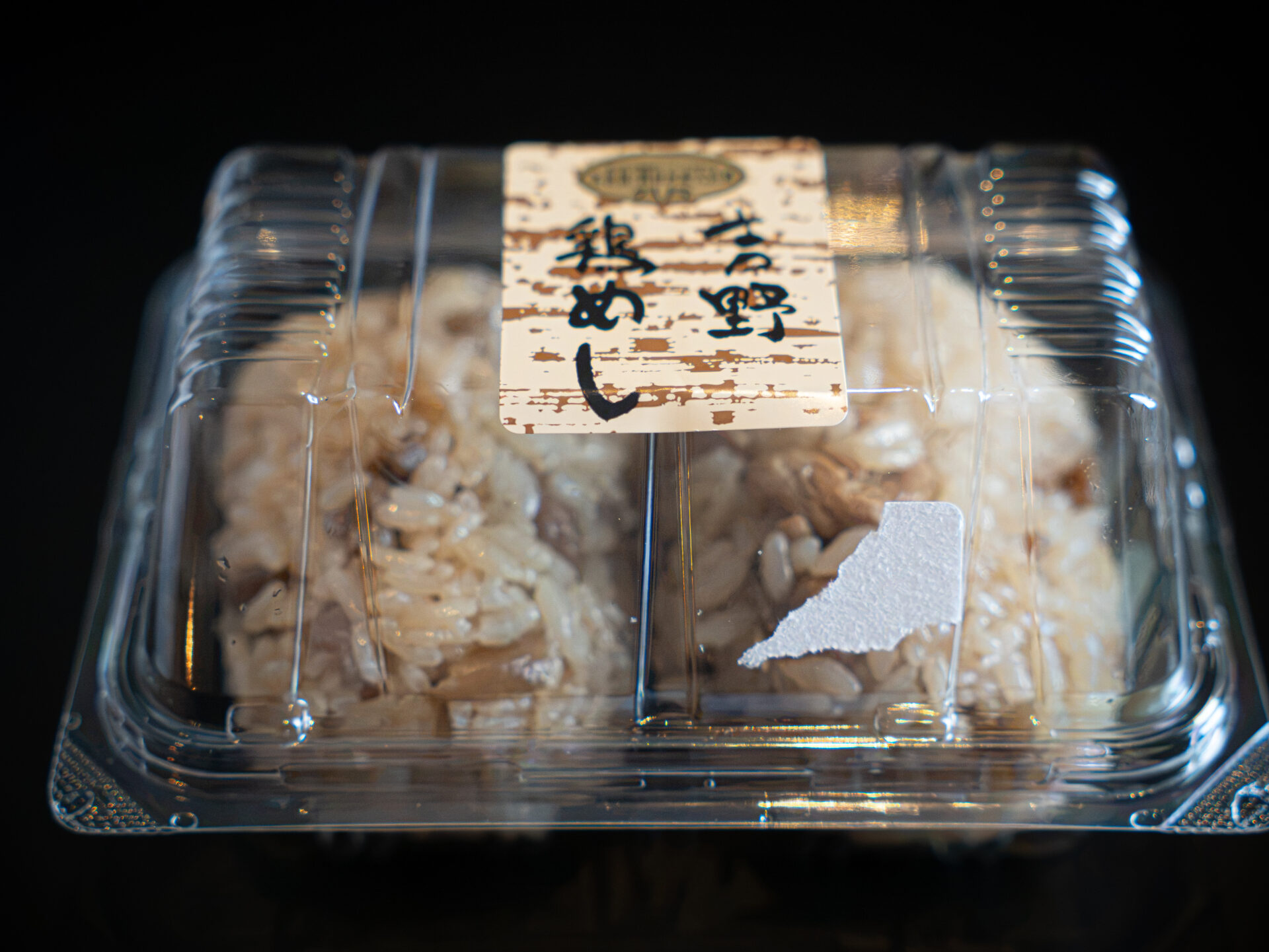
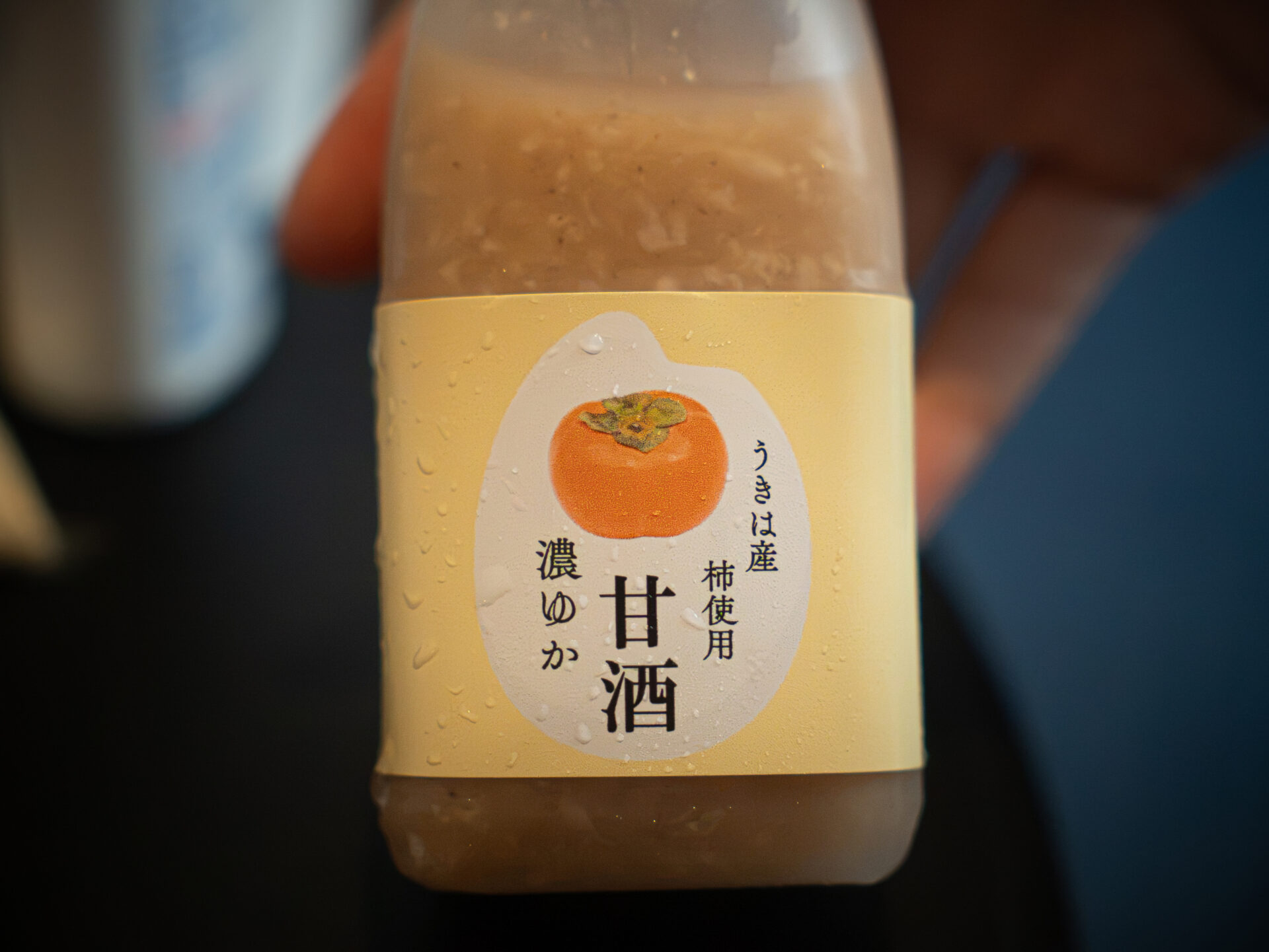
What we picked up that day were “Yoshino Torimeshi” and “Nuyuka,” an amazake made with Ukiha persimmons.
Both were small treats to enjoy leisurely in the hotel room.
Tonight’s Stay: Fairfield by Marriott Fukuoka Ukiha
Right next to the roadside station.
Our accommodation for this trip was Fairfield by Marriott Fukuoka Ukiha.
This Fairfield series is built adjacent to roadside stations across Japan, with the concept of serving as a “base for travel” from which to fully enjoy the region’s charms.
Deliberately without an in-house restaurant, it proposes a style of stay rooted in the place — meals are to be enjoyed at the town’s own restaurants.
Here at Fukuoka Ukiha, you can walk directly from beside the open terrace to the roadside station,
and from the same early-morning hours as the producers, you can encounter local flavors such as Yoshino torimeshi and freshly pressed milk.
I’ve honestly become completely hooked on this series (lol).
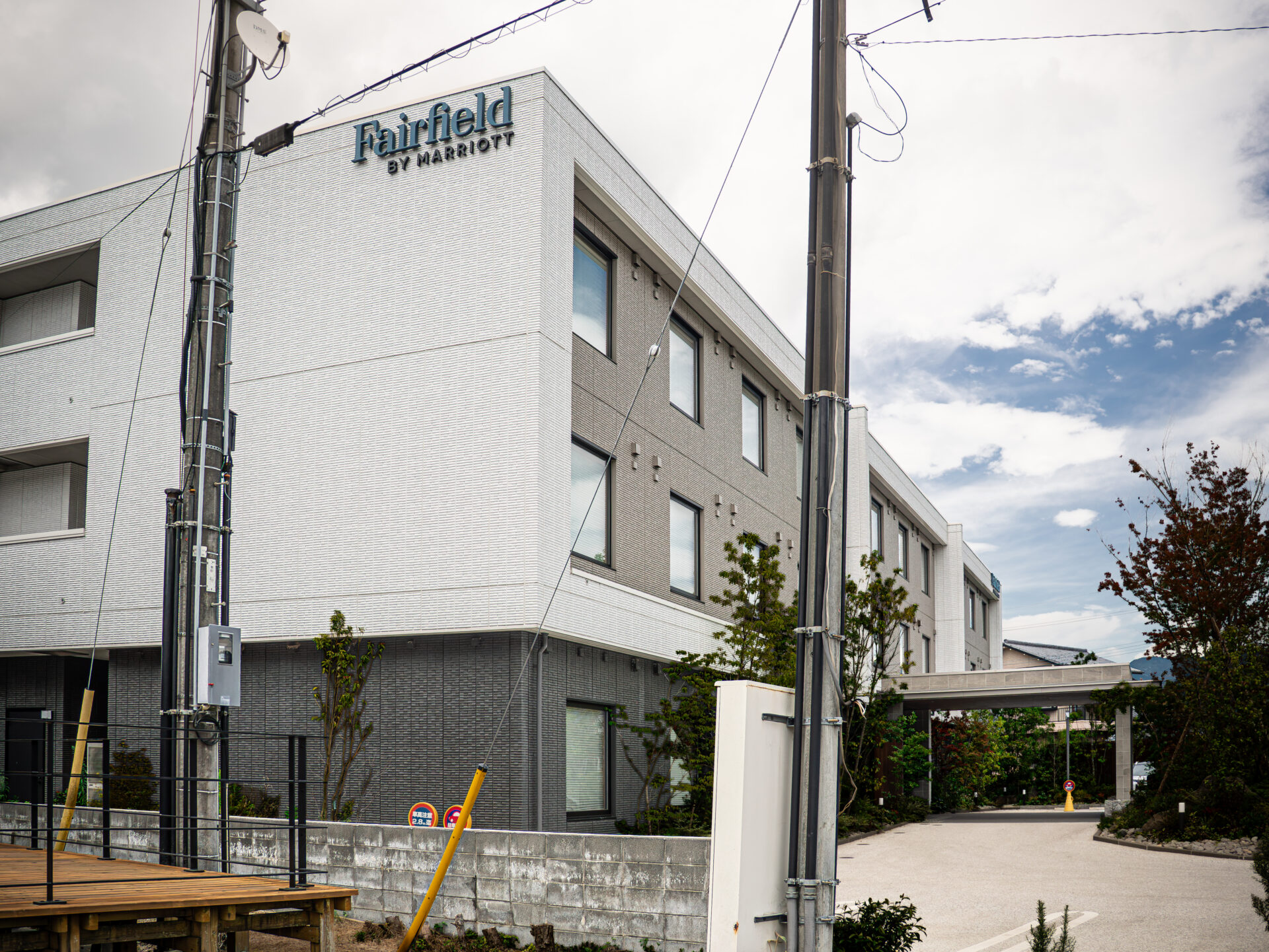
A clean white-and-gray exterior, with green plantings and red-leafed trees nestled gently alongside.
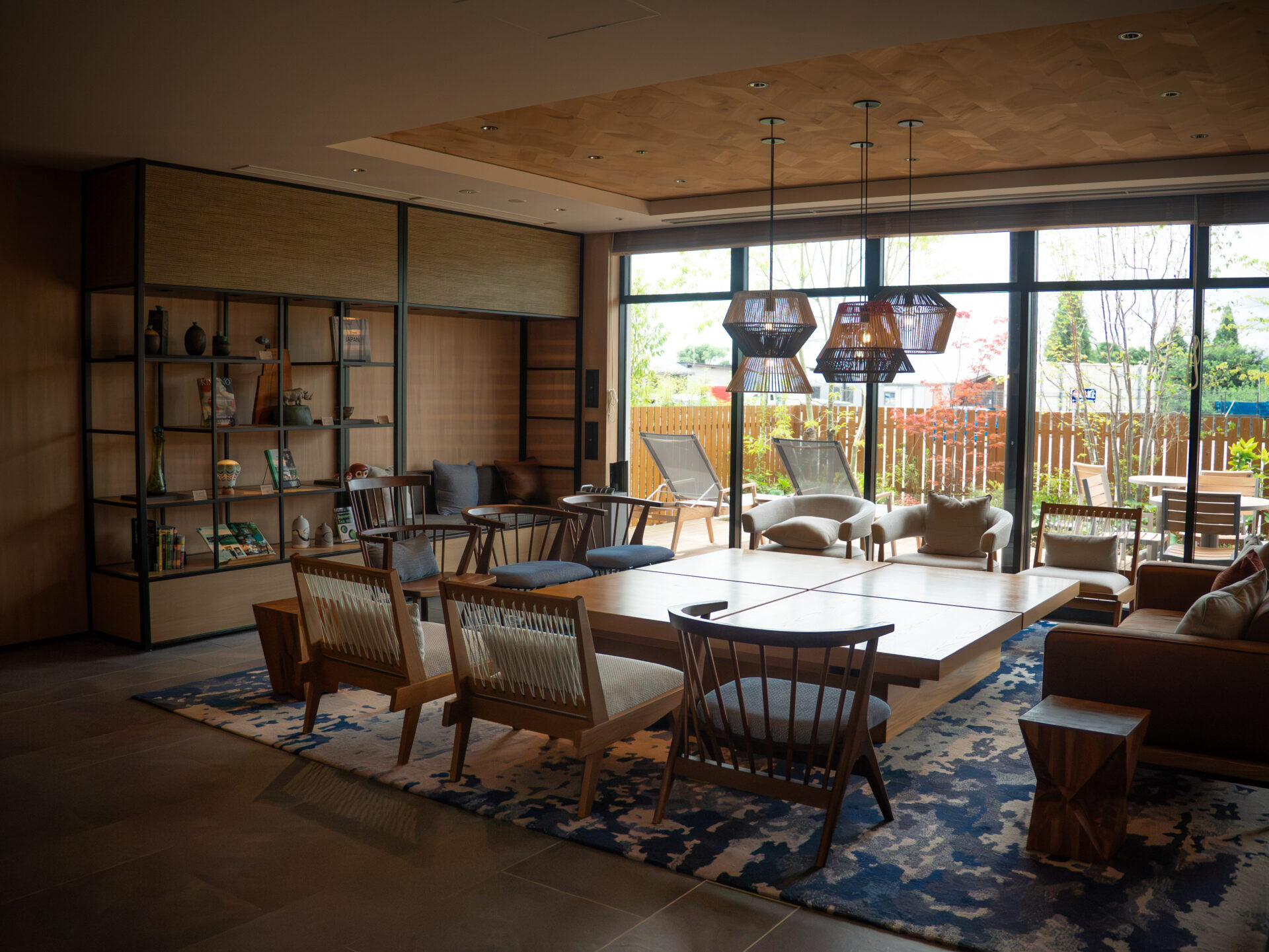
Past the entrance is a lounge wrapped in the warmth of wood.
Rattan pendant lights cast soft shadows, and beyond the large windows lie the terrace and the green of the garden.
Even the time spent waiting to check in is the kind that lets the heart unwind.
What caught my eye first upon entering the room was the large window straight ahead.
Beyond it, an orchard covered in netting and the gently rolling Minou range.
Like a single painting, the scenery of Ukiha is framed exactly as it is.
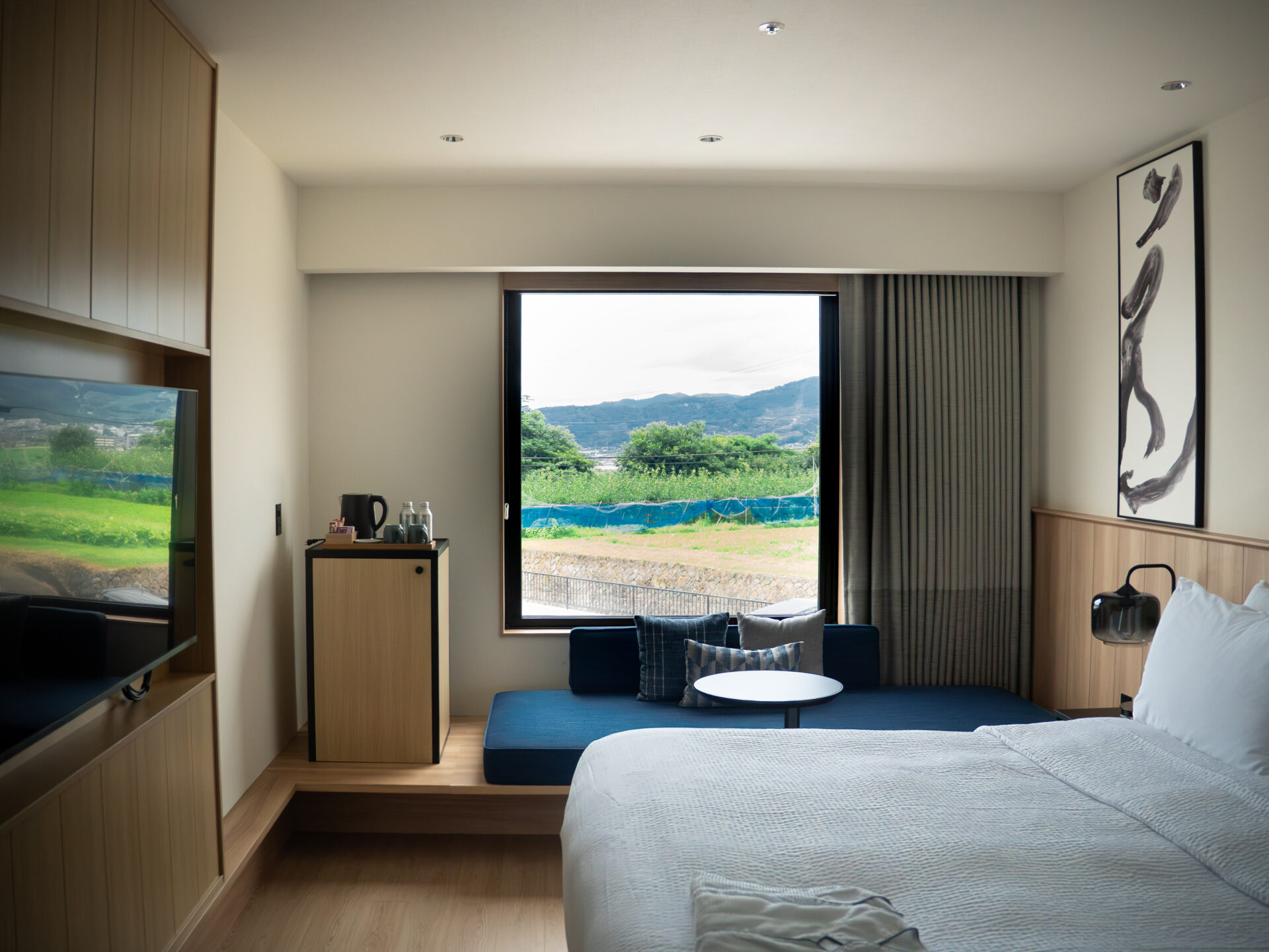
By the window, a bench sofa with blue cushions.
On the wall hung a piece of art with bold ink brushwork — simple, yet conveying the aesthetic sense of the region.
My wife immediately went to the window and gazed out for a while.
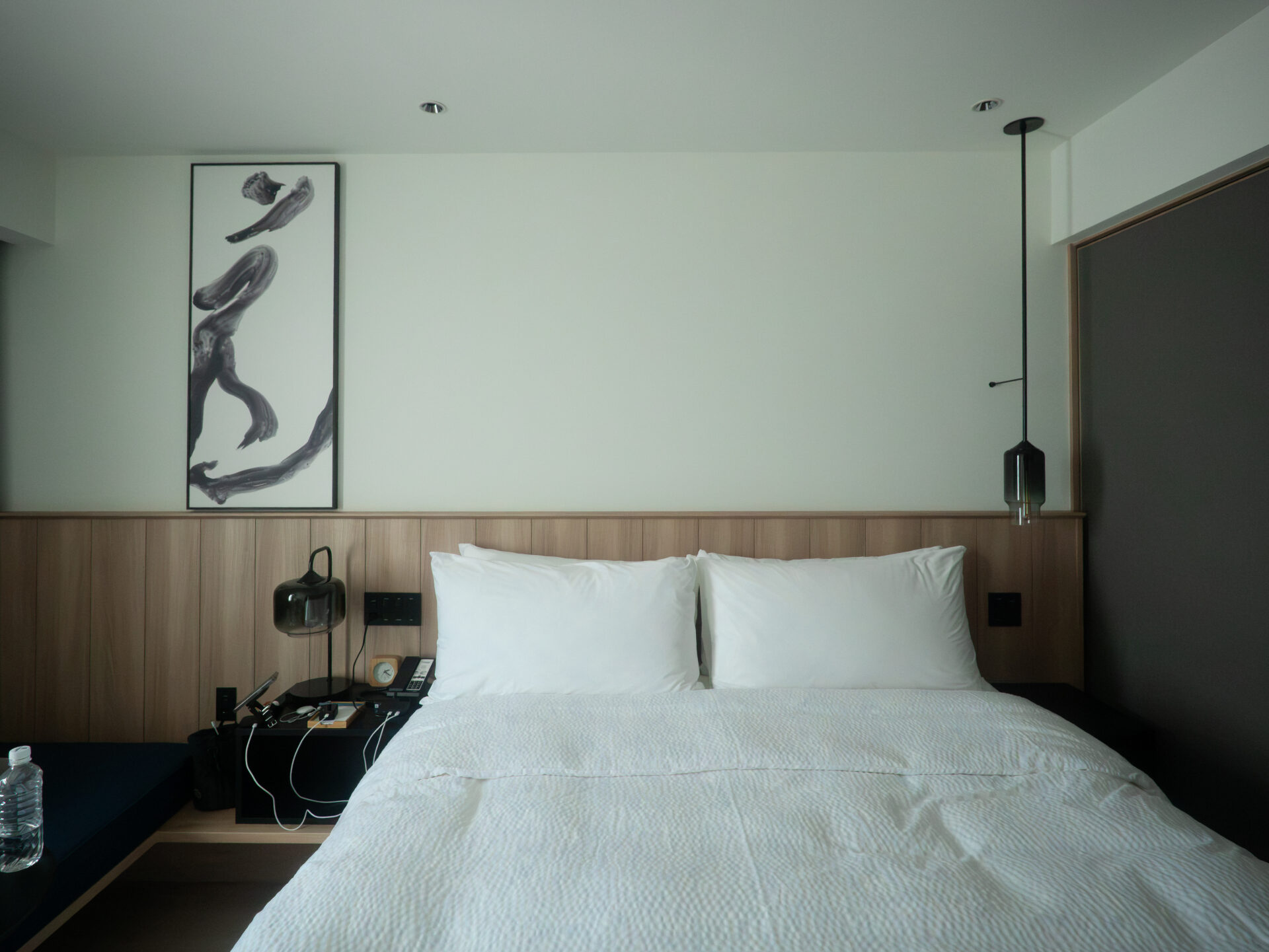
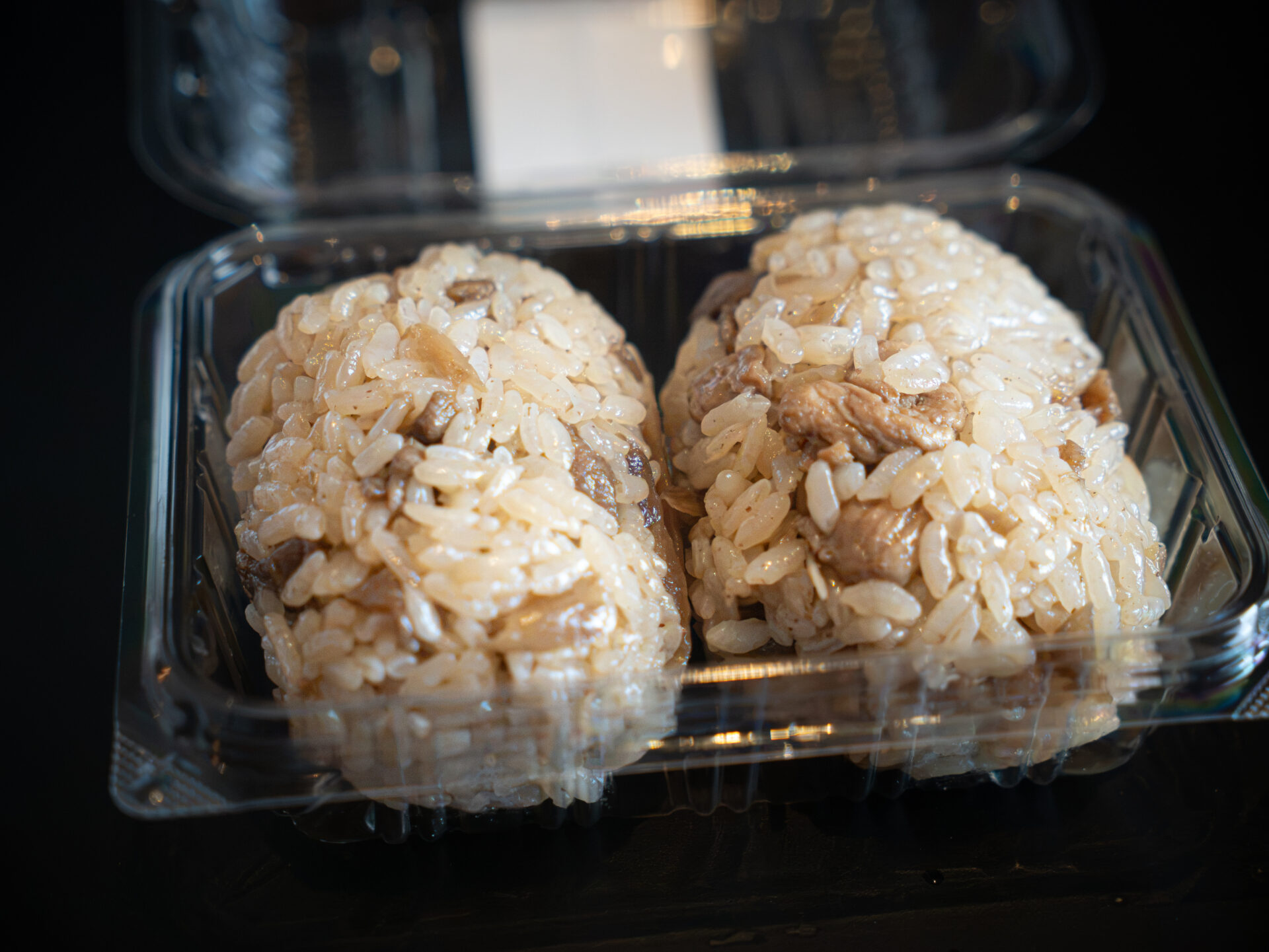
Once settled, it was time for the treats we’d bought at the roadside station.
“Yoshino Torimeshi” is a mixed rice dish beloved as a local specialty of Oita.
The flavor of chicken and the aroma of burdock soak thoroughly into the rice — humble, yet with a taste that lingers.
The amazake “Nuyuka,” made with Ukiha persimmons, has a silky mouthfeel with the gentle sweetness of persimmon.
The chilled bottle seeped soothingly into bodies warmed by a summer drive.
Tasting the flavors of the place while gazing at the green outside the window.
After a rest, it was time for a stroll before dusk.
- ADDRESS
福岡県うきは市浮羽町山北734番地6
- OPEN
チェックイン15:00、チェックアウト11:00
- COMMENT
- 2023年8月31日開業。館内にレストランなし。完全キャッシュレス(現金不可)。杷木ICから車で約10分。

A Stroll Through Michi-no-Eki Ukiha Before Dusk
With time before dinner, we went to Michi-no-Eki Ukiha once more.
It was the time of day when the daytime bustle had eased and a slower air had begun to settle in.
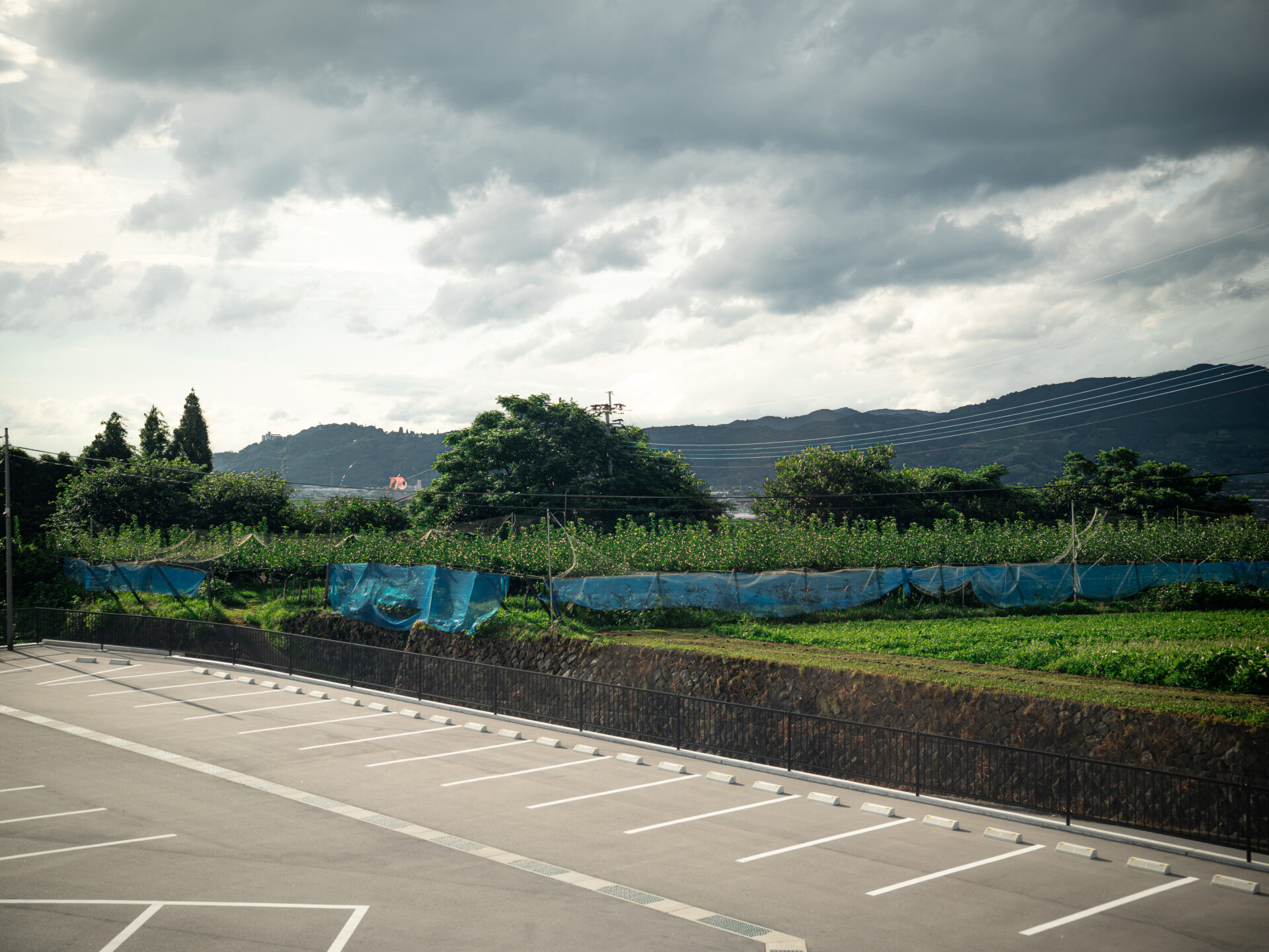
Looking up, light poured through gaps in the thick clouds.
Beyond the orchards protected by blue netting, the mountain range lay quietly.
Climbing to the observation deck at the back of the roadside station, the view opened up all at once before us.
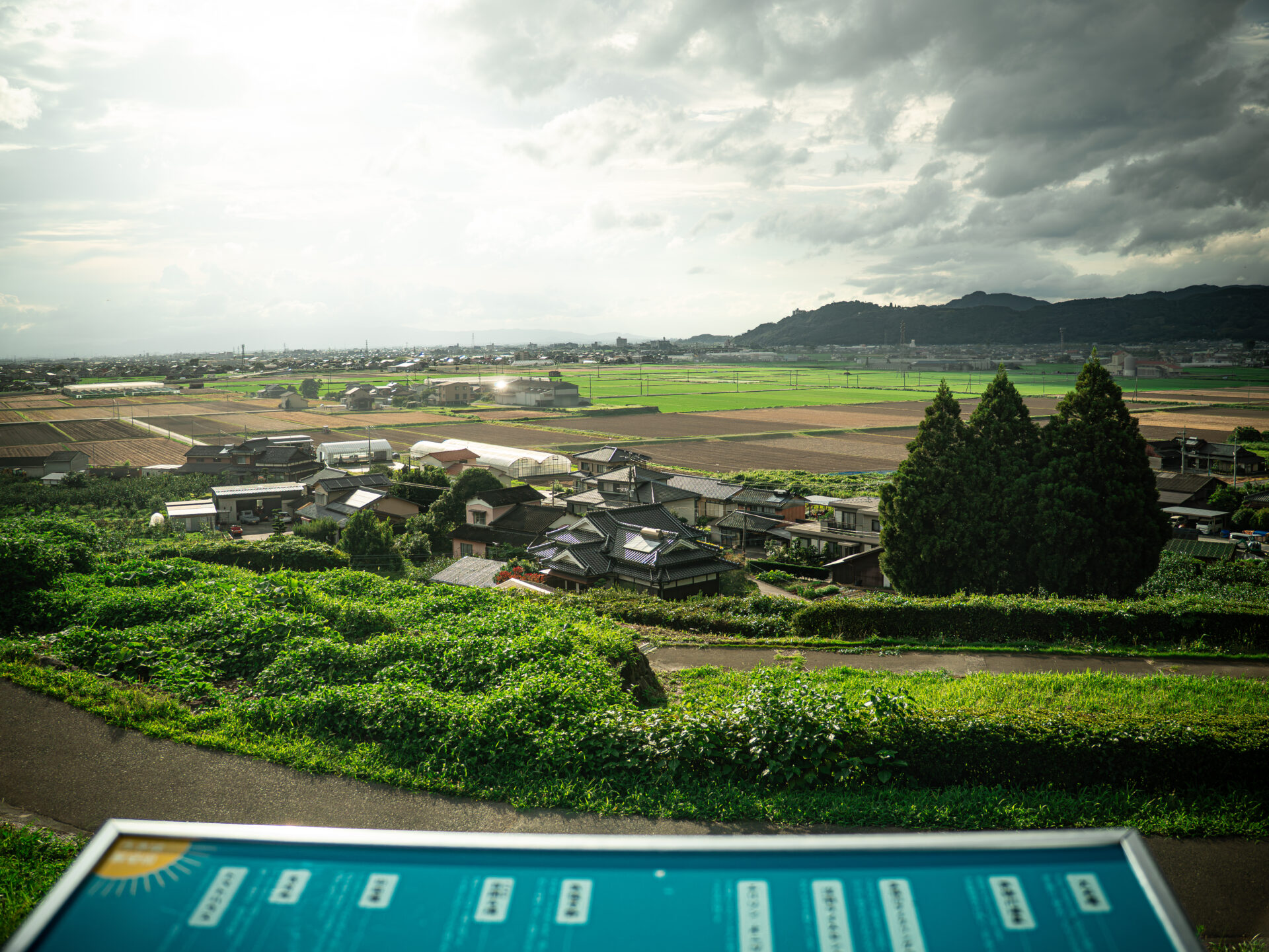
Below stretched the fields of the Chikugo Plain, endless, with houses scattered among them.
Beyond, mountains rolled on, and clouds changed expression moment by moment as they drifted across the sky.
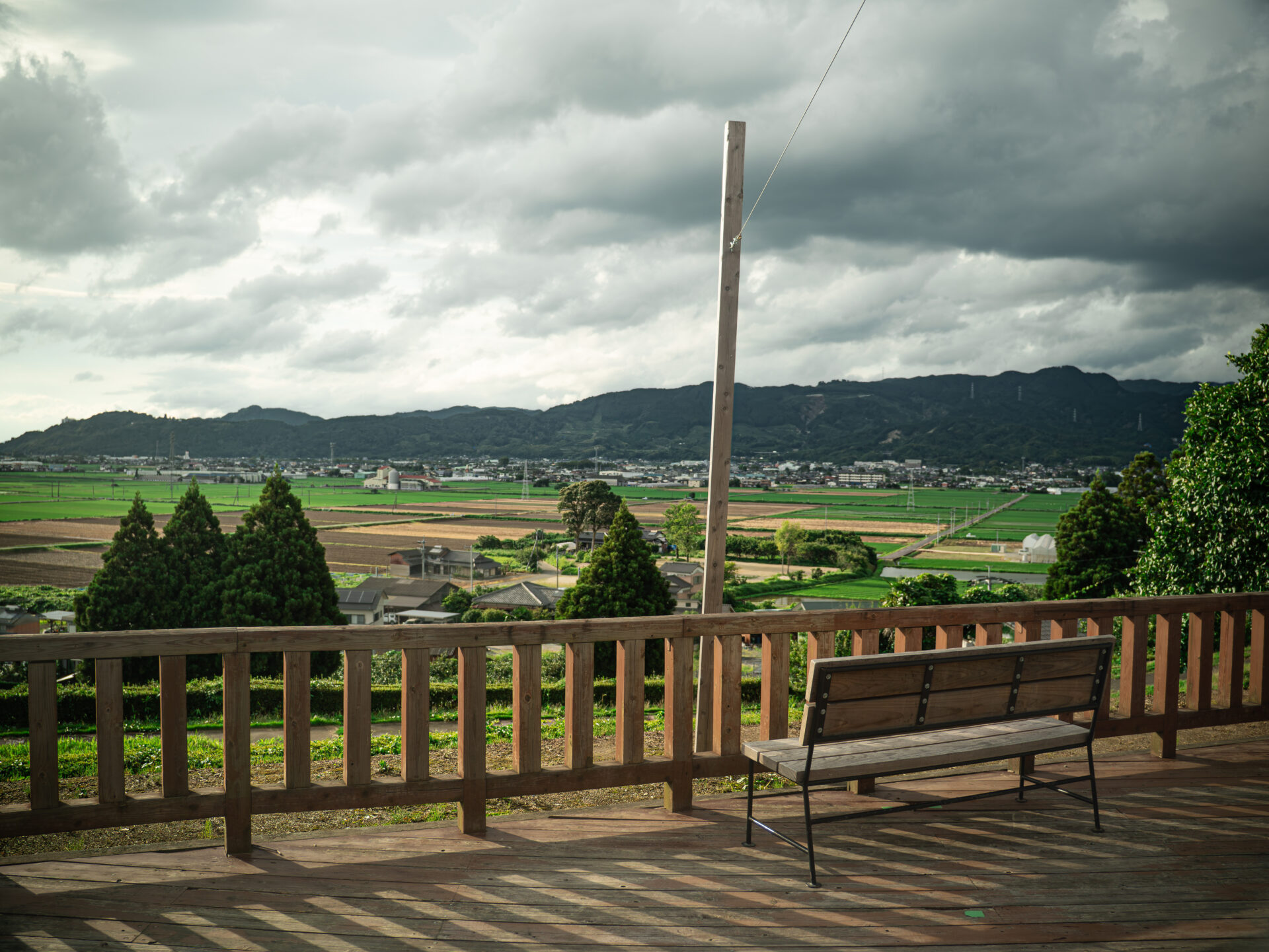
It’s the kind of view where you’d like to sit on a wooden bench and simply look, saying nothing for a while.
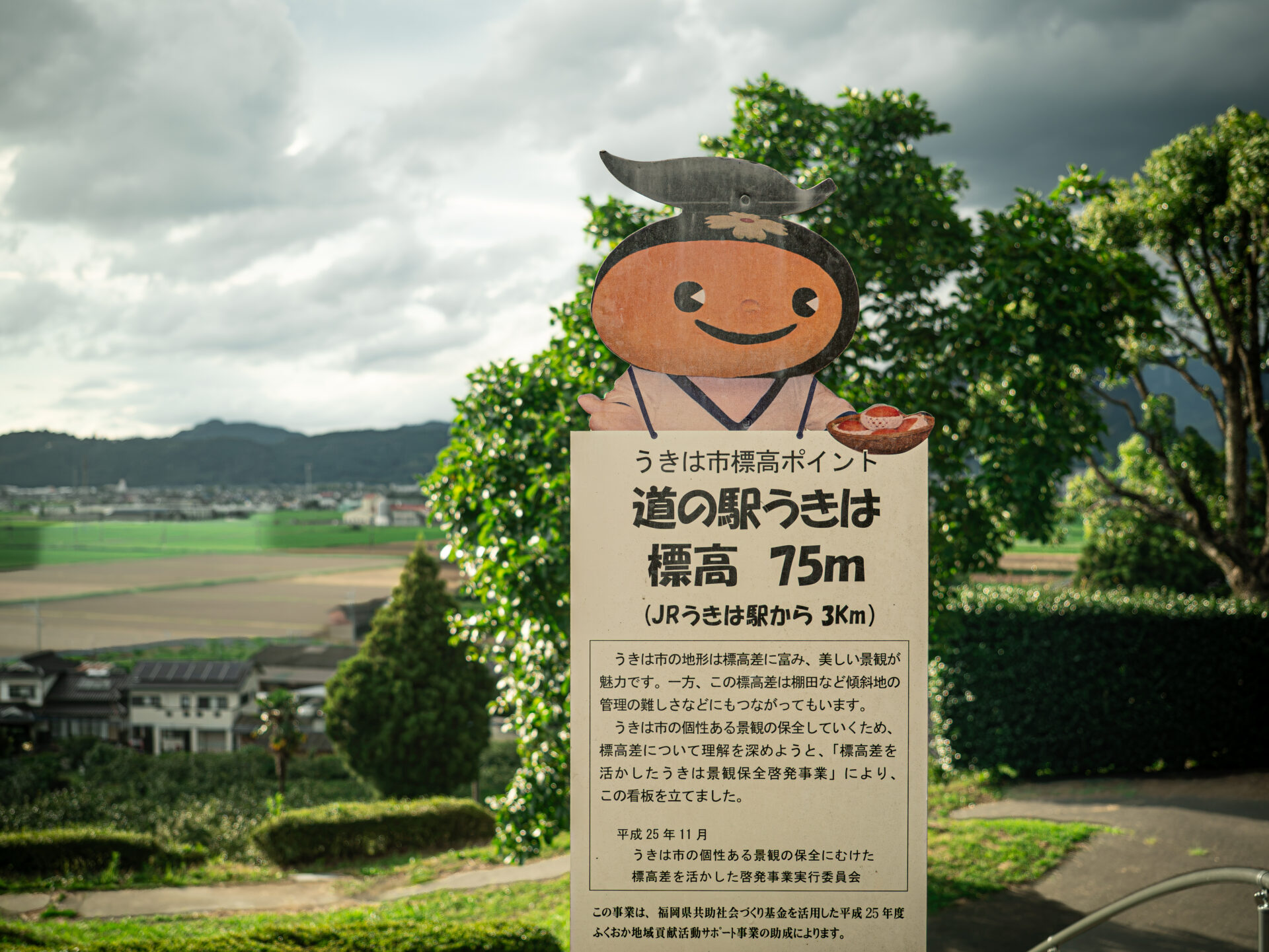
In one corner of the deck stood a sign for the “Ukiha City Elevation Point” featuring “Ukipii,” Ukiha City’s official mascot.
Said to be a fairy of the persimmons grown in the Fruit Kingdom, it’s endearing, with a stem for a hat and a perfectly round, persimmon-colored face.
According to the sign, Michi-no-Eki Ukiha sits at an elevation of 75 m, about 3 km from JR Ukiha Station.
Ukiha is a town whose appeal lies in terrain rich in variations of elevation, and the sign was erected to preserve and pass on that landscape.
The breadth of the view from here made it easy to agree.
The deck also had a face-in-hole photo panel with fruit characters — and even a Godzilla.
Apparently Ukiha City has Godzilla monuments all over town, making it something of a local specialty.
At its feet was a handwritten notice reading “It’s fragile, so please don’t touch!”,
and the gap with its imposing appearance couldn’t help but bring a smile (lol).
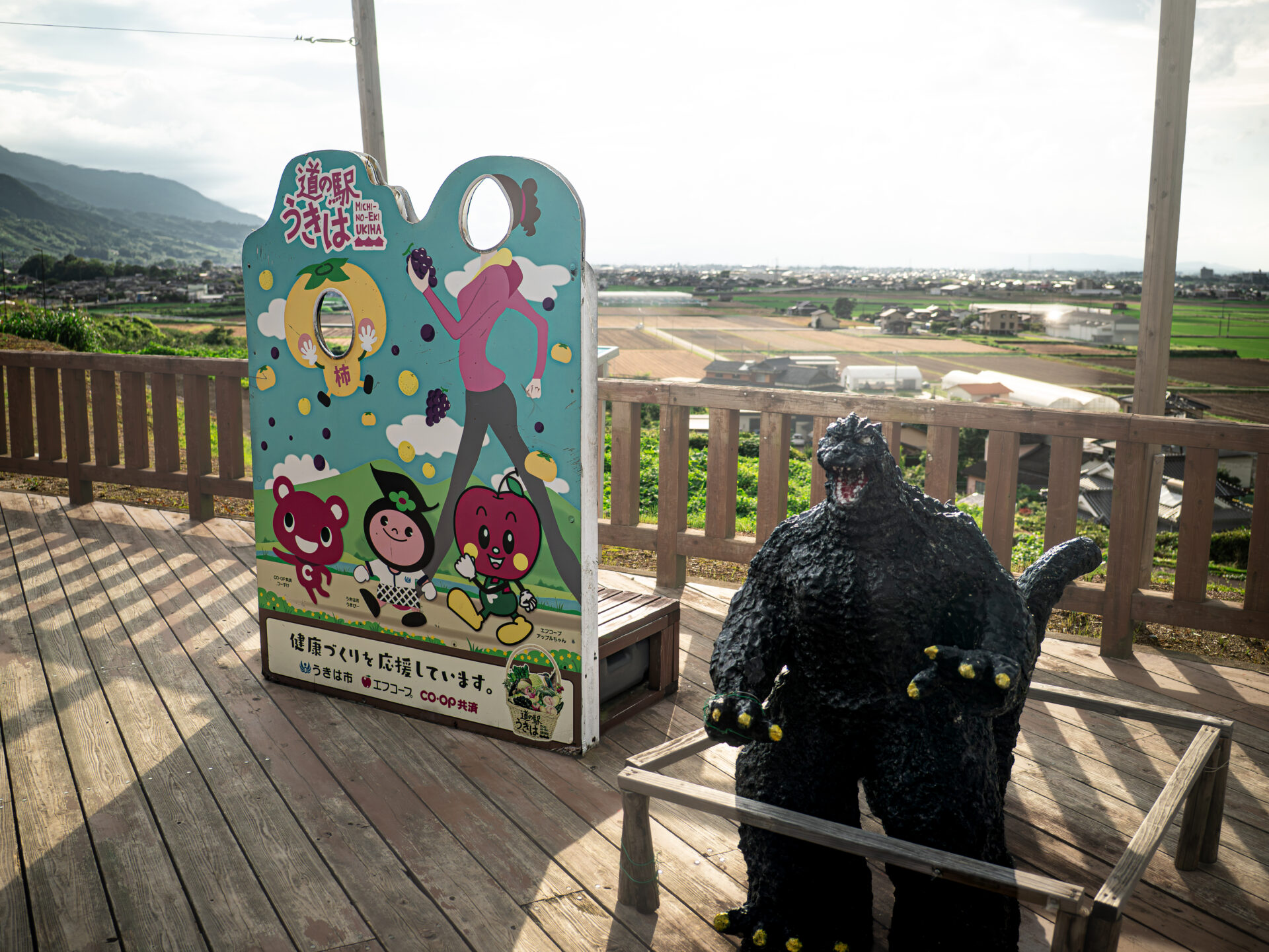
Gazing at the plain lit by the evening light spilling through the clouds,
our anticipation for dinner built little by little.
- ADDRESS
福岡県うきは市浮羽町山北729-2
- OPEN
9:00~18:00
crossroadfukuoka
定休日:第2火曜日(祝日の場合は翌日)、年末年始 ※7~9月は無休
- AWARD
九州じゃらん2024年 みんなが好きな道の駅 No.1
- COMMENT
- 駐車場320台。大分自動車道「杷木IC」から約10分

Dinner at an Old Farmhouse: “MAHORO756 CUISINE DE MAKOTO”
Leaving the roadside station at dusk, we headed — [mode of transport and travel time] — to Ukiwa-machi in Ukiha City.
Our destination that night was “MAHORO756 CUISINE DE MAKOTO.”
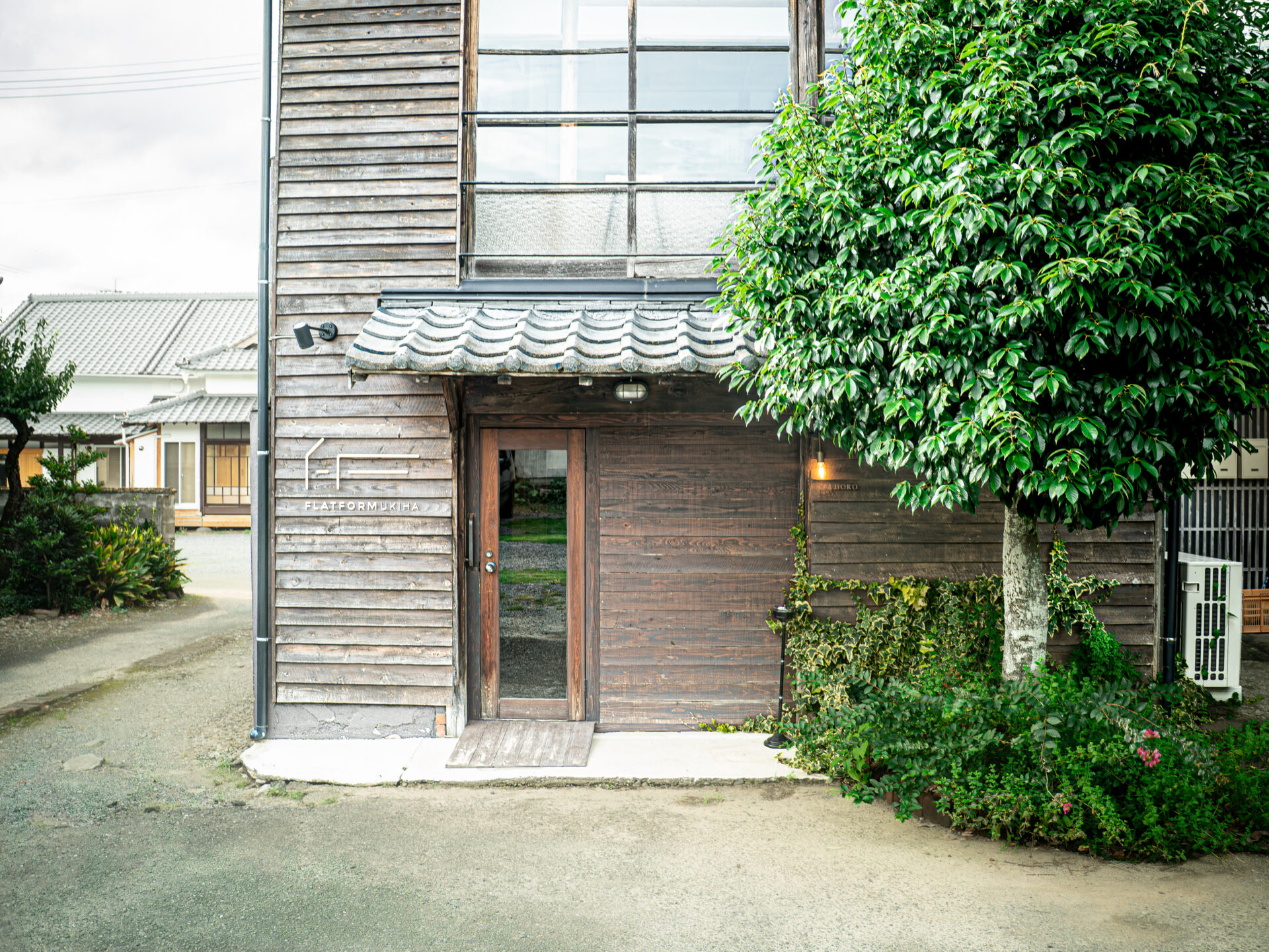
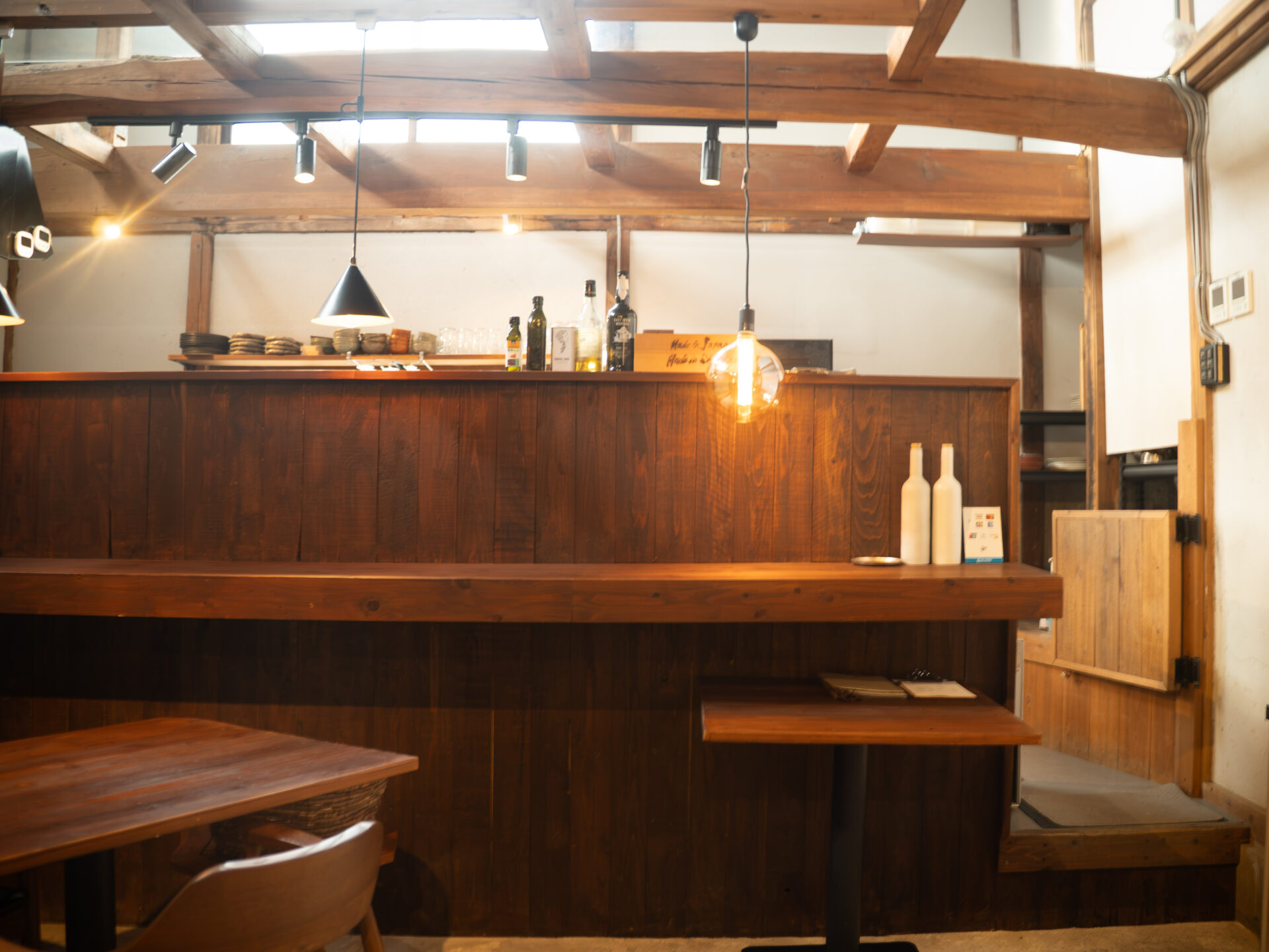
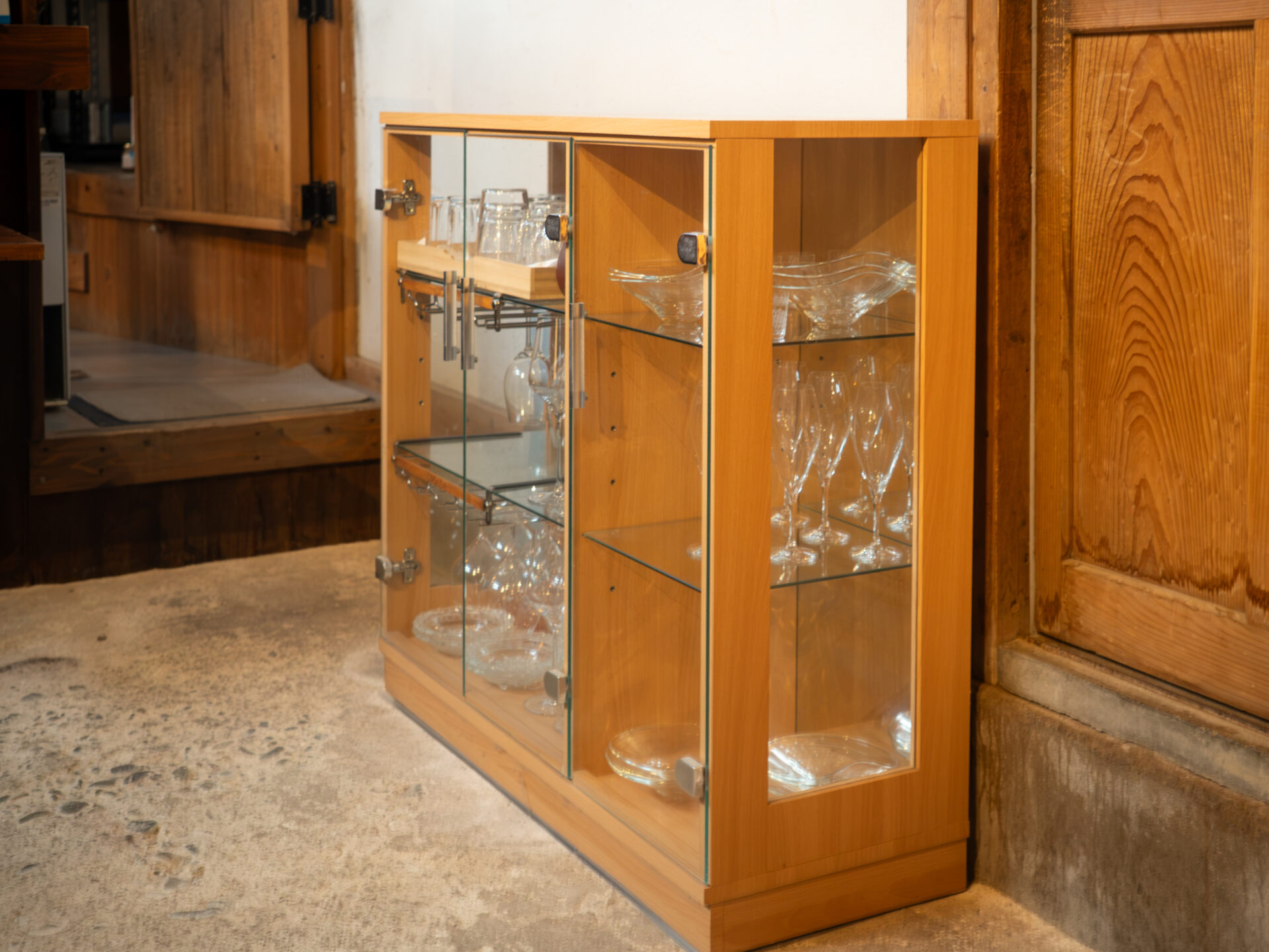
The restaurant is inside “FLATFORM UKIHA,” a complex converted from an old farmhouse more than 65 years old.
Charred-cedar exterior walls, a tiled eave, and a lush tree spreading its branches alongside —
a building that has accumulated time in this town for so long is quietly taking on a new breath of life.
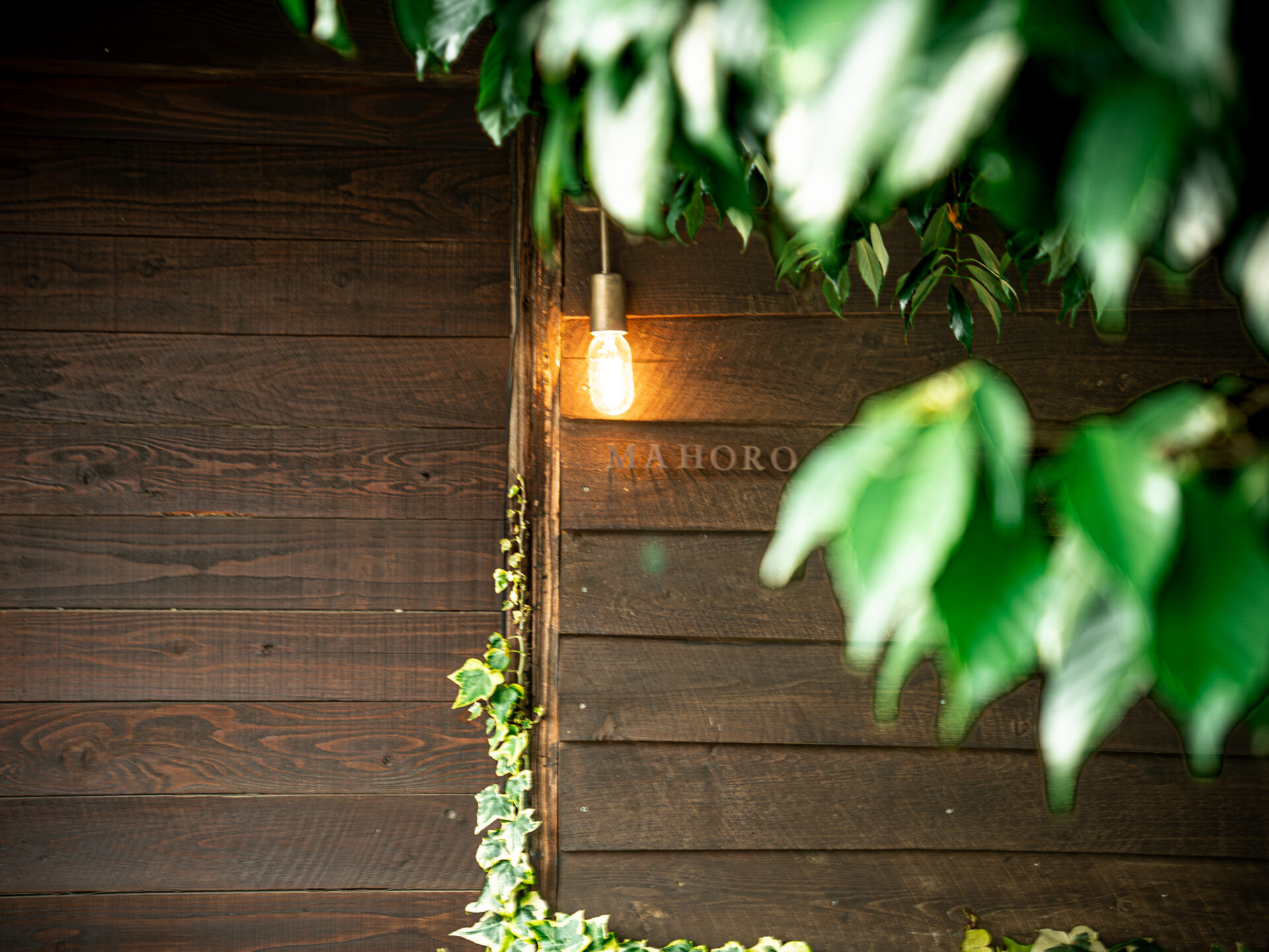
Beside the entrance, the word “MAHORO” glowed under the soft light of a bare bulb.
The ivy’s green and the texture of the wood layered together, naturally building anticipation for the time ahead.
The chef at the helm is Chef Makoto Inoue.
He spent five years training in Tokyo and ten in France — in Paris and the south of France —
where he also opened a sake restaurant.
He holds the specialist sake qualification “Sakesho” and is deeply versed in both food and drink.
He also supervised the menu for Nishitetsu’s sightseeing train “THE RAIL KITCHEN CHIKUGO,” continuing to share the appeal of Chikugo’s food.
The “756” in the name comes from the restaurant’s street number.
What’s served in the Japanese-modern space is an omakase course fusing Japanese and French cuisine, built on seasonal local Ukiha vegetables and carefully selected ingredients.
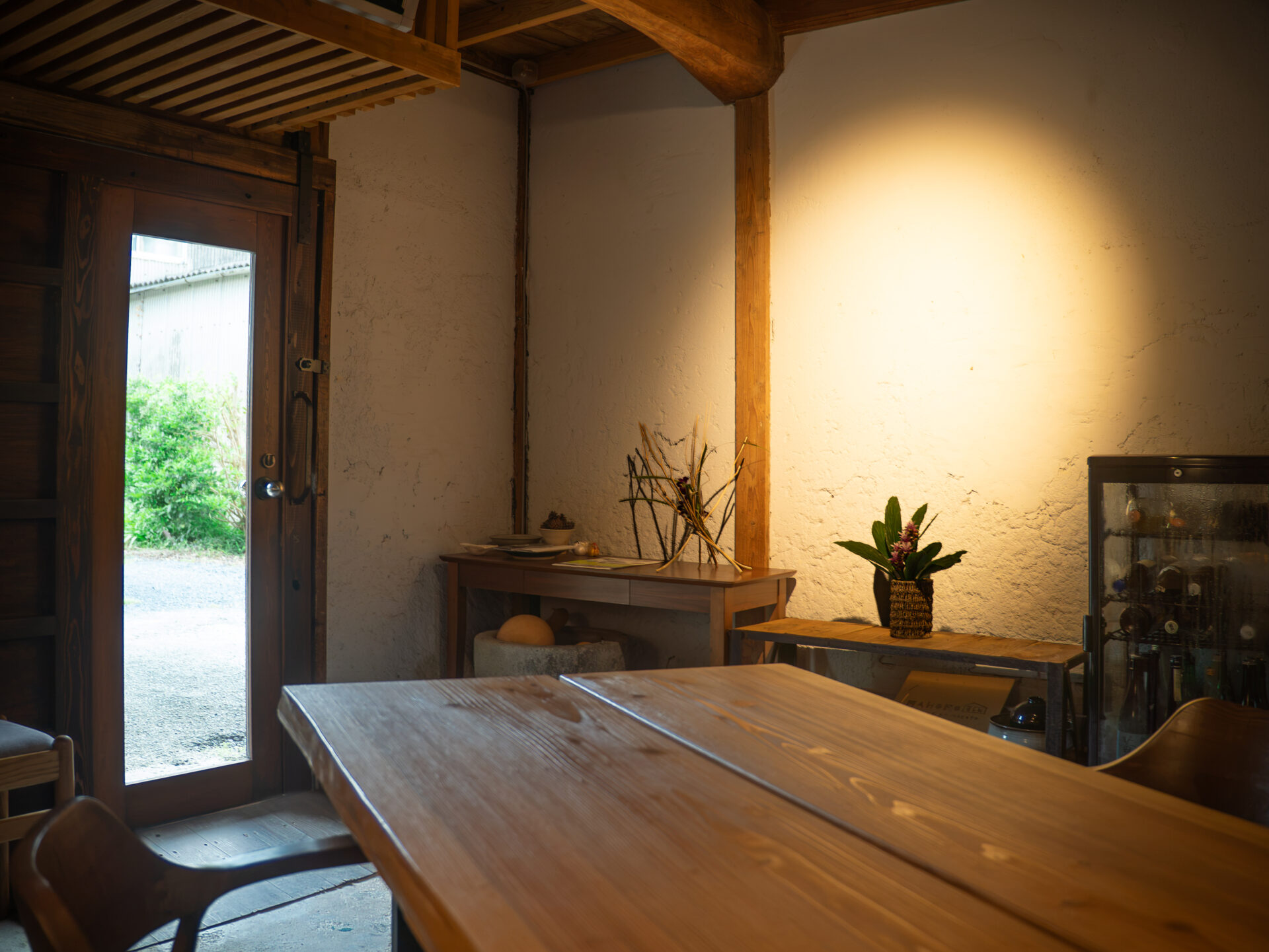
A Fruit-Kingdom Opening, Then the Bounty of River and Sea
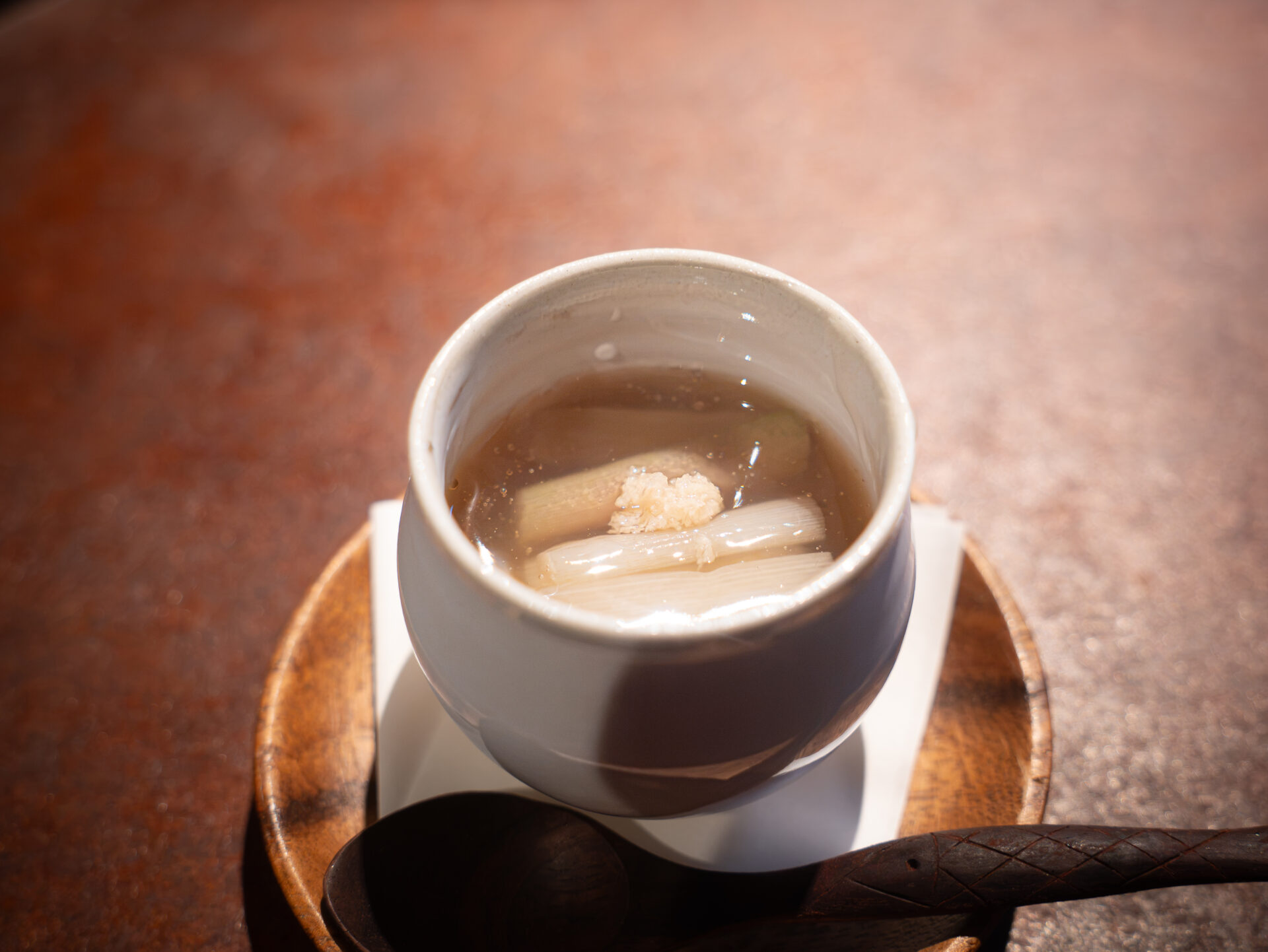
The course opened with a zuiki (taro stem) soup.
The gentle flavor of a summer vegetable slowly woke the stomach.
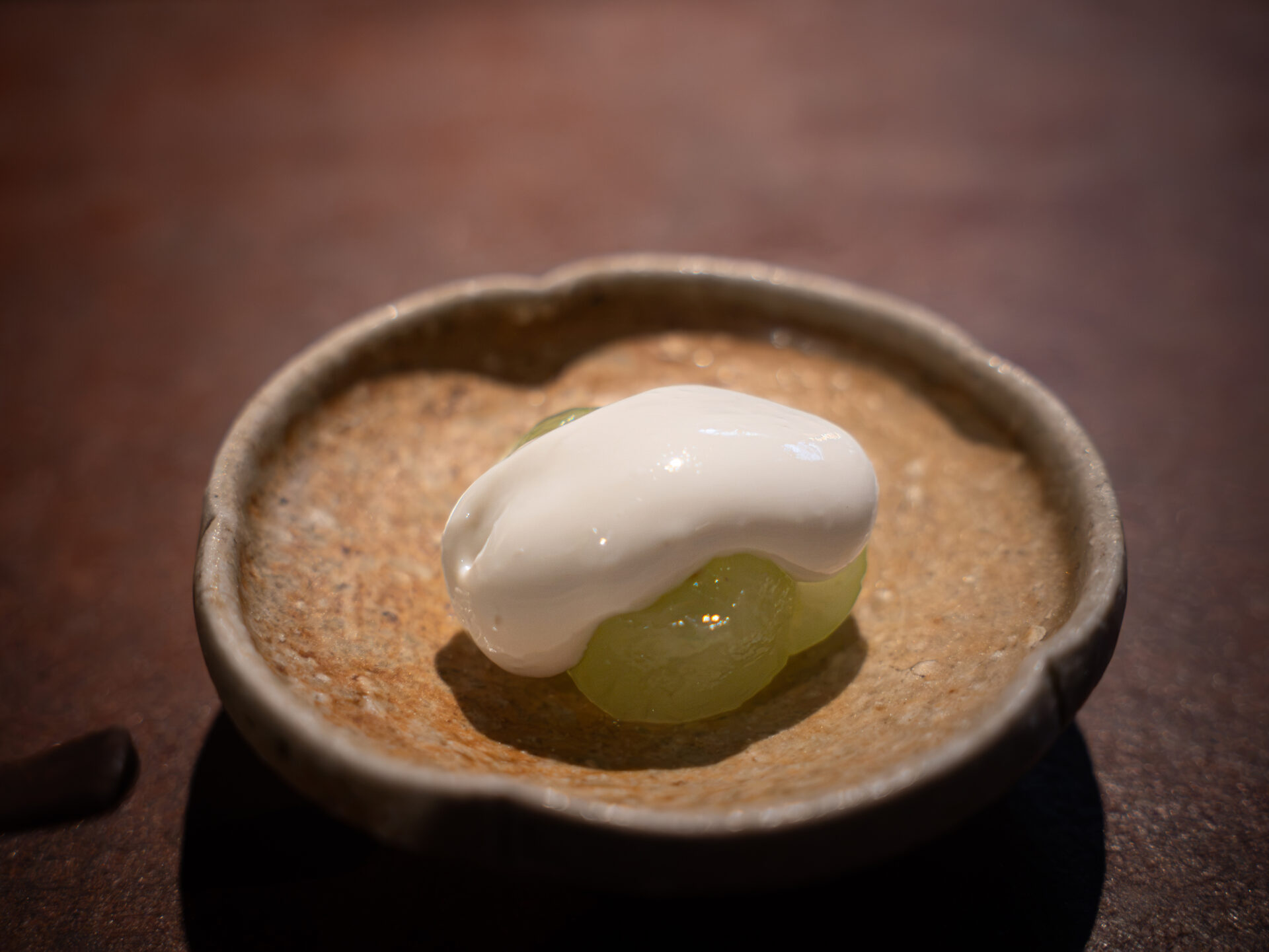
Next came Shine Muscat shira-ae.
The juicy sweetness of the fruit with the mellow richness of tofu.
A dish only the Fruit Kingdom of Ukiha could offer, bringing a smile to our faces.
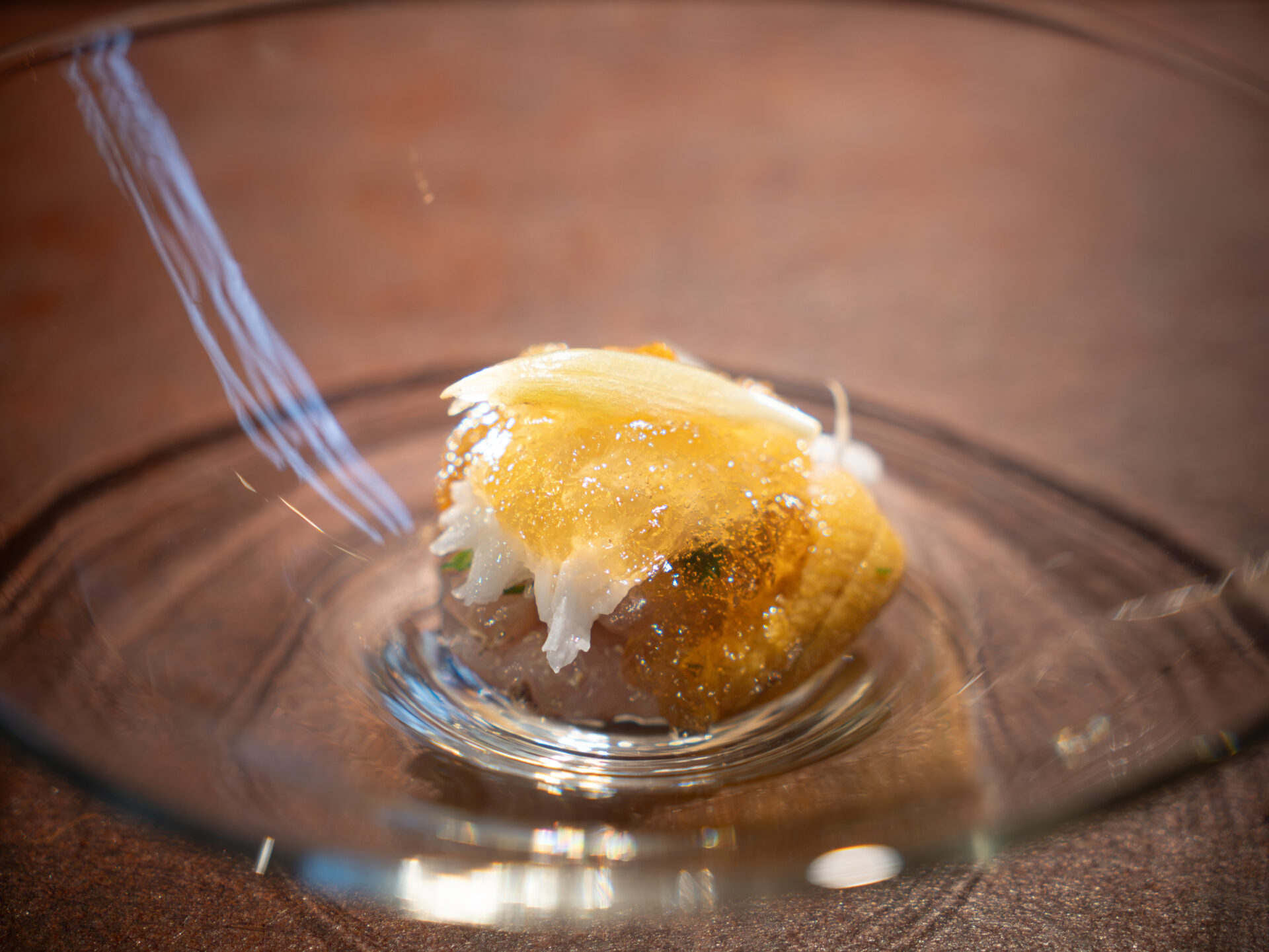
Kawahagi (filefish), retaining its delicate flavor, is paired with tosa-vinegar jelly and sea urchin.
Acidity, sweetness, and the scent of the sea overlap, with Japanese technique and French sensibility melting together naturally.
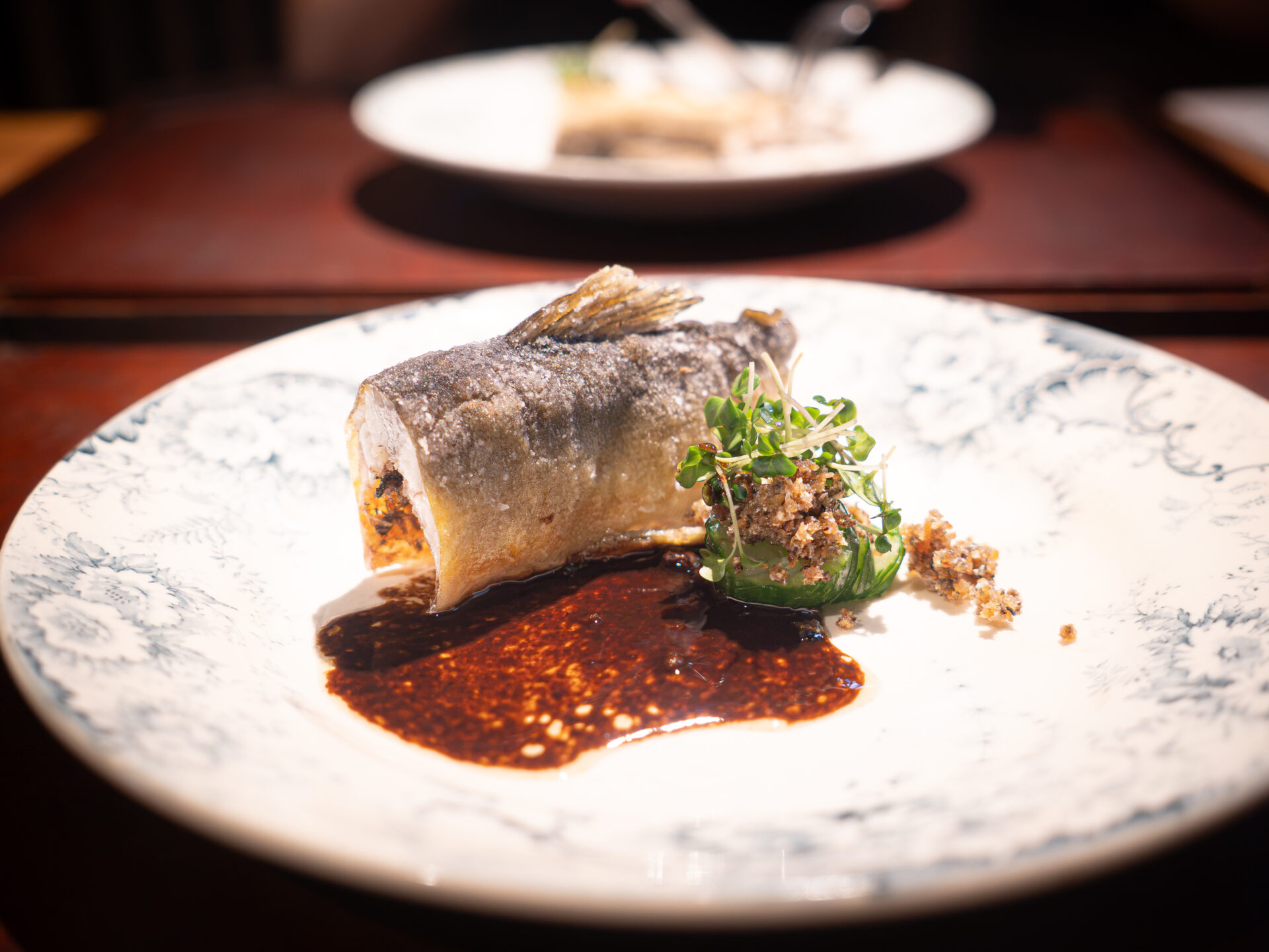
Ayu (sweetfish), the star of summer, is made into a fritto.
Paired with a foie gras and liver sauce — a decidedly bold combination.
The ayu’s gentle bitterness and the foie gras’s richness resonated with each other in a striking dish.
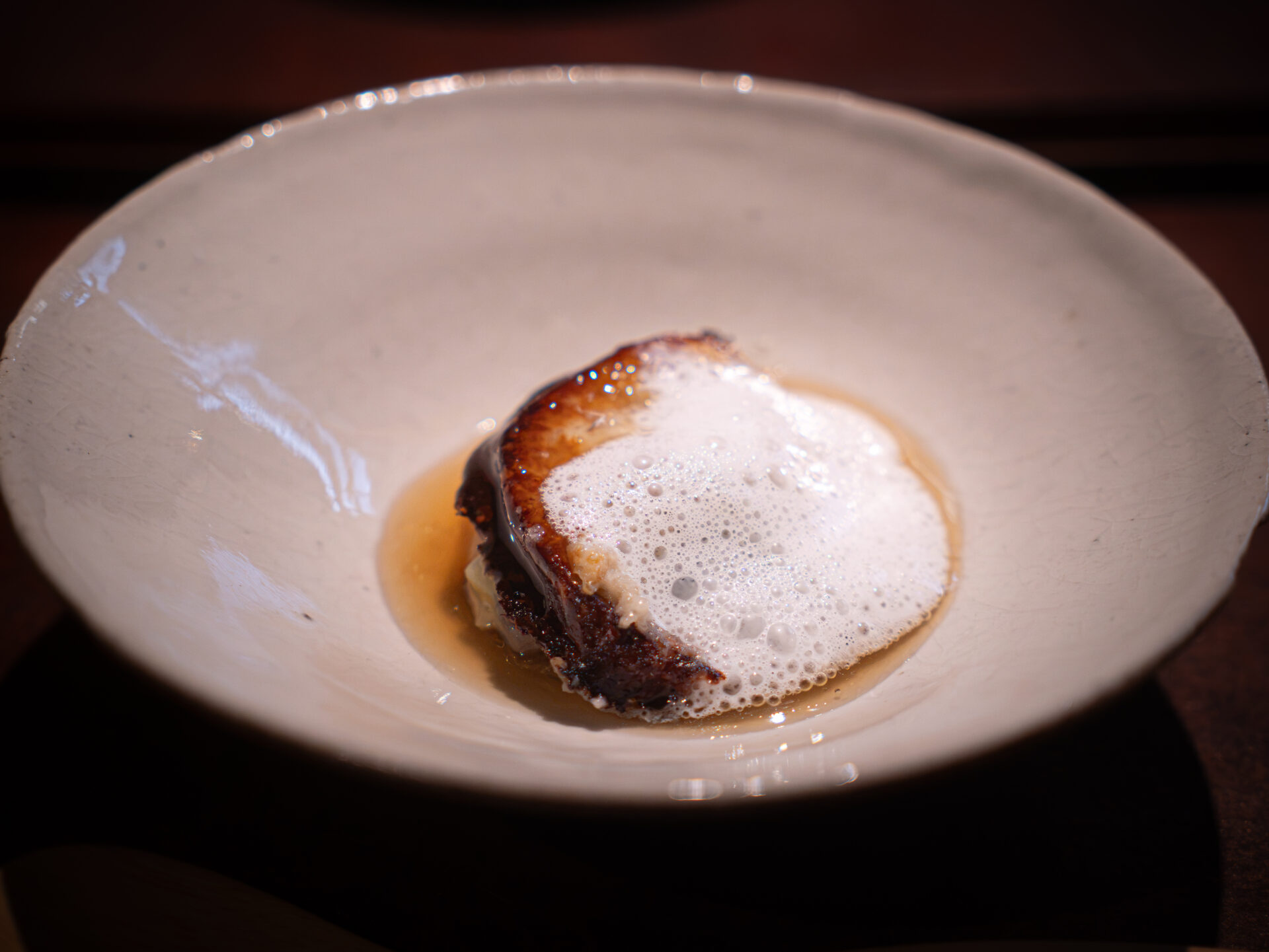
Careful handiwork could be felt in every dish; delicate as they are,
they have a characteristic quality that somehow makes you want a drink.
The Signature Pig’s Trotter Gratin, and Ukiha’s Ginjo Pork
Particularly outstanding was the signature pig’s trotter gratin.
Its appearance included, it was a very memorable dish.
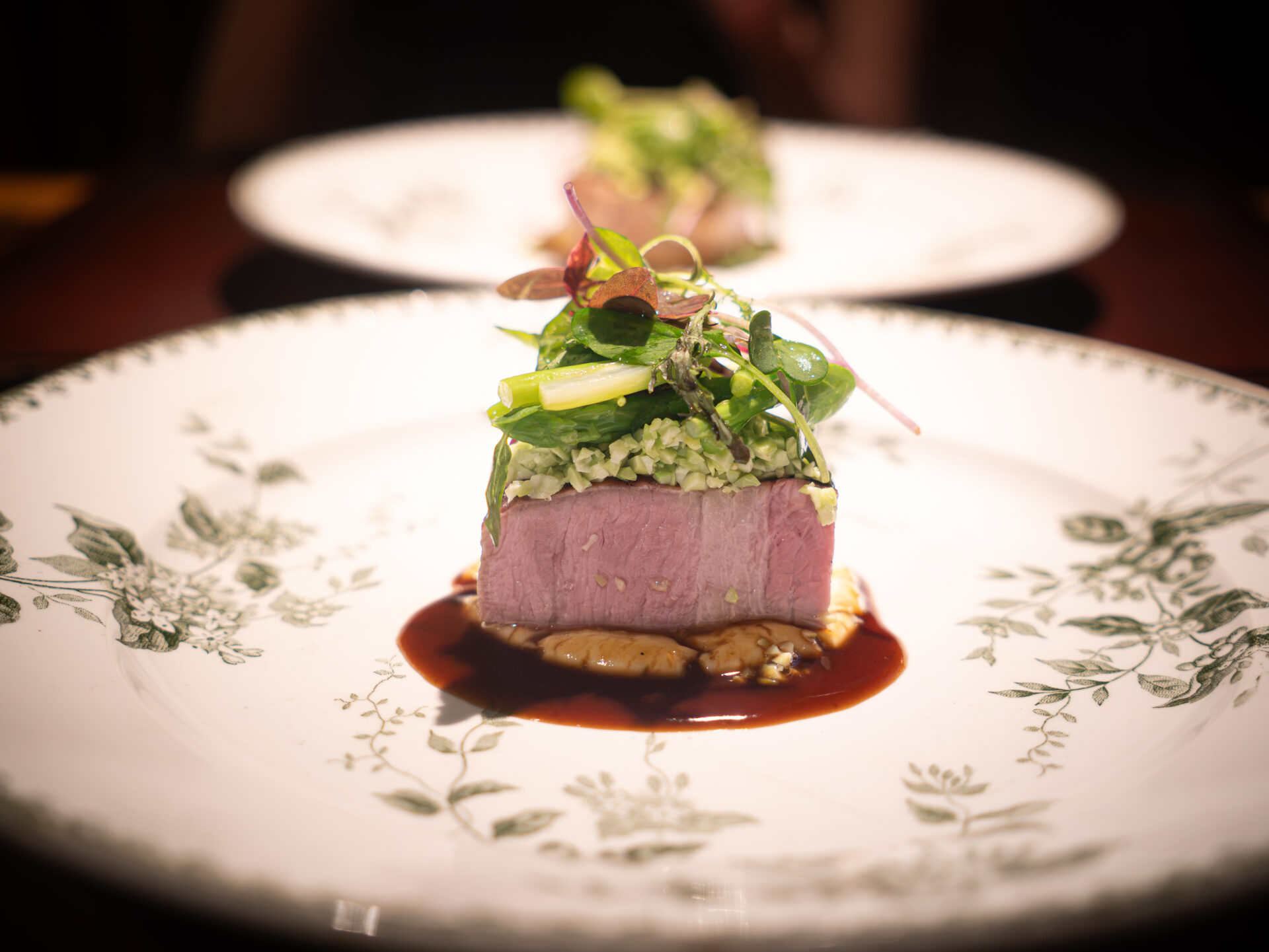
And the main course was shoulder loin of ginjo pork from Ukiha’s “River Wild.”
The beautiful color and cross-section caught the eye first.
When the knife went in, the texture was fine-grained and delicate.
A dish that let us taste the umami of locally raised pork, plain and direct.
Closing with Chicken Soboro Rice with Red Vinegar and a Matcha Terrine
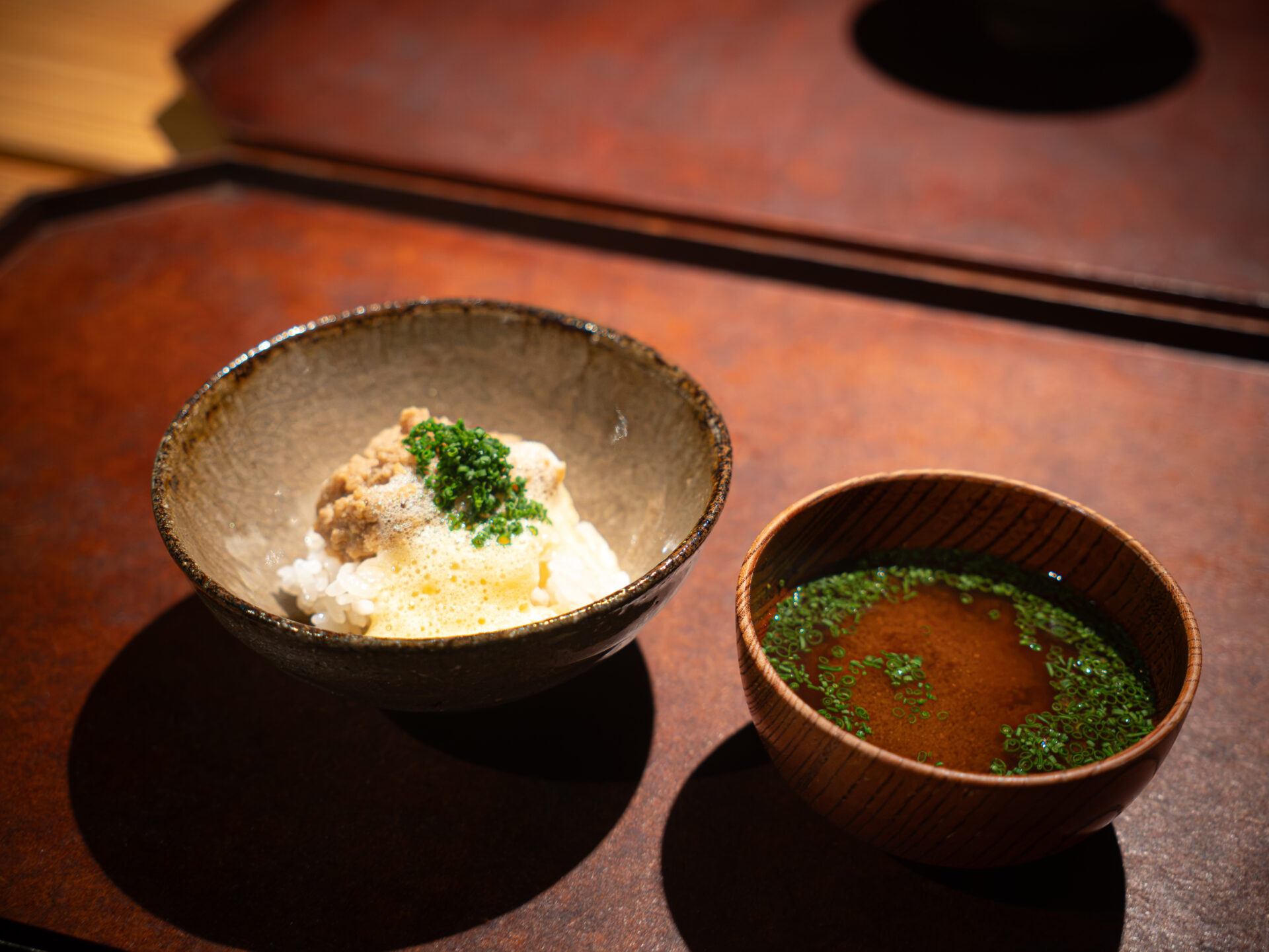
The closing rice was chicken soboro served with red vinegar.
Lighter than the usual closing rice, it made a strikingly fresh impression.
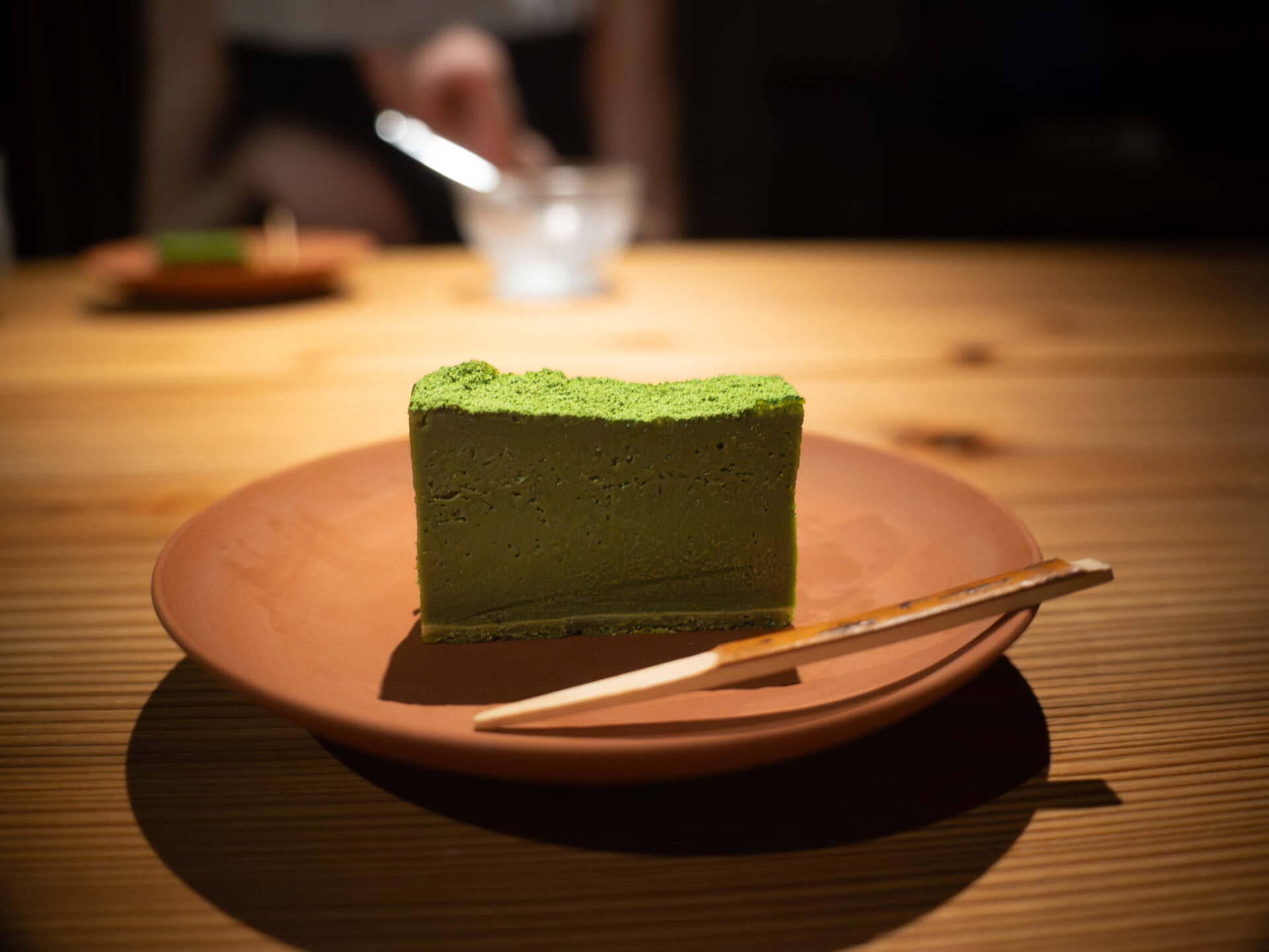
Dessert was a matcha terrine.
The gentle bitterness and richness of matcha quietly closed the course.
The rivers and mountains of Ukiha, and the bounty of its fruit.
A memorable dinner expressing the ingredients of the land plate by plate through Japanese and French technique.
The chef, also a sake sommelier, makes dishes that somehow all make you want a drink.
We didn’t drink that day, so next time I’d love to enjoy it with the chef’s selected sake pairings.
- ADDRESS
住所:福岡県うきは市浮羽町浮羽756(FLATFORM UKIHA内)
- OPEN
17:30〜22:00 (LO.21:15) 定休日 日曜(不定休あり)、完全予約制
- COMMENT
- シェフは唎酒師の上位資格「酒匠」を有するスペシャリスト
Ending the Day with a Soak at Chikugogawa Onsen “Kiyonoya”
Carrying the afterglow of MAHORO, before returning to the hotel we stopped at Kiyonoya in Chikugogawa Onsen.
It’s a hot-spring inn on the banks of the Chikugo River that also accepts day-use bathers.
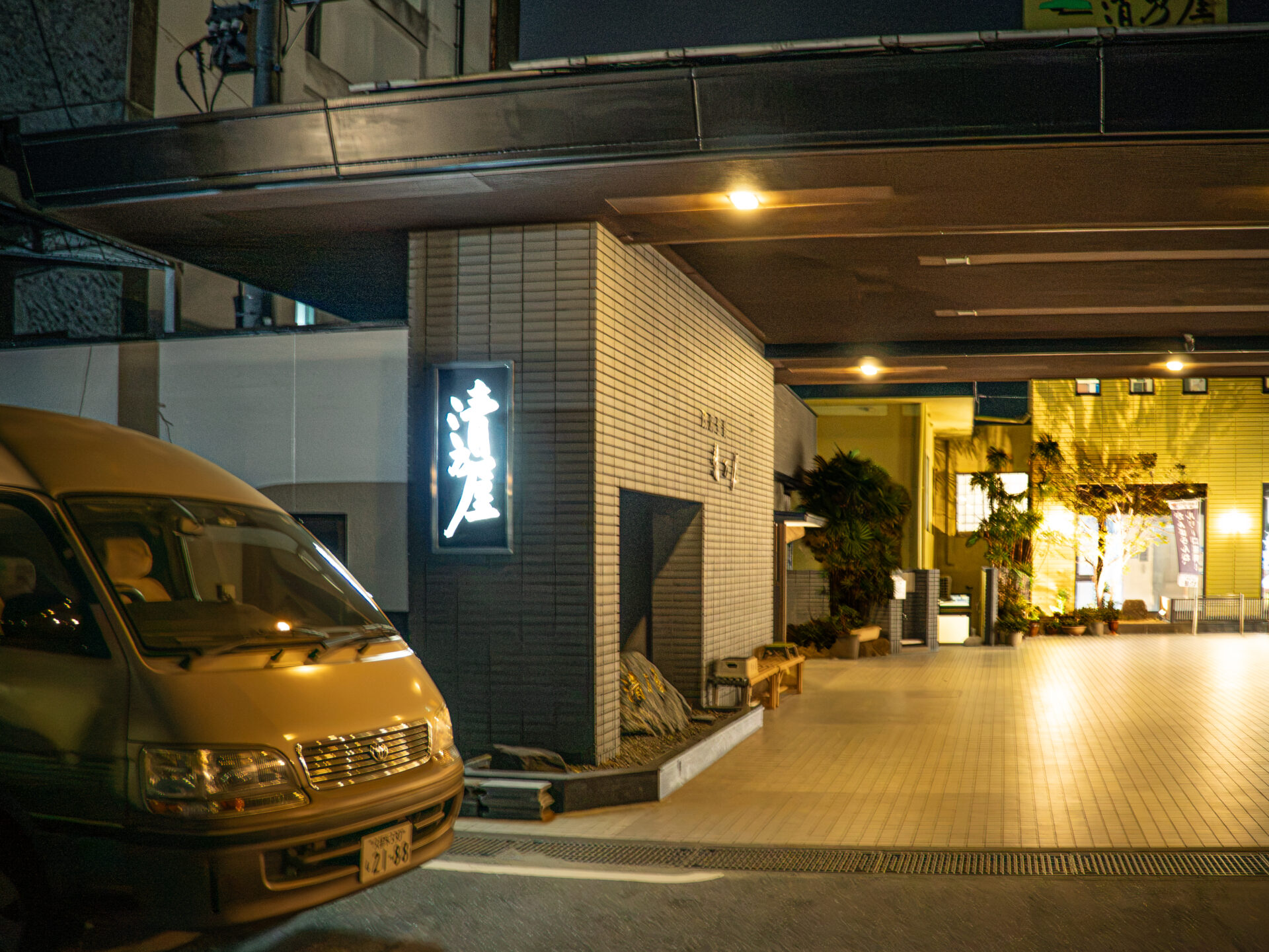
Against the dark of night, the characters of “Kiyonoya” glowed pale blue.
Light spilling from inside spread gently across the quiet parking lot.
The highlight is the alkaline water from the inn’s own source, flowing freely into the baths.
Sinking into the tub, the silky feel gently enveloped the body,
and afterward the skin was left smooth and supple.
The fatigue of driving and walking around all day slowly unwound.
Eating well, taking in the scenery, and warming up in a hot spring.
We closed out a summer day in Ukiha in the best possible way.
- ADDRESS
福岡県うきは市浮羽町古川1099-3
- OPEN
立ち寄り湯入浴時間 ――
10:00~21:00(家族湯:10:00~14:00 ※事前予約は承っておりません)
Cooling our post-bath glow in the night breeze, we headed to the hotel.
And so the first day of the Ukiha trip came to a peaceful close.
DAY 2 | Woken by the Morning Sun, Breakfast from the Roadside Station
The second morning began with strong sunlight slipping through a gap in the curtains.
Around the hotel stretch only orchards and rice paddies, with not a single tall building to block the light.
As a result, the summer morning light poured straight into the room.
An awakening almost too bright
is a morning gift unique to Ukiha, hard to find in the city.
Through the Terrace to the Roadside Station in the Morning
Breakfast, of course, was sourced at Michi-no-Eki Ukiha.
Pass through the hotel terrace and the roadside station is right there.
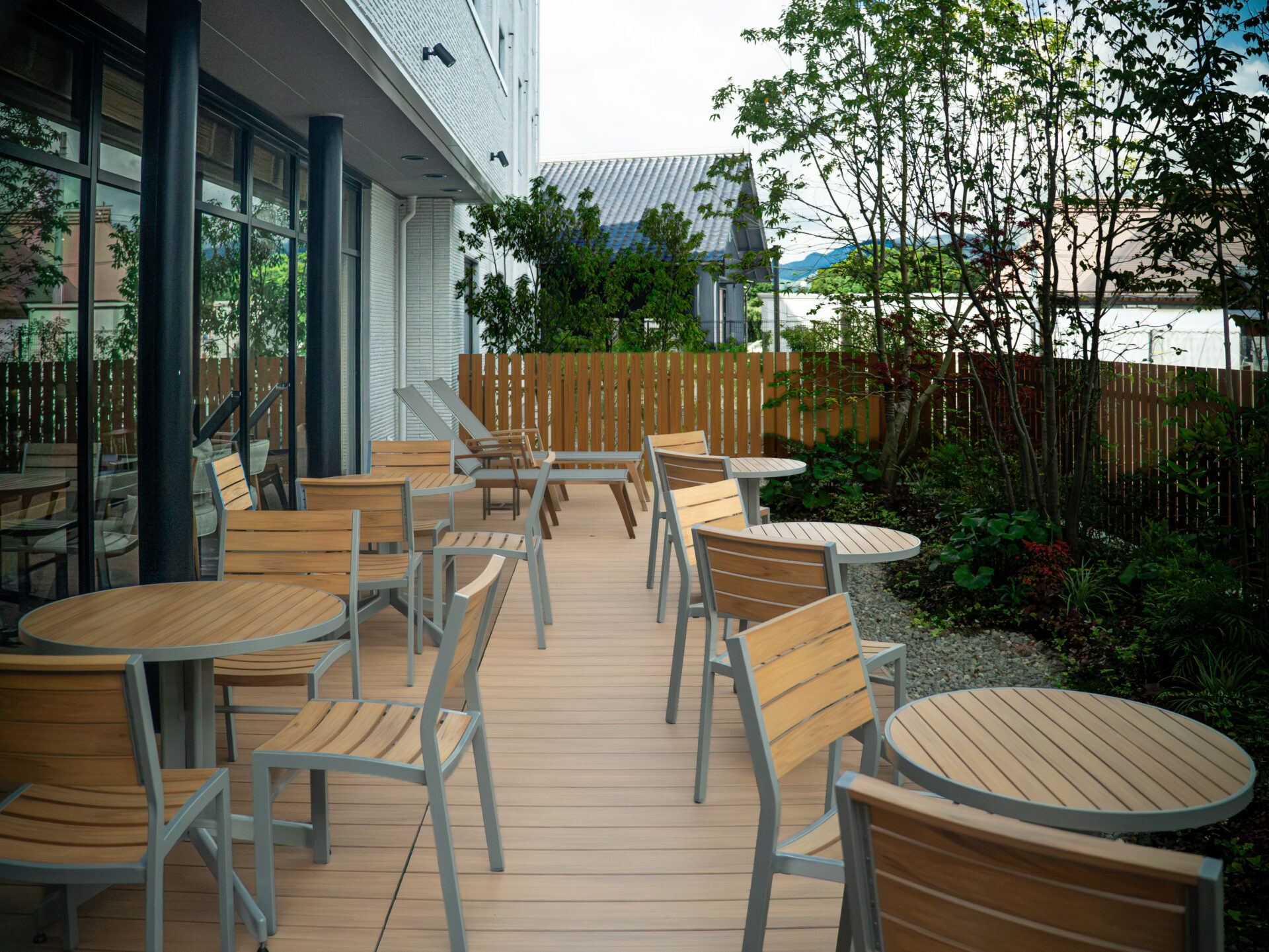
The terrace, with tables and chairs on a wooden deck, is a pleasant space surrounded by green plantings.
In the clear morning air, it would be nice to spend a leisurely while here.
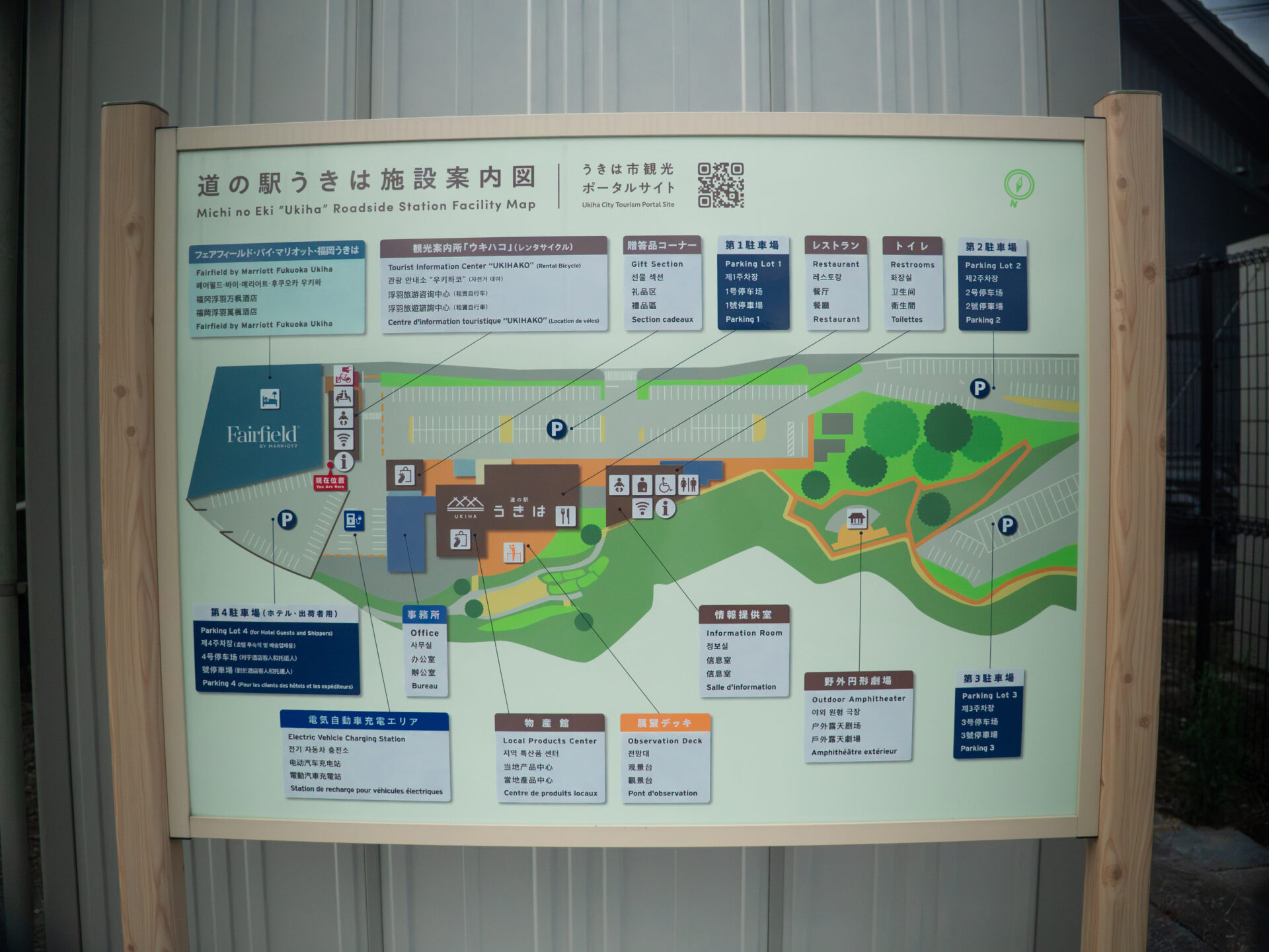
The guide map shows clearly how the hotel and roadside station are connected.
From the hour when producers bring in vegetables and fruit picked that morning, guests can come and go in the same way —
truly the feeling of “staying at a roadside station.”
Kashiwa-meshi Onigiri and Freshly Pressed Milk for Breakfast
This morning’s choice was a kashiwa-meshi onigiri set made by a local.
Three kashiwa-meshi rice balls with karaage and takuan on the side, for just ¥340.
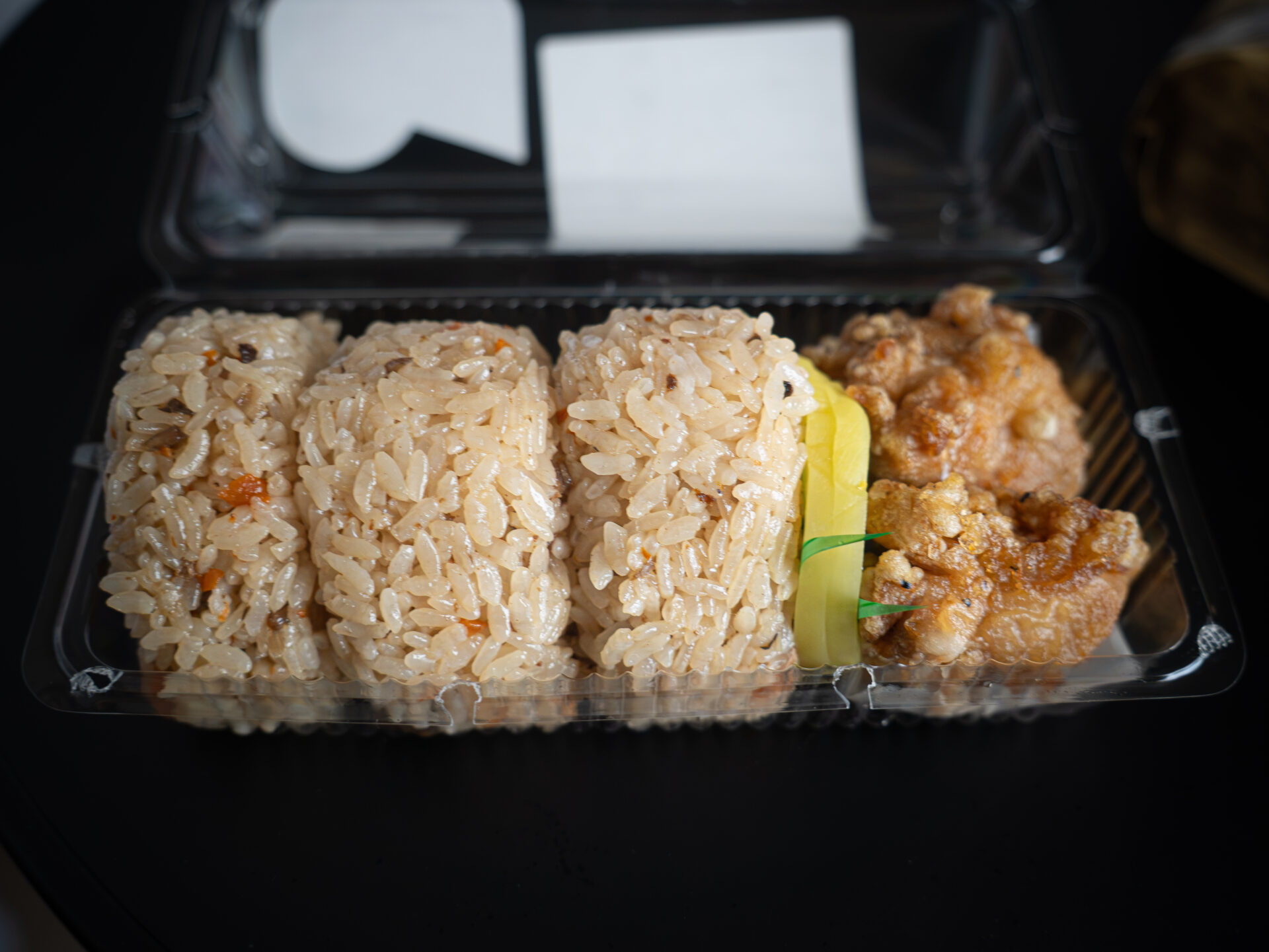
Sweet-savory rice infused with the flavor of chicken, plus fragrant karaage.
A somehow nostalgic, comforting taste that kept the chopsticks moving, even in the morning.
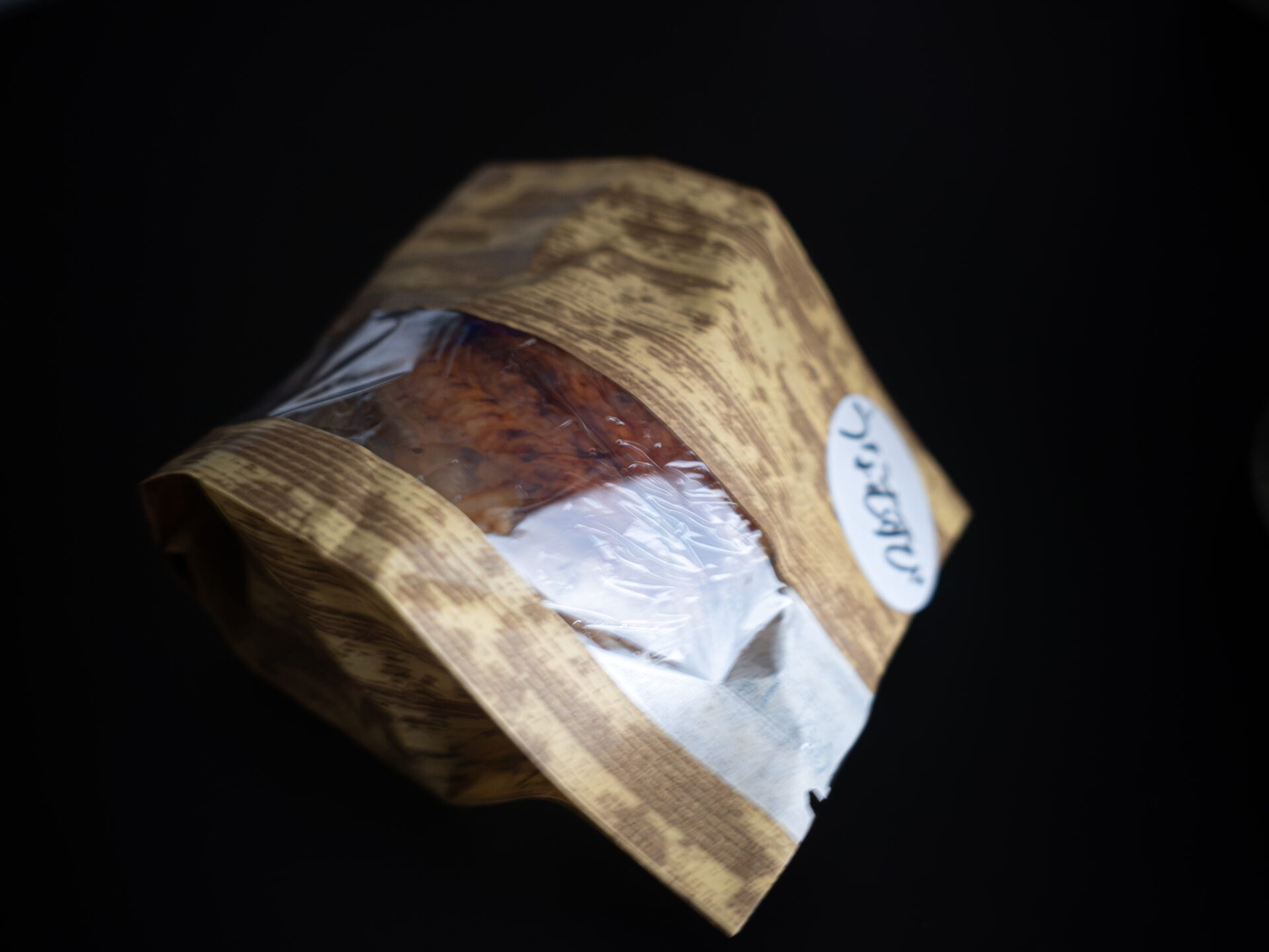
One more thing caught my eye and I picked it up: the “Unamusubi.”
A luxurious rice ball with fragrantly grilled eel pressed together with the rice.
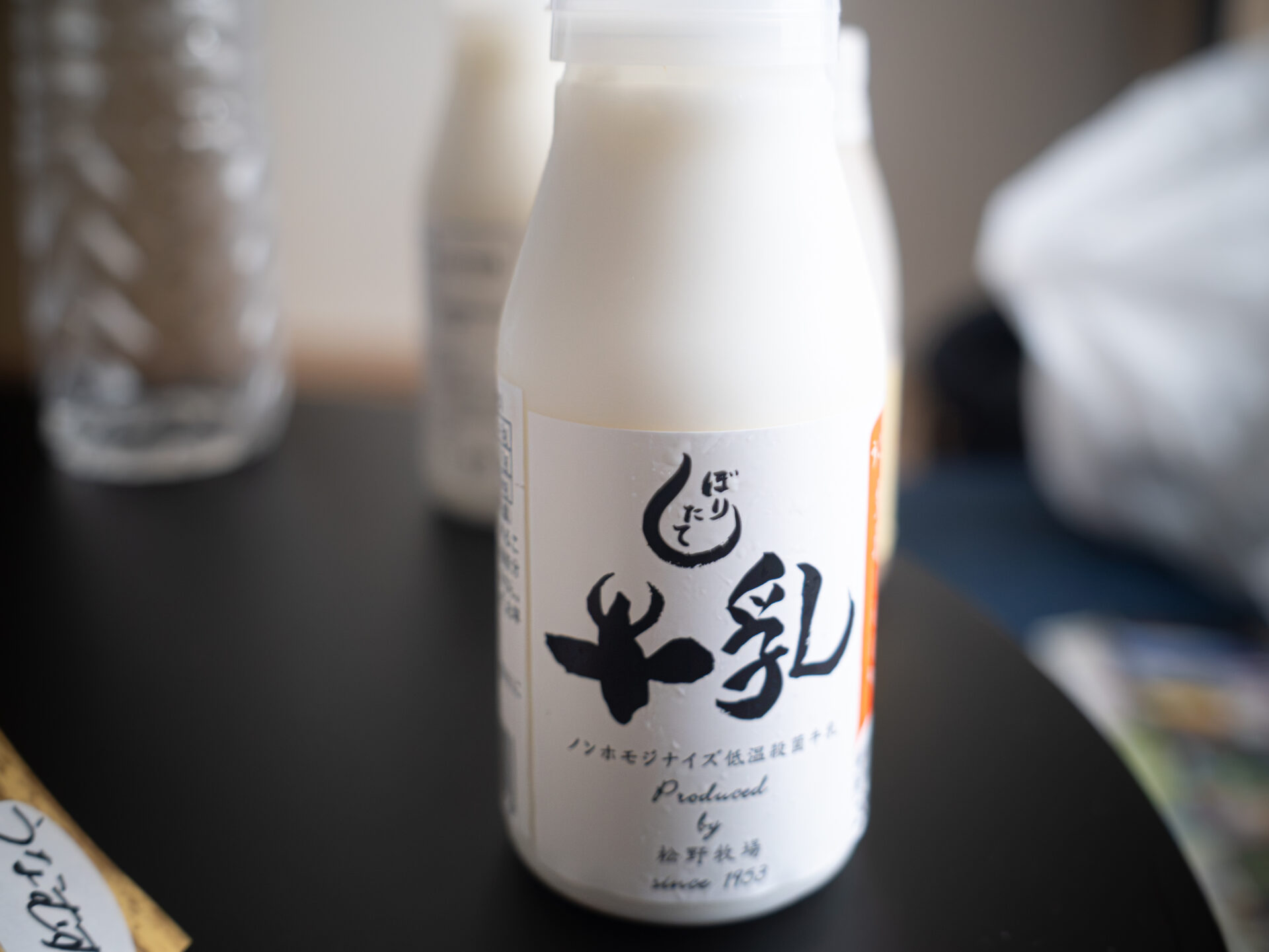
And to go with breakfast, freshly pressed milk.
Non-homogenized, low-temperature pasteurized milk from “Matsuno Farm,” founded in 1953.
Within a clean, easy-drinking mouthfeel, the natural sweetness and richness of milk unfold.
Breakfast of local flavors, in a room bathed in morning light.
Nothing flashy, but this is exactly the pleasure of staying at a roadside station, a luxurious moment.
On to Yoshii for Lunch, a White-Walled Townscape Through the Window
After breakfast and checkout, we drove to Yoshii-machi in Ukiha City in search of lunch.
After driving a while, the view outside suddenly began to change.
Lined up along the road were houses with white plaster walls and heavy tiled roofs.
This is the “white-walled townscape,” the Chikugo-Yoshii Preservation District for Groups of Traditional Buildings.
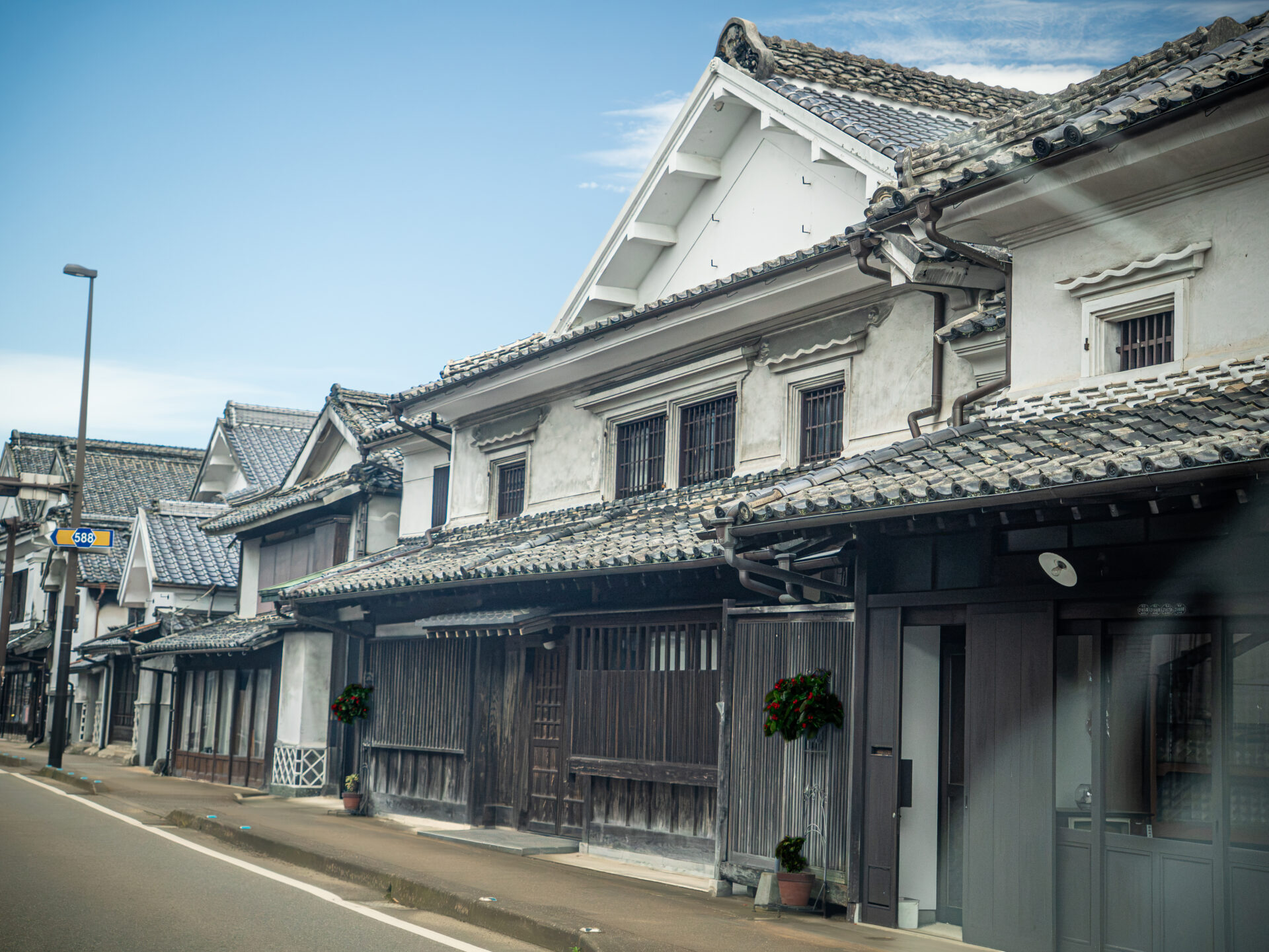
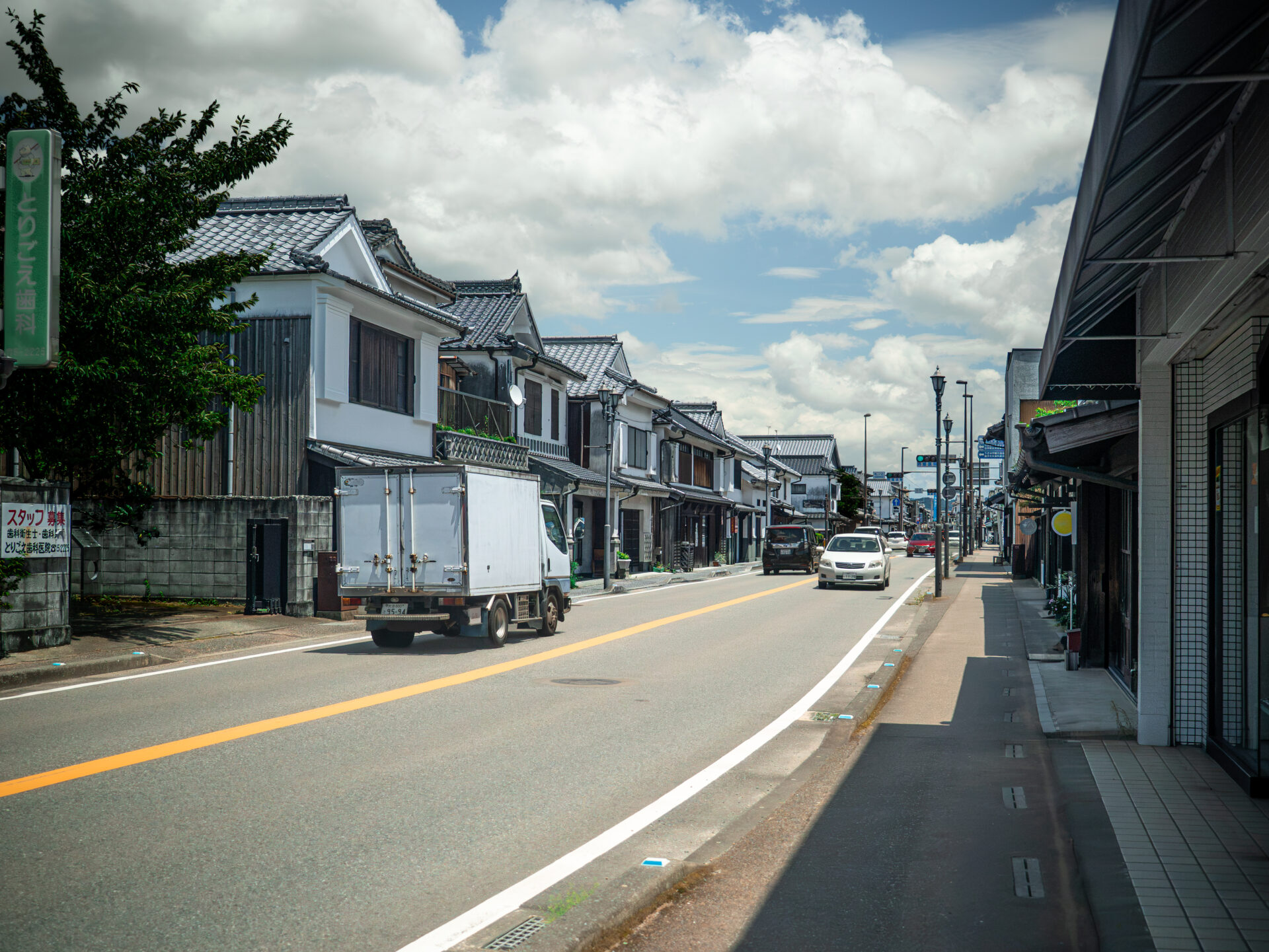
Beneath a summer blue sky and billowing thunderheads,
namako-kabe walls, lattice doors, and potted flowers hanging from eaves drifted slowly past the window.
This area, once flourishing as a post town and merchant town, is said to have developed its fire-resistant white-walled, earthen-storehouse-style houses after repeated great fires.
A townscape where the signs of daily life remain as they are — even just viewing it from the car window, time seems to flow slowly.
Lunch at “Maaboya,” a Mapo Tofu Specialist in the White-Walled Town
Set in a corner of that white-walled townscape is today’s lunch destination, the mapo tofu specialist “Maaboya.”
A deep green exterior wall, a red-and-white striped awning.
The classic look, somehow reminiscent of a European street corner, stands out especially in the white-walled town.
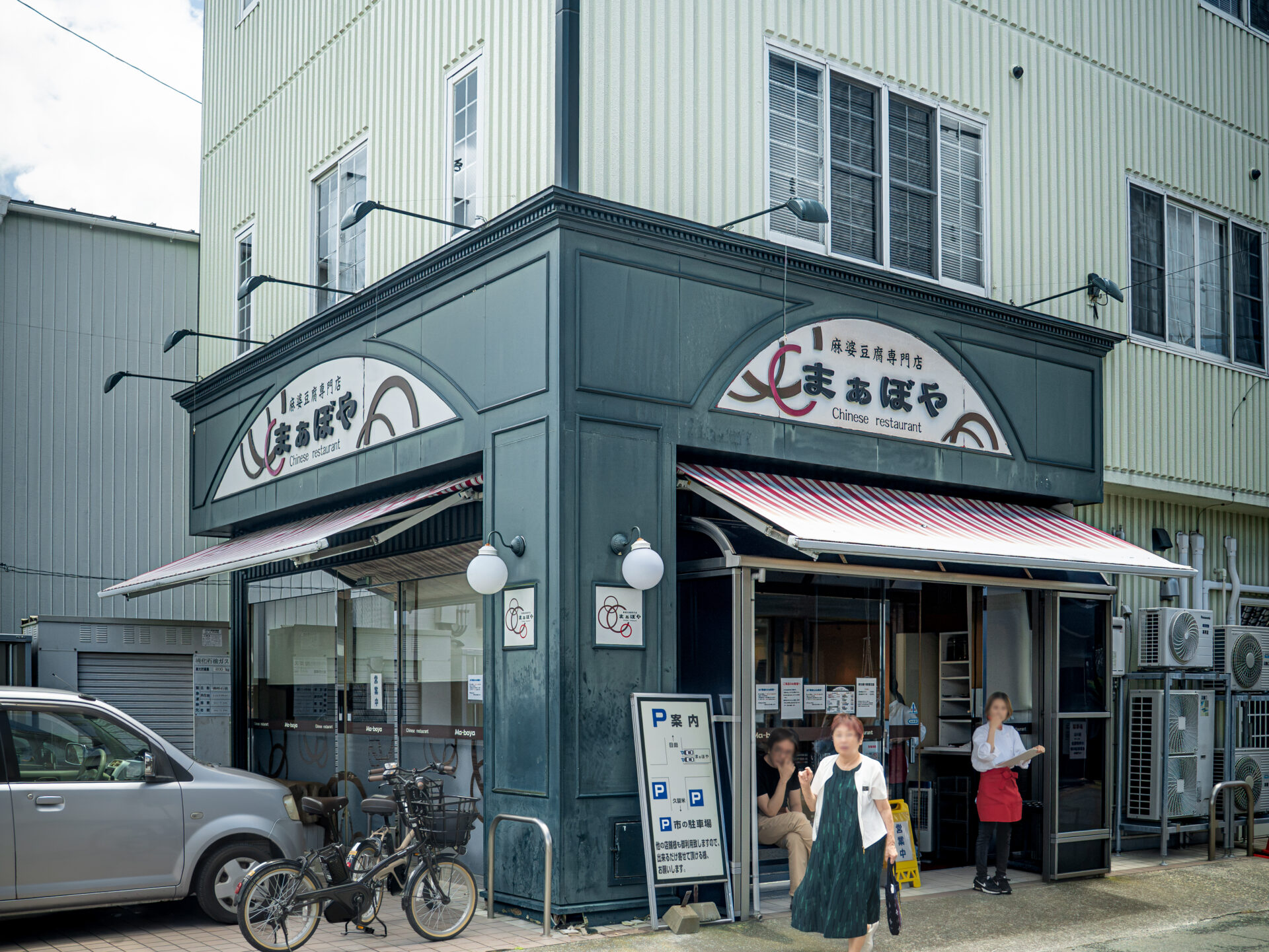
Even on a weekday lunchtime, people were already waiting in line outside.
That day, we waited about 40 minutes before finally being seated.
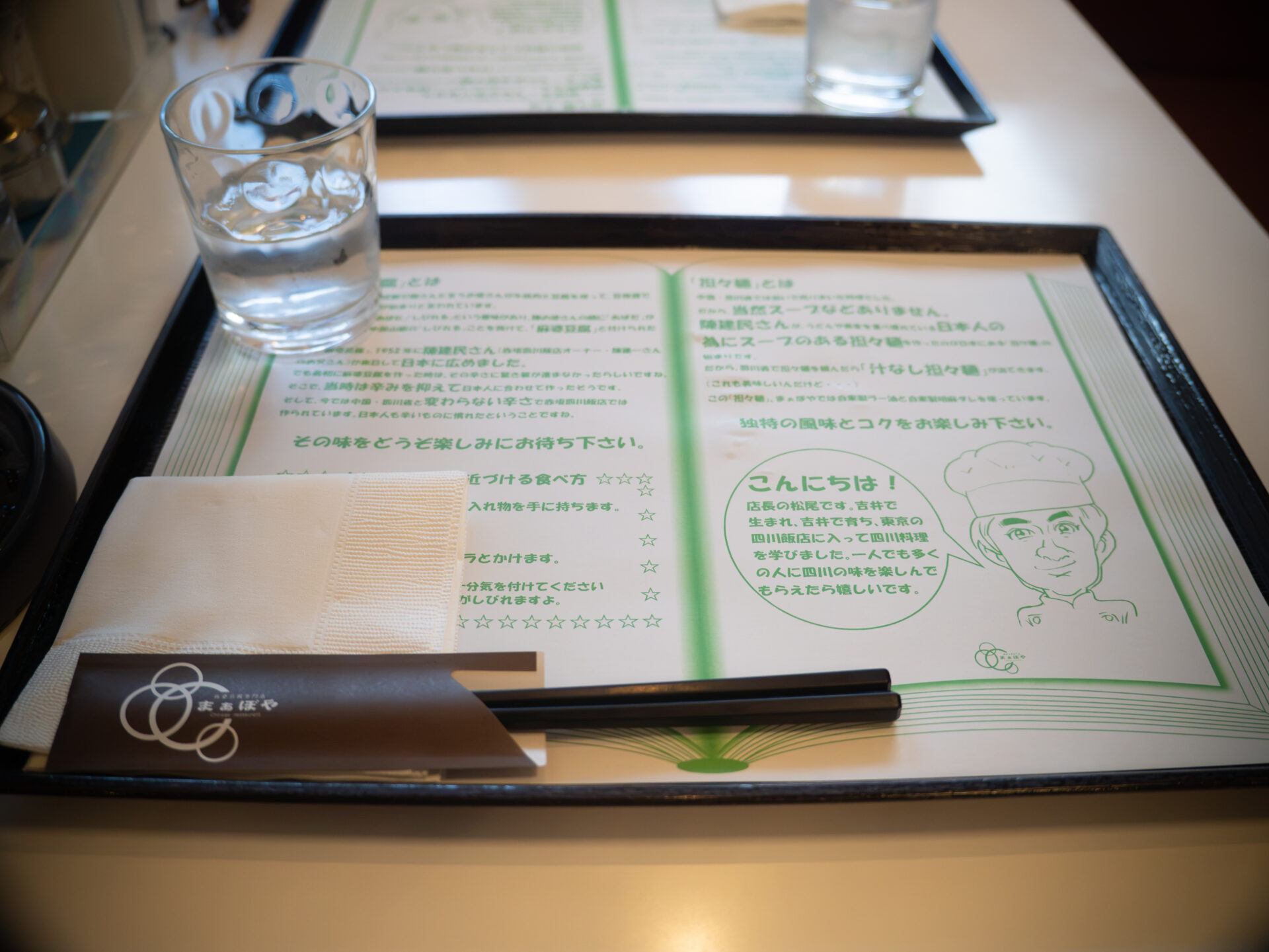
Once seated, a message from the manager was printed on the placemat on the tray.
The manager, Mr. Matsuo, was born and raised in Yoshii and learned Sichuan cuisine at Tokyo’s renowned “Szechwan Restaurant Chen.”
He carries on in his hometown of Yoshii the lineage of Chen Kenmin, who spread mapo tofu throughout Japan.
What we had were the signature mapo tofu and tantanmen.
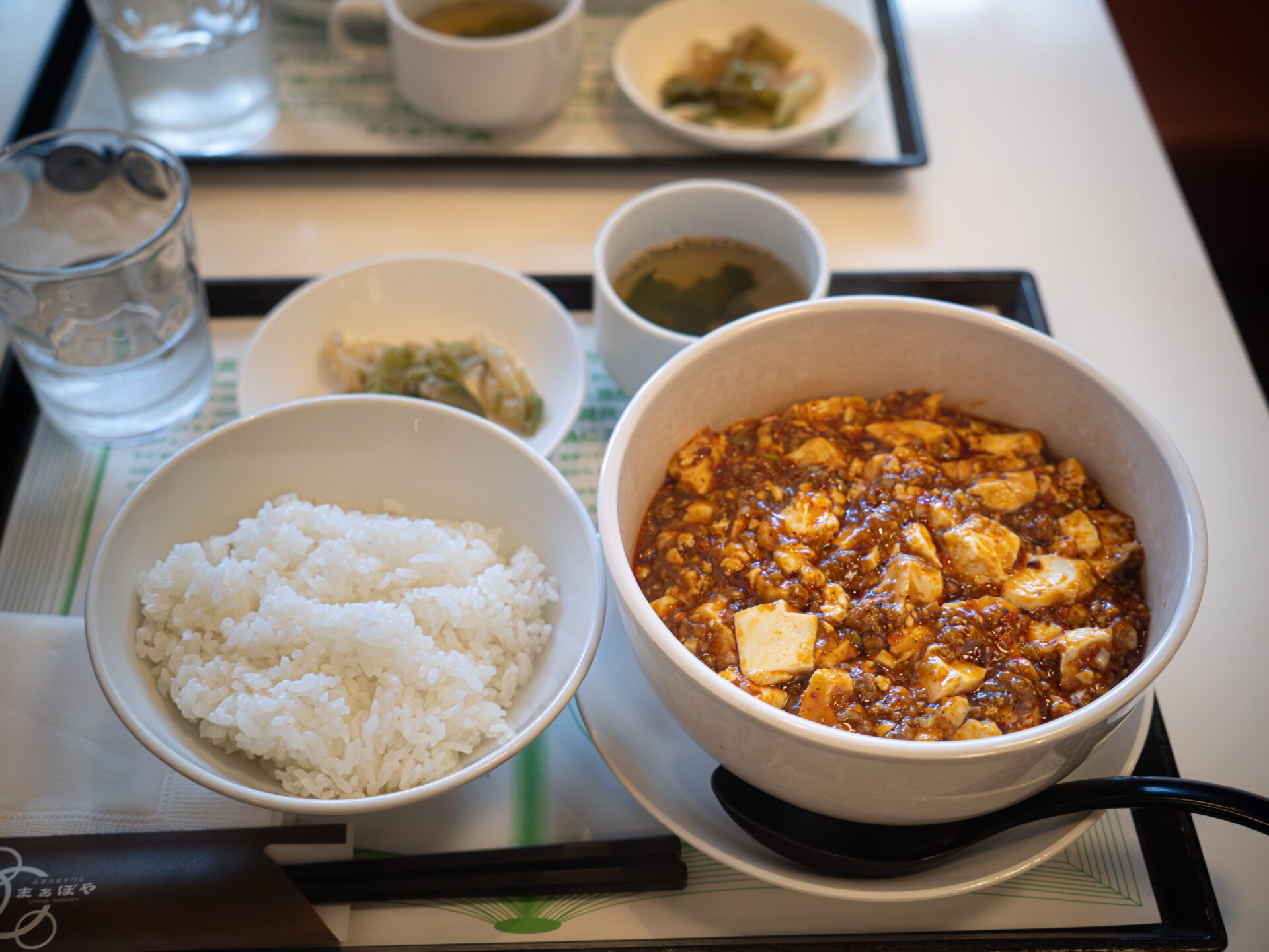
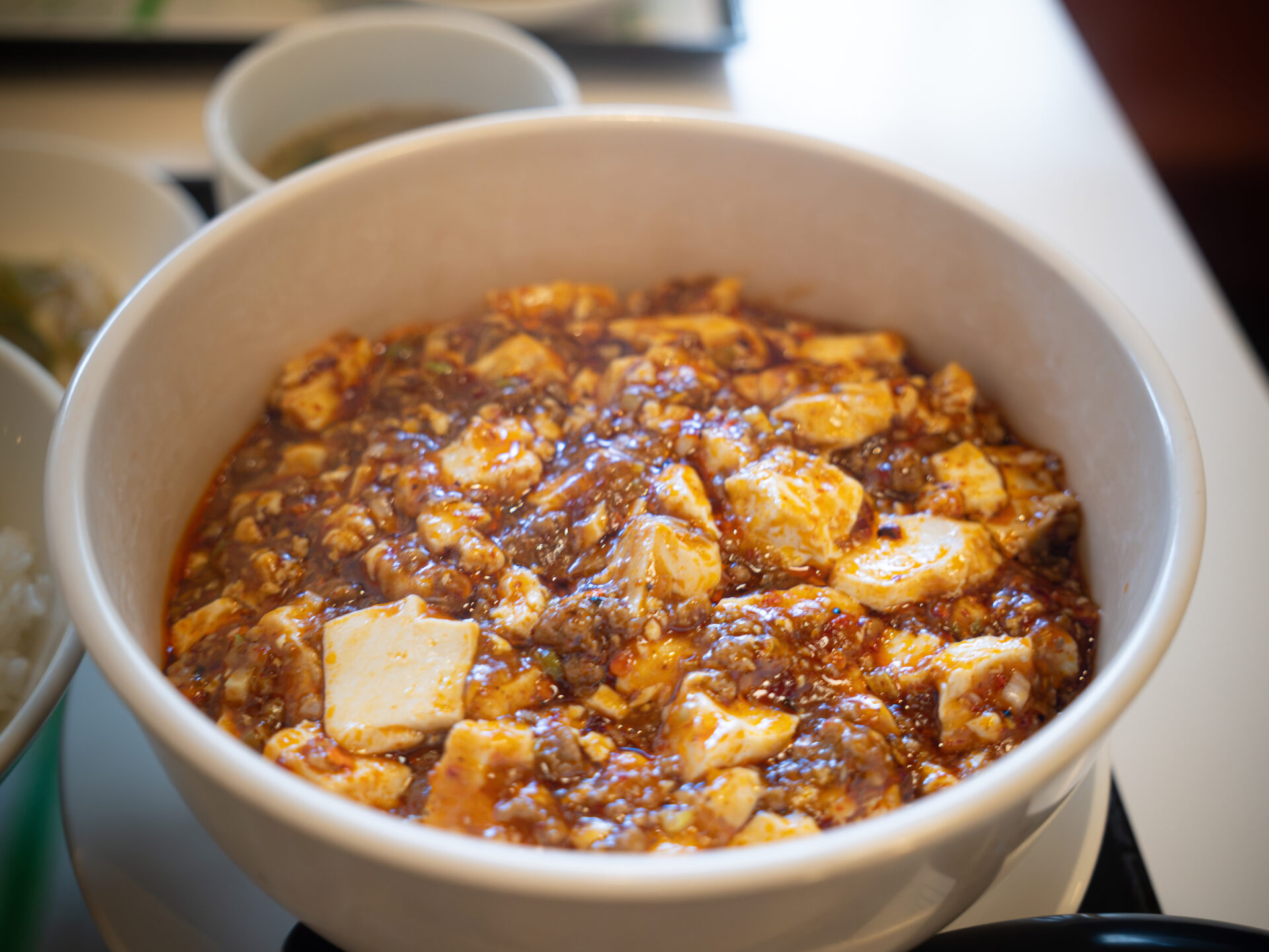
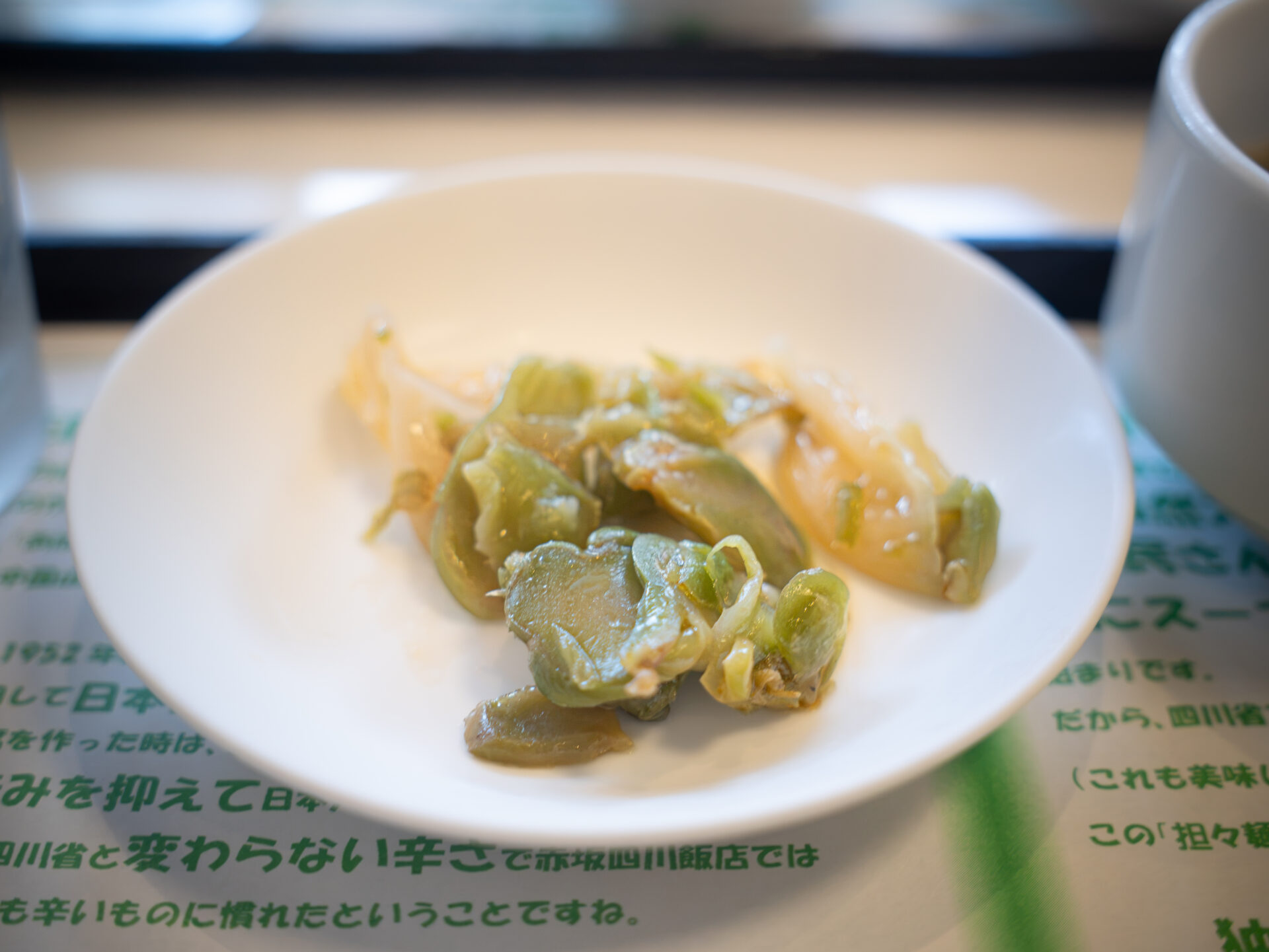
The mapo tofu’s key is its easy-to-eat, toned-down heat.
The fragrance of doubanjiang and Sichuan pepper comes through clearly, yet umami and richness lead — a gentle dish.
I felt it was perfect as an introduction to mapo tofu, even for those who aren’t good with spicy food.
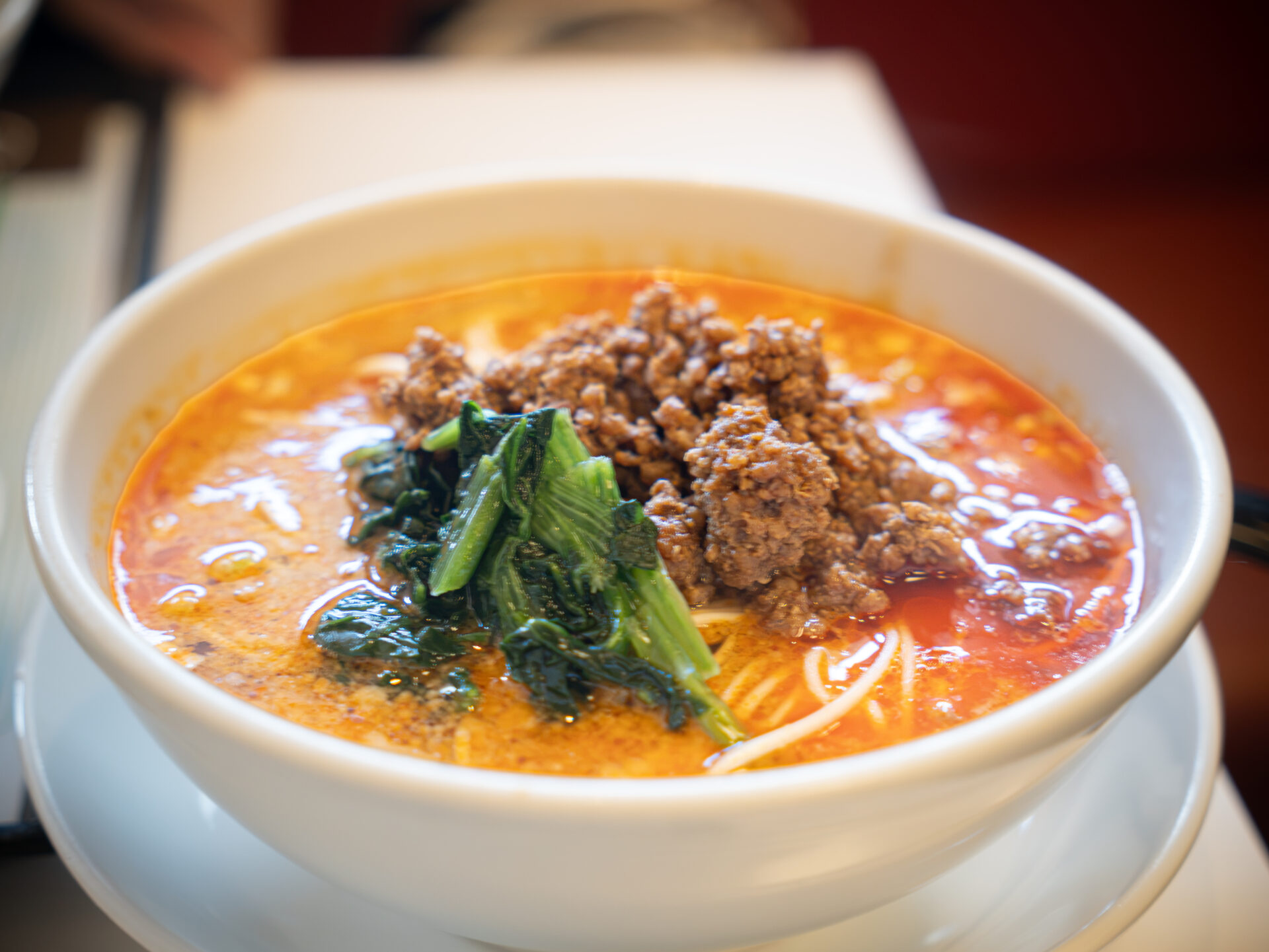
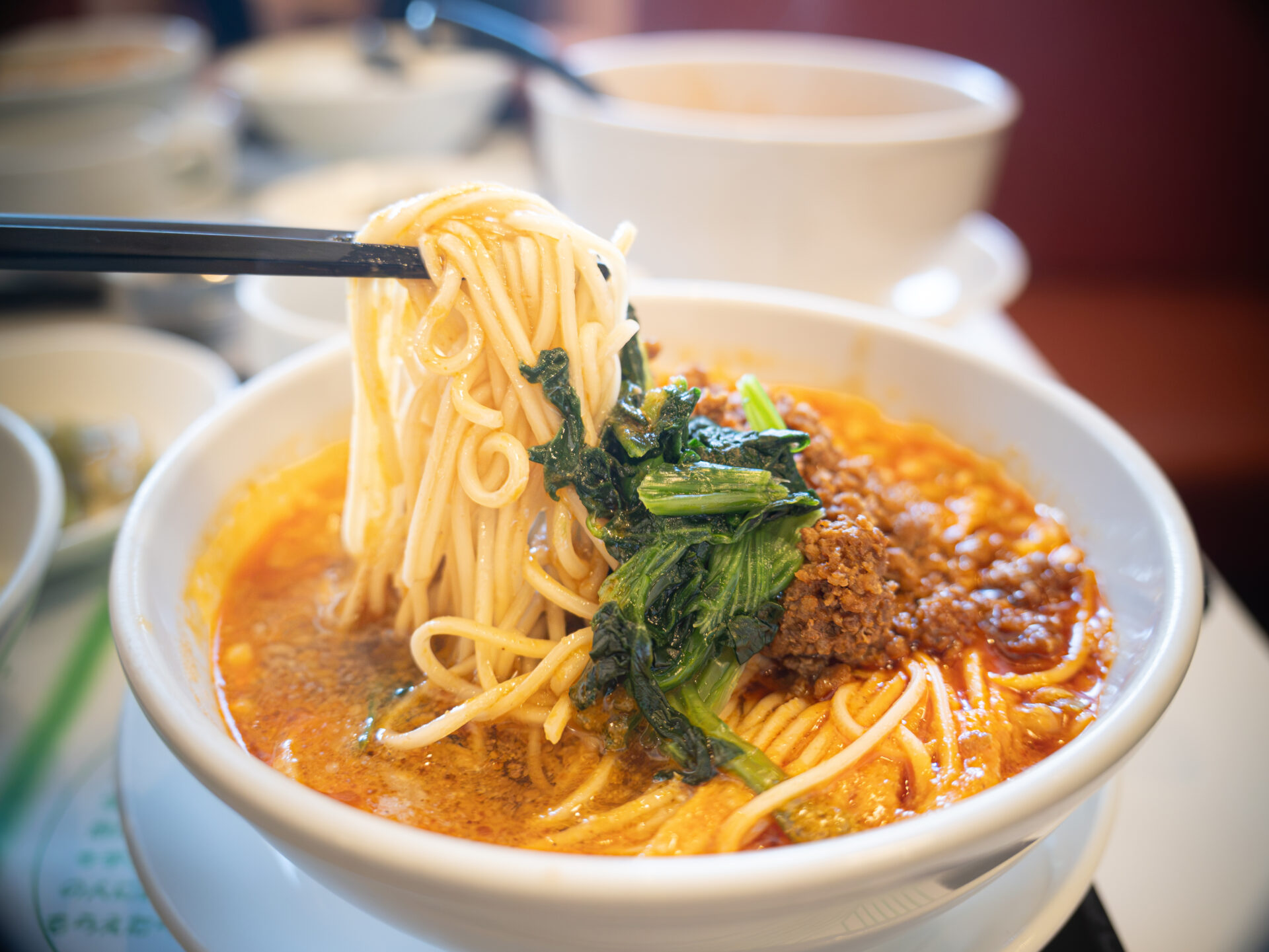
The tantanmen is full of sesame’s fragrance and richness.
This too has restrained heat, and was comfortable to the very end.
With every bite, you understand why it’s worth a 40-minute wait —
a beloved local favorite rooted in the white-walled town.
- ADDRESS
福岡県うきは市吉井町1349-1
- OPEN
平日11:00~15:00 定休日 土日祝、不定休
- AWARD
食べログ 中国料理 WEST 百名店 2023 選出店
- COMMENT
- 駐車場:有(2台)※近隣共同Pあり。予約不可。
To Ukiwa Inari Shrine, with Its Vermilion Torii Gates
With our stomachs full, we drove a short way to Ukiwa Inari Shrine.
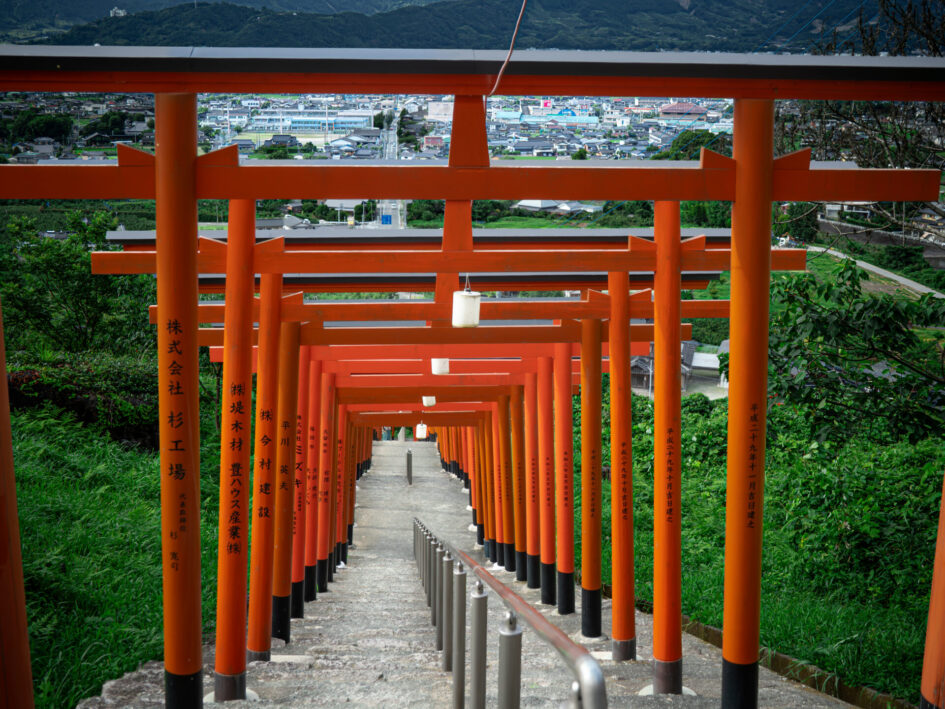
As we approached, vermilion torii gates could be seen stretching in a single straight line through the deep green of the Minou range.
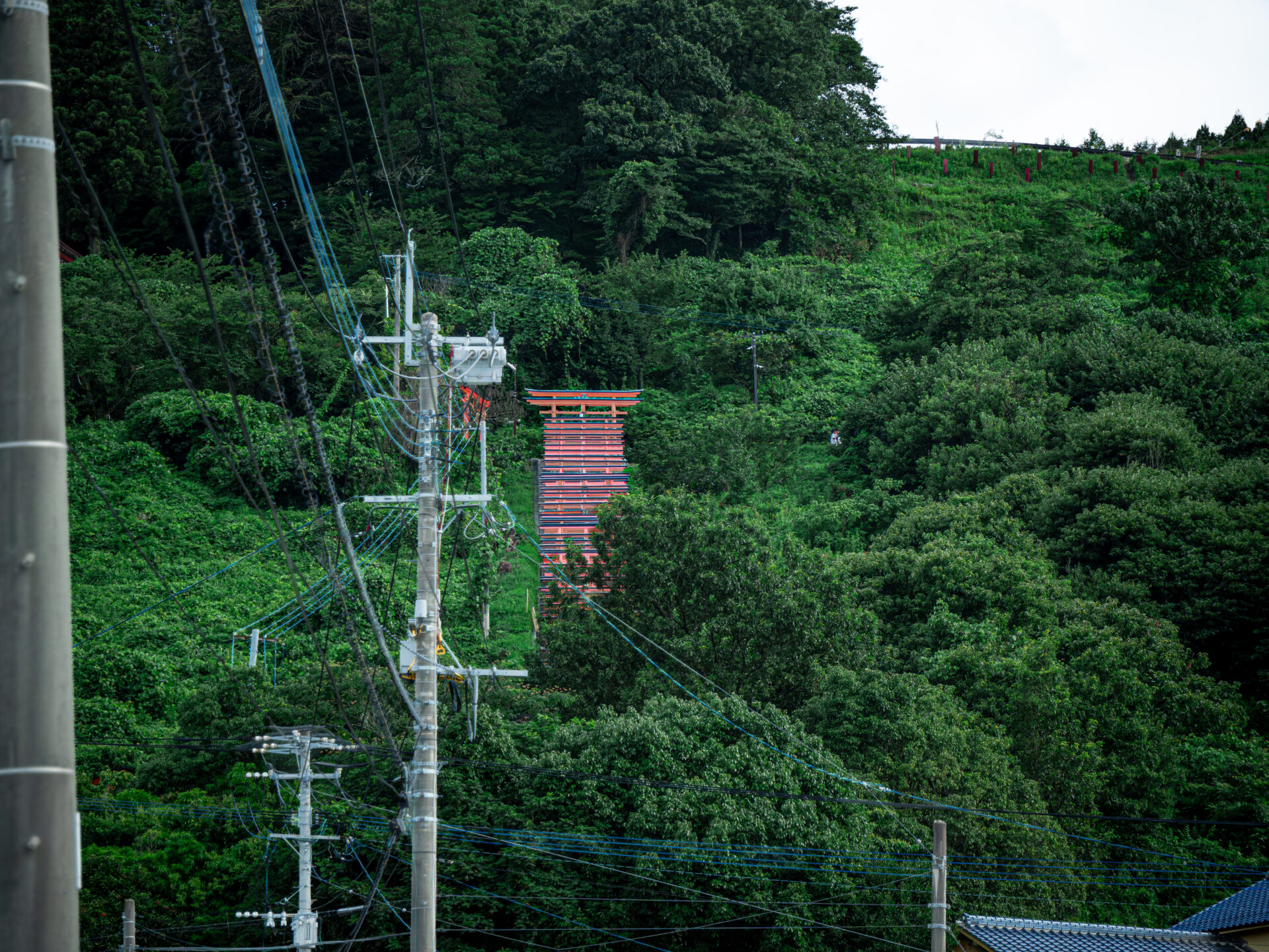
The torii gates, threading along the mountain slope, are startlingly vivid even from afar.
Even seen across power lines, they carry a certain mystical air.
Ukiwa Inari Shrine was founded in 1957 (Showa 32), with Inari Okami enshrined from Fushimi Inari Taisha in Kyoto.
Together with Oyamakui-no-Kami of Matsunoo Taisha and Sugawara no Michizane of Dazaifu Tenmangu, three deities are enshrined,
said to bring a range of blessings including business prosperity, bountiful harvests, and success in studies.
The vermilion-lacquered torii lining the approach number 91 in total.
【Whether we climbed the stone steps from the bottom or visited from the parking lot】
And then, looking back through the tunnel of torii —
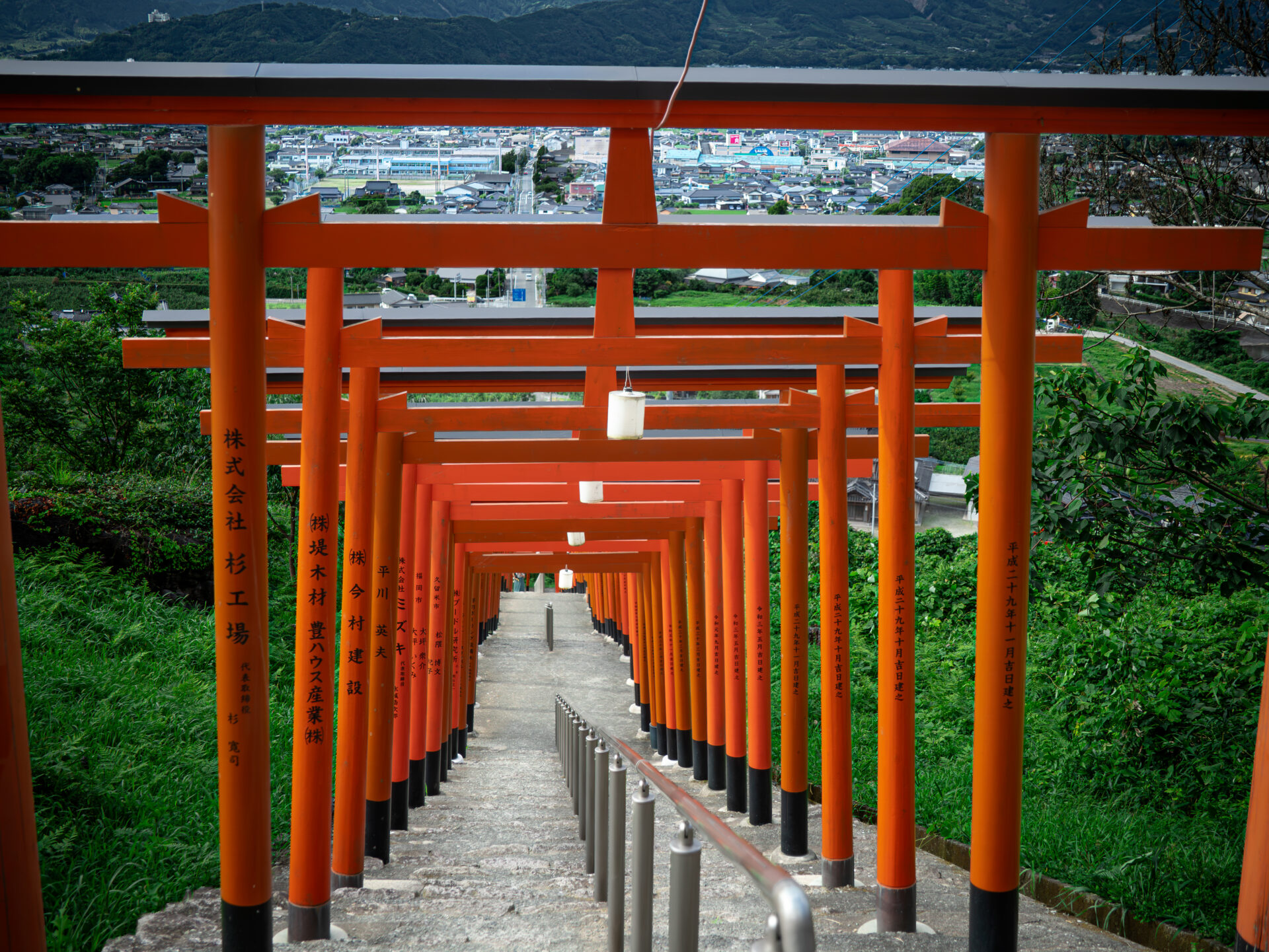
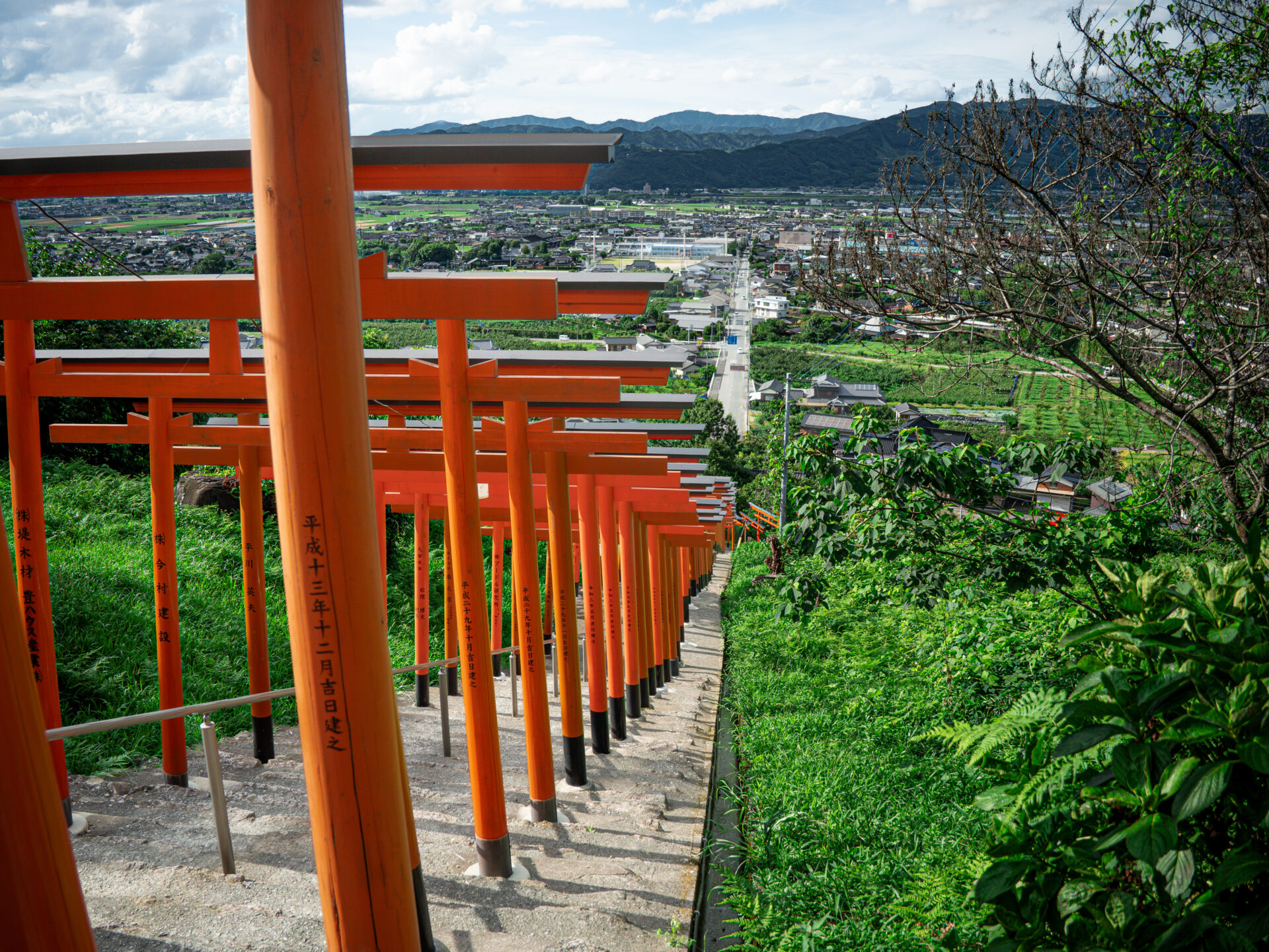
Beyond the vermilion torii, the Chikugo Plain spread out in full.
Fields and houses, with mountains rolling on behind.
Thinking that we were now looking down from the mountain at the same plain we’d gazed at from the roadside station’s observation deck yesterday,
the Ukiha we’d walked through these two days seemed to connect into a single view.
The humid summer wind slowly blew through the gates.
For a while, speechless, we etched that view into our eyes.
- ADDRESS
福岡県うきは市浮羽町流川1513-9
- OPEN
終日開放(参拝自由)
- COMMENT
- JR「うきは」駅から徒歩約20分。駐車場は石段の200段目付近。
Closing the Trip at the Horse Meat Specialist “Baan Konomi”
Leaving Ukiwa Inari Shrine, our choice for the final meal of the Ukiha trip was the horse meat specialist “Baan Konomi.”
Under a sky of summer clouds, the “Baan” sign hung along the road was our landmark.
Basashi (horse sashimi), horse meat sukiyaki, shabu-shabu, yakiniku, motsunabe —
the menu on the sign made it clear this is a place to thoroughly enjoy horse meat.
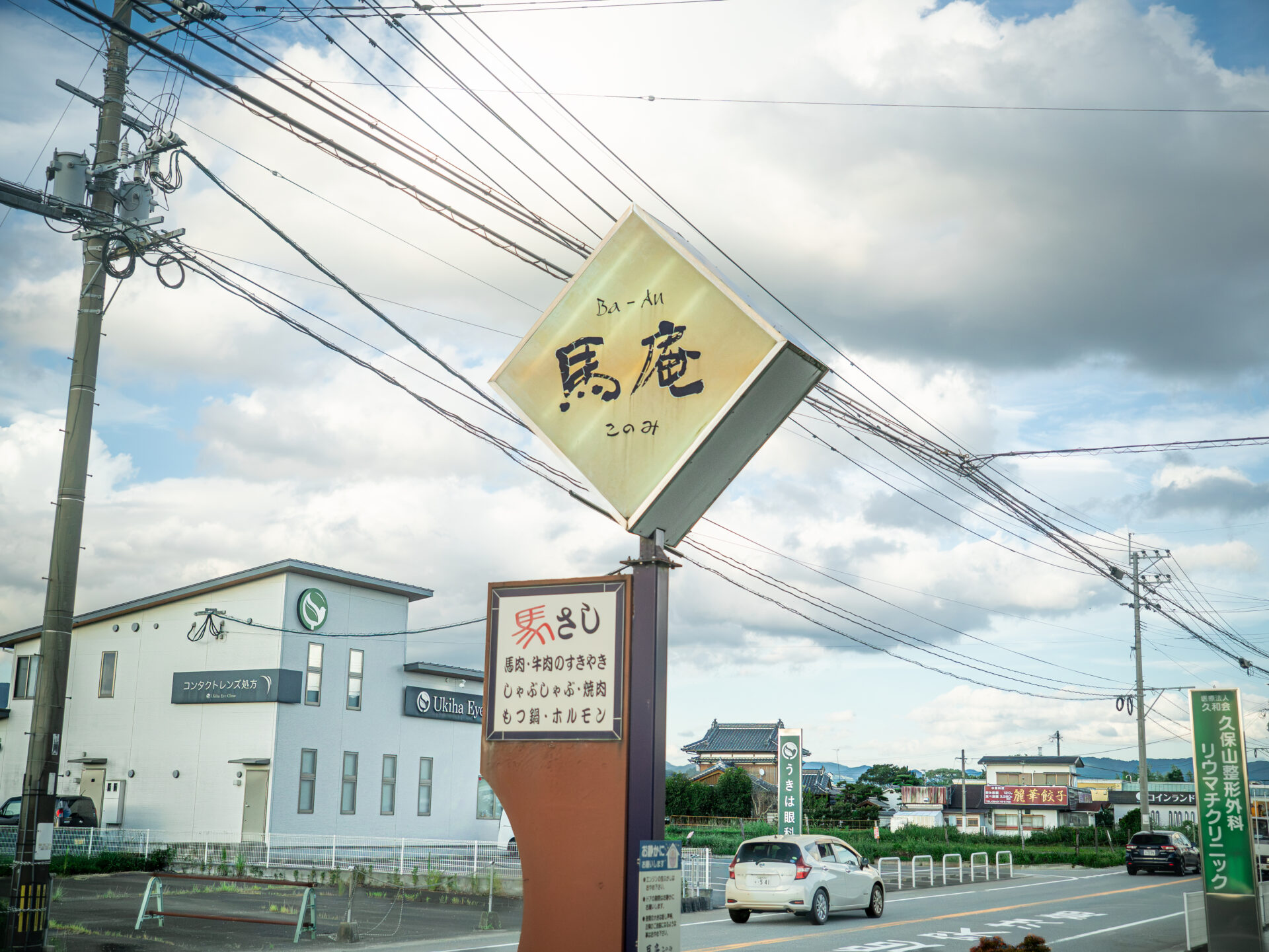
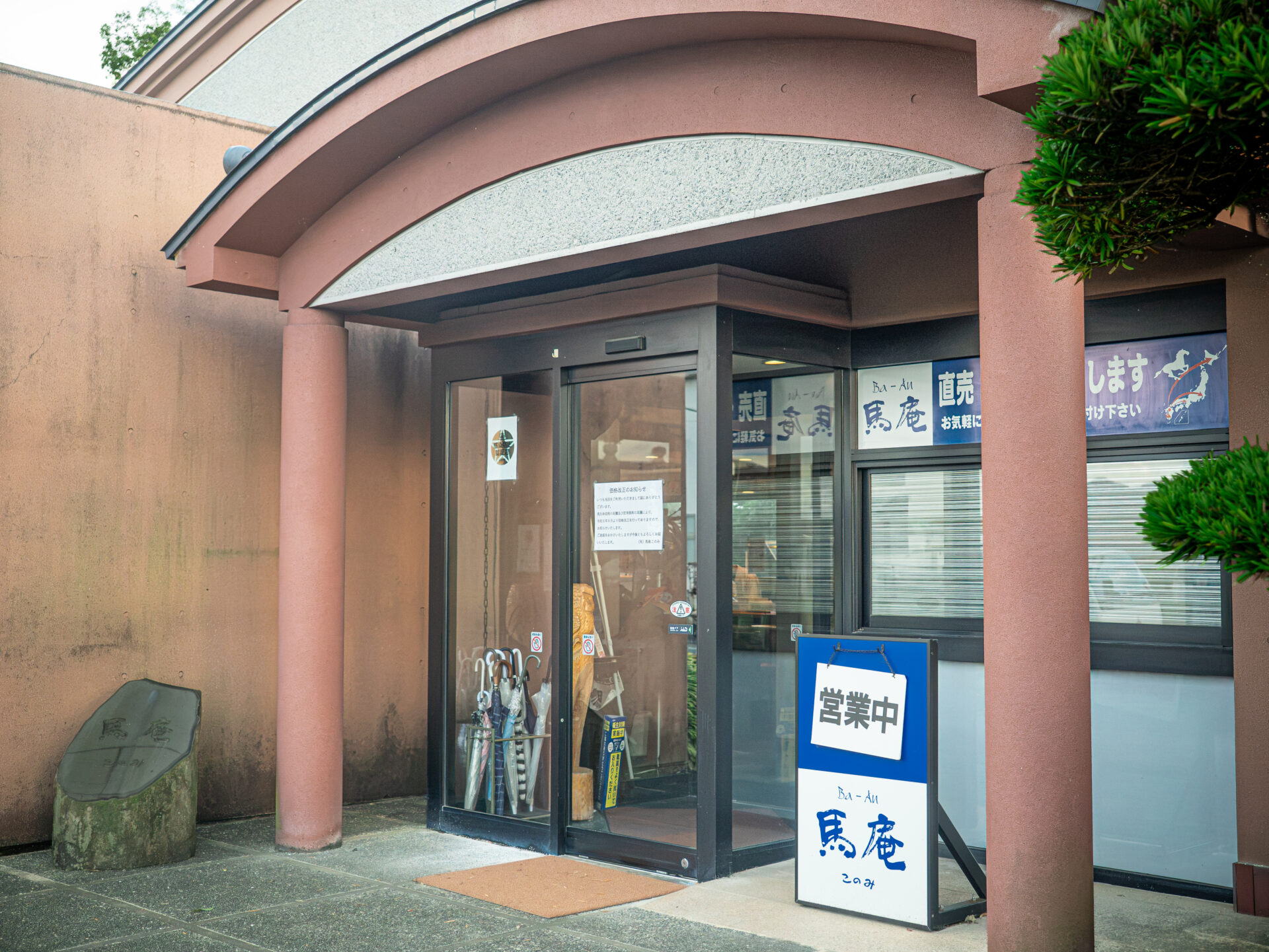
The entrance, with its arched awning, also bore the word “direct sales.”
It seems you can not only eat in but also buy horse meat to take home.
First, Basashi and Yukhoe to Taste the Umami of Horse Meat
The first thing we had was an assorted basashi platter.
Deep crimson lean meat, translucent white mane fat, and beautiful marbling.
On a single plate, you can enjoy the differences in texture and flavor between cuts.
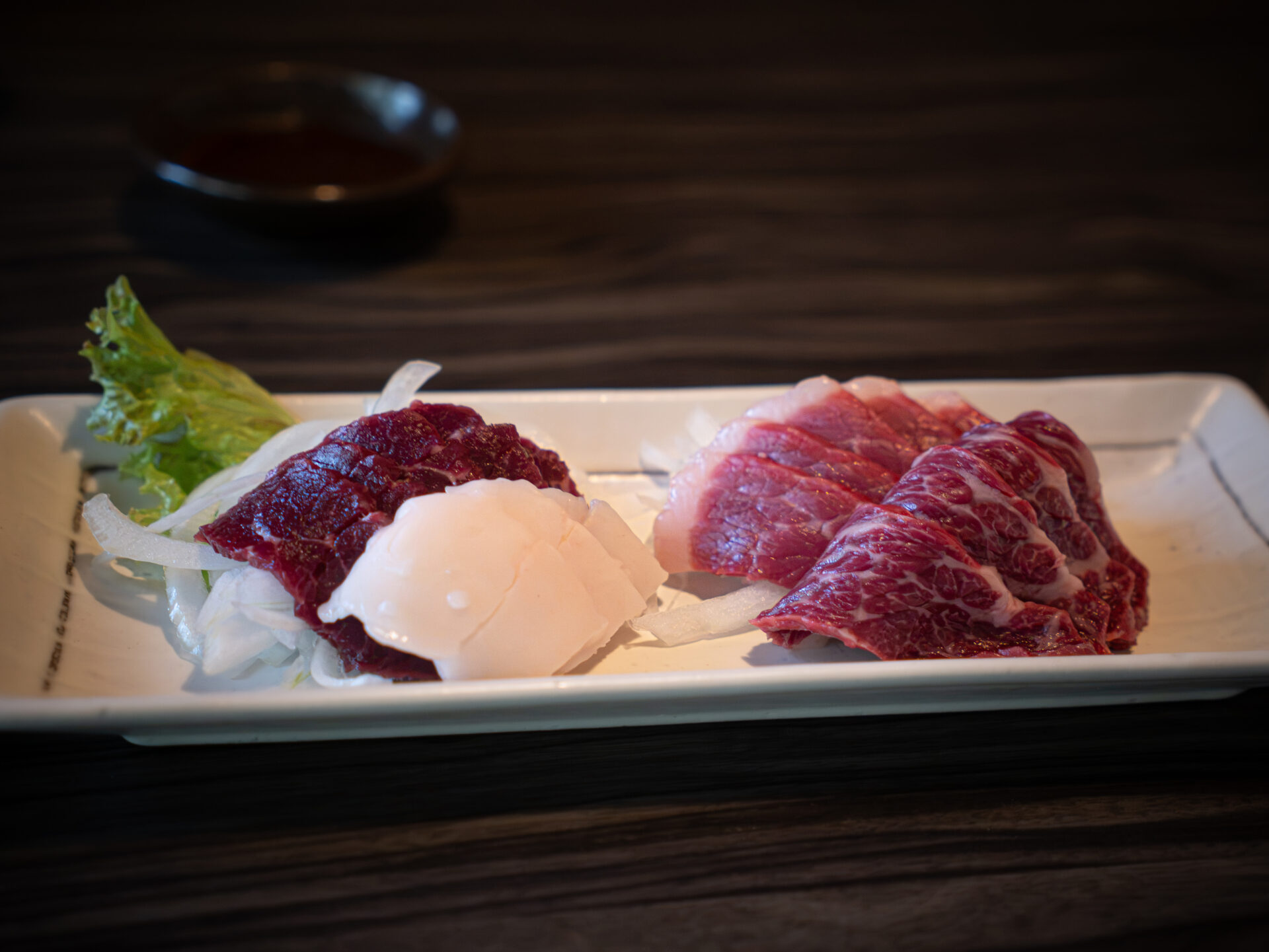
The lean meat is moist and tender, with a clean umami that seeps out the more you chew.
Eaten together with the mane fat, a faint sweetness and richness are added, deepening the flavor considerably.
Next, horse meat yukhoe.
A beautiful dish: a mound of lean meat topped with a glossy egg yolk.
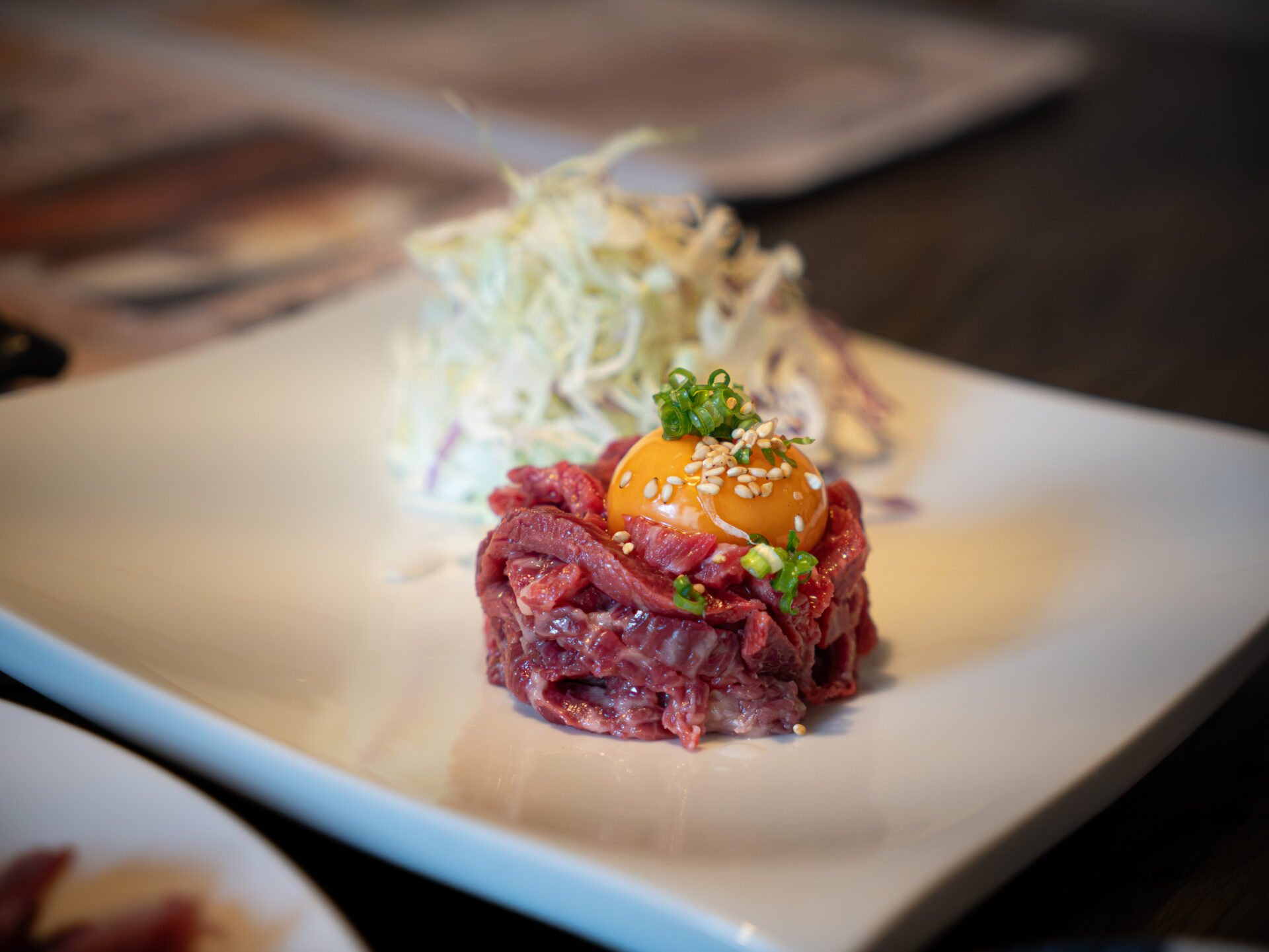
Break the yolk and mix it in, and the mellow richness layers over the lean meat’s umami — the chopsticks keep moving.
Sakura Roast, Sakura Harami, Sakura Premium Kalbi — Enjoying Horse Meat Yakiniku
And now the long-awaited yakiniku.
On the large platter: sakura roast, sakura harami, and sakura premium kalbi.
The names, a nod to horse meat being called “sakura niku” (cherry blossom meat), are a stylish touch.
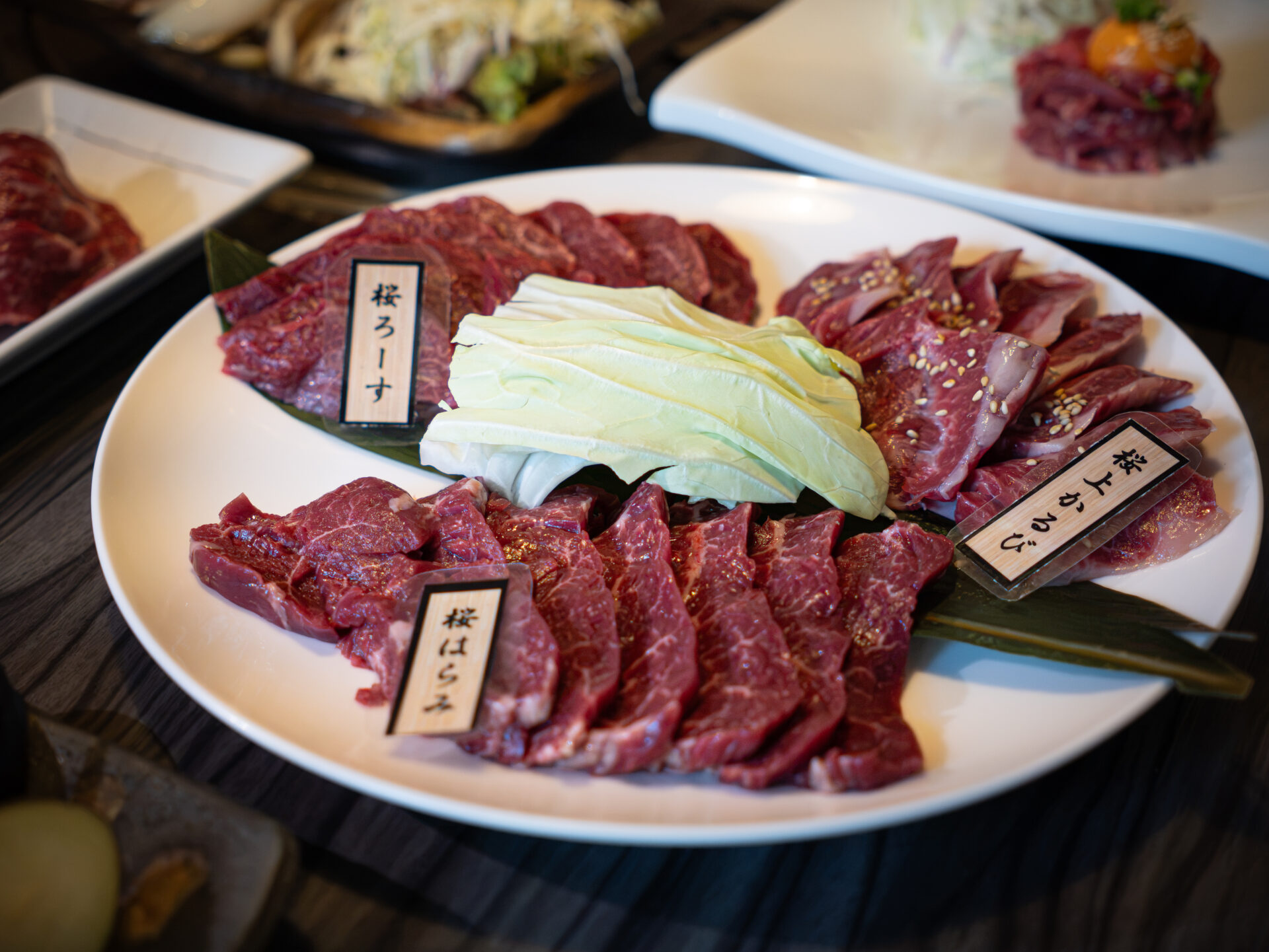
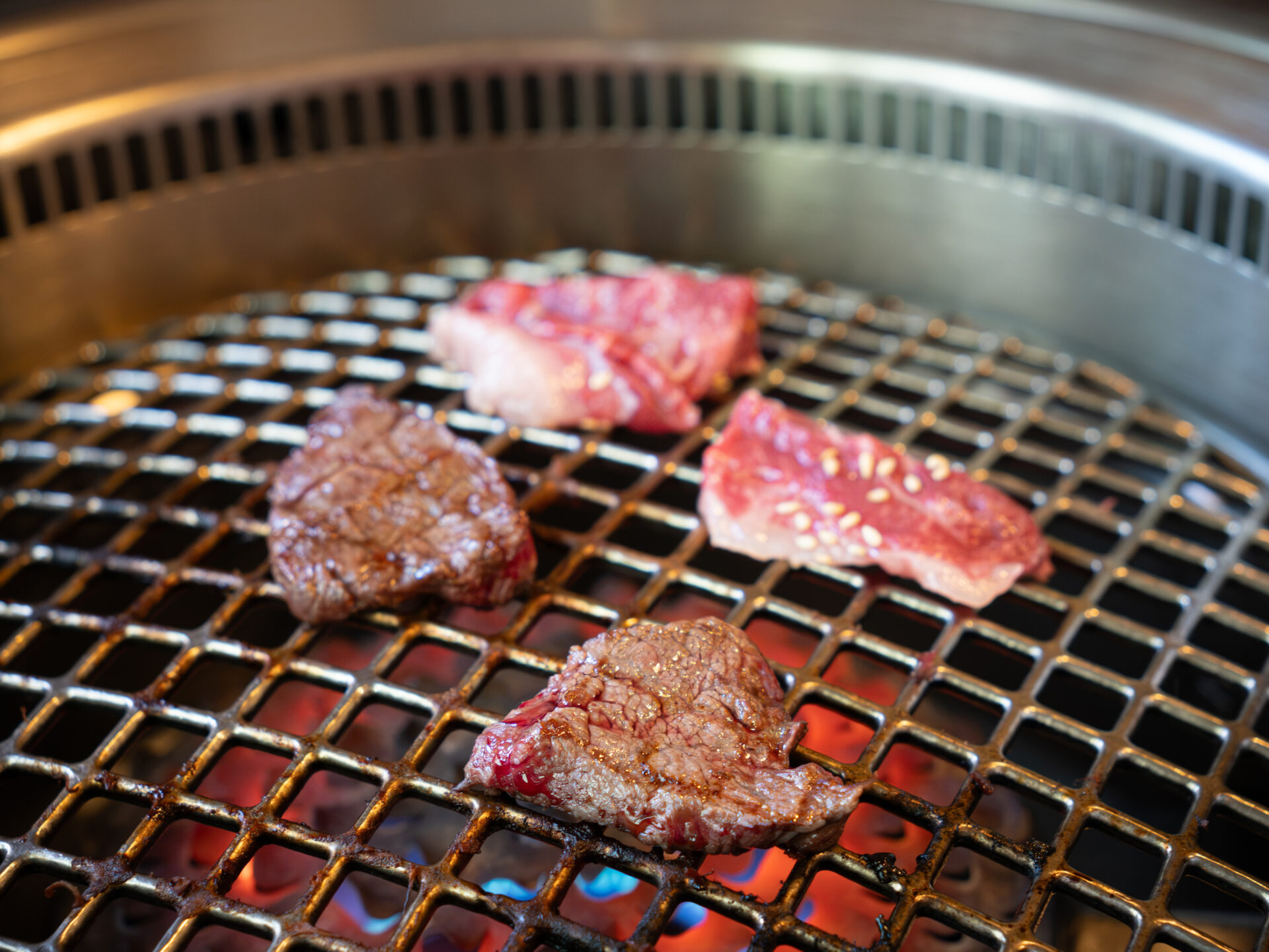
Laid on the grill, the fat sizzles in the charcoal heat and a fragrant aroma rises.
The key with horse meat is not to overcook it.
Searing it just lightly brings out the tenderness of the lean meat and a surprisingly light sweetness in the fat.
A light, refined flavor quite different from beef — we were both completely absorbed.
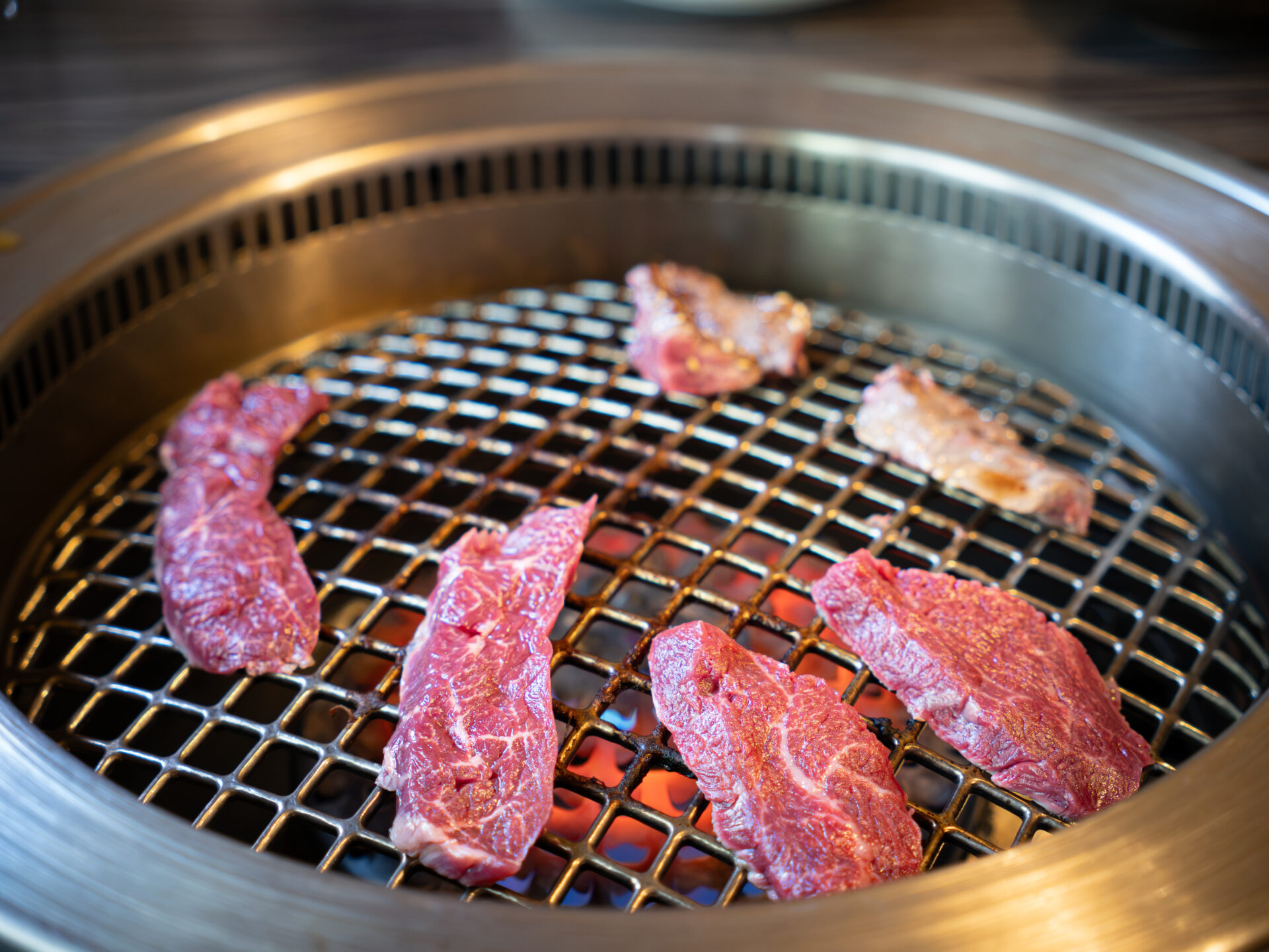
Raw or grilled, the appeal of each cut comes through directly —
a feast fitting for the end of a trip, one that revealed the depth of horse meat.
- ADDRESS
福岡県うきは市吉井町生葉785-2
- OPEN
11:30〜21:30(L.O.21:00)/ ランチ11:30〜15:00
- COMMENT
- JR久大本線 筑後吉井駅より車で約5分、駐車場有り(30台)。自家牧場にて当店専用に、およそ2年の年月を掛けて肥育されたものを自社ブランド【このみ桜】として提供しています。
With stomach and heart both full, we left Ukiha.
With the Minou range at dusk behind us, the car returned to the expressway.
It should have been the same road as on the way out, but the view from the window on the way home was somehow tinged with reluctance to leave.
Talking quietly with my wife in the passenger seat, bit by bit, about memories of the past two days, we headed back toward Fukuoka.
And so, the second day of the Ukiha trip — and this small summer journey — quietly came to a close.
After Two Days — Ukiha, a Town in the Land of Fruit
To think that such a rich stretch of time was flowing just an hour from Fukuoka.
That was the first thing I felt upon finishing this trip.
The Chikugo Plain surveyed from the roadside station’s observation deck,
the hotel window filled with strong morning light,
the summer wind passing through the white-walled streetscape, and the sweeping view beyond the vermilion torii.
In every view, the lives of the people who live in this land quietly breathed.
And what anchored the trip was, in the end, the food.
Roadside hamburgers, kashiwa-meshi and unamusubi from the roadside station,
mapo tofu carrying on the flavors of Sichuan, horse meat seared over charcoal.
Above all, the course at MAHORO756
expressed the rivers, mountains, and fruit of Ukiha plate by plate through Japanese and French technique — a flavor you can only encounter in this land.
Glamour and simplicity, nostalgia and newness.
Ukiha, where all of these coexist without strain,
is a town that, precisely because it’s so close, makes you want to visit again and again — I felt that anew.
Next time, in a different season.
Perhaps during the persimmon harvest of autumn, or in the cherry blossoms of spring —
I ended the trip looking forward to what kind of Ukiha I’ll meet next.
 Plan Your Journey
We’ll create a journey tailored to your interests.