
CONTENTS
About BACAR
Concept
BACAR OKINAWA builds its identity around wood-fired Neapolitan pizza, while giving equal care to appetizers and pasta so that every dish is composed with the same attention. Rather than leaning too heavily into being purely a pizza specialist, the restaurant keeps sight of the meal as a whole — how courses flow together, how they pair with wine.
Okinawan ingredients aren’t forced into the spotlight here either; they’re woven naturally into the cooking wherever they fit. The restaurant’s outlook extends beyond the kitchen too — its work turning underused parts of tuna into Okinawan bottarga reflects a chef’s perspective committed to making full use of what an ingredient has to offer.
About the Chef
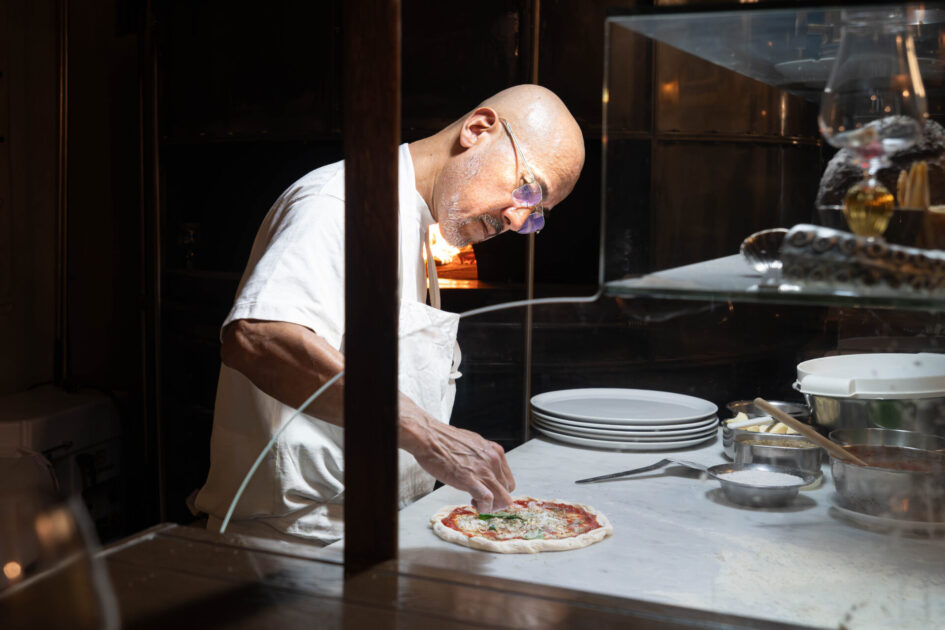
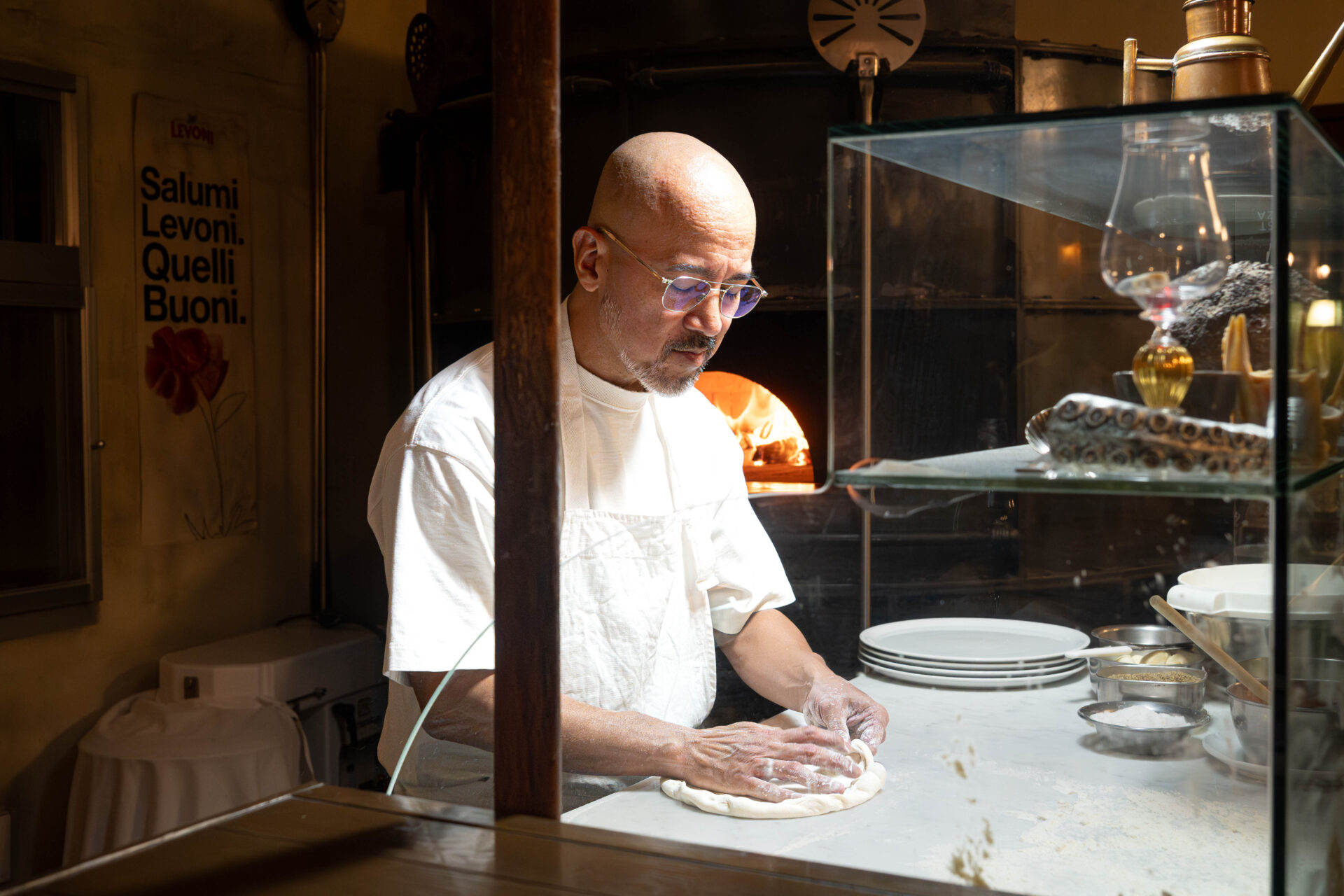
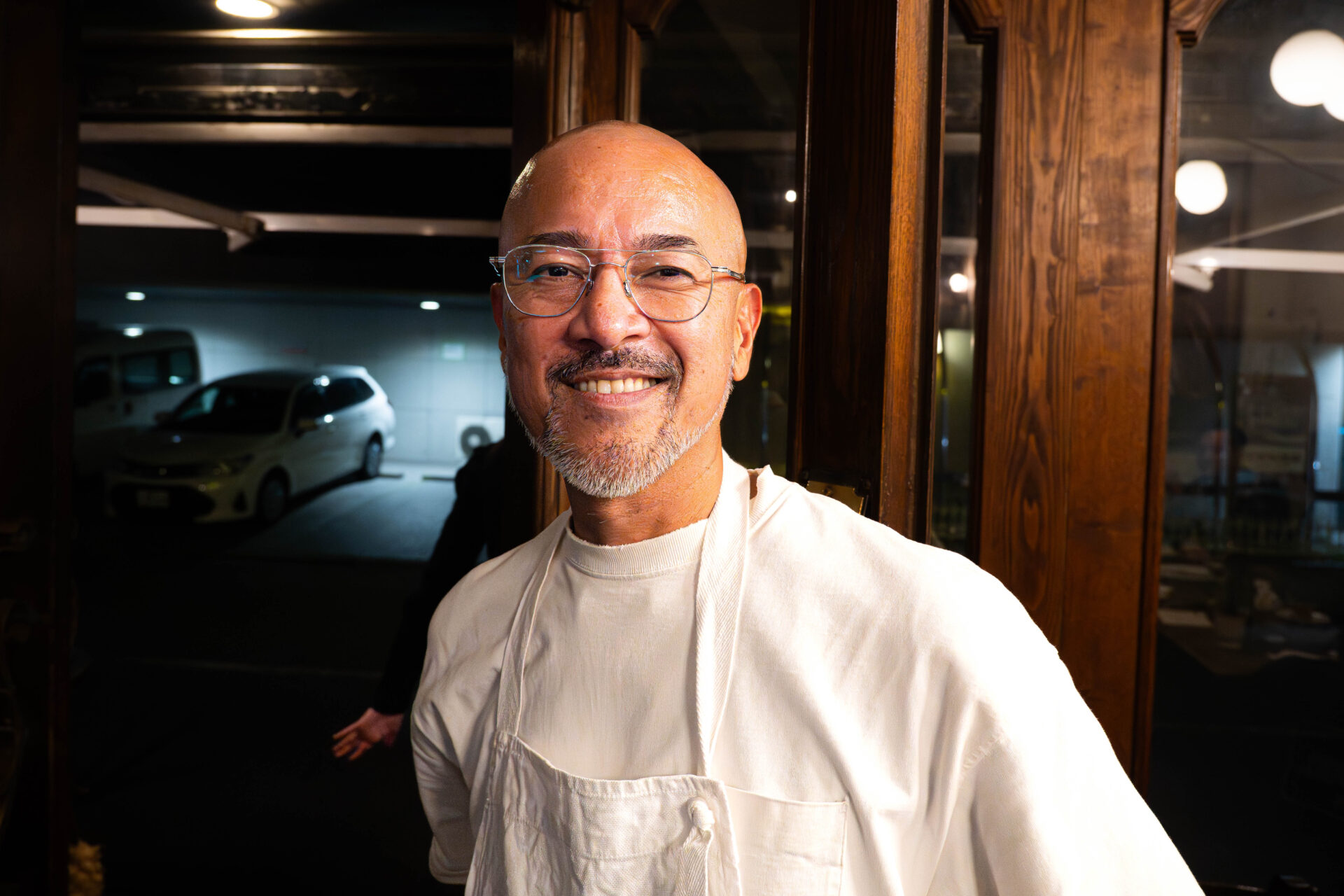
Daisuke Nakamura, the chef behind BACAR OKINAWA, was born in Naha in 1977. At 24, he spent six months in Italy, and the pizza he encountered in Naples during that trip became the defining origin point for everything that followed. Back in Japan, eating his way through Tokyo’s restaurant scene, he was struck by the pizza at SAVOY (now Seirinkan) in Nakameguro, and personally asked to apprentice under owner Susumu Kakinuma — writing to him directly from Okinawa to request the opportunity, which he was granted.
He spent roughly five years learning pizza at SAVOY, taking part in the launch of both its Mishuku and Azabu-Juban locations, before opening BACAR in his hometown of Naha in 2008. He brought the Neapolitan pizza he’d discovered in Italy, together with the technique honed in Tokyo, back to Okinawa and shaped it into a restaurant of his own.
What Nakamura values most in his pizza is the dough and the fire. In his own account of his work, he describes pizza-making as a craft of engaging daily with things in constant flux — the fermentation of the dough, the state of the oven’s fire. Through the Margherita and Marinara that sit at BACAR’s core, he’s pursued pizzas simple enough in construction that differences in dough and firing come through clearly.
Nakamura’s work extends well beyond pizza itself. He’s previously built a mobile wood-fired oven together with a metalworker, staff from an art university, and his own team at BACAR, using it to grill as many as 500 pizzas at outdoor events like music festivals — food-centered work that reaches beyond the restaurant.
Alongside these projects, Nakamura’s pizza has also drawn international recognition. He placed 33rd in the world at the 2023 Best Pizza Awards, followed by 58th in 2024, 49th in 2025, and 56th in 2026 — landing in the global top 100 for four consecutive years. In the 2026 ranking, he appears as “Daisuke Nakamura – Bacar,” placed 56th.
Critical Recognition
BACAR OKINAWA is known within Naha’s restaurant scene as a restaurant that has built its reputation squarely on the strength of its pizza. It’s appeared on Tabelog’s “Top 100 Pizza” list across multiple years — evidence of consistent, sustained quality rather than a passing moment of attention. The pizza’s precision, fired in a wood-burning oven, has earned it a following well beyond Okinawa, drawing diners from across Japan.
Reviews frequently mention not just the strength of the pizza itself, but the overall balance of the meal — the appetizers, the wine pairings, the whole experience. Despite being a pizzeria, the restaurant clearly avoids resting on single standout dishes, and that course-like sense of flow seems to factor directly into how it’s received. Some reviews do note the price point, but even that seems to be understood as part of what makes this “a place you go for a proper meal.”
In a part of Naha popular with tourists, the restaurant’s continued support from both locals and visitors alike is itself telling. Rather than leaning on accolades, BACAR’s reputation reads as something built steadily through the quality of its day-to-day service — trust that shows directly in both its numbers and its reviews.

Dining Prelude
Exterior & Entrance
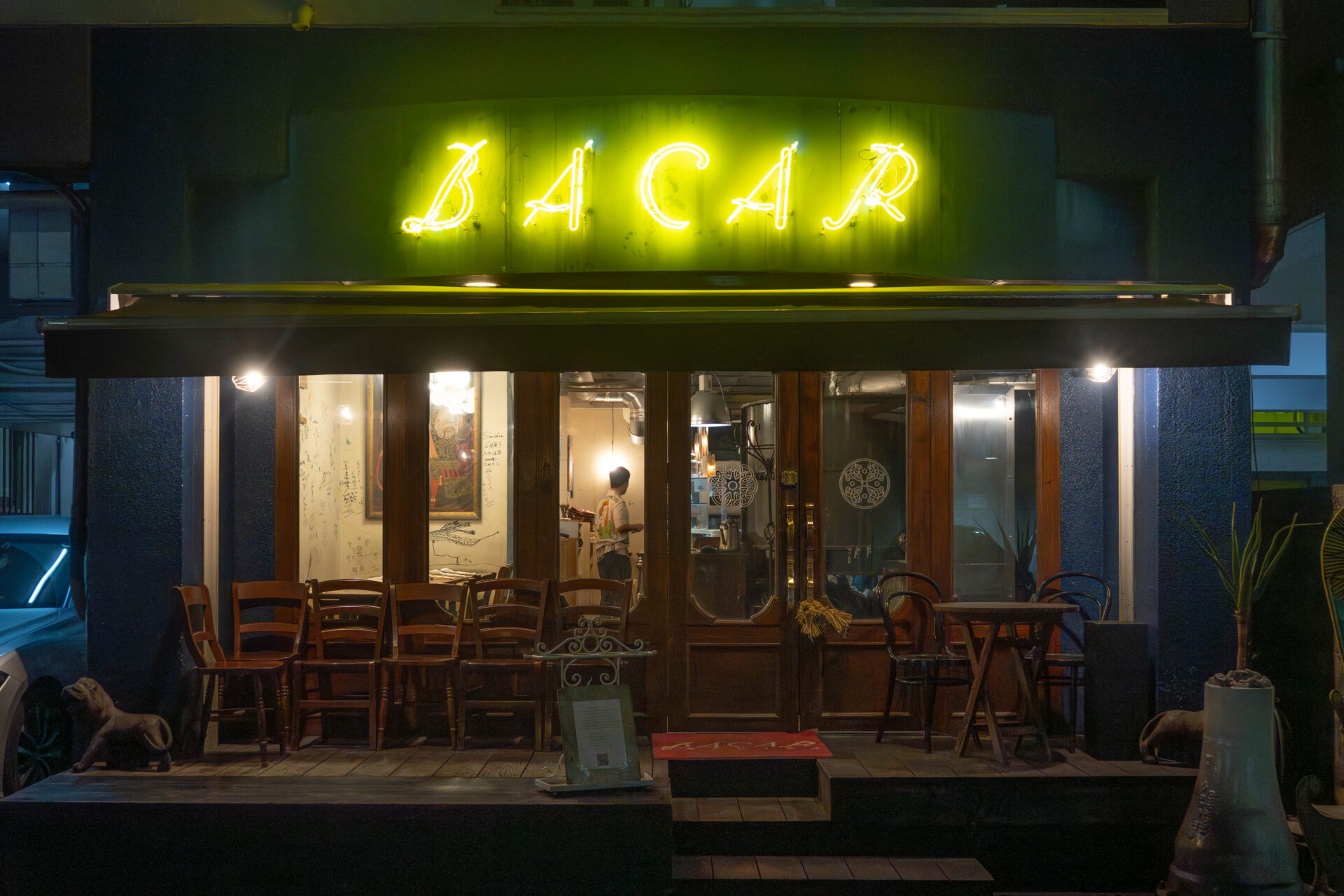
BACAR OKINAWA’s exterior blends quietly into the streets of Kumoji, Naha. It doesn’t call attention to itself along the street, and first-time visitors may need to look a little carefully to find it — but that restraint says a lot about the restaurant’s whole approach.
Getting closer to the entrance, the design keeps the interior mostly hidden from outside view, so the moment the door opens brings a genuine shift in atmosphere. It’s an entrance built to step back from the noise outside and create space to focus fully on the meal ahead — signage and decoration kept to an absolute minimum, drawing attention instead to the food and the room itself.
Set in the heart of Naha, yet keeping its distance from the typical bustle of a tourist spot, the exterior and entrance quietly signal that this is “a restaurant you come to specifically to eat.”
The Dining Space
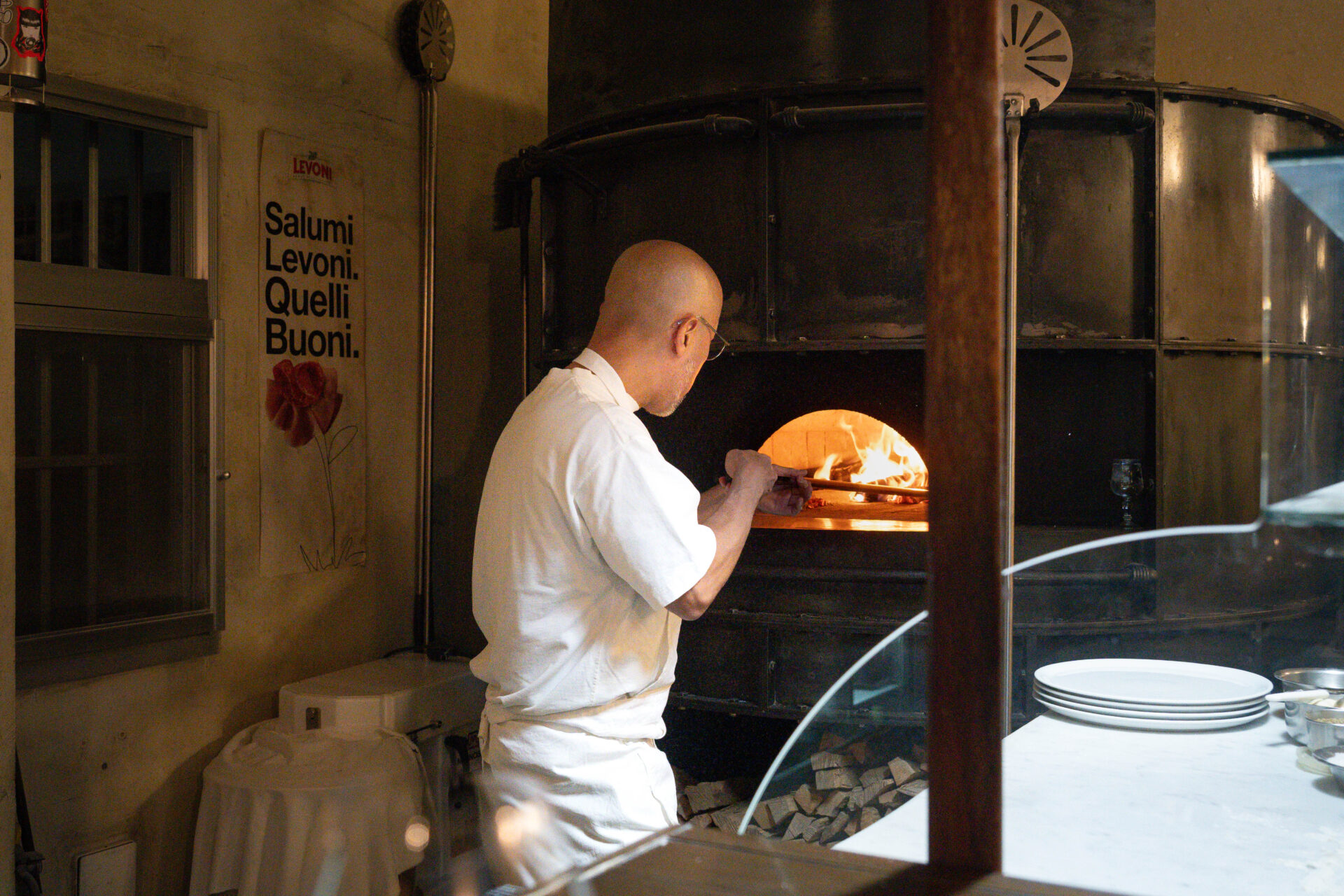
Step into BACAR OKINAWA’s dining room, and the wood-fired oven makes its presence known immediately. The kitchen sits close to the seating, letting the sound of the fire and the sense of its heat reach the tables directly, yet the room never feels loud — a calm atmosphere holds throughout.
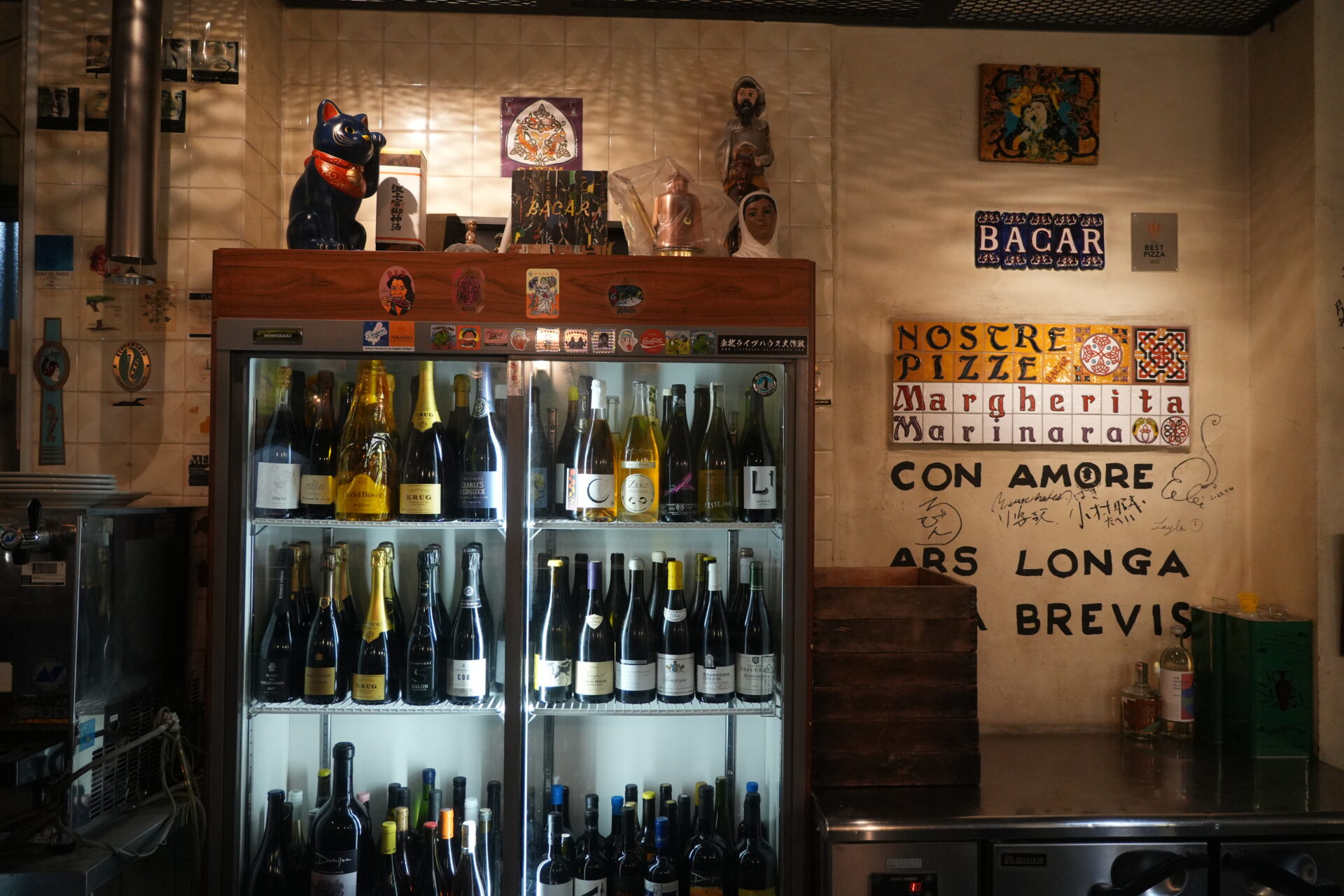
Tables are set with enough space between them to focus comfortably on the meal and conversation. The wood-toned interior carries genuine warmth without tipping into overdecoration, kept deliberately in a tone that never competes with the food. Wine bottles visible around the room quietly reinforce that this restaurant is never just “a pizza place.”
Staff movement through the room is clearly well considered, with the pacing of service and attentiveness never feeling forced. It’s a space that stays relaxed while still fully delivering a proper meal — somewhere in the middle of Naha that still lets guests settle in and focus completely on eating.
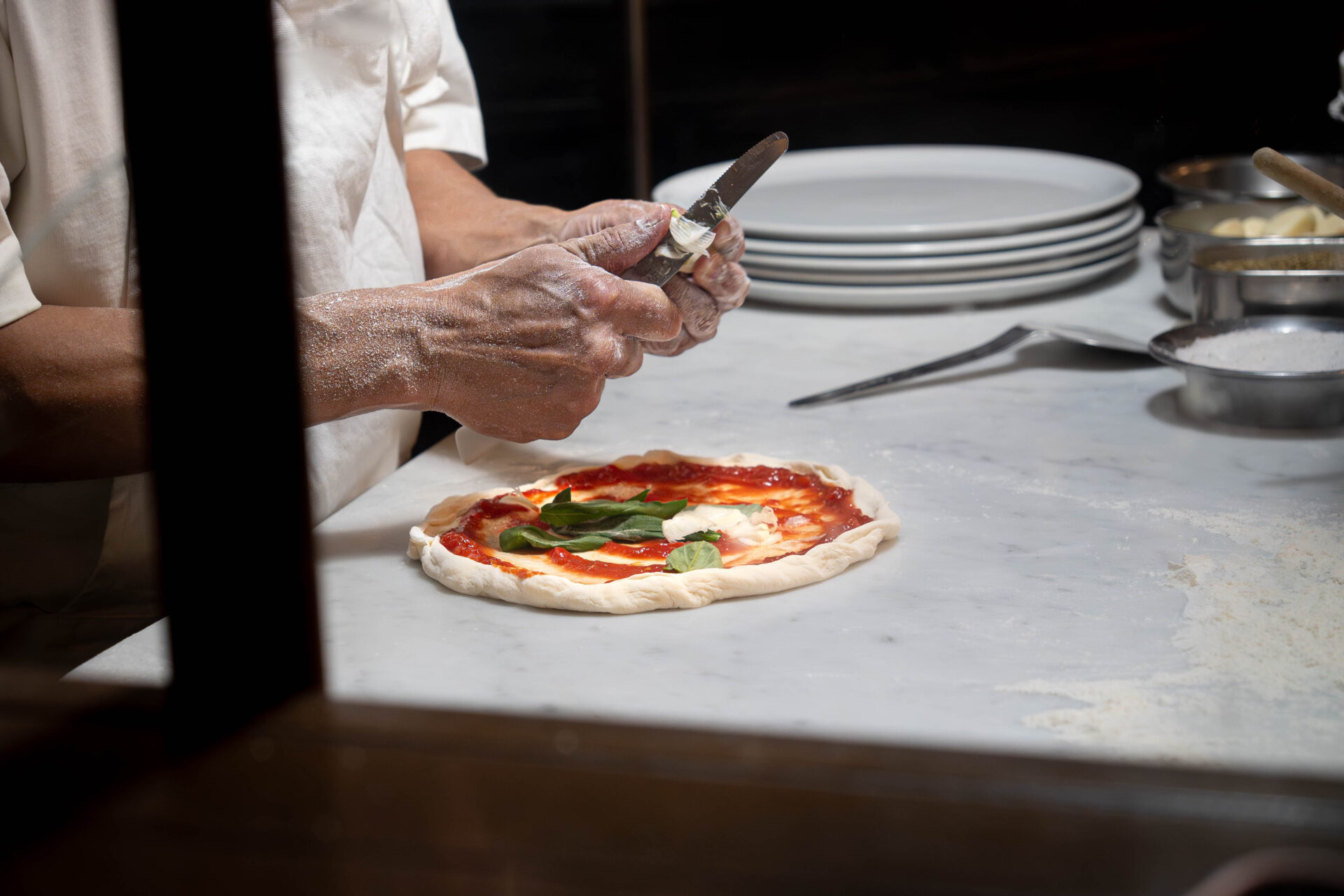
This visit’s seat was at the counter — the closest vantage point to watch the chef build each pizza. The full sequence unfolds right in view: stretching the dough, adding toppings, sliding it into the wood-fired oven, watching it bake.
The chef’s movements carry remarkably little waste motion, working at a steady, consistent rhythm throughout. The way his eyes track the fire, how long he stands in front of the oven — all of it speaks to real focus on the cook. He explains little in words, but the results alone make clear that every step in that process is necessary.
Sitting at the counter feels almost like witnessing prep work in progress, yet without ever tipping into excessive tension — the comfort of a proper meal stays fully intact. It’s a seat that makes the case for why pizza is this restaurant’s signature, not just through flavor, but through the process itself.
Menu Presentation
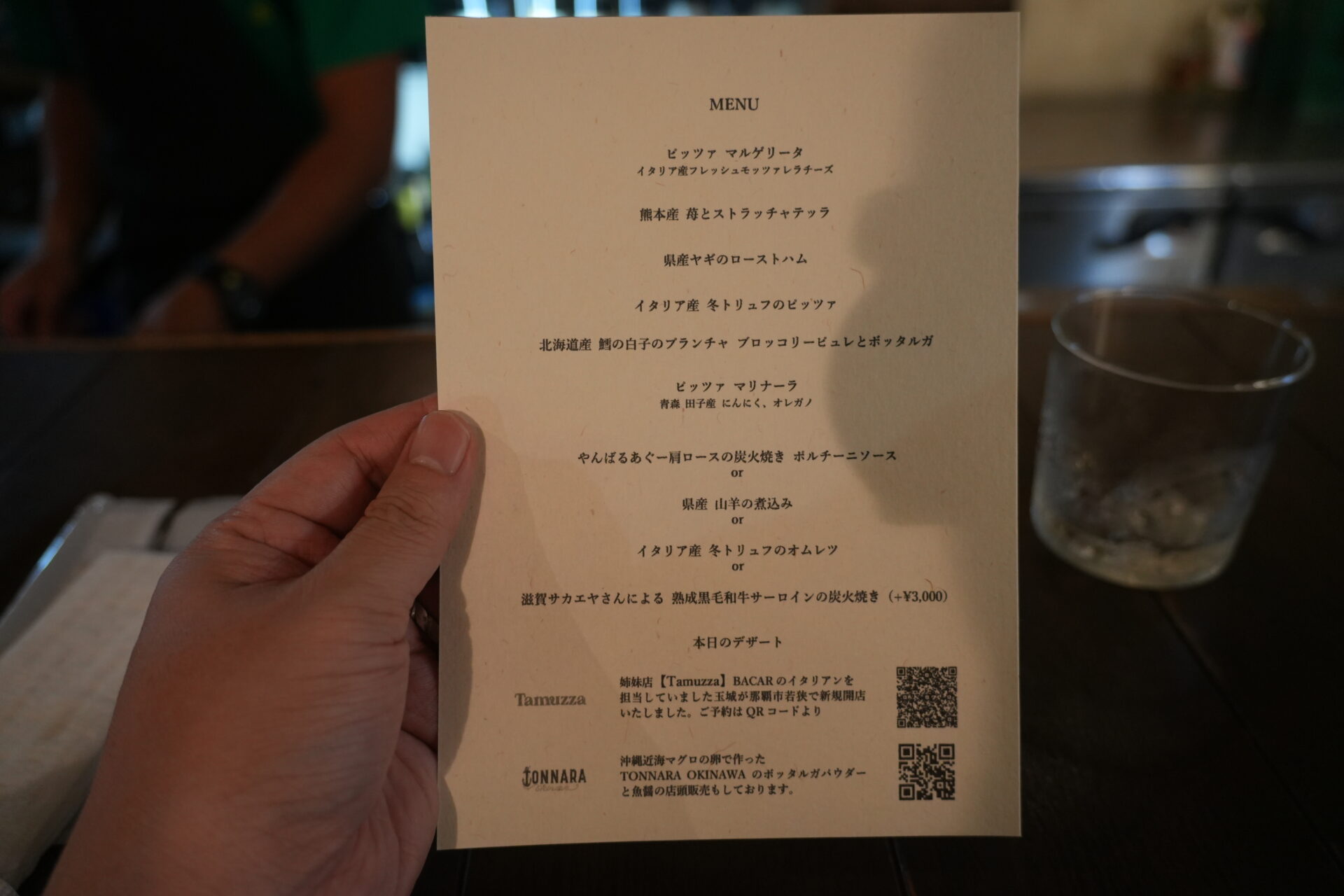
BACAR OKINAWA currently offers a course-only menu. This particular day’s lineup kept pizza at its center while building a natural flow through the dishes before and after it.
The course opens with the Margherita — a remarkably simple pizza built on fresh Italian mozzarella, seemingly intended to establish the restaurant’s baseline for dough and cook right from the start. Opening with this dish sets the frame through which every subsequent course gets read.
From there, appetizers follow — Kumamoto strawberries with stracciatella, roasted Okinawan goat ham — settling the temperature and pace back down. The clear distinction between lightness, richness, and salinity creates a pause before returning to wood-fired dishes.
Midway through, two pizzas with distinctly different characters arrive in sequence: an Italian winter truffle pizza, and a Marinara built on garlic from Tako, Aomori, and oregano. Rather than competing on the strength of toppings, each pizza’s role stays clearly defined around the shared foundation of dough and fire.
In between, dishes sharing that common thread of wood and charcoal fire appear — a blanched Hokkaido cod milt, charcoal-grilled Yanbaru agu pork shoulder — building real cohesion across the course. The main course comes with a choice: braised Okinawan goat, or a winter truffle omelet, with an aged Japanese black beef sirloin also available as an add-on — leaving some of the decision-making in the guest’s own hands.
The meal closes with the day’s dessert. Opening with the Margherita makes clear from the very start that pizza here isn’t simply a signature dish — it’s the restaurant’s actual standard.
The Tasting
Pizza Margherita
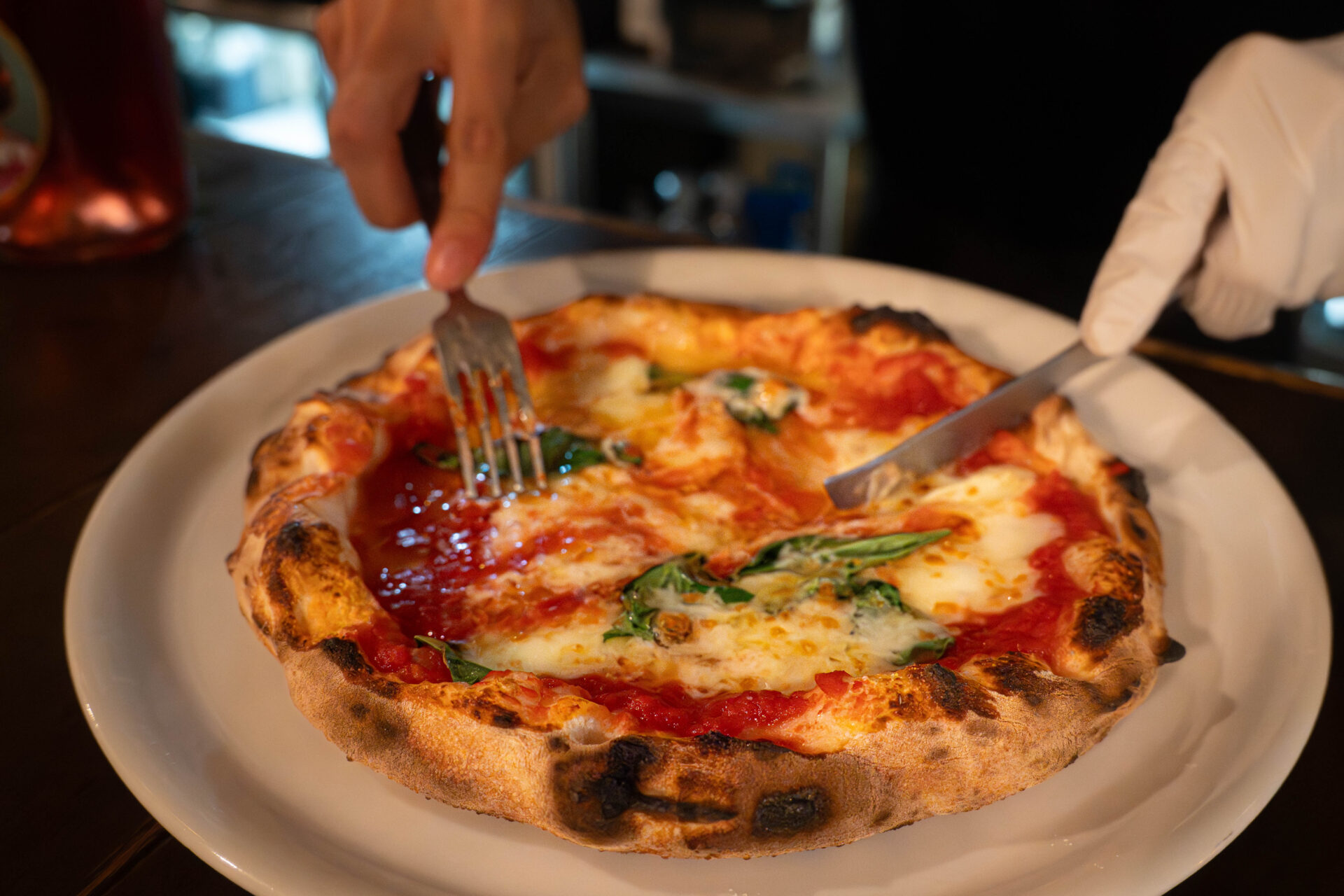
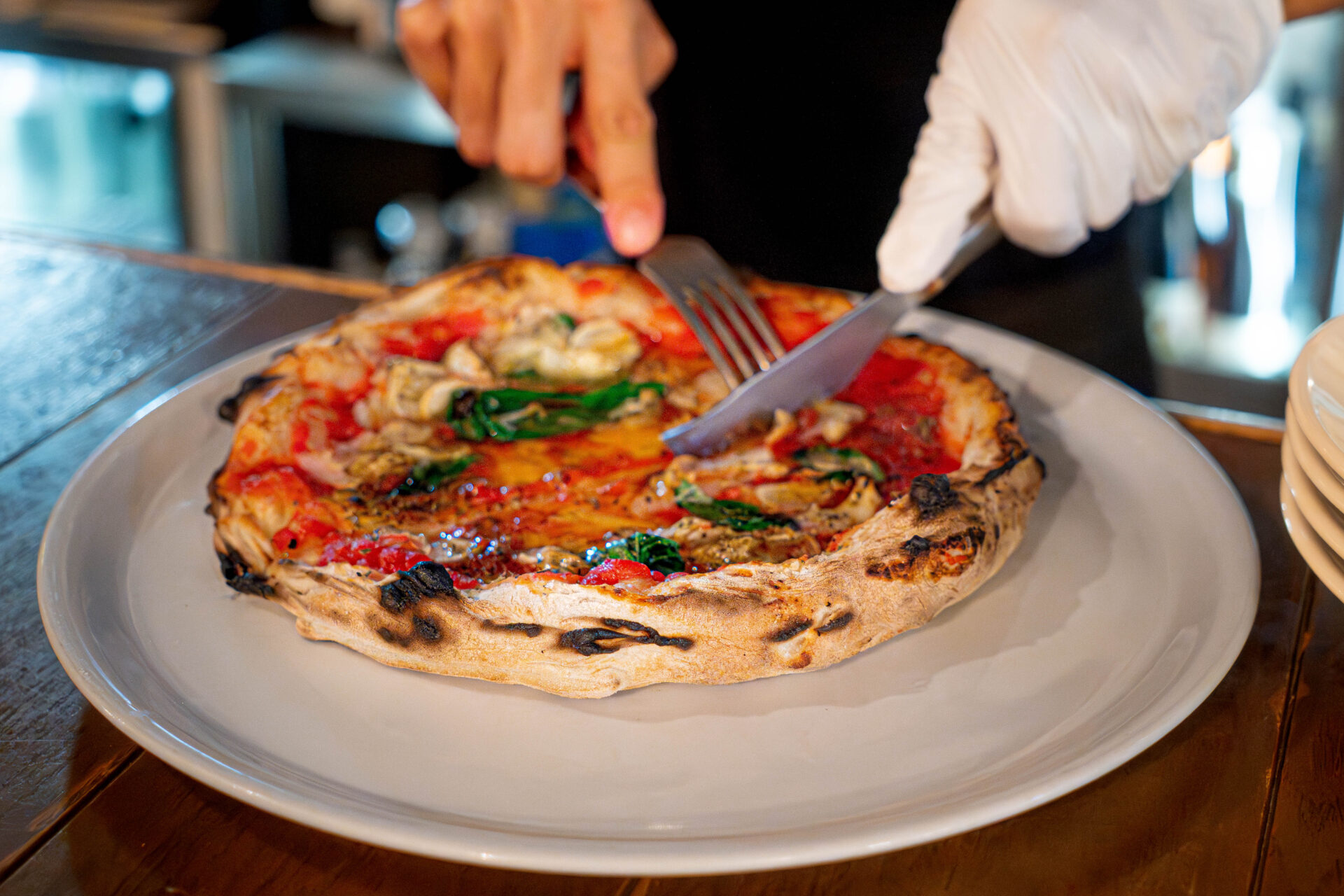
The first dish of the day: Pizza Margherita, built on a remarkably simple foundation of fresh Italian mozzarella.
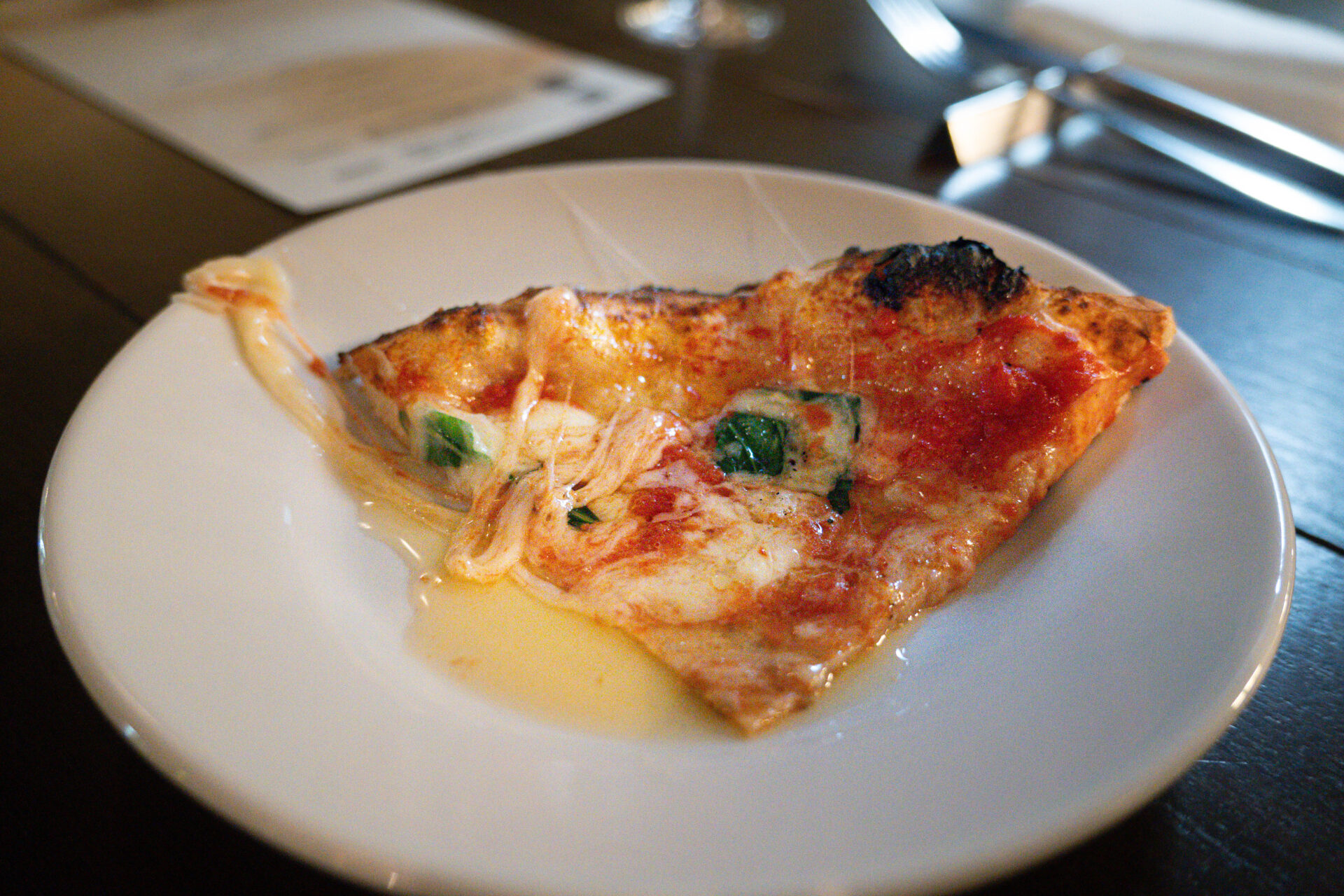
It landed on the plate the moment the chef signaled it was ready, cut right there without delay — the whole sequence from oven to table to the first cut through the crust unfolding right in front of us. There was a clear sense of intention behind serving the Margherita first.
The first bite brings the dough’s lightness, the fragrance of wheat, the tomato’s acidity, and the melted mozzarella’s milky richness, all arriving in a clean, direct line. Rather than layering in a lot of toppings, this is a pizza built to let dough and fire speak for themselves as the baseline. The cornicione’s rise and the evenness of the cook feel entirely unforced, with nothing extraneous about it — it does exactly what an opening dish should, setting the standard for the whole course ahead.
Eating this Margherita first makes clear, without a word of explanation, exactly what this restaurant cares about. A genuinely memorable way to begin the meal.
Kumamoto Strawberries with Stracciatella
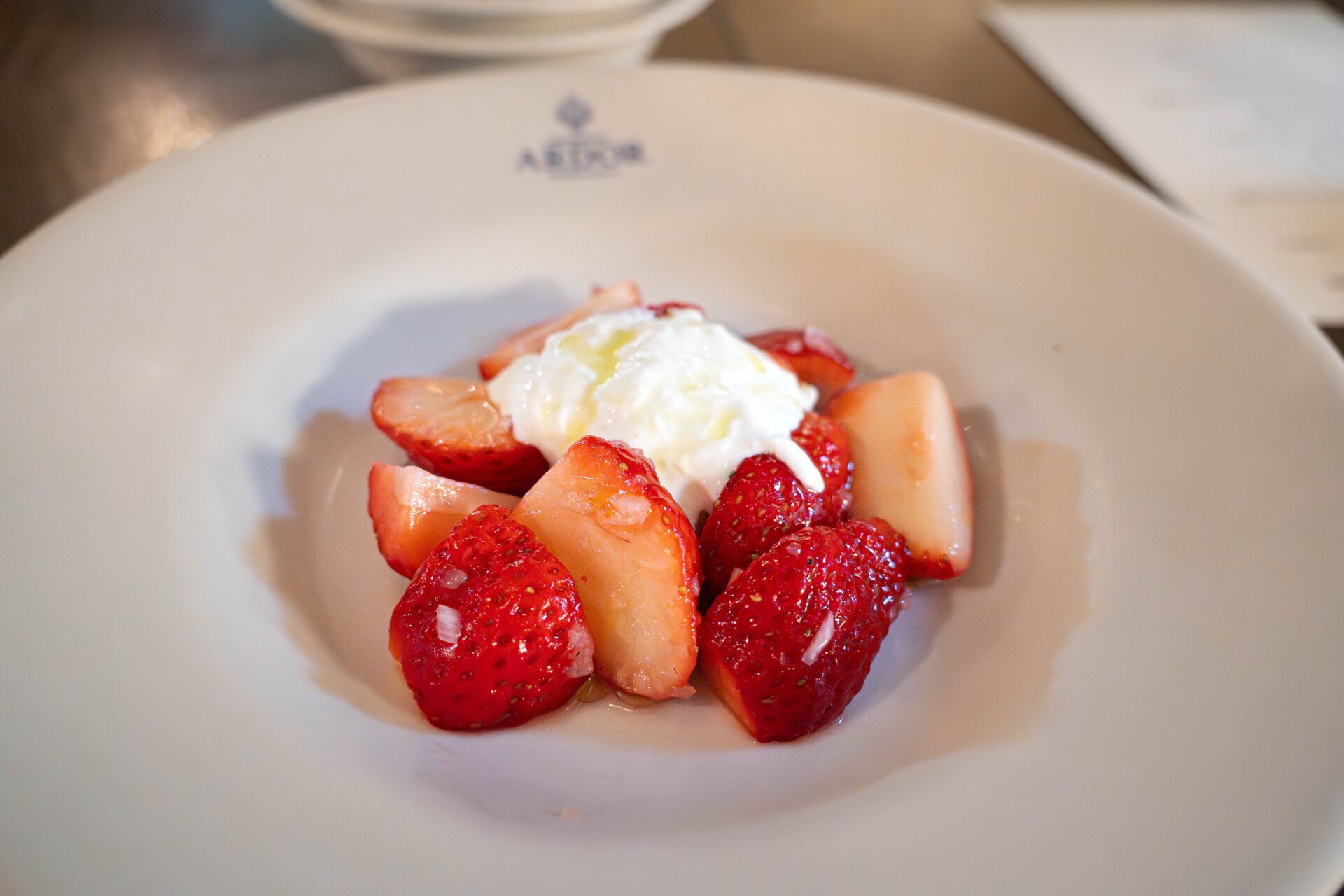
Following the Margherita came Kumamoto strawberries paired with stracciatella — a simple appetizer meant to settle the temperature and pace back down.
The strawberries’ bright acidity meets the stracciatella’s milky richness and warmth in careful balance, never tipping too far toward sweetness. The oil stays restrained, never competing with the ingredients’ own character. As the strawberries’ juice spreads across the plate, the flavor subtly shifts with each bite — a nice touch.
Coming right after the pizza, this dish resets the palate and eases naturally into the next course. Rather than aiming for a strong impression on its own, it functions exactly as intended — a dish designed to keep the course’s overall flow in order.
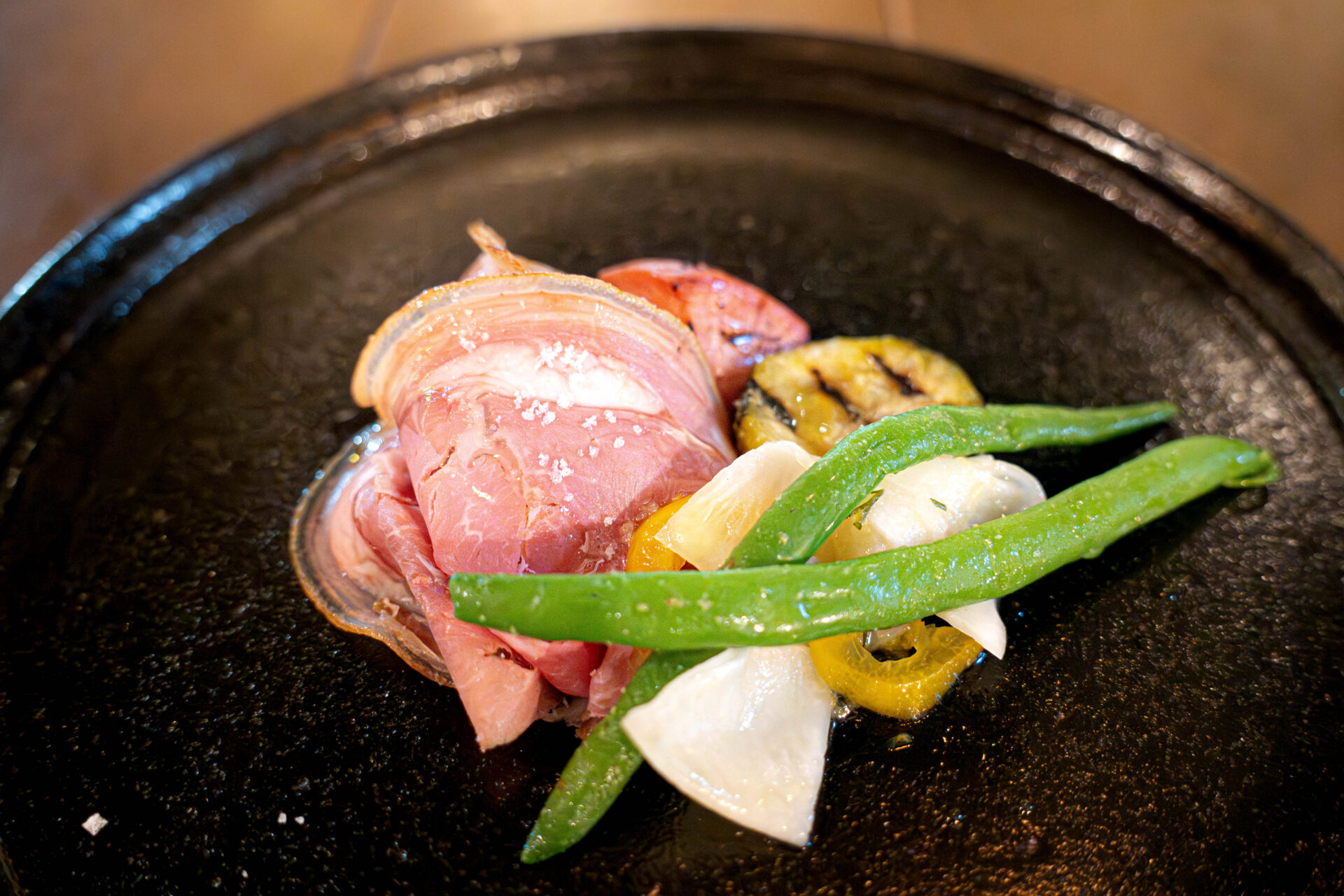
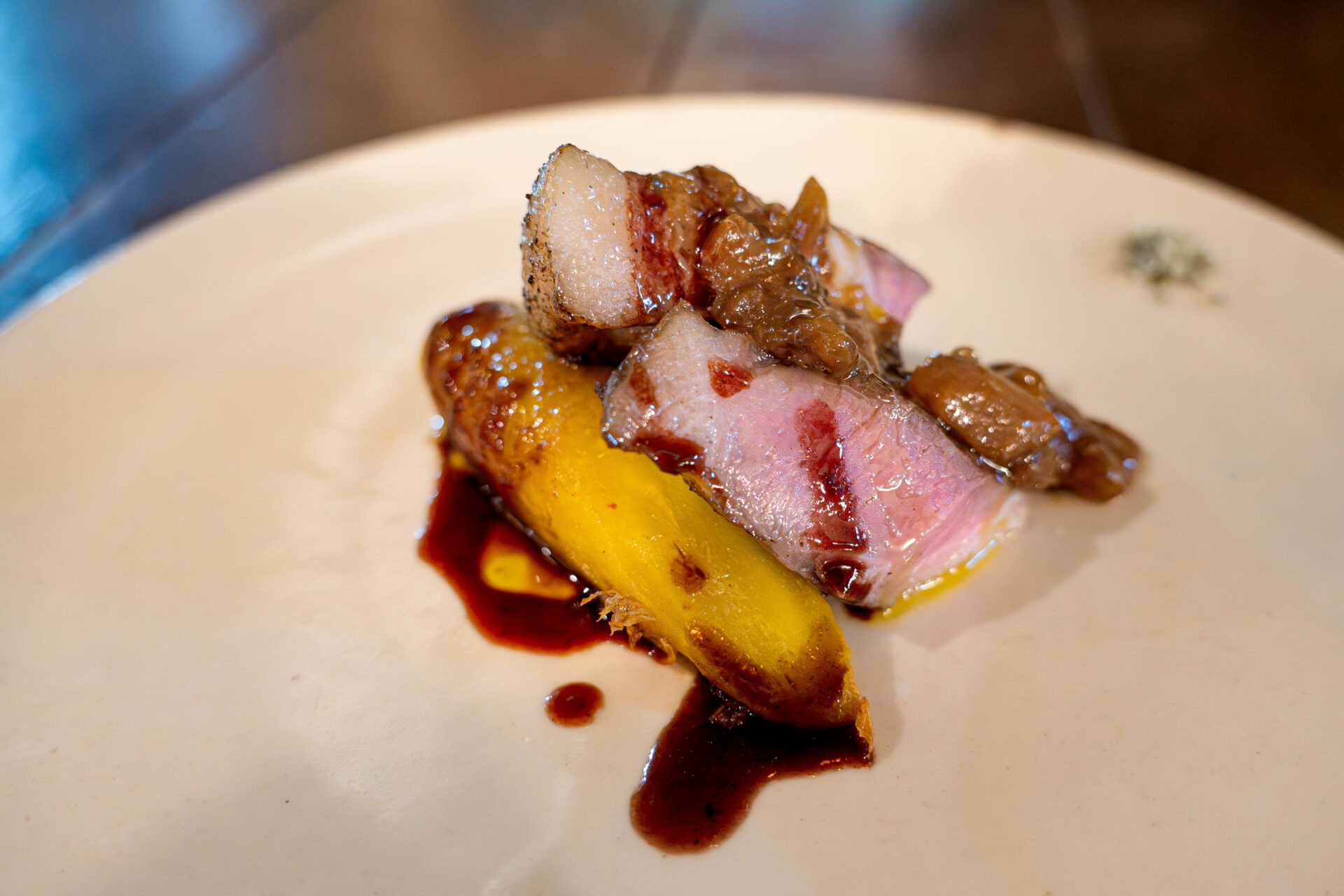
Roasted Okinawan Goat Ham with Vegetables
The next course pairs roasted Okinawan goat ham with vegetables cooked two ways — grilled and boiled. The first thing that strikes you before any explanation is offered: there’s no trace of the goaty character often associated with the meat.
As it turns out, the goat is raised on fermented feed — a detail that clarifies the cleanness of its aroma and the lightness of its fat. The meat is moist, its umami building with every bite. It quietly rewrites the usual assumptions around “goat dishes.”
The accompanying vegetables serve more than a garnish role too — the different cooking methods organize texture and sweetness, supporting the meat’s richness without ever weighing the dish down. Nothing flashy here, but a dish that shifts its impression entirely through careful ingredient choice and handling — genuinely characteristic of BACAR.
Italian Winter Truffle Pizza
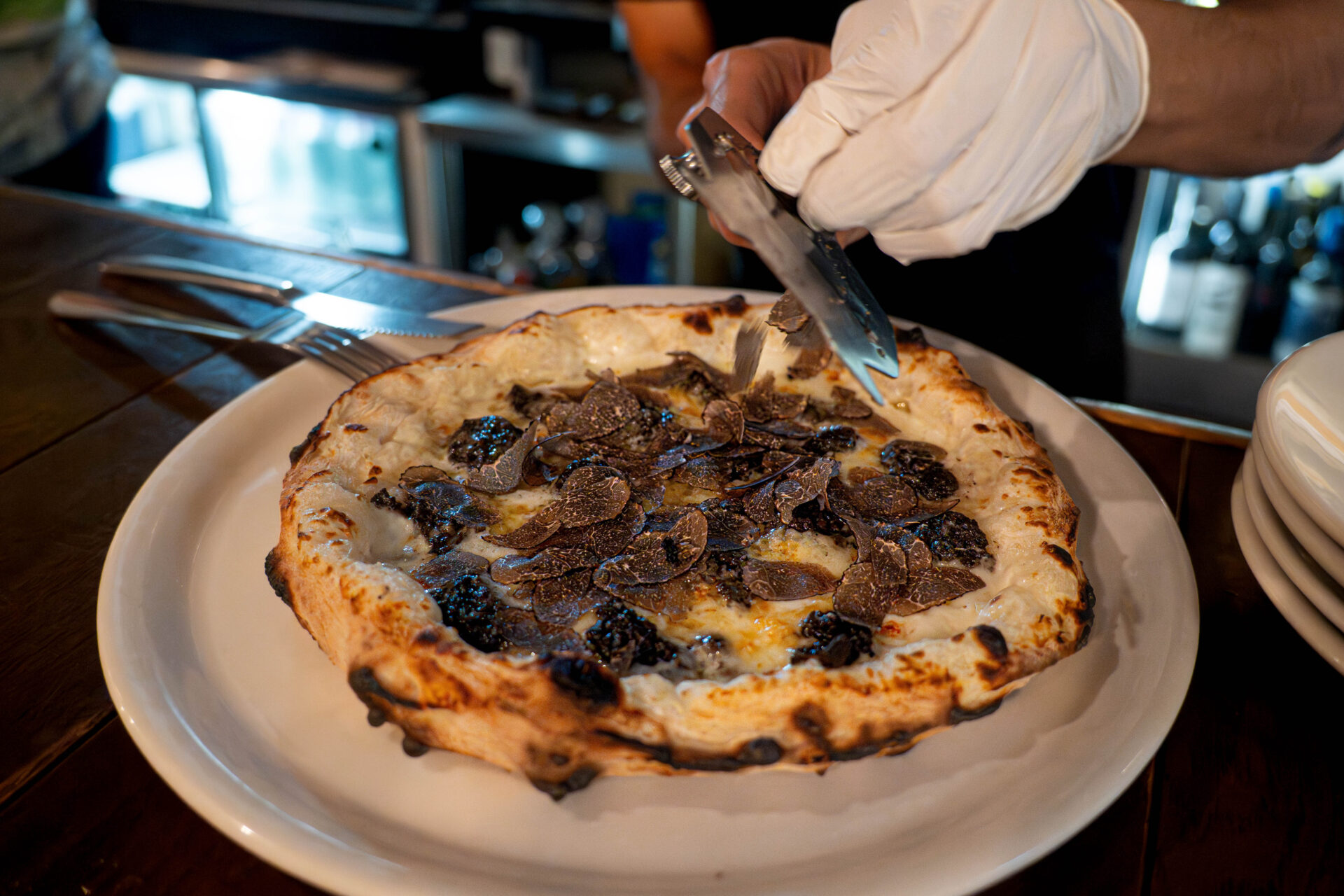
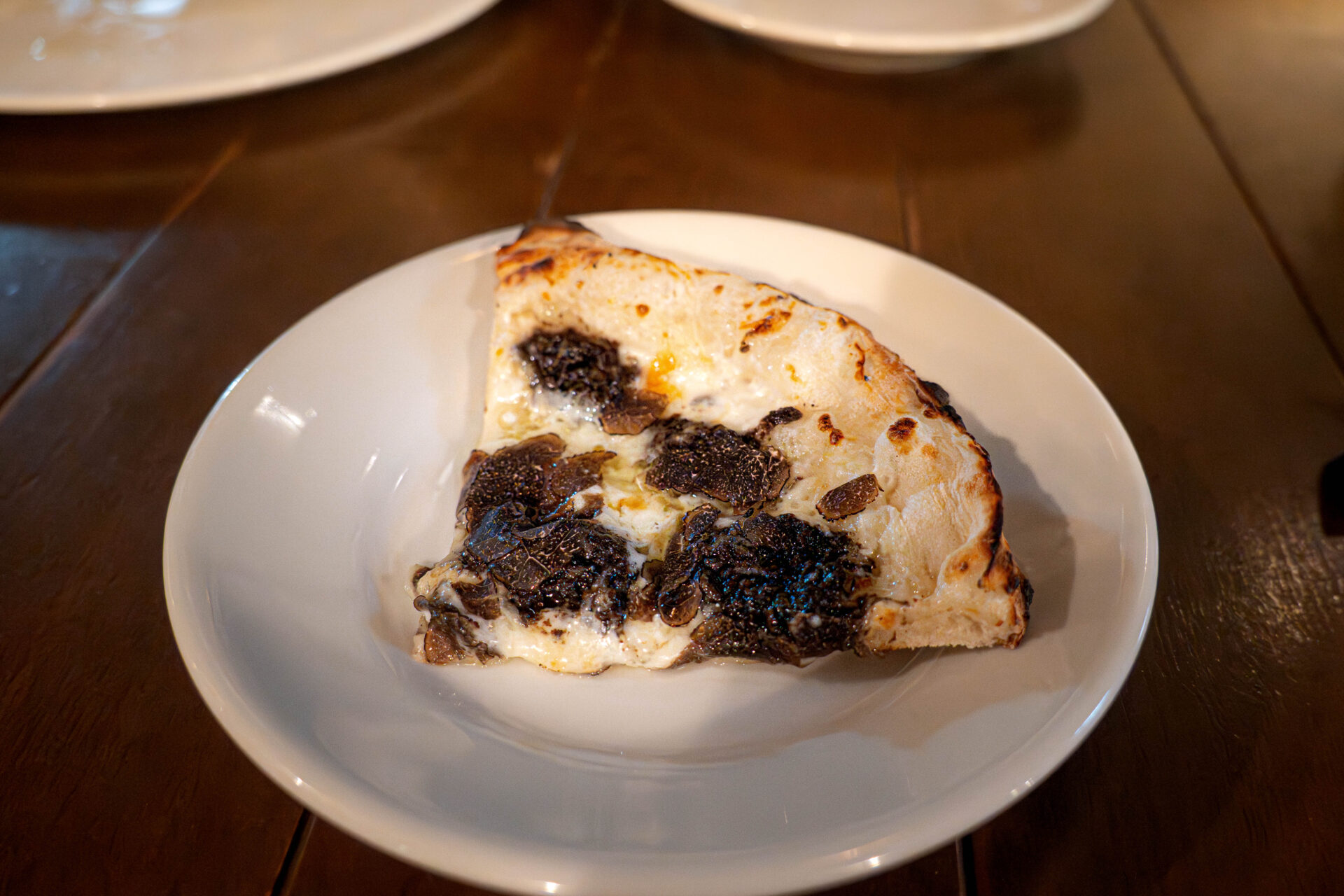
Next came a pizza built on Okinawan mushrooms and Italian winter truffle. The finished pie is set on the counter, and only then does the chef shave truffle over it right there, tableside.
Shaved at just the right moment — before the pizza cools too far — the truffle’s fragrance blooms immediately, dissolving straight into the hot dough and melted cheese. The aroma is strong, but never overbearing, connecting naturally with the earthy character of the mushroom underneath.
Coming right after the Margherita established the baseline, this pizza makes the contrast in how aroma and ingredients are layered immediately clear. Dough and fire stay on the same axis throughout — the real focus here is entirely on how the truffle is deployed on top of that foundation.
It’s a dish with real flair, but the pizza itself remains the star throughout. Even the tableside shaving serves a practical purpose — making sure guests get to taste the truffle’s fragrance at its absolute peak.
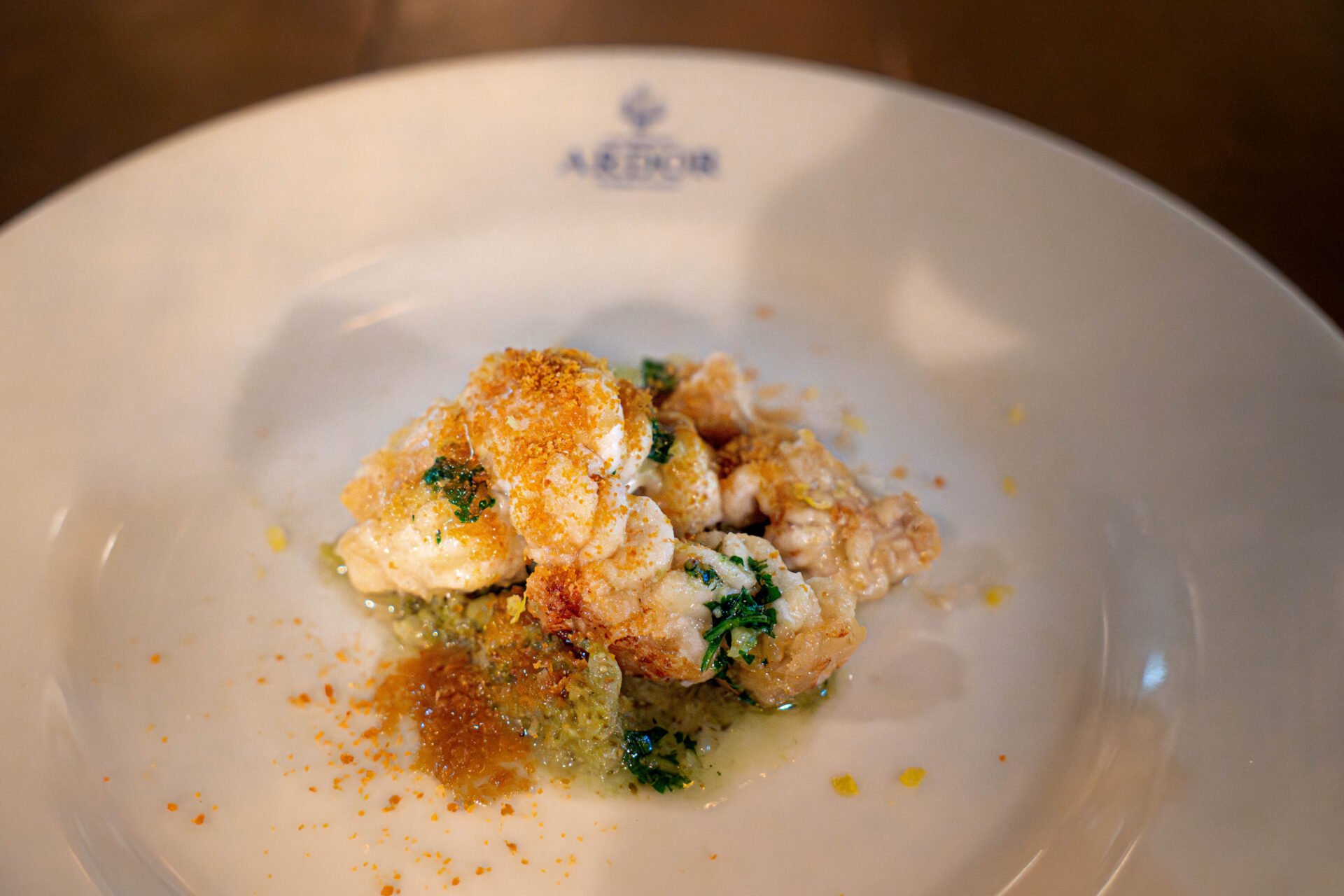
Blanched Hokkaido Cod Milt
Tucked between the pizzas came a blanched Hokkaido cod milt. Cooked only lightly on the surface, the dish preserves the milt’s signature creaminess in full.
It’s paired with a broccoli purée and bottarga. The broccoli’s green edge and gentle bitterness receive the milt’s sweetness, with the bottarga’s salinity and umami layering in on top. Nothing here overstates itself — the whole dish builds itself around the milt’s own texture.
Despite working with a genuinely rich ingredient, the finish never grows heavy. In a course built heavily on wood-fired dishes, this one serves to reset the palate and ease naturally into what follows.
Pizza Marinara
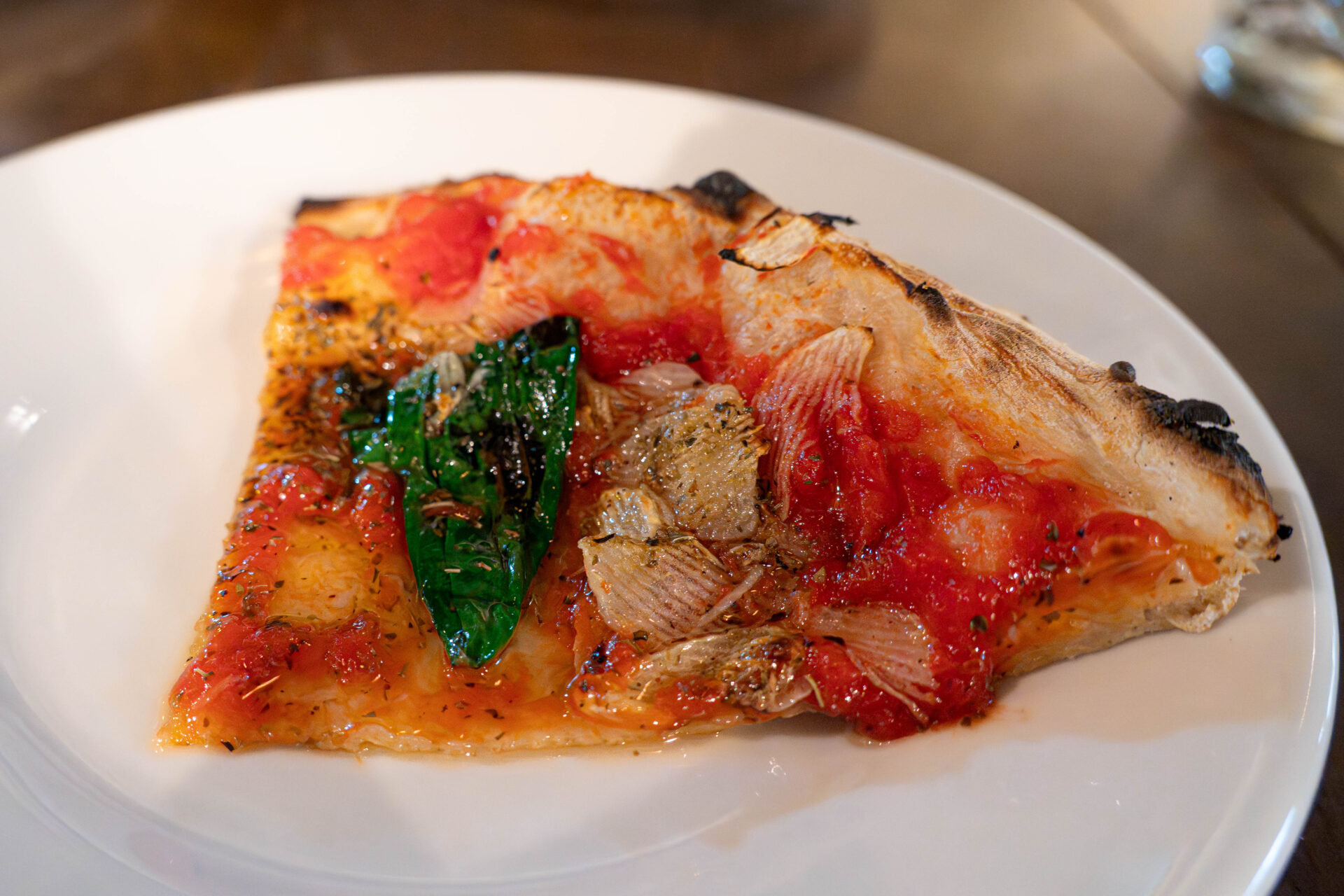
Arriving later in the course, the Pizza Marinara. With no cheese to speak of, garlic, tomato, and oregano stand out with real clarity.
The garlic here comes from Tako, Aomori. The moment it comes off the fire, its fragrance blooms fully, and the suggestion is to eat it alongside the semi-dried tomatoes on top. Rather than the sharpness of raw garlic, this is garlic whose umami has been drawn out through fire and oil — a deep, lingering fragrance rather than any sharp bite.
The garlic asserts itself immediately from the first bite, but surprisingly little heaviness lingers afterward. The tomato’s acidity and the dough’s lightness absorb it well, keeping the pace moving right through to the last bite. It’s easy to understand why this is called the specialty — a pizza that demonstrates, entirely through flavor, the confidence of a genuine pizzeria.
Charcoal-Grilled Yanbaru Agu Pork Shoulder (Porcini Sauce)
The first main course: Yanbaru agu pork shoulder, grilled over charcoal. What’s immediately obvious the moment it’s set down isn’t the amount of fat, but the restraint of the cook.
There’s the pleasant marbling you’d expect from shoulder, but no heaviness — it melts away smoothly with each bite. The charcoal’s fragrance never overpowers, contributing just enough to give the meat’s own umami definition. The porcini sauce carries real depth while staying restrained in texture, never masking the pork’s natural sweetness.
The composition, sides included, is genuinely simple — but that simplicity makes clear how much confidence the kitchen has in both ingredient and cooking technique. Even within a course centered on pizza, this stands out firmly in its own right as a meat course.
Italian Winter Truffle Omelet
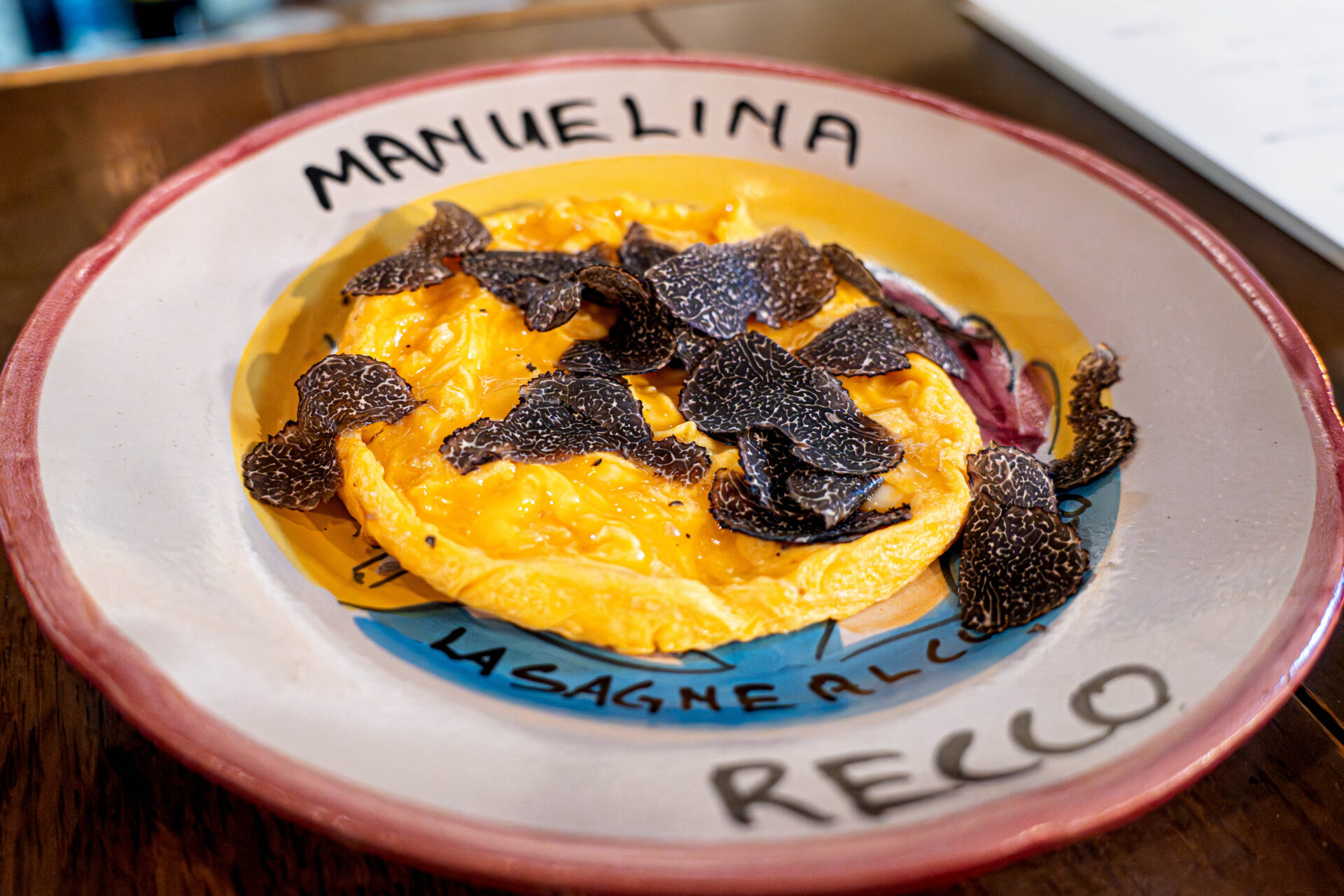
One of the main course options: an omelet built around Italian winter truffle — known here as a genuine house classic.
Cooked only briefly, the center stays nearly runny. Served with the egg’s own sweetness and warmth still intact, it’s finished with a generous shaving of truffle on top. The aroma is strong, but it never crowds out the egg’s own character — if anything, it seems to open up more space around it.
Despite being built around truffle, the egg remains unmistakably the star. Rather than leaning on the ingredient’s own strength, the dish holds together through precise timing and cooking — and that’s exactly why it’s remained a house classic.
In a course centered on pizza, choosing this omelet lets guests experience that same aromatic peak from an entirely different angle.
Off-Menu Bonus Pasta (Dashi Egg Noodles)
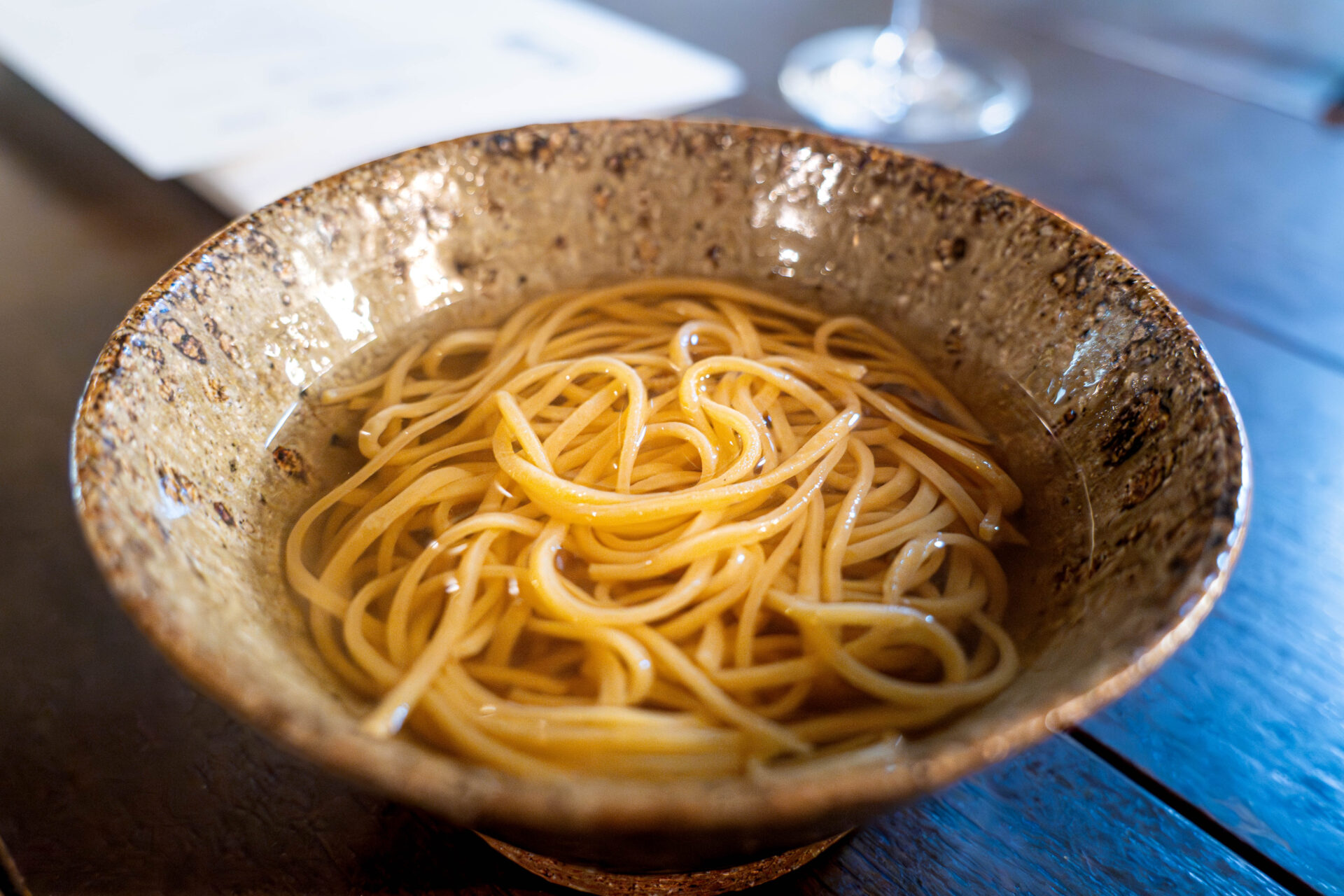
Near the end of the course came an off-menu addition — a pasta not listed anywhere. Nothing else added, just dashi and egg noodles — a remarkably simple construction.
The egg noodles’ richness dissolves into the clear dashi, gentle in flavor but with a clear, well-defined character throughout. Rather than leaning on fat or aroma, it holds together purely through temperature, seasoning, and the noodle’s own texture. Even after all the pizza and meat that came before, it arrives with real lightness.
Less an additional course than a way to bring the meal to a clean close. Even the choice to leave it off the menu speaks to this restaurant’s instinct for restraint.
Dessert & Finale
Two Desserts: Basil Ice Cream / Mascarpone Coffee
The meal closes with two desserts, built not to overwhelm with sweetness but to receive everything that came before with genuine care.
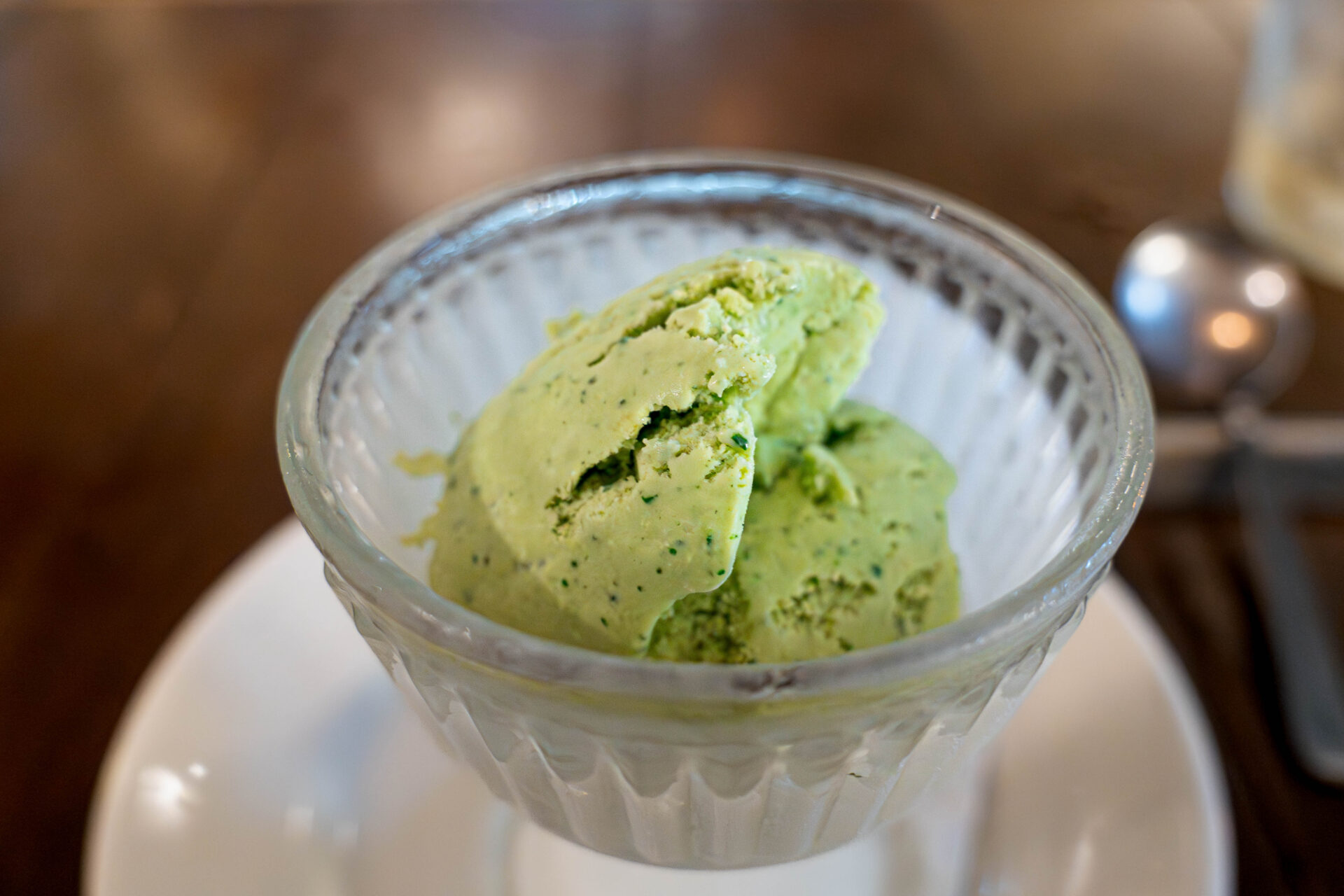
The first is a basil ice cream. Aromatic, but never leaning too far into refreshment — the herb’s green edge and the milk’s richness meet gently. It functions almost as a palate reset, tying the whole meal’s aftertaste into a clean close.
The second is mascarpone coffee — a creamy mascarpone center wrapped in coffee jelly. The balance between bitterness and milky sweetness is well judged, light enough that a second bite feels almost inevitable.
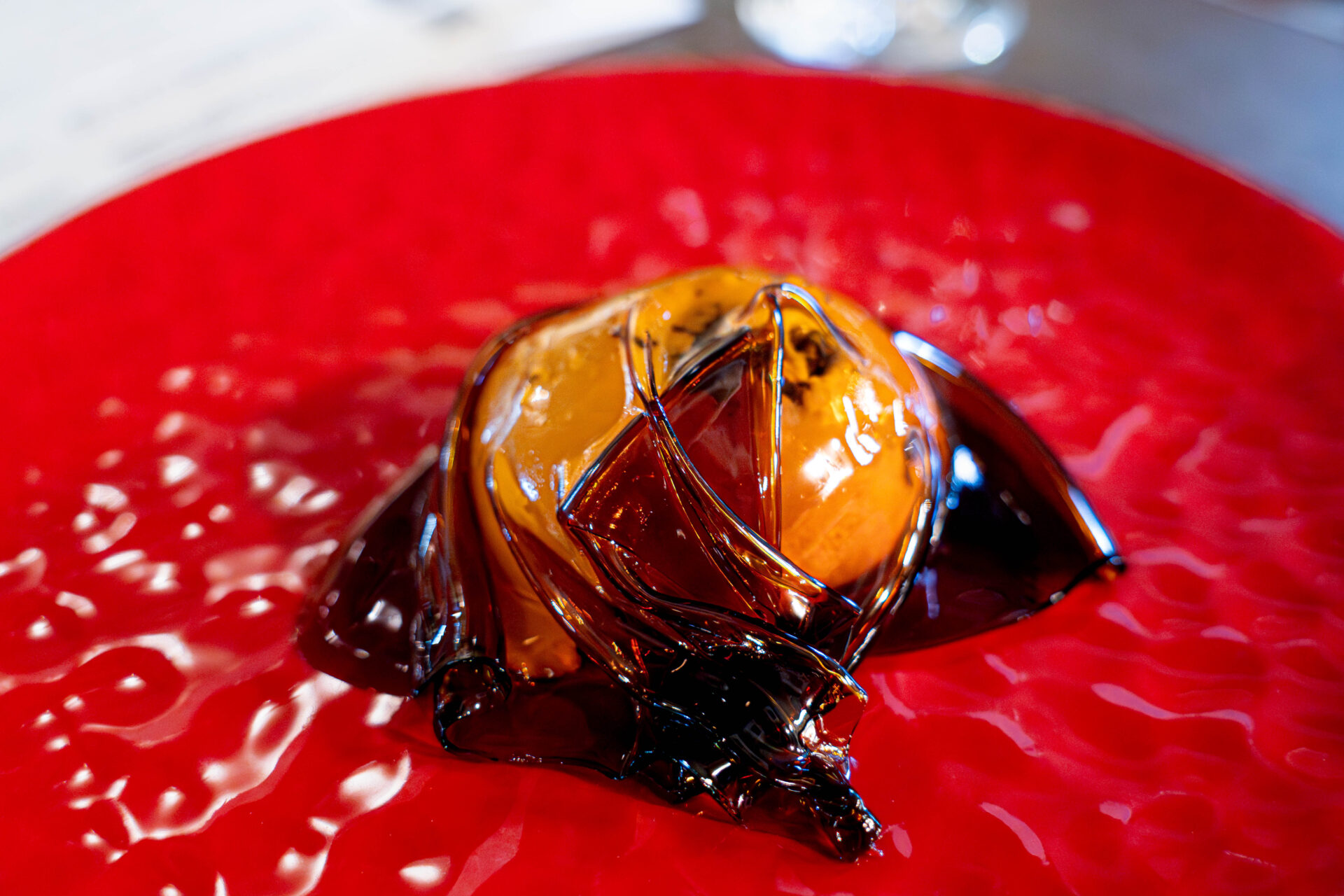
Nothing heavy lingers to the end — the meal closes purely through aroma and temperature. A pair of desserts with genuine restraint, fitting for a course built around pizza.
Final Thoughts
Watching from the counter, the chef’s movements carry a distinctive rhythm — and it becomes clear that the pizza itself is simply the sum of that rhythm, built up piece by piece. Time spent handling the dough, the pauses watching the fire, the precision of the finish. That entire sequence shapes the whole feel of the restaurant, and without quite realizing it, you find yourself drawn in.
Shifting to a course-only format has made it easier for even a solo diner to work through multiple pizzas and dishes comfortably. At the same time, it’s given the chef himself more room to experiment beyond his classics — a shift that shows through clearly in the food.
The precision of the cooking is impressive, of course, but what lingers most is the chef’s own character and the atmosphere he creates. It makes complete sense that people travel from all over the world drawn specifically by the feeling of this place, centered around him. This is a restaurant that’s become essential to any real conversation about Naha, Okinawa.
Reservations & Access
BACAR, in Kumoji, Naha, currently operates in a course-only format close to full reservation-only, with bookings taken online. The official reservation page offers two seatings — 17:00 and 19:30 — with the current omakase course priced at ¥13,200 (tax included). As the menu is course-only, arriving late may mean missing certain dishes, so it’s best to plan for some buffer time.
Reservations run through the TableCheck booking page. Phone inquiries and reservations are also accepted — the restaurant’s number is 098-863-5678. Parties of five or more may not be accommodated depending on seating, so a phone confirmation is recommended in that case.
Address: 3-16-15 Kumoji, Naha City. About a 5-minute walk from Kenchomae Station on the Yui Rail, making it easy to reach from around Kokusai-dori as well. There’s no dedicated parking, so those arriving by car will need to use nearby coin-operated parking.
Current hours: Wednesday, Thursday, Friday, Saturday, and public holidays, with two seatings — 17:00–19:15 and 19:30–22:00. Closed Sunday, Monday, and Tuesday as a rule, though additional irregular closures do occur, so checking the Instagram calendar before visiting is the safest bet.
Reservation page:
BACAR official reservation page (TableCheck)
Instagram:
BACAR OKINAWA official Instagram
| Item | Details |
|---|---|
| Name | BACAR |
| Address | 3-16-15 Kumoji, Naha City, Okinawa Prefecture 900-0015 |
| Nearest station | About a 5-minute walk from Kenchomae Station (Yui Rail) |
| Phone | 098-863-5678 |
| Reservations | Online or by phone |
| Online booking | TableCheck reservation page |
| Menu | Omakase course only |
| Course price | ¥13,200 (tax included) — as of last check |
| Hours | Wed–Sat & public holidays, 17:00–19:15 / 19:30–22:00 |
| Closed | Sun, Mon, Tue (additional irregular closures possible) |
| Parking | None (nearby coin-operated parking available) |
| Seating | 24 seats (table and counter) |
| Official Instagram |
*As hours, pricing, and operating days are subject to change, confirming the latest details via TableCheck and the official Instagram at the time of booking is recommended.
- TAGS