CONTENTS
About ponte
Concept
ponte is an Italian restaurant built entirely around hand-made pasta, run as a pop-up kitchen-share operation. Rather than compensating for a dish’s shortcomings by piling on ingredients, it works from the opposite direction — building each plate around the noodle’s own texture and bite, and how completely it merges with the sauce. This philosophy echoes traditional Roman pasta cooking, where a dish like gricia strips everything down to its essentials, letting an ingredient’s true character and lingering flavor come through.
ponte currently operates out of Munakata Fermentation Lab (in Kanasu, Ginowan City, near Urasoe-Maeda Station), serving lunch only. Operating days are irregular, with reservations and announcements handled mainly through social media. Without a fixed location of its own, ponte’s approach of settling into whatever space is available and focusing purely on the cooking is itself part of the restaurant’s identity — a deliberate choice suited to engaging fully with something as simple as pasta.
About the Chef
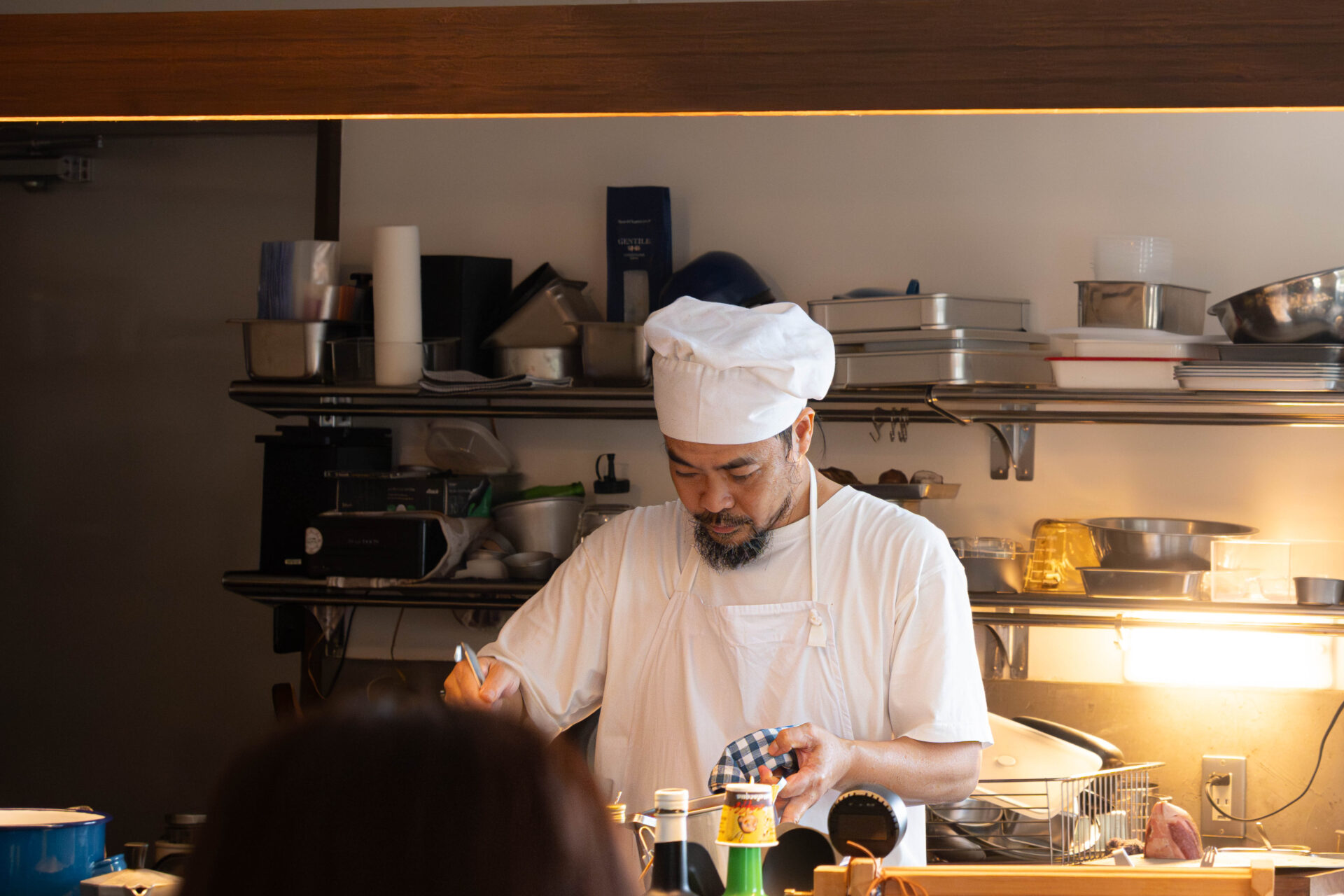
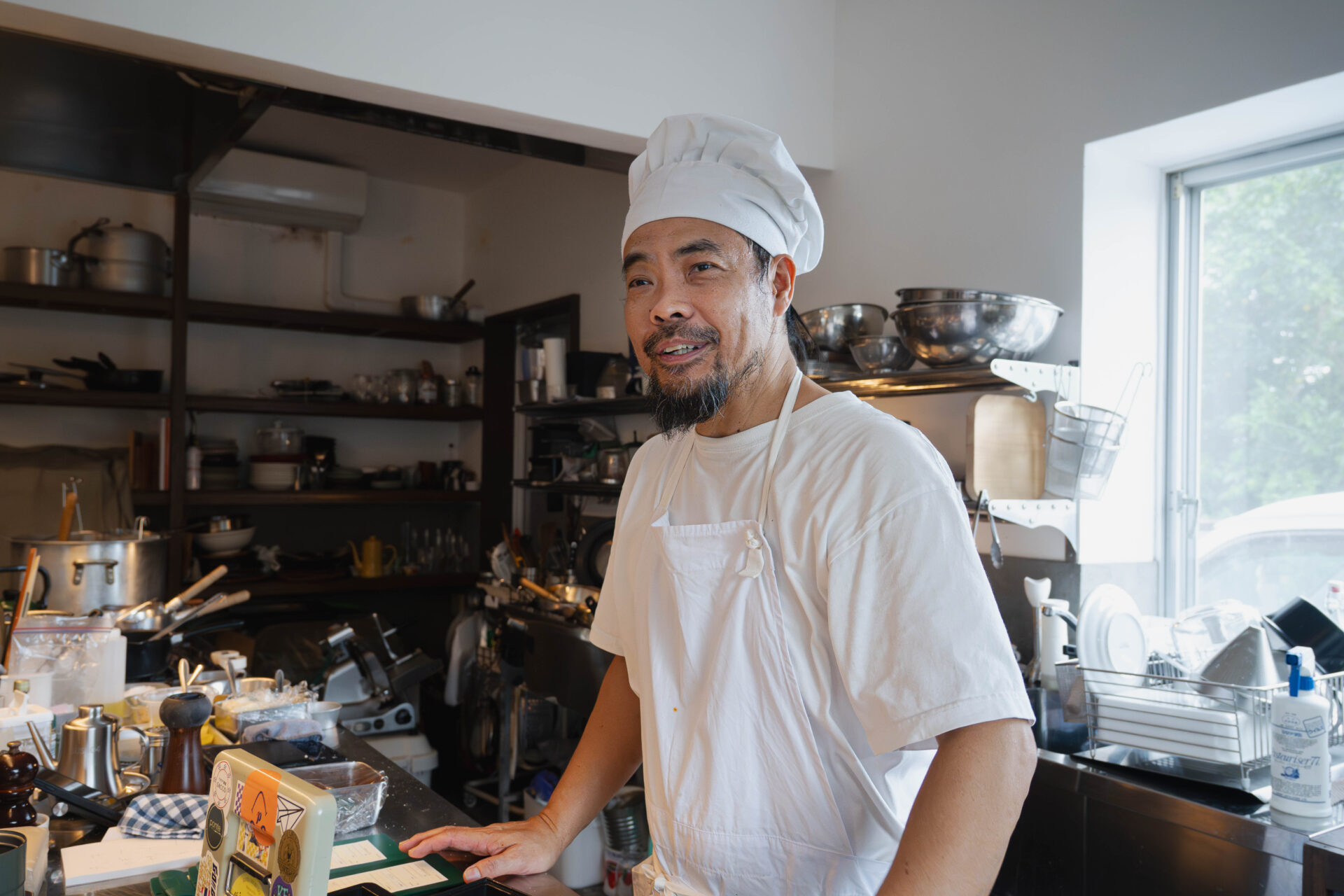
Yuzo Tanahashi, the chef behind ponte, moved to Okinawa at 23. His career in food began in a family restaurant kitchen, building his fundamentals afterward in Western-style hotel cuisine before spending many years at BACAR, an Italian restaurant in Naha. His formative experience came specifically at ARDOR, a BACAR-affiliated restaurant that once operated in Chatan, where he spent real time engaging seriously with pasta-centered cooking.
He’s traveled and eaten his way across Italy directly, but rather than bringing back impressions exactly as received, he’s the type to fully process and rework them through his own perspective. He prioritizes how something feels the moment you bite into it, and how the movement of the hands shapes flavor, over theory alone — treating precision in gesture and preparation as inseparable from the cooking itself. That accumulated discipline is precisely what carries through into ponte’s direct, well-grounded pasta.
Dining Prelude
Exterior & Entrance
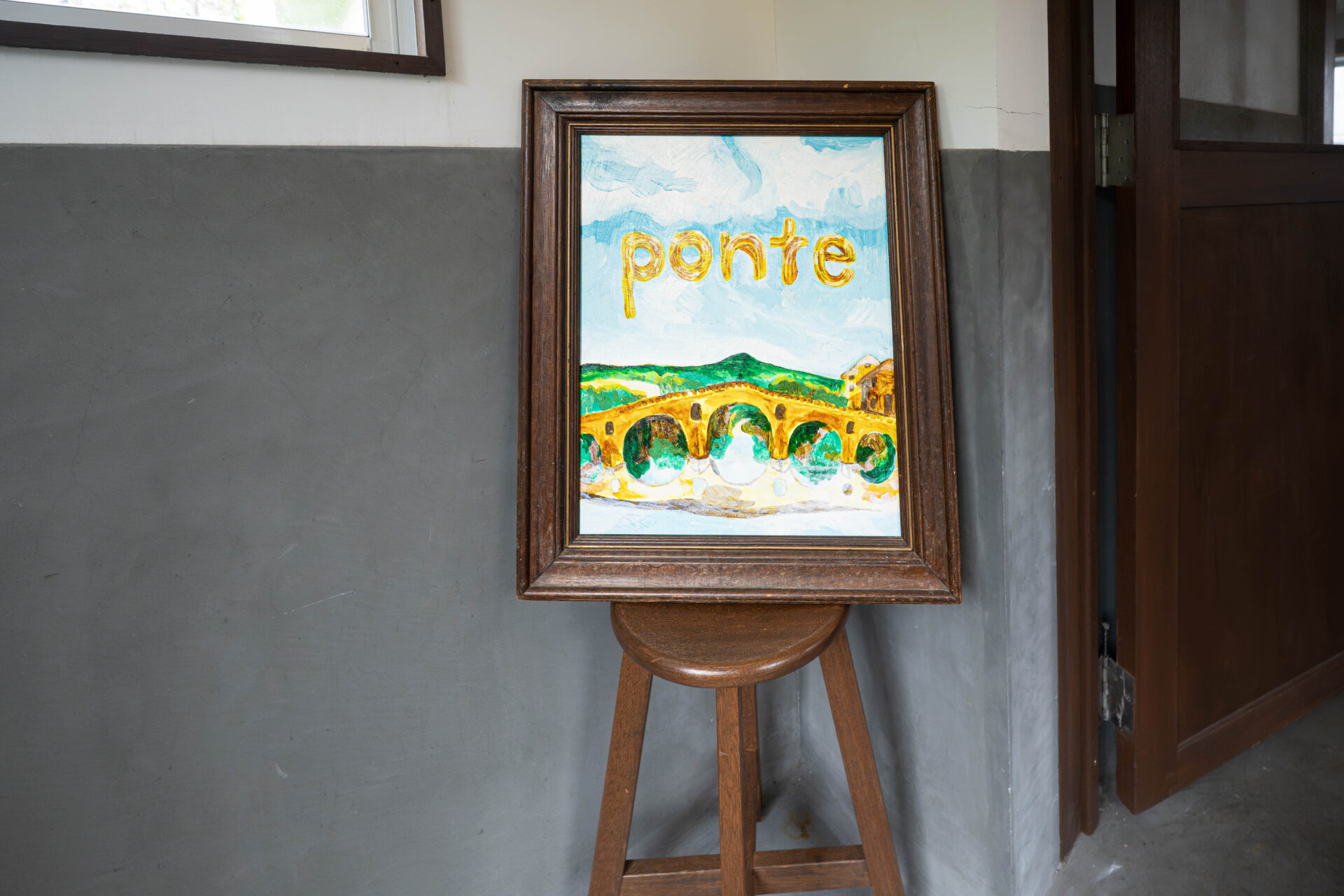
The first thing that catches the eye at ponte’s entrance is a hand-painted sign. Set in a wooden frame, the artwork pairs the restaurant’s name with a motif reminiscent of a stone bridge — a visual rendering of “ponte,” Italian for “bridge.” Propped simply on a stand, it never calls too much attention to itself, yet still serves as an unmistakable marker that this is the destination.
The building itself is part of a research facility tucked into a residential neighborhood in Kanasu, Ginowan City. Nothing about the exterior signals a restaurant, and there’s no elaborate approach to speak of — right up until the door opens, it reads as an extension of ordinary daily life. In that setting, this one sign quietly does the work of saying “this is the entrance.”
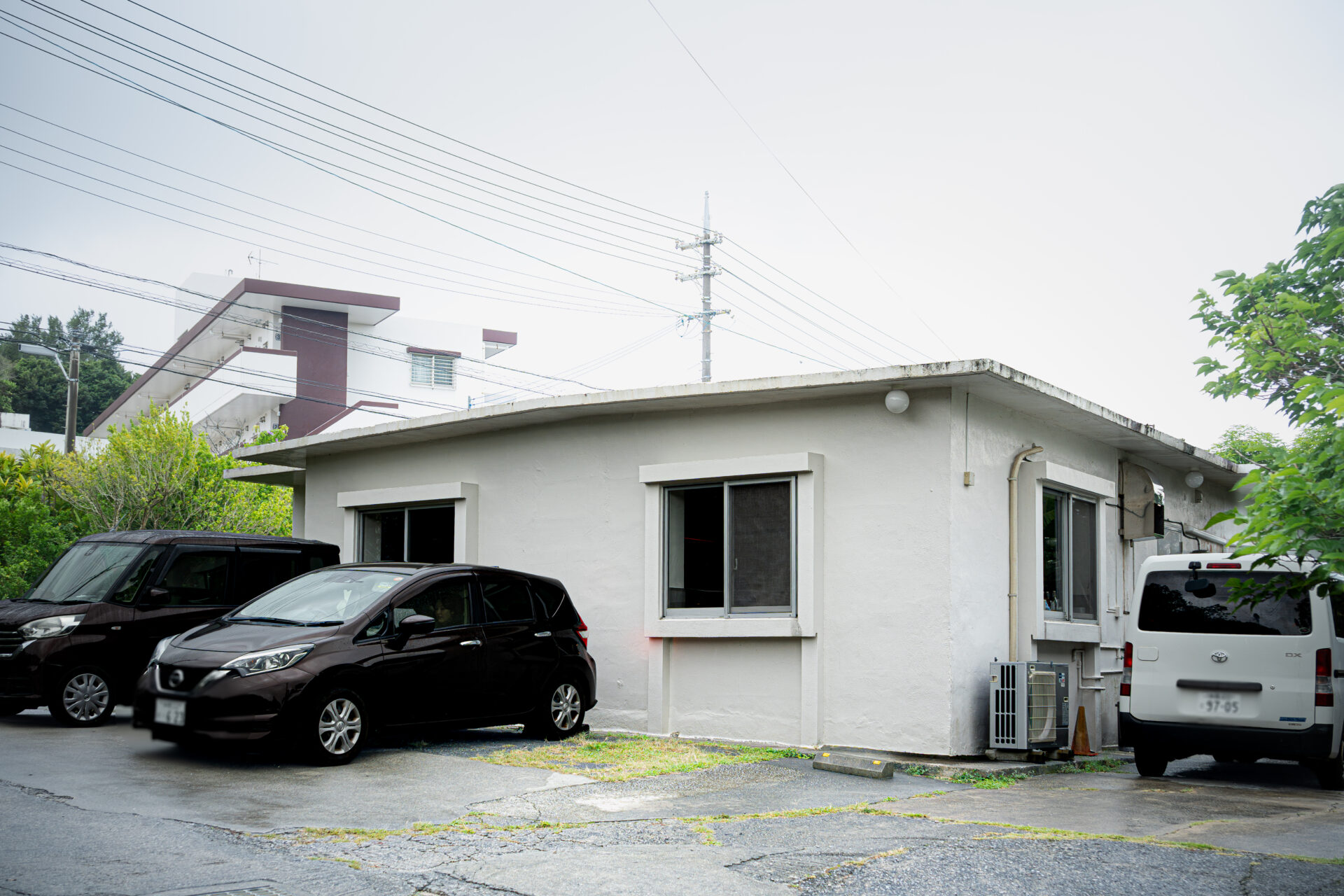
Given the pop-up nature of the operation, there’s no attempt to construct a full visual world through the exterior. Instead, the idea behind the name — a bridge, something that connects — is quietly entrusted to a single painted sign. That restraint feels of a piece with the direction of the cooking itself: stripping away, keeping only what matters at the core.
The Dining Space
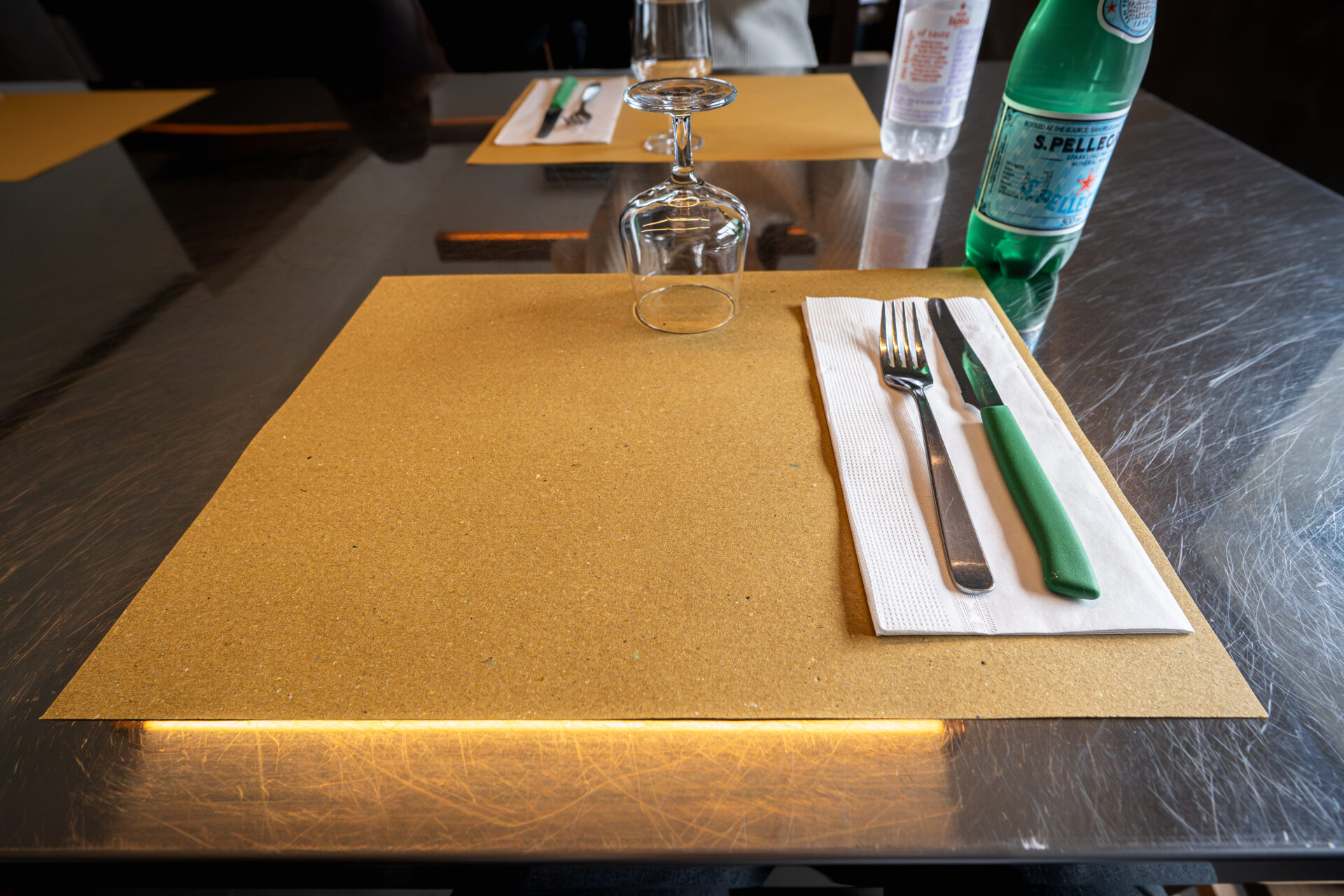
ponte’s dining space makes full use of its host location, Munakata Fermentation Lab, keeping the open-kitchen layout entirely as is. Since the chef works completely solo on operating days, the distance between kitchen and table stays close, letting guests watch the full sequence — rolling the pasta, boiling it, finishing the dish — right in front of them.
Munakata Fermentation Lab itself was built as a gathering space centered on fermentation, bringing together a range of people and projects, and its design is correspondingly stripped-down and simple. During ponte’s service, rather than being retrofitted into a dedicated restaurant space, guests instead experience Chef Tanahashi’s cooking within that existing environment.
Unlike a restaurant built around a large seating count, what defines this place is the closeness between where the food is made and where it’s eaten. Visiting specifically for hand-made pasta, then watching the chef’s work unfold up close while eating — that particular closeness is a major part of what makes ponte’s food resonate.
Menu Presentation
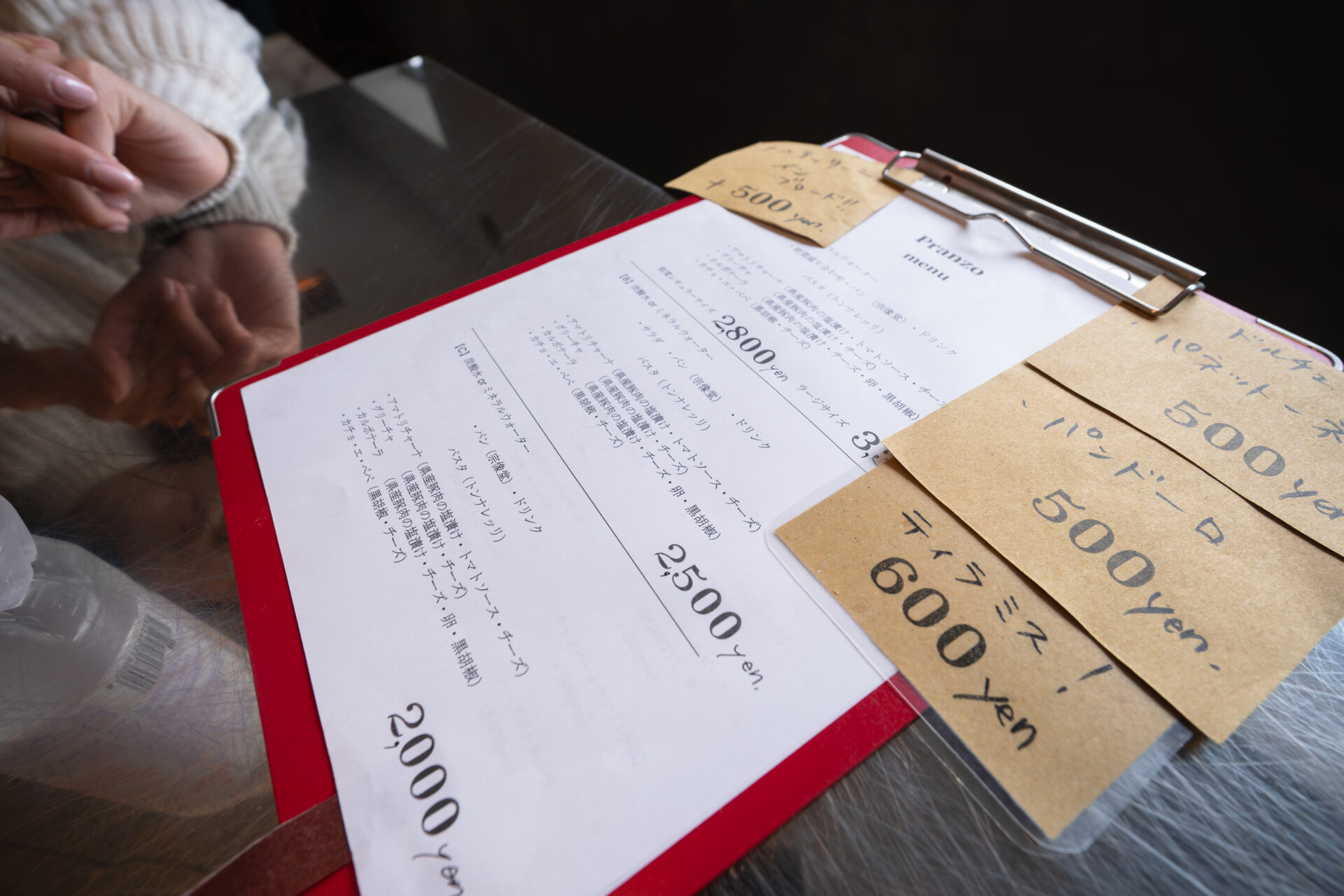
ponte’s lunch centers on a simple structure built around hand-made pasta. Typically offered as a set pairing an appetizer with pasta, with an optional course adding bread and a drink.
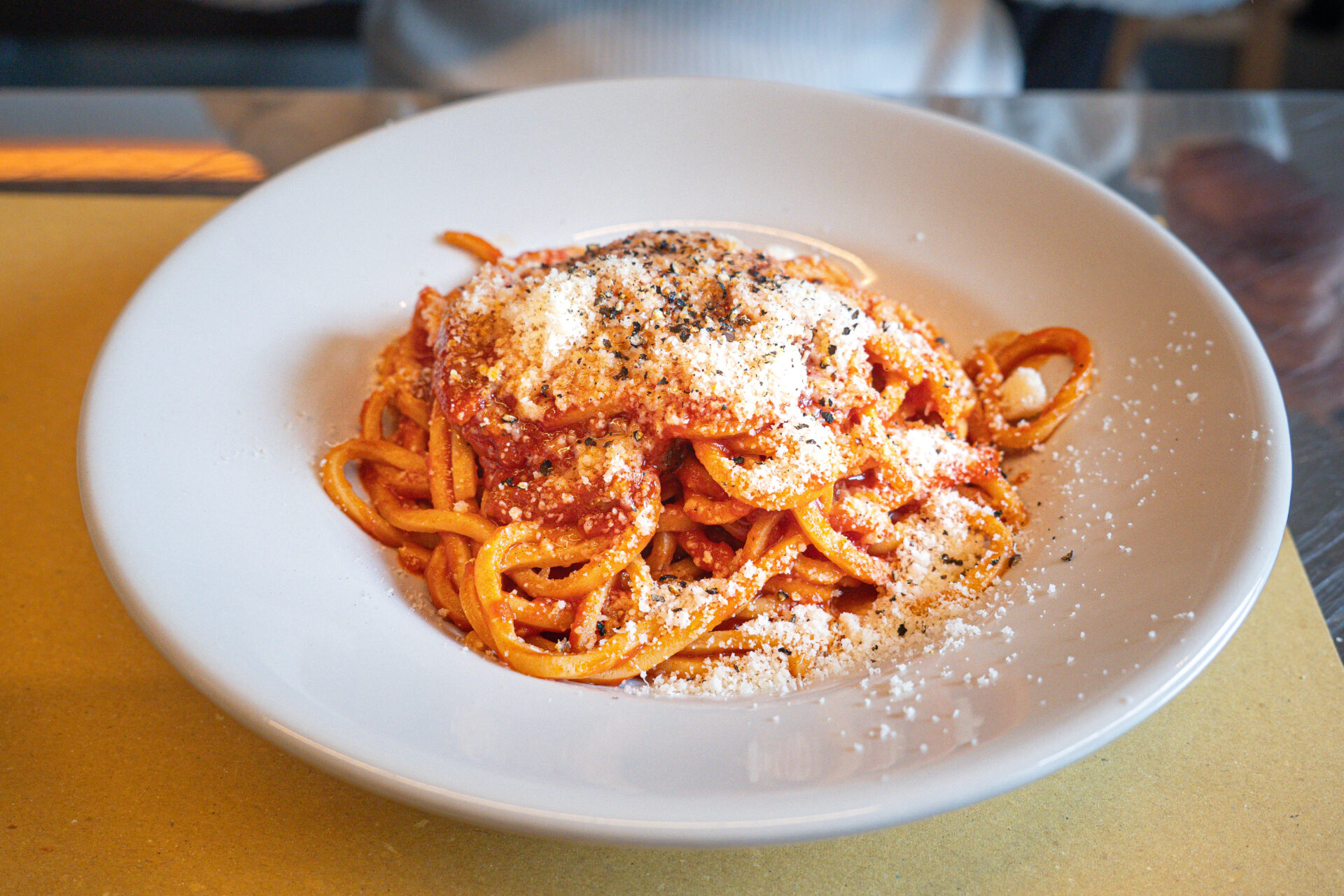
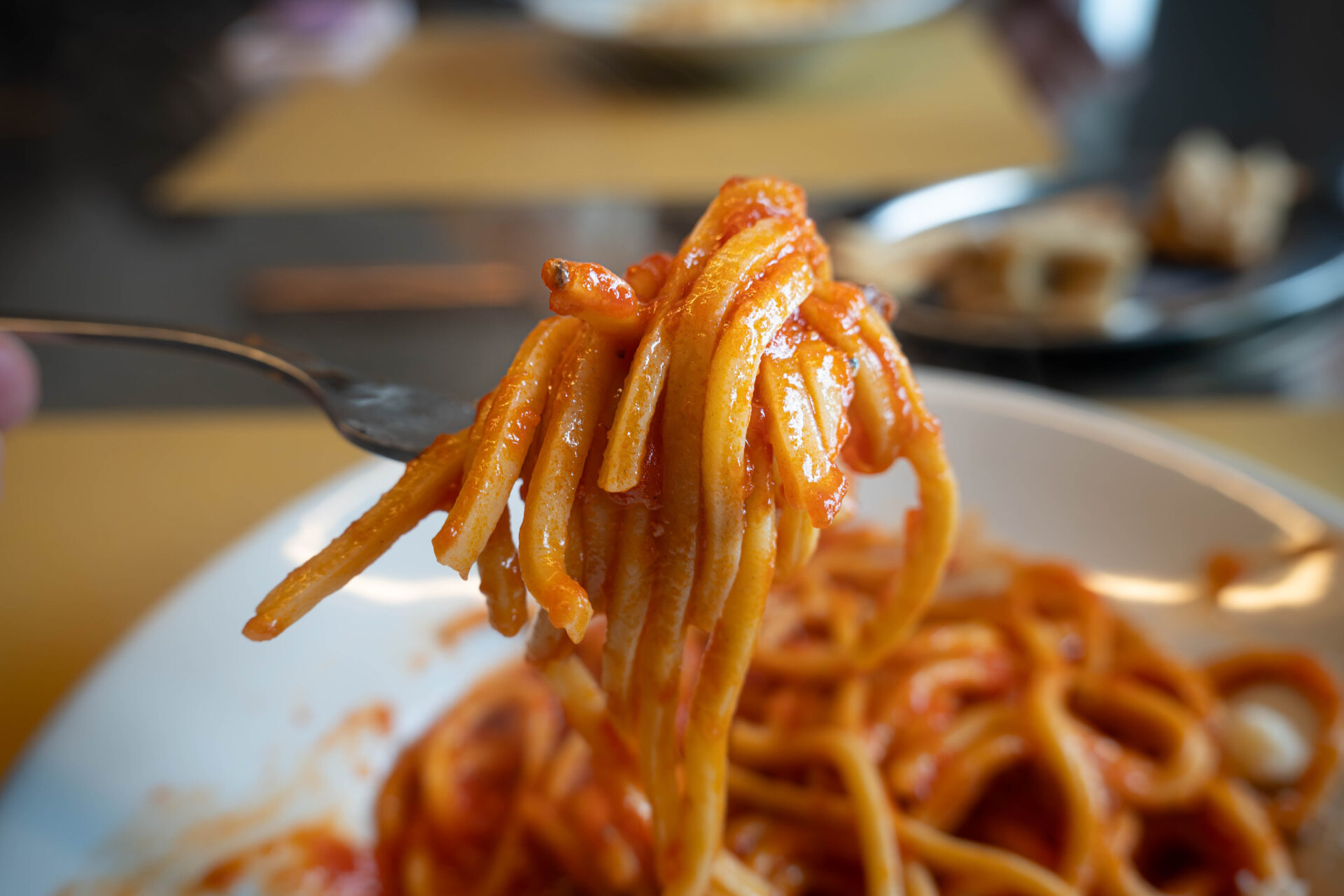
The pasta uses house-made tonnarelli, with a lineup centered on Rome’s classic pasta dishes — carbonara, amatriciana, gricia, cacio e pepe. Beyond just the sauce and toppings, the composition lets guests experience the distinctive texture of thick, hand-cut noodles directly.
Appetizers are built around seasonal ingredients, changing from visit to visit. Combined with the pasta at its core, alongside appetizer and bread, the meal comes together as a genuine dining experience centered squarely on hand-made pasta.
Neither operating days nor the menu stay fixed — a natural byproduct of the pop-up format — and that shifting content according to season and schedule is itself part of what defines ponte. Checking which pasta happens to be on offer on any given visit becomes part of the pleasure.
The Tasting
Appetizer
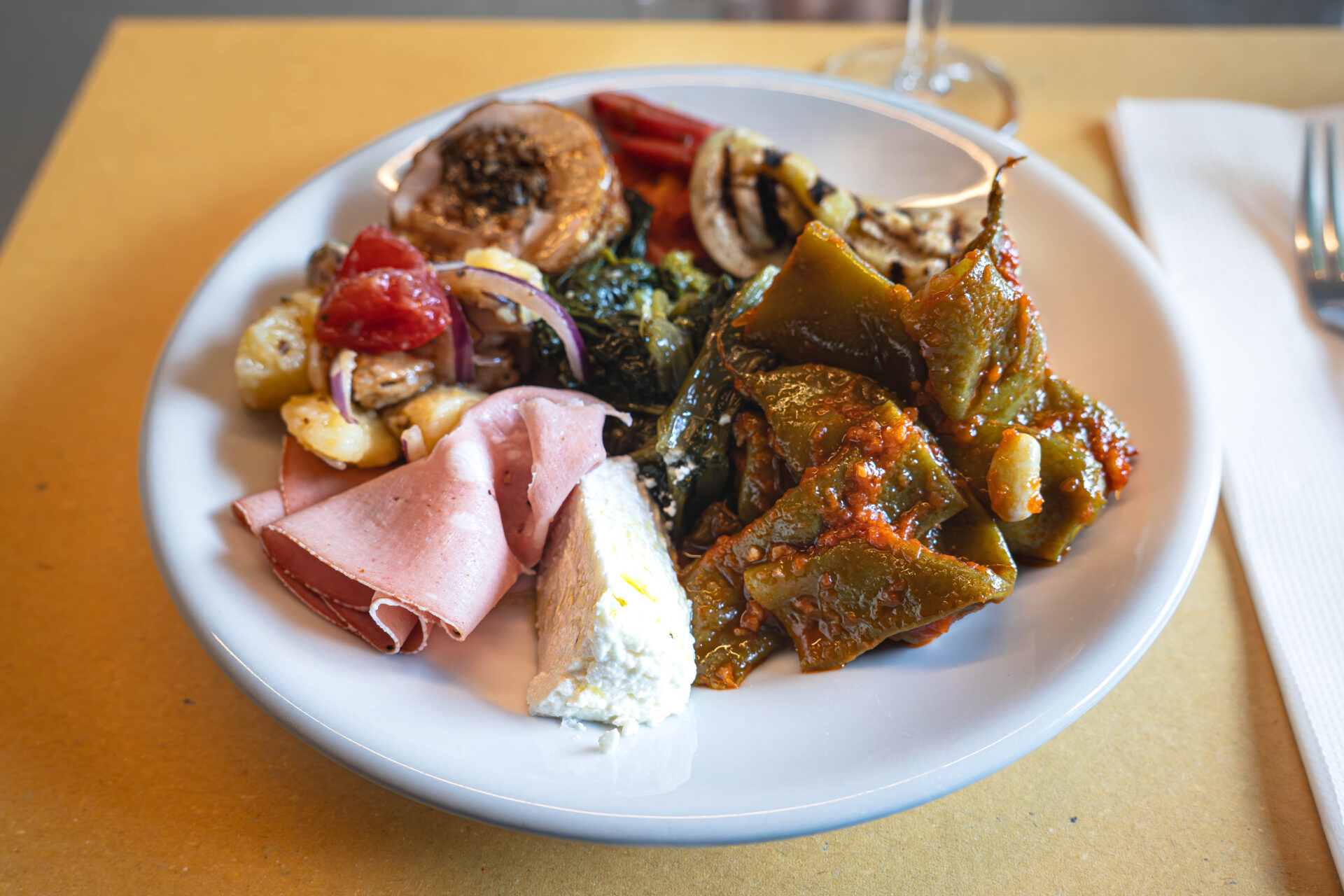
The appetizer arrives as a single plate layered with multiple elements — a dish that speaks directly to both the volume and direction of the prep work behind it. At its center sits a piece of Okinawan young chicken thigh, cooked until it falls apart tenderly, tucked with chopped mushrooms and black truffle inside, so the chicken’s fat and fragrance spread quietly outward.
Around it, a range of vegetable and preparation work fills out the plate. Mustard greens and komatsuna are cooked to soften their green edge; turnips are braised with anchovy until completely tender, prioritizing umami over any crisp texture. White eggplant stays soft while retaining its moisture, and Okinawan runner beans (a variety called “Bikkuri Jumbo”) are simmered with tomato, keeping the ingredient’s natural size to give real bite.
Fresh cheese made that morning, mortadella, potato, mussels, onion, tomato — the elements are numerous, yet every one is seasoned with real restraint. What stands out is that nothing is positioned to stand apart on its own; everything seems arranged instead to connect naturally within the mouth.
This appetizer alone makes clear that the chef spends more time refining than adding. As an introduction to the pasta that follows, it builds satisfaction through density rather than sheer weight.
Carbonara
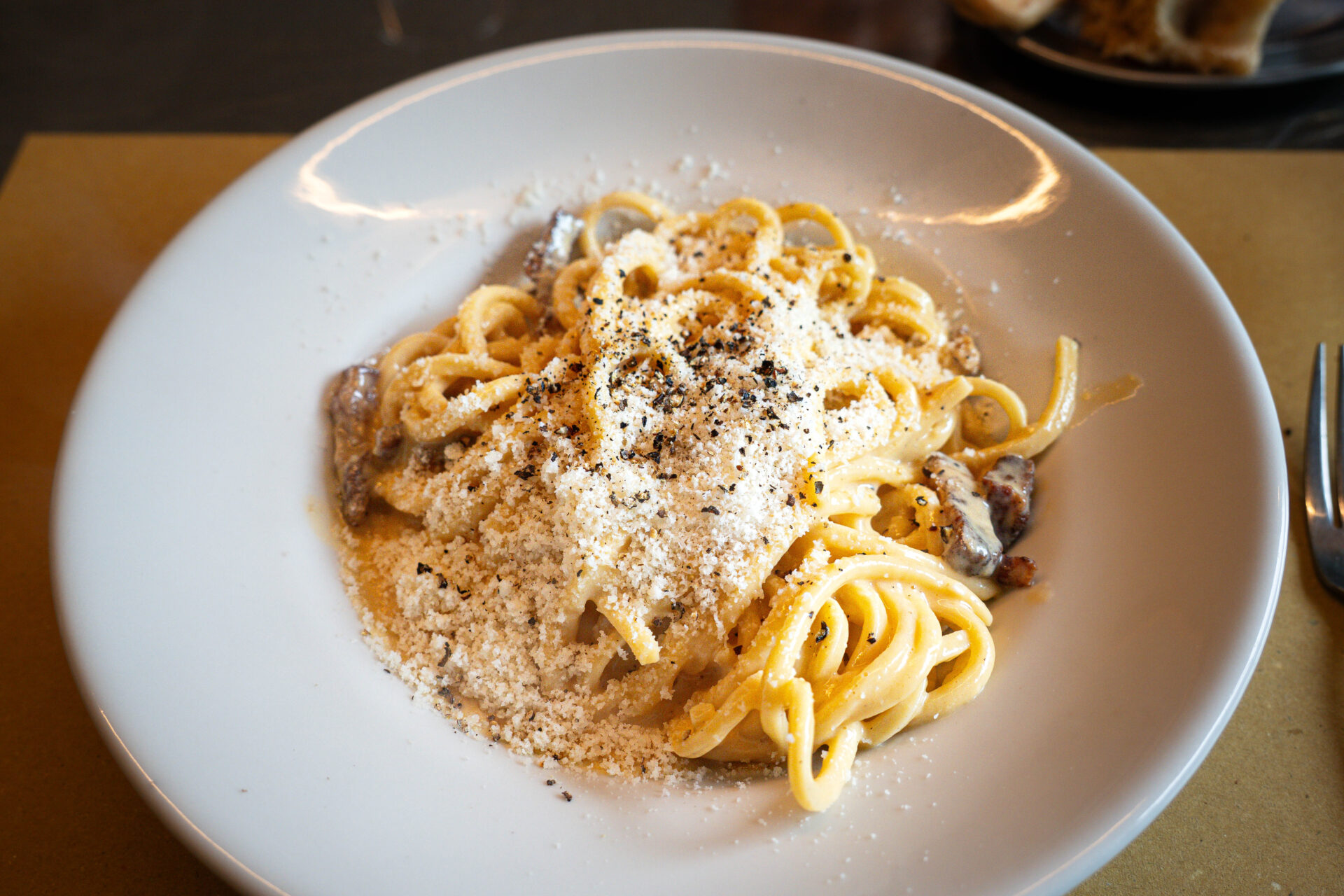
Built on the barest essentials — cured Okinawan pork, cheese, egg, black pepper. Rather than leaning toward creaminess, this is a dish where egg and cheese soften from heat and cling directly to the tonnarelli. The pork’s salt and fat form the base, with black pepper kept purely as a fragrant accent. With every bite, the noodle’s firm core and the sauce’s unity come through more clearly, the balance sharpening the further you eat. This is the dish where ponte’s philosophy of “letting the noodle be eaten” comes through most directly.
Amatriciana
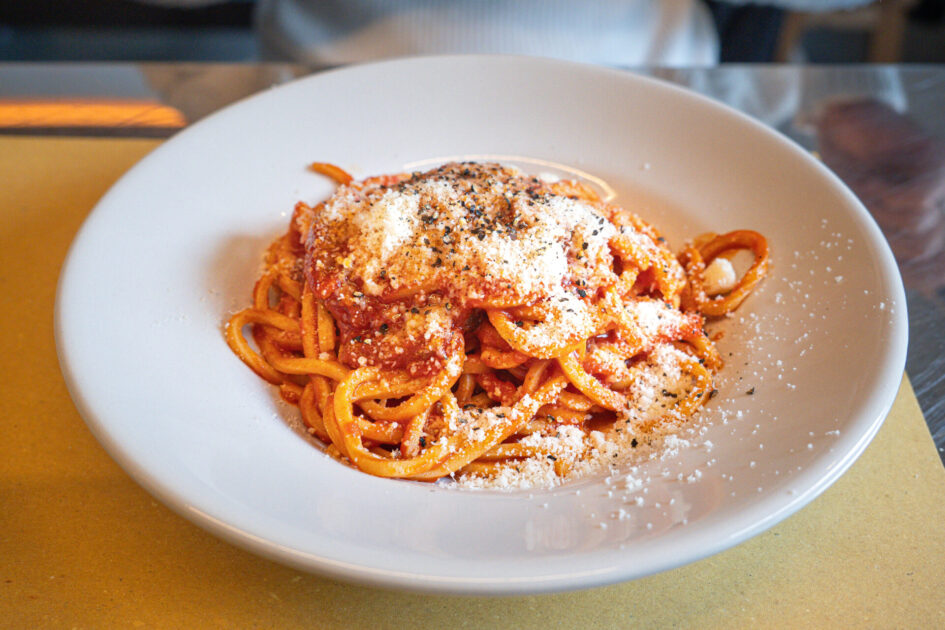
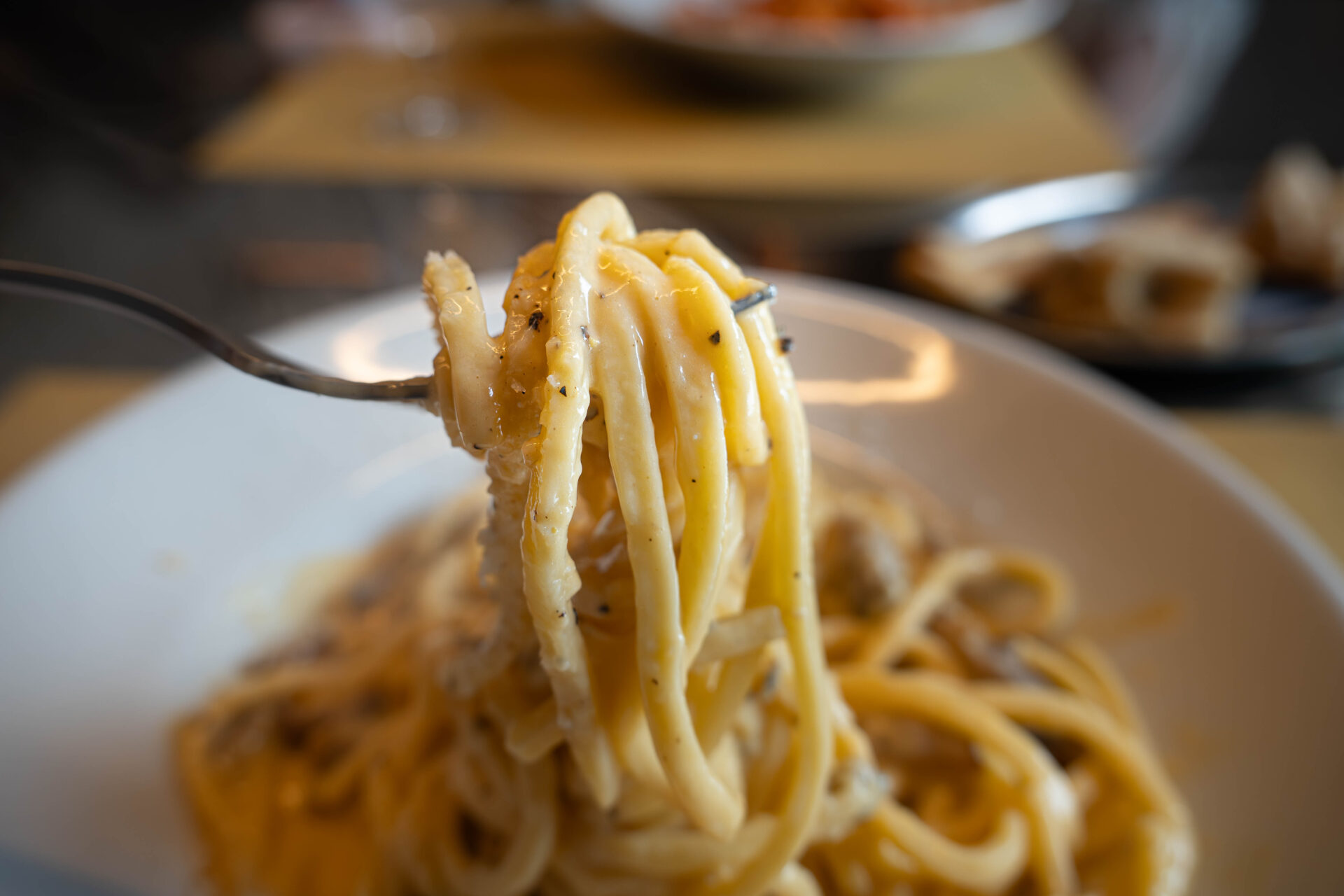
Also built around cured Okinawan pork, paired here with tomato sauce and cheese. Rather than pushing acidity forward, the dish is built to let the tomato’s liquid and the pork’s umami soak fully into the noodle, keeping the overall character soft and rounded. The tonnarelli’s thickness holds the sauce well, and each bite layers wheat, tomato, and pork umami further together. Nothing flashy, but built to be eaten right through to the end without ever growing tiresome.
What both pastas share is that no single ingredient overstates itself. Even while drawing on local Okinawan ingredients, the noodle itself remains unmistakably the star throughout. The palate and appetite, prepared by the appetizer, carry naturally into the pasta — the whole lunch at ponte reads as a single, coherent line.
An Additional Order: Tortellini
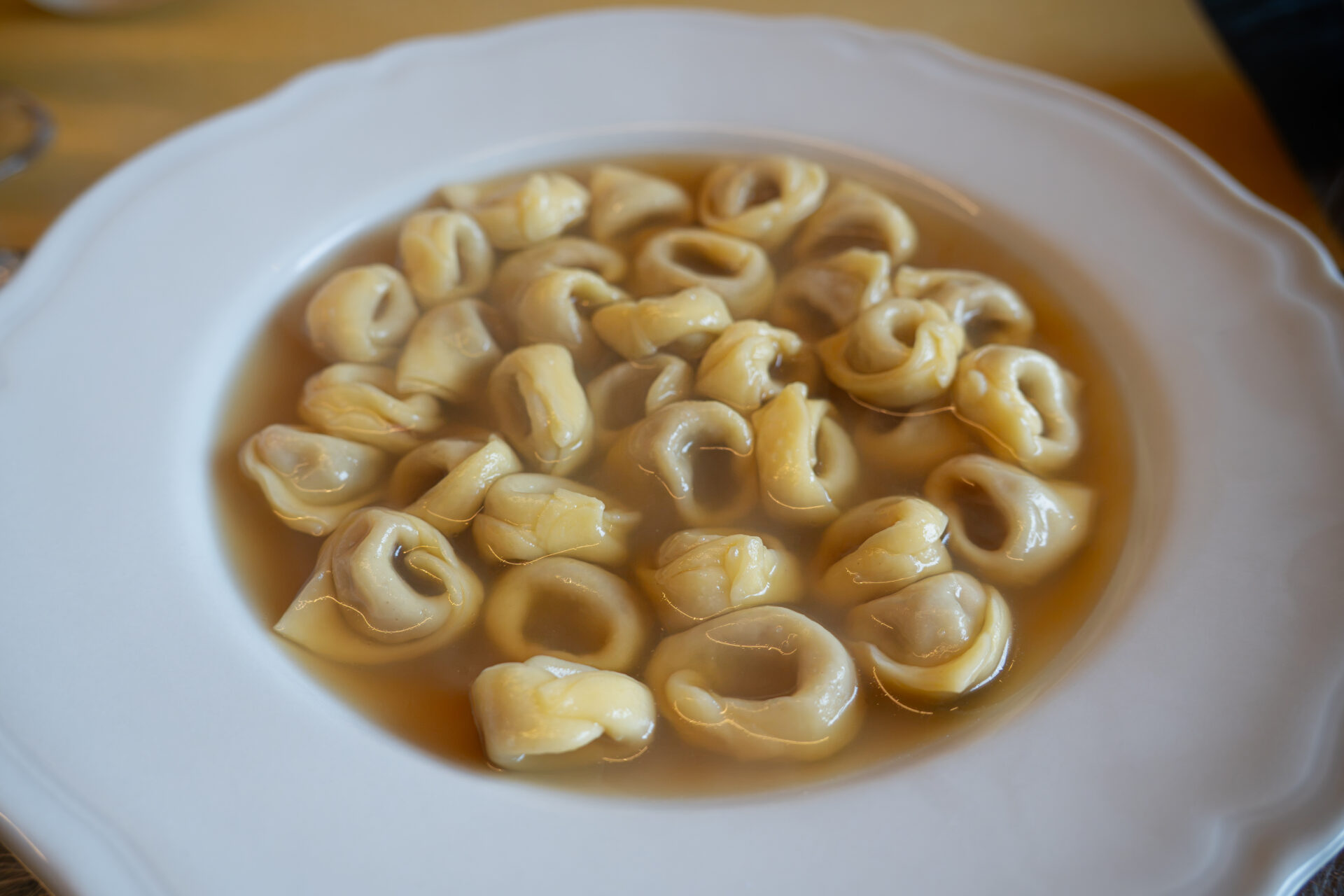
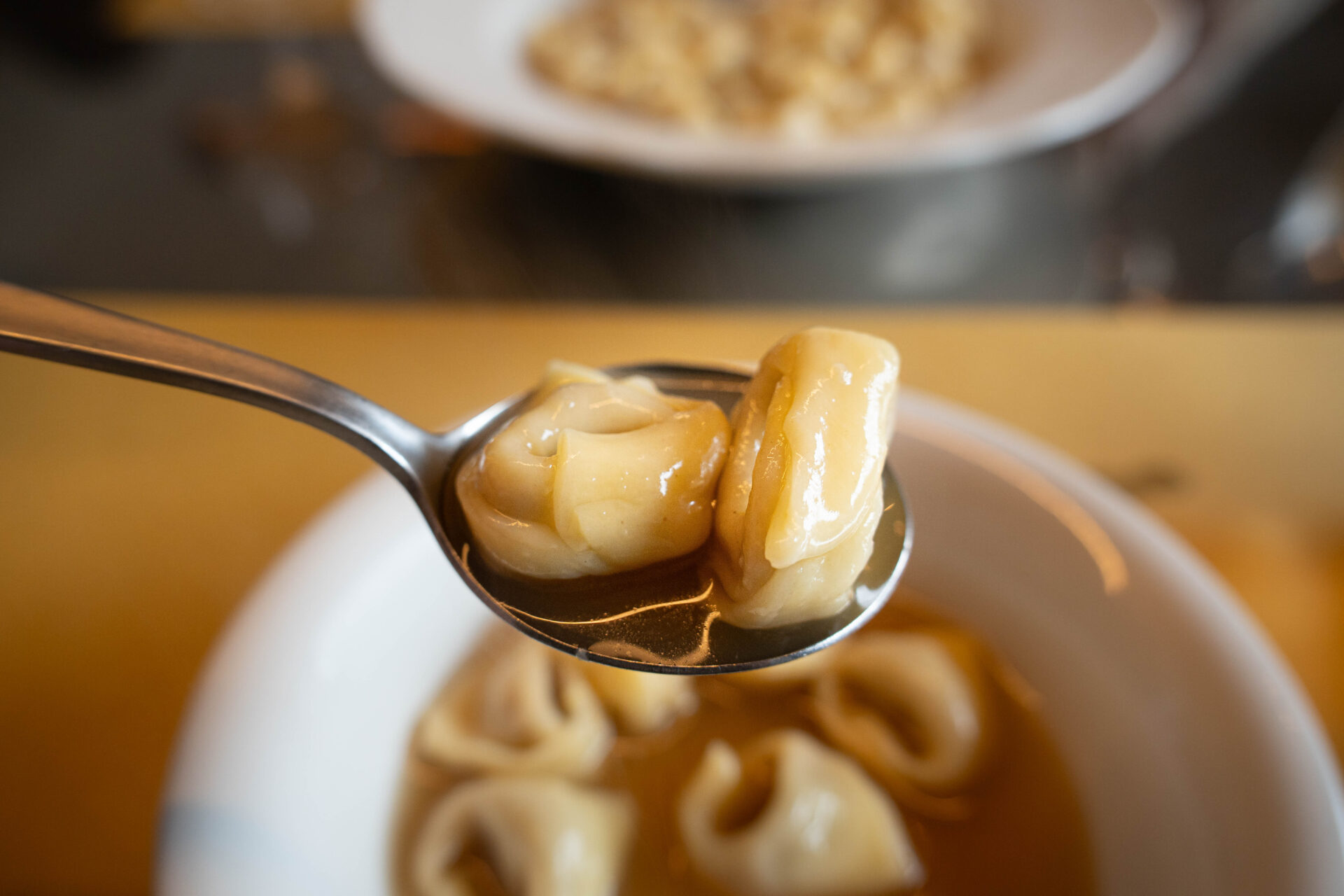
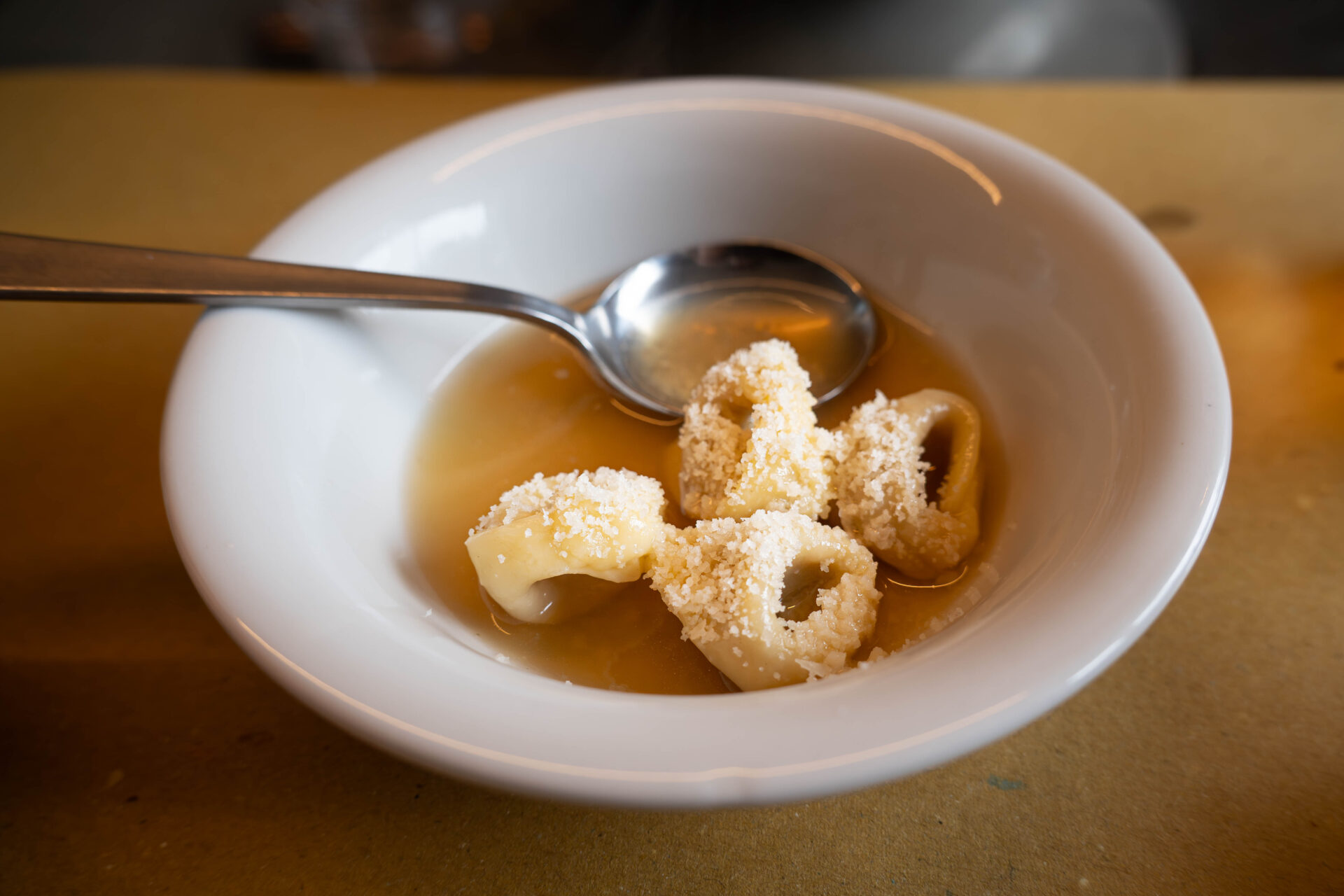
As this particular visit fell on Christmas, a special tortellini was on offer, outside the usual lineup. Stock drawn from veal bones and Okinawan chicken, extracted slowly over roughly an hour into a clear broth, holds small tortellini in a remarkably simple presentation.
The dough has a satisfyingly chewy texture, its umami slowly seeping out with each bite. Filled with pork shoulder and other ingredients, it carries genuine meaty richness while staying carefully balanced enough not to overpower the broth. Tasted first as-is alongside the broth, then finished partway through with a dusting of Parmigiano to taste, the flavor gains a bit more weight — the cheese’s salt and fragrance bringing both the broth’s umami and the filling into sharper focus.
Nothing flashy about the presentation — a dish that walks guests through broth, dough, and filling in sequence. Within ponte’s pasta-centered flow, this stood out as a quiet highlight, one that speaks directly to the chef’s fundamental technique and sense of construction.
Bread (Munakata Fermentation Lab)
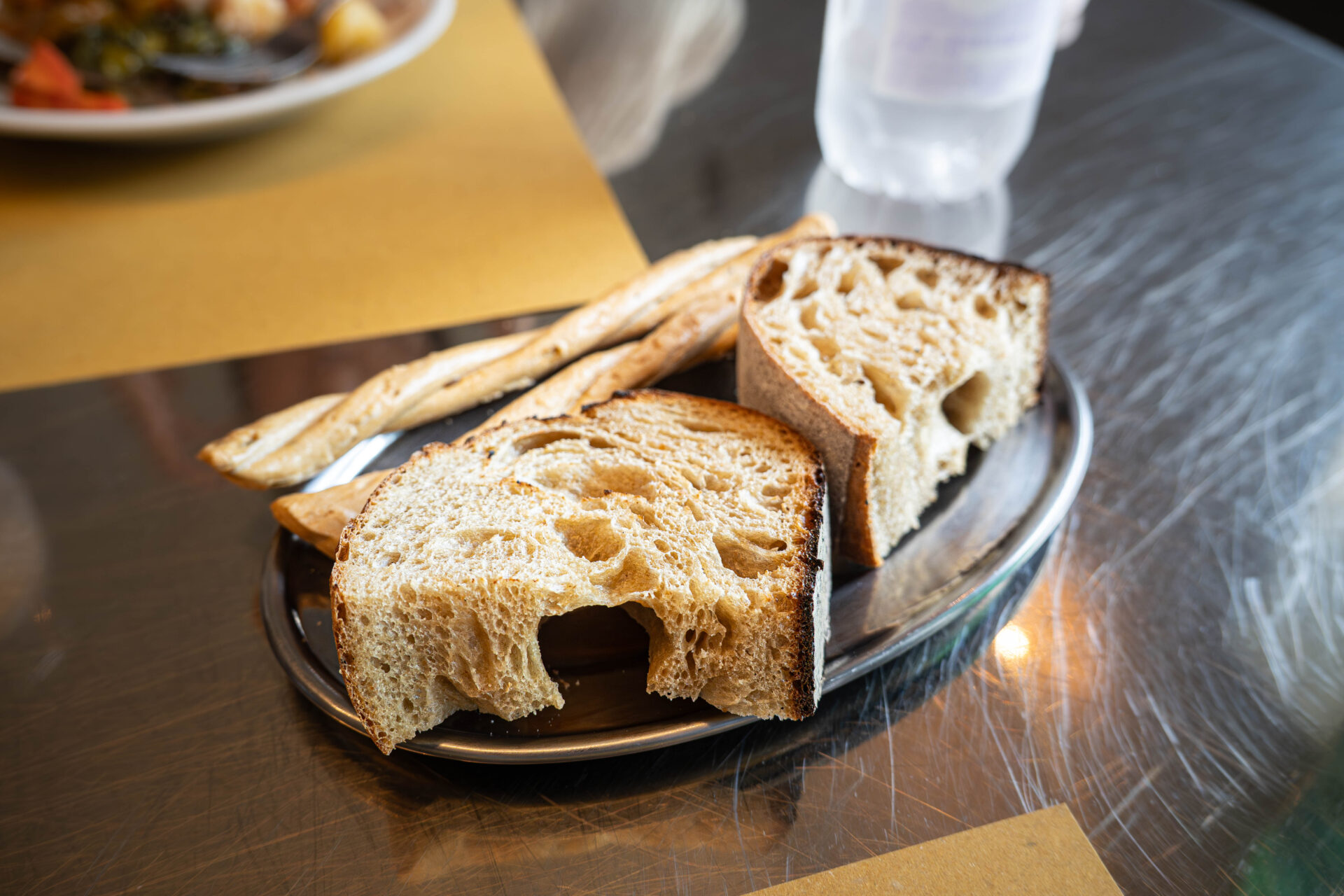
The bread comes from Munakata Fermentation Lab, the very venue ponte is borrowing space from — a generously cut piece of campagne alongside slender grissini. The crust is baked through firmly, while the interior stays light and moist within, its gentle fermented acidity coming through with each bite without ever getting in the way of the meal.
What stands out most is how clearly it’s meant to soak up soup and sauce. The tortellini’s clear broth, the lingering cheese and tomato from the pasta — the bread absorbs it all cleanly. The grissini, meanwhile, offer textural contrast and serve as a kind of palate reset.
This isn’t bread meant to show off its house-made status — it’s simply placed exactly where it’s needed within the flow of the meal. Eating it within a space centered on fermentation only makes the affinity between the bread and ponte’s cooking feel that much more natural.
Final Thoughts
ponte’s lunch, centered entirely on hand-made pasta, prioritizes clarity of intention over spectacle in every single dish. The appetizer sets the direction for ingredients and prep, the pasta engages directly with the noodle itself, and the tortellini and bread settle the aftertaste. Nothing about that flow feels forced, and what lingers afterward isn’t so much fullness as genuine satisfaction.
Despite drawing on Okinawan meat and vegetables, the meal never pushes that local character to the foreground — instead, it clearly prioritizes how well the dish comes together as food, full stop. The tonnarelli in particular carries a sense of coming together through the act of chewing, rather than through a sauce simply “placed on top” — the chef’s accumulated experience showing through directly.
Even within the constraints of a pop-up operation, the space, the bread, and the cooking connect cleanly into a single, coherent dining experience. Without any flashy presentation or explanation, it’s a restaurant where what it’s putting its effort into comes through naturally, on its own.
Reservations & Access
Here’s what’s currently confirmable regarding reservations, access, and hours. As ponte has no fixed location of its own, operating instead out of Munakata Fermentation Lab, checking Instagram for operating days before any visit is essential.
Reservations
Reservations are accepted via direct message on ponte’s Instagram. Fully reservation-based, with confirmed examples showing two seatings — starting at 11:00 and 13:00. Operating days aren’t fixed and are instead announced monthly via Instagram.
The general process is to check Instagram for operating days first, then reach out via DM with a preferred date and time. Rather than a conventional phone reservation, this is a booking method specific to a pop-up operation of this kind.
Official Instagram:
ponte official Instagram (@ponte_scaffali)
Access
ponte currently operates out of Munakata Fermentation Lab. Address: 1-20-7 Kanasu, Ginowan City, Okinawa Prefecture — about 1.9 km from Urasoe-Maeda Station. The facility sits near Munakata-do, and ponte borrows its space to serve lunch.
For guests arriving by car, parking is available around Munakata Fermentation Lab and Munakata-do. During events, carpooling or shared parking arrangements are sometimes announced, so it’s worth checking the latest guidance before visiting.
Hours
There’s no fixed regular operating schedule — operating days are announced as they come via ponte’s Instagram. Confirmed examples show reservations accepted for seatings starting at 11:00 and 13:00.
As a pop-up operation, ponte doesn’t run on a typical restaurant schedule of “every [day] at [time].” For anyone planning a visit, the clearest approach is: check Instagram for operating days, message to reserve, then head to Munakata Fermentation Lab at the assigned time.
| Item | Details |
|---|---|
| Name | ponte |
| Format | Pop-up operation within Munakata Fermentation Lab |
| Address | Munakata Fermentation Lab, 1-20-7 Kanasu, Ginowan City, Okinawa Prefecture |
| Nearest station | About 1.9 km from Urasoe-Maeda Station |
| Reservations | Fully reservation-based |
| How to reserve | DM via ponte’s official Instagram |
| Operating days | Irregular / announced via Instagram |
| Hours | Varies by operating day; confirmed examples start at 11:00 and 13:00 |
| Official Instagram | @ponte_scaffali |
| Parking | Available per listings; confirm latest details before visiting |
| Notes | Check official Instagram for the latest on operating days and reservation method |
*Operating hours and reservation methods are subject to change. As ponte operates as a pop-up on an irregular schedule, checking the official Instagram immediately before your visit is strongly recommended.
- TAGS