
CONTENTS
About Sumisho Mikuriya
Concept
Tucked away in a quiet alley in Nishitenma, Osaka, sits Sumisho Mikuriya — a small counter-only restaurant with room for about ten guests. The atmosphere here isn’t built around “eating yakitori” so much as confronting each skewer as a dish in its own right.
What the chef obsesses over, above all, is the fire. Charcoal type, heat intensity, how the fat renders, the exact moment to flip — every variable is calibrated part by part, aiming for each cut’s ideal state. The skewers arrive on the philosophy that “the moment it’s cooked is the moment it’s best,” so the style here is to eat immediately upon serving. The heat and fragrance land on the plate so vividly that conversation and photos almost feel like they can wait.
Ingredients go beyond premium options like jidori (free-range heritage chicken) or aigamo (crossbred duck) — the chef deliberately works with everyday chicken too, intent on drawing out its character purely through fire. Cooking methods shift by cut, including grilling some pieces unskewered — a distinctly Mikuriya touch.
Nothing flashy here, just a quiet focus on temperature and aroma, skewer by skewer, that lets yakitori’s essential form come through with real clarity. “A restaurant that turns yakitori into a genuine dish, not just a drinking snack” feels like the right way to put it.
About the Chef
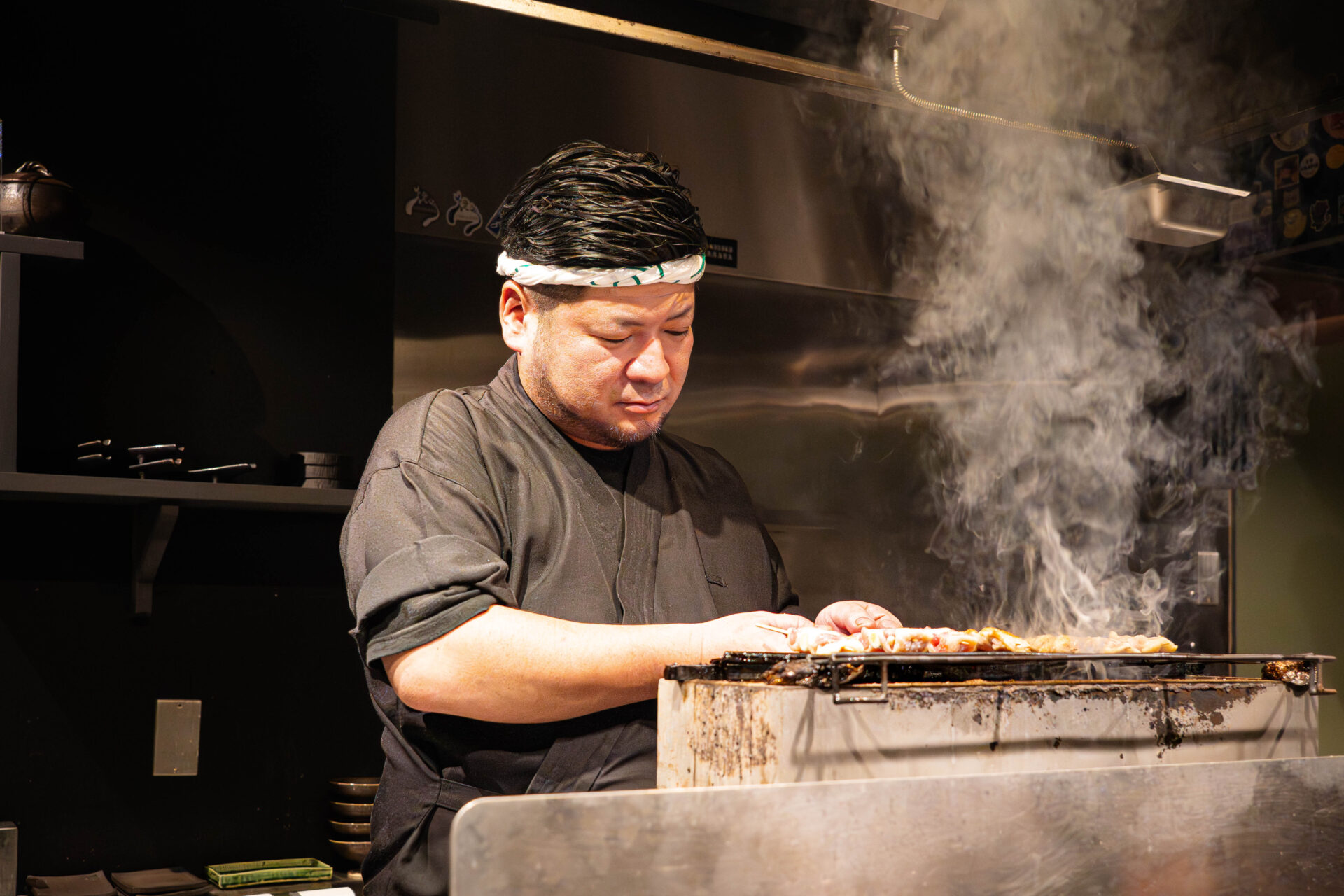
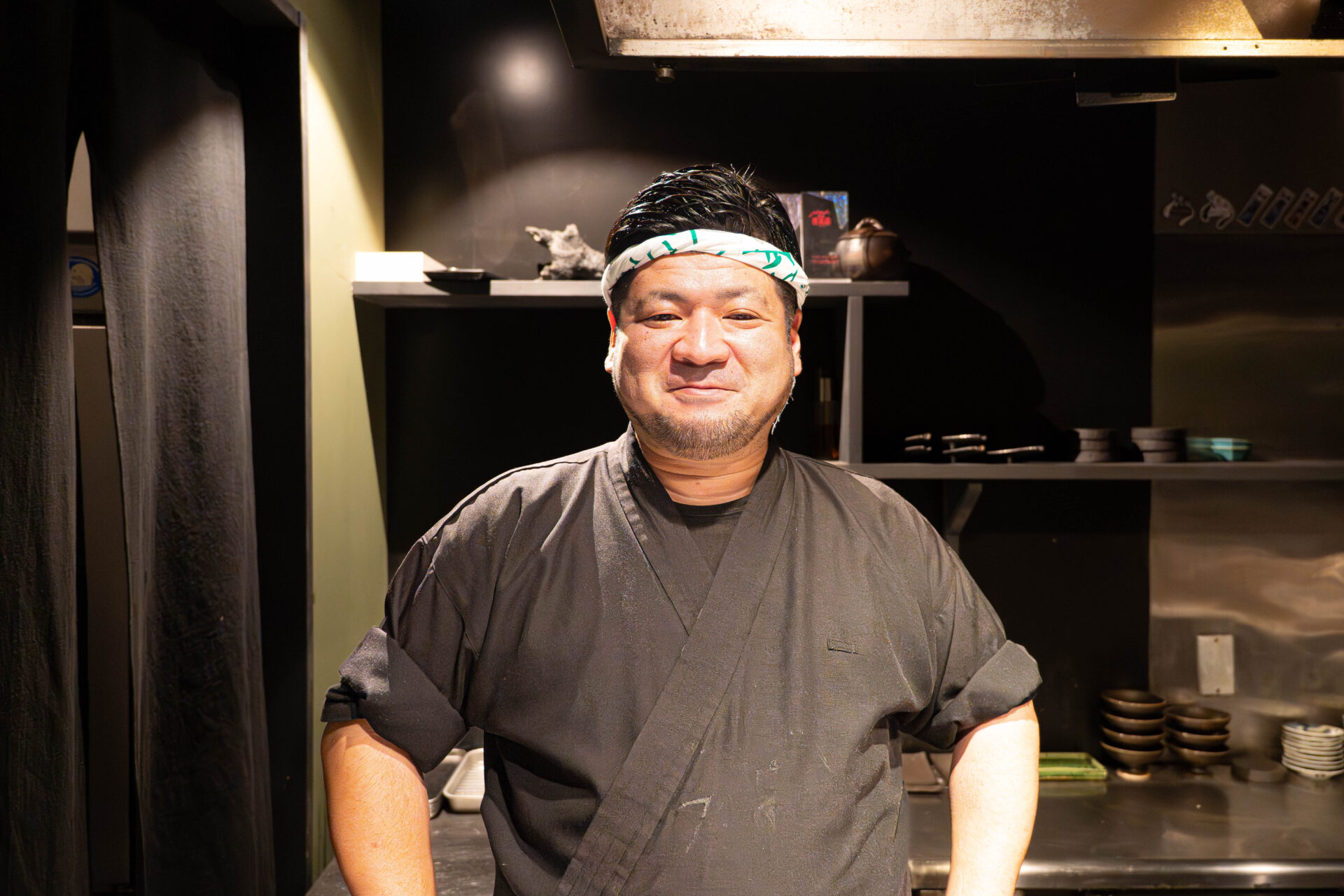
Mikuriya is run by the man known simply as “Gori-san.” Originally a chef working in Italian and creative Japanese kitchens, he encountered the depth of yakitori at some point and decided to commit to it fully. Facing charcoal and fire day after day, he’s grown so absorbed in the craft that he now says, “I feel like I live because of yakitori.”
His approach at the grill is unfailingly straightforward, with nothing extraneous about it. Reading the charcoal’s condition daily, fine-tuning the timing of each flip and the distance from the heat, he’s built up experience to the point where he estimates he’s grilled “a good million skewers, easily.” He’s particular about serving timing above all — hoping guests will eat as quickly as possible so the peak moment isn’t lost.
He comes across less as approachable than as intensely focused and direct about his craft — a true artisan chasing, day after day, just how much value a single skewer can hold.
Recognition & Critical Reputation
Sumisho Mikuriya has earned recognition for its high level of specialization even within the yakitori genre, appearing every year on Tabelog’s “Top 100 Yakitori” list. It’s held that spot consecutively since 2022, and was also included in the “WEST Top 100” for 2024 and 2025 — a genuinely established name among Kansai’s yakitori restaurants.
Reviews consistently circle back to one thing: the fire. Many describe it as “a restaurant that lets you taste the single most delicious moment,” praising the precision of the cook and the discipline of serving each skewer without letting that peak slip away. The practice of grilling certain cuts unskewered, tailored to the ingredient, also stands out to reviewers, and it’s not uncommon to see scores in the high 4-point range.
At the same time, because the restaurant places such weight on the exact moment food comes off the grill, guests need to be mindful about the timing of photos and conversation — “eat it the second it arrives” is an unspoken but shared expectation. Many reviewers frame even that tension as part of “the point of eating here,” with the appeal reportedly growing the more one becomes a regular.
On the whole, what comes through clearly from both its accolades and its reviews is a restaurant that refuses to treat yakitori as casual fare, instead making each skewer stand fully on its own as a dish.

Dining Prelude
Exterior & Entrance
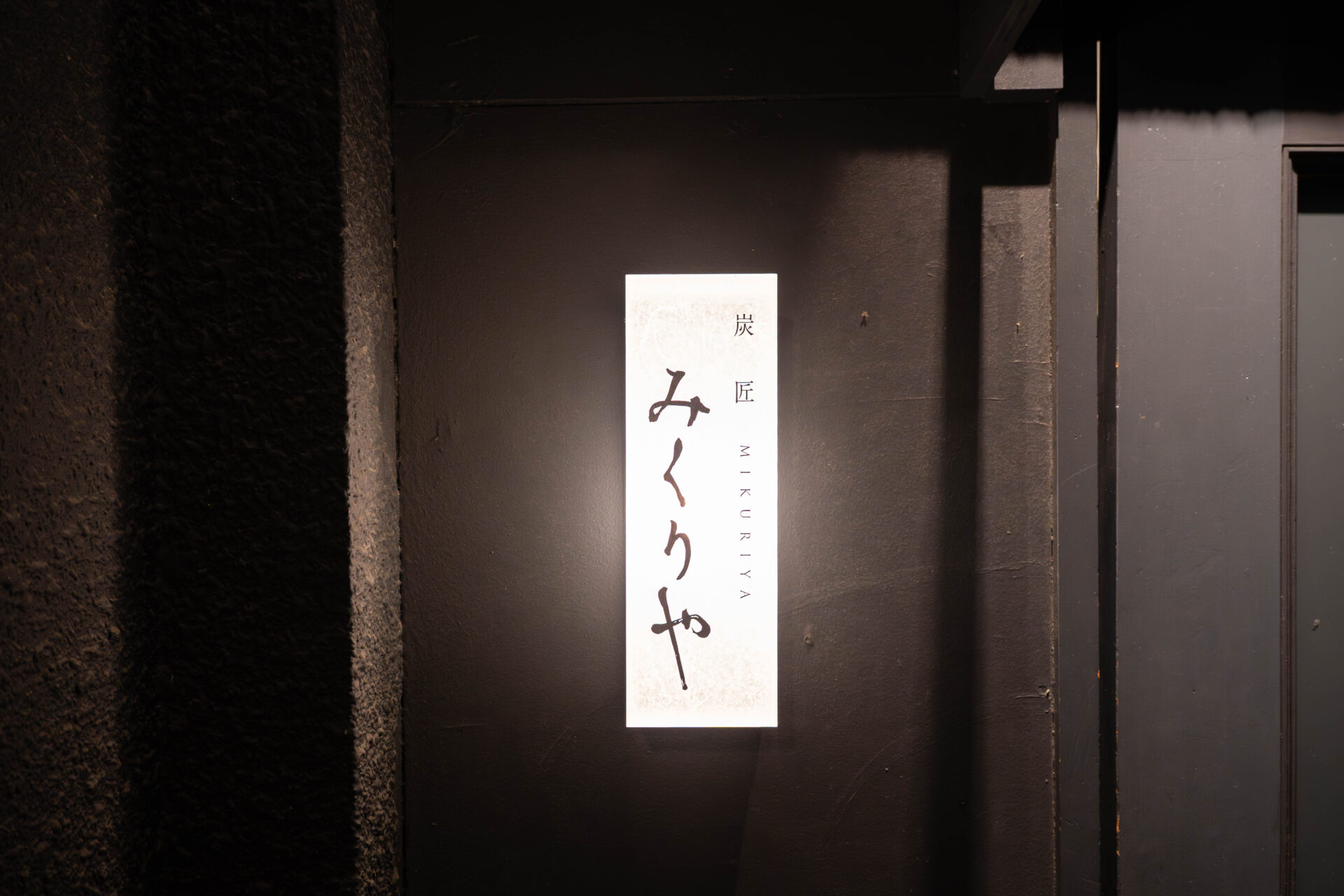
Blending quietly into a narrow street in Nishitenma, the black-toned exterior gives almost nothing away. There’s barely any light out front — the only clue is a small sign set into the wall, its plate reading “Sumisho Mikuriya” in soft lettering on white, glowing faintly in the dark.
The sliding door carries the same restraint, with no decoration beyond the sign’s quiet glow framing the space. It’s understated enough to walk right past, but that very simplicity seems to say something about the restaurant’s whole approach. Standing outside, there’s already a sense that the air itself might shift the moment you step through.
The Dining Space
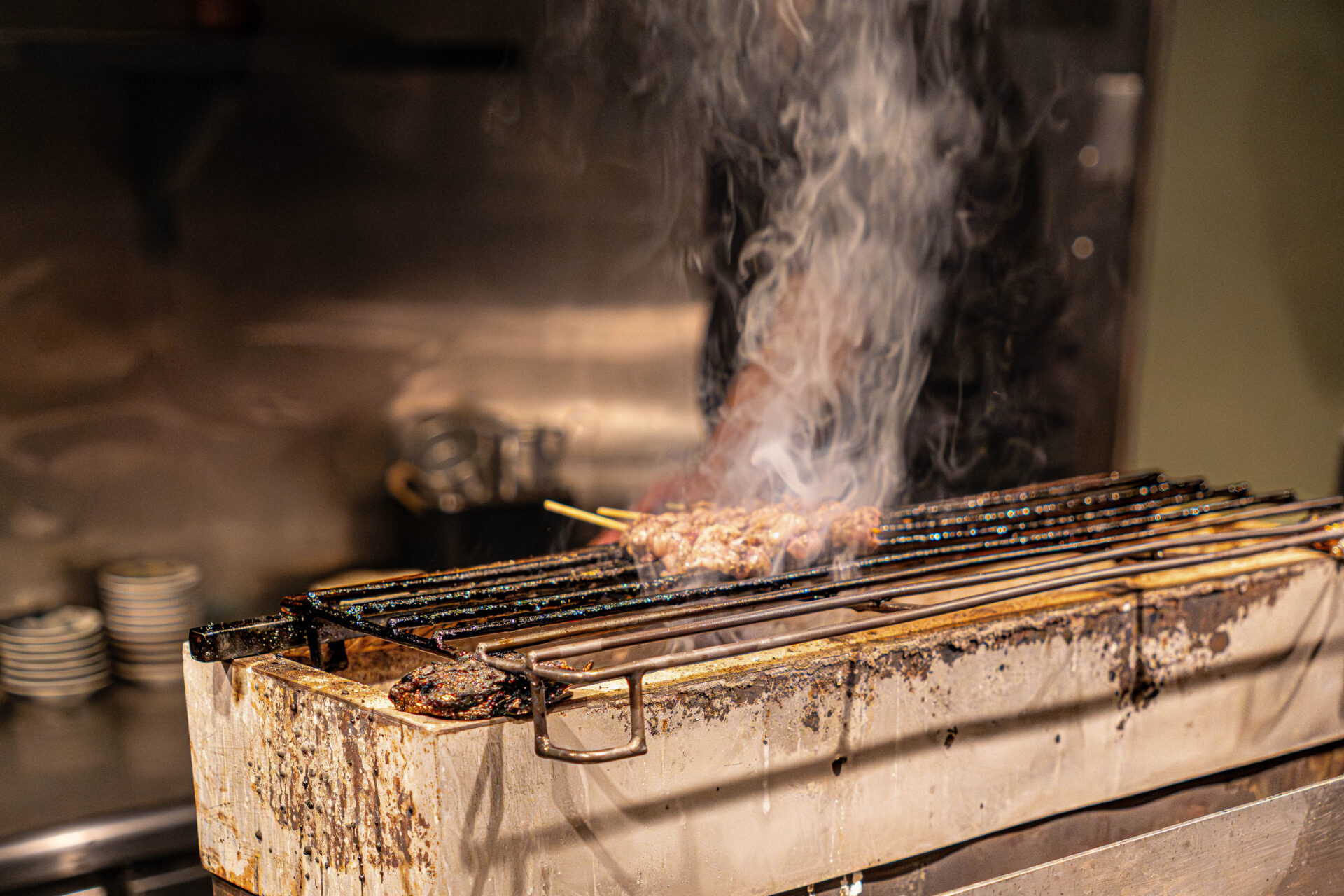
Inside, seating is limited to a counter for around ten guests. Walk further in and the grill station comes into view almost immediately, the chef’s every movement visible from the seats. The distance to the counter is close enough to feel the heat of the charcoal and hear the fat dripping down. The space itself isn’t large, but that closeness only sharpens the sense of focus and tension around the fire.
Decoration is minimal, lighting kept deliberately low — designed so soft light falls only on the chef’s hands and the grill, drawing the eye naturally to each skewer. Seats aren’t packed too tightly either; there’s an awareness of neighboring guests without any sense of noise or crowding.
The restrictions around photography and conversation timing make complete sense given this setting. The sound and heat of the fire dominate the room, pulling full attention to the shift in temperature the instant a dish lands on the counter. It feels less like “a place to eat yakitori” and more like sitting in on the process of finishing a single skewer.
Menu Presentation
The foundation at Sumisho Mikuriya is an omakase course. It runs through two small dishes, seven skewers, two grilled vegetables, a palate cleanser, and a closing course — a genuinely paced dining experience, even for a yakitori specialist, rather than simply “skewers and done.”
The course opens with lighter dishes before settling into the skewers themselves. Grilling methods shift by cut, and each is timed and served individually, so the real pleasure lies in receiving that heat and fragrance the moment it’s set down. Grilled vegetables are woven in along the way to balance the meal’s weight, closing finally with a rice-based dish.
Additional orders are also welcome alongside the course — more skewers, small dishes, grilled vegetables, or rice dishes like oyakodon or kamameshi, whatever a guest wants a little more of. Even within a style built around precise serving timing, there’s real flexibility to shape the meal to one’s own satisfaction.
The Tasting
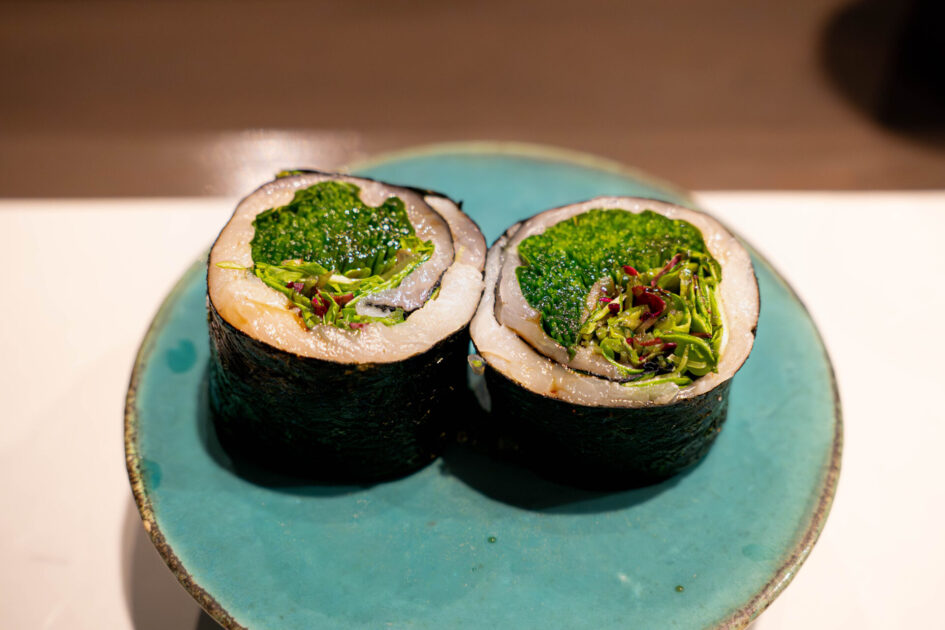
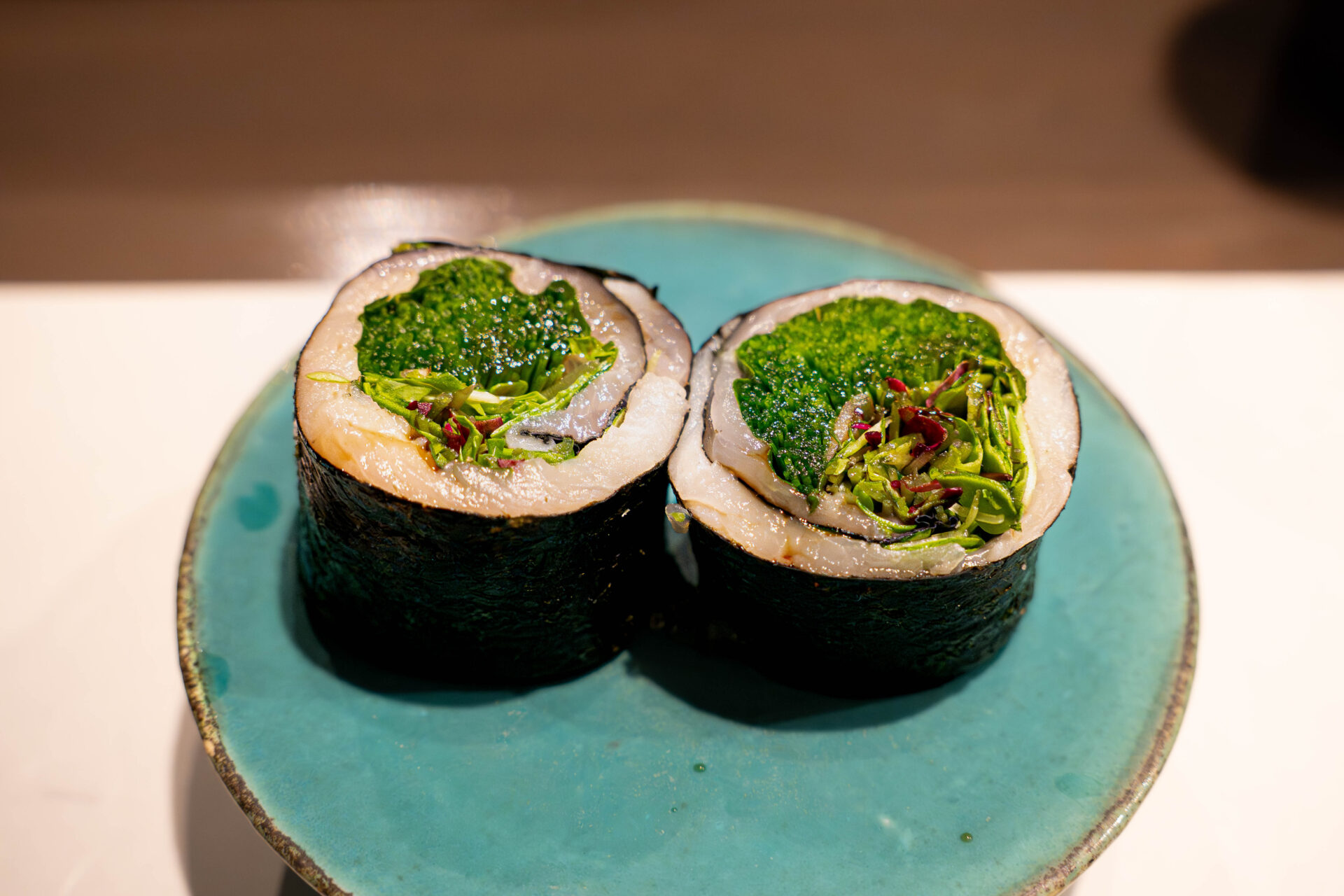
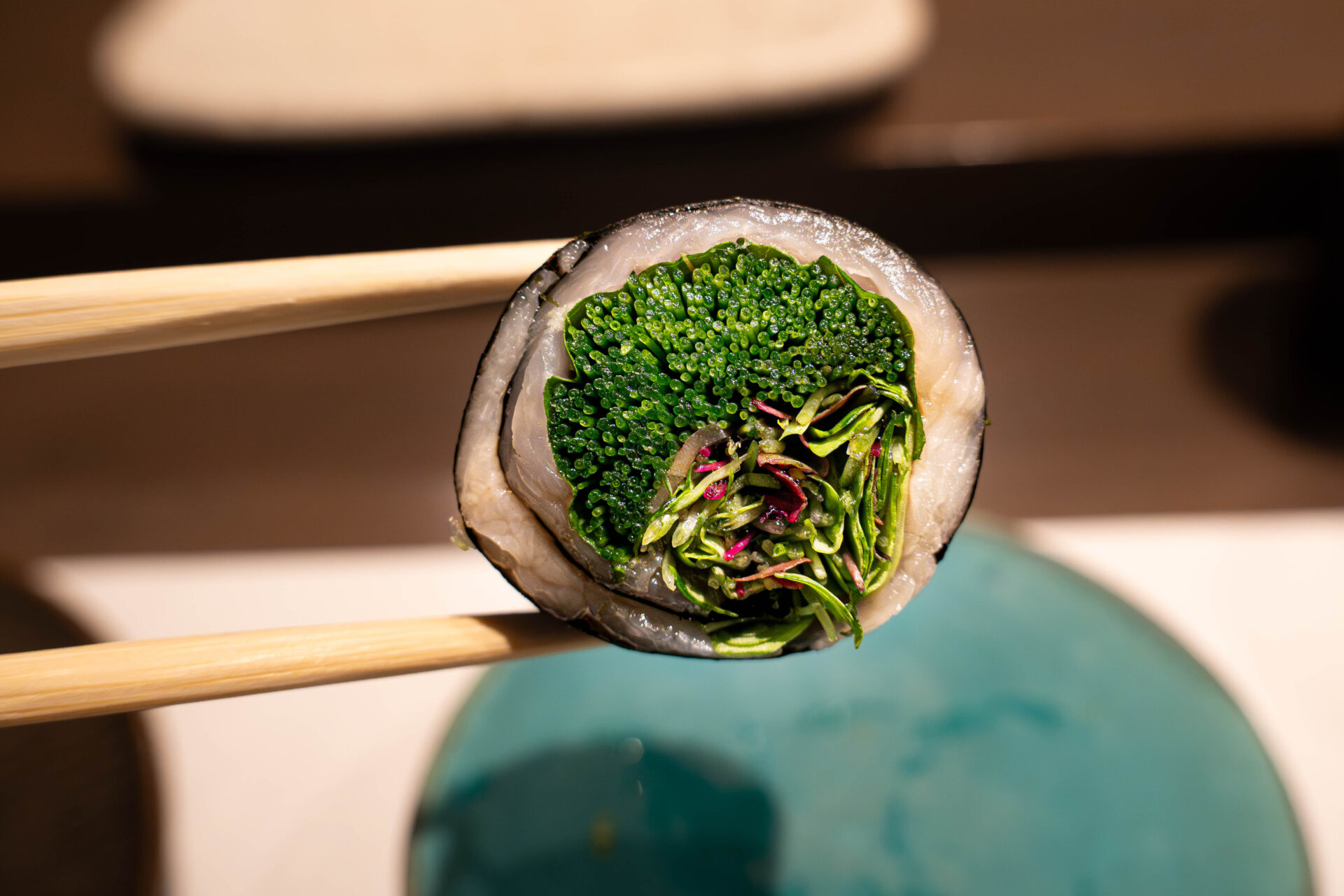
Vinegar-Cured Chicken Breast and Baby Scallion Roll
The first course to arrive: chicken breast lightly cured in vinegar, wrapped around a core of baby scallion, held together with nori on the outside. Visually, it looks almost like a thin sushi roll, but the flavor tells an entirely different story.
The breast is cooked to the narrowest possible margin, tender throughout, with the vinegar’s acidity kept well in check. The baby scallion at the center offers a crisp bite and a fragrance that blooms gently outward. Before the skewers even begin, this dish signals the freshness of the ingredients and the care behind their preparation — evidence, right from the start, that this is far more than just a grilling operation.
Shikano Jidori White Liver Sashimi
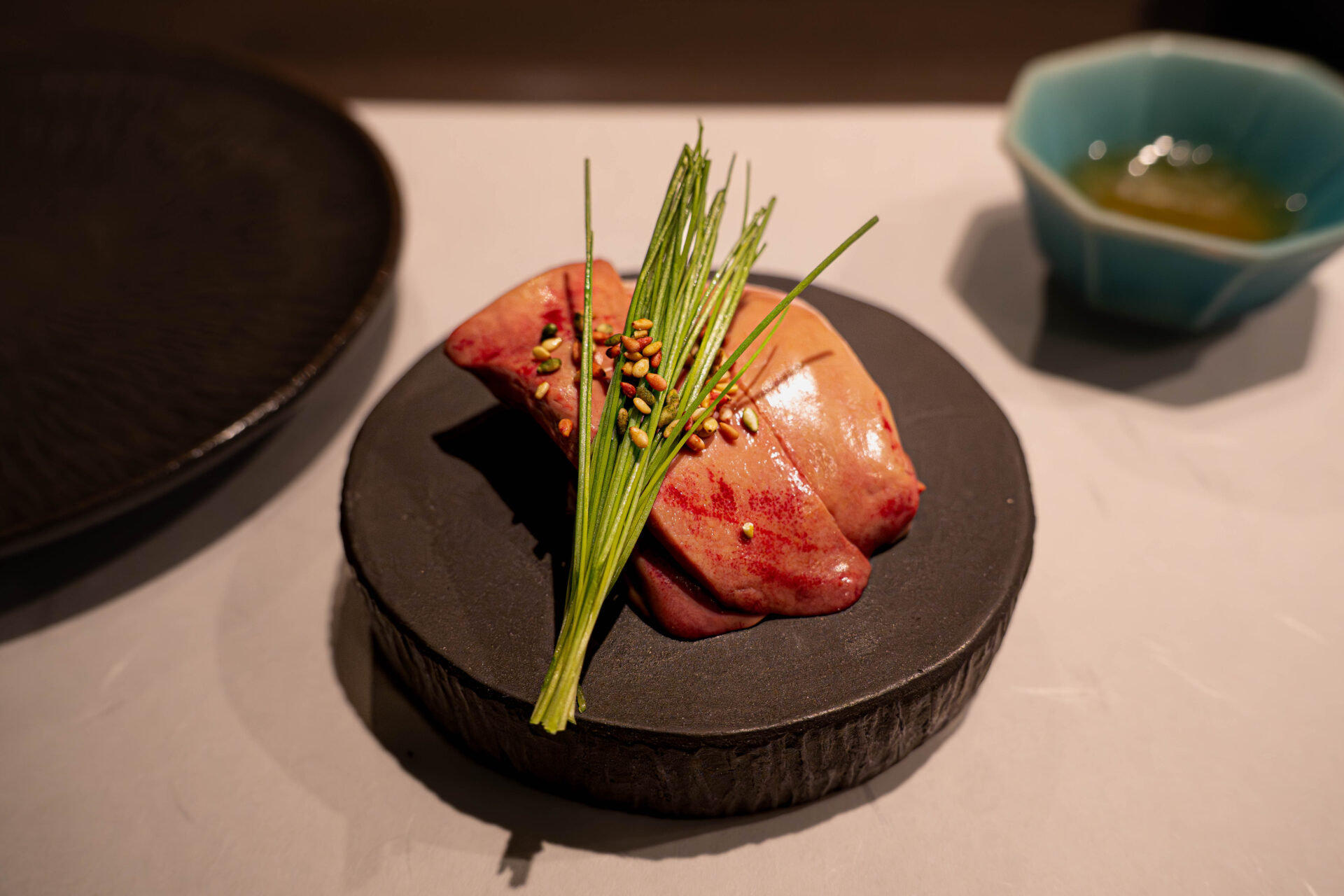
Beyond the set course, the restaurant keeps a separate menu for additional orders. Alongside skewers and grilled vegetables, it lists sashimi that appears only on days when the quality is right — anything on it can be added freely.
That day came word that white liver was available, and I didn’t hesitate. It comes from Tottori’s Shikano jidori chicken. Set on the plate, its pale color and sheen made the quality immediately obvious. Sesame oil and salt are served separately, letting guests adjust as they go — plain first, then with a touch of oil.
The texture was remarkably soft, free of any off-notes, with a light umami that lingers gently. This is a dish defined more by cleanliness than intensity, showing off the ingredient’s true character before the fire even enters the picture.
Shikano Jidori Tataki (Yodare Chicken Style)
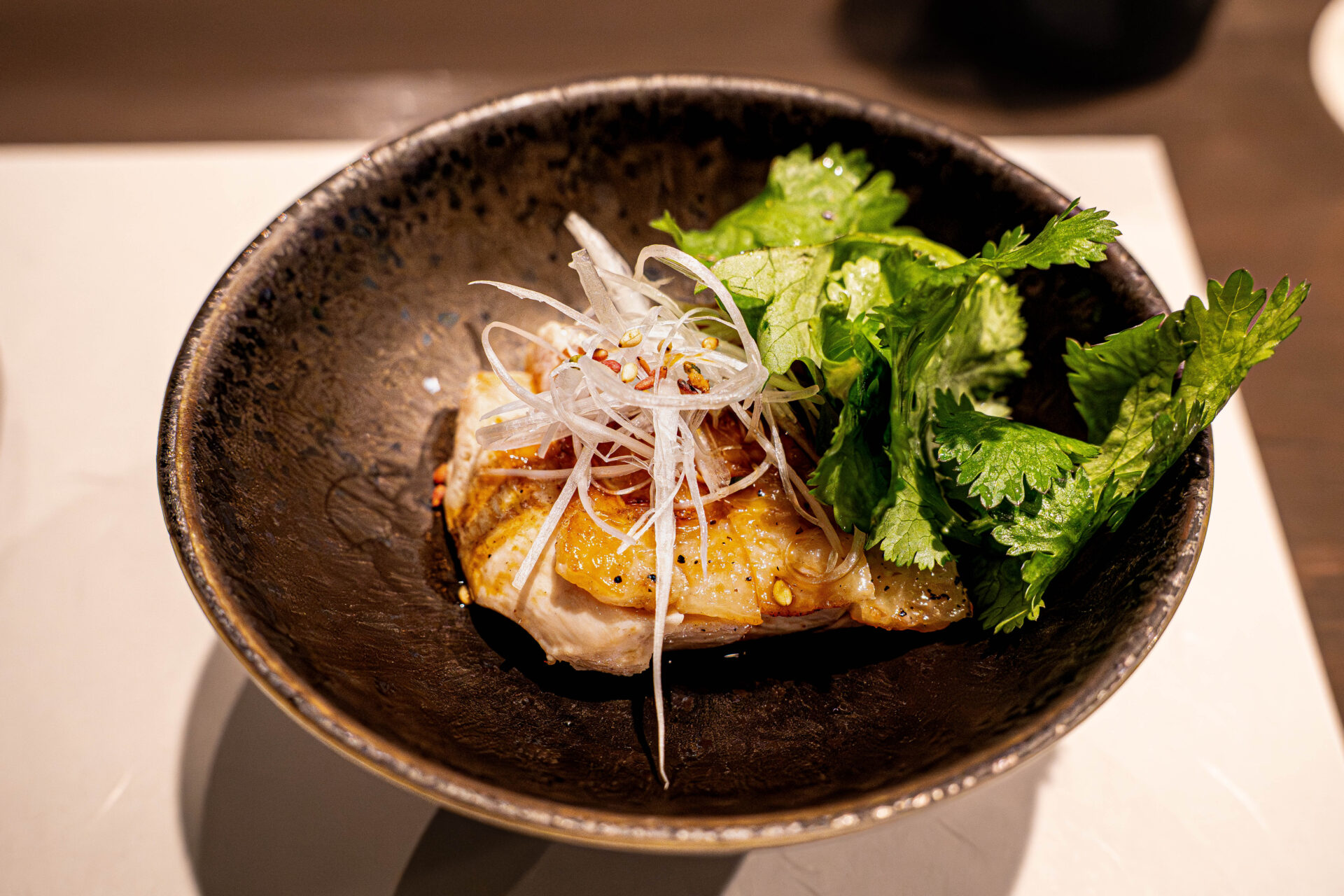
Another addition from the extra-order menu. Every jidori used at Mikuriya comes from Tottori’s Shikano jidori, and this tataki uses the same breast meat.
The lightly seared meat is moist and substantial, its jidori character coming through cleanly with every bite. A spicy sauce reminiscent of yodare-dori (a Sichuan-style chili chicken dish) is drizzled on top, restrained enough to stay behind the meat’s own flavor, contributing just a hint of aroma and acidity. Julienned scallion and cilantro layer in further, leaving the lingering fragrance more memorable than any heat.
Before the skewers themselves begin, this dish makes the quality of the Shikano jidori unmistakably clear.
Opening Skewers: Seseri (Neck Meat) and Hatsu (Heart)
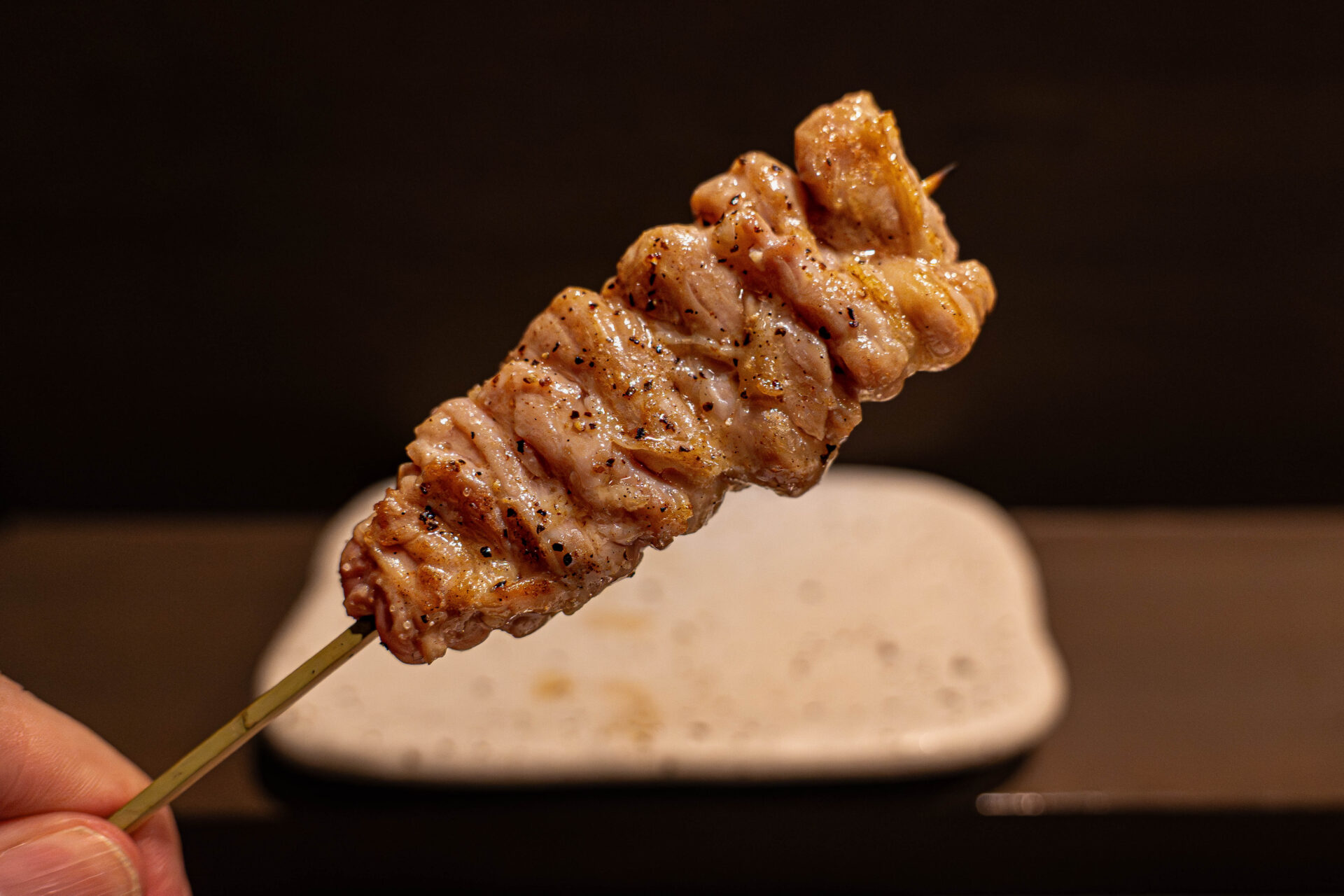
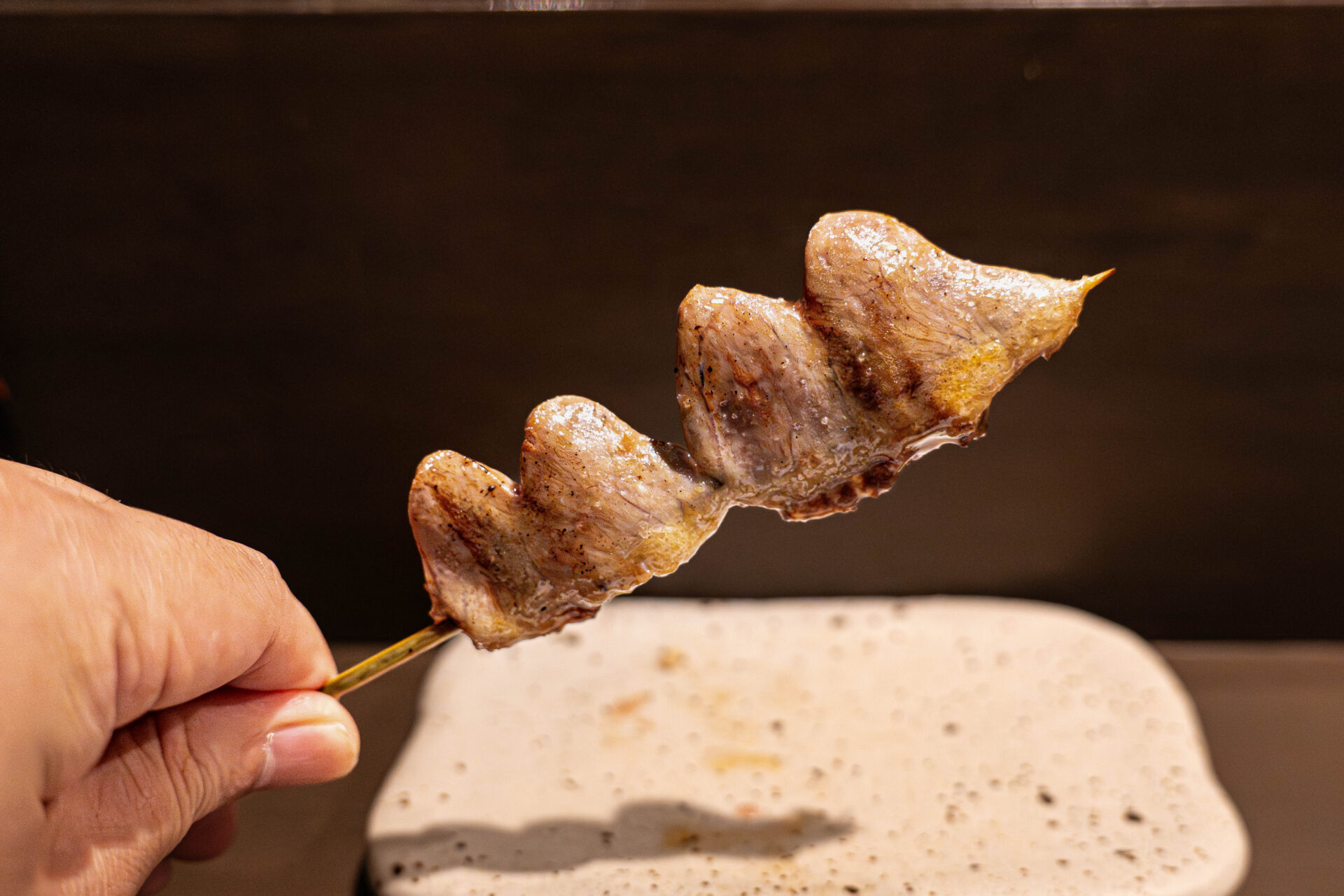
The first two skewers: seseri (neck meat) and hatsu (heart). At Mikuriya, the belief is that a skewer’s “best moment” lasts only a few seconds off the grill, so the assumption is that guests eat immediately upon being served.
The chef notes that these first two skewers use broiler chicken deliberately — a milder, less assertive meat than jidori, chosen specifically so the effect of the cooking itself comes through more clearly. It ties directly into the restaurant’s philosophy of building a yakitori course that never wears the palate down.
The seseri comes tightly seared on the outside while staying tender within, its fibers pulling apart with each bite. The hatsu that follows carries a springy bite and a fragrant char, giving a small pop with every bite. These two skewers feel designed less to showcase the ingredient itself than to introduce the restaurant’s approach to charcoal and heat.
Zuri (Gizzard)
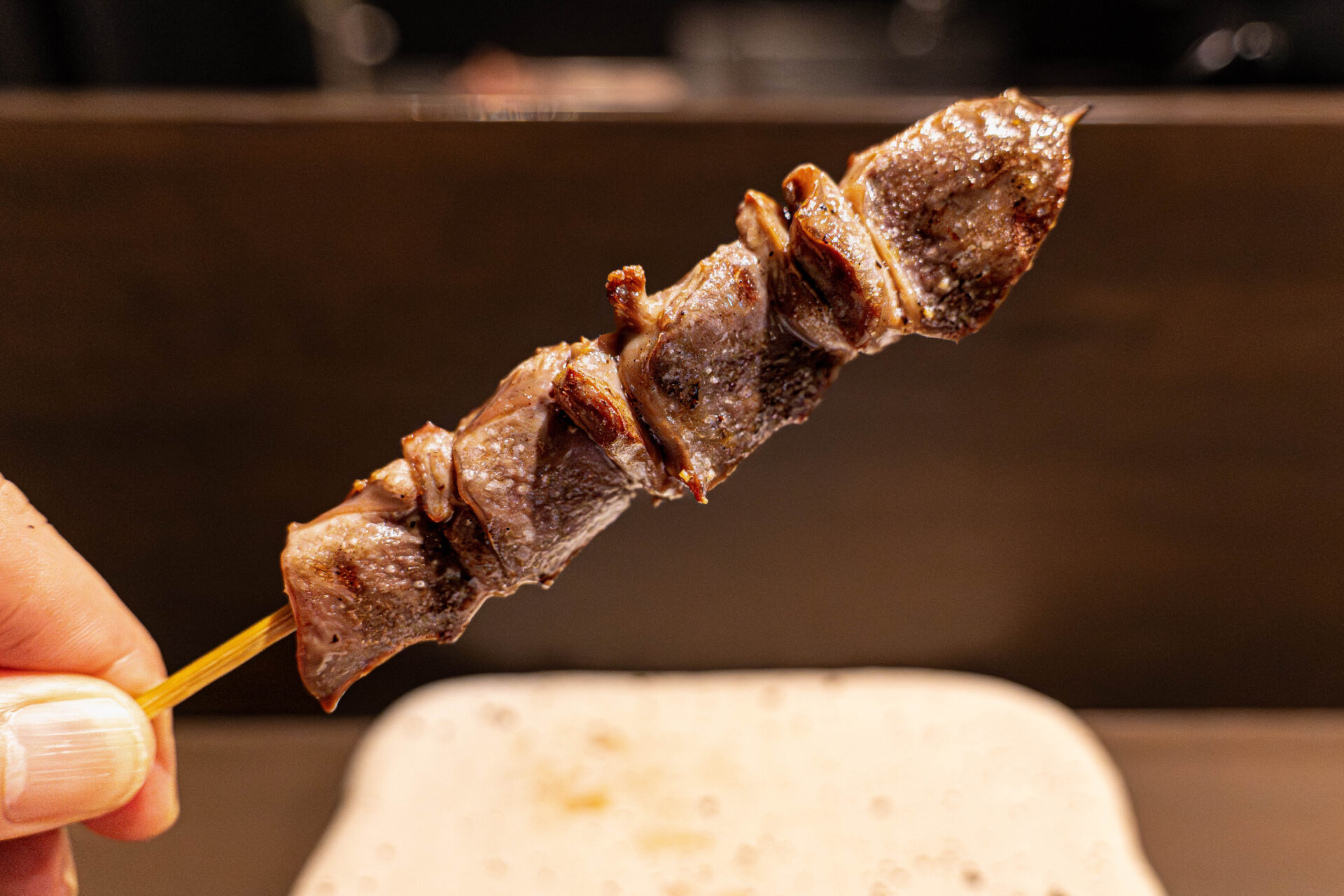
Next, gizzard from the Shikano jidori. There’s no special blood-draining process used here, yet there’s no trace of off-flavor whatsoever. It’s far more tender than it looks, cooked to leave just enough bite.
The first bite offers a satisfying crunch at the core, followed quickly by a gentle give. Rather than leaning on sheer firmness, the dish lets the gizzard’s natural fragrance and its clean, low-fat umami come through directly — a skewer that shows a real balance between the ingredient’s own quality and the way the charcoal is applied.
Toukuro Ginkgo Nuts
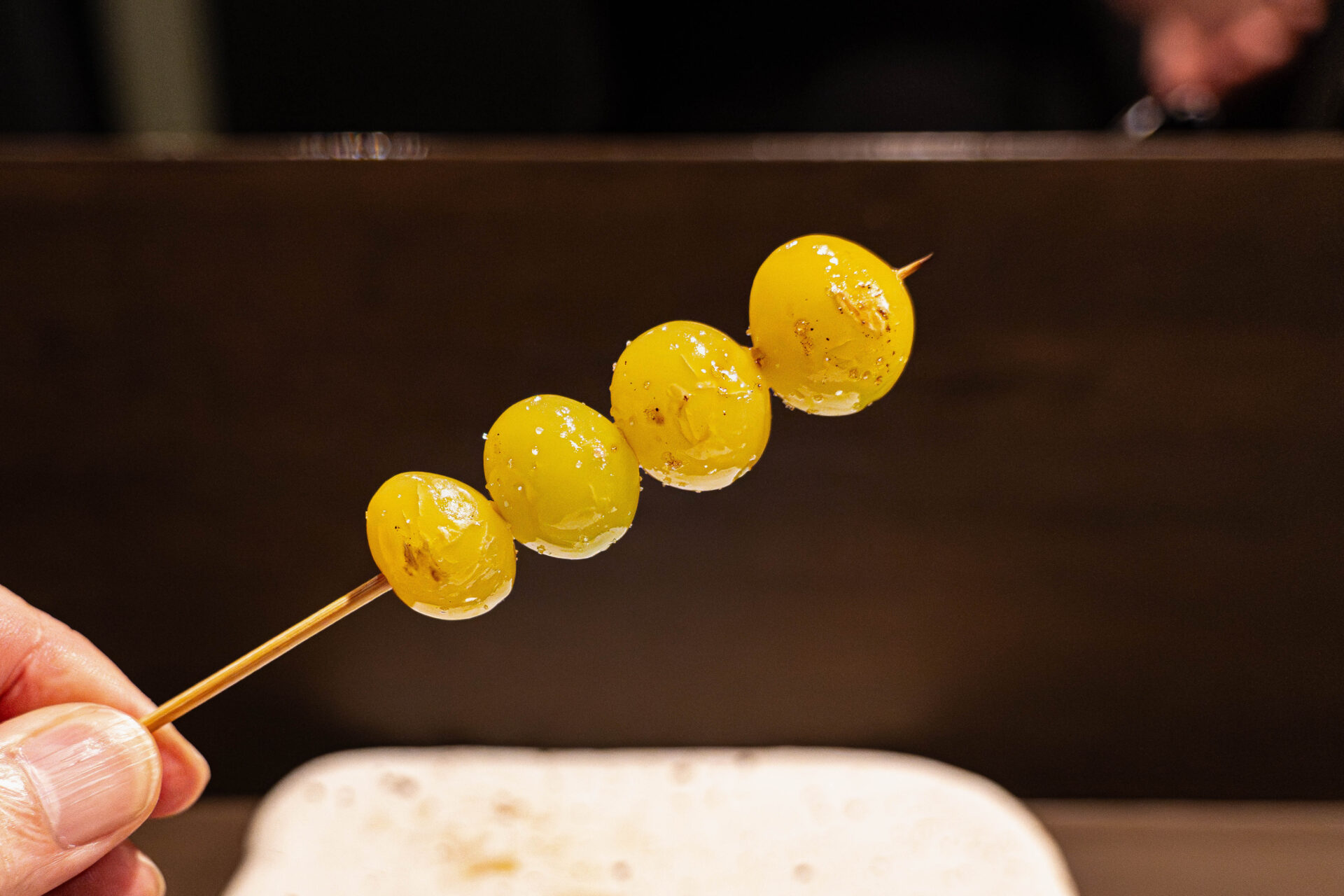
A skewer of toukuro ginkgo nuts follows, served fresh off the grill with the suggestion to “take your time, they’re hot” as a between-course bite.
Biting in brings the ginkgo’s characteristic bitterness first, followed by a soft sweetness that lingers — the flavor holding up perfectly with nothing but salt. A quiet, grounding moment built into the flow of skewers.
Sori-les (Sukoyaka Chicken, Hyogo)
A skewer of sori-les follows — the one cut here not sourced from Shikano jidori, but from Sukoyaka chicken, a branded breed from Hyogo. Cooking renders the fat gently, leaving the surface fragrant and the interior moist with a satisfying spring.
The umami builds the more you chew, carrying a power distinct from jidori’s own character. The fat’s sweetness and the meat’s real thickness sit together in good balance — a skewer with genuine presence in the lineup.
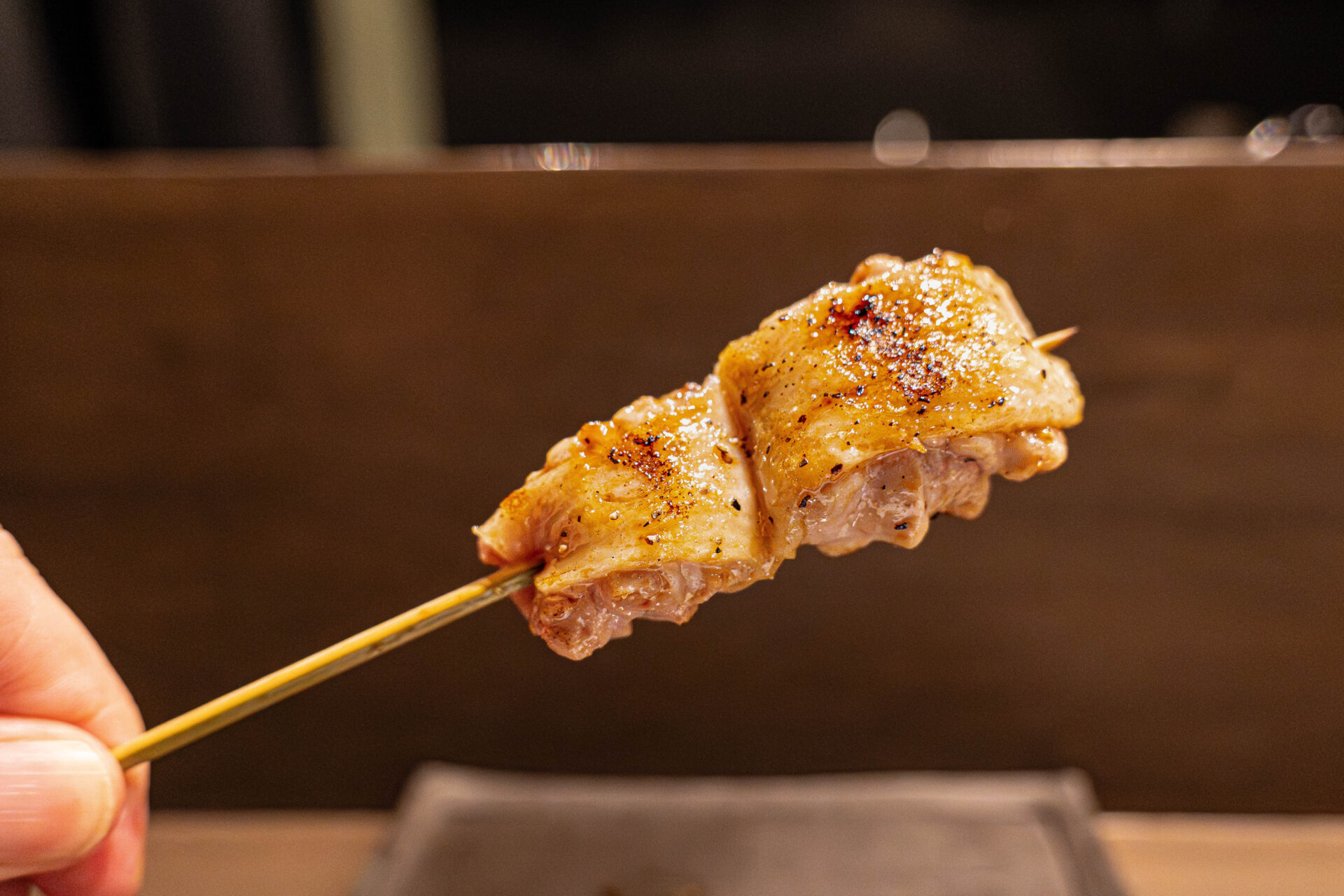
Segimo (Back Liver)
Next comes Shikano jidori segimo (a liver cut from along the backbone). The surface carries a light char while the interior keeps a smooth, well-judged texture. The liver’s richness comes through clearly without ever feeling heavy, unwinding slowly in the mouth.
The char’s fragrance meets the segimo’s distinctly smooth umami, the temperature shifting noticeably across a single skewer. Of everything served so far, this one stood out most for its command of the fire.
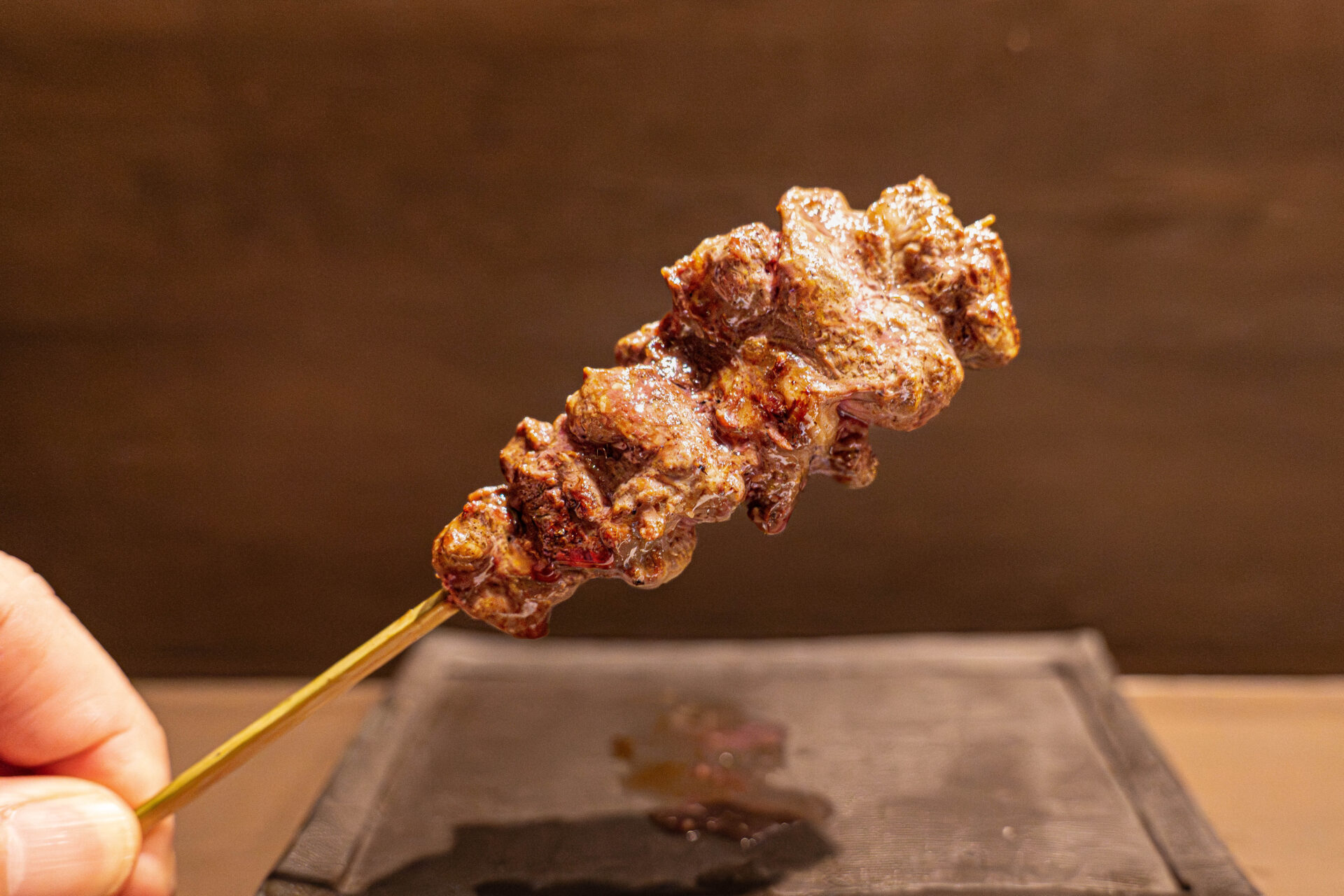
Shikano Jidori Seseri “Peking Duck” Style
The rhythm shifts slightly here, as a hand-passed “Peking duck”-style preparation using seseri arrives. Shikano jidori seseri, grilled fragrantly over charcoal, wrapped in a thin pancake alongside aromatic vegetables. The moment it’s handed over, the smoke and sweet richness of the fat rise up immediately.
The first bite brings seseri’s distinctive springy texture, followed by the pancake’s own char and the sauce’s sweetness layering in. Bitter greens add a bright accent, and wrapping it this way keeps the seseri’s fat from ever feeling heavy.
It shows off the Shikano jidori’s quality from an entirely different angle than the skewers, with a genuine touch of playfulness in the composition.
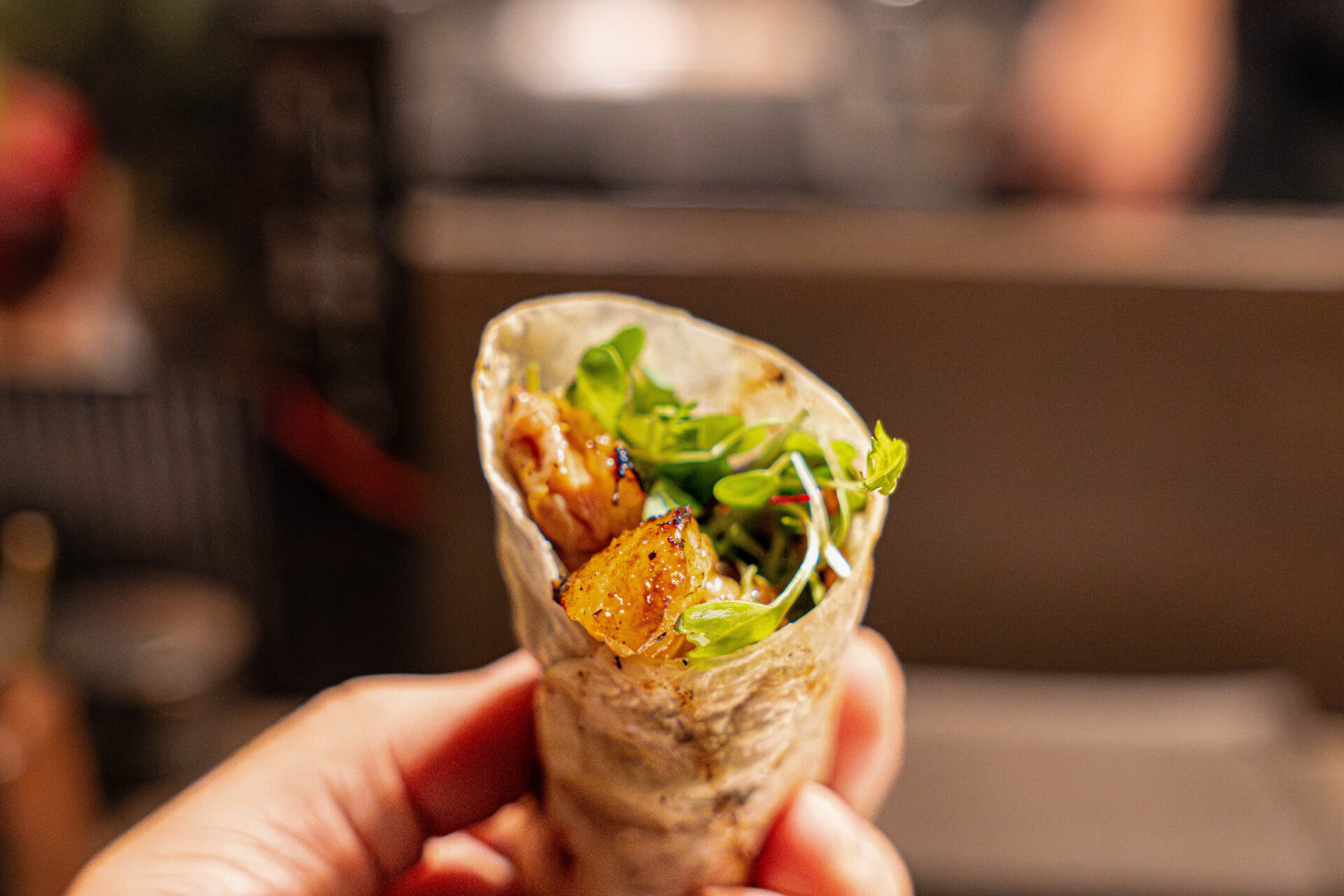
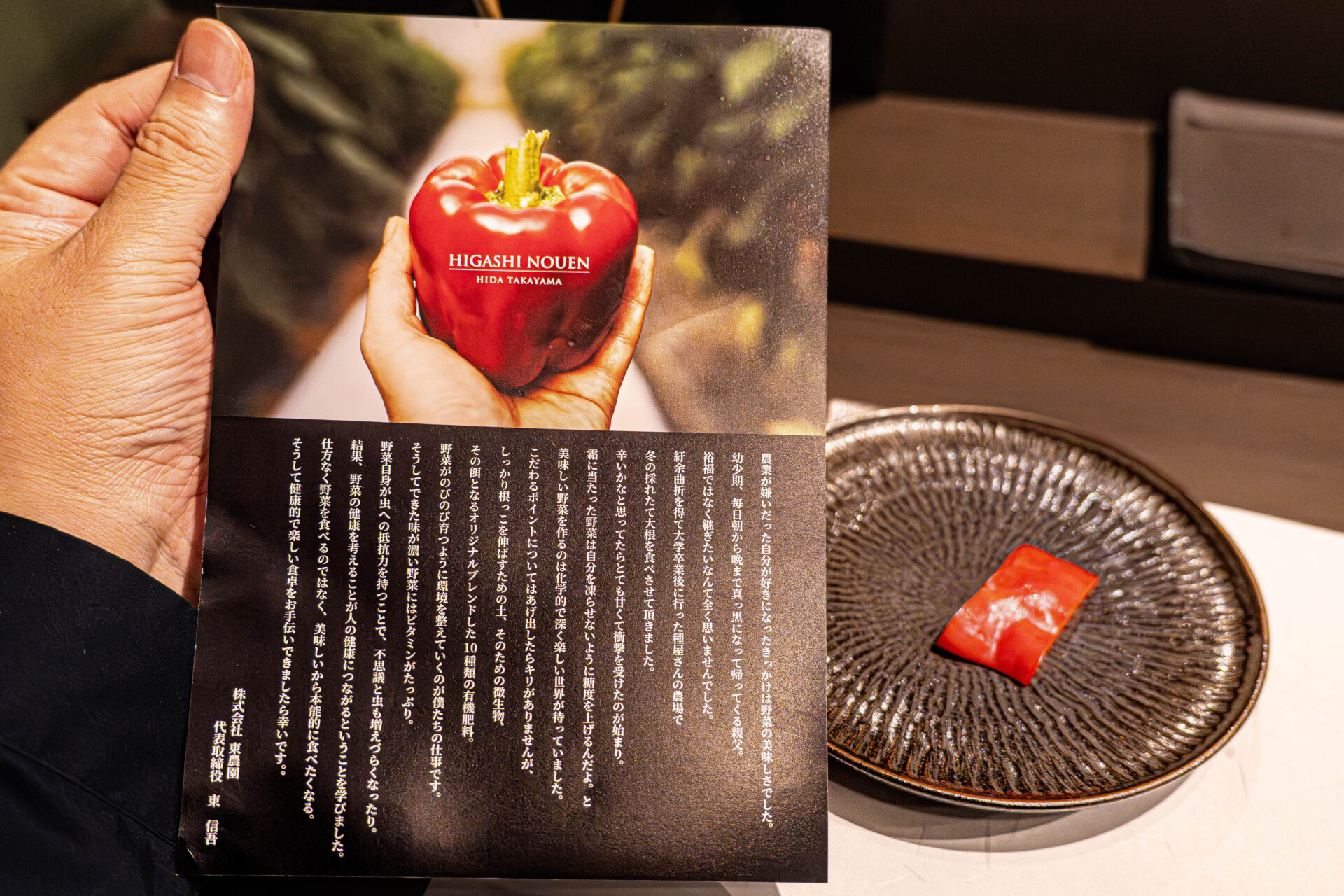
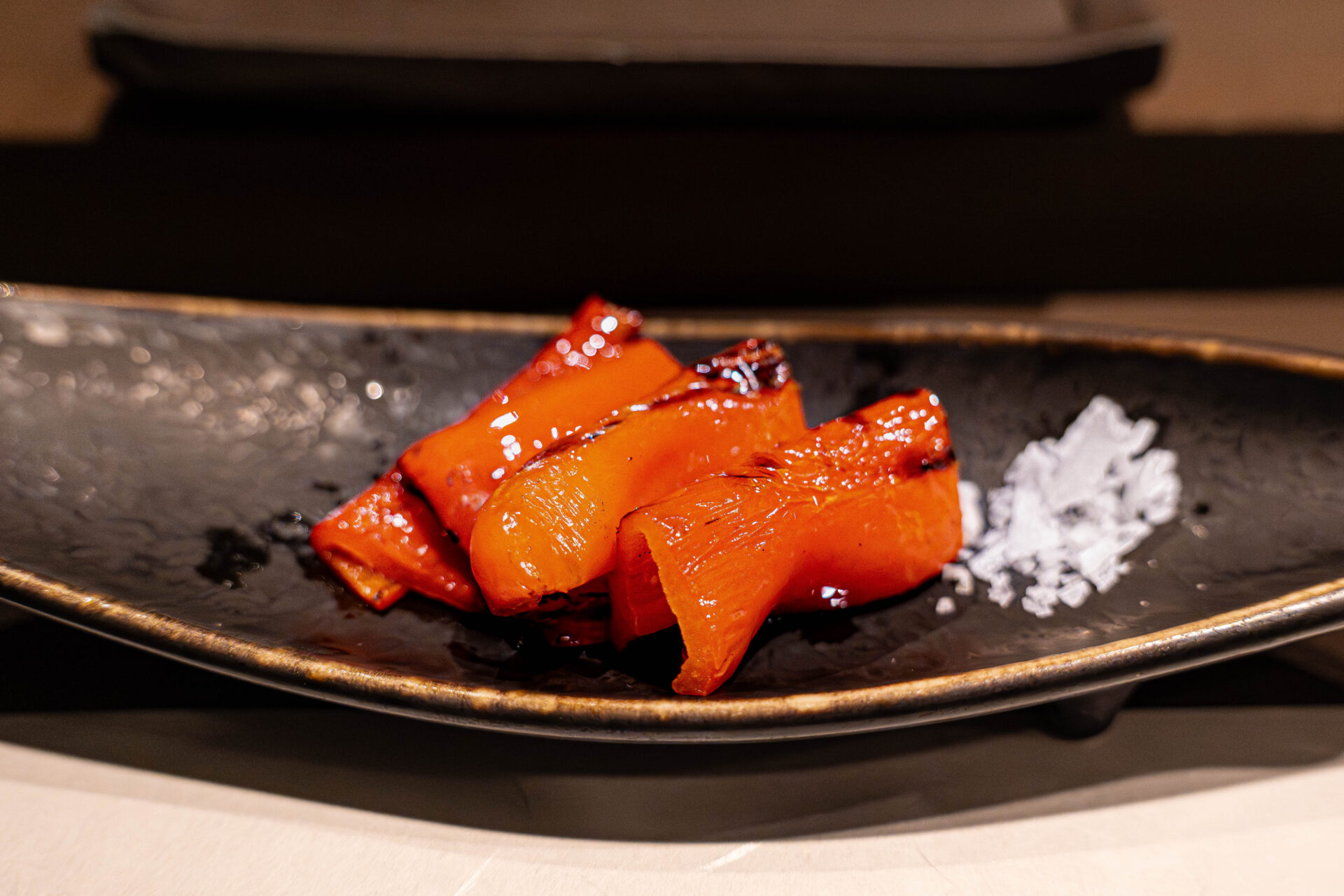
Paprika from Higashi Farm (Hida Takayama): Raw → Grilled
Paprika sourced from Higashi Farm in Hida Takayama, served first raw, one slice. Biting in, the juice seems to burst outright, with almost no green bitterness and a sweetness that lands cleanly on the tongue. That first bite alone was enough to reconsider what paprika is supposed to taste like.
The same paprika, grilled, follows next. The heat brings the acidity forward, and the texture becomes remarkably smooth. A char and a gentle, rounded sweetness come together, resulting in something entirely different from the raw version — good with a touch of salt, or perfectly fine on its own.
A genuinely memorable dish, showing the ingredient’s own quality from two completely different angles.
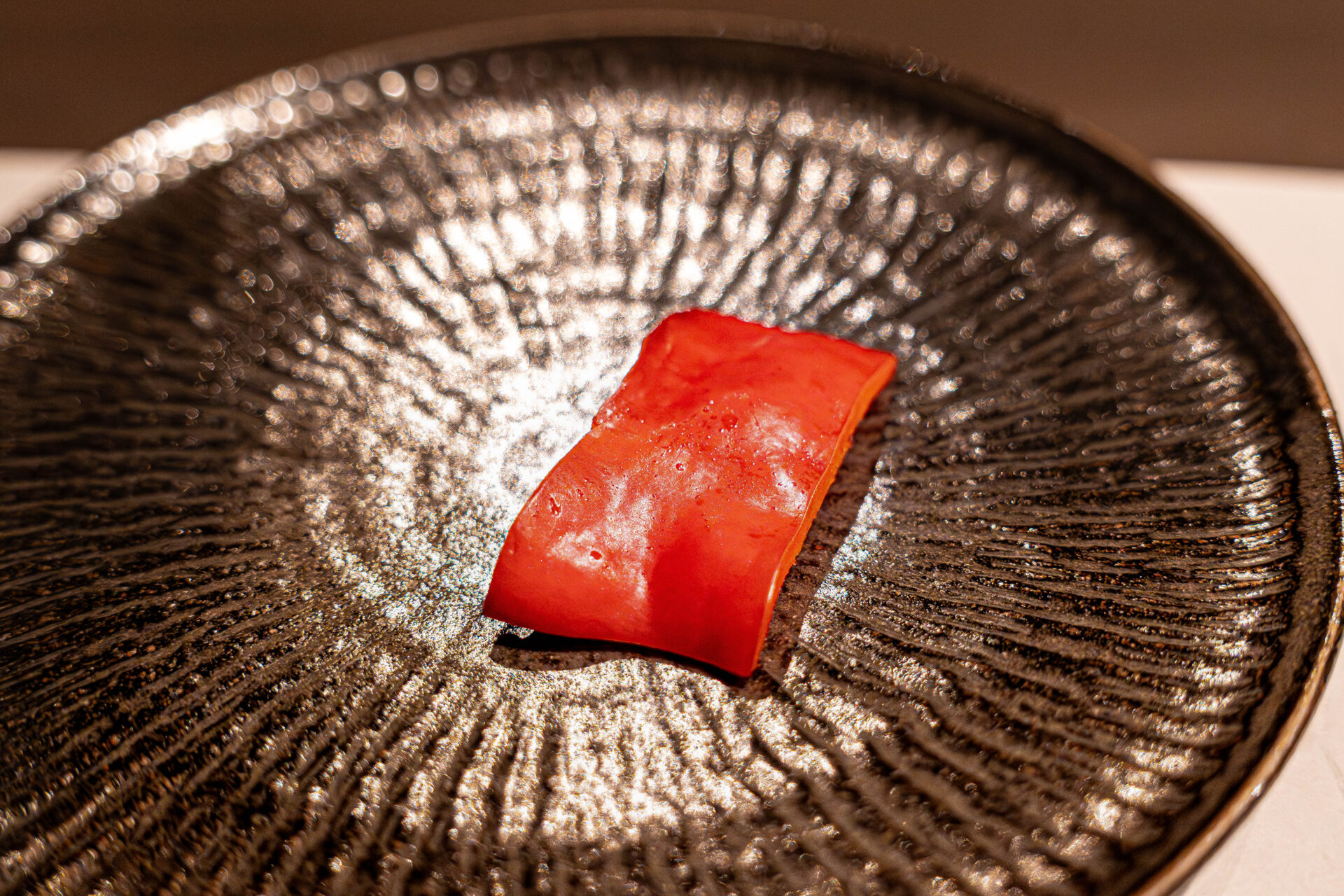
Teba Negi (Chicken Wing with Scallion, Kanzuri)
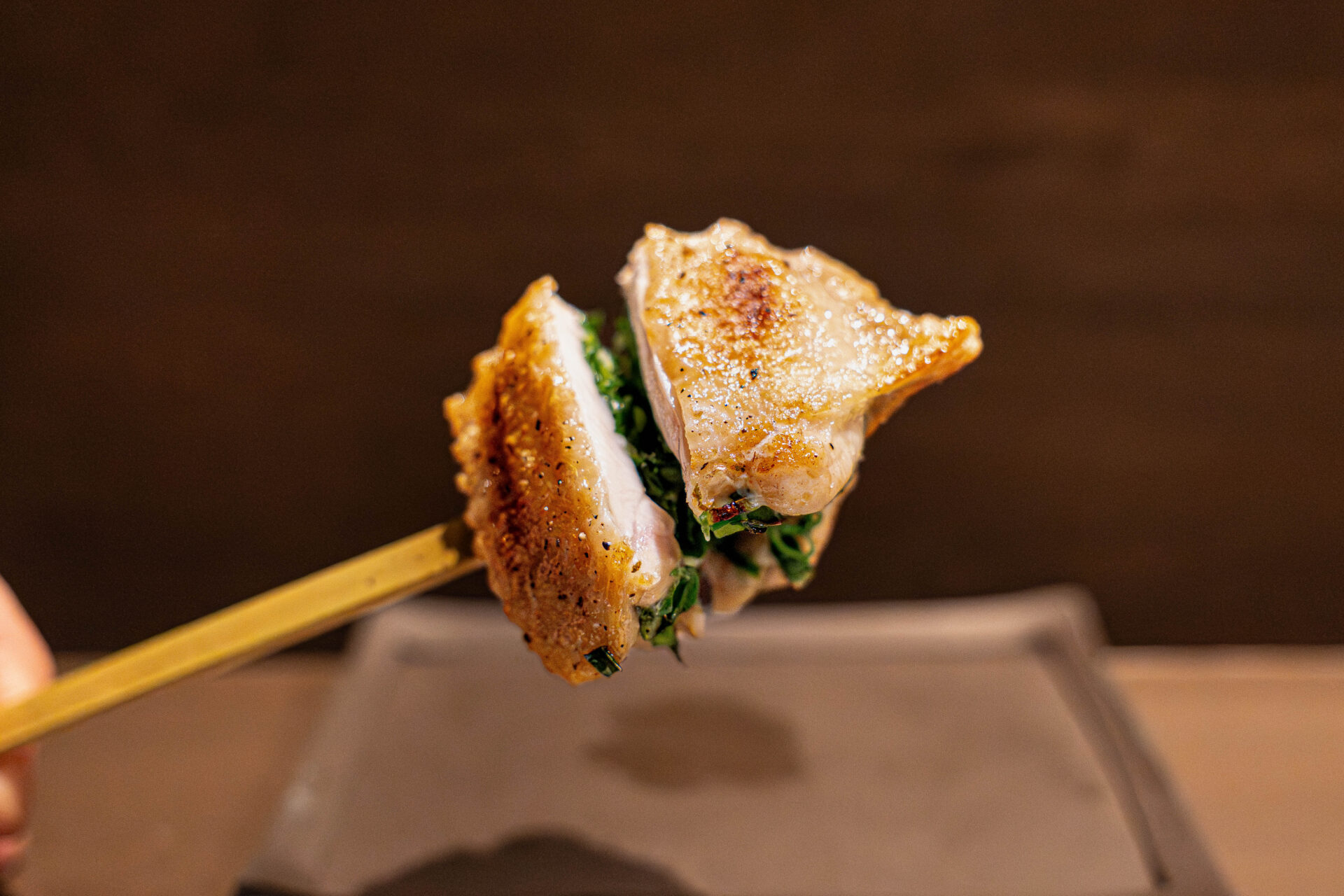
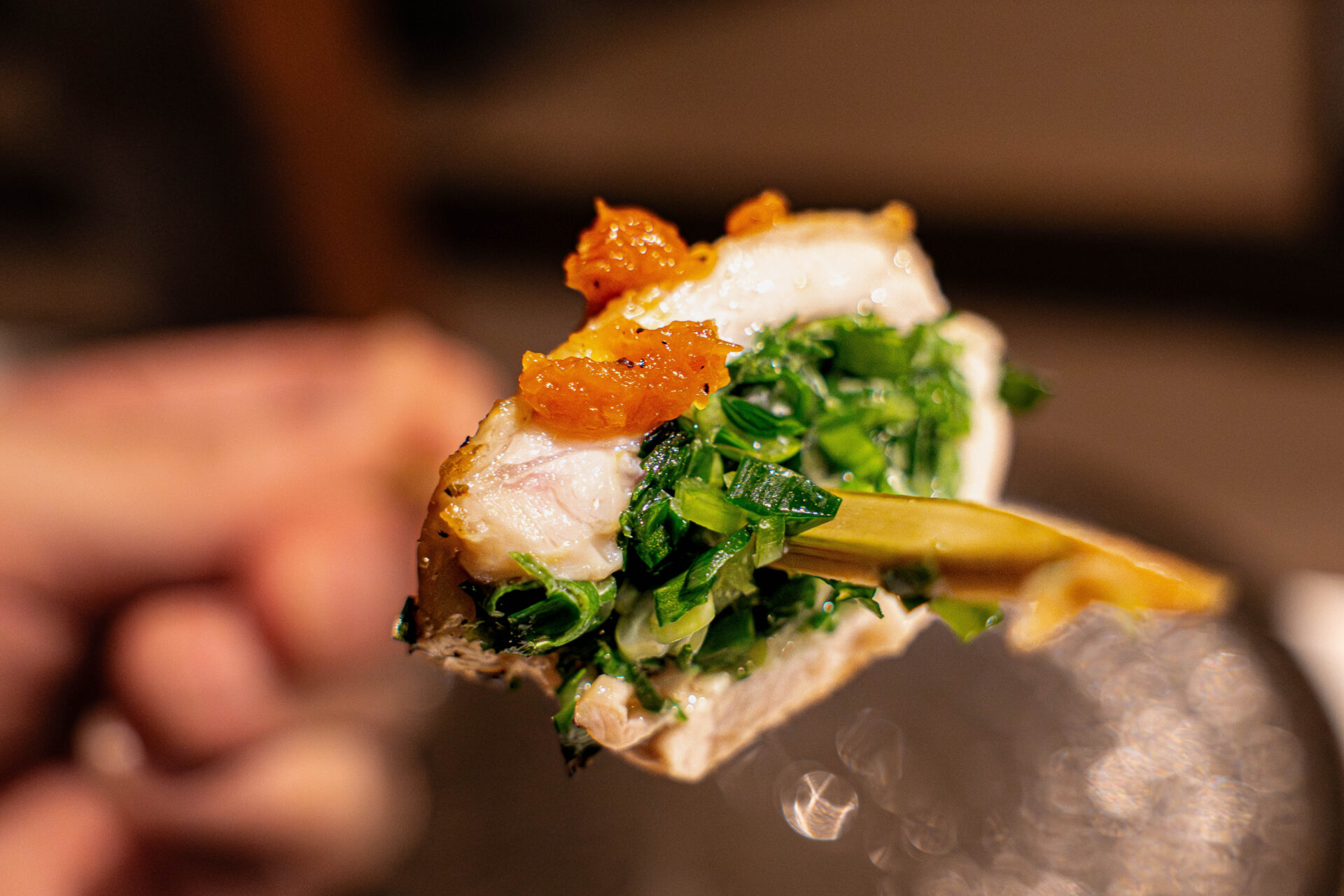
A wing skewer, skin seared to a satisfying char, packed generously with chopped scallion. Biting in brings that crisp skin first, then the tender flesh of the wing beneath. The scallion’s bright fragrance rises alongside it, cutting nicely through the fat’s richness.
“It’s good with a little kanzuri,” came the suggestion, and adding a touch brought less heat than expected and more of a mellow, fermented acidity, tightening the flavor into sharper focus. Grilled char, aromatic garnish, and kanzuri’s particular nuance work together in a three-way balance that never grows tiresome.
Tsukune (Chicken Meatball)
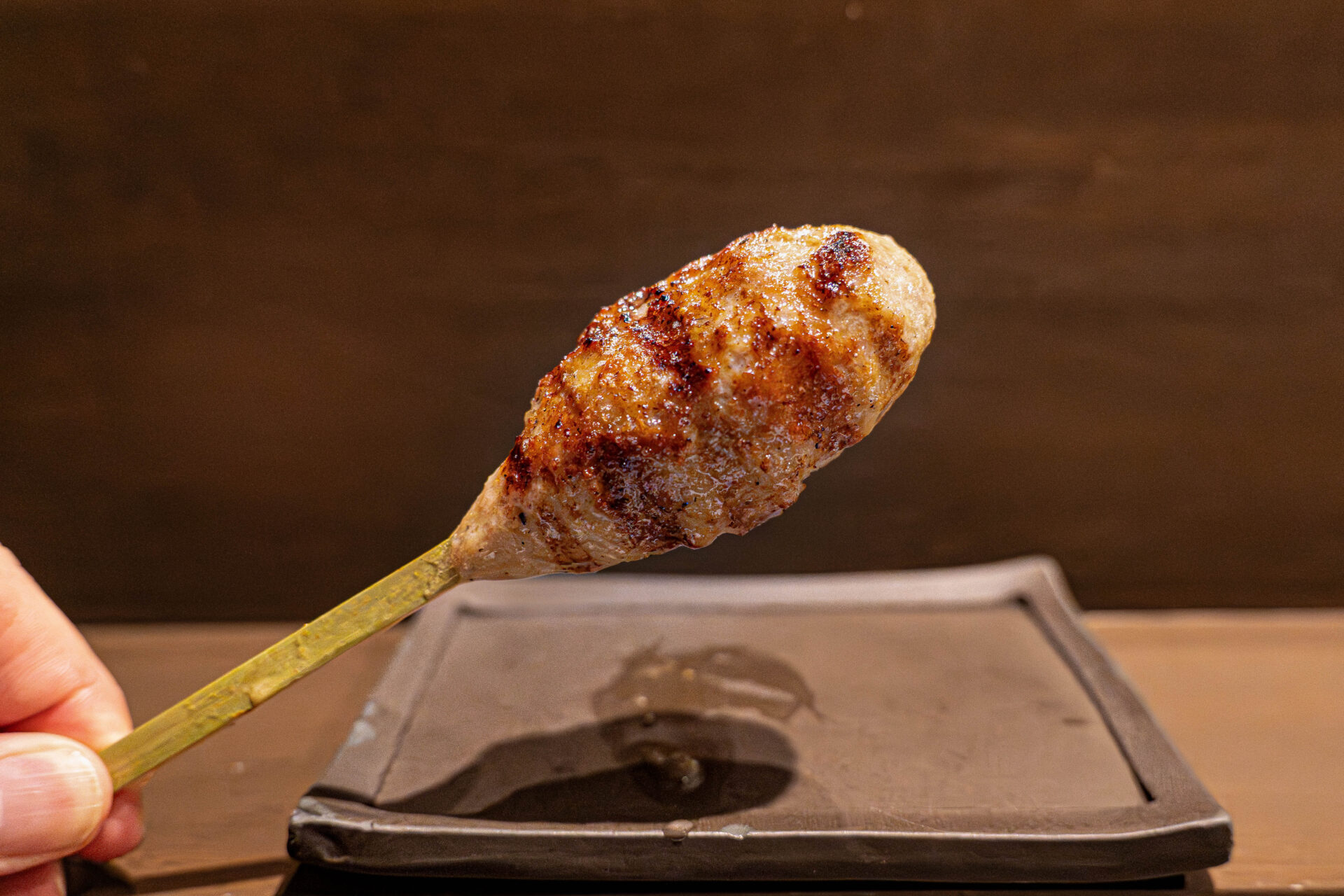
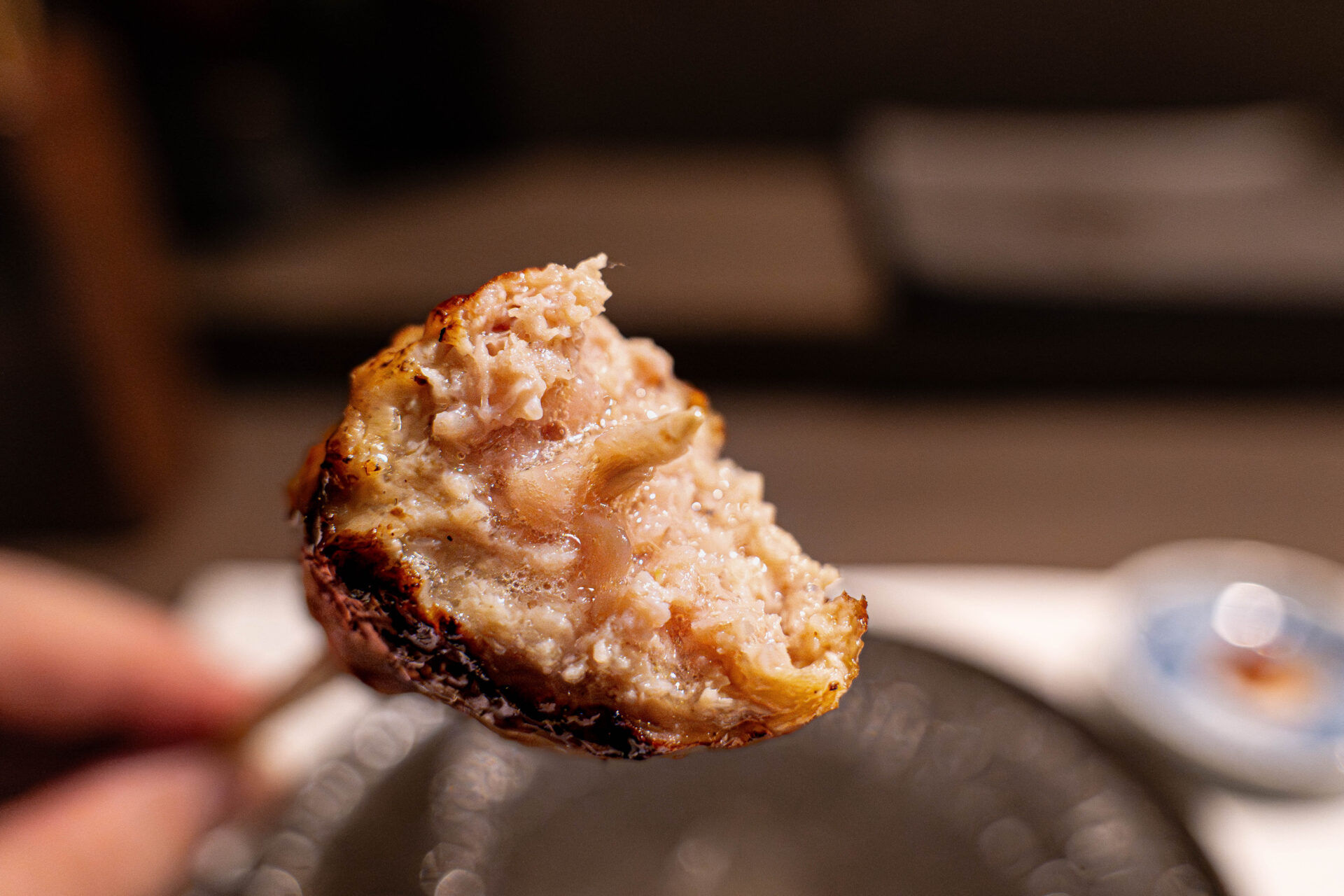
Tsukune, seared firm on the outside and left gently rare within. The first bite releases a rush of juice, the fat’s sweetness and the ground meat’s umami spreading immediately. The coarser grind leaves a slight texture that keeps it from feeling monotonous.
That rare center brings a moist mouthfeel that meets the charcoal’s fragrance beautifully — a skewer that makes the restaurant’s standard for cooking abundantly clear.
Furisode (Additional Order)
An additional order of furisode (upper wing). The skin is seared through firmly, releasing char with every bite, while the interior stays satisfyingly juicy — the smoothness and spring characteristic of this cut near the shoulder joint present in equal measure.
The fat’s sweetness clears quickly, leaving a light finish even after several skewers already eaten. A genuinely worthwhile addition to order.
Oya Bonjiri (Mature Chicken Tail, Additional Order)
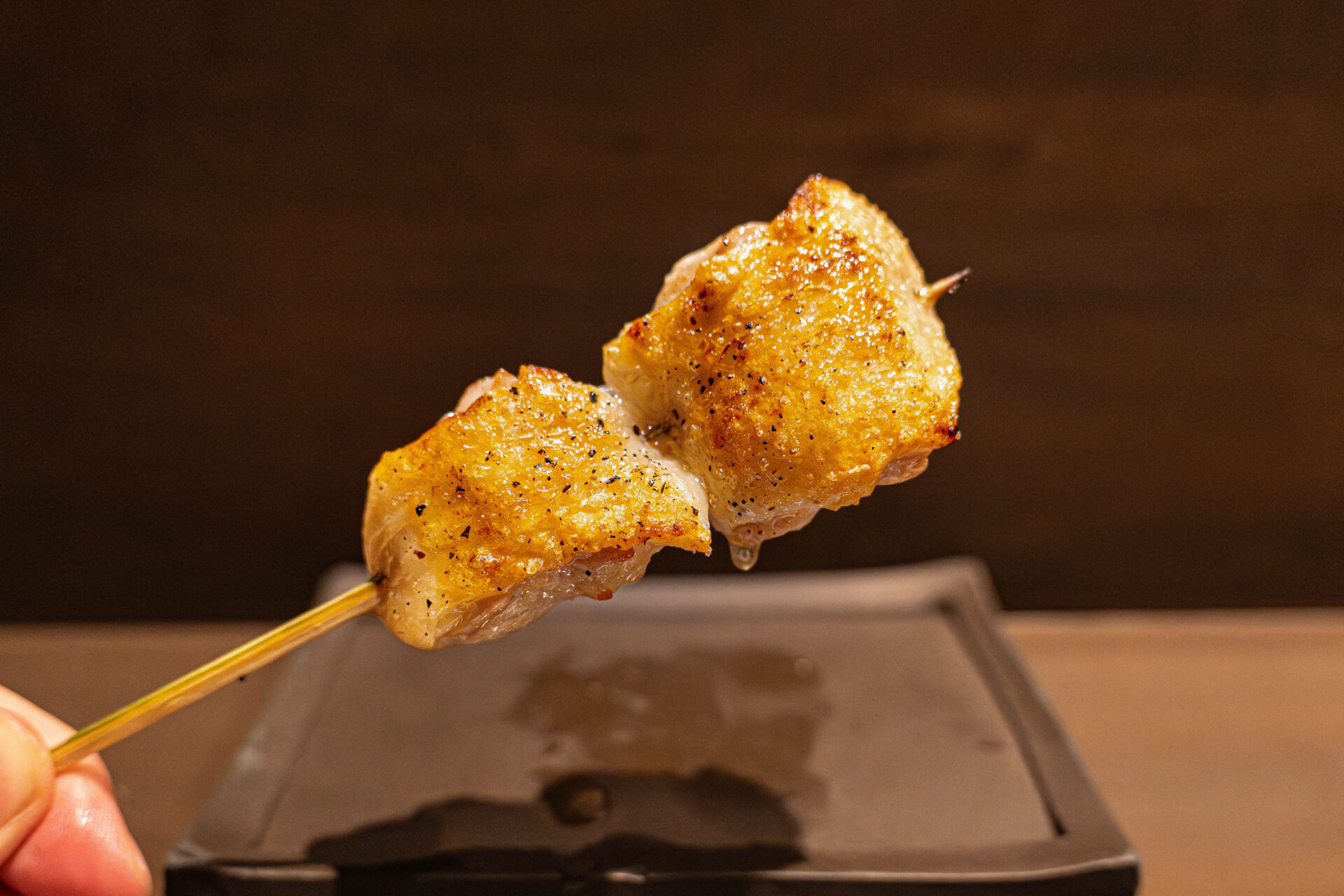
An additional order of oya bonjiri (tail from a mature bird). A cut naturally high in fat, but the balance of charcoal fragrance and salt is precise enough that the fat spreads with every bite without ever feeling heavy. The surface is crisp and fragrant, the interior retaining a melting quality.
Umami rises again and again with every bite — a genuinely satisfying addition just before the meal’s close.
Negima (Chicken and Scallion, Additional Order)
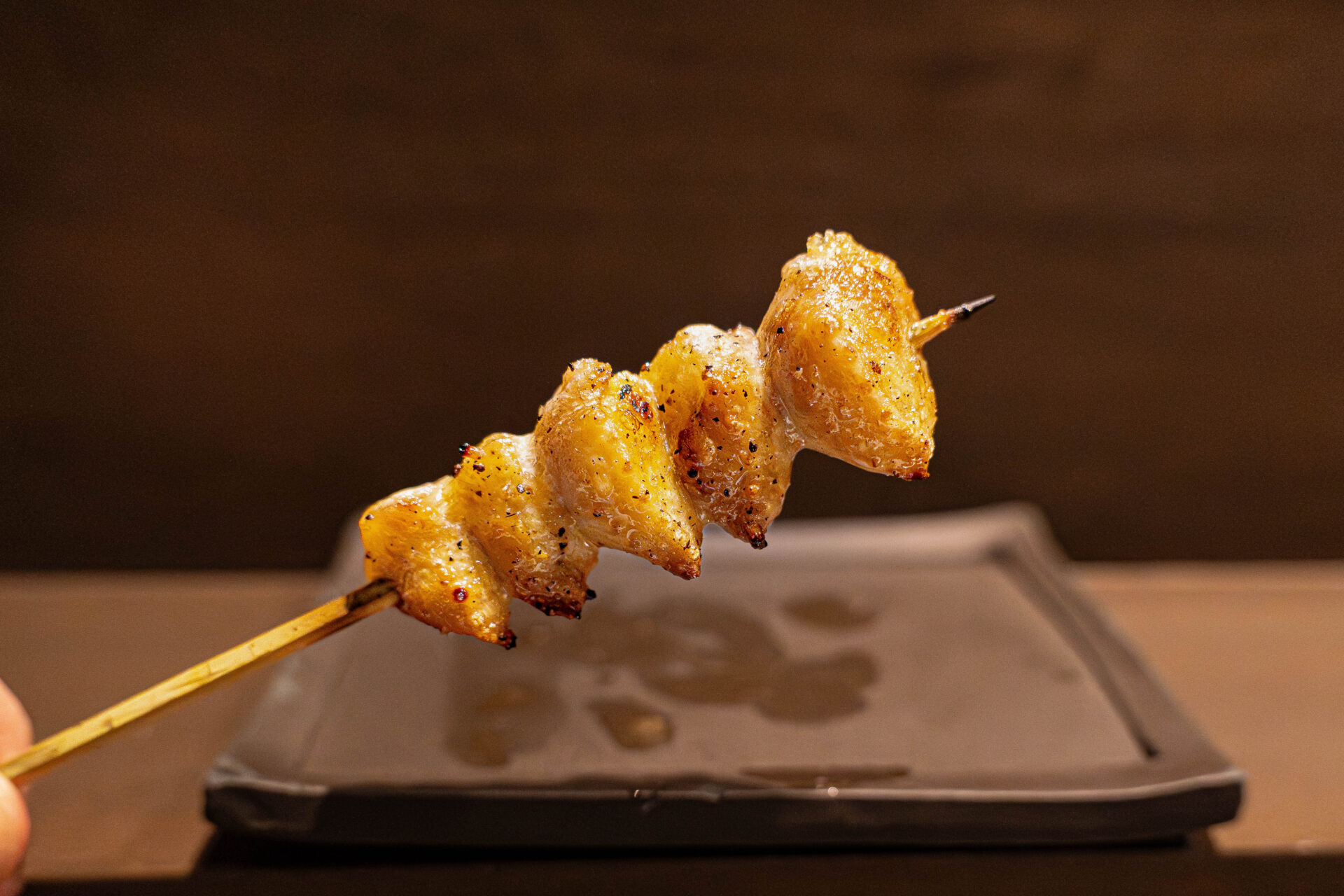
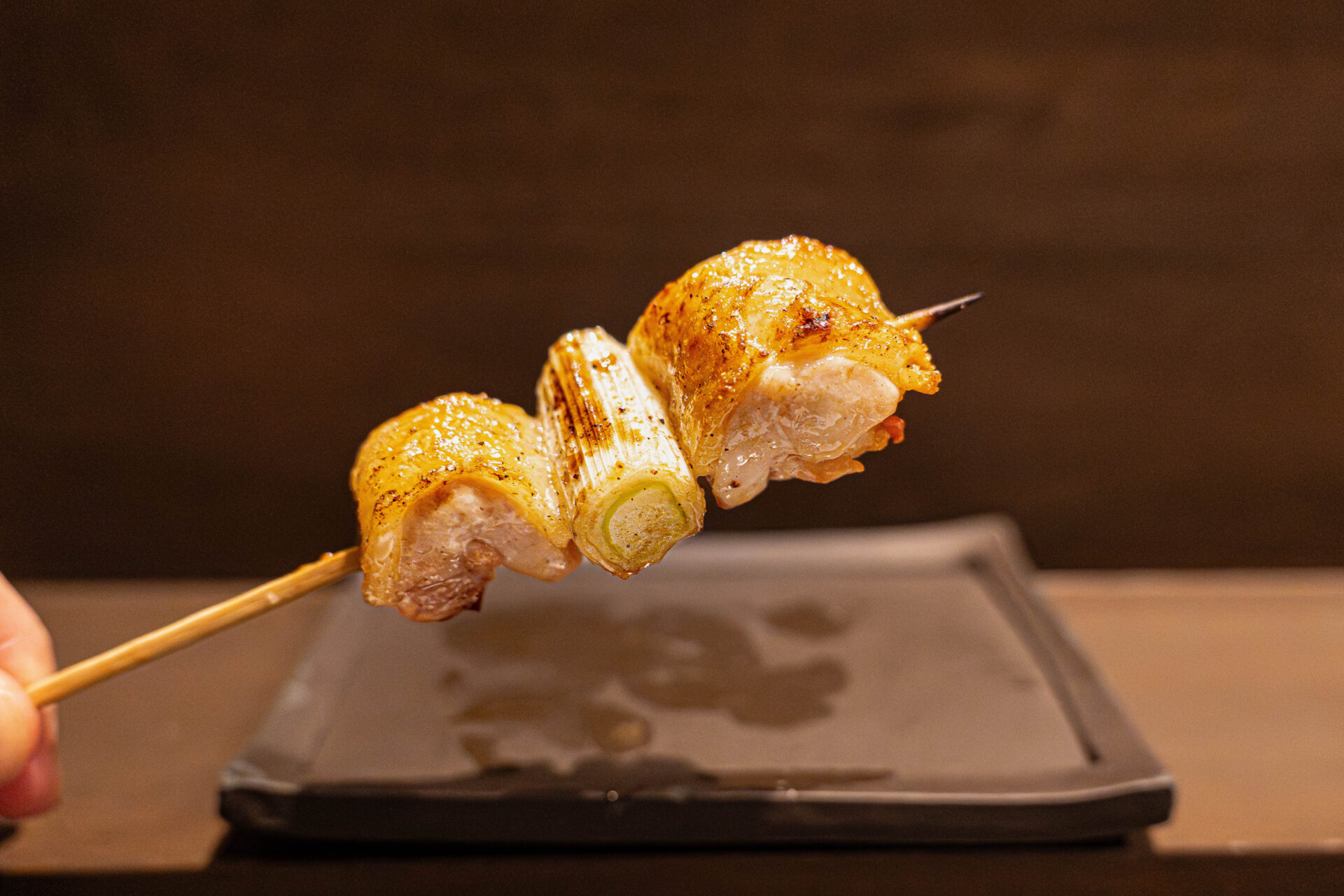
An additional order of negima, its skin seared to a deep char that releases fat gently with each bite. The scallion tucked between the pieces carries a light sear on the outside and a soft, sweet center — its gentle warmth and sweetness meeting the chicken’s fat in perfect proportion.
A simple skewer, but one where precise cooking shows through directly in the flavor — a genuinely satisfying addition.
Yagen Nankotsu (Wishbone Cartilage, Additional Order)
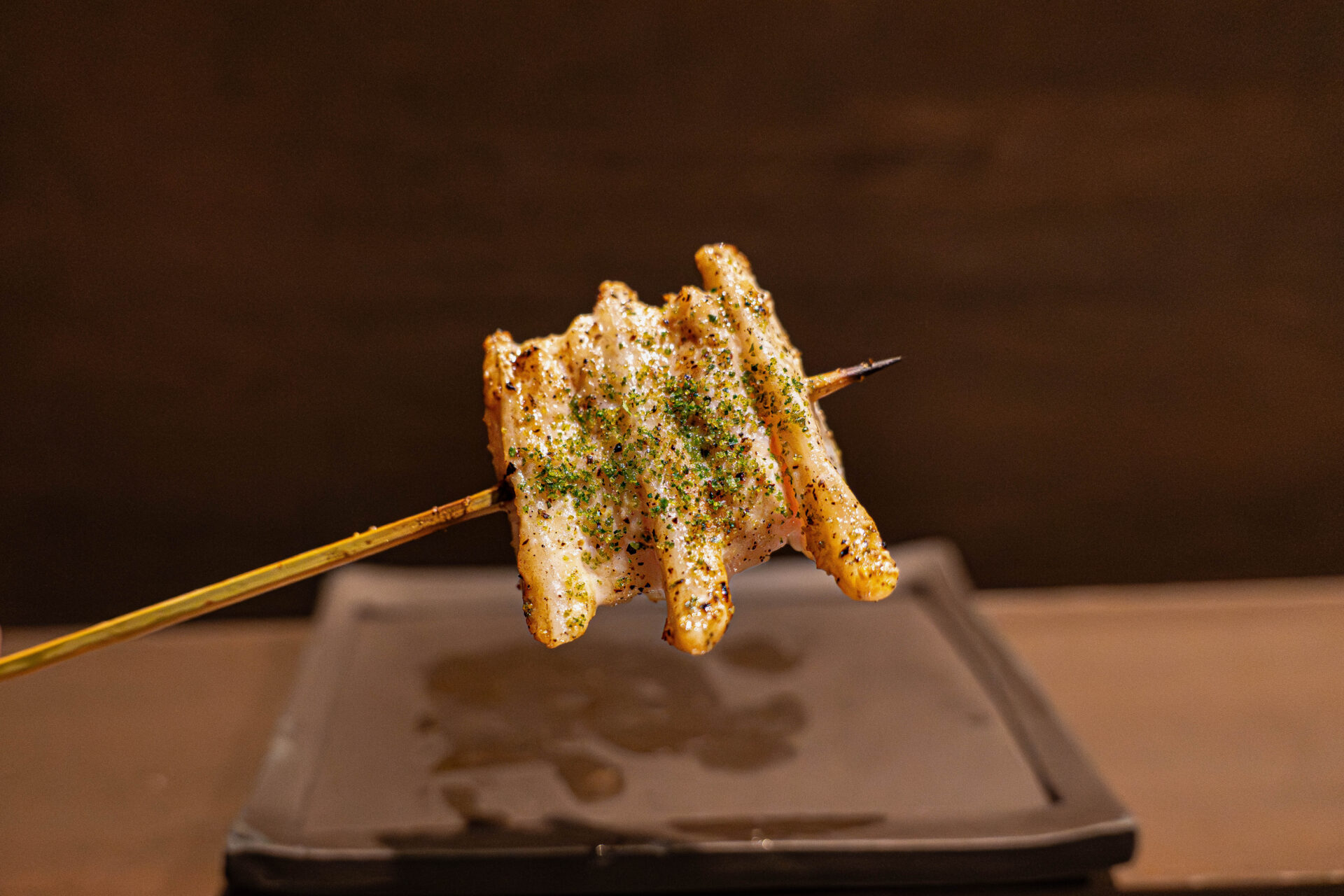
Yagen nankotsu, grilled and finished with a light dusting of aosa seaweed and house-made karasumi (cured mullet roe) powder. A crisp bite gives way to the seaweed’s fragrance rising up, with a faint salinity from the karasumi lingering behind. A combination that adds depth through aroma and salt without disturbing the cartilage’s own light umami.
A well-judged addition, introducing a small shift in rhythm to the skewer lineup.
Tare Kawa (Sauced Skin, Additional Order)
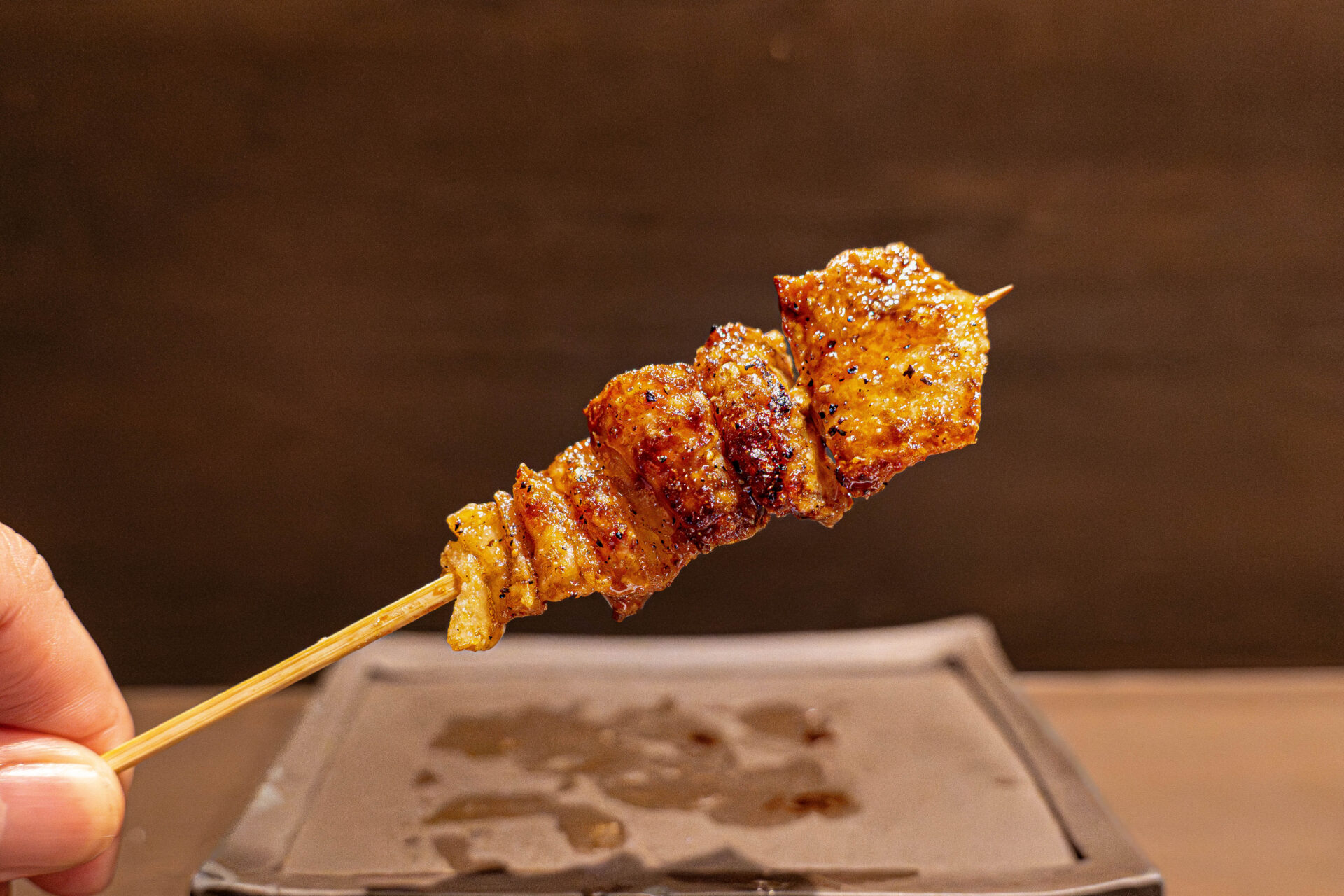
An additional order of tare kawa, carrying the charcoal’s fragrance fully while grilled crisp outside and left with a satisfying spring within. A thin coating of sweet-savory tare clings to the surface, releasing a rush of fatty umami with every bite. The sauce never overwhelms, instead drawing out the skin’s own char.
A well-composed skewer in the lineup, and a satisfying addition in its own right.
Momo Tare (Sauced Thigh, Additional Order)
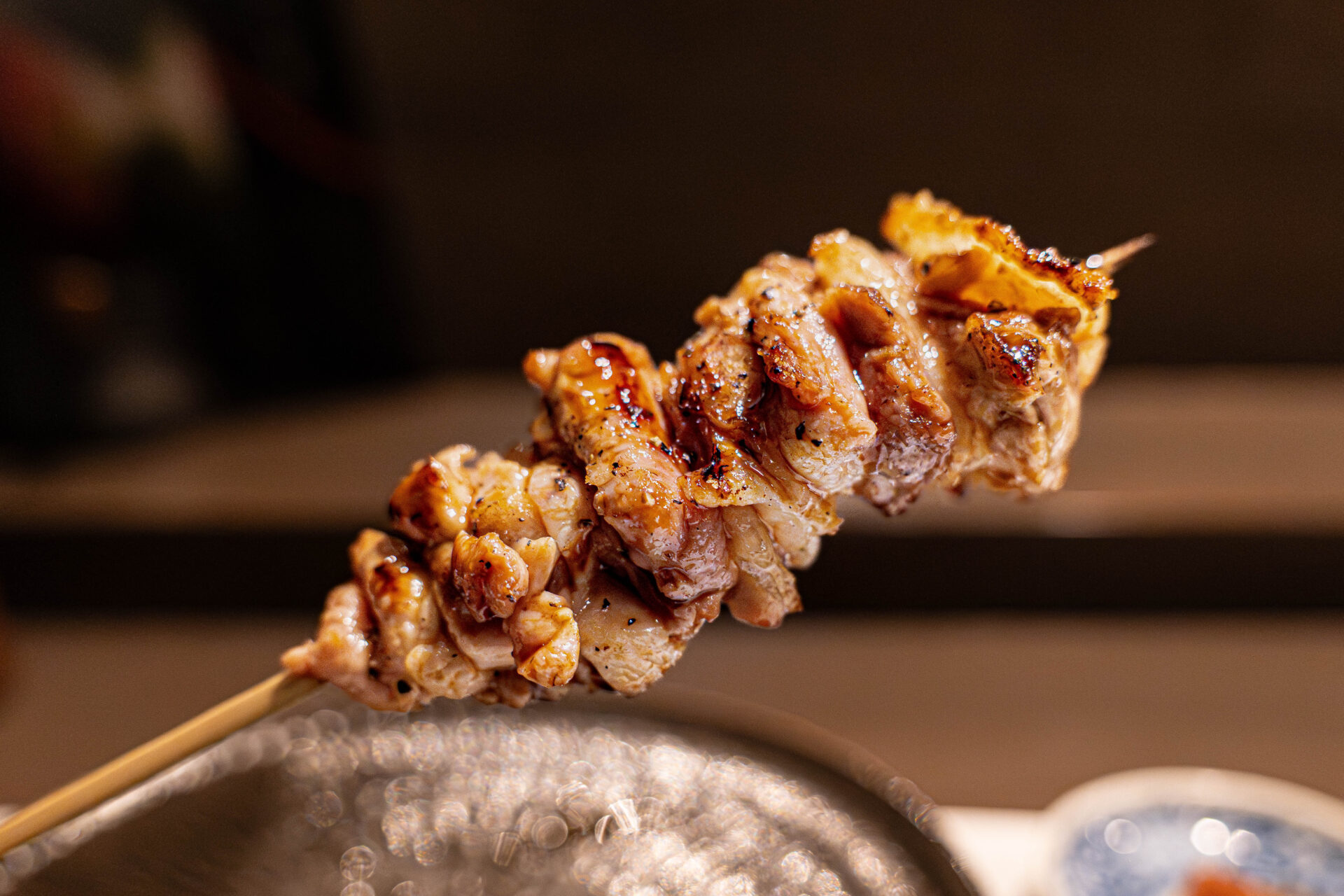
An additional order of thigh with tare. The surface, seared firm over charcoal, carries a thin coating of sauce, its sweetness rising up gently from behind the char. The meat itself is plump, releasing a satisfying amount of juice with each bite.
The tare never overstates itself, letting the thigh’s own robust umami come through clearly. A satisfying addition, and one that never felt heavy even this close to the meal’s end.
Chicken Kamameshi (Takeaway)
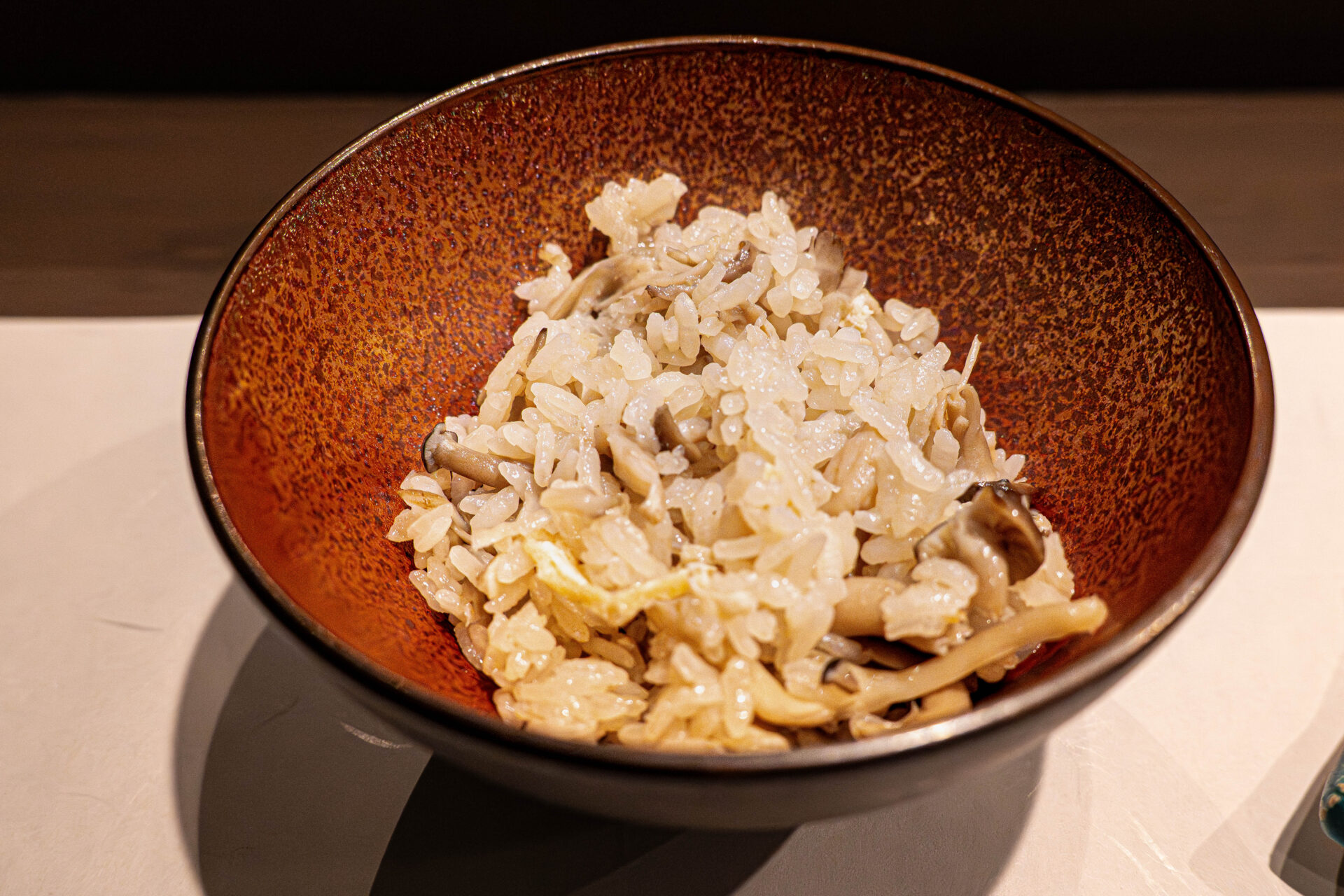
For the close, a chicken kamameshi prepared as a takeaway order. “Would you like a small taste?” came the offer, and a small portion of the freshly cooked rice was served right there at the counter.
Chicken dashi seeps gently into the rice, mushroom fragrance layering in softly. There’s no greasiness at all, and it never grows heavy as you eat. A dish that settles the lingering impression of the skewers into something calm and quiet.
Knowing there was more to enjoy at home later only added to the satisfaction of this closing course.
Oyakodon
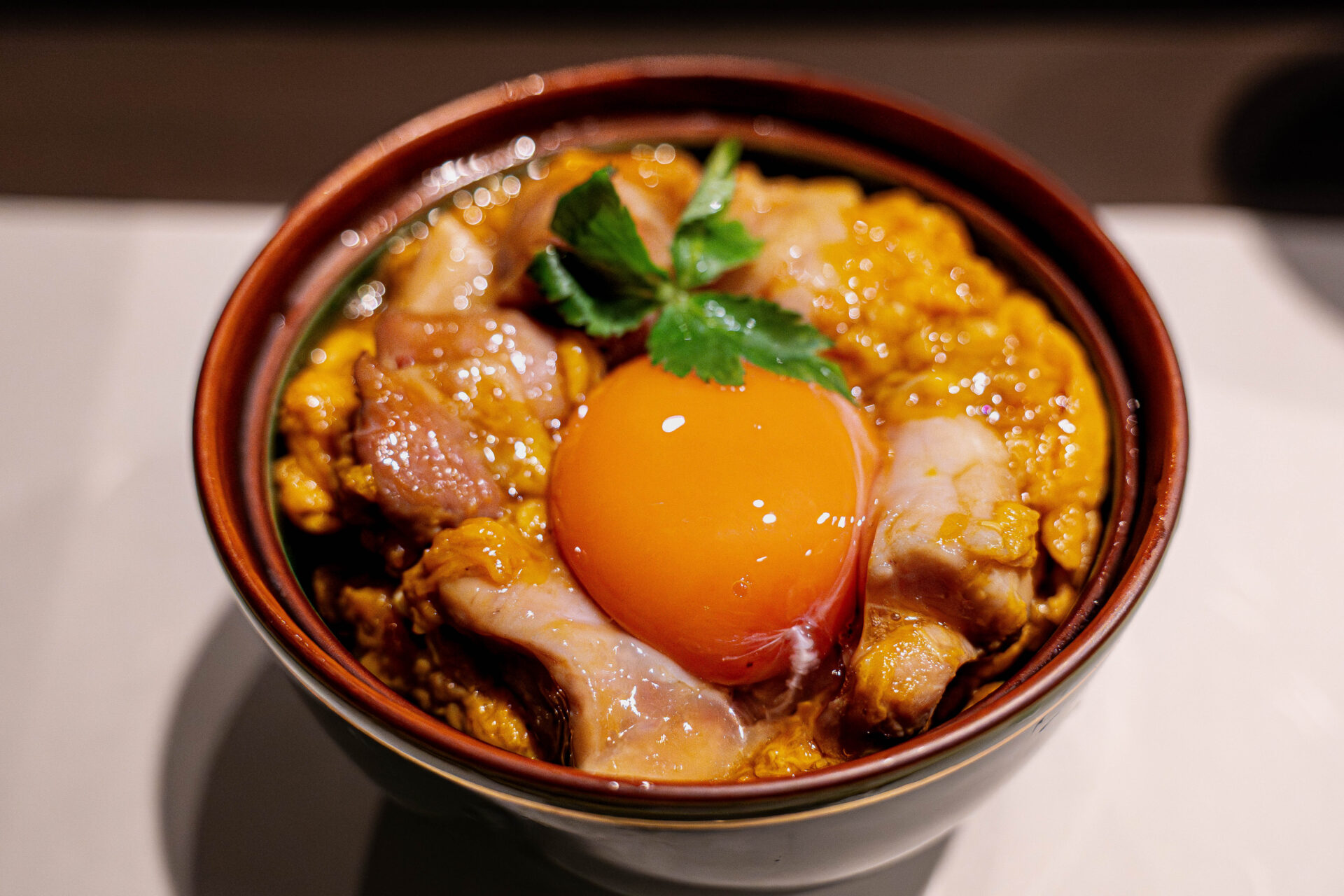
The meal closes with oyakodon — softly set egg cradling chicken still carrying a hint of charcoal fragrance. A rich, deep-orange yolk sits at the center, its color and aroma building anticipation before the first bite even happens.
Chicken cooked at different degrees layers together nicely, the egg’s sweetness meeting the dashi in turn.
Final Thoughts
What came through most strongly here was the chef’s unwavering conviction: drawing the absolute maximum out of a single skewer through the interplay of ingredient and fire. For every cut used, he’s clearly worked out exactly which temperature range unlocks its best flavor, and that judgment held consistent across every single skewer.
The attention paid to serving timing and how guests eat might read as strict to some, but it comes from genuine knowledge of exactly when a dish tastes best — nothing careless or heavy-handed about it. If anything, it reflects real care taken to meet that peak moment head-on.
Even the paprika wasn’t really about showing off technique — the real intent was to first let guests experience just how good the vegetable is completely raw. Only then does the shift to grilling change the acidity and aroma, letting the same ingredient reveal two distinct characters. That structure made the vegetable course feel like a genuine statement about that day’s ingredients, not just a filler between skewers.
Even through several rounds of additional orders, the precision of the cooking never wavered — heat and fragrance carrying cleanly all the way through to the closing kamameshi and oyakodon. Nothing about the meal felt heavy, forming naturally into a yakitori course that never wears you down.
The chef’s dedication isn’t about spectacle — it’s a willingness to face both ingredient and fire head-on, without compromise. That sincerity comes through in every single dish, making for a restaurant that wins you over quietly.
Reservations & Access
Sumisho Mikuriya, in Nishitenma, Osaka, operates entirely by reservation, booked online only through TableCheck. A phone number is listed, but reservations are handled exclusively via TableCheck.
Sumisho Mikuriya reservation page (TableCheck)
The restaurant is located at 5-10-4 Nishitenma, Kita-ku, Osaka. About a 5-minute walk from Minami-Morimachi Station, and roughly 8 minutes from Naniwabashi Station; also within walking distance of Higashi-Umeda and Kitashinchi stations.
Hours run from 18:00, closing once the skewers run out for the night. Closed Sundays, public holidays, and other irregular days. As hours and days can change, it’s worth confirming current details when booking.
| Item | Details |
|---|---|
| Name | Sumisho Mikuriya |
| Address | 5-10-4 Nishitenma, Kita-ku, Osaka, Osaka Prefecture |
| Reservations | Reservation-only, online booking only |
| Booking page | Book via TableCheck |
| Phone | 06-6948-5563 |
| Nearest stations | 5-minute walk from Minami-Morimachi Station / 8-minute walk from Naniwabashi Station |
| Hours | From 18:00, until skewers run out |
| Closed | Sundays, public holidays, other irregular days |
| Seating | 10 seats, counter only |
| Parking | None (nearby coin-operated parking available) |
- TAGS