CONTENTS
- Okayama — The Land Chefs Chose: Prologue
- DAY 1 | From Hakata Station to Okayama by Bullet Train
- Arrival at Okayama Station
- Meeting Up at the Momotaro Statue
- Picking Up the Rental Car at the West Exit
- North on the Expressway from Okayama IC
- A Rest Stop at Maniwa PA
- A Little Early — A Detour to Chuwa Shrine
- Lunch at Ryo, a Hiruzen Eel Specialist
- Still Savoring Ryo, Driving Through the Hiruzen Highlands
- A Soft-Serve Break at Hiruzen Jersey Land
- From Hiruzen to the Seto Inland Sea: A Dusk Drive
- Dinner at Yisai Liuxiang in Tsurumi, Bizen
- Back to Okayama Station, Returning the Rental Car
- Tonight’s Stay: Mitsui Garden Hotel Okayama
- DAY 2 | An Unexpected Closure, and Okayama’s Local Favorite at Okonomiyaki Mori, Hokan-cho
- Our Target, 400℃ mori no machi — Unexpectedly Closed
- By Bus to Okonomiyaki Mori in Hokan-cho Shopping Street
- Splitting Up at the Castle Grounds — My Wife Heads to Okayama Castle and Korakuen
- Okayama Castle: A Black Keep Reflected in the Asahi River
- Across Tsukimi Bridge to Korakuen, One of Japan’s Three Great Gardens
- Reunited at Okayama Station, Off to Heiwa-cho for the Evening
- Dinner at the Chinese Restaurant Hasunomi
- After Two Days: Why These Chefs Chose This Land
Okayama — The Land Chefs Chose: Prologue
An award-winning eel specialist that once held a star in Tokyo has relocated to a small hamlet tucked in the mountains of Hiruzen.
A Chinese home-cooking restaurant once known in Osaka as “the place you can never get a reservation at” has resettled in a quiet cove along the Seto Inland Sea.
And a chef who spent fourteen years training at a celebrated Tokyo restaurant has returned home to his native Okayama.
Chefs who built solid reputations in the big city are now, one by one, choosing to put down roots in Okayama. Leaving behind the streets they knew so well — what led them here?
In the north of the prefecture lies the mountain village of Hiruzen, blessed with clear water and open farmland. To the south, the islands of the Seto Inland Sea rise from waters rich with seafood. Okayama, known as the “Land of Sunshine,” holds two distinct kinds of abundance — mountain and sea.
The seasons have turned since our summer trip to Kanazawa, and now it’s autumn.
This time, we rented a car and drove the length of Okayama, from the mountain valleys of Hiruzen down to the shores of the Seto Inland Sea, in search of the dishes crafted by the chefs who chose this land.
Relocation. Migration. A return home.
Each followed a different path, but all led to the same destination — a plate of food worth traveling for.
Let’s begin at the very start of the journey.
DAY 1 | From Hakata Station to Okayama by Bullet Train
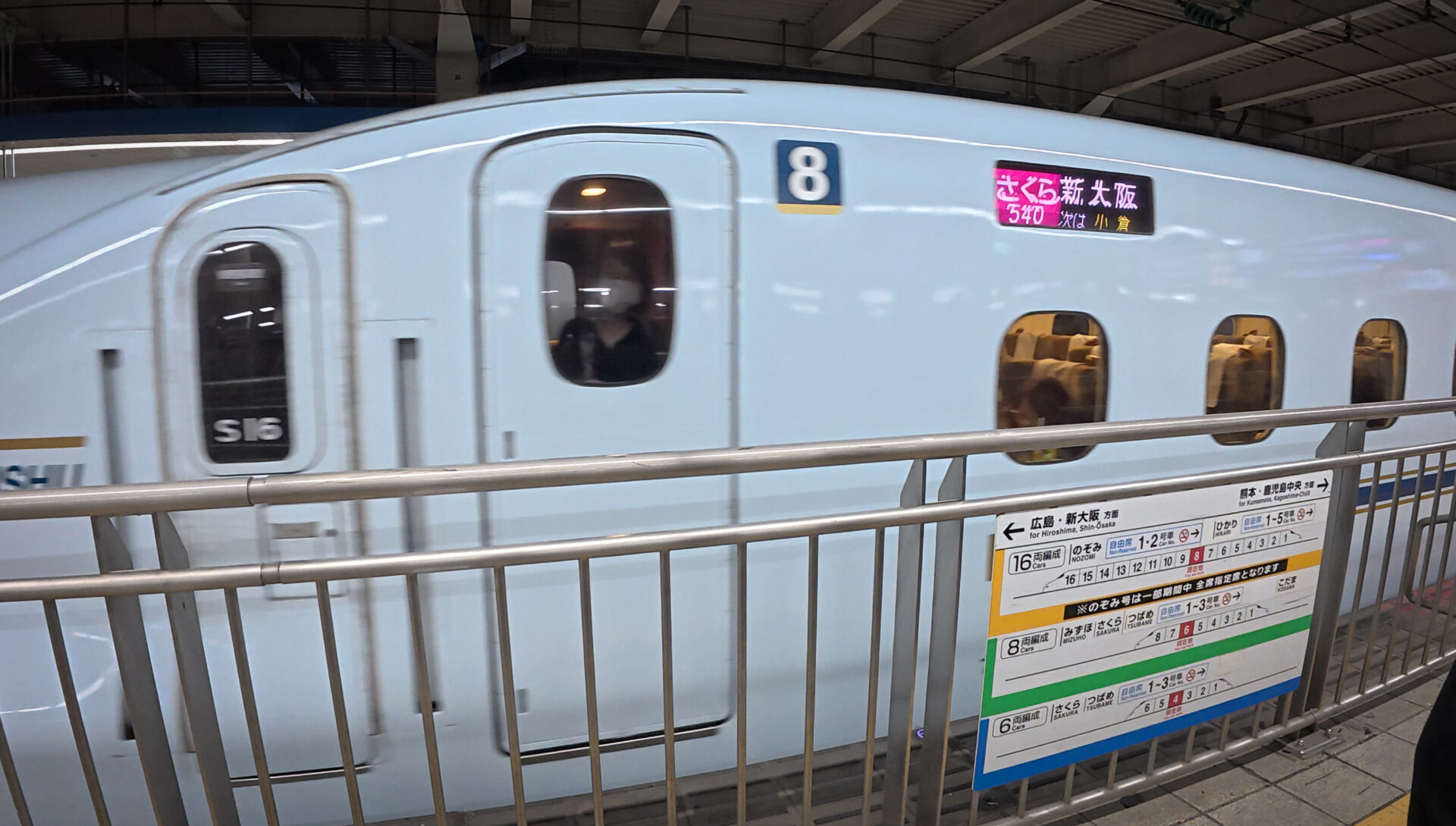
A journey through the gastronomy of Okayama begins on the shinkansen platform at Hakata Station.
The flow of passengers, the electronic departure board, the announcements echoing across the platform — even a familiar scene feels a little different on the morning a trip begins.

The train we boarded that day was the Sakura 540, bound for Shin-Osaka, running through on the Kyushu Shinkansen line.
The soft blue of the train body pairs beautifully with the pink “Sakura” markings on the destination sign.
Watching the scenery slip by outside the window, we passed through the Kanmon Tunnel into Honshu, heading east along the San’yo route — the journey itself already felt like part of the trip.
Arrival at Okayama Station
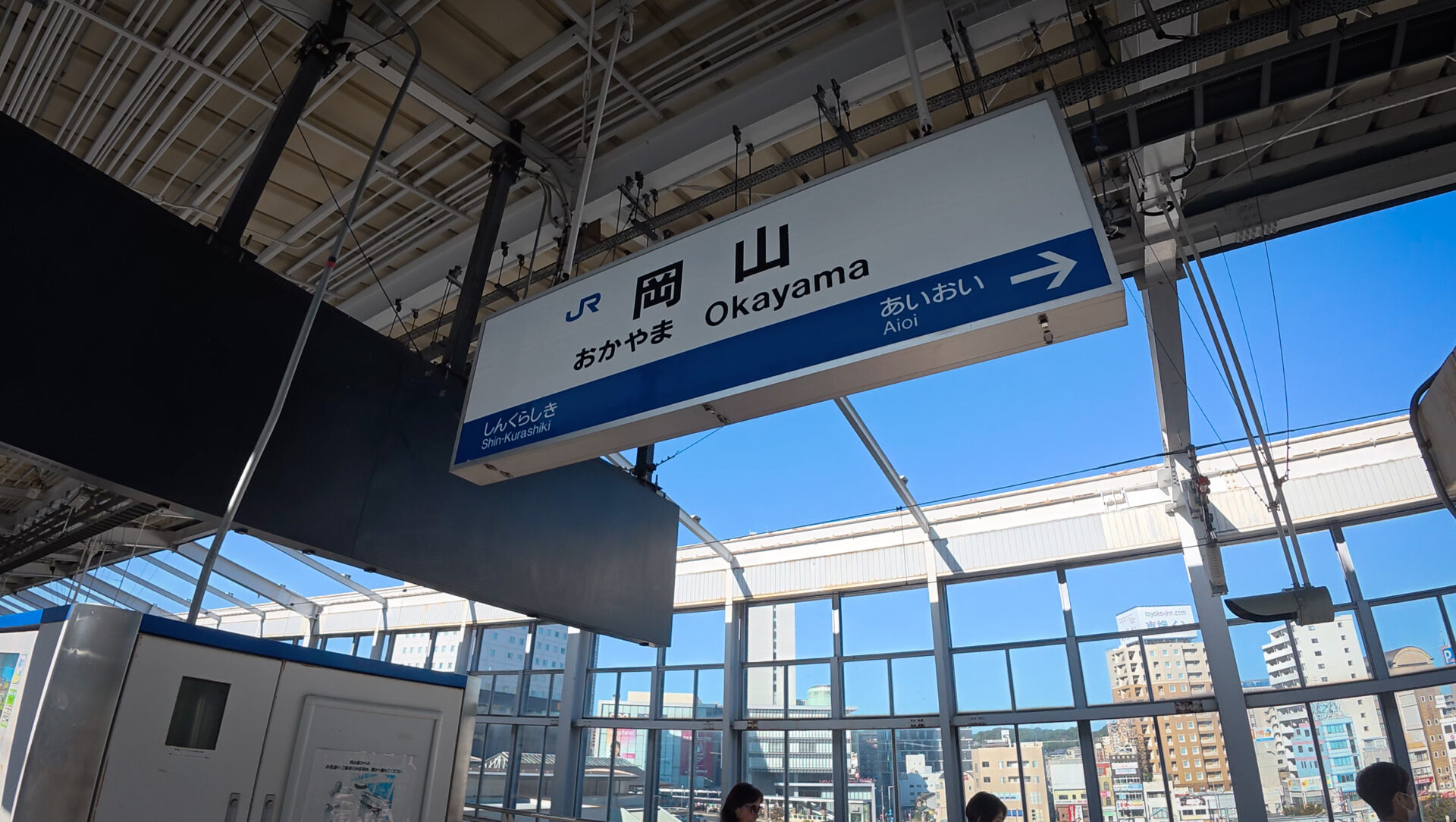
Less than two hours after leaving Hakata, we arrived at Okayama Station. Stepping onto the platform, a clear blue sky and bright sunlight greeted us through the glass.
Looking up at the “Okayama” station sign, the realization that the trip was finally beginning started to settle in.
Meeting Up at the Momotaro Statue
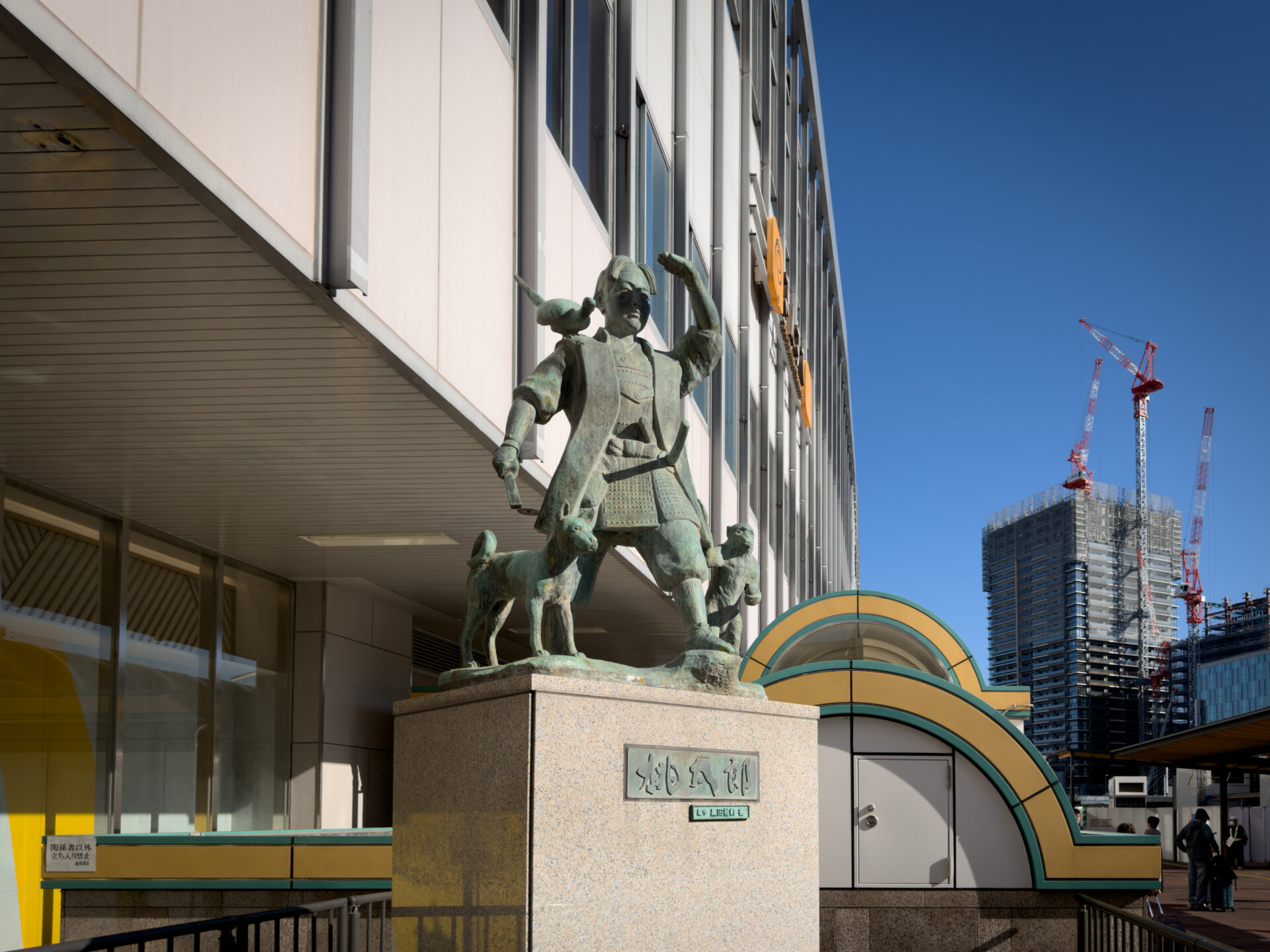
Past the ticket gates, we headed for the station’s symbolic landmark: the Momotaro statue. With a pheasant perched on his shoulder and a dog and a monkey at his feet, the dignified figure feels perfectly suited to Okayama’s front door.
This is where we met up with the rest of the group for this trip — an obvious, unmistakable landmark that everyone agrees on when meeting in Okayama.
Looking up, cranes from ongoing redevelopment stretched into the blue sky above the station square — as if a new skyline were slowly layering itself over the town of folktales.
With everyone gathered, the Okayama trip properly began. First stop —
Picking Up the Rental Car at the West Exit
From the Momotaro statue, we cut through the station to Okayama Station’s west exit, where we picked up our reserved car from the Nissan Rent-a-Car office — our companion for the rest of the trip.
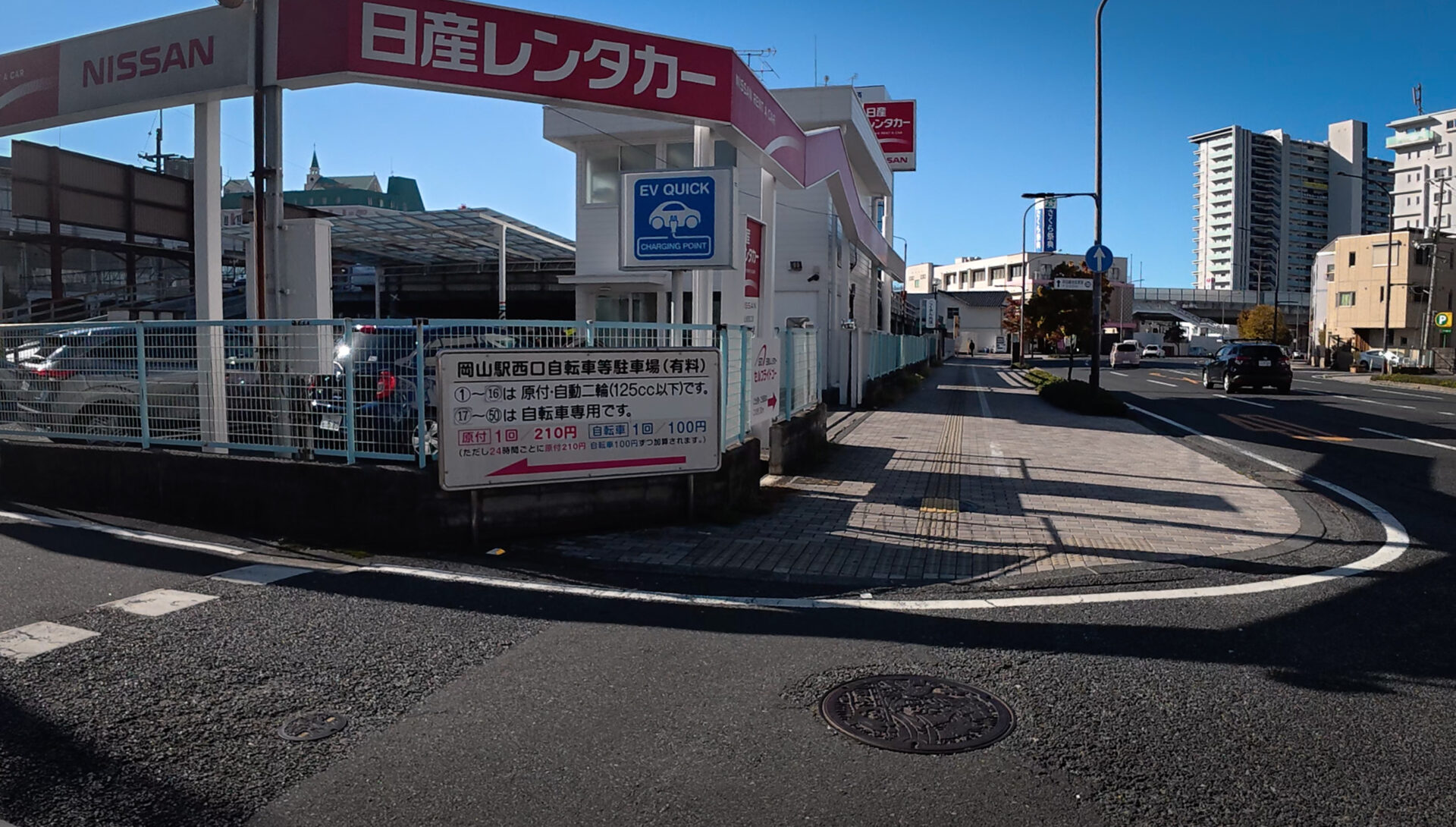
A world away from the bustle of the east exit, the area around the west exit felt wider and quieter. Being just a short walk from the station meant we could pick up the car and set off right away.
Since Okayama’s culinary destinations are scattered well beyond the city center, we built this trip entirely around traveling by car — a format that also made it much easier to move around together as a group.
Paperwork done, hands on the wheel, and we were finally off — driving out into the streets of Okayama toward our first destination.
North on the Expressway from Okayama IC
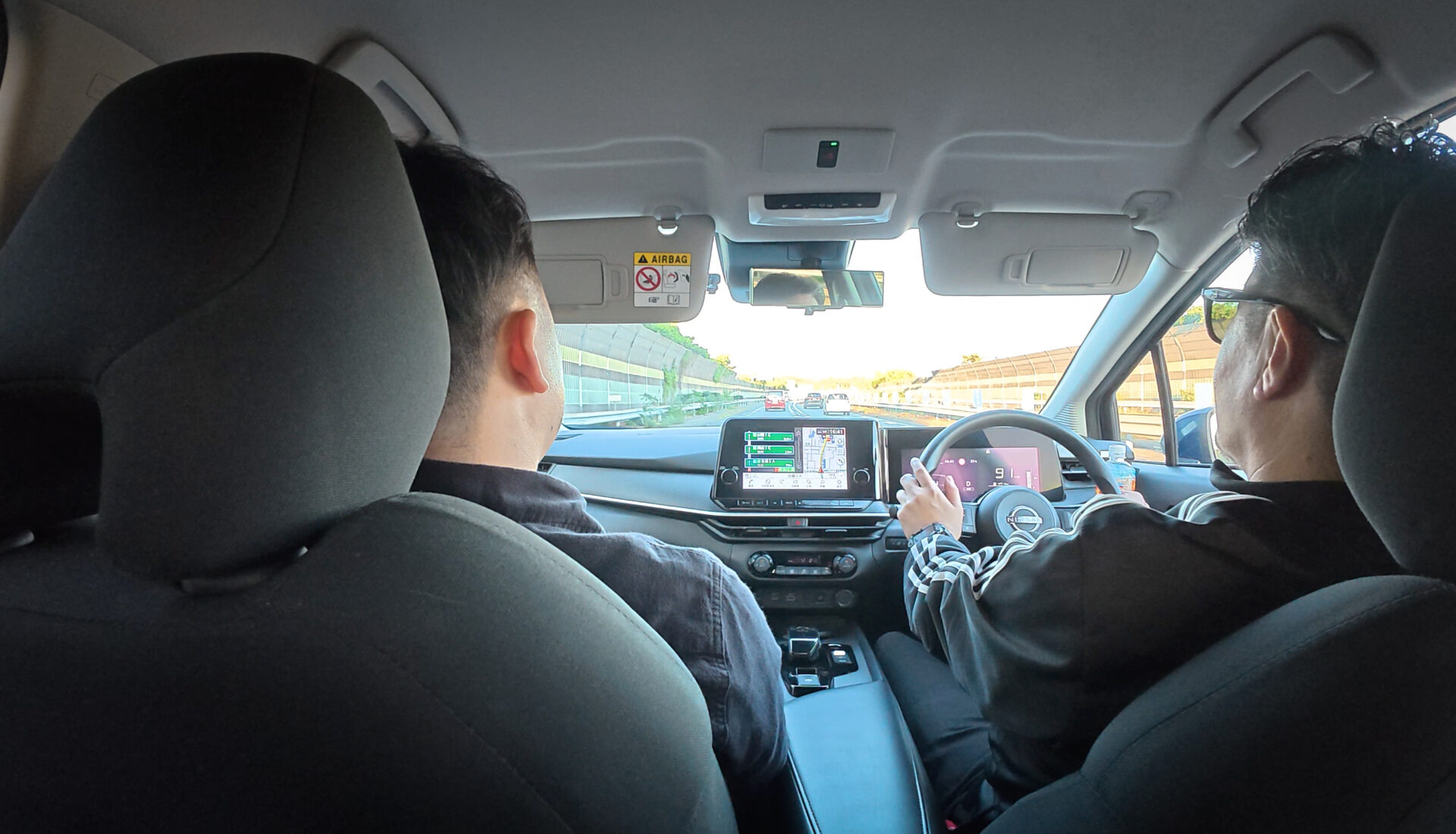
With the car in hand, we made our way out of the city center toward Okayama IC. Driving beneath a clear blue sky, distant mountains rolling gently on the horizon, was enough on its own to ease the mind.
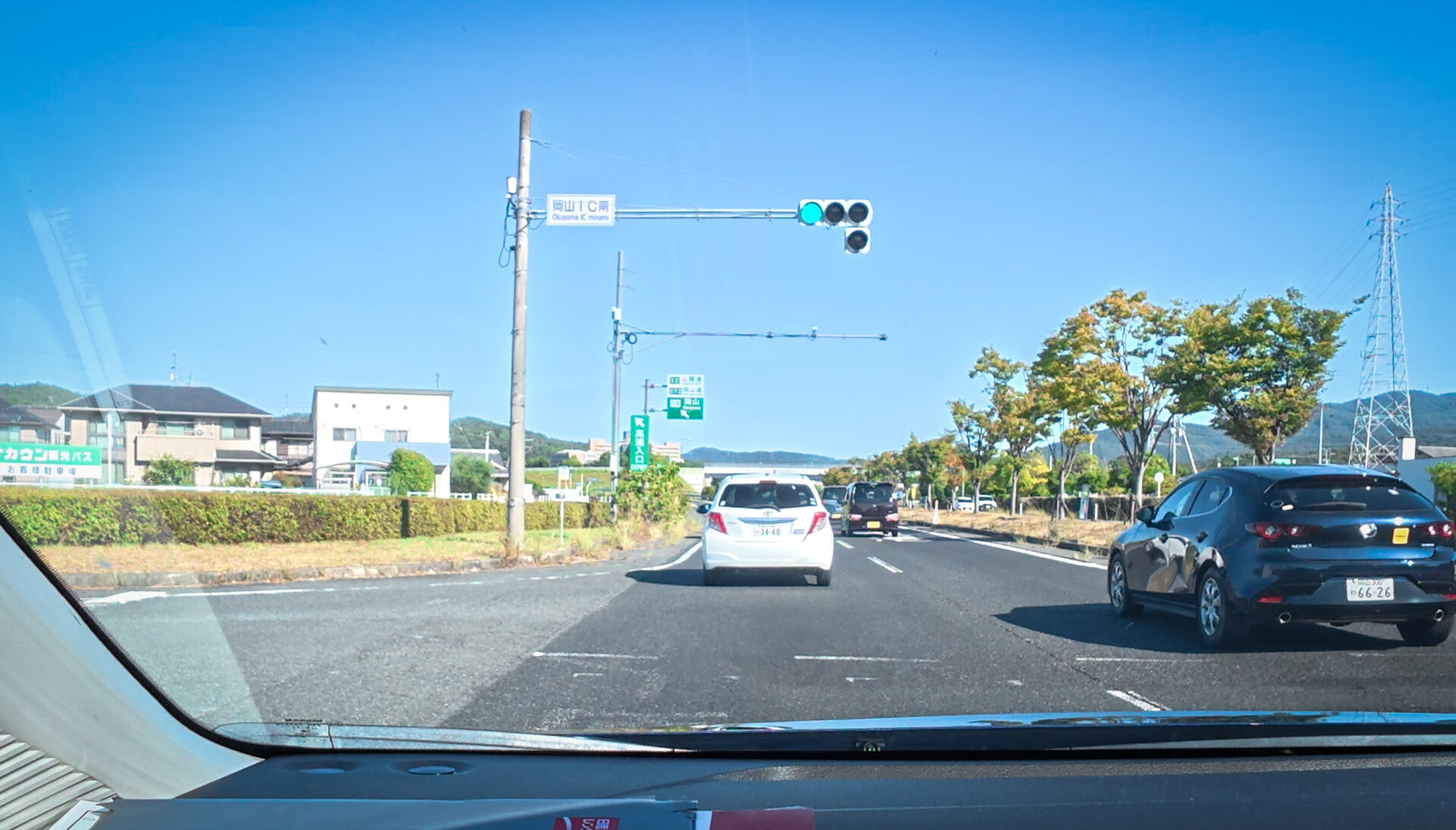
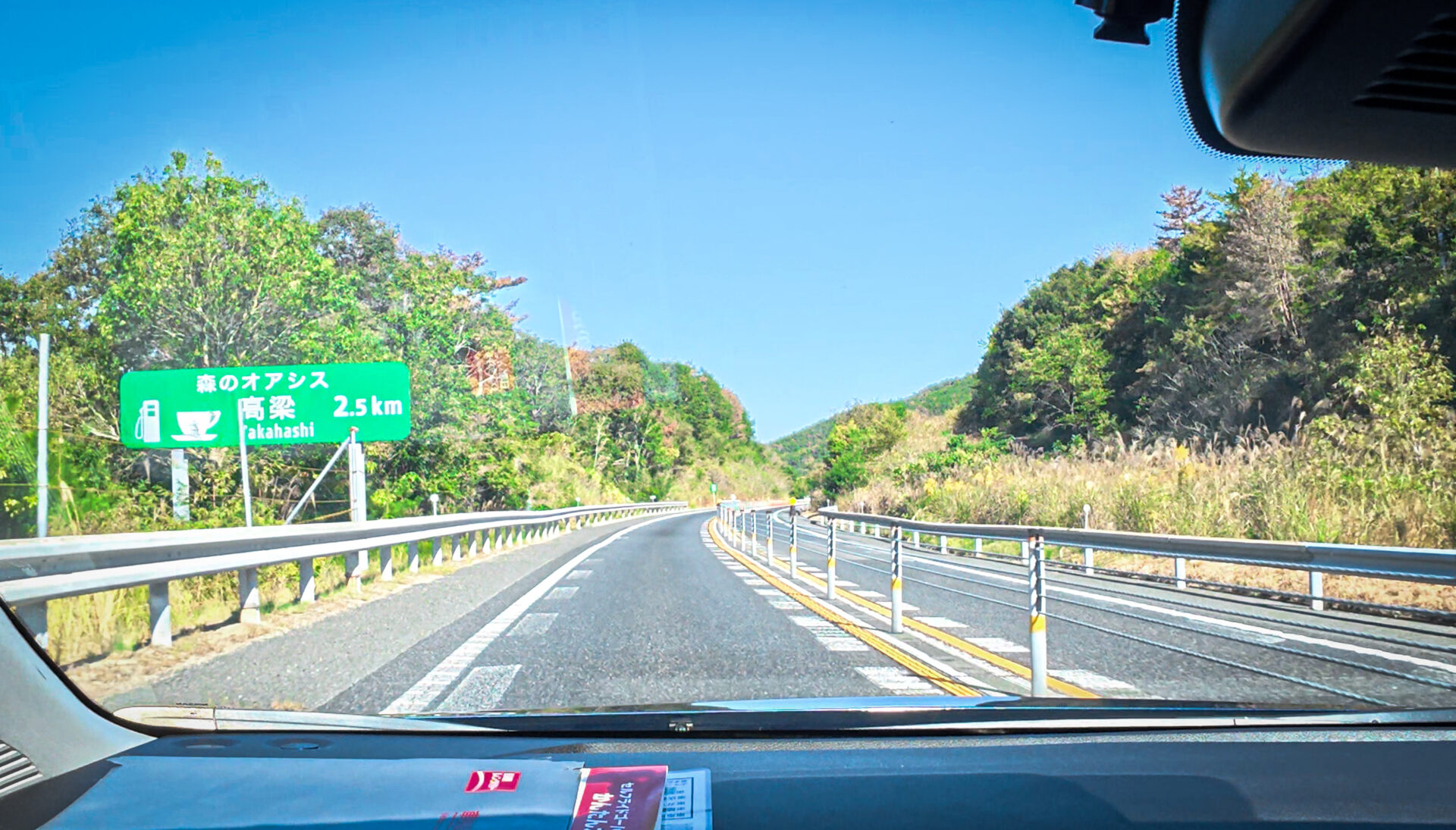
As we headed north on the expressway, the view outside shifted from city blocks to deep green mountain valleys. Trees along the road were beginning to turn color here and there, with pampas grass swaying in the wind along the shoulder. Passing a sign for “Takahashi, Oasis of the Forest,” the car continued deeper into the Chugoku mountain range.
A Rest Stop at Maniwa PA
On the way to our first destination, we pulled off for a break at Maniwa PA. Climbing the stairs, a small building came into view, home to a restaurant called Hanamizuki and a highway shop.
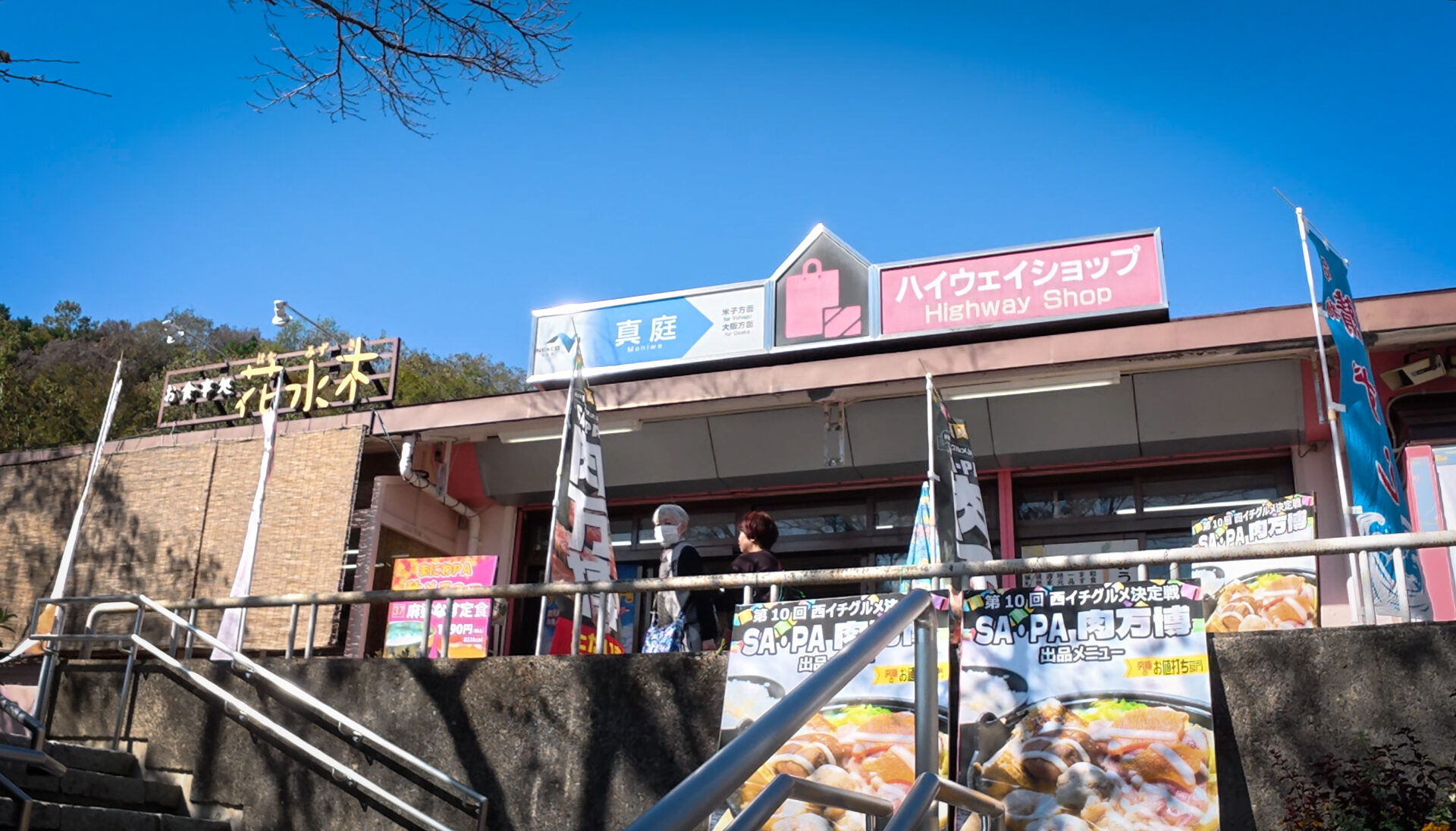
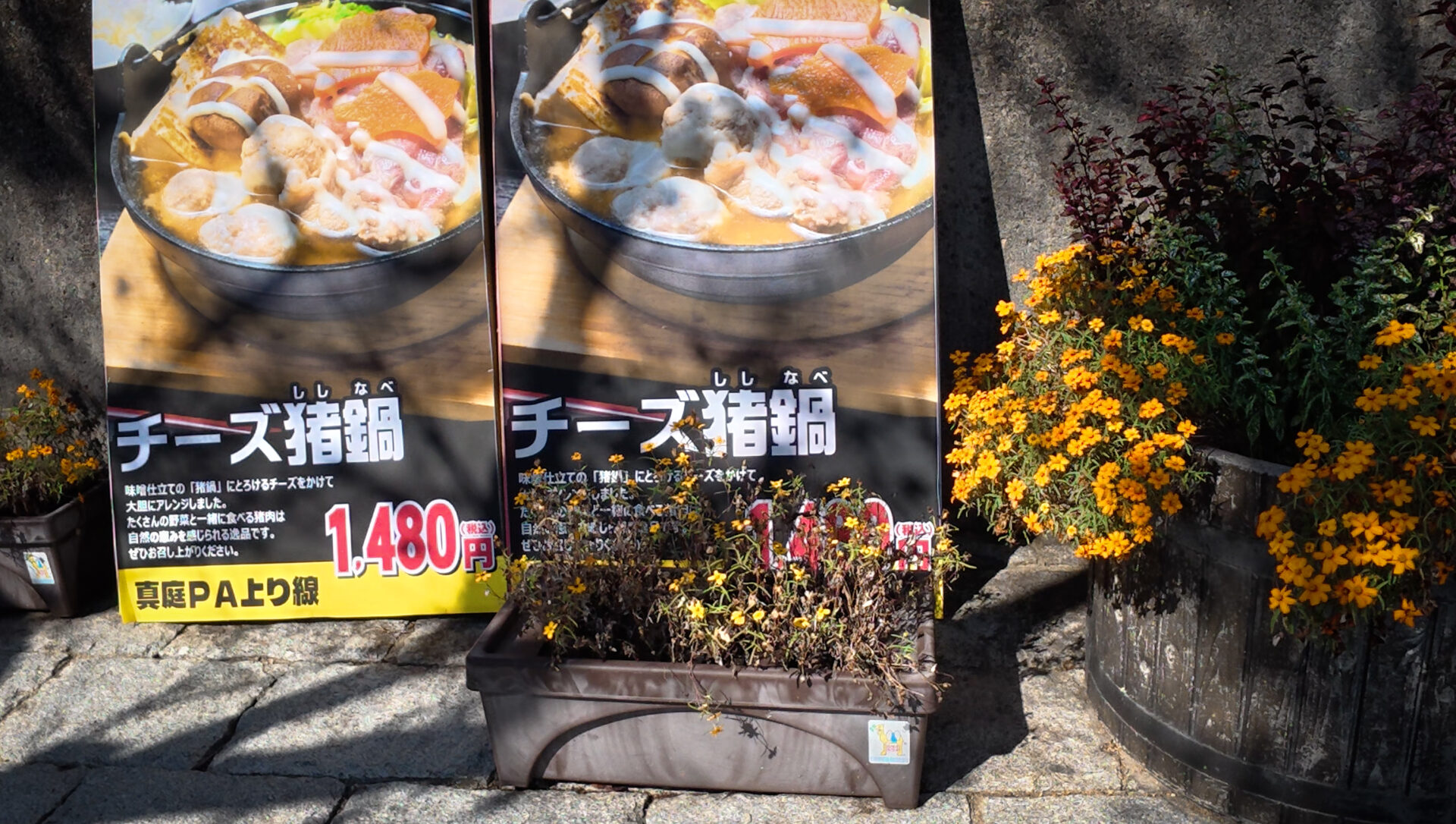
What caught the eye right at the entrance was a poster for “Cheese Wild Boar Hot Pot” (¥1,480). It was an entry in “Meat World Expo,” NEXCO West’s gourmet event held across its service and parking areas — a miso-based wild boar hot pot topped with melted cheese, a fairly bold combination. It’s the kind of place, tucked in the mountains, where trying game meat feels like a completely natural thing to do.
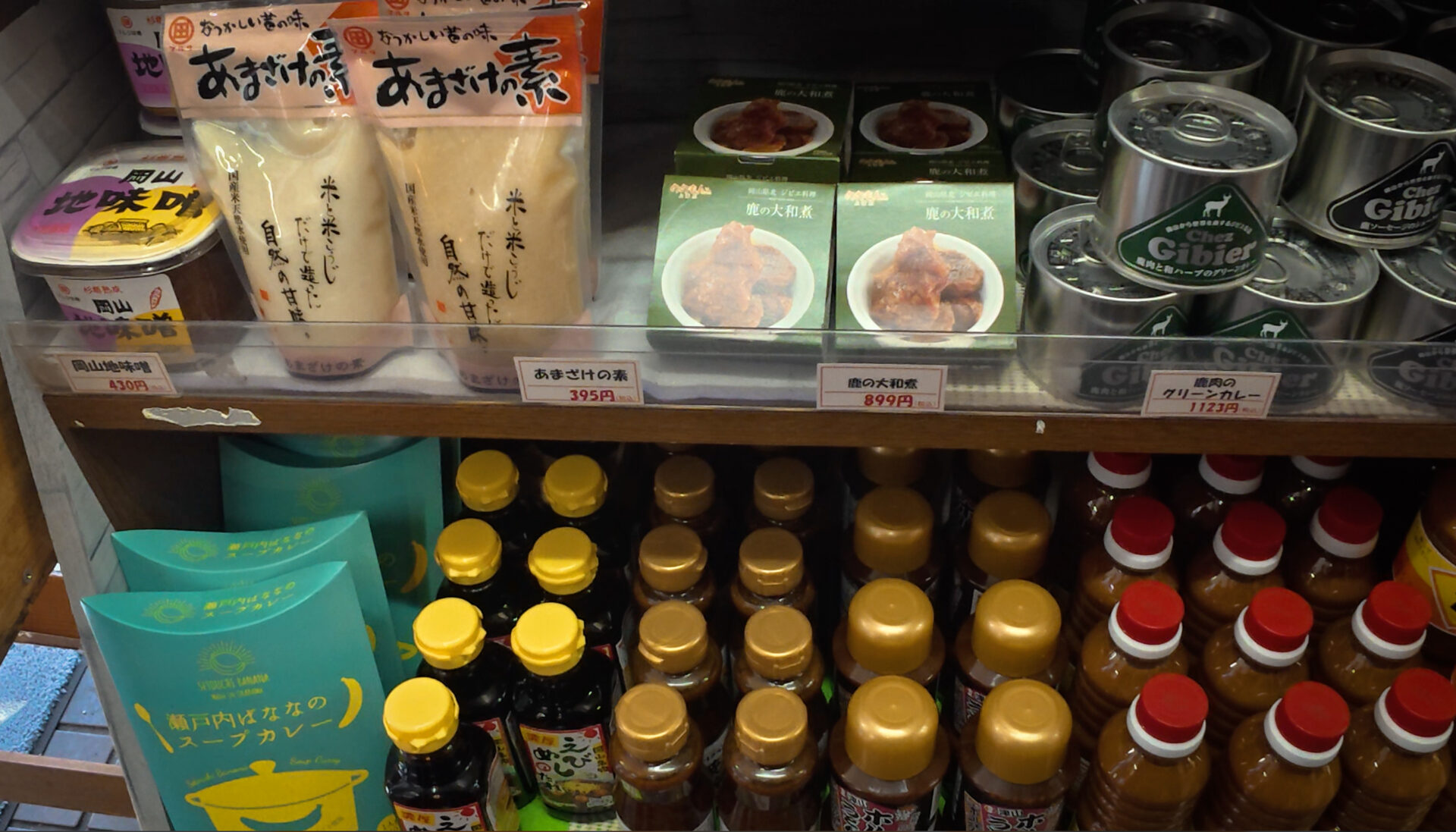
The shop’s shelves were lined with local temptations — Okayama’s own miso, amazake made purely from rice koji, canned game meat like simmered venison and venison green curry, and even a “Seto Inland Sea Banana Soup Curry.”
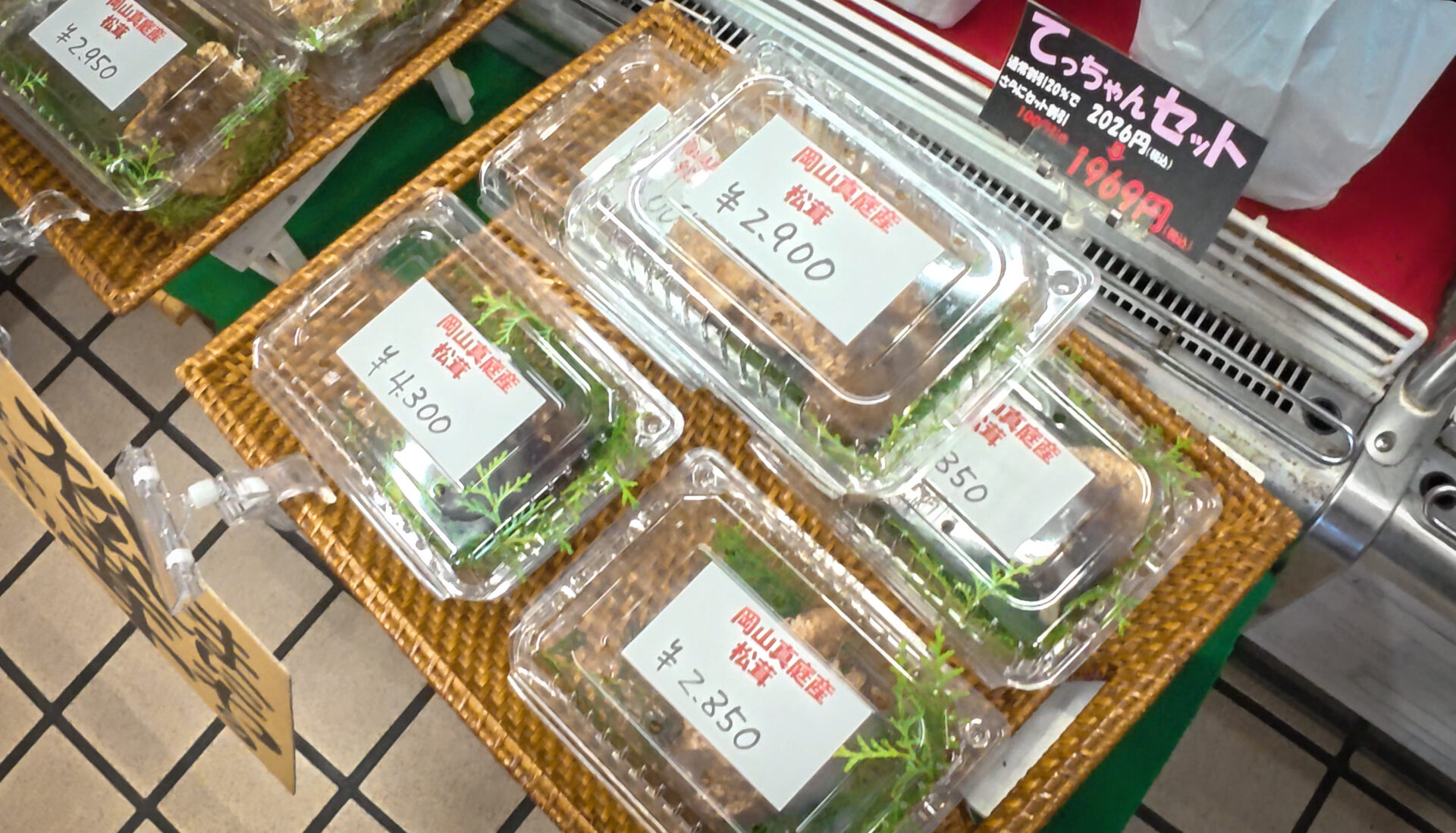
What really brought the season home, though, was matsutake mushroom from Maniwa, Okayama. Packages sat in a basket, priced anywhere from ¥2,850 to ¥4,300. Coming across local matsutake right at a highway rest stop felt like a small, welcome discovery — one distinctly of autumn in Okayama.
It was only a brief stop, but touching on the region’s bounty flipped a switch for the trip ahead. Back on the road, hands on the wheel again, toward our first real destination.

- ADDRESS
207 Shimokata, Maniwa, Okayama (Chugoku Expressway, Maniwa PA Inbound)
- OPEN
8:00 AM – 8:00 PM (Open 365 days / Year-round)
- AWARD
Featured entry in NEXCO West’s Highway Gourmet Championship and Guilty Pleasure Gourmet Fair
- COMMENT
- Notable for its soft peach-pink exterior inspired by Okayama white peaches. The house specialty and #1 bestseller is the Maniwa Ramen.



A Little Early — A Detour to Chuwa Shrine
We had some time before our reservation, so we decided to take a little detour and drive around the surrounding area.
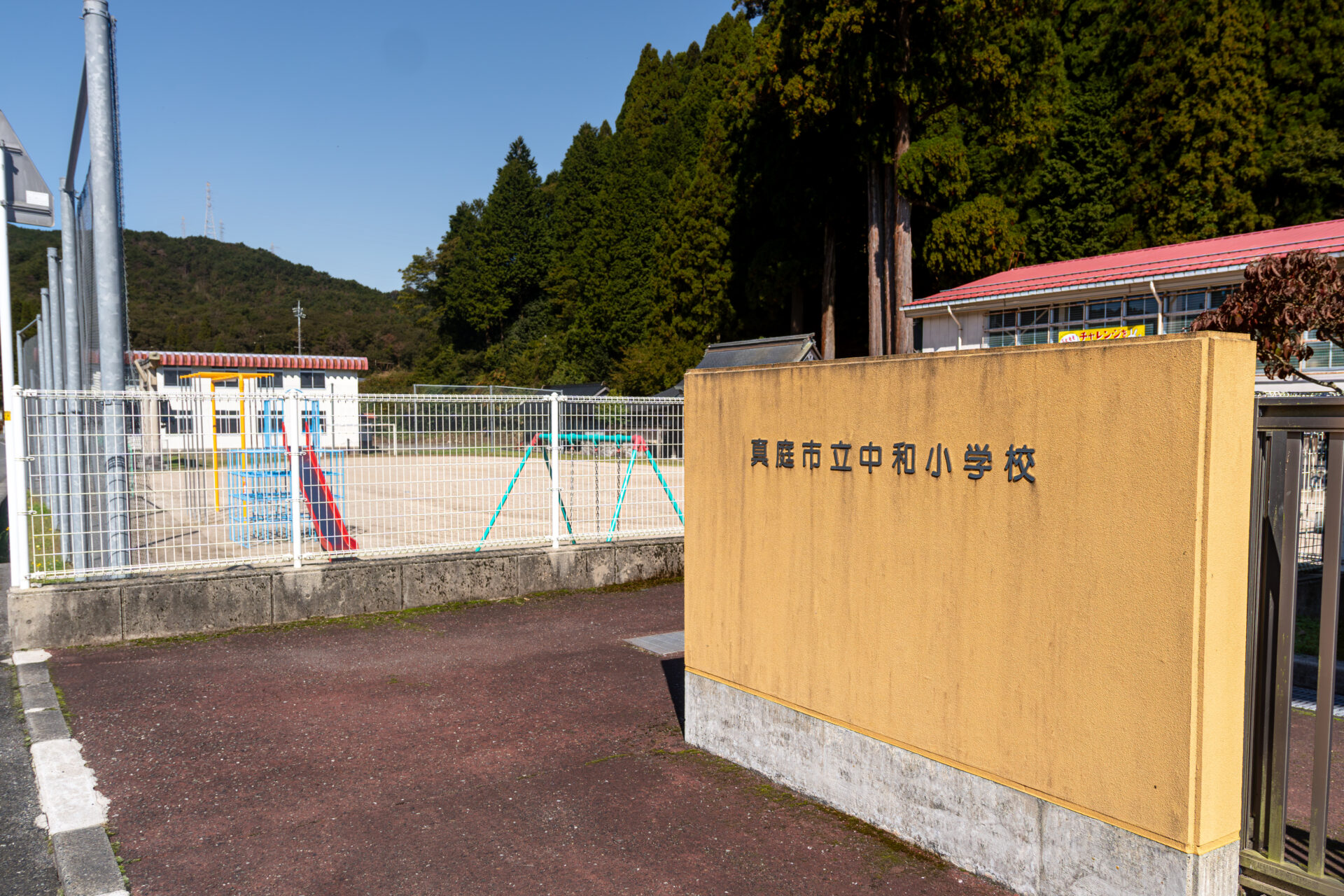
Along the mountain road, a school building with a red roof came into view through the window — Maniwa City Chuwa Elementary School. A banner hung in the window reading “Let’s enjoy taking on challenges!” — a small, charming sight.
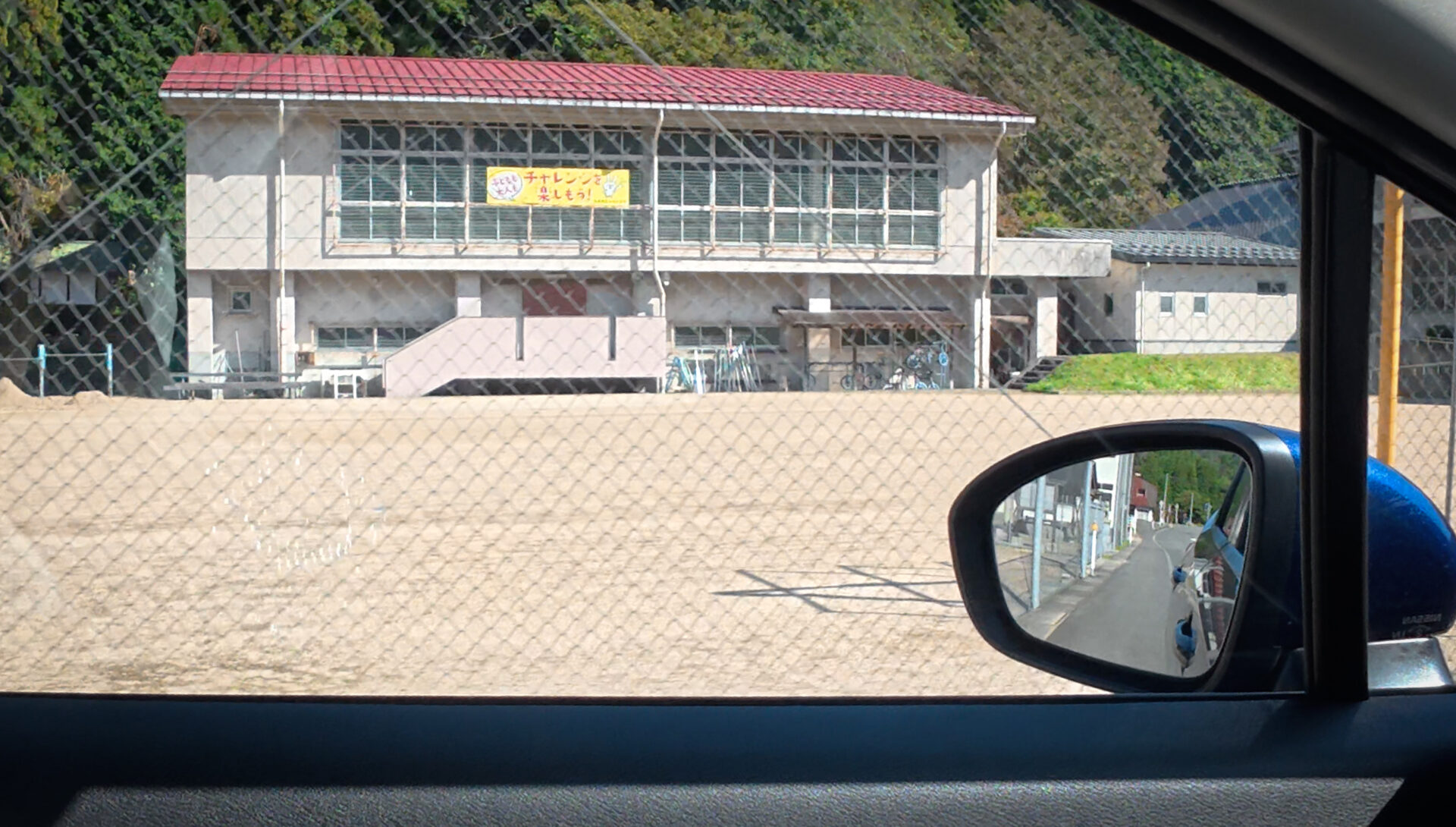
We parked and walked up to the school gate. Backed by a cedar forest, the red-roofed building stood alongside another with a tiled roof and a clock — every bit the mountain school it appeared to be.
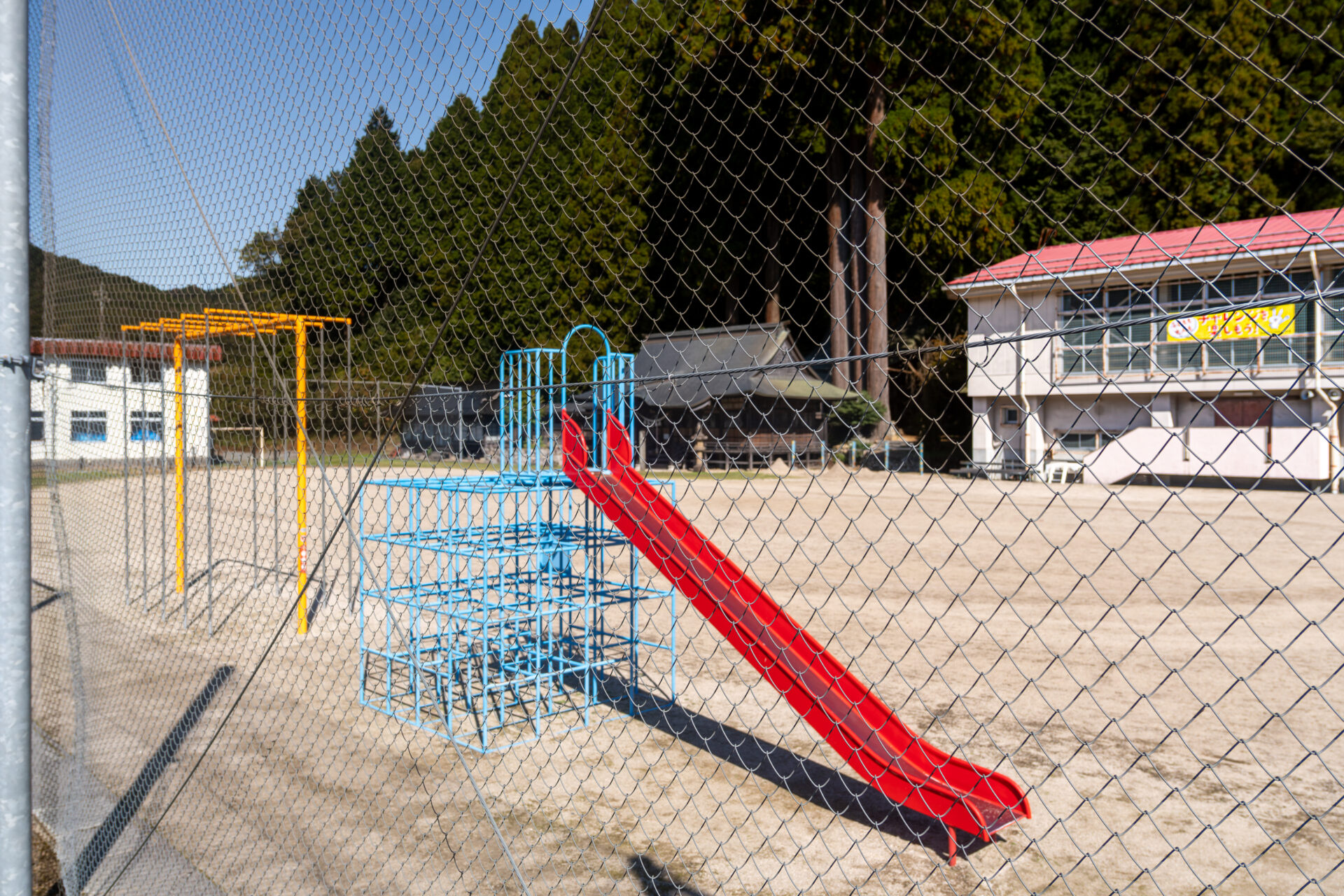
Through the fence, a red slide, a light-blue jungle gym, and a yellow set of monkey bars sat in the yard — playground equipment exactly as remembered from childhood, enough to make us stop and take it all in.
Beyond the schoolyard, Chuwa Shrine came into view. Surprisingly, the shrine grounds and the schoolyard turned out to be one continuous space — as if the gods and the children had long watched over the community together, side by side.
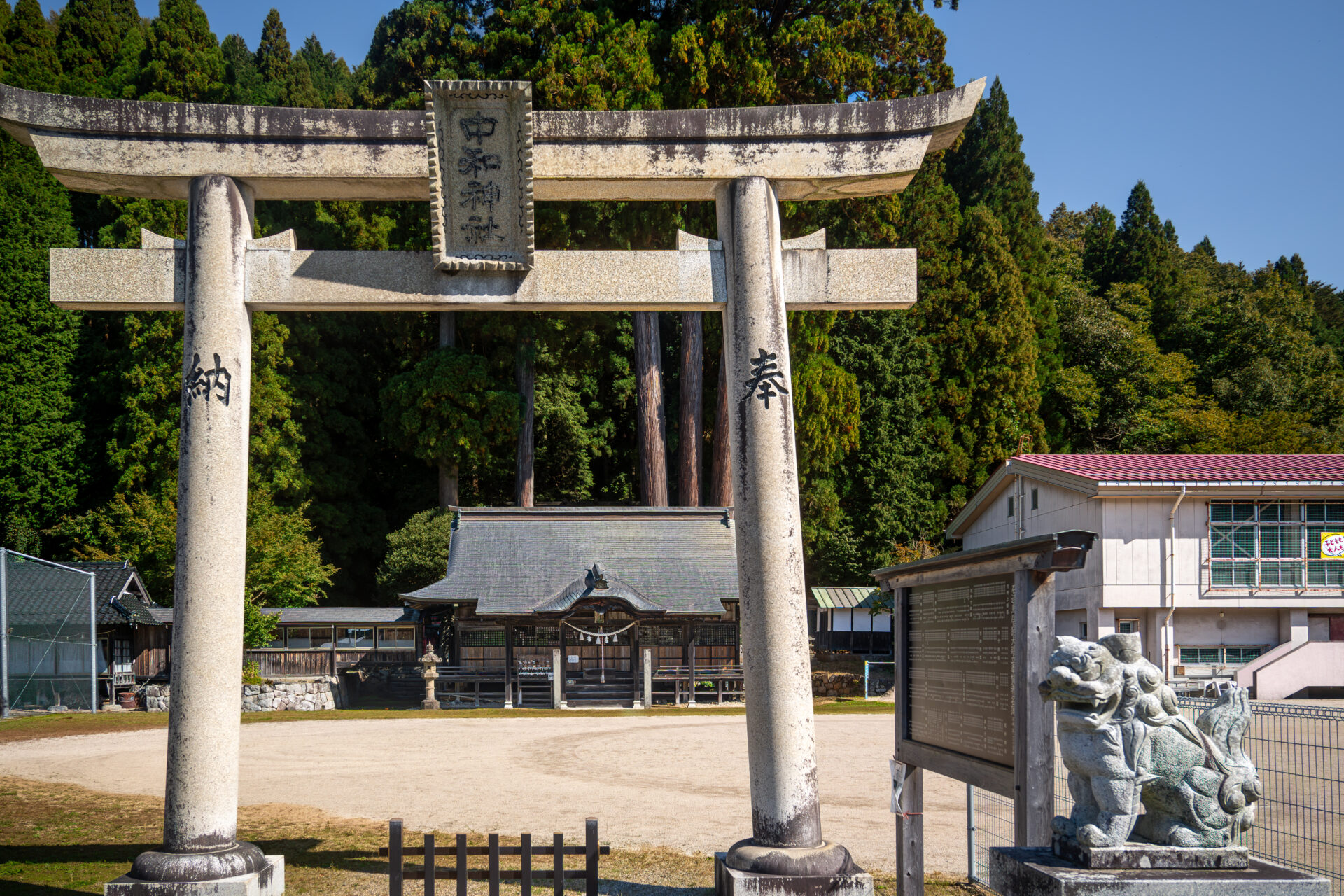
Beyond the stone torii gate stood a towering cedar reaching straight toward the sky, and a solid, weathered worship hall. The moss-covered torii and guardian statues spoke quietly of how long this place has been cared for.
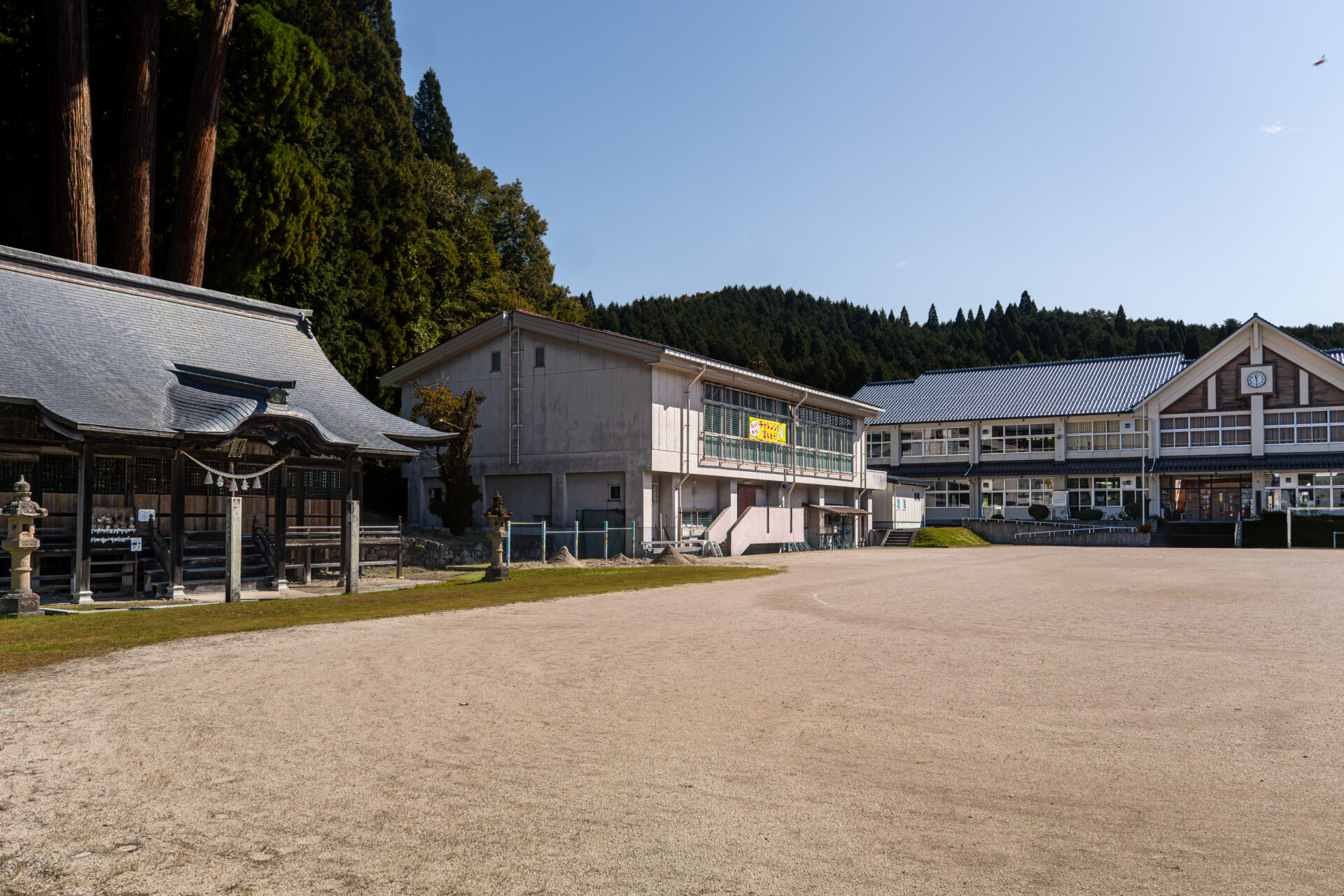
We paid our respects in front of the hall, offering a quiet wish for a safe journey and for the meals waiting ahead. All that could be heard was the wind moving through the cedar leaves. Surrounded by that clear air, the fatigue of travel seemed to melt away.
Perhaps it’s exactly these unassuming village scenes — not the tourist spots — that reveal a place’s true character. With minds settled, we headed at last toward the first destination of the trip —
- ADDRESS
1946 Hiruzen-Chuwa, Maniwa, Okayama
- OPEN
Open 24/7 (Free admission / Open grounds)
- AWARD
Attracted nationwide attention across Japan as the spiritual haven tied to the triumphant, against-all-odds return of the asteroid probe Hayabusa.
- COMMENT
- Founded as the village shrine (satomiya) for Kurumado Shrine and renamed Chuwa in 1913, this sacred spot honors the guardians of livestock, warding off misfortune and bestowing safe passage on travelers. With soaring Japanese cedars exceeding 400 years in age, it offers an idyllic, serene threshold to pause and pray for a safe journey before embarking deeper into the mountains.
Lunch at Ryo, a Hiruzen Eel Specialist
A short drive from Chuwa Shrine brought us to the trip’s very first destination: Ryo, an eel specialist run by a chef with a Michelin star to his name. The restaurant sits quietly in a mountain hamlet in Chuwa, east of the Hiruzen Highlands.

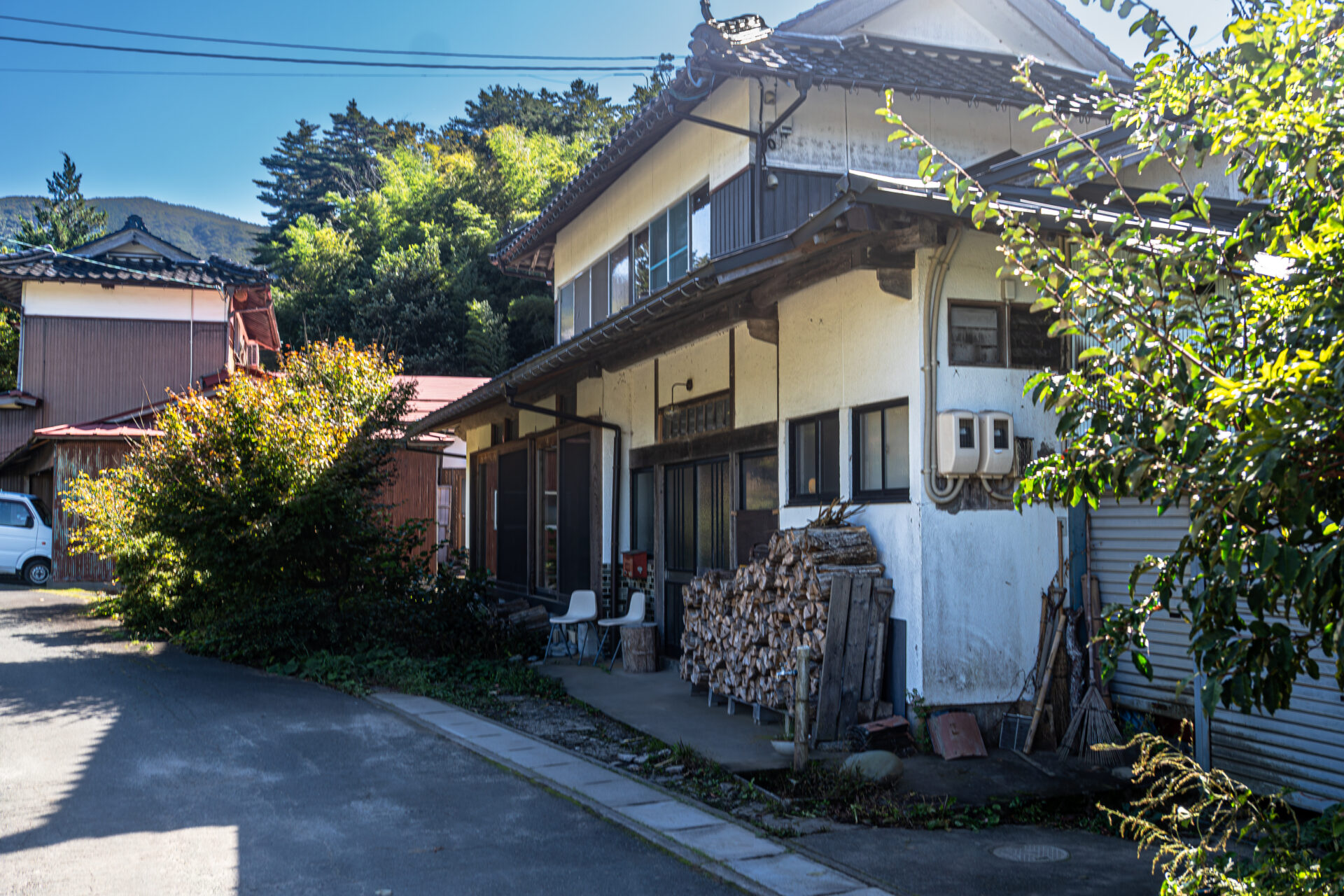
The chef once ran an eel restaurant in Nakameguro, Tokyo, that held a Michelin star two years running in the 2017 and 2018 editions of the Michelin Guide Tokyo. In the spring of 2020, he closed it himself and relocated here, to this satoyama landscape fed by natural hot spring water and lined with rice paddies, building a course centered on eel and the bounty of the land.
And yet, what stood before us looked like nothing more than an ordinary house. A tall stack of firewood sat under the eaves, two white chairs set neatly side by side. “Is this really it?” — the simplicity was so unassuming it almost made us double-check, which somehow only heightened the feeling of having arrived somewhere genuinely special.
Service starts all at once at noon. As the reservation time drew near, the fragrant smell of grilling eel began drifting out from inside — anticipation building to its peak.
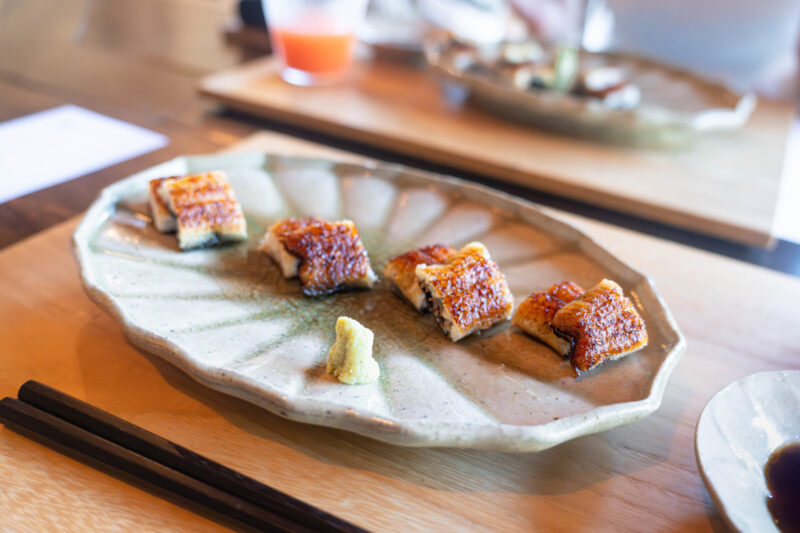
You can read all about the course, which showcases a single eel prepared through a range of techniques, along with the standout dish of the visit, in the blog post below.
- ADDRESS
1705-6 Hiruzen-Chuwa, Maniwa, Okayama
- OPEN
HOURS: 12:00 PM Sharp (Simultaneous start; approx. 2-hour dining course)
REGULAR CLOSING: Irregular days off (Seasonal winter closure: mid-February to mid-March)
- CONTACT
No phone service (Bookings accepted strictly via email: ryo.reserve@gmail.com)
- AWARD
Tabelog Eel 100 Famous Restaurants (Hyakumeiten) / Founded by a chef who held a Michelin star in Tokyo
- COMMENT
- Strictly by reservation. Hidden deep within a tranquil satoyama basin blessed by hot spring runoff and pristine paddies, this discreet retreat is accessible exclusively by private car.

Still Savoring Ryo, Driving Through the Hiruzen Highlands
We left Ryo in the early afternoon, fully satisfied — meal and mood both. From there, the car headed toward the Hiruzen Highlands.
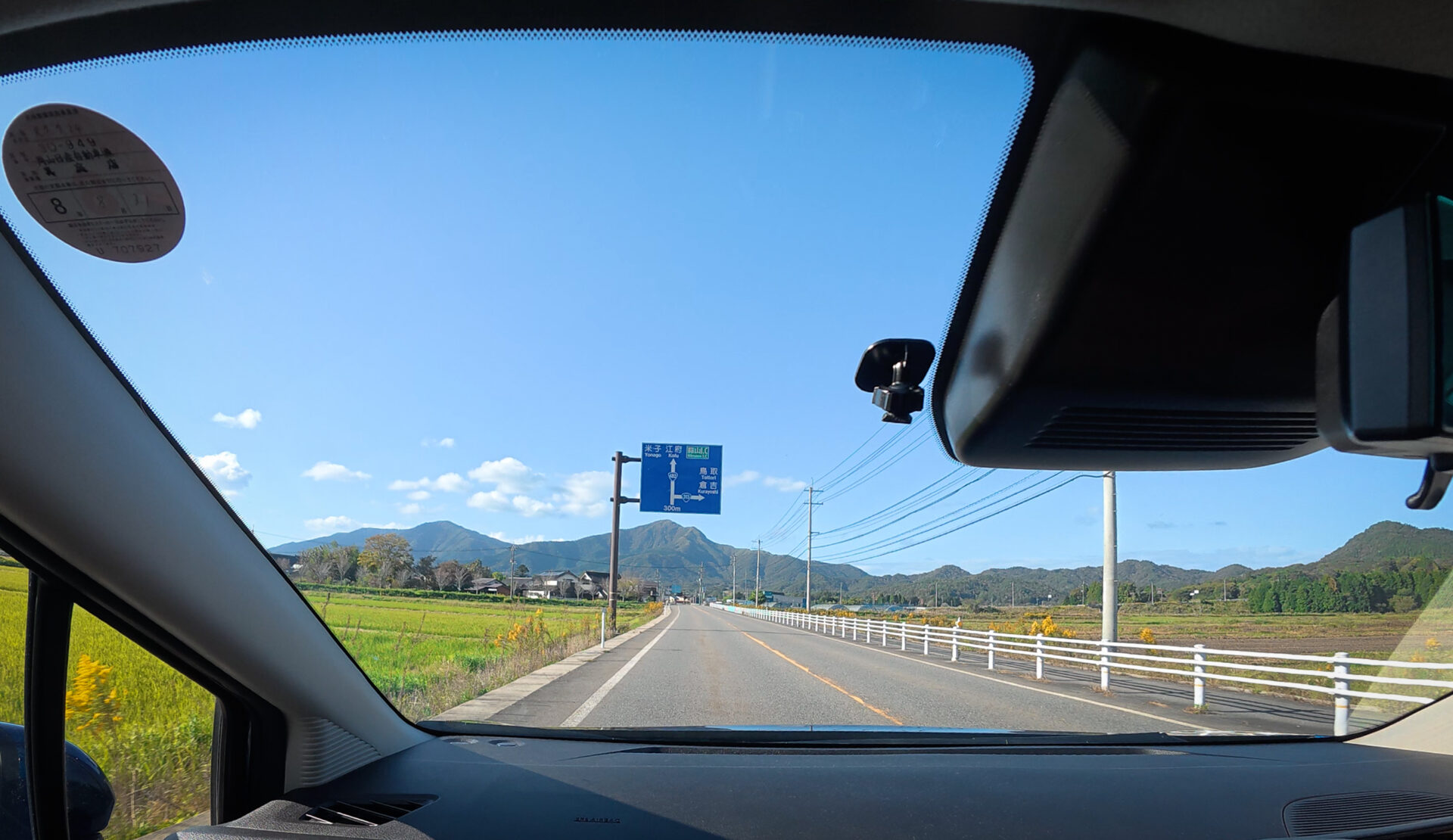
The view opened up suddenly — golden rice paddies stretching out toward the sturdy silhouette of the Hiruzen mountain range beyond. Yellow flowers swayed at the roadside, white clouds drifting across a clear blue sky. It was the kind of open, sweeping highland scenery that makes you want to roll the windows down.
A Soft-Serve Break at Hiruzen Jersey Land
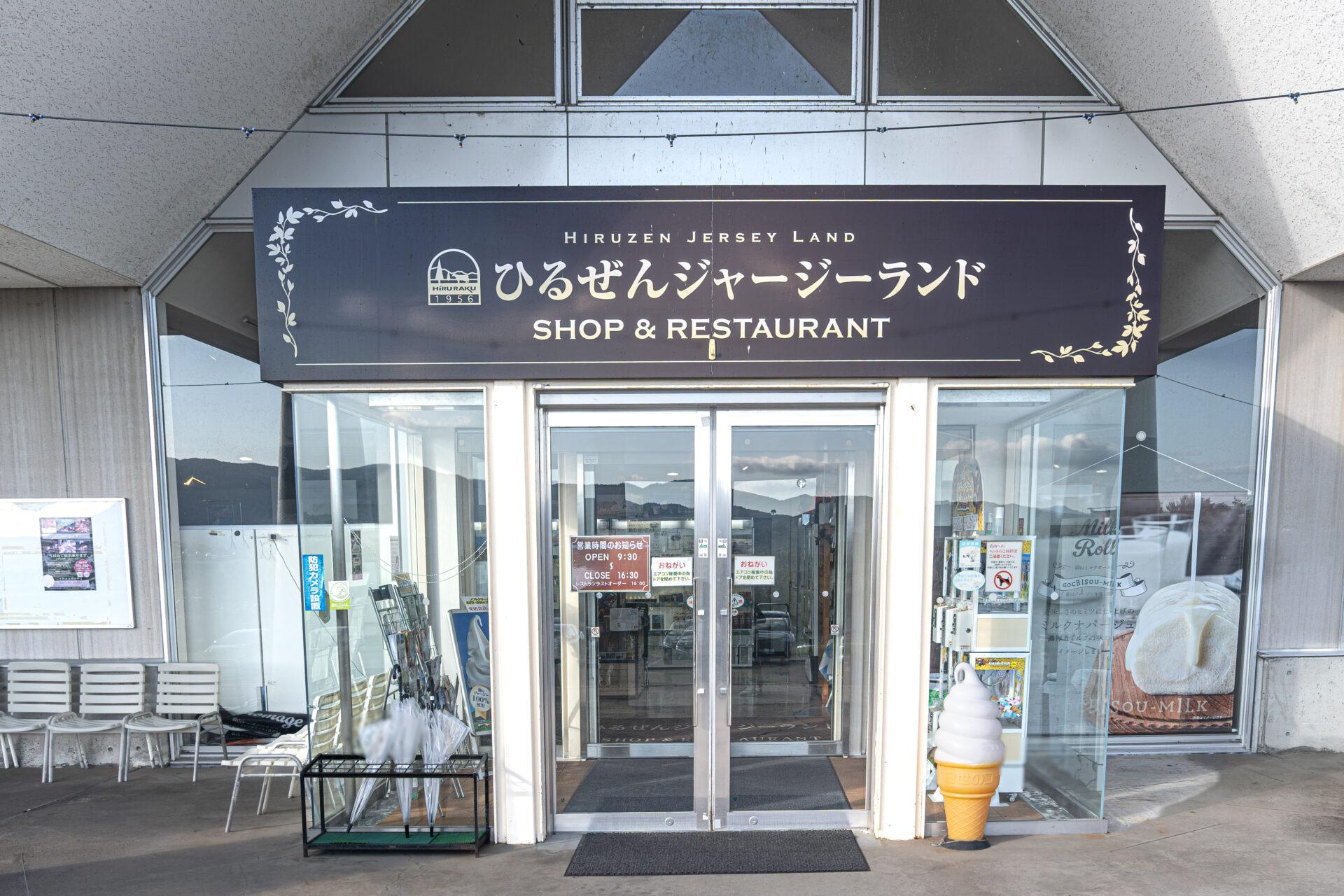
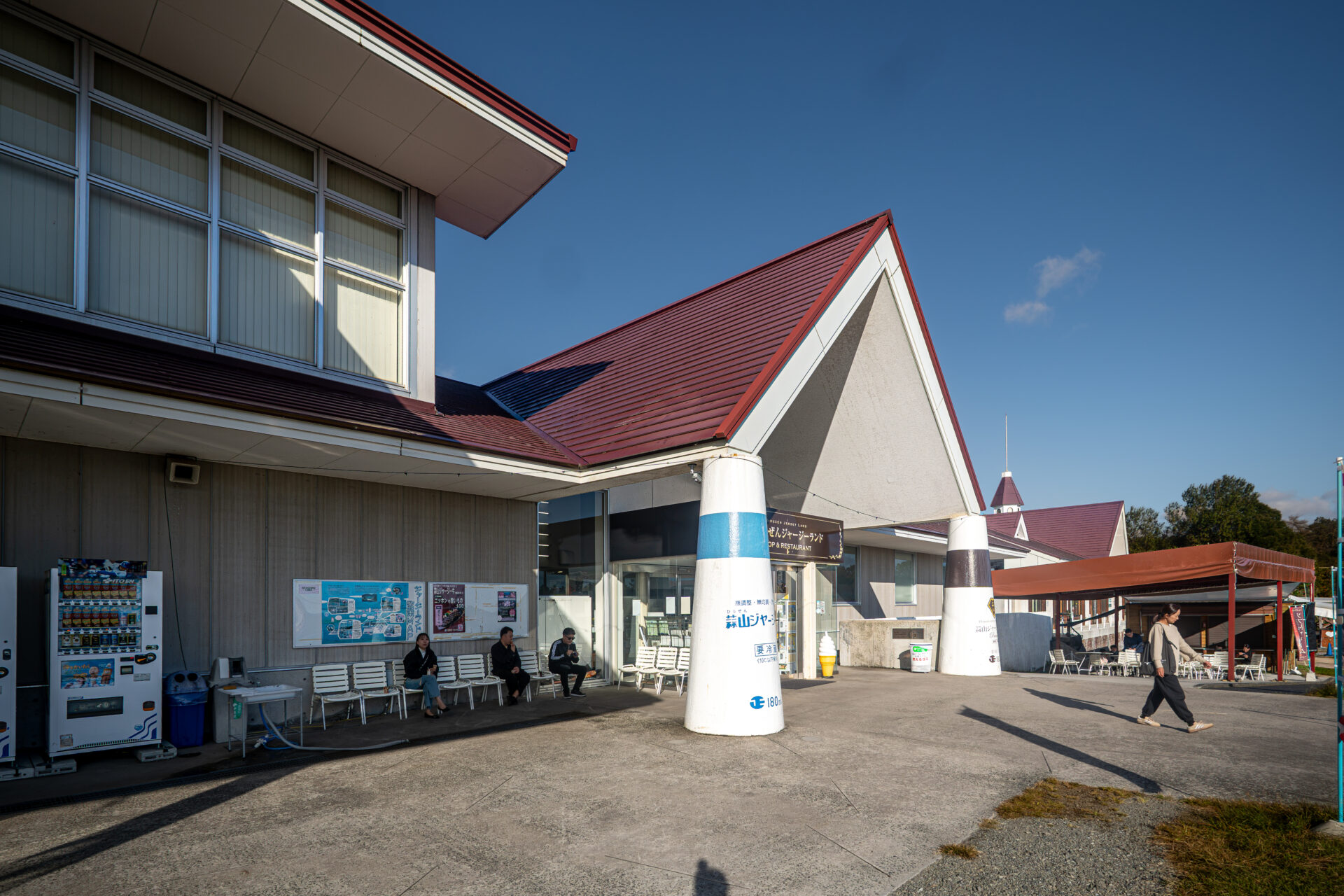
We headed to Hiruzen Jersey Land, set among the pastures of the Hiruzen Highlands. Run by the Hiruzen Dairy Cooperative, the shop and restaurant is marked by a red-roofed building with a clock tower.
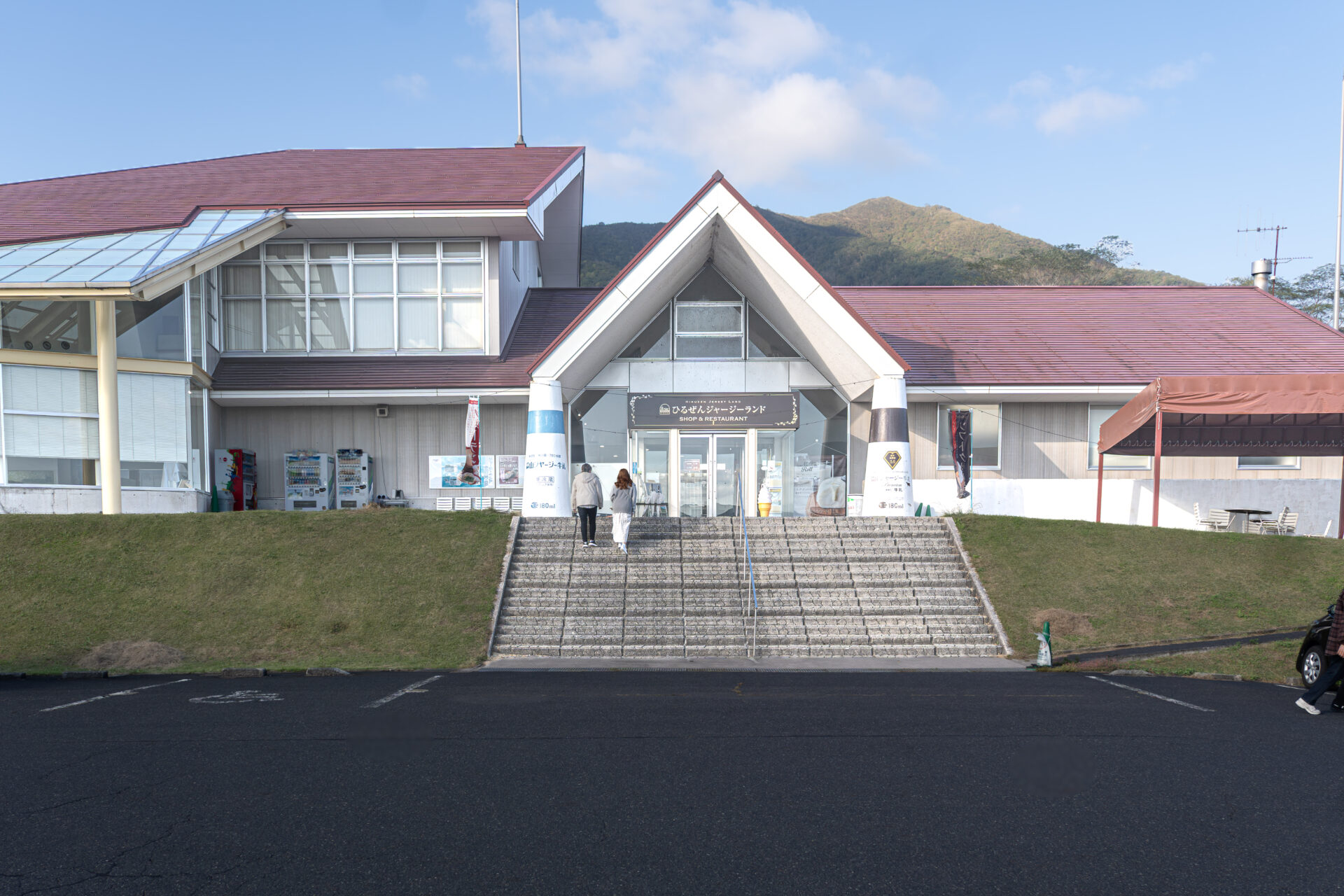
Stepping out of the car, the outside temperature read 16°C. The cool, clear highland air gently wrapped around the lingering satisfaction from the eel. Climbing the stairs together with the group, it was finally time for something sweet.
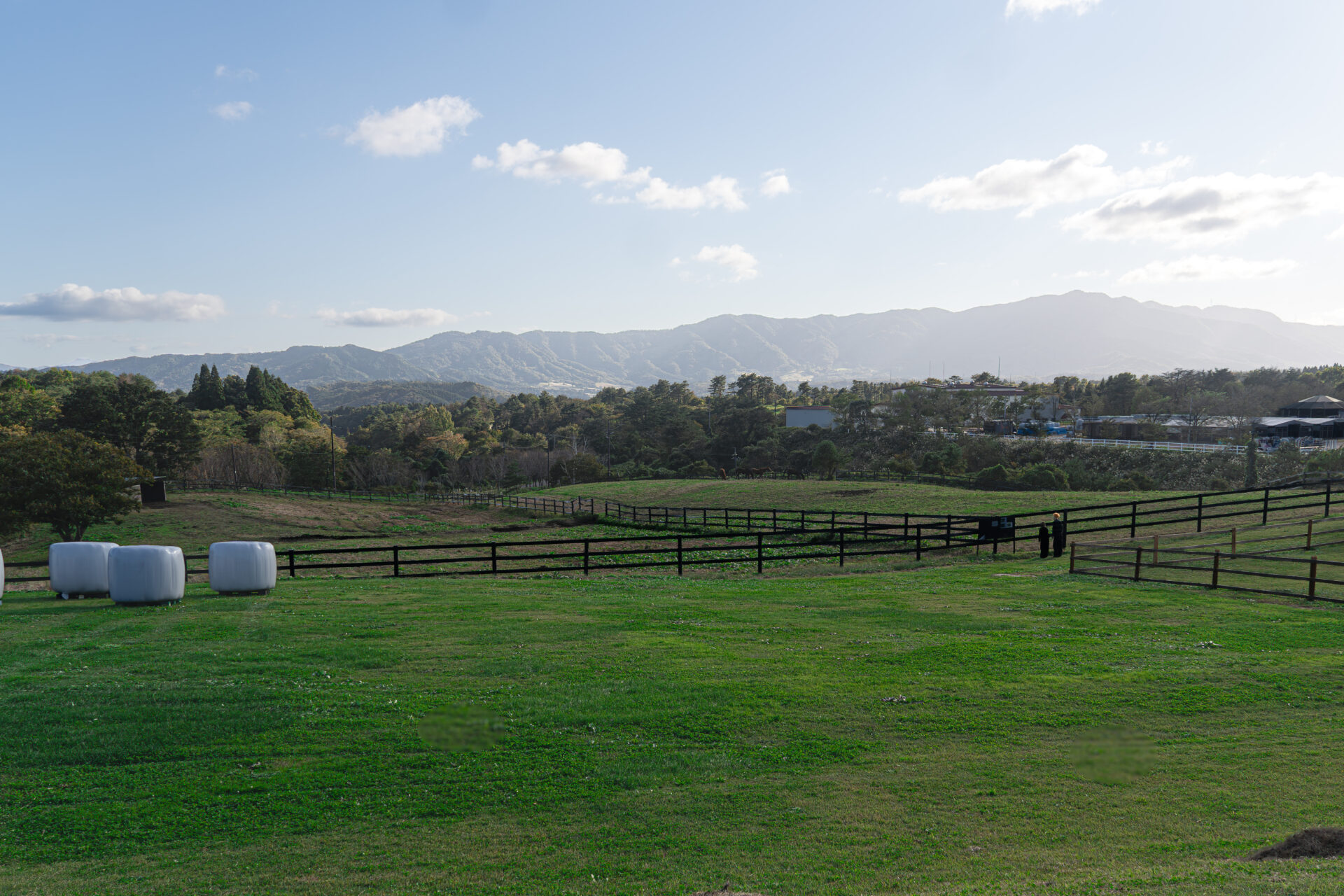
Jersey cattle are usually seen grazing here, but that day it was horses casually roaming the pastures instead.
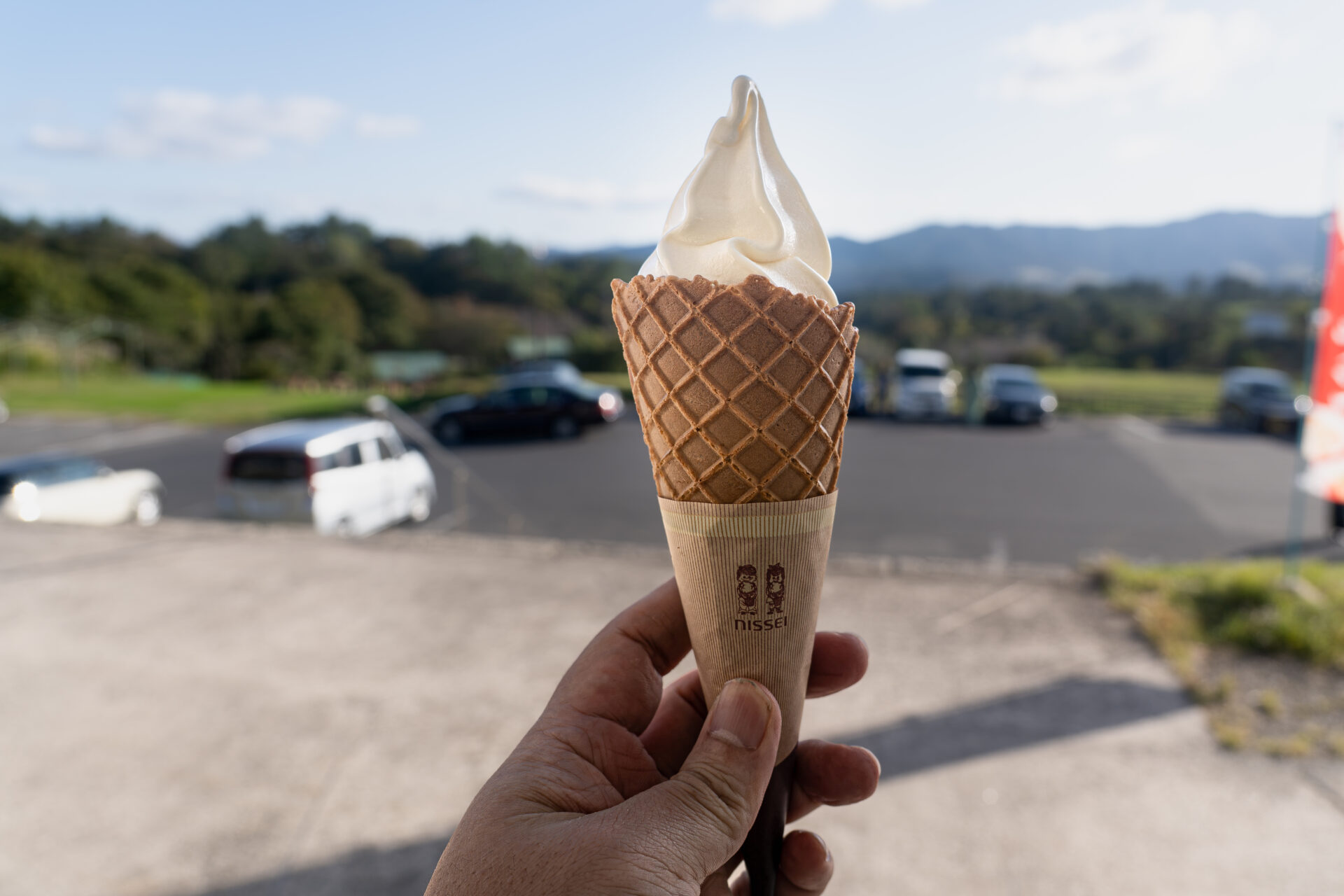
Taking in that view, we of course reached for the Jersey soft-serve. Rich in milky depth, yet remarkably clean on the finish — that particular character unique to Jersey milk: full-bodied, never heavy.
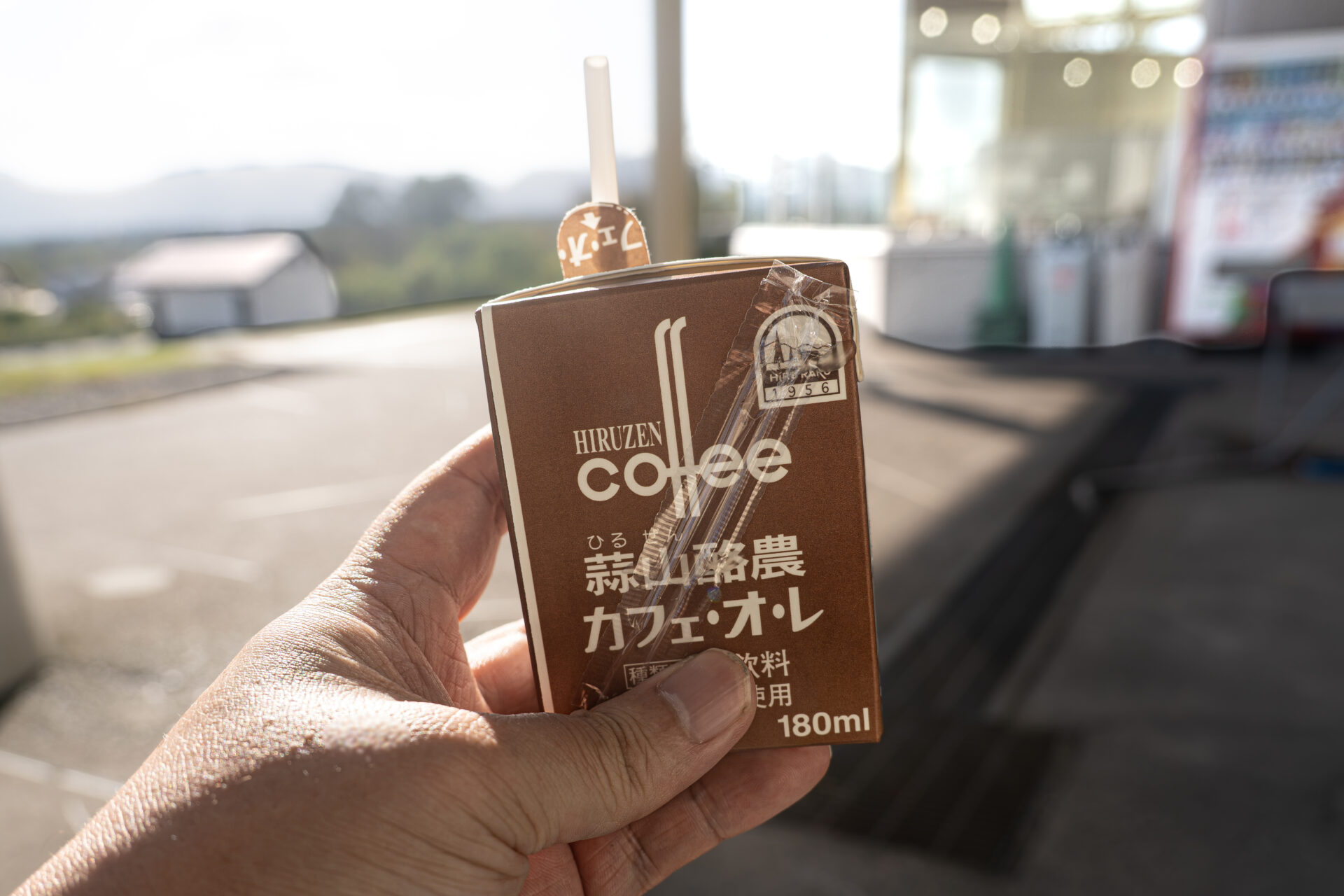
Alongside it, we picked up a Hiruzen Dairy Café au Lait. Poking a straw through the old-fashioned paper carton released the gentle round warmth of milk mingling with the coffee’s fragrance. This too was rich yet clean, pairing beautifully with the soft-serve.
We sat on a bench under the eaves, taking in the distant mountains, ice cream in hand, resting alongside the group — a gentle Hiruzen afternoon, with nature and dairy farming close at hand.
- ADDRESS
956-222 Hiruzen-Nakafukuda, Maniwa, Okayama
- OPEN
HOURS:
Late March – November: 9:30 AM – 4:30 PM
December – Mid-March: 10:00 AM – 4:00 PM
REGULAR CLOSING: January 1; Tuesdays and Wednesdays during January & February
- AWARD
Multi-award winner for authentic regional dairy soft-serve and artisanal souvenirs
- COMMENT
- Free admission. Situated roughly 10 minutes by car from the Yonago Expressway Hiruzen IC. Accommodates up to 300 vehicles with generous, complimentary on-site parking overlooking rolling highland pastures.
From Hiruzen to the Seto Inland Sea: A Dusk Drive
Having fully soaked in the highland air, we got back on the expressway. From the north of the Chugoku mountain range to the southeastern edge of the prefecture and the shores of the Seto Inland Sea — a long drive that traced the length of Okayama, heading toward that evening’s destination.
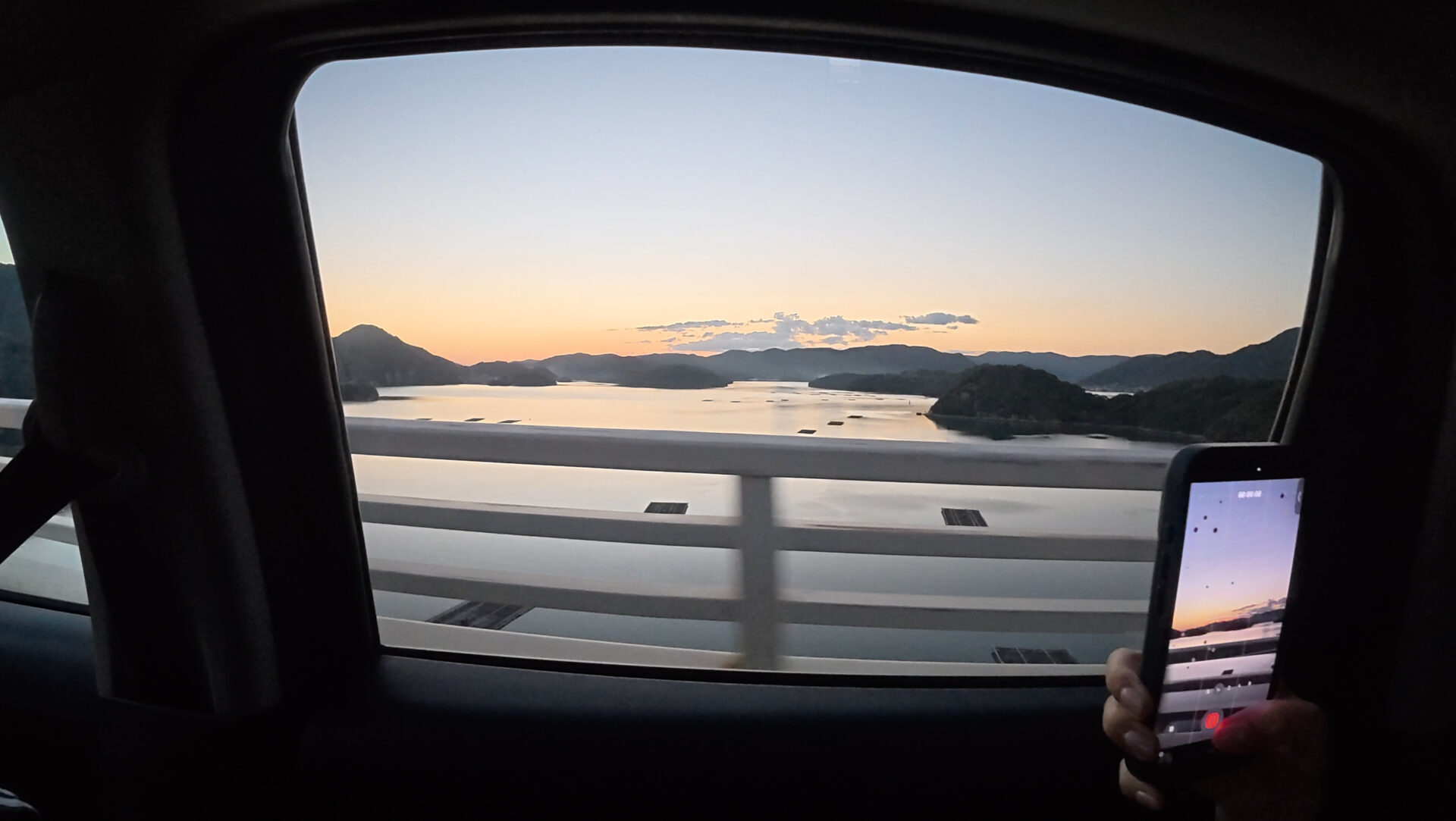
Coming off the expressway onto the coastal road, the sky had just begun to turn a deep amber. Looking down from a bridge over the inlet, oyster-farming rafts dotted the water, layers of island silhouettes drawn quietly against the sunset.
We found ourselves reaching for our phones almost automatically. A mountain hamlet in the morning, a highland pasture at midday, and now the Seto Inland Sea at dusk — encountering so many different faces of Okayama in a single day is exactly the reward of traveling by car.
Dinner at Yisai Liuxiang in Tsurumi, Bizen
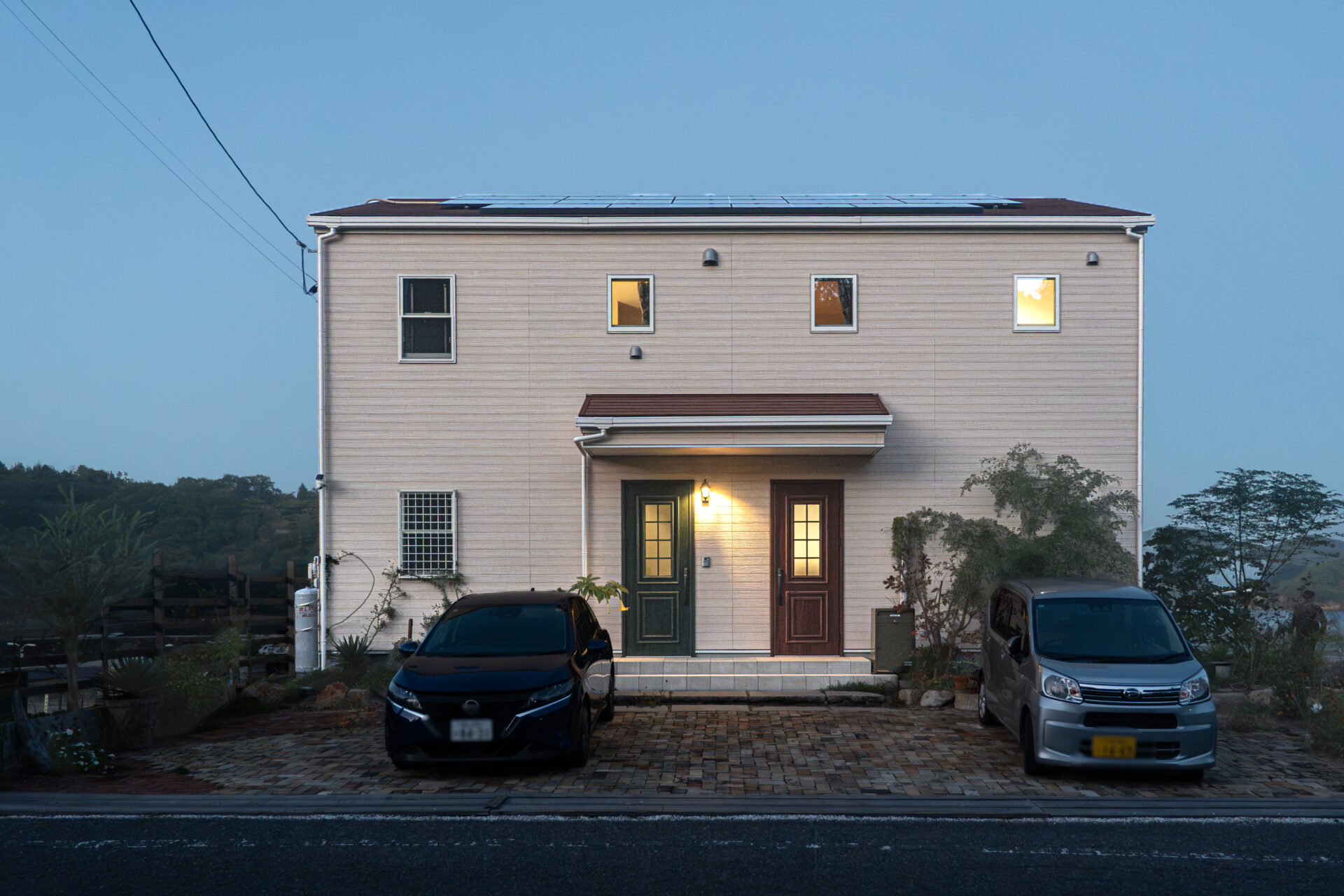
We arrived at Yisai Liuxiang, set along the inlet at Tsurumi in Bizen City. Once known in Takatsuki, Osaka, as “the Chinese home-cooking restaurant you can never book,” it relocated in 2023 to this calm stretch of coastline — a small auberge that also offers overnight stays.
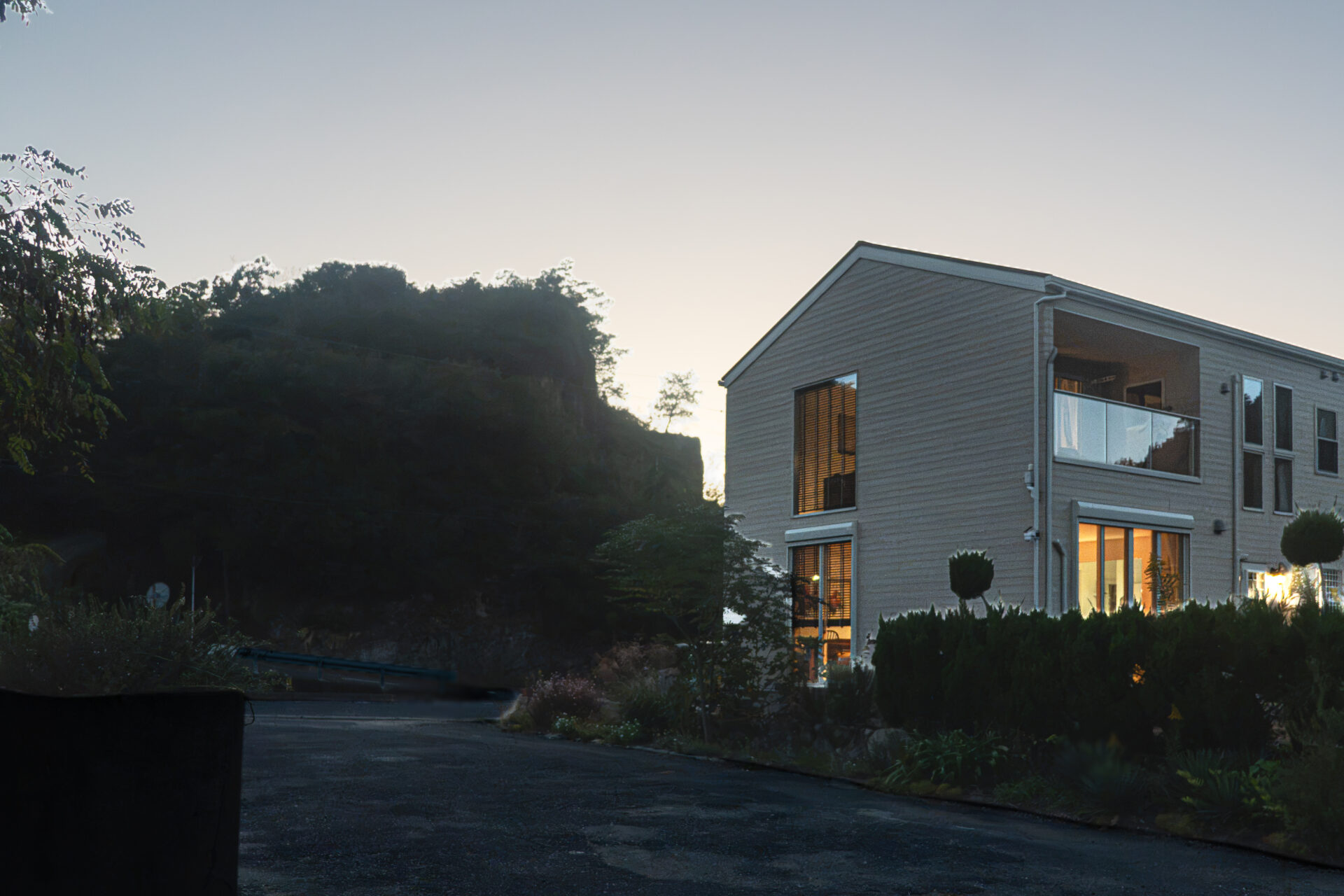
Rising through the dusk was a two-story building with the warm, approachable feel of a private home. The soft glow of light at the entrance made it feel almost like being invited into someone’s house.
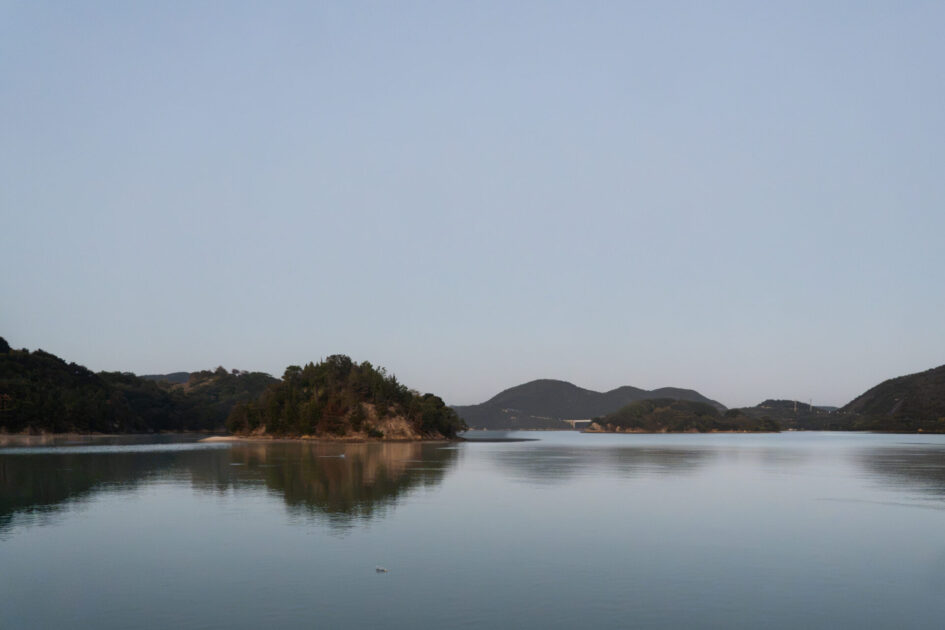
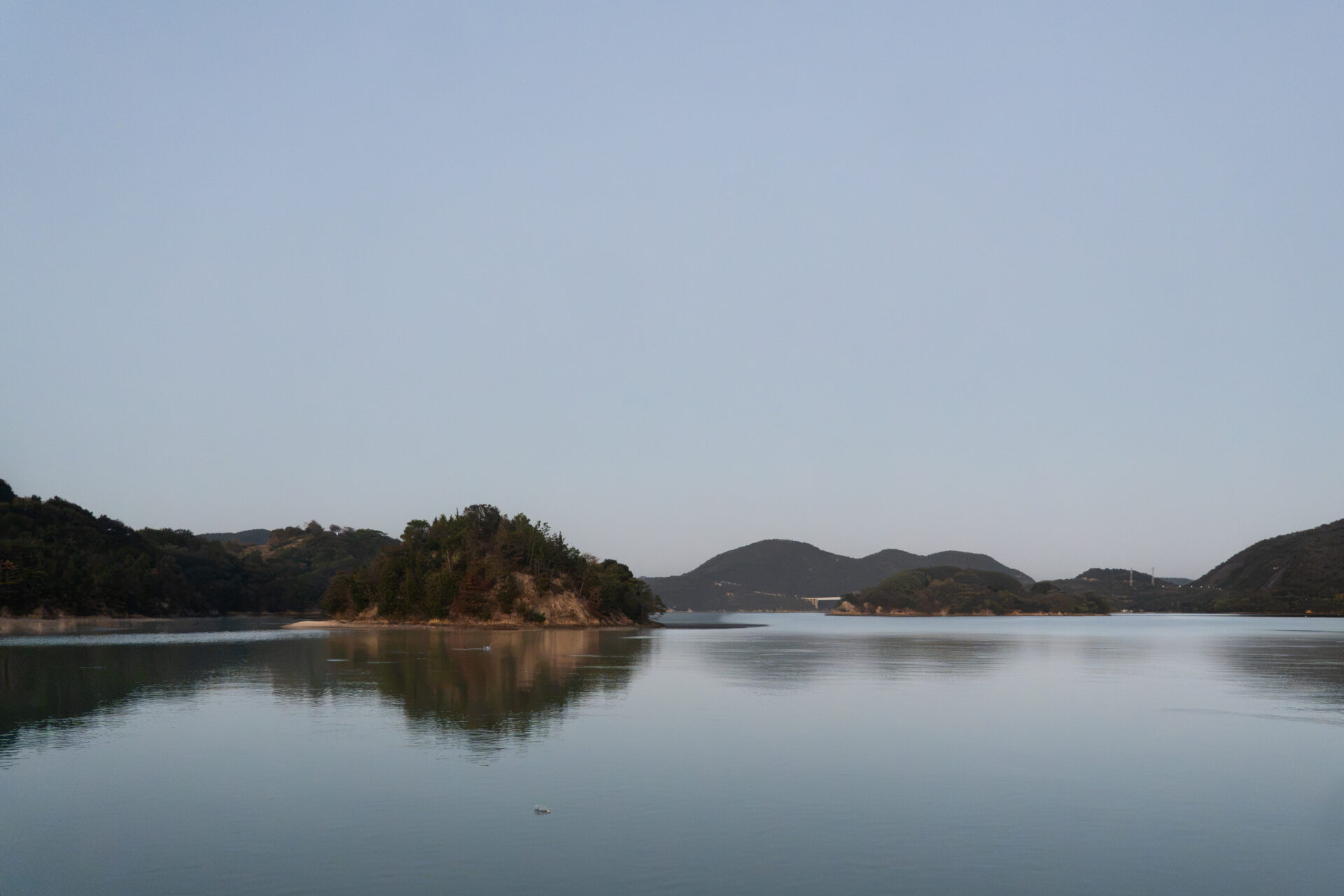
Turning back, the inlet lay perfectly still, mirror-like, in front of us — the sky’s shift from dusk to night reflected slowly across the water as it sank into deeper blue. Seeing this view made it easy to understand exactly why the restaurant chose to move here.
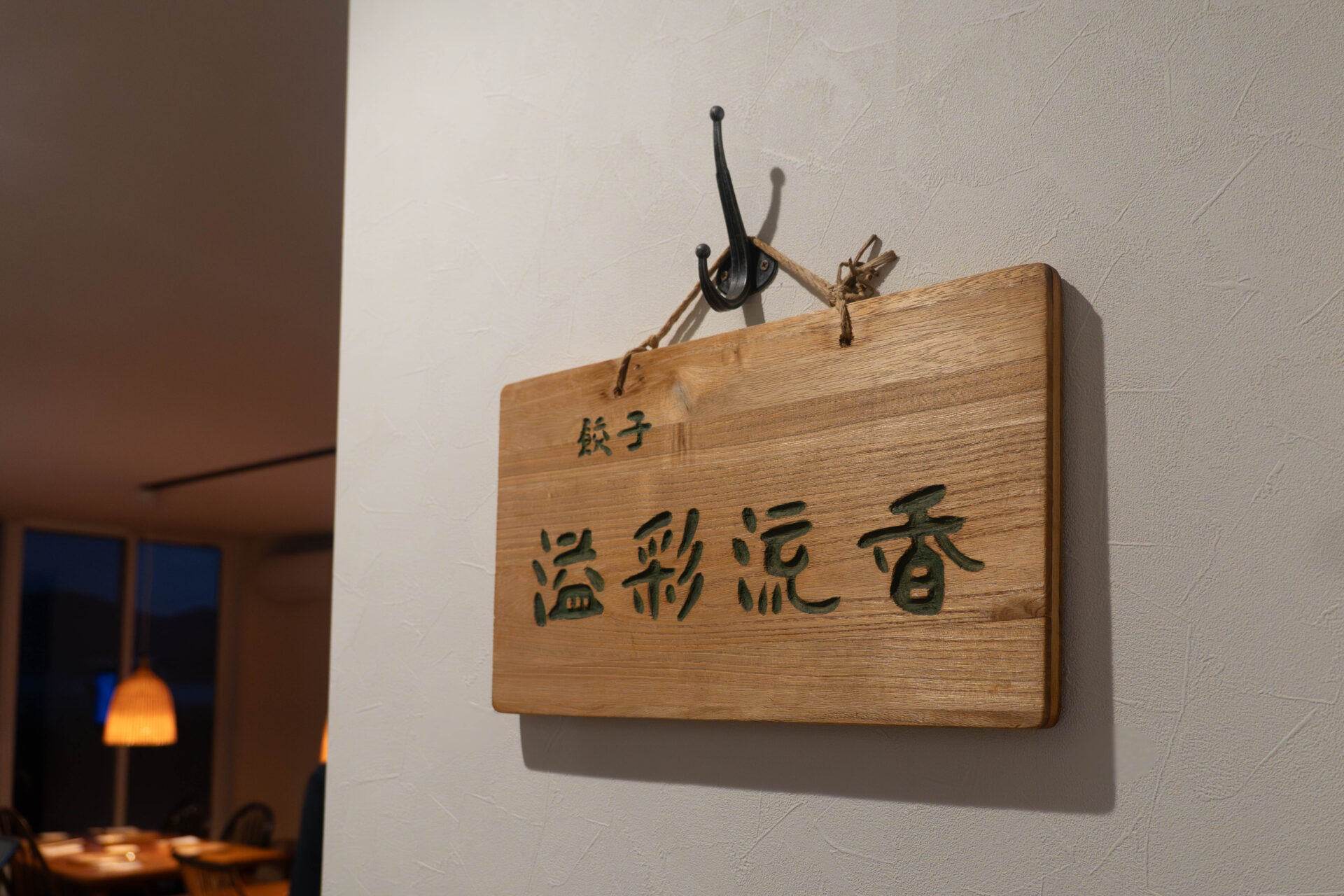
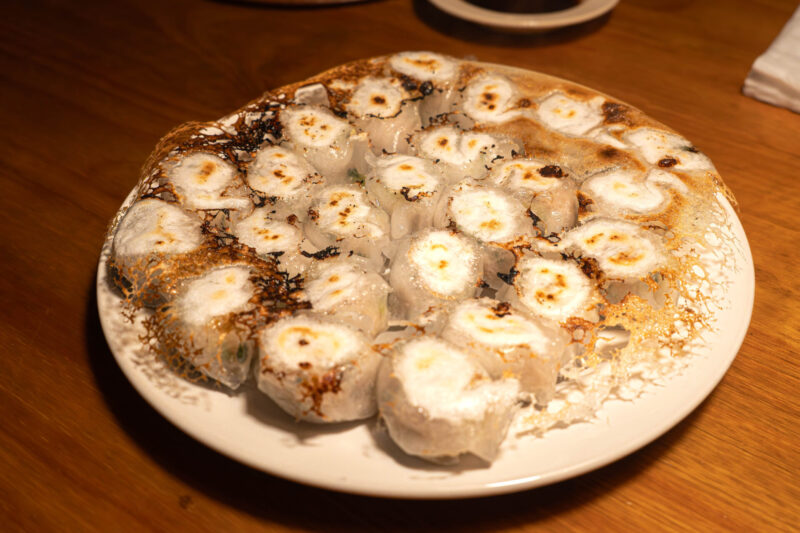
Stepping inside, a wooden sign carved with “Dumplings, Yisai Liuxiang” hung on the wall — the restaurant’s true signature, and the dish we’d been most looking forward to all day: crystal dumplings, drawing steadily closer.
You can find the full course — Seto Inland Sea ingredients built through Chinese home-cooking technique, along with those long-awaited crystal dumplings — in the blog post below.
- ADDRESS
3710 Tsurumi, Bizen, Okayama
- OPEN
HOURS: Lunch from 12:00 PM / Dinner from 5:00 PM
REGULAR CLOSING: Irregular days off
- CONTACT
+81-80-4017-6682 (Inquiries: 9:00 AM – 6:00 PM)
- AWARD
The legendary Osaka (Takatsuki) institution celebrated as the "impossible-to-book home-style Chinese kitchen," renowned nationwide for its signature, translucent Crystal Dumplings.
- COMMENT
- Fully private dining and boutique auberge operating strictly by advance reservation. Table seatings require parties of 4 to 8 guests (maximum 2 seatings per day; omakase course ¥8,000 tax incl.). Overnight stays are exclusively restricted to one single party per night, fronting an oyster-farming cove. On-site parking for 3–4 cars.
Back to Okayama Station, Returning the Rental Car
Full in both stomach and spirit after Yisai Liuxiang, we drove the evening roads back into Okayama City, returning to Okayama Station — where this trip had begun that same morning.
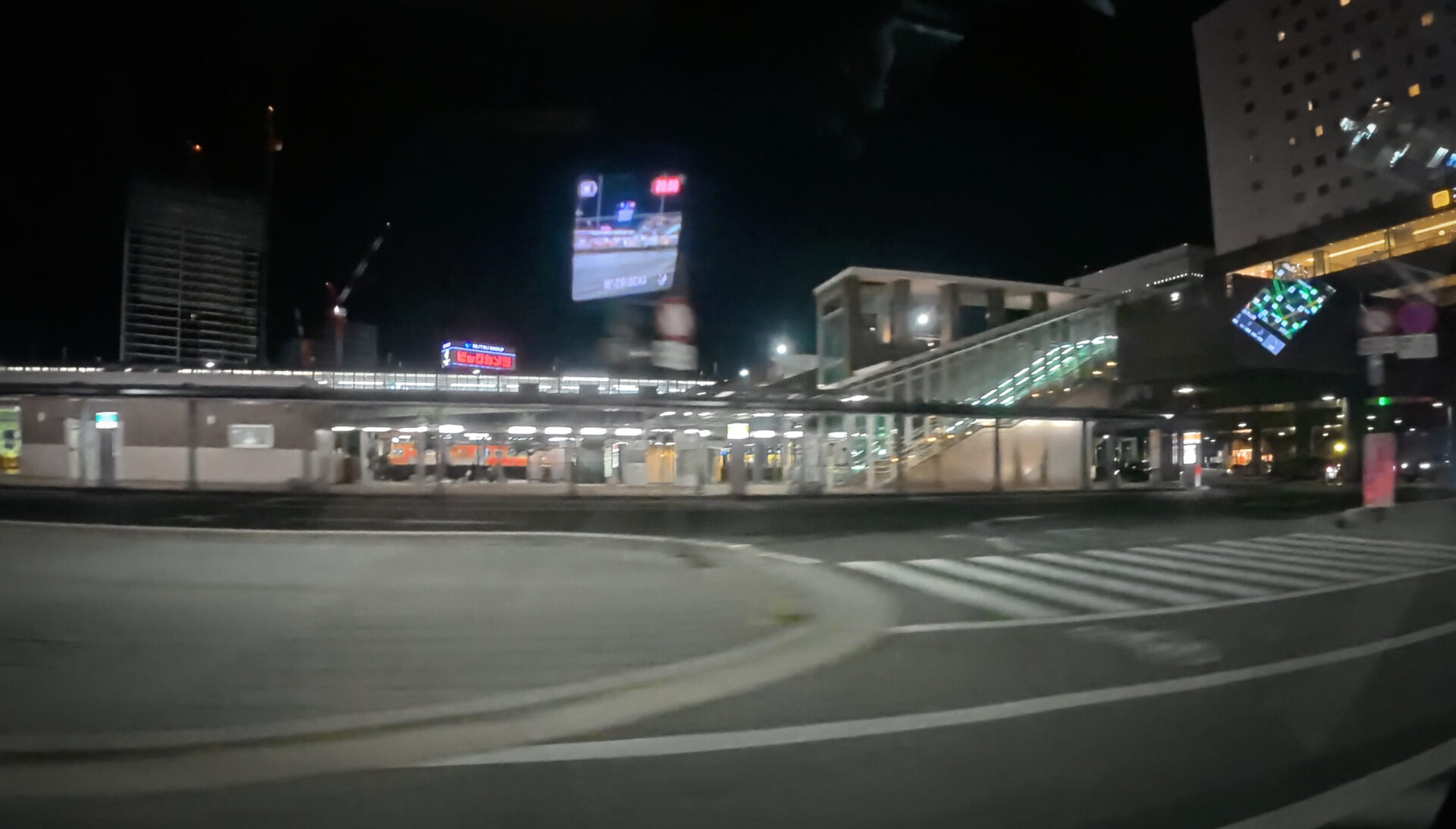
The redevelopment cranes that had stretched into the blue sky that morning now sat as mere silhouettes against the night. Looking at the lights around the station and thinking back on the ground covered that day — from a mountain hamlet, through highland pastures, to the shores of the Seto Inland Sea — brought on a slightly strange, unreal feeling.
We returned the rental car at the west-exit office, marking the end of driving for the day. Real gratitude, both for the car that carried us so far, and for the group members who took turns at the wheel.
Tonight’s Stay: Mitsui Garden Hotel Okayama
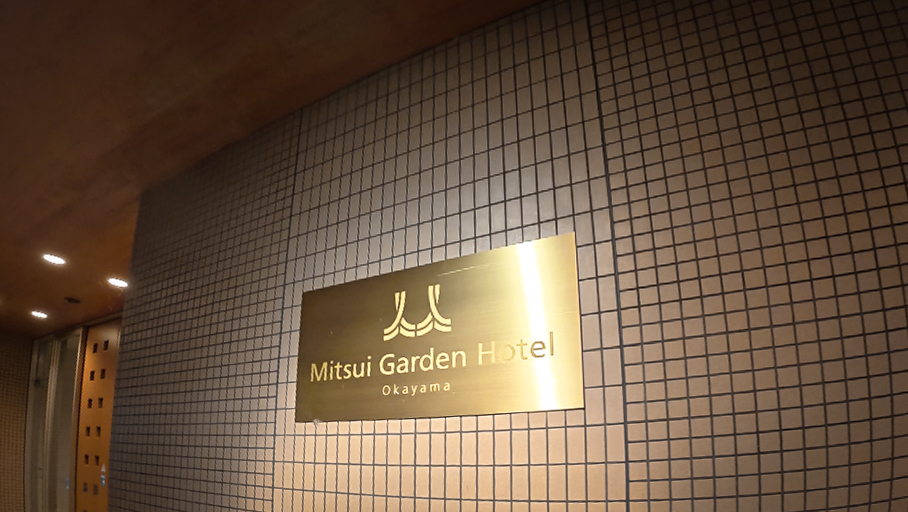
We made our way to Mitsui Garden Hotel Okayama, a short walk from the station. The same Mitsui Garden Hotel chain that took care of us during our Kanazawa trip, once again our home for the night.
A gold plaque set against a tiled wall cast a calm light over the entrance. Checking in and stepping into the room, the day’s fatigue slowly began to unwind.
- ADDRESS
1-7 Ekimotomachi, Kita-ku, Okayama, Okayama
- OPEN
Check-in: 3:00 PM / Check-out: 11:00 AM (subject to booking rate)
- AWARD
Rakuten Travel Bronze Award / Jalan OF THE YEAR Honoree
- COMMENT
- Located just a 2-minute stroll from JR Okayama Station's Korakuen Exit (East Exit). Houses the soothing, guest-only "Garden Bath" communal spa on the top floor—an essential respite after a day behind the wheel. Paid on-site parking for 48 vehicles (first-come, first-served).
Eel in Hiruzen, soft-serve on the highlands, and crystal dumplings by the Seto Inland Sea. Having encountered so many faces of Okayama — from mountain to sea, and the gastronomy found in between — day one of the trip quietly came to a close.
DAY 2 | An Unexpected Closure, and Okayama’s Local Favorite at Okonomiyaki Mori, Hokan-cho
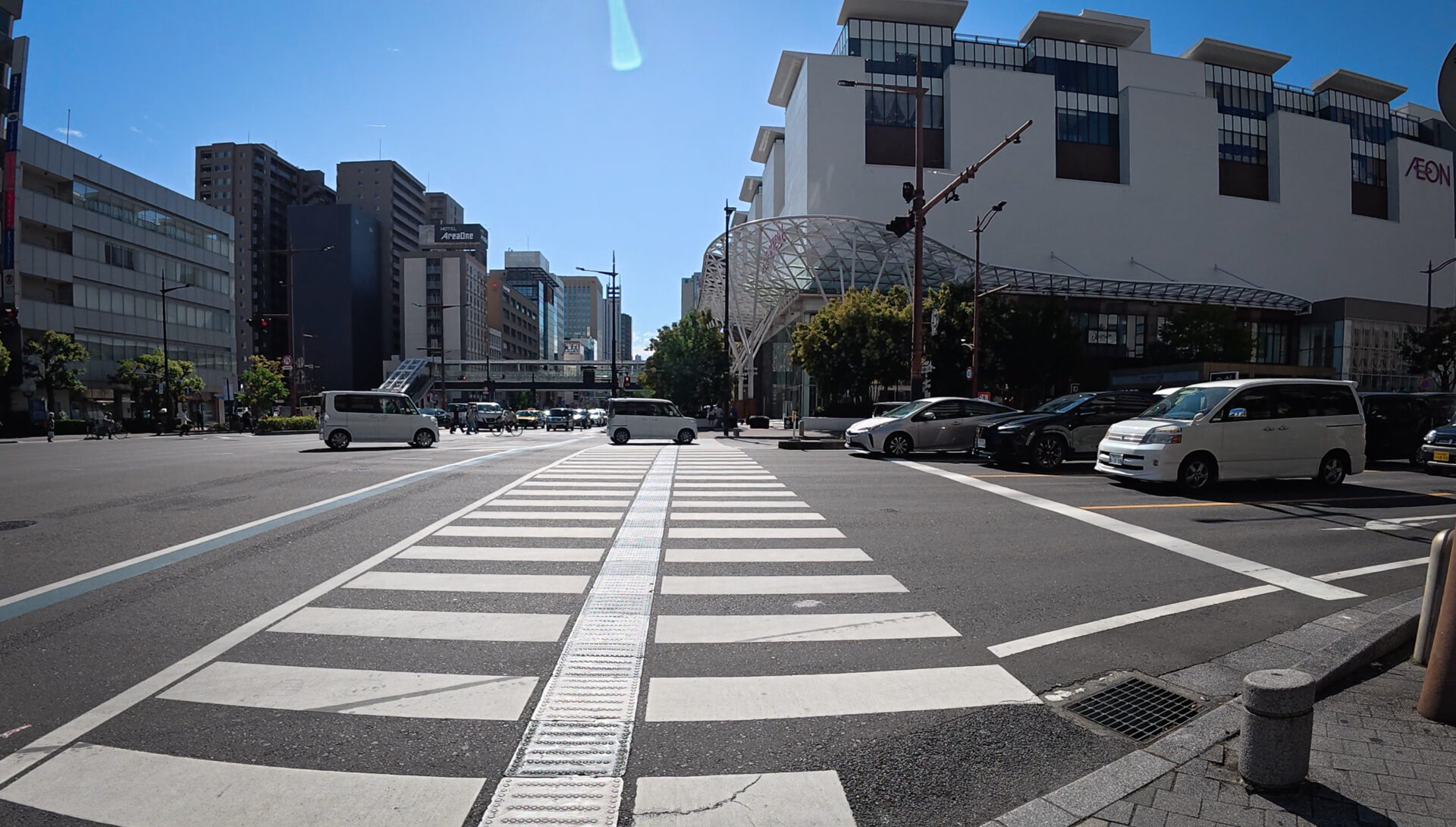
Day two began with a walk out of the hotel and into the city. The sky was once again cloudless, autumn sunlight pouring down comfortably.
Our Target, 400℃ mori no machi — Unexpectedly Closed
Lunch’s destination was 400℃ mori no machi, located in the food court on the first floor of Mori no Machi Plaza. It’s the second location of 400°C PIZZA, Okayama’s celebrated pizzeria — ranked No. 1 nationwide in Tabelog’s pizza category and awarded a Bib Gourmand by the Michelin Guide.
The original location is famously difficult to book, but this branch operates walk-in only, no reservation needed. Being able to try the same signature pizzas — including its famous “FNT” — with none of the usual hassle made it a must-visit on this trip.
We walked through a small plaza with trees clustered at the foot of a high-rise tower — something like a tiny forest tucked into the city — heading toward the entrance.
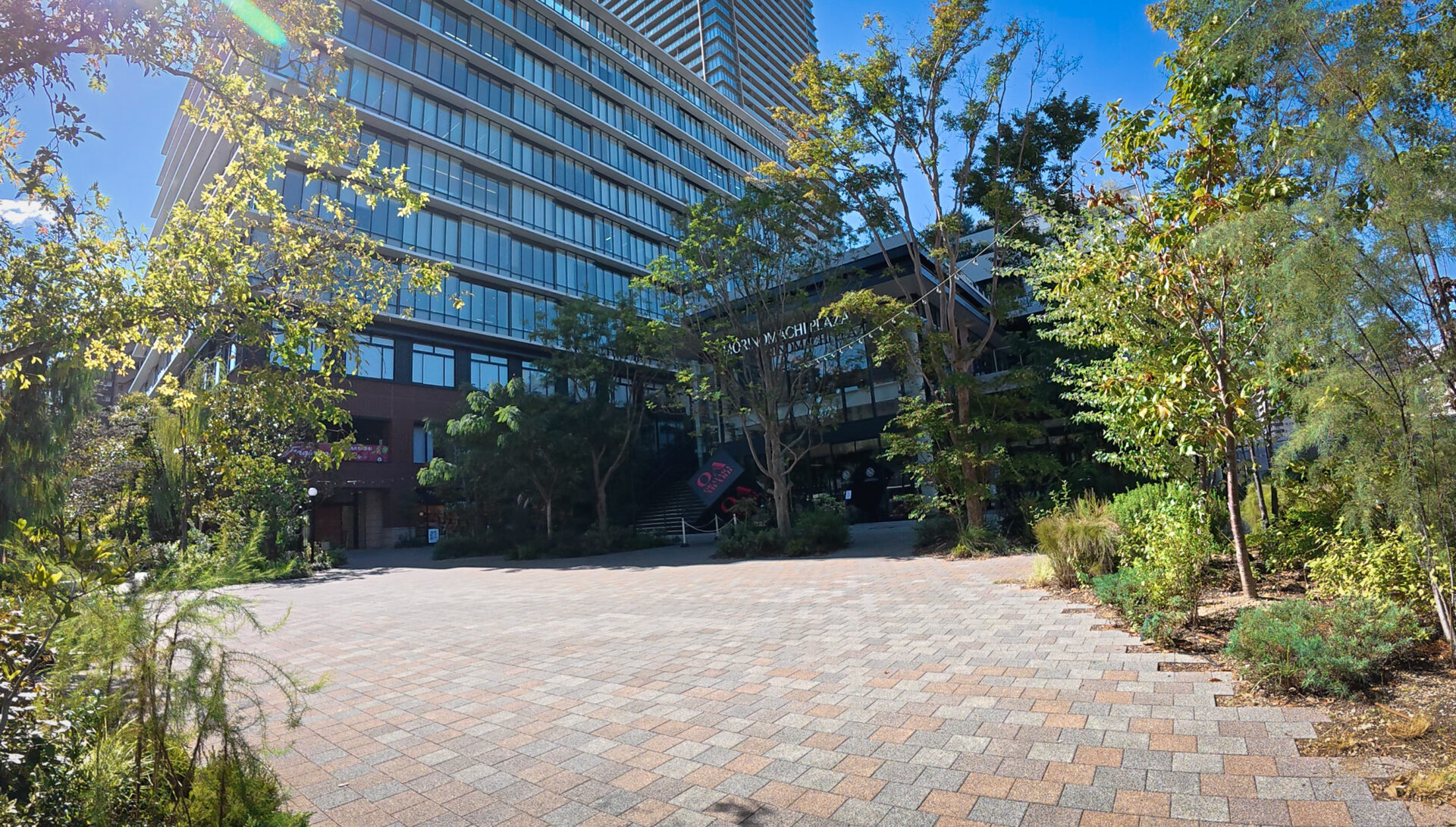
…and then, an unexpected turn. Posted at the entrance was a notice: “Floors 1 and 2 temporarily closed today for a private event.” Through the glass, a red carpet had been laid out — the whole space had been transformed for the occasion.
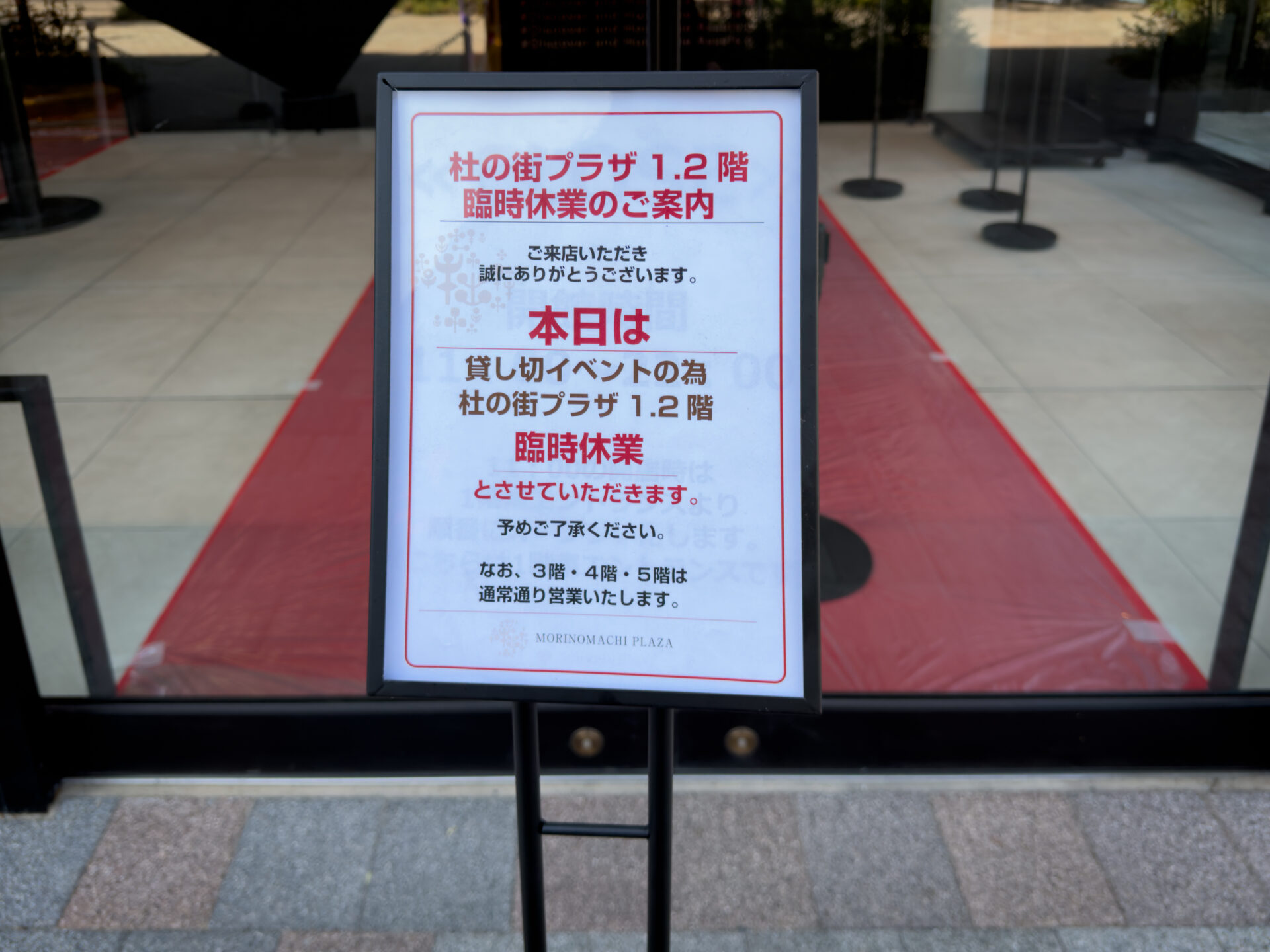
It brought back memories of our Kanazawa trip, when the nodoguro rice bowl restaurant we’d been dying to visit turned out to be closed that day too. “Not again…” we couldn’t help but laugh. Operating days are announced via the official Instagram, so it’s well worth checking ahead of any visit. Recovering from the surprise, we set off in search of a new lunch spot.
- ADDRESS
1F Mori no Machi Plaza, 2-10-107 Shimoishii, Kita-ku, Okayama, Okayama
- OPEN
Irregular days off (Prior verification via their official Instagram is strongly advised)
- CONTACT
Walk-in only (Casual food court setting; no reservations taken)
- AWARD
Tabelog Pizza 100 Famous Restaurants (Hyakumeiten) (Flagship holds a Michelin Bib Gourmand and has ranked No. 1 nationwide on Tabelog's pizza leaderboard).
- COMMENT
- 10 minutes on foot from Okayama Station. Because floor-wide events, buyouts, and dough supplies cause unexpected closures, travelers are advised to verify operations on Instagram (@morino400dopizza) before visiting.
By Bus to Okonomiyaki Mori in Hokan-cho Shopping Street
Pulled from our saved list on Tabelog, we chose Okonomiyaki Mori — a short walk from Okayama Station’s west exit, tucked into the Hokan-cho shopping street. It’s a well-regarded restaurant, featured on Tabelog’s “Top 100 Okonomiyaki” list. We caught a bus from a nearby stop and headed over.
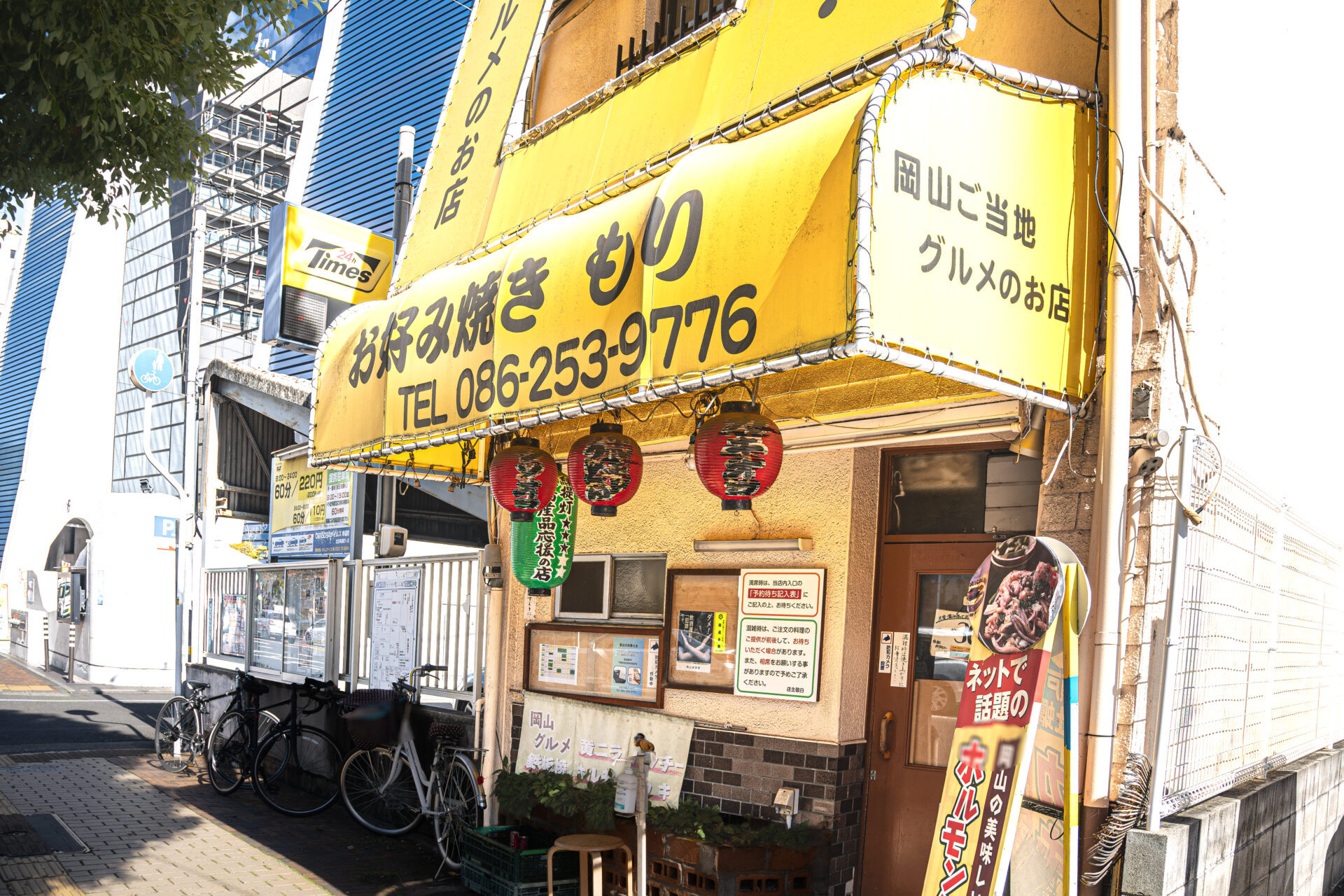
What came into view was a classic, old-school exterior — a yellow awning, a red lantern swaying in the breeze. The words “Okayama Local Cuisine” on the sign only built up the anticipation.
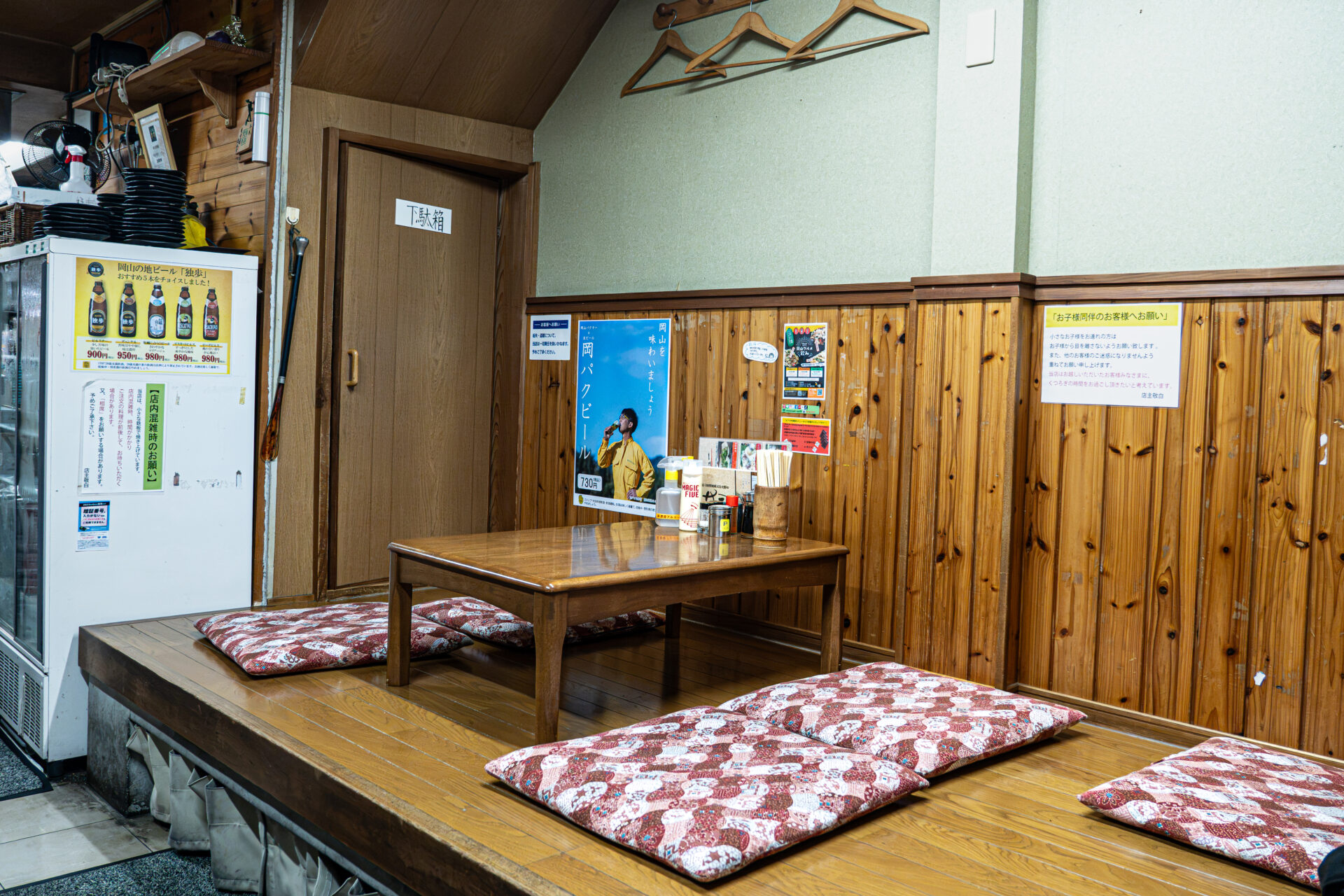
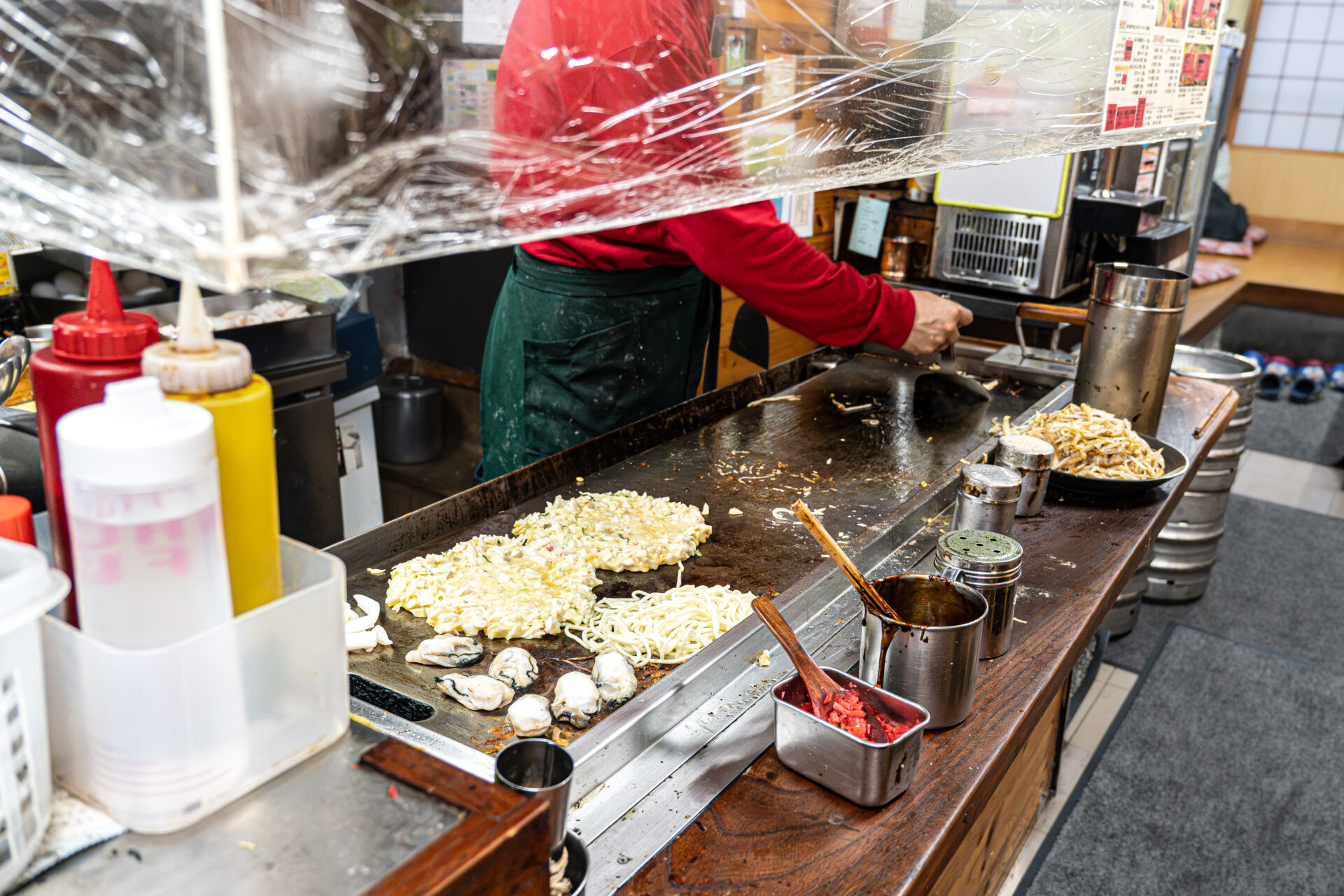
Inside, there was counter seating and a tatami area, with the added treat of watching everything cooked right in front of you on the griddle. Plump oysters, udon noodles, and a generous mound of cabbage sat sizzling on the hot plate — the sound and the fragrant scent of sauce hitting the appetite hard.
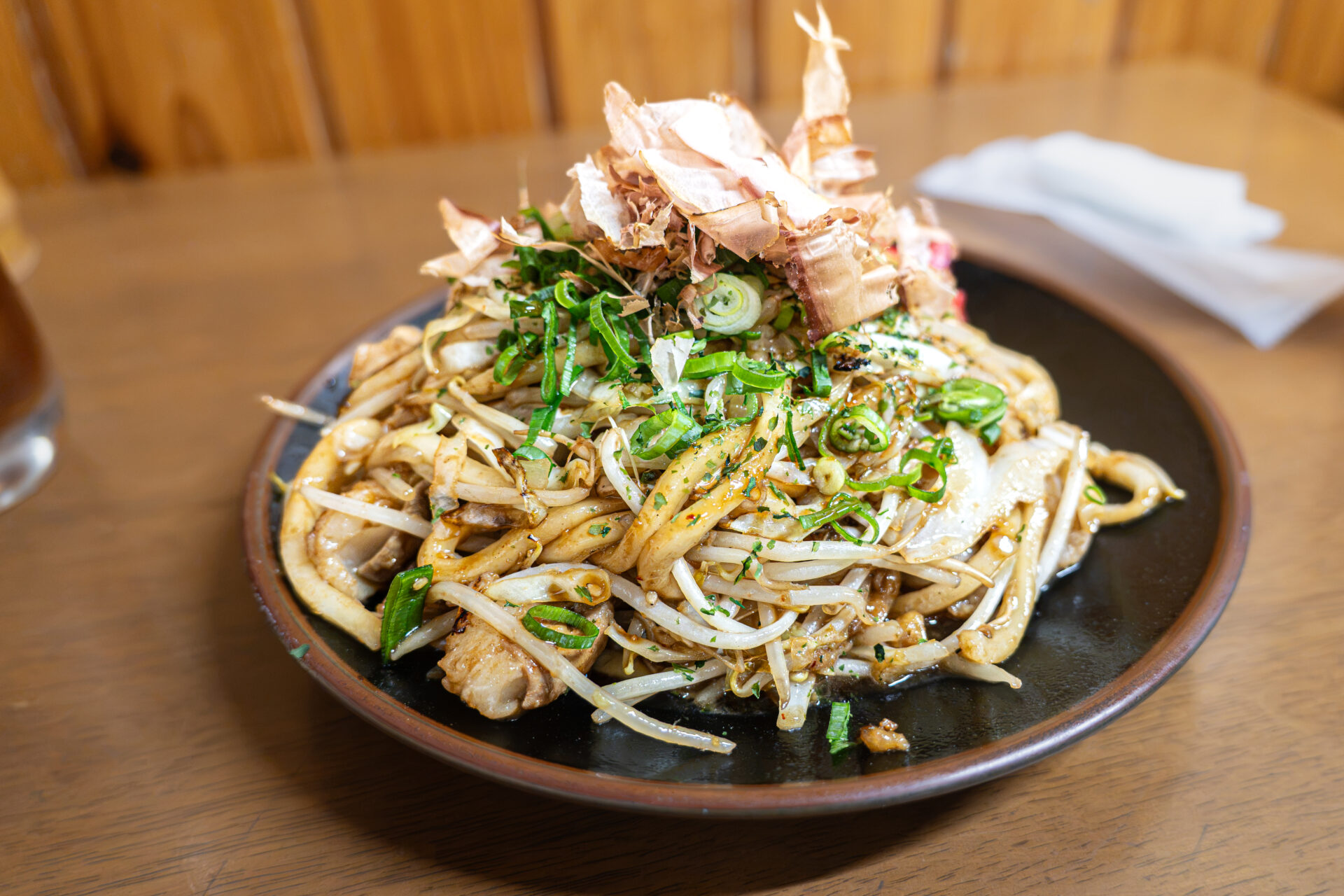
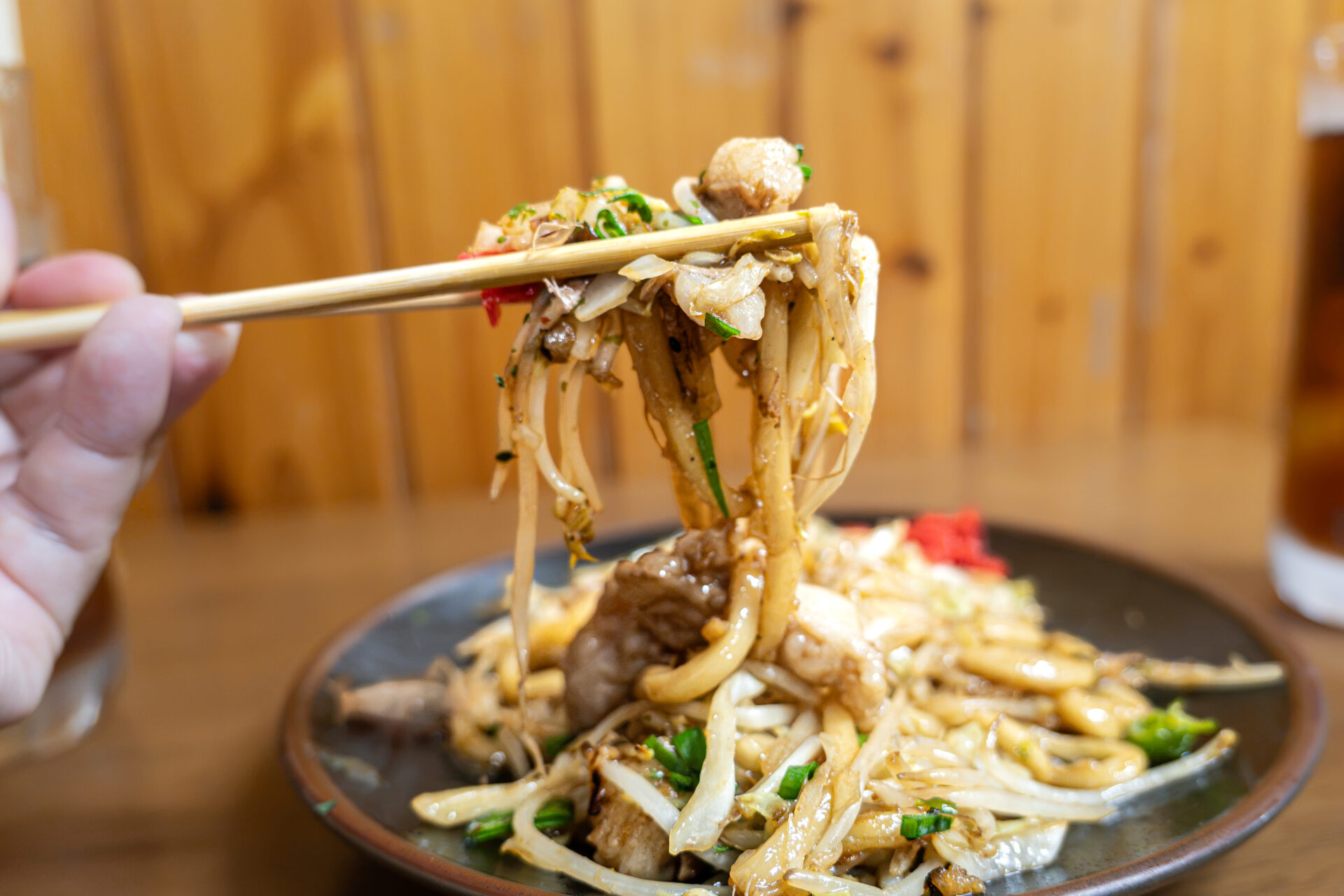
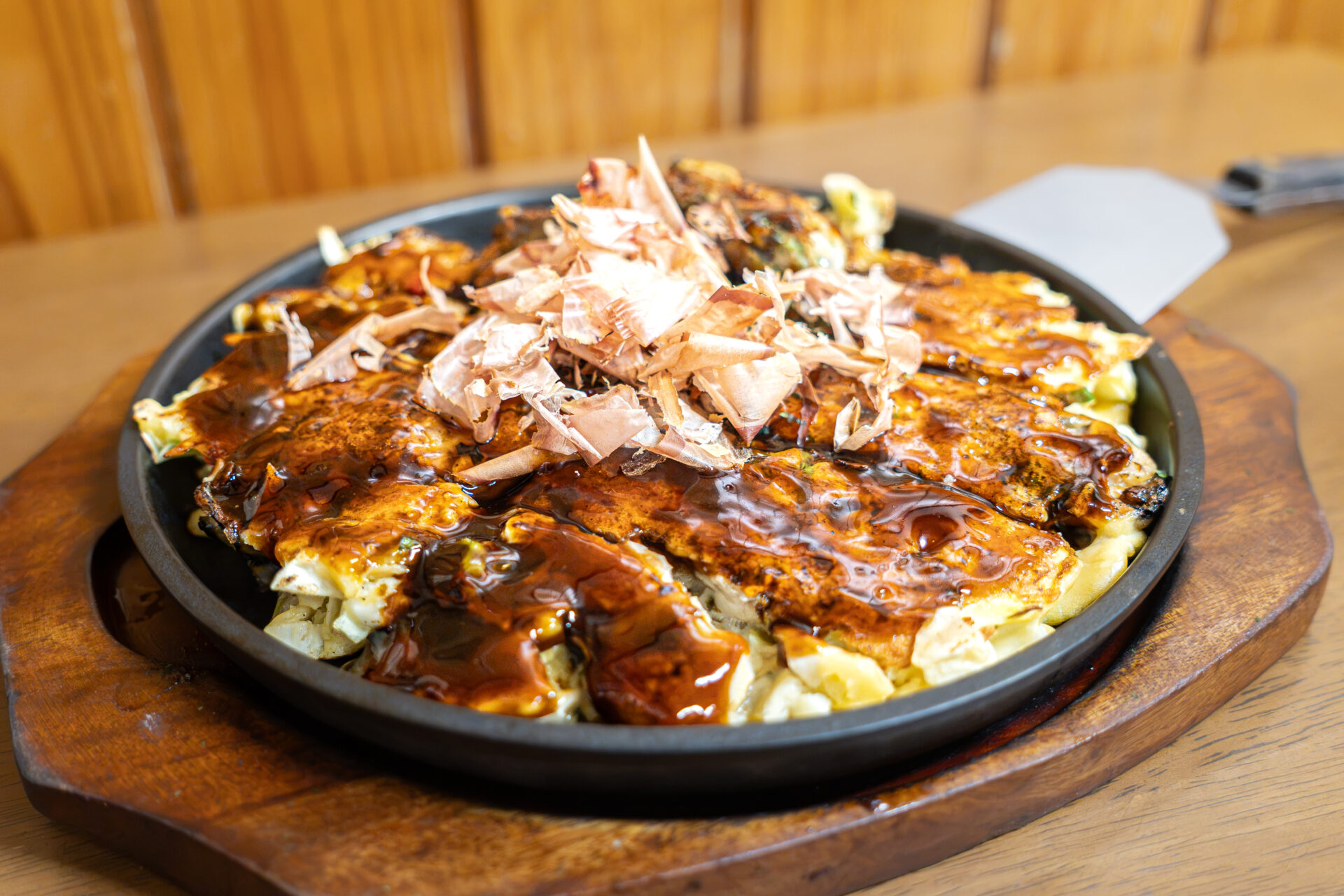
We ordered two of Okayama’s local specialties that day: horumon udon and kaki-okonomiyaki (oyster okonomiyaki).
First, the horumon udon. Chewy udon noodles tangled with the springy umami of horumon (offal) and a sweet-savory sauce, generous bean sprouts and scallions on top, dancing bonito flakes stirring up the appetite further. Every bite made it hard to put the chopsticks down — a genuine soul food of Okayama.
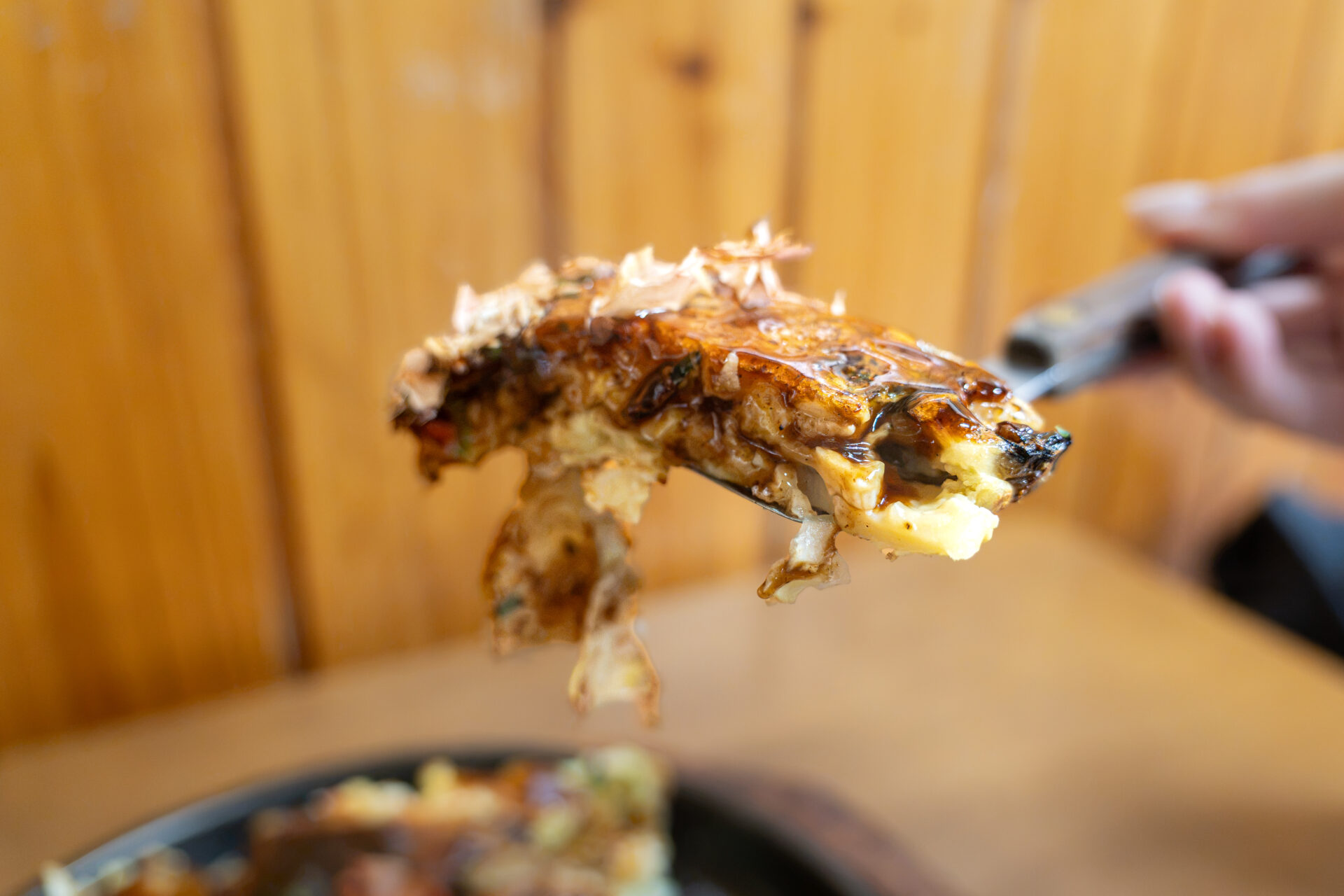
Next, the kaki-okonomiyaki. Soft, fluffy batter loaded with generous Seto Inland Sea oysters throughout. The sauce’s fragrant char met the oyster’s milky richness in every bite. Having seen the oyster-farming rafts scattered across that inlet the night before, the flavor felt all the more meaningful.
Both dishes let their ingredients speak plainly and directly. The chef’s cheerful voice ringing out over the heat of the griddle added to the warmth of the place — an atmosphere where both tourists and locals alike could settle in without any pretense.
The restaurant we’d originally planned didn’t work out, but that mishap ended up bringing us straight to two of Okayama’s local favorites and a genuine warmth of hospitality — a small stroke of luck, looking back on it now.
- ADDRESS
1-6-9 Hokancho, Kita-ku, Okayama, Okayama
- OPEN
HOURS:
Lunch: 11:00 AM – 1:30 PM (L.O. 1:00 PM)
Dinner: 5:00 PM – 9:15 PM (L.O. 8:45 PM)
REGULAR CLOSING: Irregular days off (Closes immediately when daily ingredients sell out)
- AWARD
Tabelog Okonomiyaki 100 Famous Restaurants (Hyakumeiten)
- COMMENT
- A 7-minute walk from JR Okayama Station's West Exit in the nostalgic Hokan-cho arcade. No dedicated parking (use coin lots nearby). Known for serving authentic soul food straight off the teppan: rich Horumon Udon and plump, seasonal Kaki-oko (Seto Inland Sea oyster okonomiyaki).
Splitting Up at the Castle Grounds — My Wife Heads to Okayama Castle and Korakuen
Stomachs full, we walked off the meal heading toward the castle district — one of the city’s premier sightseeing areas, home to both Okayama Castle and Korakuen Garden.
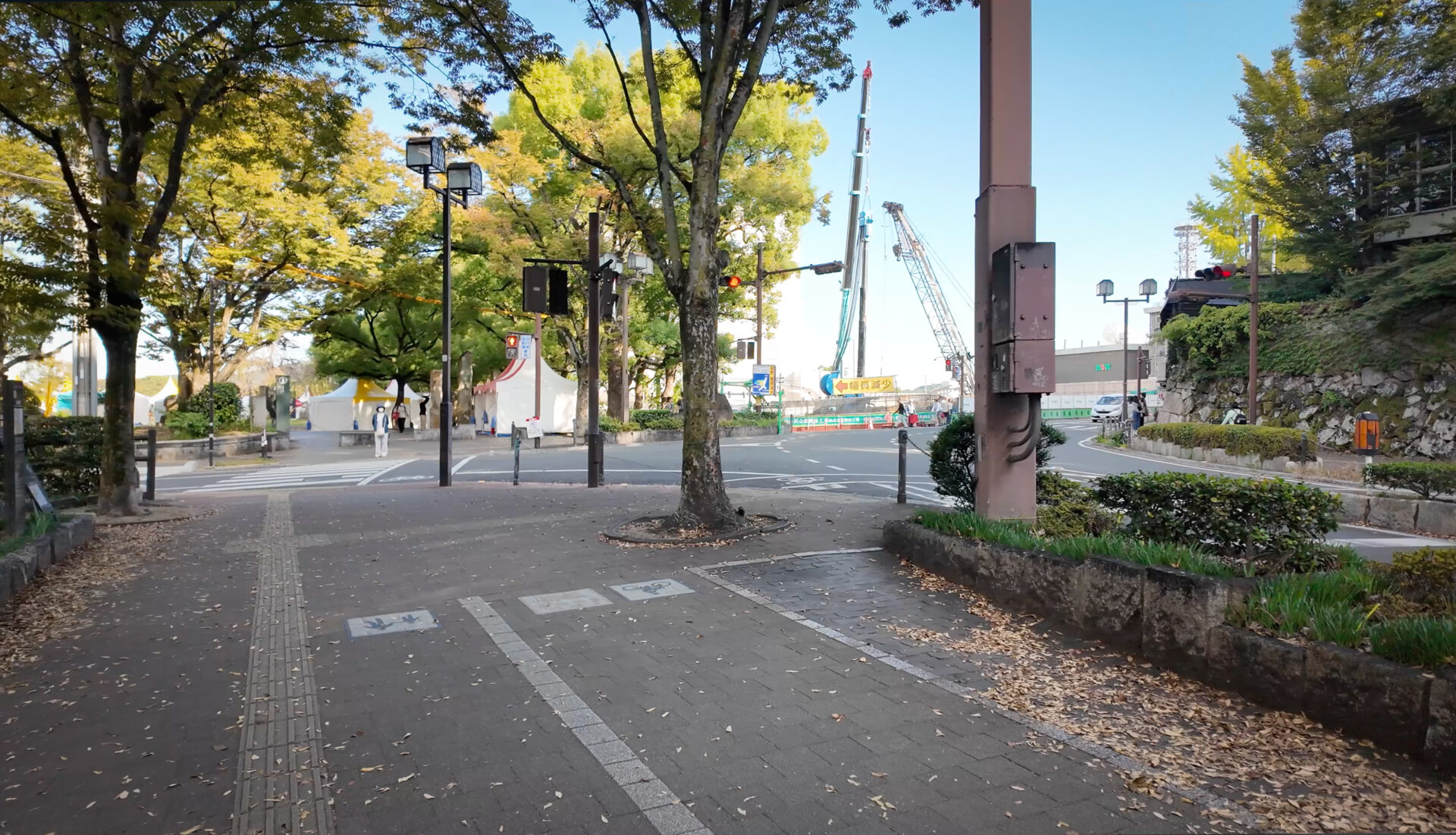
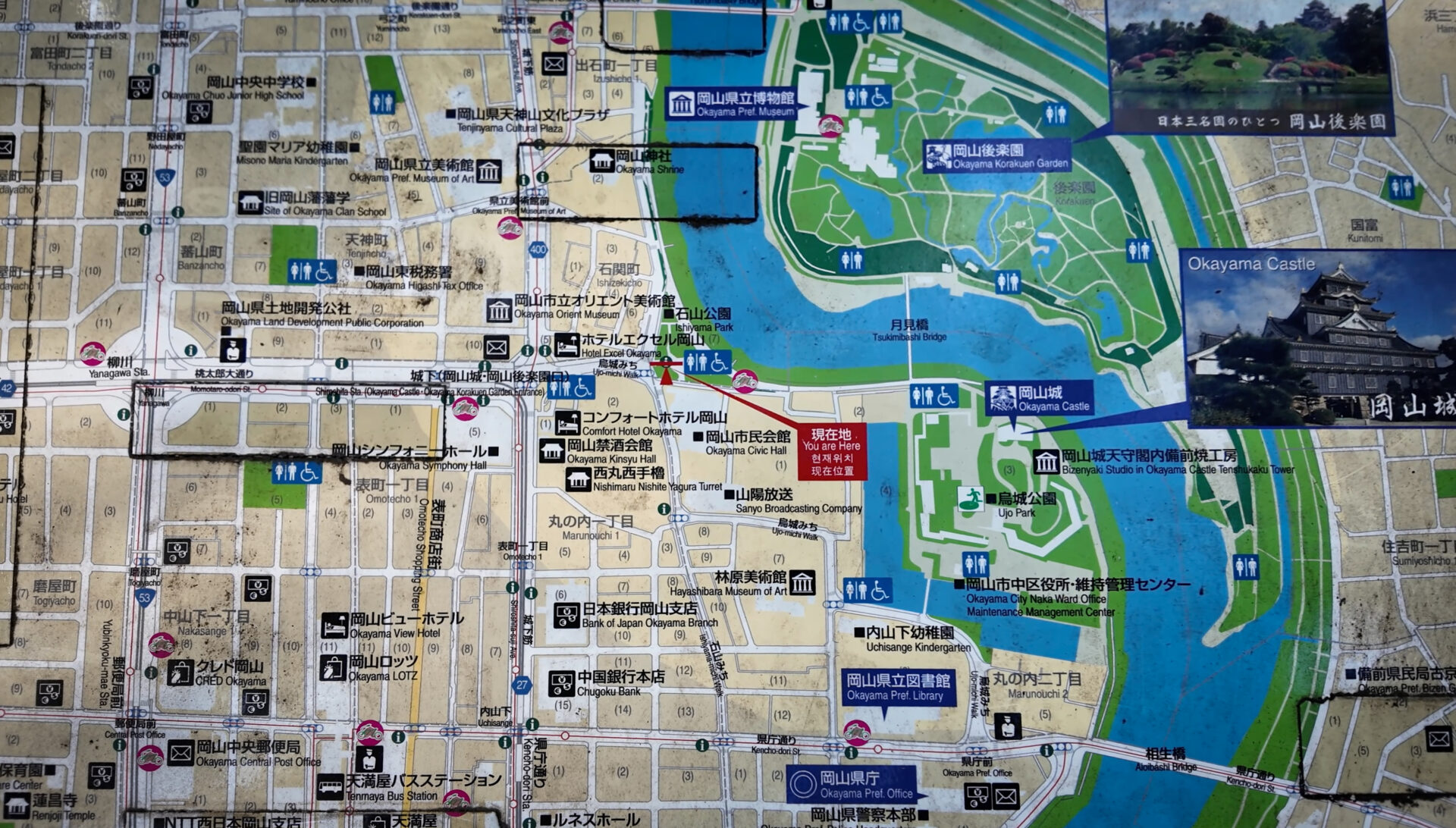
…though at this point, I had to head toward Himeji for work. Daily obligations don’t take a break for travel, apparently — same as on our Kanazawa trip. We split up for a while, and my wife toured Okayama Castle and Korakuen Garden on her own.
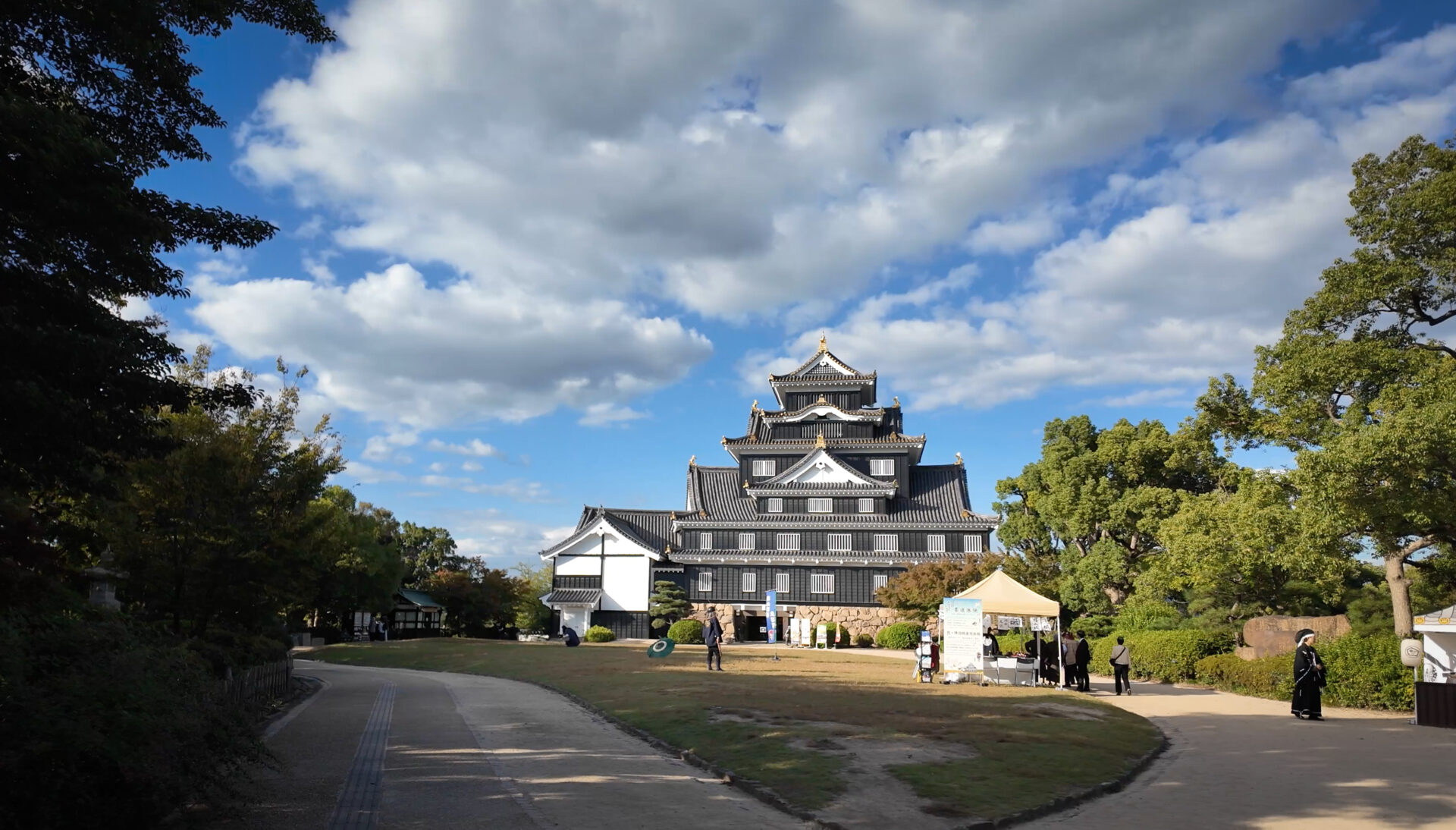
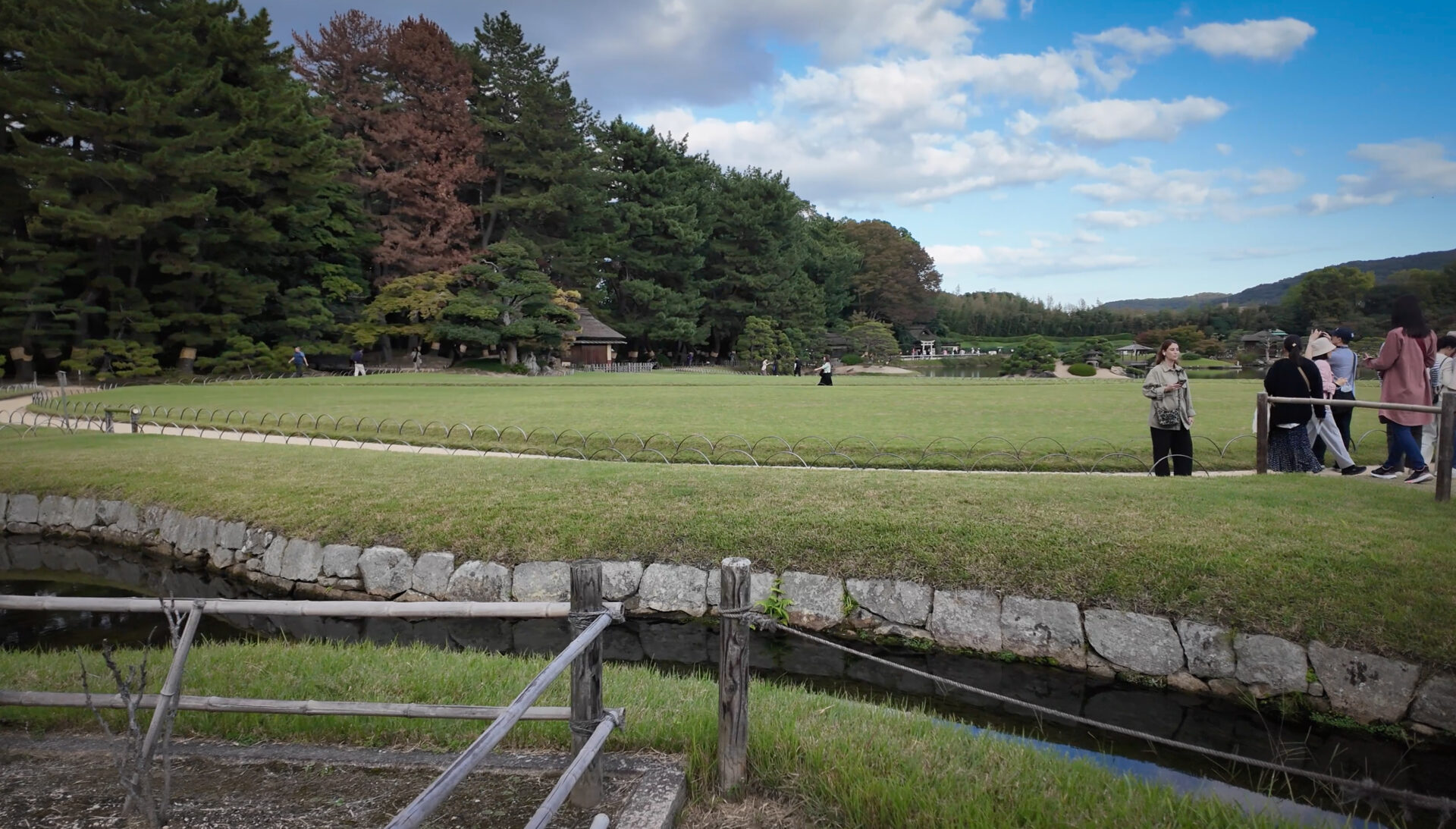
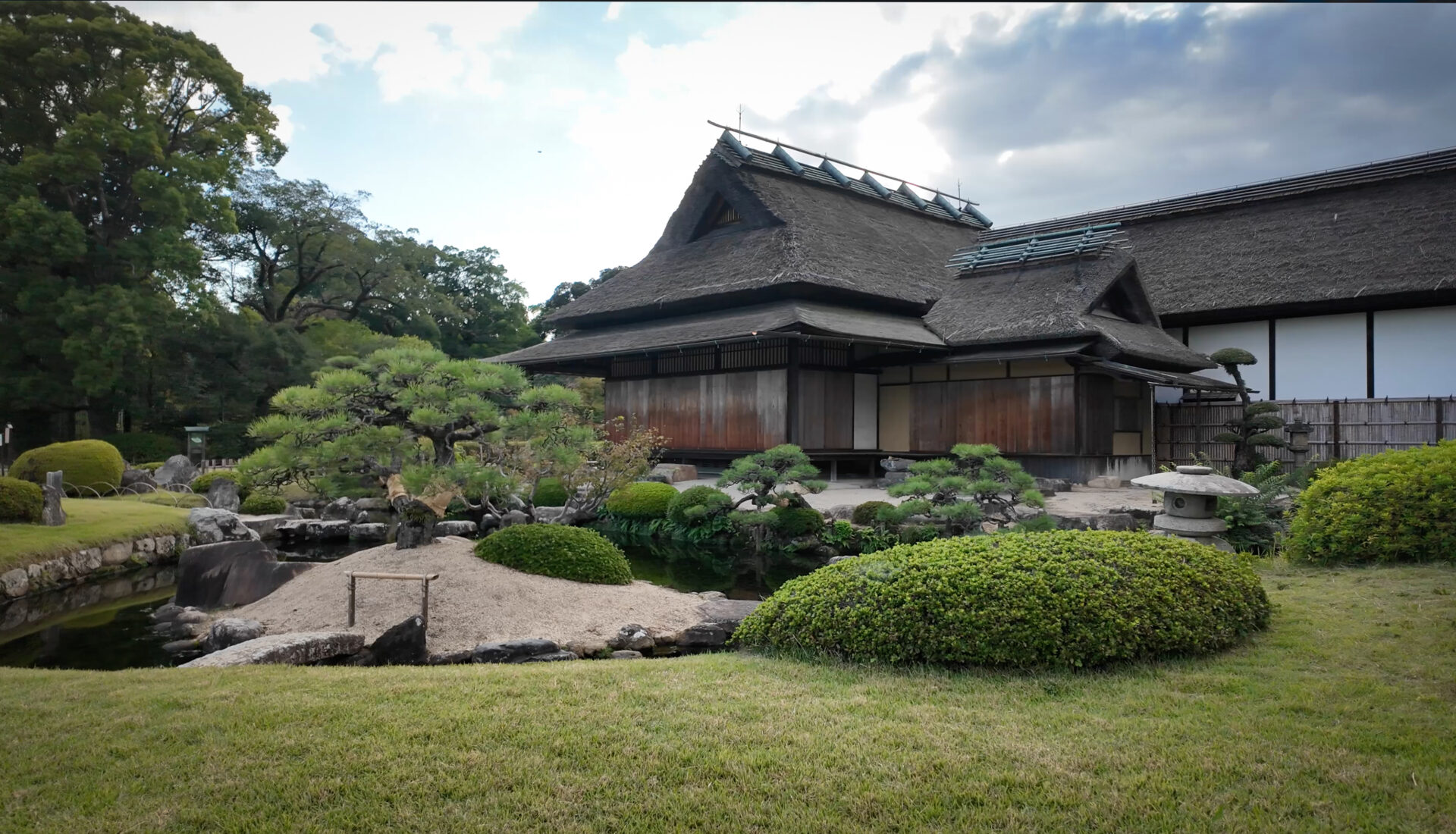
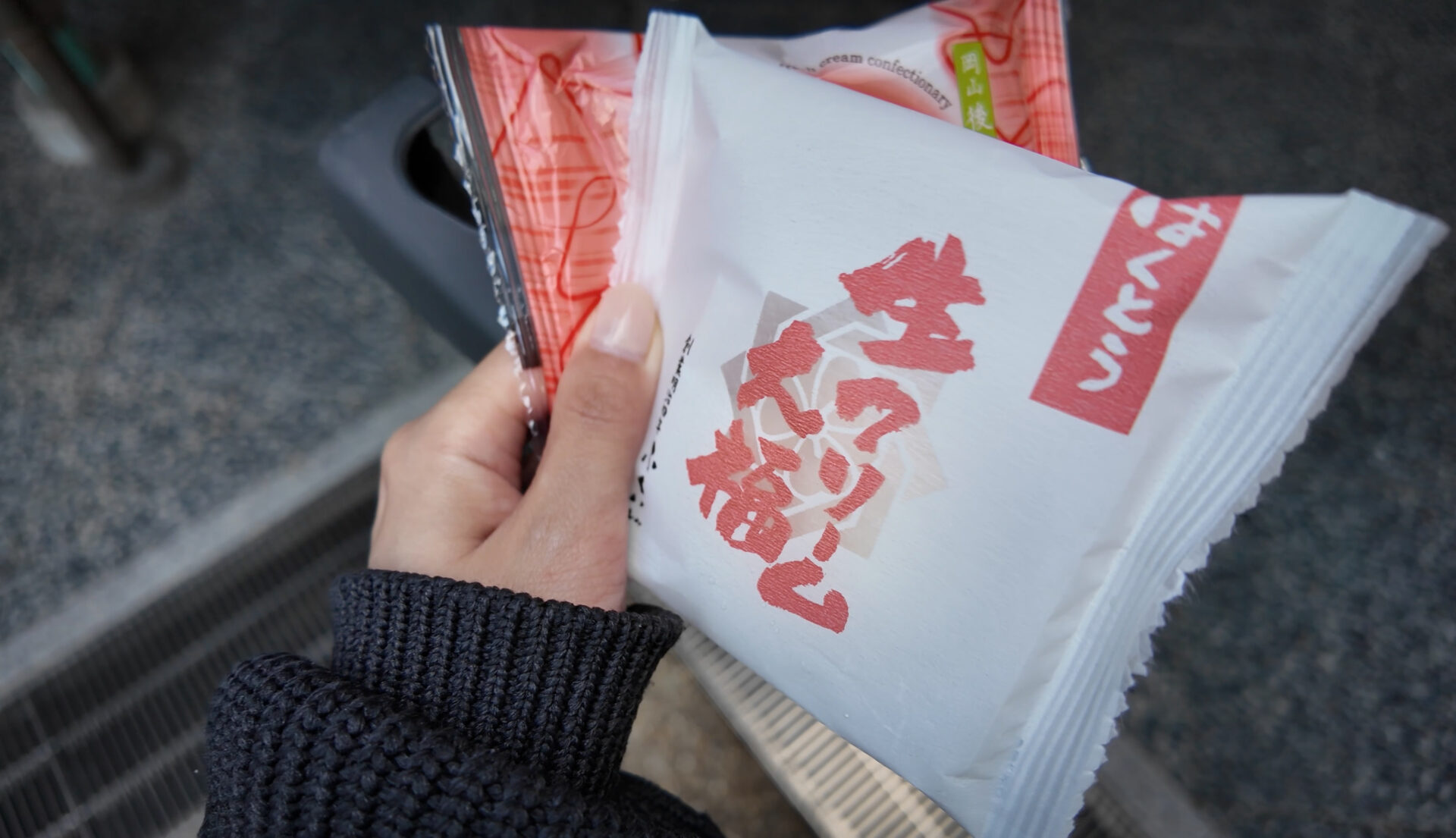
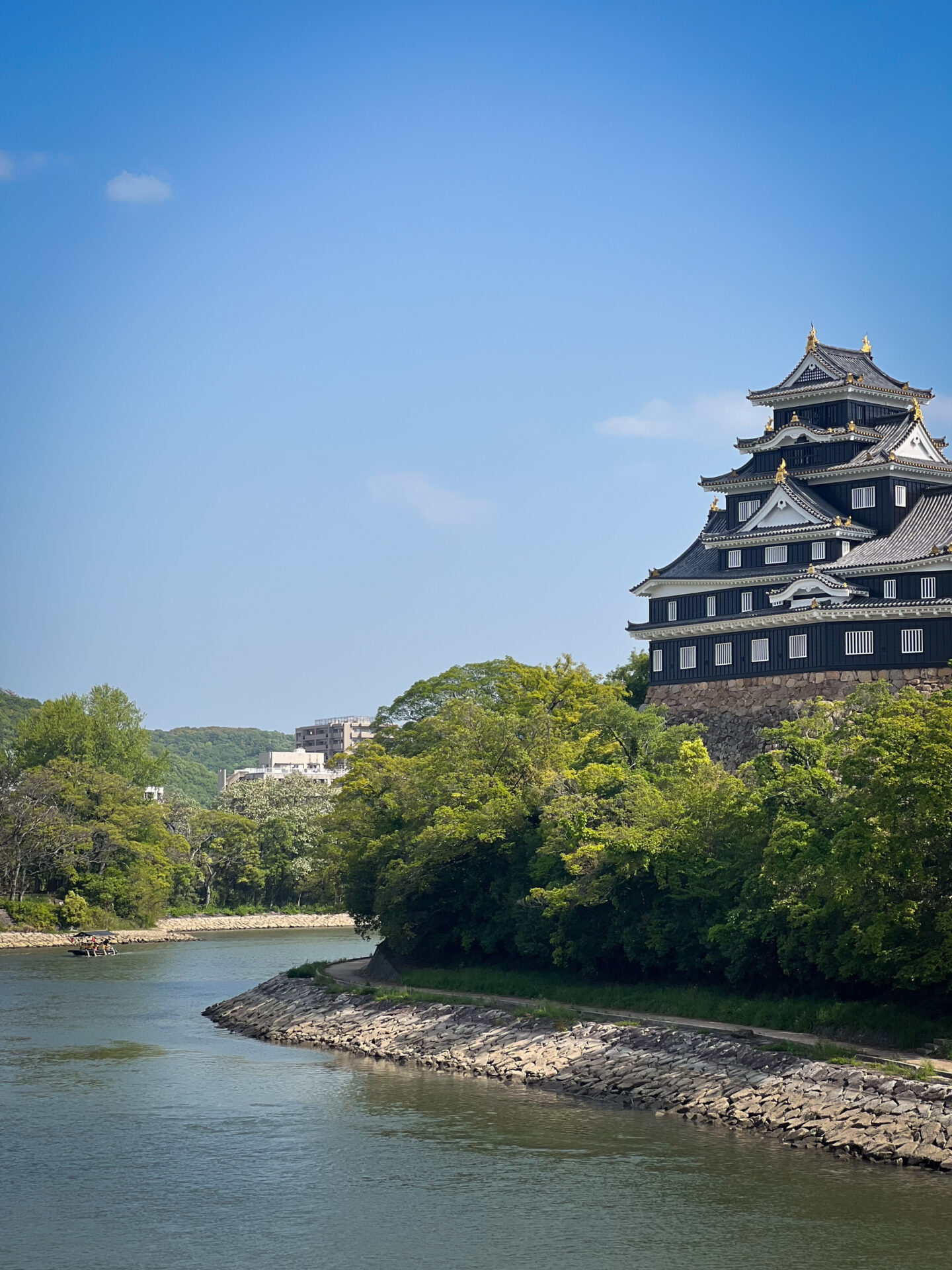
Since I don’t have any photos of this stretch myself, the following photos are ones taken during an earlier visit in May. The season is different, but hopefully they still capture the mood of some of Okayama’s defining scenery.
Okayama Castle: A Black Keep Reflected in the Asahi River
Rising above stone ramparts along the Asahi River stands Okayama Castle. Its dark board-siding exterior earned it the nickname “Ujo,” or “Crow Castle” — the contrast of dark walls against green foliage, water, and blue sky lends it a genuinely striking presence.
 The keep grows more imposing the closer you get, especially viewed from the plaza with its stone monument.
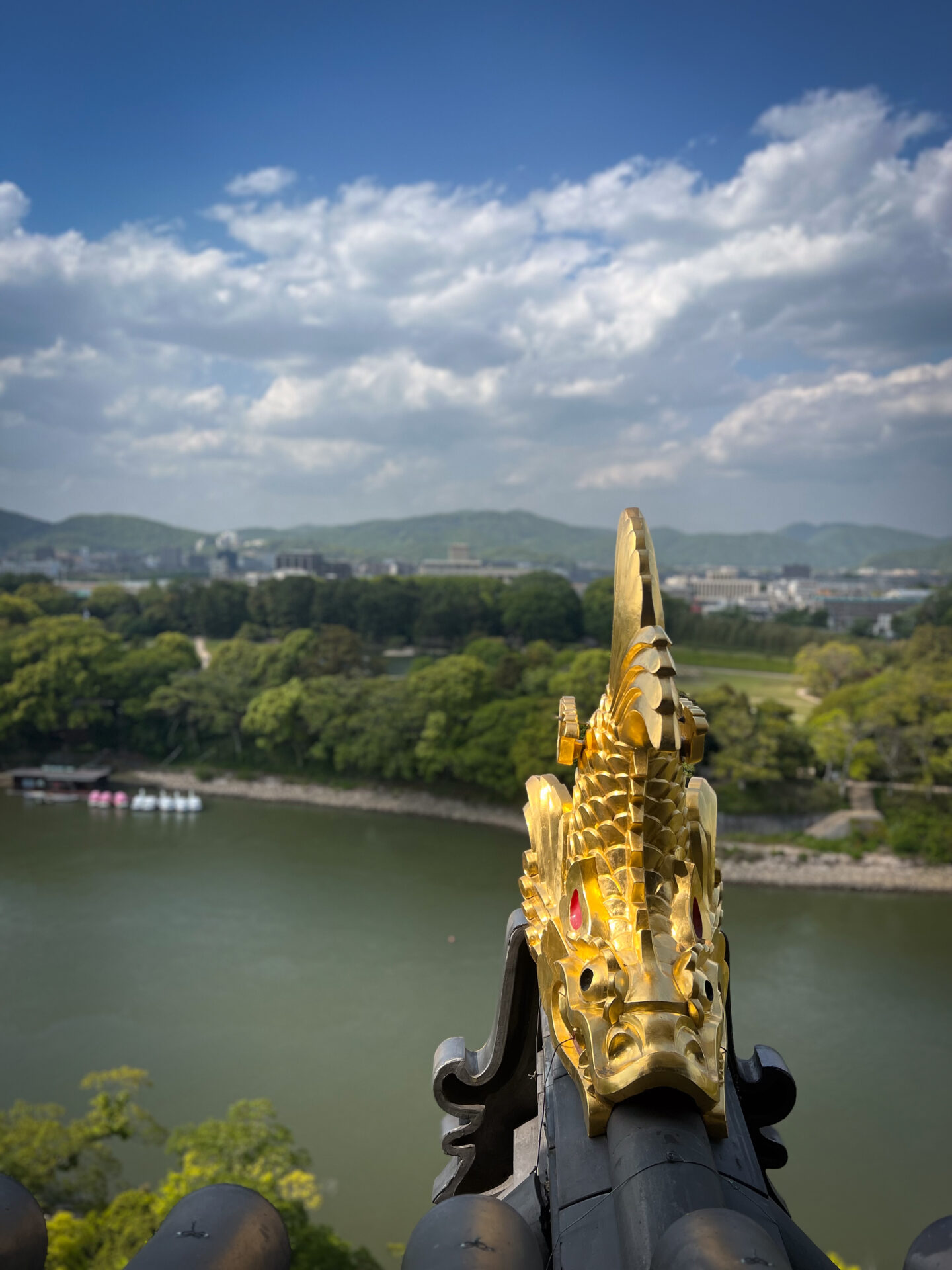
From the top floor of the keep, the golden shachihoko ornaments frame a view of the Asahi River, Korakuen’s greenery, and the city of Okayama spread out below. Imagining the castle’s former lords taking in this same view brings on a quiet sense of reflection.
- ADDRESS
2-3-1 Marunouchi, Kita-ku, Okayama, Okayama
- OPEN
HOURS: 9:00 AM – 5:30 PM (Final admission 5:00 PM)
CLOSING DATES: December 29 – 31
- AWARD
Registered National Historic Site of Japan / One of Japan's Top 100 Castles
- COMMENT
- Famed as Ujo ("Crow Castle") for its striking black timber siding contrasting against the river and gardens. No dedicated parking on grounds (pay lots nearby). Admission: Adults (15+) ¥500, Junior High & Elementary free, Seniors (65+) ¥200.
Across Tsukimi Bridge to Korakuen, One of Japan’s Three Great Gardens
Crossing Tsukimi Bridge over the Asahi River from Okayama Castle brings you almost immediately to Korakuen Garden — one of Japan’s Three Great Gardens, alongside Kenrokuen in Kanazawa and Kairakuen in Mito.
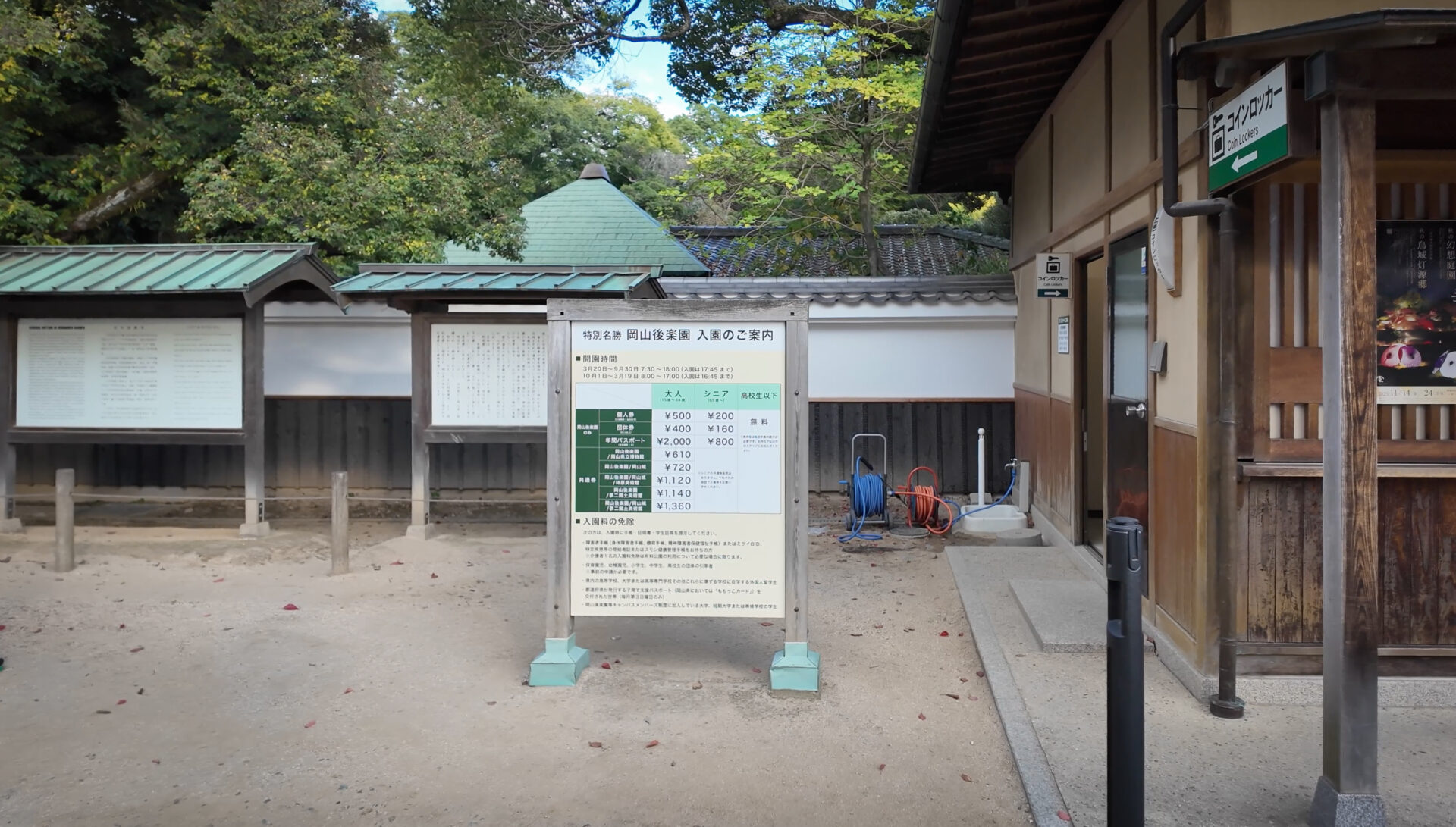
We’d had to skip Kenrokuen on our Kanazawa trip due to the brutal heat, so this time it was my wife who got to step into one of the “Three Great Gardens” first.
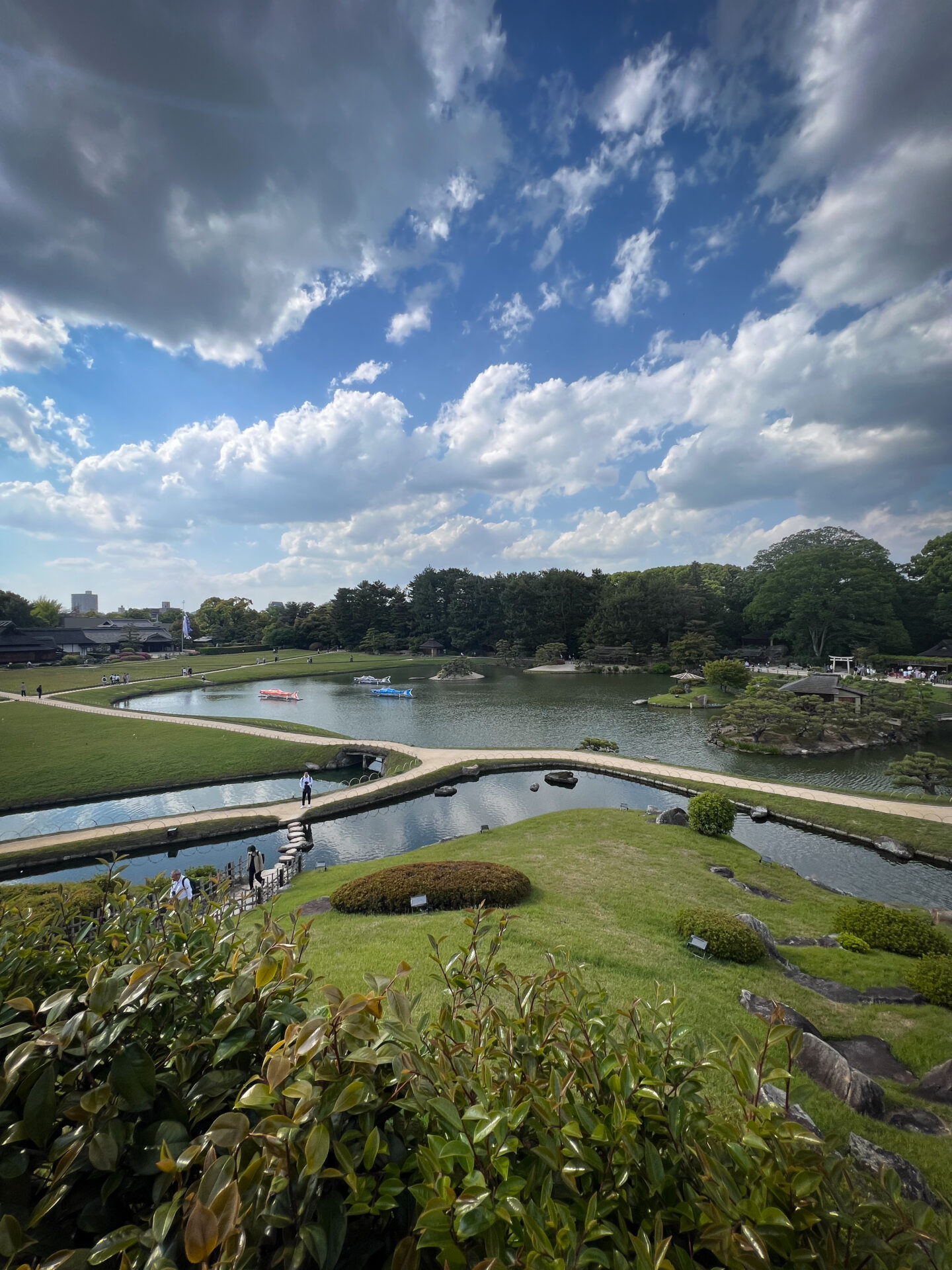
Looking down from a small hill within the garden, sweeping lawns and a large pond spread out at the center. Winding paths, streams, teahouses, and pavilions scattered throughout come together into a single, beautifully composed landscape.
My own visit in May happened to fall right in koinobori (carp streamer) season. Colorful carp streamers floated above the pond, seeming almost to swim across the water’s surface beneath the blue sky. The sight of pine trees on Naka-no-shima Island alongside the streamers made for a view unique to that particular season.
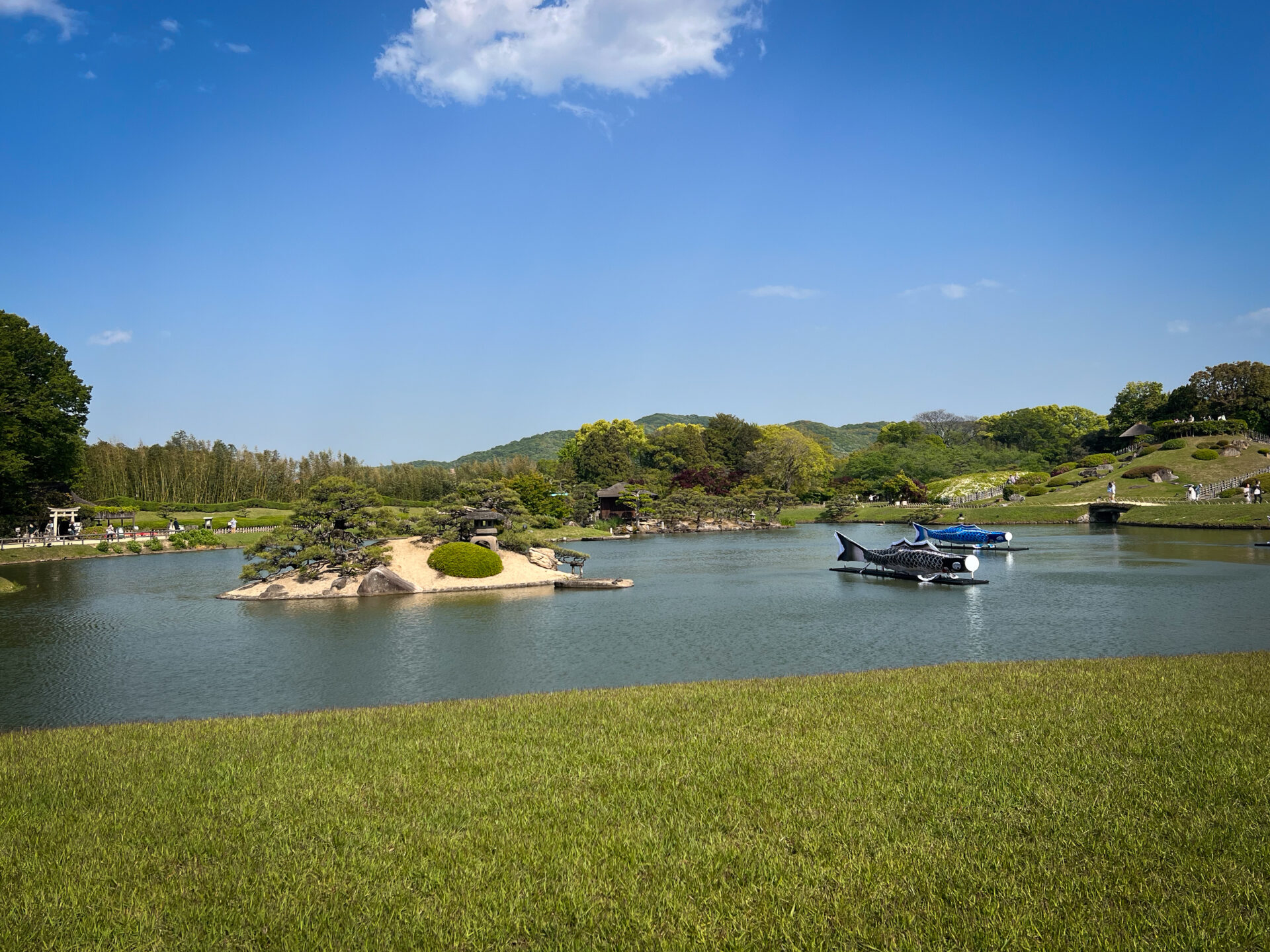
That’s part of the depth of a daimyo garden — a completely different character depending on the season. Apparently there’s a special nighttime autumn opening called “Fantasy Autumn Garden,” so it seems worth seeing Korakuen again someday, dressed in autumn colors and lantern light.
- ADDRESS
1-5 Korakuen, Kita-ku, Okayama, Okayama
- OPEN
HOURS:March 20 – September 30: 7:30 AM – 6:00 PM (Last entry 5:45 PM)
October 1 – March 19: 8:00 AM – 5:00 PM (Last entry 4:45 PM)
REGULAR CLOSING: Open 365 days / Year-round
- AWARD
One of Japan’s Three Great Gardens / Special Place of Scenic Beauty / 3 Stars in the Michelin Green Guide Japon
- COMMENT
- Admission: Adults ¥500, Seniors (65+) ¥200, High school students and younger free. The combined ticket with Okayama Castle (just across Tsukimi Bridge) is ¥800 and offers tremendous value. Paid on-site parking available.
Okayama Korakuen: Visitor Information
| Item | Details |
|---|---|
| Hours | March 20–September 30: 7:30 AM–6:00 PM (last entry 5:45 PM) October 1–March 19: 8:00 AM–5:00 PM (last entry 4:45 PM) |
| Admission (individual) | Adults (15–64): ¥500 / Seniors (65+): ¥200 / High school age and under: Free |
| Annual pass | Adult: ¥2,000 / Senior: ¥800 |
| Combined tickets (adult) | Korakuen + Okayama Castle: ¥720 Korakuen + Okayama Prefectural Museum: ¥610 Korakuen + Okayama Castle + Hayashibara Museum of Art: ¥1,120 Korakuen + Yumeji Art Museum: ¥1,140 Korakuen + Okayama Castle + Yumeji Art Museum: ¥1,360 |
| Recommended | The combined ticket is a good value if visiting Okayama Castle as well — it’s just across Tsukimi Bridge. |
*Prices and hours reflect information posted at the garden as of November 2025. Please check the official website for the most current details.
Reunited at Okayama Station, Off to Heiwa-cho for the Evening
After finishing up work in Himeji, I made it back to Okayama Station by early evening to meet up with my wife again.
“Korakuen was huge — and it felt so good to walk through.”
Listening to her recap of Okayama Castle and Korakuen, we headed off toward the final dinner of the trip.
Dinner at the Chinese Restaurant Hasunomi
We headed to Hasunomi, a Chinese restaurant about a ten-minute walk from Okayama Station, near Nishigawa Ryokudo Park. It received Bronze at the Tabelog Award 2025 and is featured on the “Chinese Cuisine WEST Top 100” list — a restaurant representing the very best of Okayama’s Chinese dining scene.
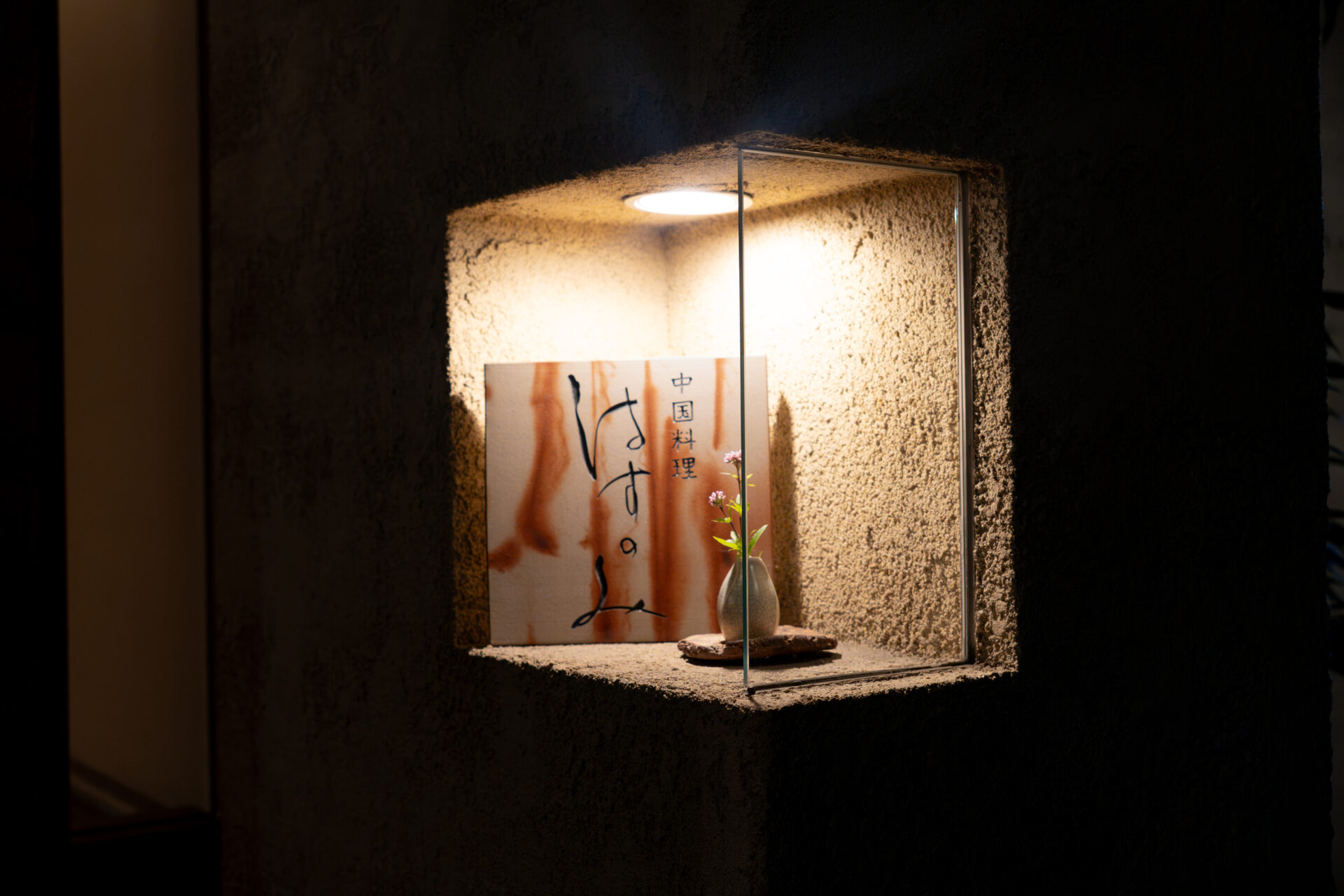
At the helm is Chef Kentaro Kato, a native of Kurashiki. After fourteen years honing his craft at the celebrated Azabu Choko in Azabu, Tokyo, he returned to his home prefecture of Okayama to open his own restaurant. He’s known for using seafood from the Seto Inland Sea and seasonal Okayama produce, prepared through genuine, classical Chinese technique. He’s also served as culinary supervisor for Chinese cuisine aboard the Twilight Express Mizukaze sleeper train — a track record that speaks for itself.
Despite sitting in a busy entertainment district, the restaurant keeps a low profile, with no large signage out front. The only marker is a discreetly placed sign made of Bizen ware. With sixteen seats total across counter and table, the interior is done in calm tones, its design naturally drawing attention to the food.
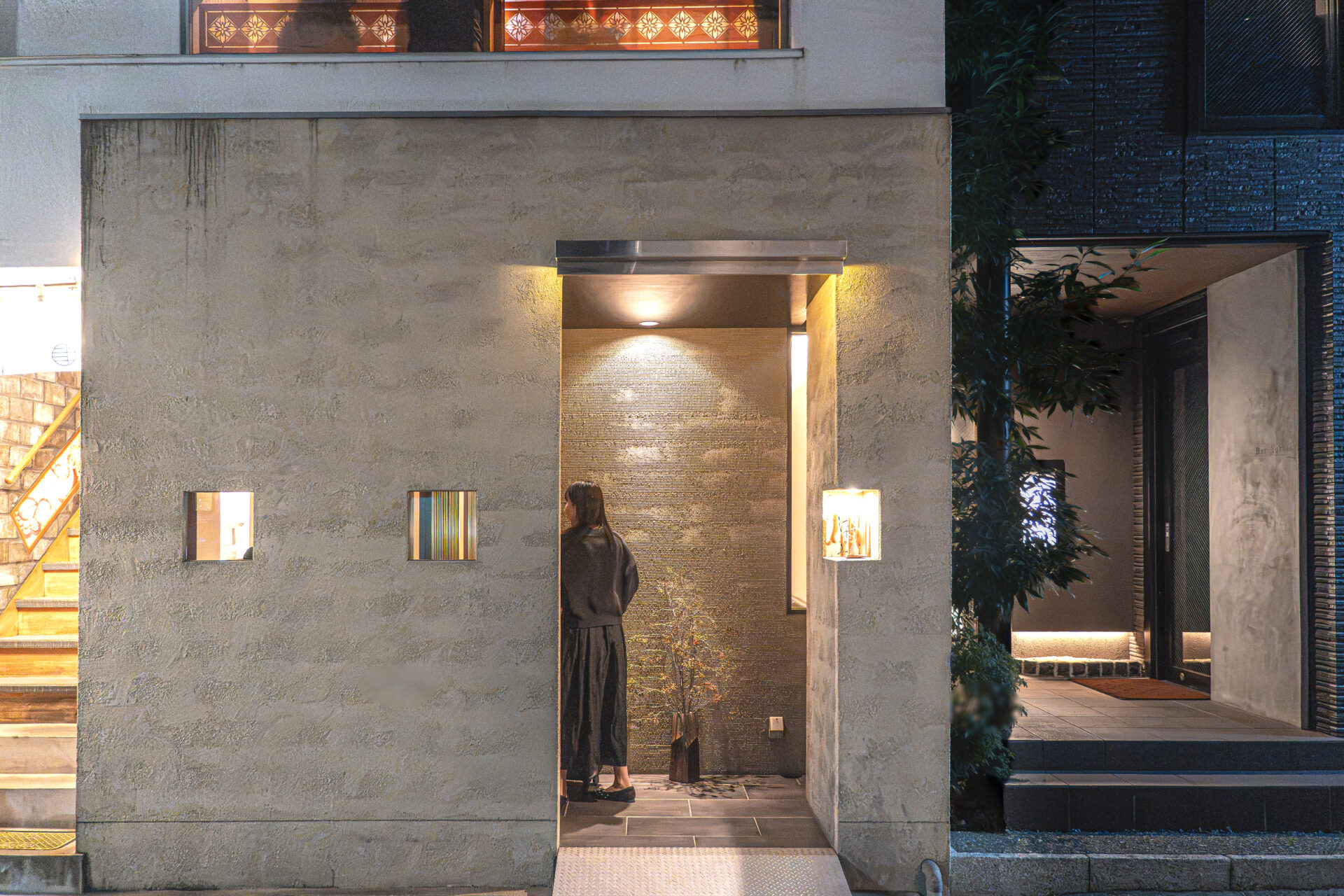
The night before at Yisai Liuxiang had brought Chinese cooking with the warmth of home cooking. Tonight promised a different approach entirely — Okayama’s own ingredients meeting Chinese culinary technique. With the chef holding a sommelier qualification, anticipation was already high for the natural wine and sake pairings ahead.
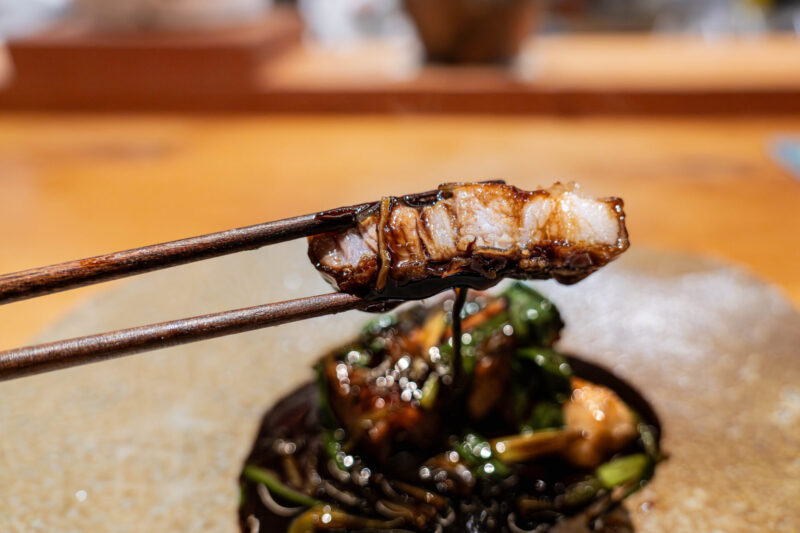
You can find the full omakase course — Seto Inland Sea ingredients built through Chinese culinary technique, along with the standout dishes of the visit — in the blog post below.
- ADDRESS
1-11 Heiwacho, Kita-ku, Okayama, Okayama
- OPEN
6:00 PM – 9:00 PM
REGULAR CLOSING: Tuesdays
- CONTACT
+81-86-238-8403 (Advance phone reservations strongly advised)
- AWARD
Michelin Plate in the Michelin Guide Kyoto-Osaka-Okayama 2021 / Tabelog Chinese Cuisine WEST 100 Famous Restaurants / Tabelog Bronze Award
- COMMENT
- A 10-minute walk from JR Okayama Station (or 1 minute from the Nishigawa Ryokudo-koen tram stop). An intimate 16-seat culinary salon where Azabu-honed classical Chinese technique intersects with Seto Inland Sea seafood, local heritage produce, and organic wine/sake pairings. No dedicated parking.
After Two Days: Why These Chefs Chose This Land
“Why did they choose Okayama?” — that question, carried since the very start of the trip, found its quiet answer waiting in each restaurant we visited.
At Ryo, in Hiruzen, the eel rests in flowing hot-spring water, and the unadon (grilled eel rice bowl) is made with rice the chef grows himself in the paddies right outside the restaurant. Rice fields stretch beyond the windows, local farmers moving unhurriedly through their work. It was a place where life and cooking had become one — something Tokyo never offered.
At Yisai Liuxiang, in Tsurumi, Bizen, seafood from the Seto Inland Sea and local vegetables came to the table dressed in the warmth of home cooking, set against a backdrop of oyster rafts and an inlet glowing at sunset. Even the sound of the waves and the shifting light felt like part of the course.
And at Hasunomi, in central Okayama, technique honed in Tokyo met deep ties with local producers back home, letting Seto Inland Sea seafood and Okayama’s seasonal ingredients quietly shine, dish after dish.
Relocation. Migration. A return home. Each chef arrived here by a different path, but all three shared one thing in common: cooking that could only exist because of this land’s water, its air, its ingredients. Every dish carried that same unmistakable sense of necessity — of belonging exactly here.
The scenery discovered between these celebrated restaurants stayed with us too — the small shrine in the Chuwa hamlet, soft-serve at a highland pasture, horumon udon and kaki-okonomiyaki found only because of an unexpected closure, and the black keep reflected in the Asahi River alongside one of Japan’s Three Great Gardens, both explored by my wife. The richness of Okayama, only visible by driving the length of it from mountain to sea, is exactly, I think, the reason these chefs chose to settle here.
Next time, I’d love to see Korakuen in early summer, with the carp streamers swimming above the water, or in autumn, lit up during its special nighttime opening. I’d also love to stay overnight at Yisai Liuxiang and join one of their dumpling-making classes. Changing seasons, we plan to return once more, to meet the present-day work of the chefs who’ve put down roots in this land.
- TAGS