CONTENTS
About Locanda del Campo
Concept
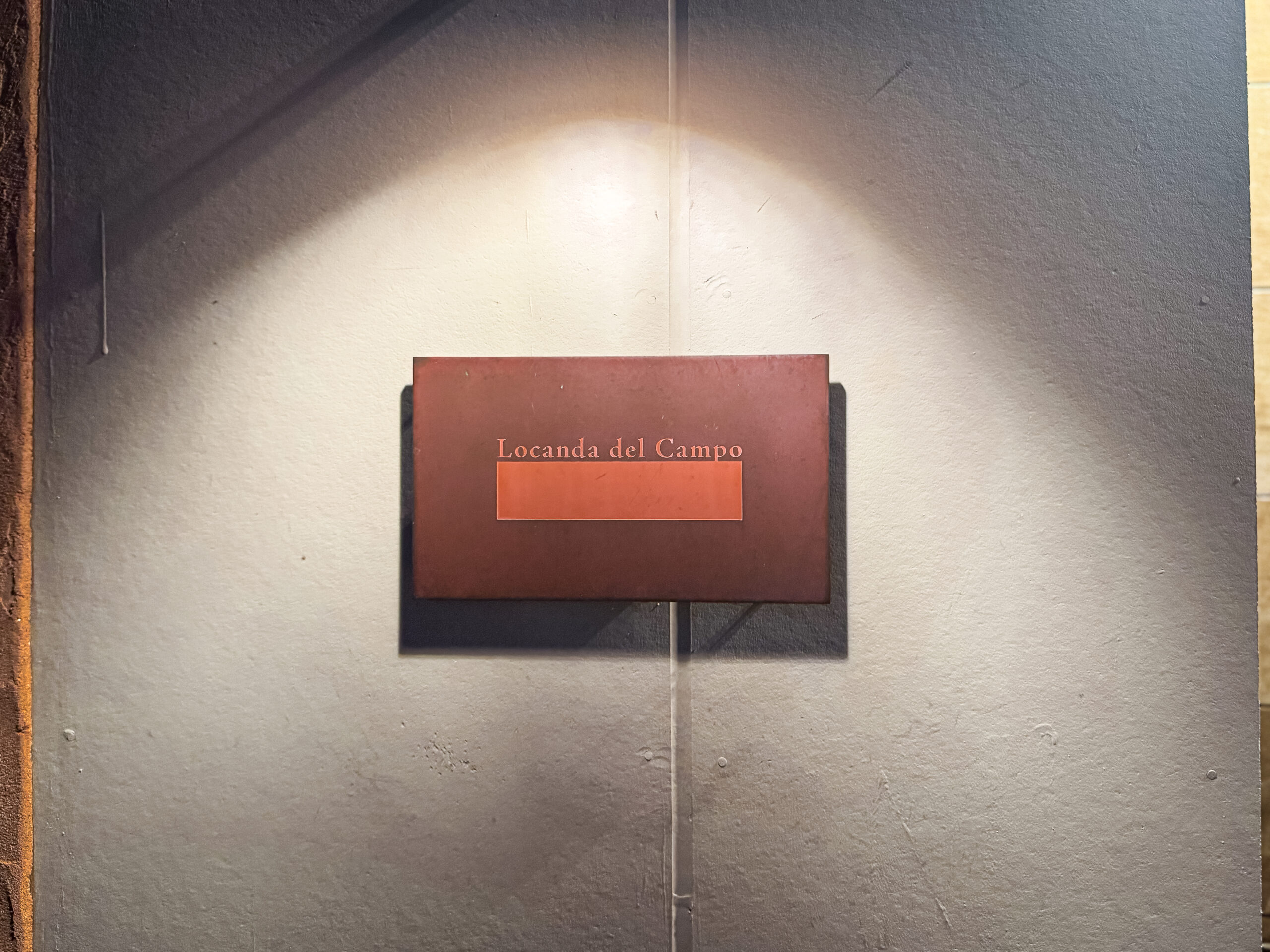
Locanda del Campo is an Italian restaurant located in Chijiwa Town, Unzen City, Nagasaki Prefecture. The name means “inn of the field” in Italian, and true to its name, this small restaurant sits nestled amid open farmland. It’s a restaurant gaining attention for dishes rooted in Italy’s regional culinary traditions while showcasing the finest local ingredients.
Chef Couple Uji
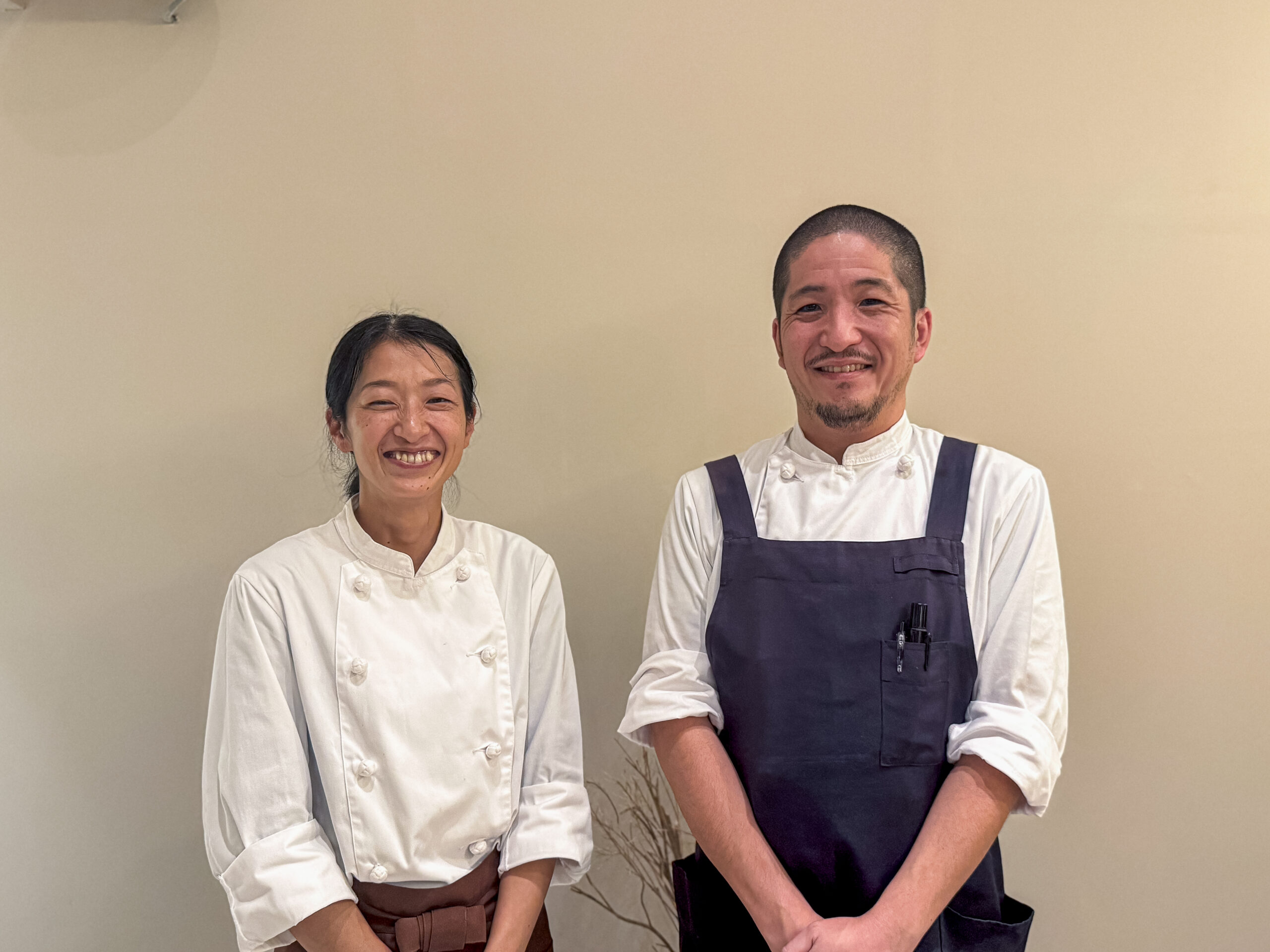
The restaurant is jointly run by Chef Takuma Uji and his wife, fellow chef Nozomi Uji. Drawing on techniques and experience honed in Italy’s Tuscany region, among others, the Uji couple crafts cuisine built around the rich bounty of their home region of Chijiwa. Valuing close relationships with local farmers and fishermen, their menu showcases the area’s natural gifts — heirloom vegetables, game caught on the Shimabara Peninsula, and fresh seafood landed at Obama.
Restaurant Reviews
While the restaurant has not yet accumulated many reviews, its commitment to local sourcing and its evident culinary skill have already earned it a feature in the prestigious lifestyle magazine Fujingaho, recognized as “a restaurant that conveys the charm of its region” — a sign of the growing recognition likely to come. Set amid the natural beauty of Unzen, it promises a special dining experience where Italy’s Tuscan culinary heritage meets the terroir of Chijiwa.
Dining Prelude
Exterior & Entrance
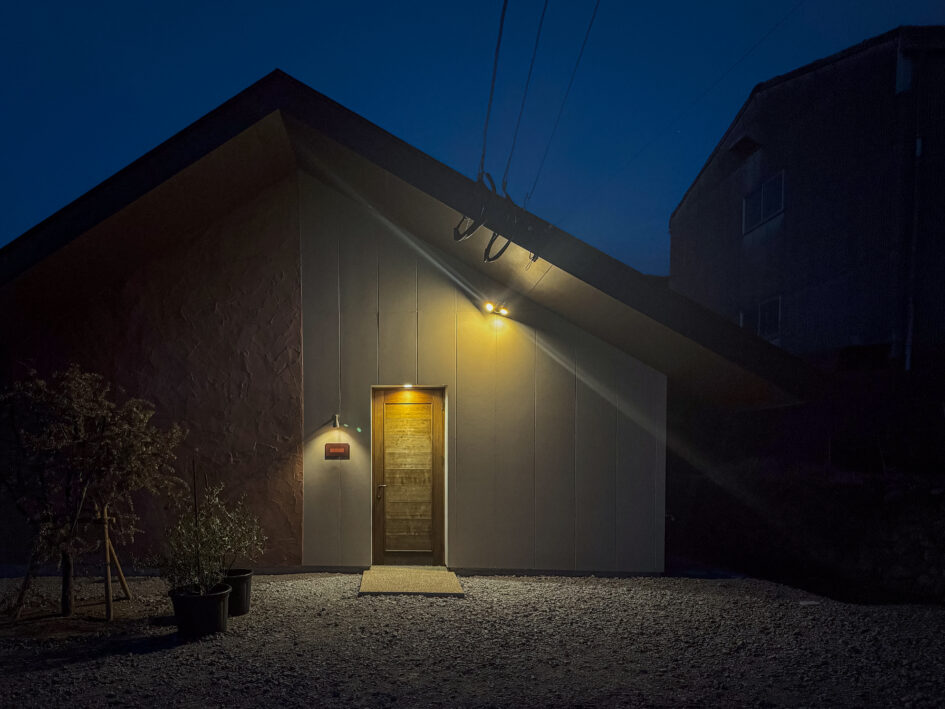
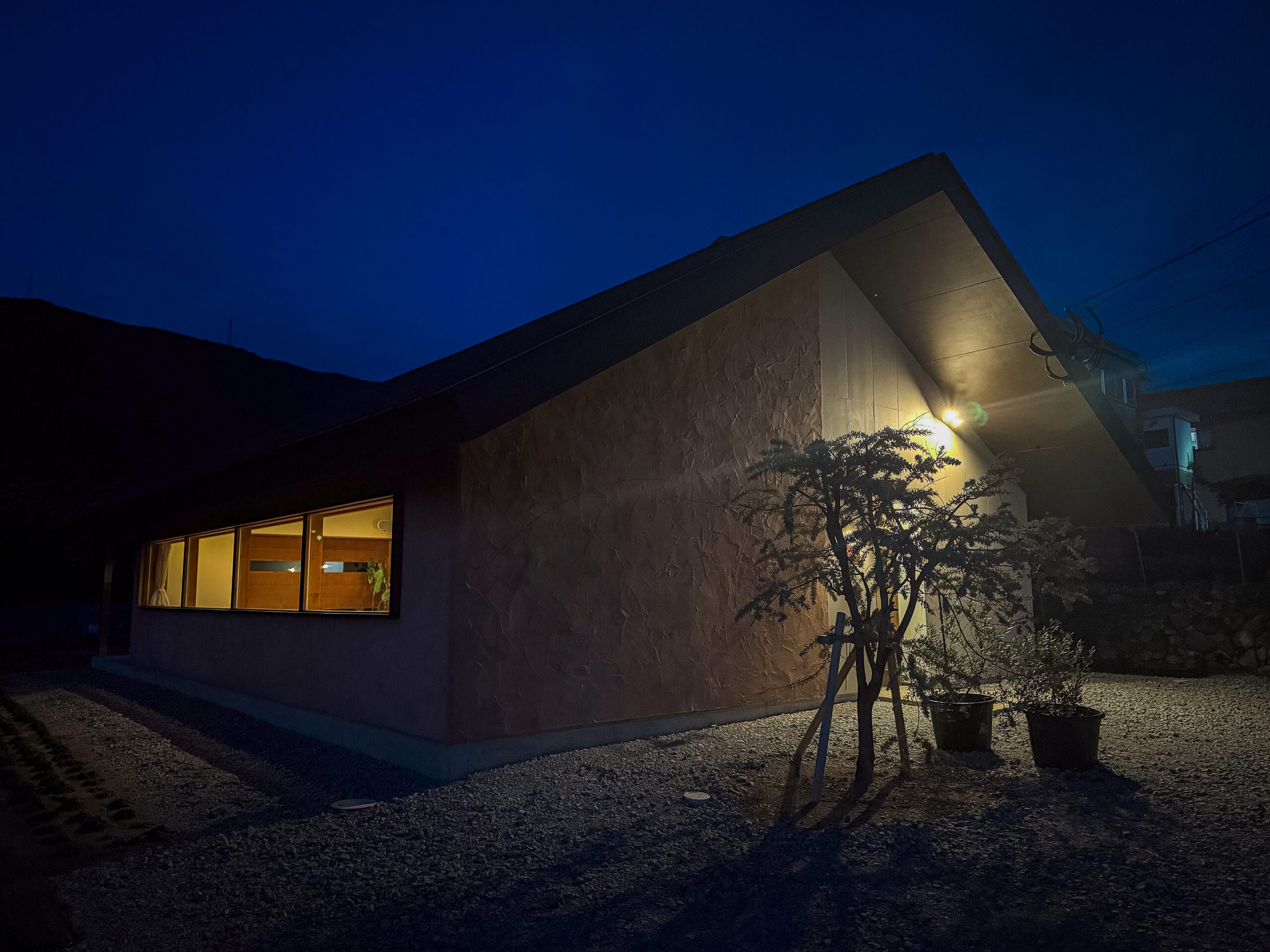
The exterior features a distinctive triangular roof in a brown hue reminiscent of the streets of Siena in Italy’s Tuscany region — a design that is simple yet warm and inviting.
Reception & Waiting Room
Stepping inside, an open kitchen unfolds before you. The space features high ceilings, with large windows offering sweeping views of Chijiwa’s sea and mountains — an open, airy atmosphere throughout.
Both the exterior and interior share a simple design language, balanced by a sense of warmth and openness.
The Dining Space
The restaurant offers counter seating for those who want a close-up view of the chefs at work, as well as table seating for a more relaxed dining experience. There’s also terrace seating where guests can enjoy their meal while taking in the natural breeze.
The Dishes
Primavera
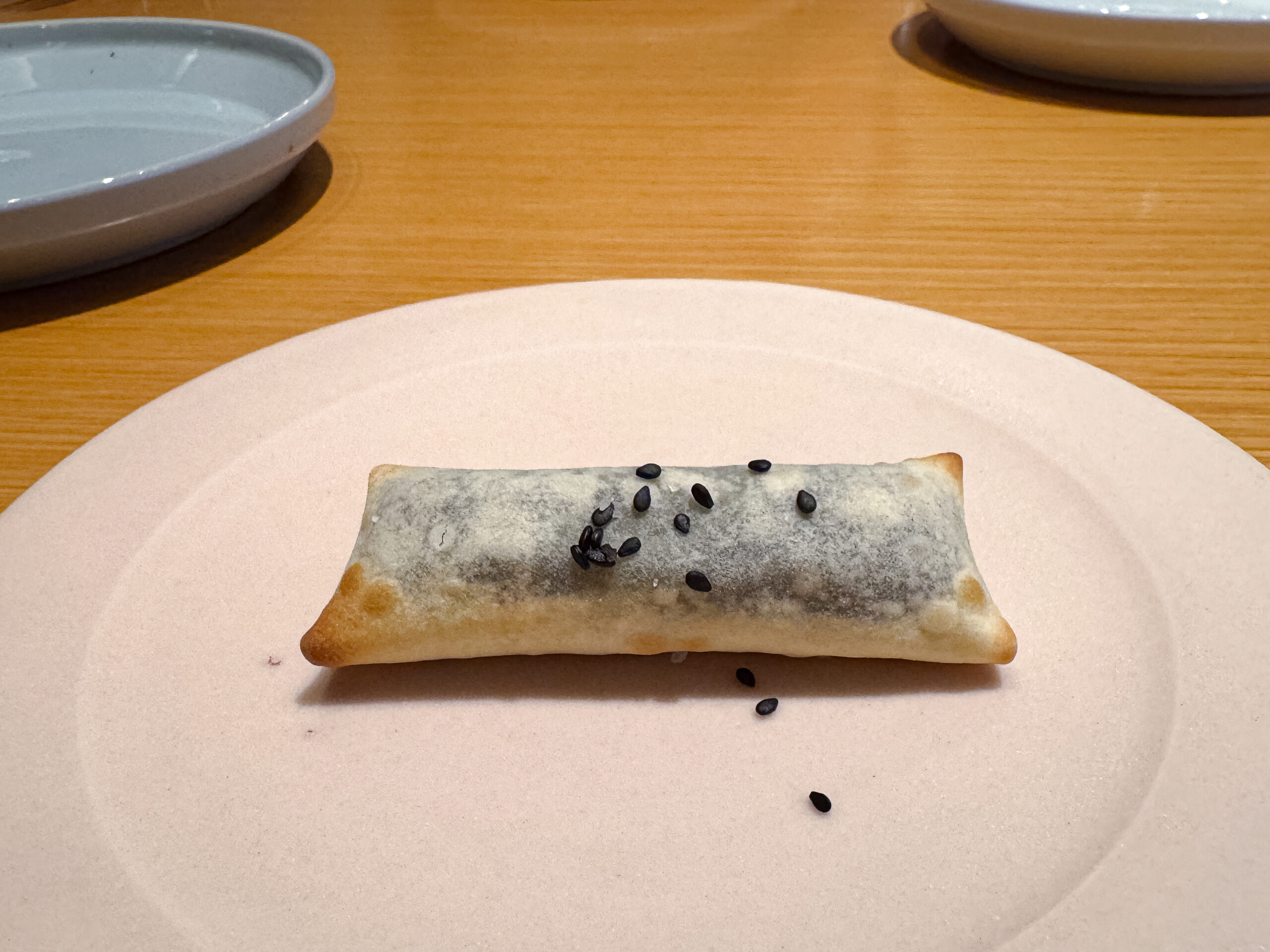
A specialty spring roll wrapper made with amazake from Fukuda Shuzo in Hirado. It’s filled with local taro-like takenokoimo, black sesame, and mozzarella cheese, then baked — a dish that fuses Japanese and Italian elements.
Koshinaga Tuna with Jerusalem Artichoke and Bottarga
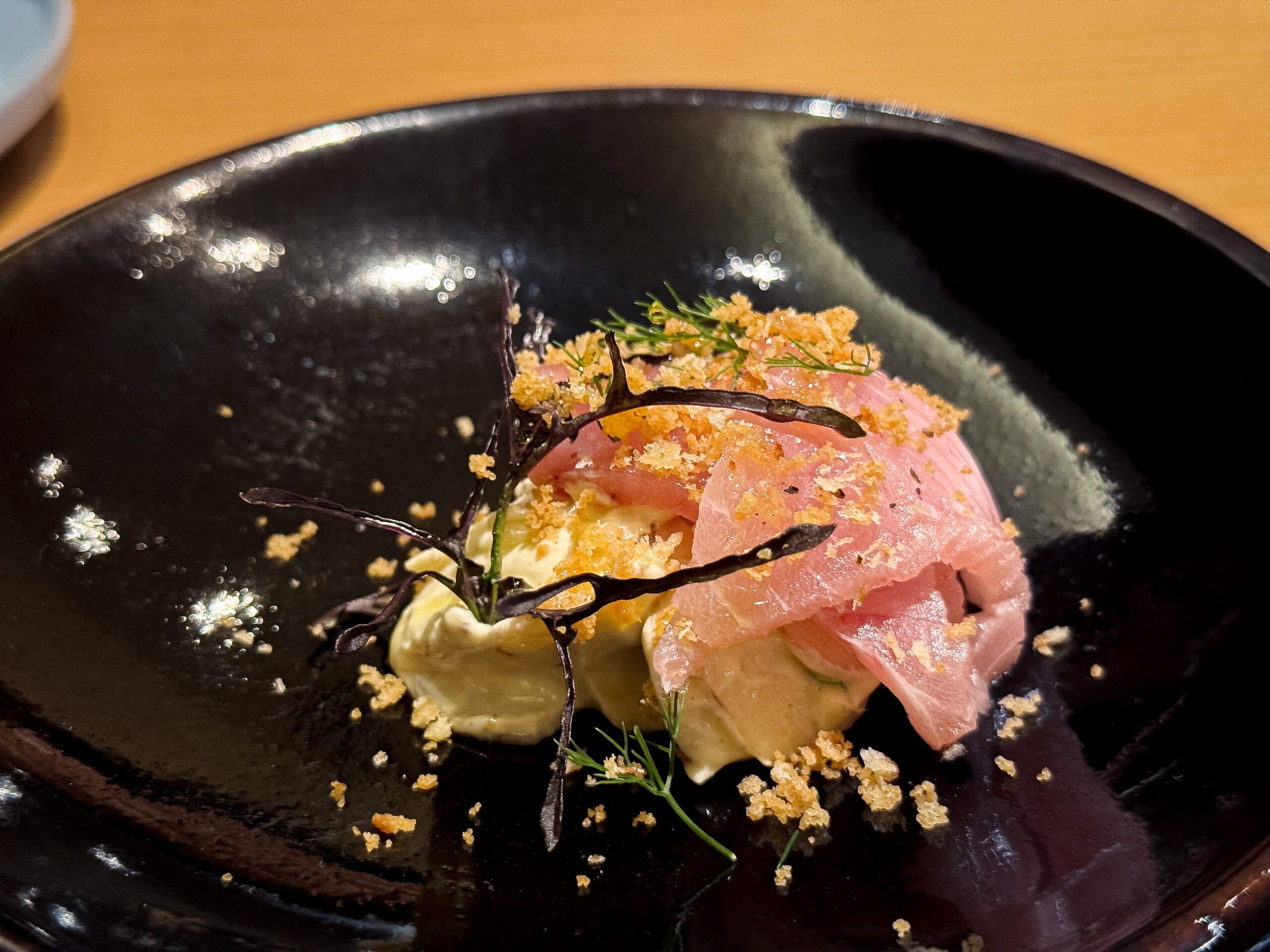
Koshinaga tuna (a type of albacore) is dehydration-marinated to bring out a wonderfully chewy texture, and set atop a rich dip made by combining tofu from local Araki Tofu Shop with soy sauce lees from Yamato Shoyu. Nestled within is a Jerusalem artichoke marinade, adding a gentle sweetness and textural accent, while a topping of spicy red mustard leaf brings a sharp kick. The dish is finished with a scattering of bottarga made from buri (yellowtail) roe, cured with salt from Nomozaki — a refined dish where umami and aroma come together in harmony.
Kuroda Gosun Carrot and Sagoshi Fritto
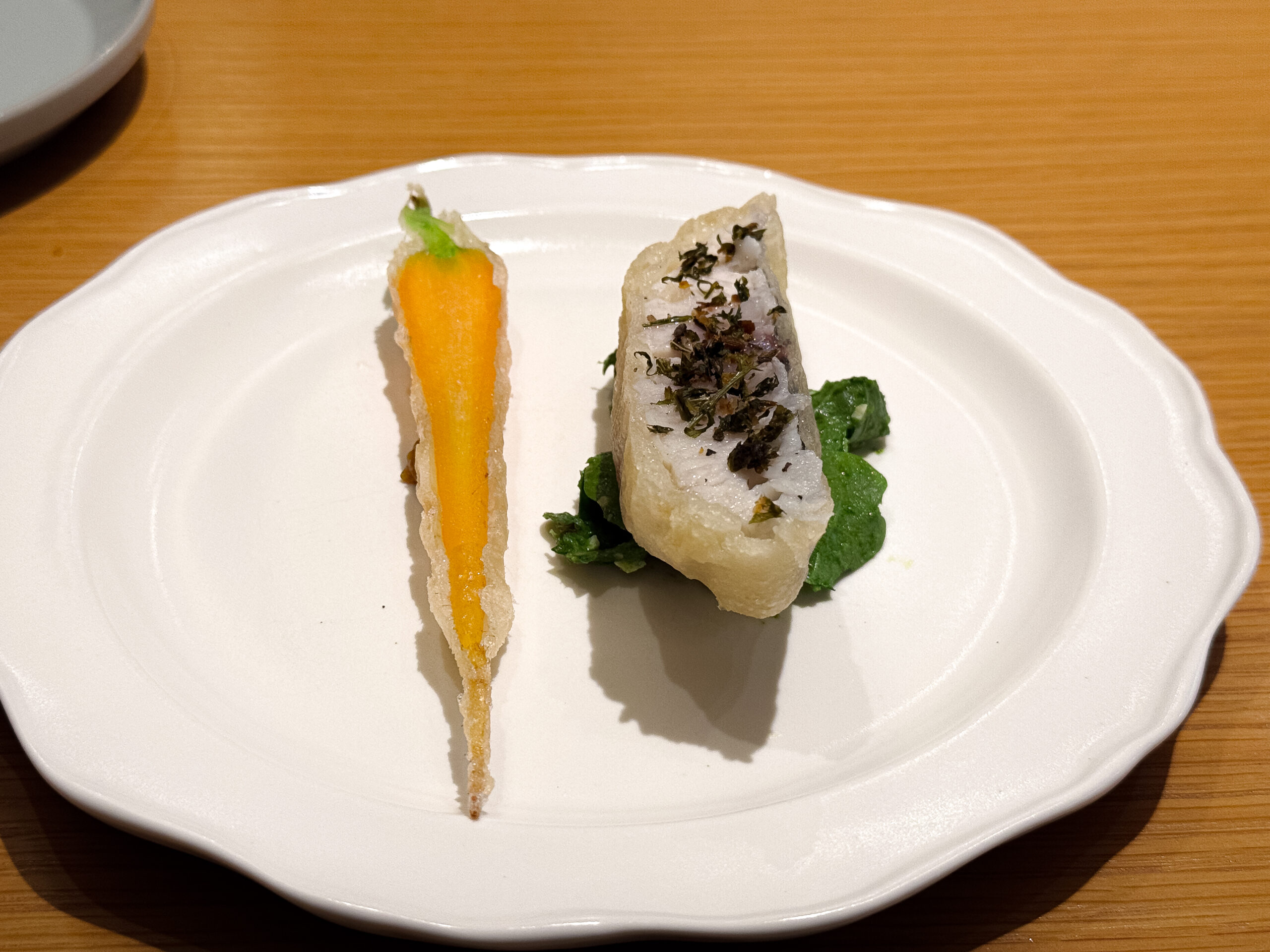
Thinned Kuroda Gosun carrots, still young from the thinning process, are fried into a light, crisp fritto that locks in a subtle sweetness and gentle texture. Beneath them lies mandarin orange preserved and reduced from the previous year, adding a well-balanced touch of sweet-tartness and salinity.
Sagoshi (young Spanish mackerel) caught in Tachibana Bay brings a plump texture and a delicate yet umami-rich flavor. The slight bitterness of arugula adds a refreshing accent, while a finishing sprinkle of Kuroda Gosun carrot-leaf furikake and peanuts contributes toastiness and depth — a dish that beautifully balances seasonality and flavor.
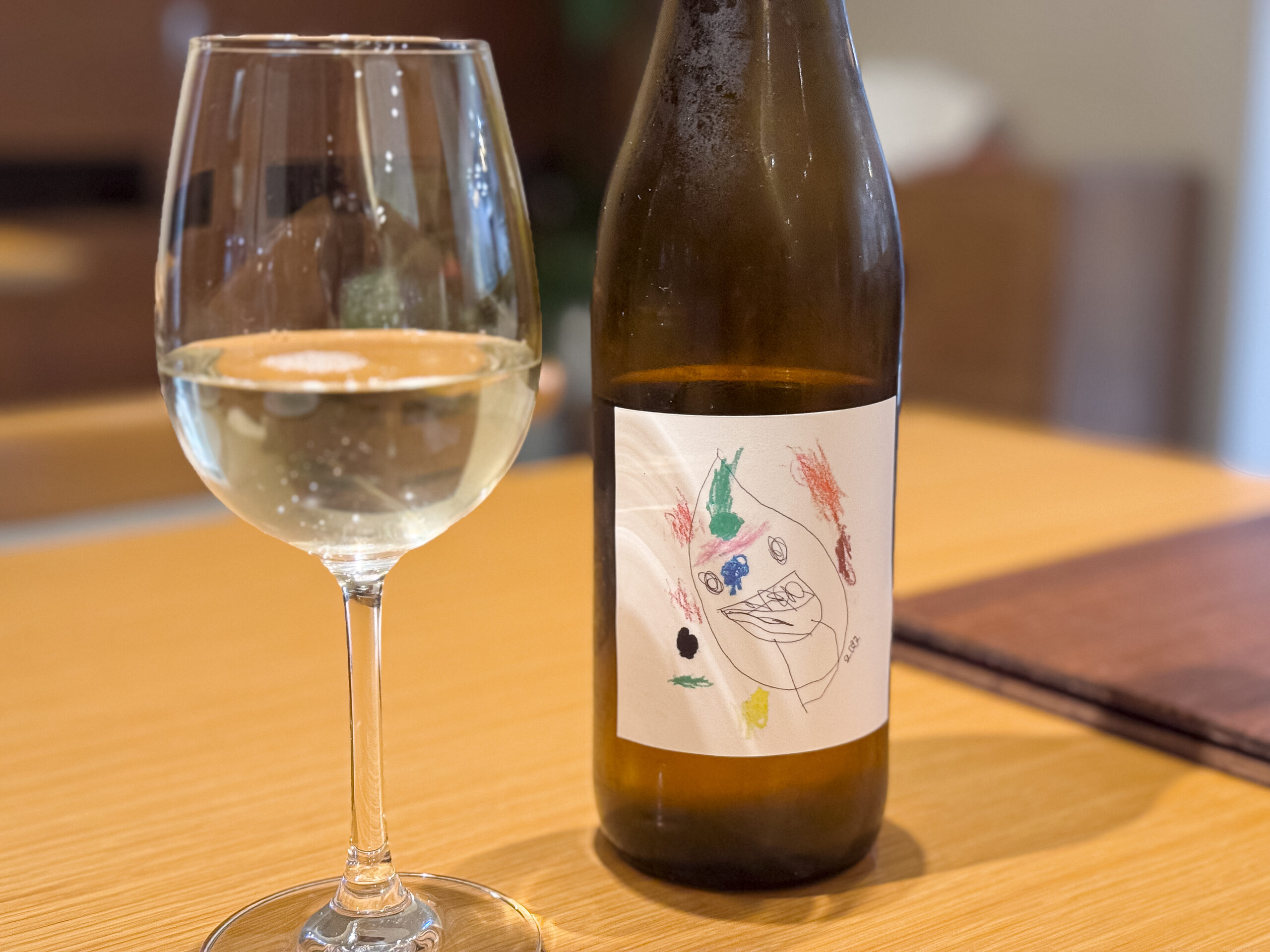
Sake Made From Our Own Rice
Brewed in collaboration with Fukuda Shuzo in Hirado using rice grown by the chef himself, this sake was carefully crafted with food pairing in mind from the very start.
What makes it especially heartwarming is the label — illustrated with a drawing by the chef’s own child. That pure, personal touch lends the sake an extra sense of specialness.
Beyond that, 50% of its proceeds are donated to disaster relief efforts for the Noto Peninsula earthquake, carrying a powerful social message. The result is a sake that offers not just great flavor, but a genuine sense of human warmth and connection.
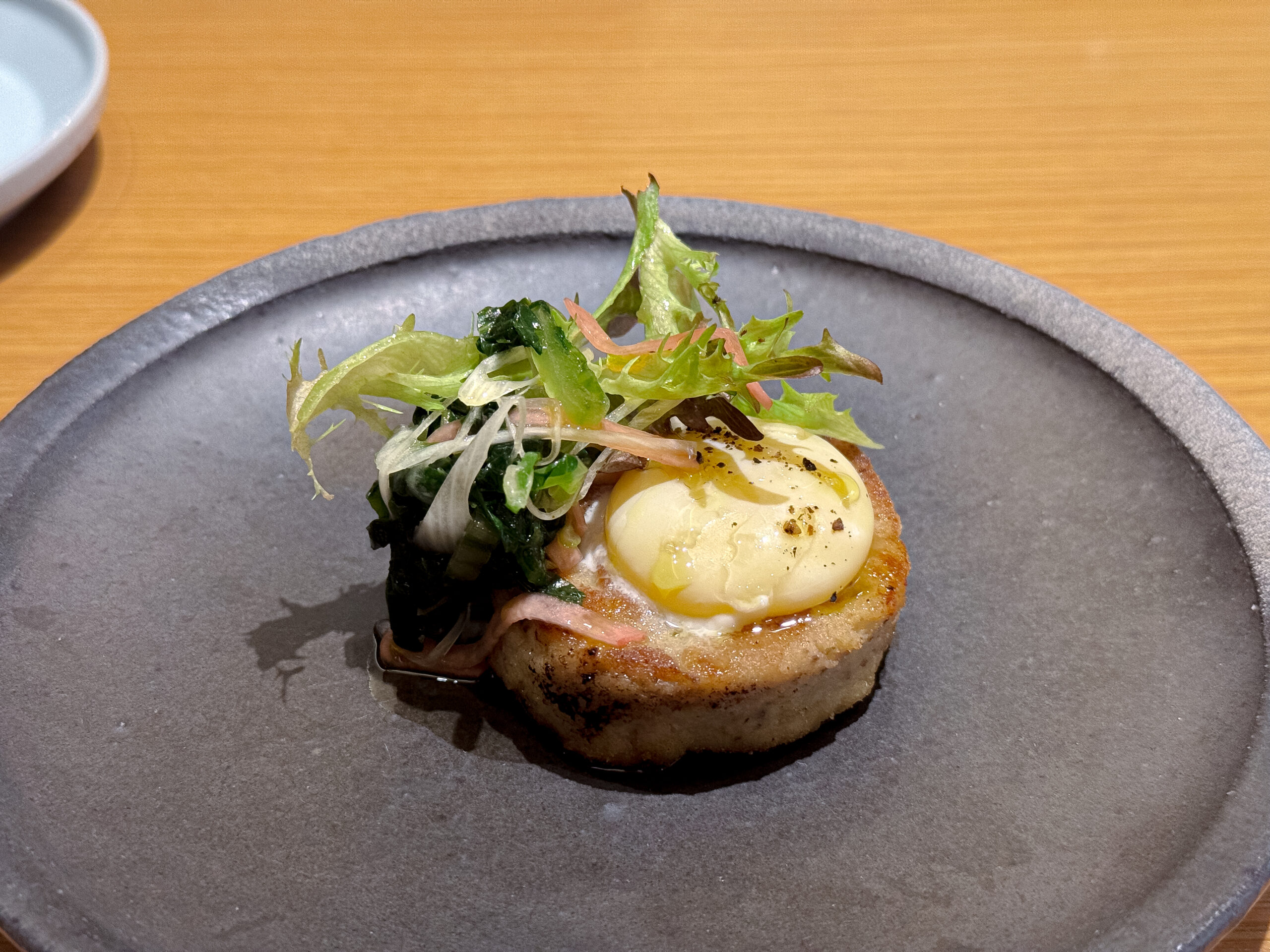
Chijiwa-Style Pancotto
This dish reimagines “pancotto,” a traditional dish from Italy’s Puglia region, in Locanda del Campo’s own style, skillfully weaving in local ingredients — a plate filled with both regional pride and culinary craft.
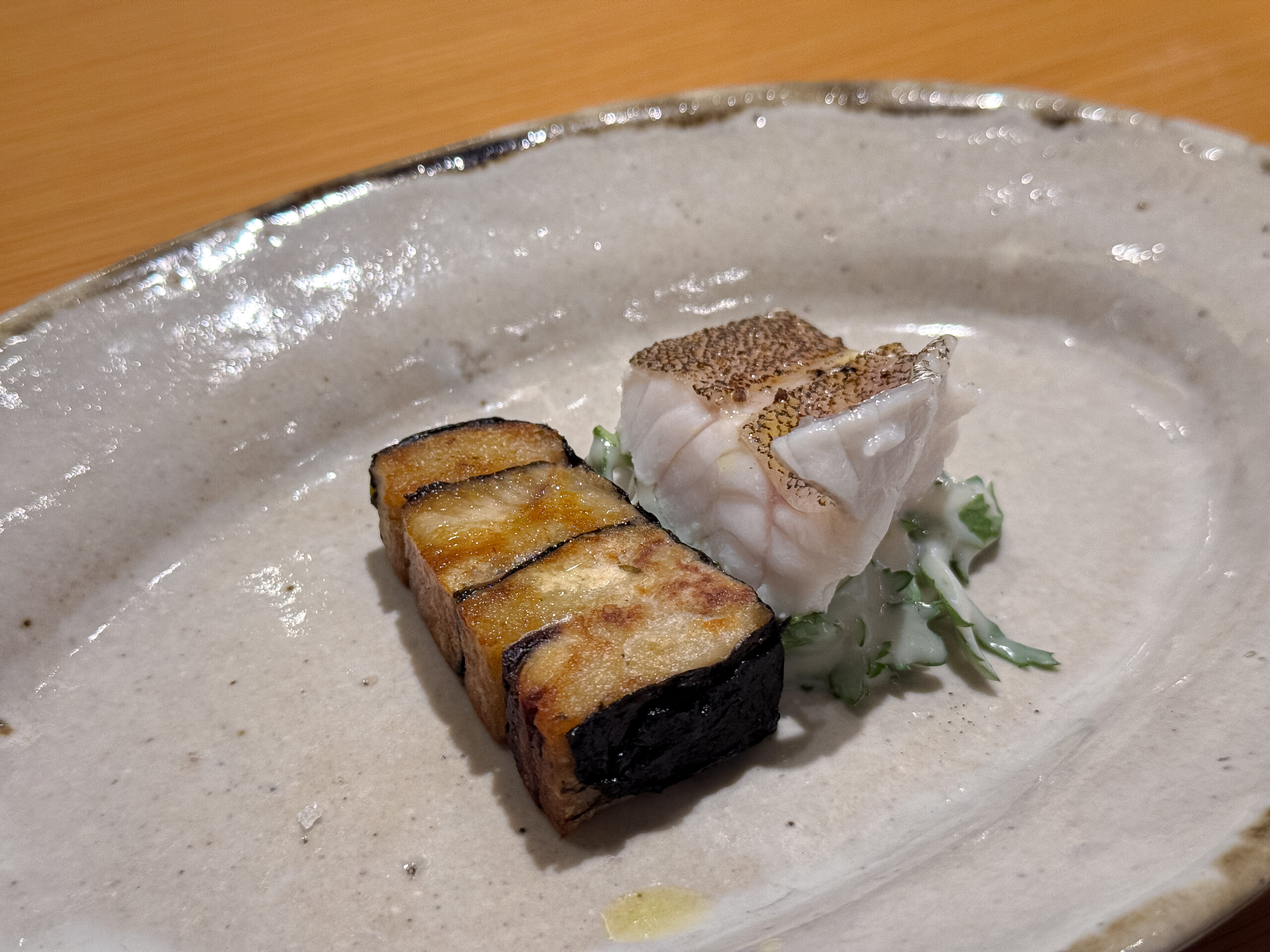
Taro Terrine and Akou (Grouper)
Taro root is left to rest, drawing out its moisture to concentrate its sweetness and umami, before being roasted until fragrant. Layered on top is smoked mackerel from Tachibana Bay, its smoky character adding a deep, oceanic richness that harmonizes beautifully with the taro. The dish is finished by wrapping it in nori from the Ariake Sea, lending a briny aroma and a light salinity, along with a visually striking finish.
Alongside it sits a simply steamed piece of akou (grouper), its plump texture and delicate umami placed in gentle contrast to the terrine.
Smoky aroma, fermentation, roasting, and the flavor of nori all come together in a terrine that is delicate yet deeply flavorful — a true expression of the region’s natural bounty.
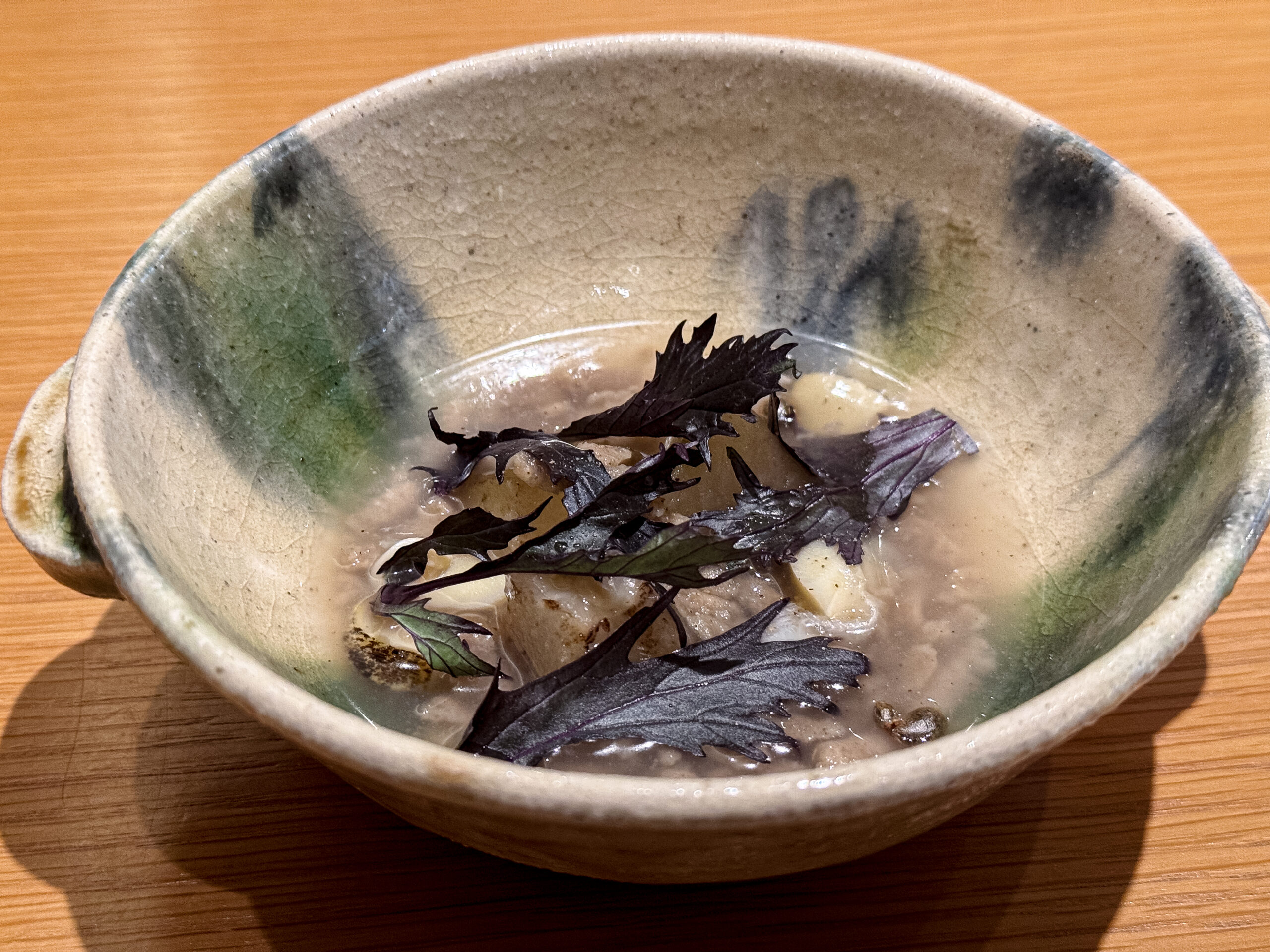
Chijiwa-Style Lasa
“Lasa” is a pasta from Italy’s Emilia-Romagna region, made using a distinctive technique in which a mass of dough is shaved off with a cheese grater. Here, it’s made with sweet potato flour, much like the local Rokubei udon noodles, resulting in a gently sweet flavor and a pleasantly chewy texture.
This house-made lasa is paired with a clear, consommé-style broth carefully drawn from sea bream caught in Tachibana Bay, drawing out a gentle umami and profound depth of flavor.
The dish is further layered with the soft texture of winter melon and the concentrated umami of clam meat, slow-steamed for three hours, adding richness to the delicate broth.
Finishing touches include the crisp, slightly bitter bite of red mizuna greens, and a light drizzle of camellia oil, which wraps the whole dish in a smooth, fragrant richness.
Bridging Italian tradition with the heritage of Chijiwa, this is a deeply nourishing and refined dish, rebuilt from the ground up using local ingredients.
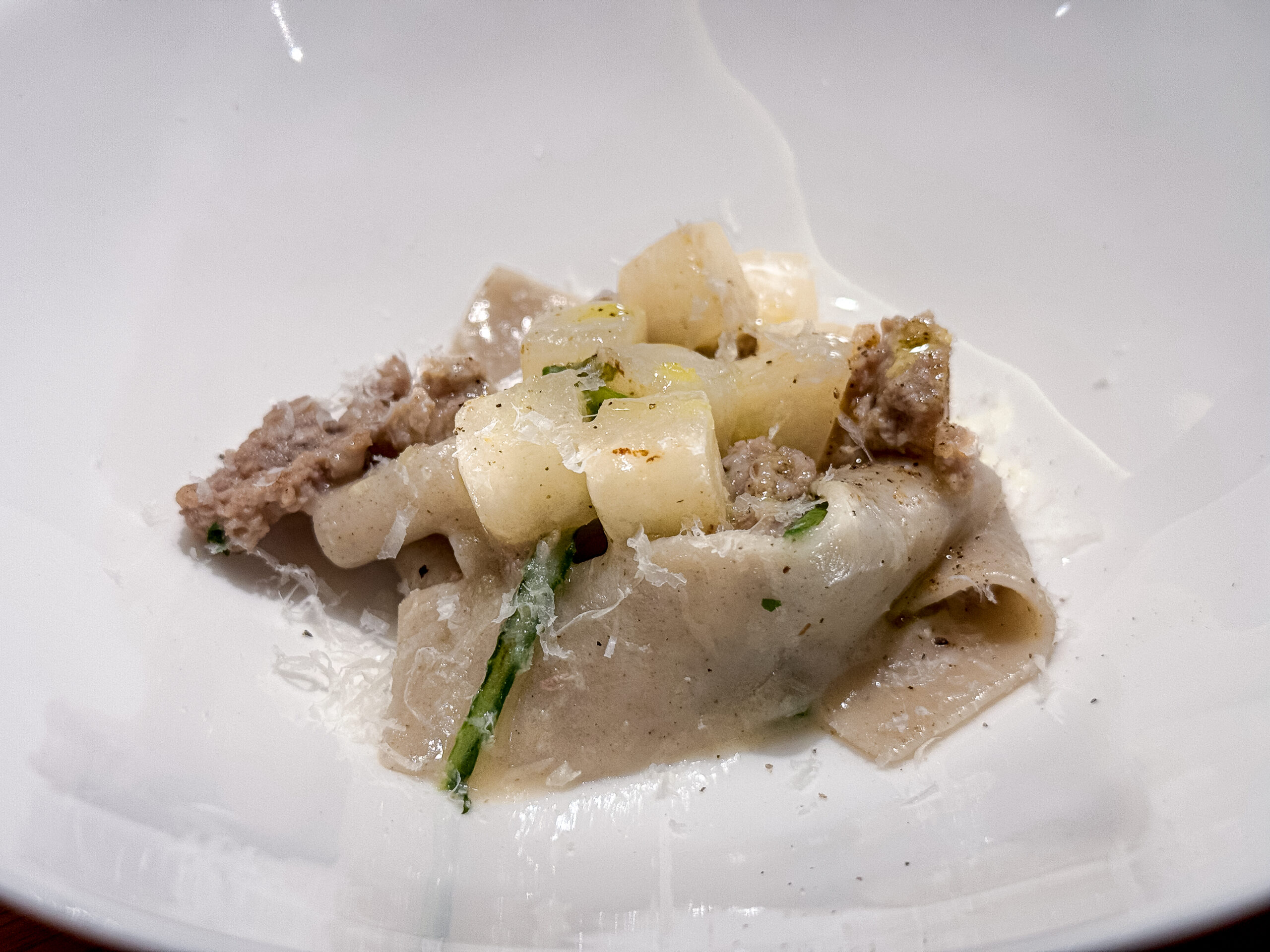
Pizzoccheri
A traditional buckwheat pasta from Italy’s Lombardy region, here reimagined using local ingredients.
The pasta is made with a rare, limited-production buckwheat flour grown in Takashiro-cho, sometimes called “phantom buckwheat” for its scarcity, lending the dish a distinct aroma and character. The buckwheat gives the noodles a satisfying bite along with a simple yet profound depth of flavor.
The dish is finished with sautéed sarsiccia (fresh sausage meat, not yet cased) made from Hoju-buta pork raised in Kuchinotsu-cho, along with turnip and its greens, all brought together with sage butter.
The aroma of buckwheat, the umami of pork, and the fragrance of sage butter unite into a dish that is simple yet deeply satisfying — a plate brimming with regional character.
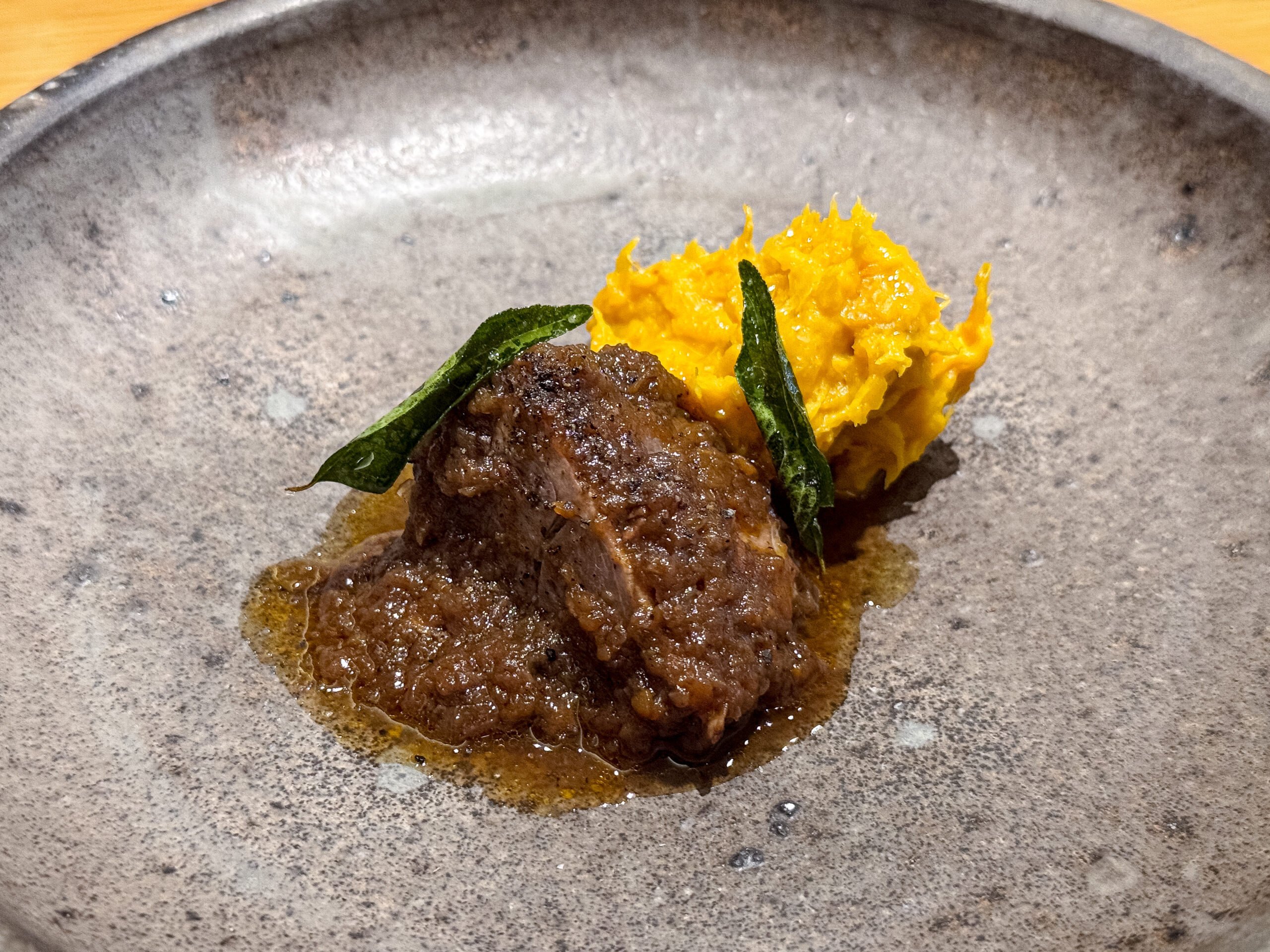
Wild Boar Peposo
The main course reimagines “peposo,” a traditional dish from the Siena area of Tuscany, combined with ingredients local to Chijiwa — a dish both robust and refined.
Peposo is traditionally a red-wine braise generously seasoned with black pepper; here, wild boar thigh meat is used, slow-braised to draw out its wild, gamey umami, while the acidity and richness of the red wine build a deep layer of flavor. The spicy aroma of black pepper adds a distinctive accent, delivering the hearty, robust character typical of Tuscan cooking.
Accompanying this hearty braise is a mash of roasted Chijiwa buna pumpkin. Roasting concentrates the pumpkin’s natural sweetness, and its velvety texture offers a beautiful contrast to the peposo’s bold spice.
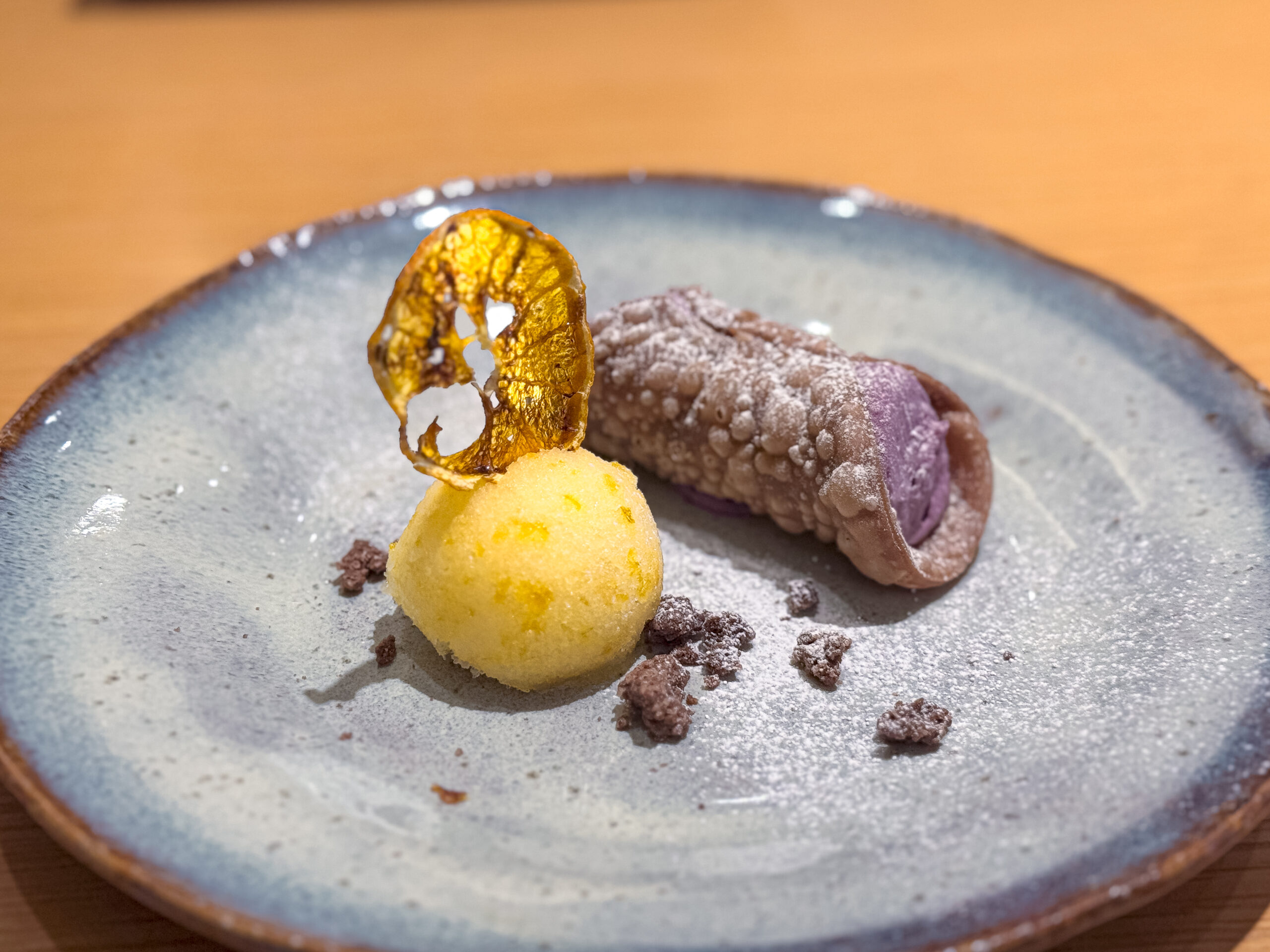
Dessert & Finale
Sicilian Purple Sweet Potato Cannolo and Kumquat Sorbet
The first dessert is built around a cream made from purple sweet potato. Defined by its vivid color, rich sweetness, and silky texture, it carries the humble, comforting spirit of Sicilian confectionery while incorporating a distinctly Japanese touch.
The second element is a sorbet made with kumquat and the restaurant’s own house sake. The kumquat’s bright acidity and gentle bitterness, paired with the subtle fragrance of the sake, create a clean, refreshing finish, its delicate sweetness and sharp clarity tying the whole dessert together.
To finish, chips made from “Yura Wase,” an early-season mandarin variety, are added for a crisp texture and a concentrated citrus aroma.
The rich purple sweet potato cream, the bright and fragrant kumquat-and-sake sorbet, and the crunch and toastiness of the mandarin chips come together in a refined dessert — one that carries the spirit of Sicily while fully embracing the region’s local bounty.
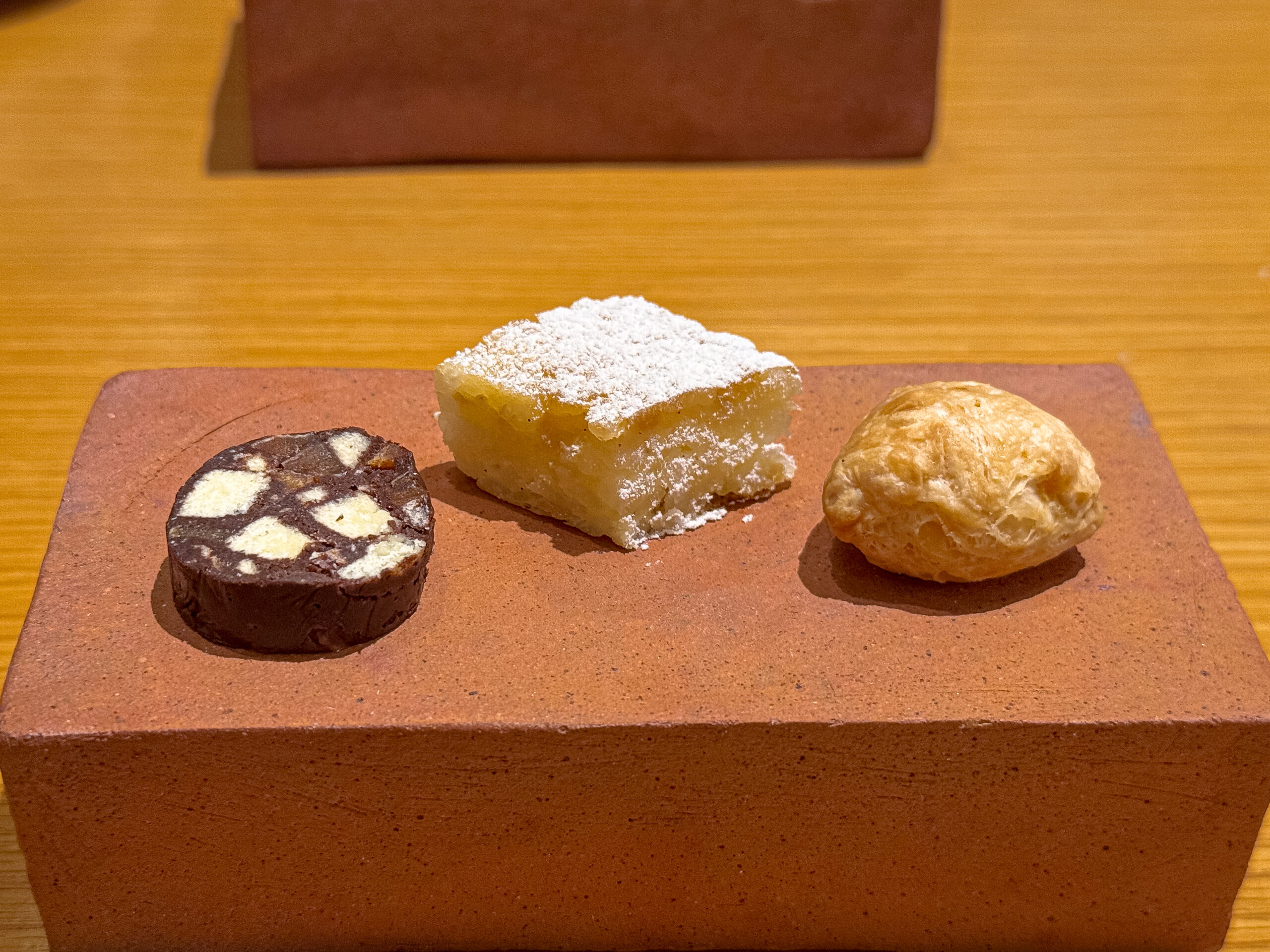
Tea Sweets
This plate of tea sweets is built on traditional confections from across Italy, each reimagined with local ingredients — a dish rich in regional character and seasonal nuance.
1. Sfogliatella filled with chestnut cream
Sfogliatella, a traditional Neapolitan pastry, is known for its many crisp, flaky layers. While it’s traditionally filled with ricotta or semolina, here it’s filled with chestnut cream instead, bringing a distinctly autumnal sweetness and earthy richness.
2. Torta di riso made with rice from the field just outside
Torta di riso, a traditional rice cake from Bologna, is a moist baked treat made by mixing rice cooked in milk into the batter. Here, it’s made with local rice grown in the chef’s own field, emphasizing a gentle sweetness and rustic character.
3. Freshly made chocolate salami with dried persimmon
Chocolate salami is a simple yet rich treat commonly made in Italian households. While it’s traditionally studded with nuts or cookies, here freshly made dried persimmon is added instead, lending a subtle Japanese nuance.
A moment to savor the lingering afterglow of the meal, while sensing the traditions of Italy’s many regions.
Final Thoughts
Rooted in traditional Italian dishes and confections from across the country, yet beautifully fused with Nagasaki’s rich ingredients and local terroir, this was a truly one-of-a-kind dining experience.
What stands out most is the restaurant’s unwavering commitment to its core concept — “savoring the land’s bounty just as it is” — a philosophy that gives the meal real weight as “a special experience that could only be born in this place, at this time.”
Local ingredients, Italian tradition, fermentation culture, and the chef’s personal convictions all weave together into a course where every dish tells its own distinct story, yet all converge toward a single, resonant theme — a truly moving culinary journey.
Reservation & Access Information
Reservations: Accepted by phone only.
The best times to call are 9:00–11:00 and 14:00–17:00.
Address: 333 Ono, Chijiwa-cho, Unzen City, Nagasaki Prefecture
Hours:
Lunch: 11:30–13:30 (last entry)
Dinner: 17:30–18:30 (last entry)
Closed: Mondays (subject to change based on holidays or circumstances)
Access: On-site parking is available for 7 vehicles.
- TAGS
 Plan Your Journey
We’ll create a journey tailored to your interests.