※This article contains affiliate links. If you purchase a product through these links, we may receive a commission.
CONTENTS
About Akasaka Fujita
Concept
Akasaka Fujita sits quietly in a residential neighborhood in Akasaka, Fukuoka.
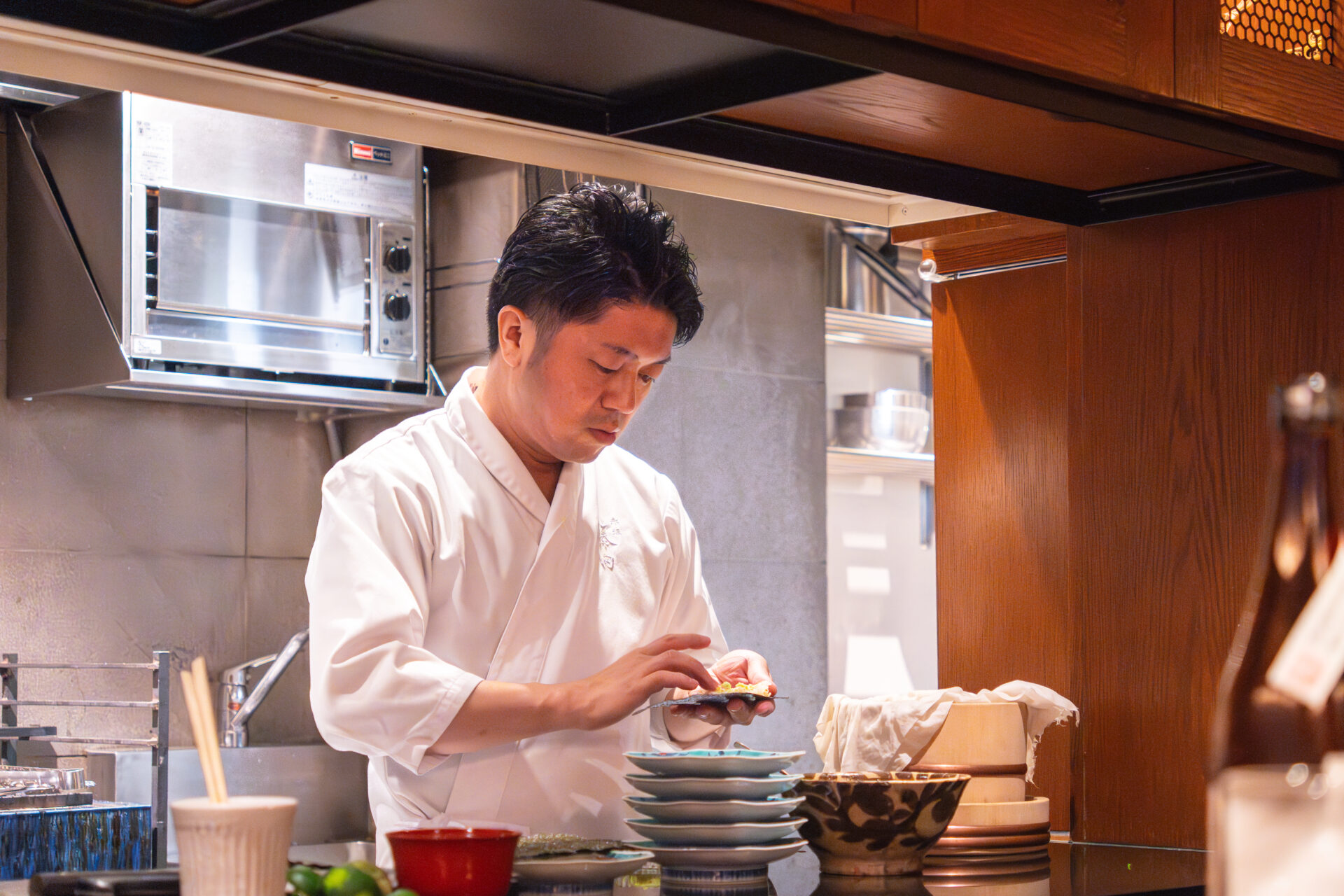
All of the chef’s experience as a cook comes from learning with his own senses. Without being confined by the boundaries of traditional apprenticeships, he has traveled all over Japan to eat, face-to-face with ingredients, and built his own world of flavors through his unique sense of aesthetics.
Without ever relying on gimmicks, he carefully draws out the best of seasonal ingredients.
He adds just the right touch—never too much, never monotonous. At this restaurant, every dish is a quiet harmony between the natural flavors of the ingredients and the sensibilities of the chef.
The menu is basically one omakase course only. While the cuisine is centered around Japanese food, Fujita-san’s own intuition and sense shine in the cooking methods and presentation.
The way he prepares dashi, the balance of heat, and the layering of aromas—all reflect his daily dedication and careful preparation.
Inside, the restaurant is a tranquil, counter-centered space. Guests can focus on the food, engage in conversation, and naturally lose track of time.
The relaxed, unpretentious atmosphere is also one of the charms of this place.
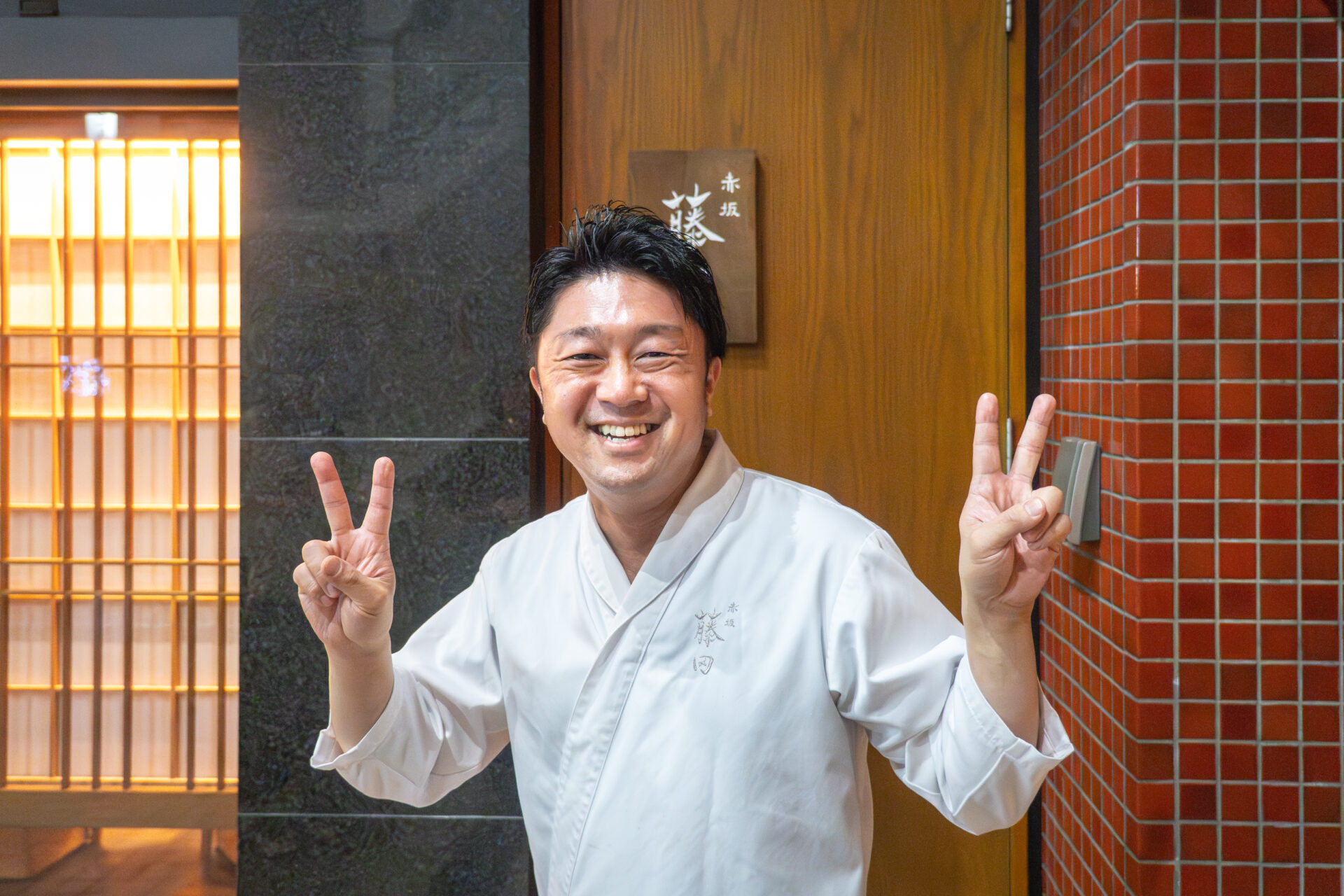
The Chef – Akihito Fujita
At age 29, he became independent and opened “Yakitori Akichan” in Sawara-ku, Fukuoka.
While he was initially busy managing the business, his desire to seriously pursue the “quality of food” gradually grew, and he began to visit famous restaurants in Tokyo and Kansai to learn.
Through this experience, his will as a creator—”I want to make something better with my own hands”—grew stronger, and he has been refining his skills as a self-taught chef.
In 2018, he opened “Akasaka Akichan” at its current location, and his attention to detail and flexible ideas—applied to everything from ingredient selection to cooking and customer service—were gradually recognized.
Then, in 2022, he opened “Akasaka Fujita” as a new stage in his career.
Unusually for a chef, he never trained under anyone.
Still, he accurately identifies seasonal ingredients from all over Japan, is committed to varieties, regions, and freshness, and sincerely expresses only what he himself thinks is the most delicious, without excessive creativity. This approach has earned him firm trust.
Restaurant Reputation
“Akasaka Fujita” is a renowned creative Japanese restaurant by Chef Fujita, who has honed his skills as a self-taught chef, offering cuisine brimming with the sense of the seasons. Recognized by the Michelin Bib Gourmand and highly rated on Tabelog, it has attracted attention from many, and visitors are enchanted by the chef’s sense for pairing ingredients, the delicious donabe rice, and the hidden, counter-style atmosphere. Truly, this is a representative hideaway of Fukuoka, combining both culinary sense and comfort.

Dining Prelude
Exterior & Entrance
Akasaka Fujita sits quietly in a residential area of Akasaka.
If you pass by the front of the restaurant, you’ll notice the soft glow of gentle lighting through the lattice door. The simple design, making the most of the texture of wood, isn’t flashy, but creates an atmosphere that makes you want to stop by.
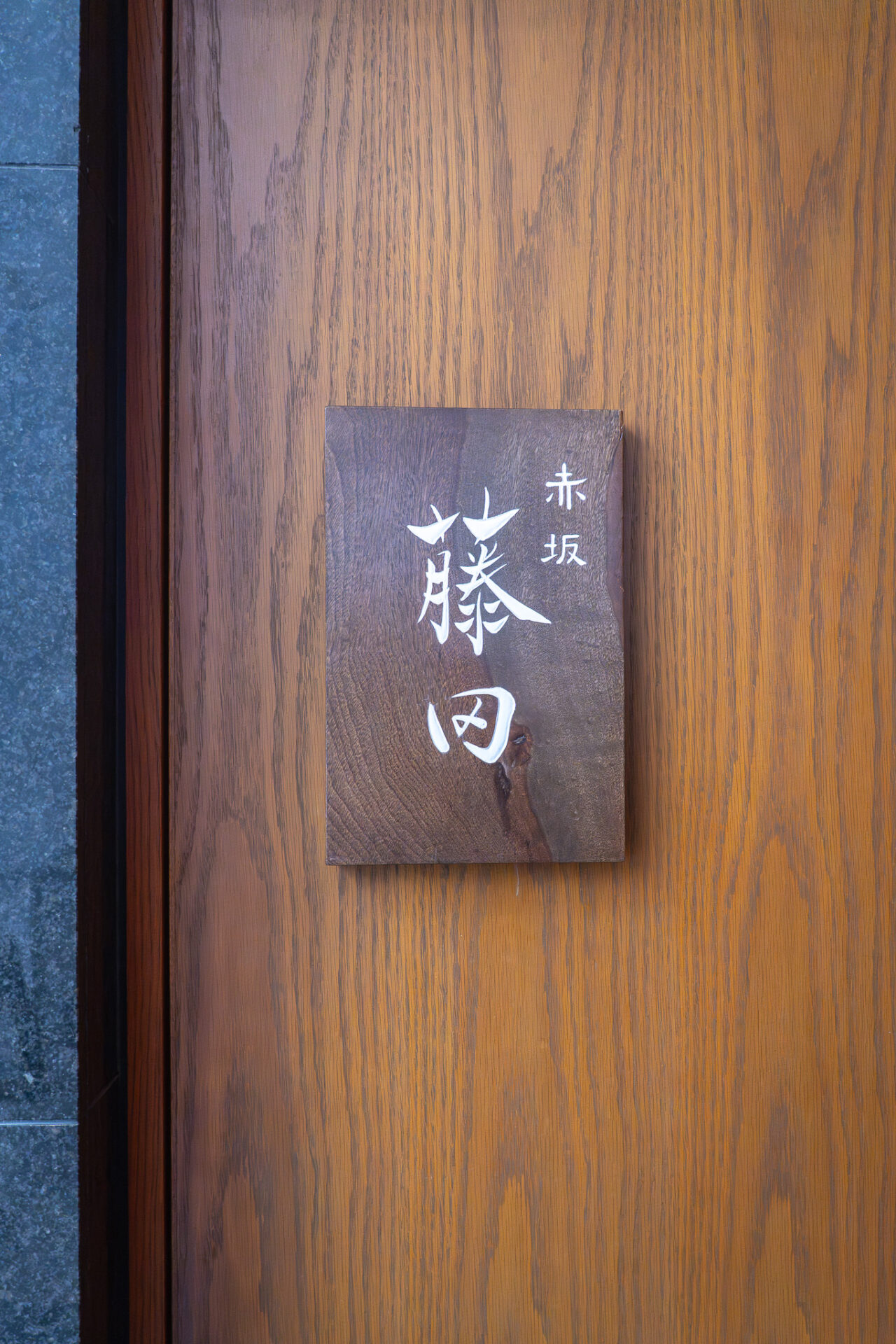
By the entrance is a wooden sign carved with “Akasaka Fujita.” The design is straightforward, stripped of unnecessary decoration, yet you can feel the warmth of craftsmanship.
You can see a little bit of the interior from outside, but there’s just enough distance from the outside to make it easy for first-timers to enter.
The dignified exterior stands out on the quiet street.
The relaxed, unpretentious atmosphere is symbolic of the appeal of this restaurant.
Dining Space
As you step inside, you are greeted by a dignified air and a serene, modern Japanese space.
The dining space, centered around the counter seats, is refined yet comfortable.
Spacious chairs, a wide counter, a wine cellar, and a sake refrigerator all convey the chef’s commitment to food and drink.
Menu Presentation
At Akasaka Fujita, there is only one “omakase course.”
The menu is composed of seasonal ingredients that change every month or even every week.
The chef himself carefully selects the most delicious ingredients of the season—not only from Kyushu, but from all over Japan, including seafood, vegetables, meat, rice, and condiments—and brings out their best in every dish.
Cooking methods range from “charcoal-grilling” and “aemono” (dressed dishes) to “donabe rice” and creative desserts.
The surprises and freshness that come with each visit are part of what makes this restaurant so appealing.
Dishes I Tasted
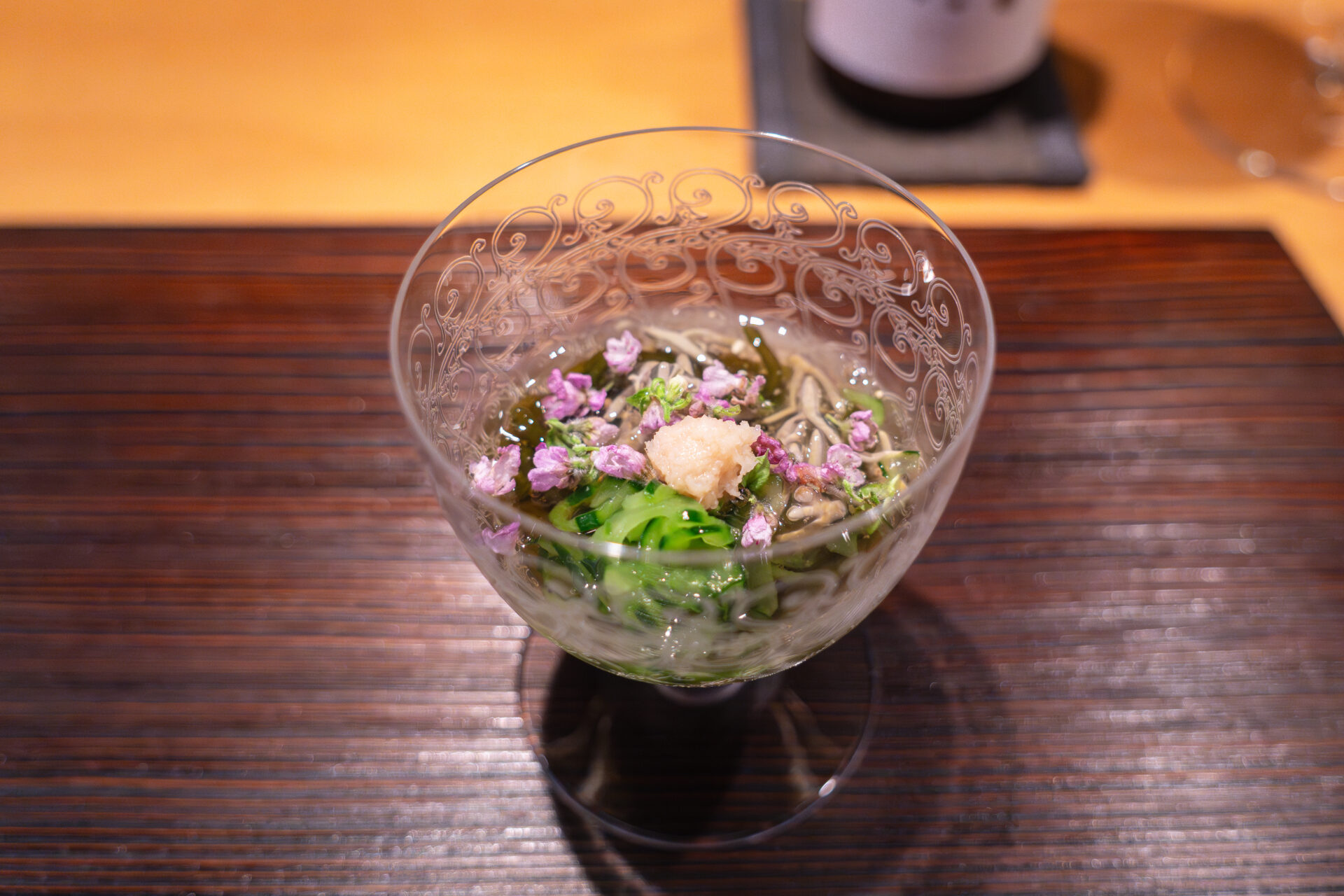
Sakizuke: Itoshima Sōmen Nori & Akita Junsai
The course begins with a refreshing starter served in a cool glass bowl.
Itoshima sōmen nori (green seaweed) and Akita junsai (watershield) are combined in this dish.
The smooth texture and seaweed aroma of the sōmen nori overlap beautifully with the slickness of the junsai, creating a light and refreshing mouthfeel.
Soaked in a gentle dashi broth, it is full of a sense of early summer.
Grated radish and shiso flower garnish the top as aromatic accents.
From the very first bite, you can feel the quality of the ingredients and the chef’s careful preparation—a quietly luxurious starter.
Hamo Otoshi – Charcoal-Grilled Skin & Ume Sauce
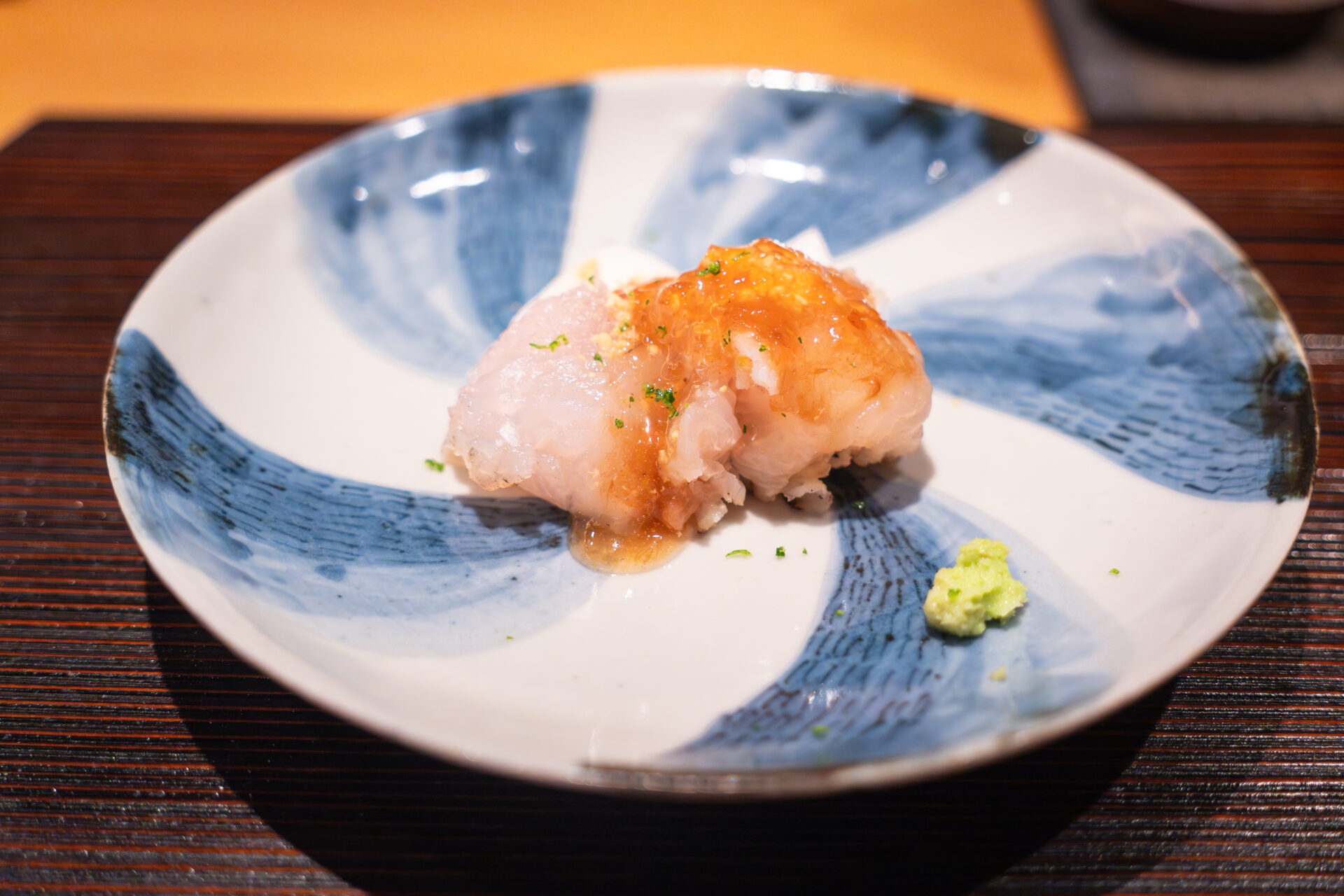
The second dish is a refreshing plate using Nagasaki hamo (pike conger).
Carefully bone-cut hamo is briefly blanched, and then only the skin side is lightly grilled over charcoal to add fragrance.
On top is a refreshing ume (plum) sauce.
Beneath, there’s a touch of sweetness from Aomori fruit turnip, bringing together the subtle flavor of hamo, the acidity of ume, and the freshness of turnip.
The aroma of charcoal, the brightness of plum, and the coolness of summer hamo were united in a memorable dish.
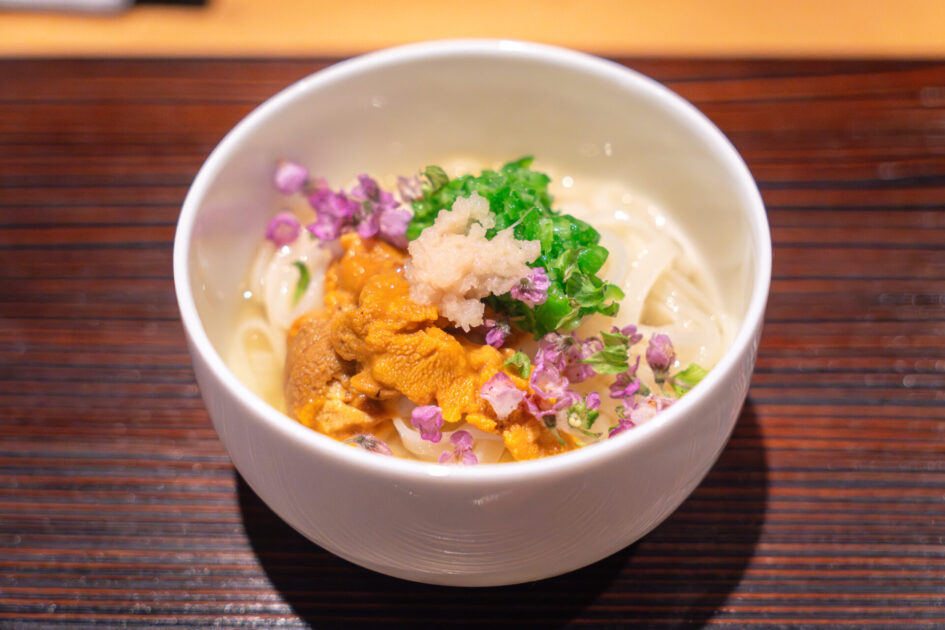
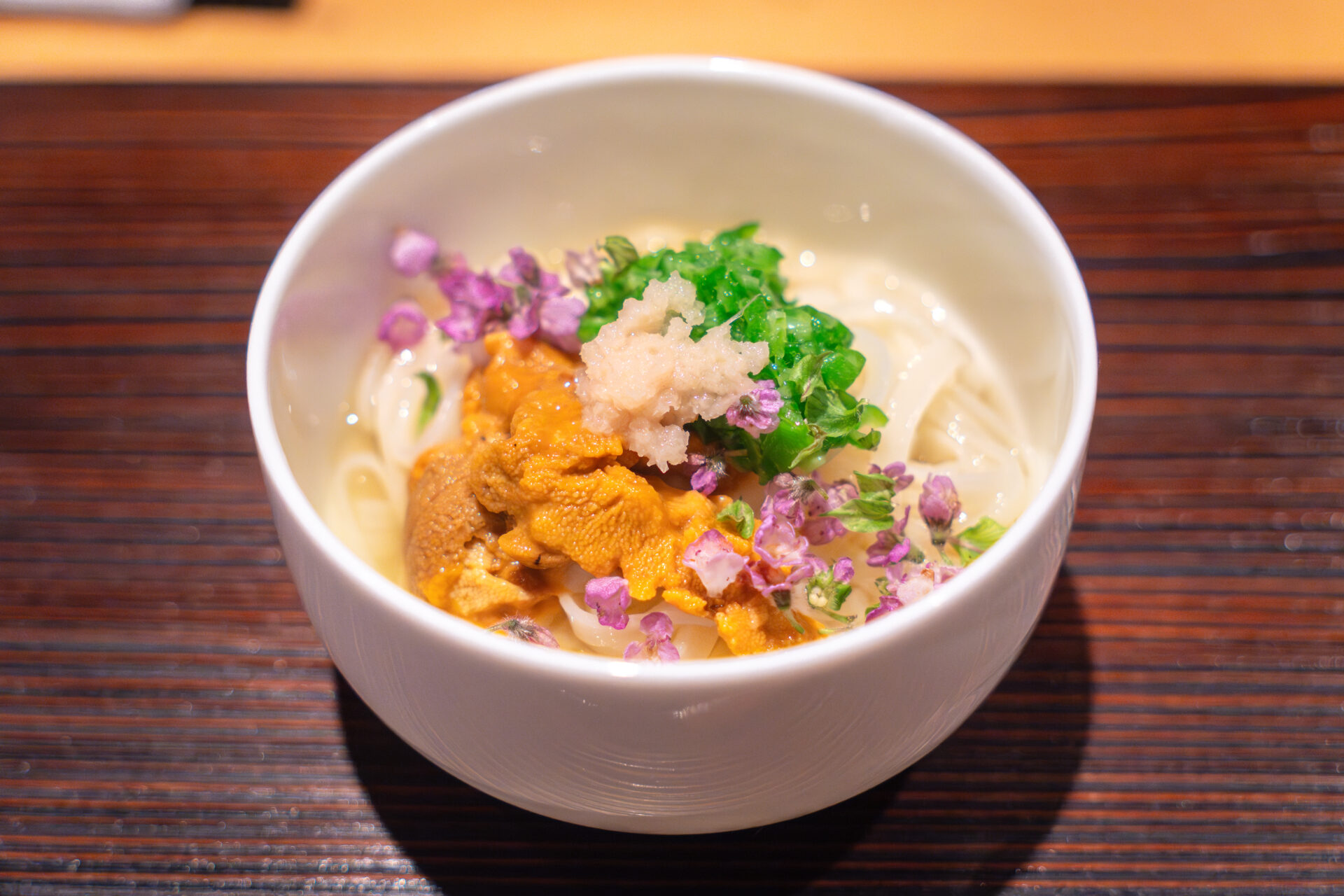
Chilled Udon with Grilled Eggplant Purée & Kitakyushu Murasaki Uni
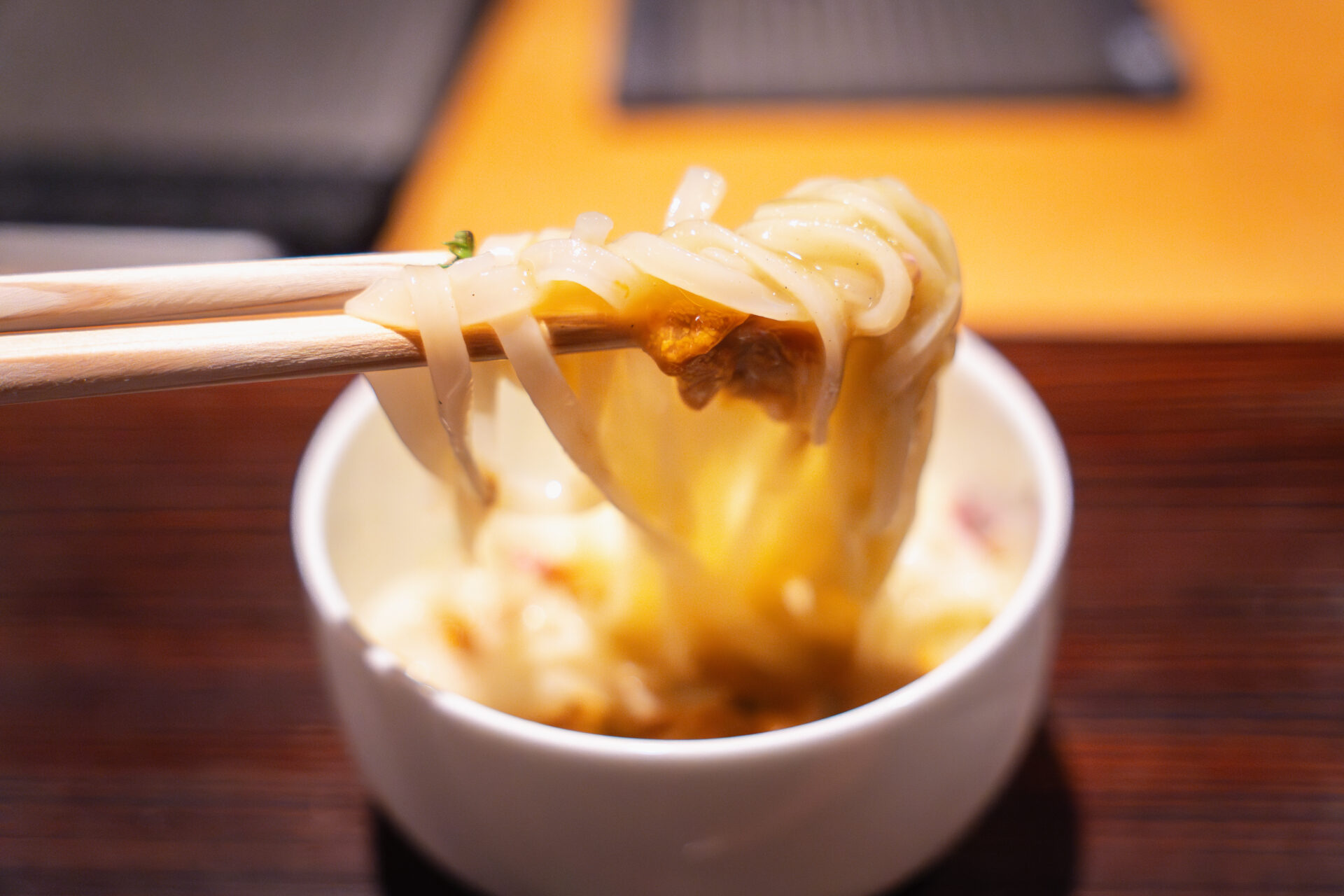
Next was a refreshing dish of chilled hand-made udon.
At the bottom of the bowl was a carefully pureed, fragrant grilled eggplant.
On top of the smooth udon, Kitakyushu murasaki uni (purple sea urchin) is lavishly placed.
Additionally, okra, grated ginger, and shiso flowers are sprinkled on top, making for a visually striking dish.
The roasted eggplant’s aroma, the sweetness of uni, the stickiness of okra, and the refreshing touch of condiments—all combined for a perfectly executed taste of summer.
Kamo Eggplant with Kuruma Ebi Shrimp Soboro Ankake
Kamo eggplant slowly cooked over charcoal is so tender it falls apart with chopsticks.
Its moist flesh, full of water, releases the eggplant’s umami and sweetness with every bite.
Topped with kuruma ebi (Japanese tiger prawn) soboro ankake.
The finely shredded prawn is gently thickened and, with the aroma of dashi, softly envelops the roasted eggplant.
The flavor is perfectly balanced, directly conveying the strength of the ingredients and the precision of the grilling—a quiet, impressive dish.
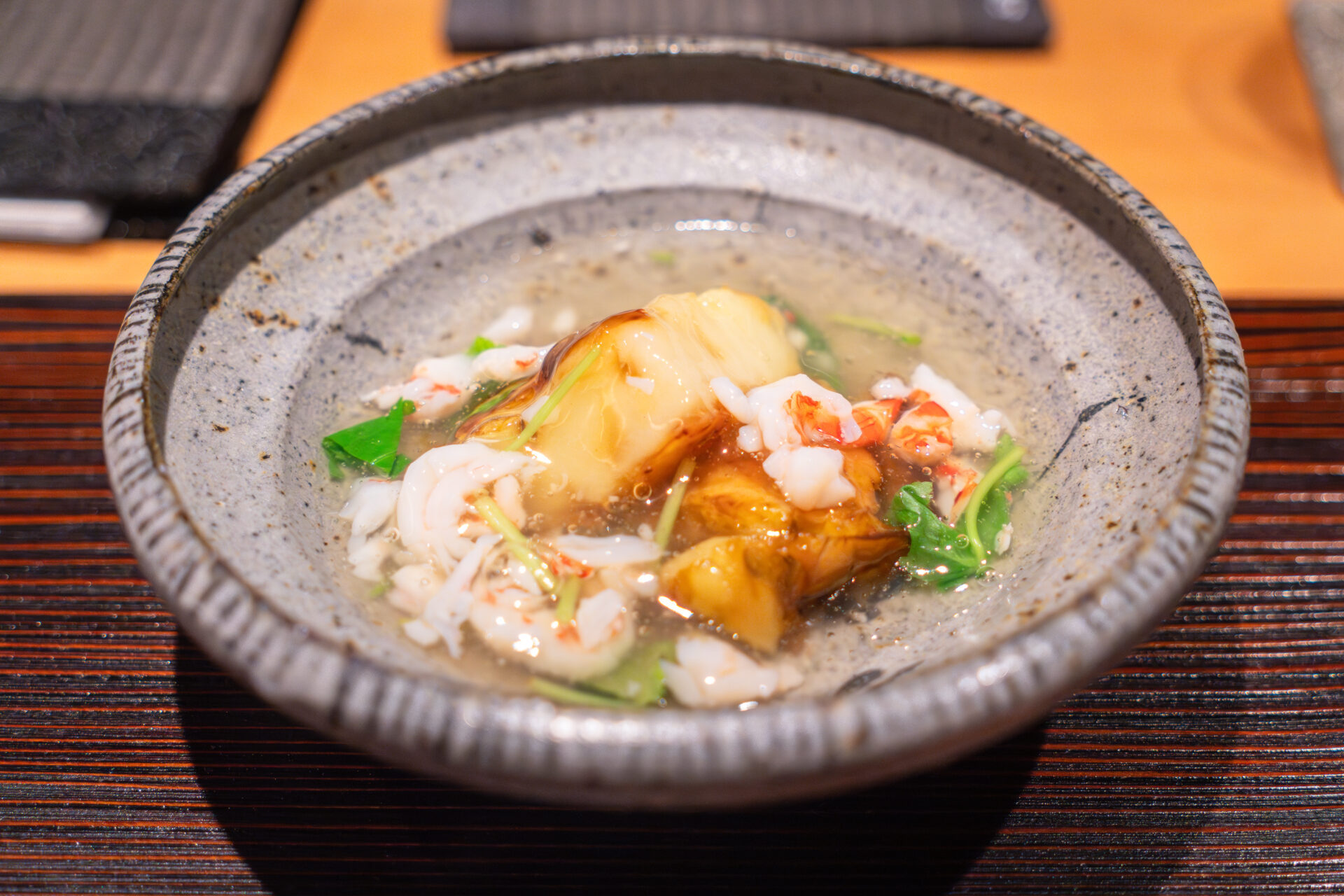
Served alongside the dishes was a bottle from Akita’s Aramasa Shuzo’s “No.6” series.
Of particular note, the H-type (Hope) 2024 is a special limited sake brewed in the traditional kioke-jikomi (wooden vat) and kimoto method.
From the glass rises a gentle yet focused aroma.
A subtle acidity and delicate sweetness are perfectly balanced, and it beautifully matches with dishes like junsai and uni.
It enhances the flavor of the food while still standing out on its own.
It was a sake that accompanied the refined Japanese course, bringing a finishing touch to the meal.
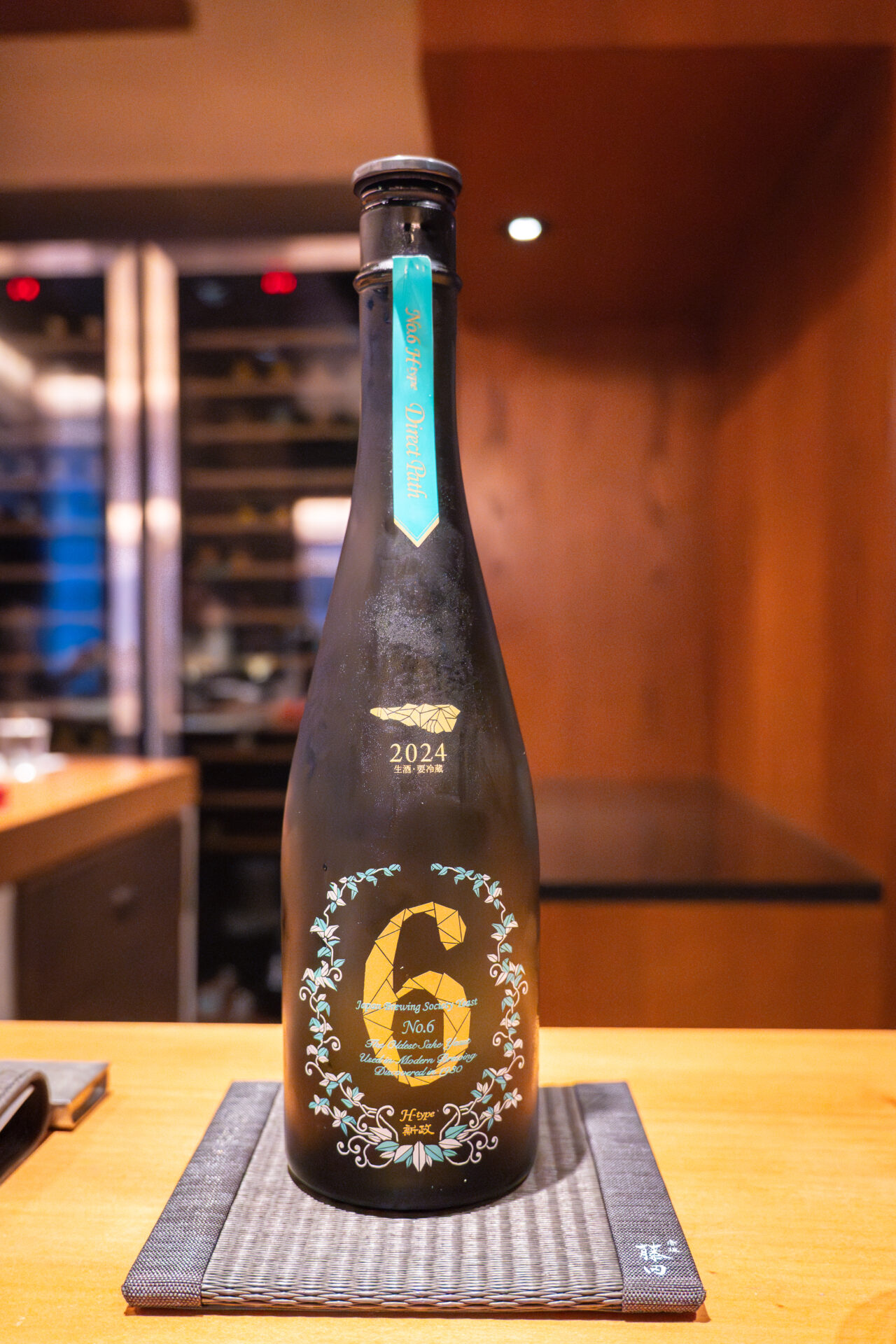
Kumamoto Dolce Dream Spring Roll – Prosciutto & Summer Truffle
Here, a visually stunning spring roll was served.
Inside is a generous filling of Kumamoto-grown corn “Dolce Dream”, and the outside is crisp and fragrant, freshly fried.
On top, prosciutto is gently draped, and freshly shaved summer truffle falls lightly like snow.
A corn purée is spread underneath the spring roll, and finally, a squeeze of sudachi (Japanese citrus) adds a fragrant accent, giving the dish depth.
Sweetness, saltiness, fragrance, and freshness—all the elements are beautifully balanced in this memorable summer dish.
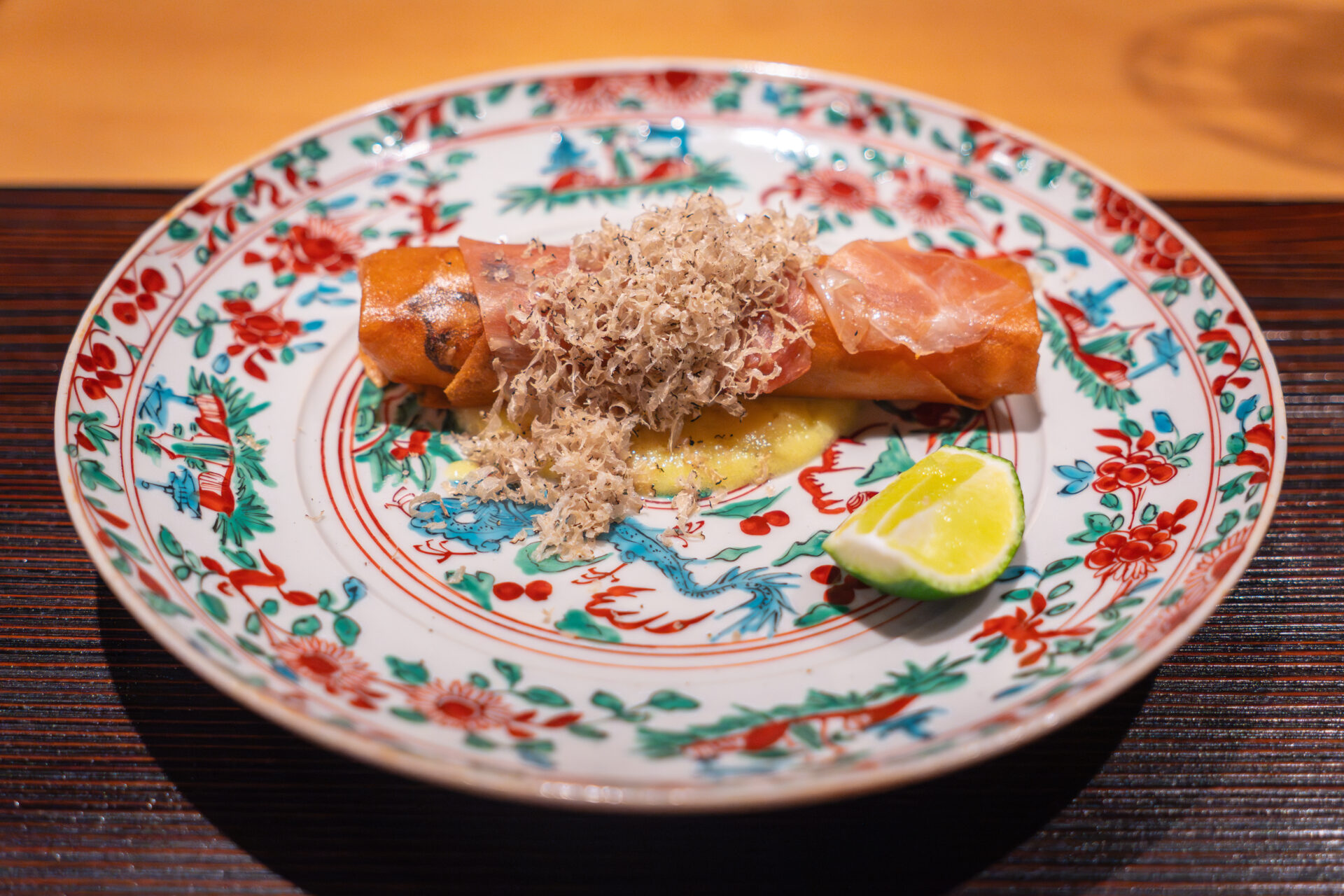
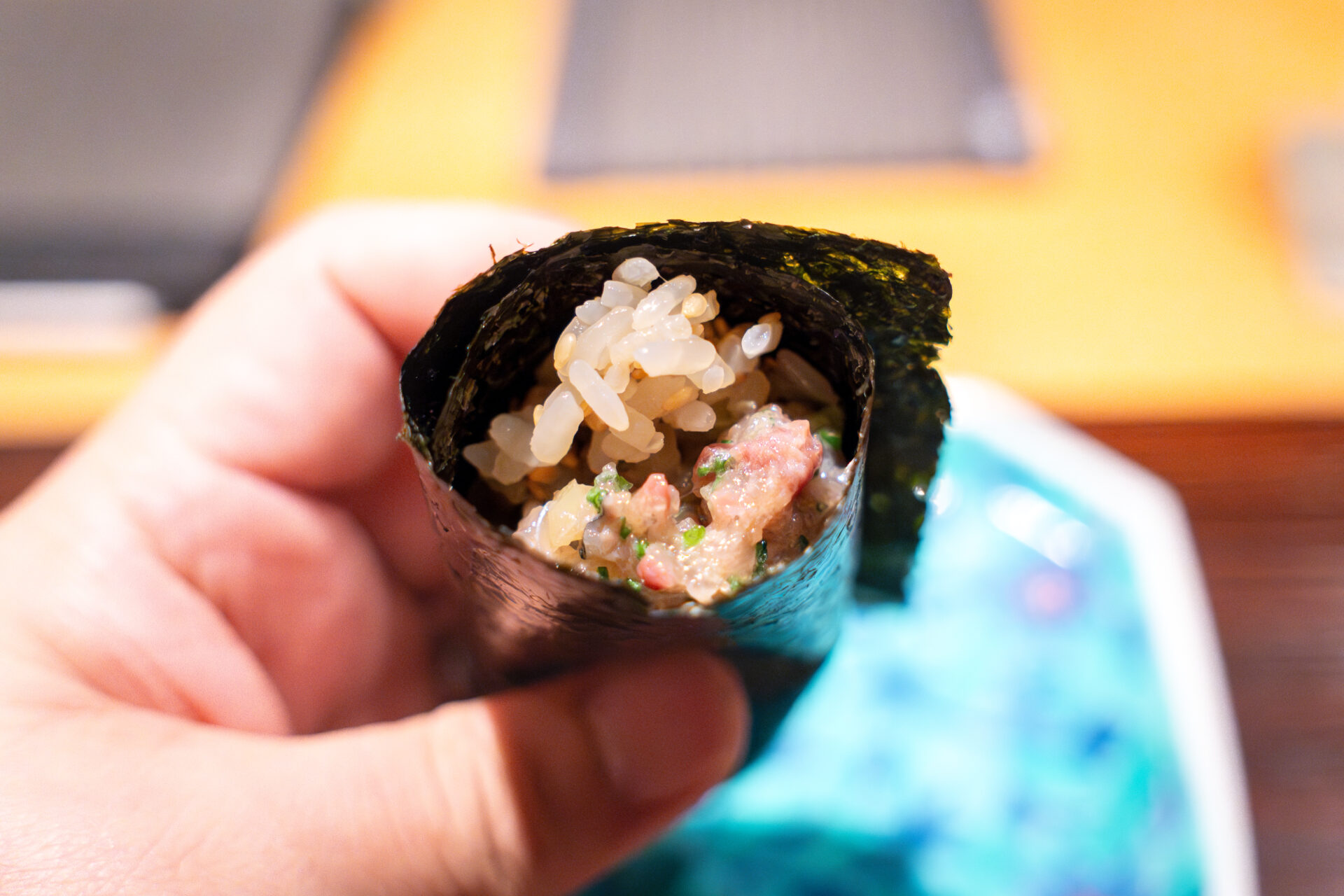
Hand-Rolled Sushi with Aji & Ginger
Towards the end, the chef makes temaki sushi (hand-rolled sushi) right in front of you.
Inside is fresh aji (horse mackerel) and chopped ginger, lightly dressed with aromatic vegetables, and the nori (seaweed) is served crispy and fragrant.
The chef rolls each by hand, and the mood softens as he hands them directly to you.
Amid all the courses, this temaki is a gentle, comforting finale.
The fatty aji and spicy ginger are a pleasant combination, and you can feel the uncompromising work right up to the end.
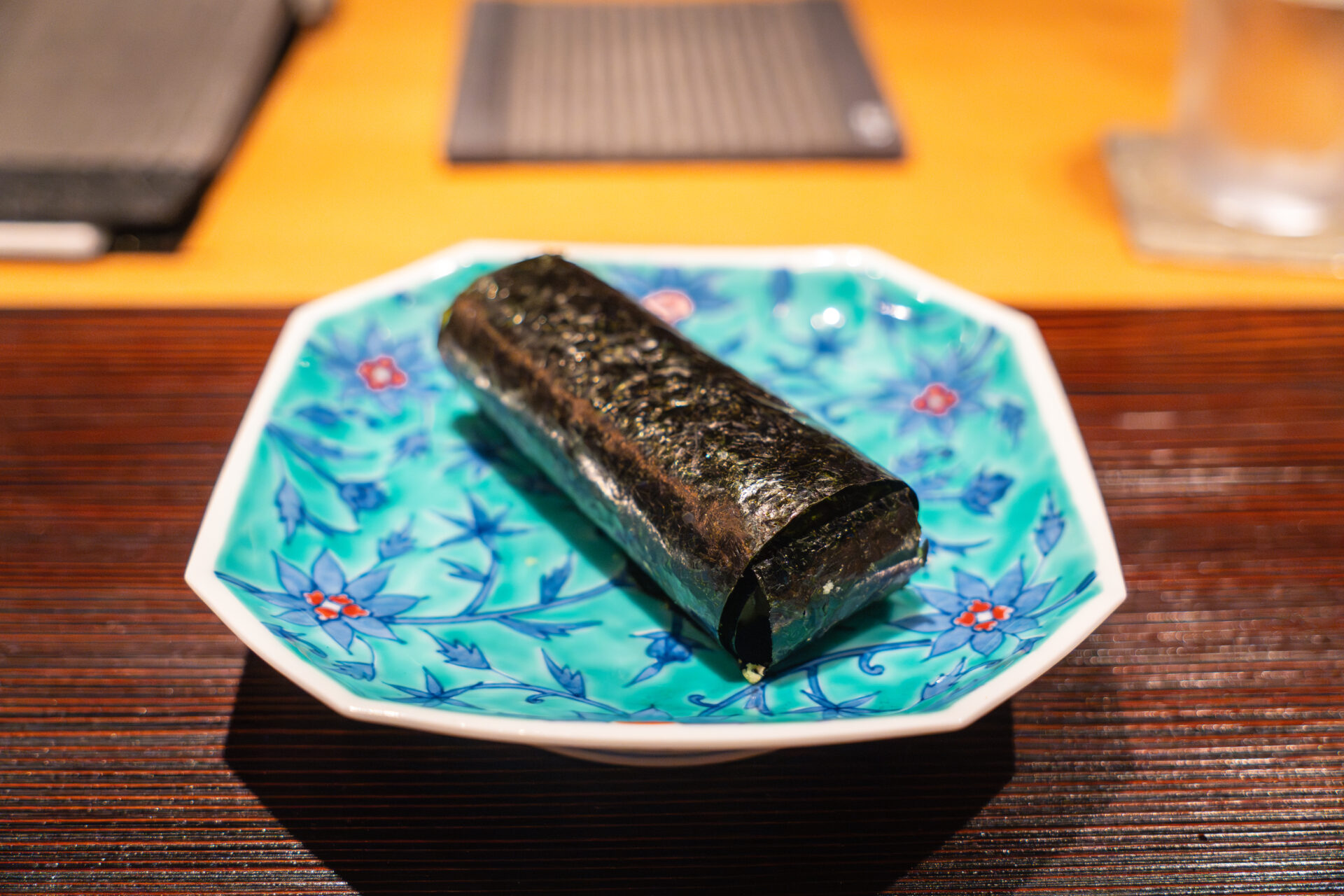
Passion Fruit & Foie Gras
Before the rice course, a striking dish appeared.
The bowl itself is the skin of a passion fruit.
Inside, there is foie gras marinated in Hatcho miso. The surface is finished with a caramelization, adding sweetness and fragrance.
On top, light puffed rice is sprinkled.
The tartness of the fruit, the richness of foie gras, the saltiness of miso, and the sweetness of the caramelization come together with distinct clarity.
Without being too sweet, this was a well-composed dish, fitting perfectly into the flow of the meal.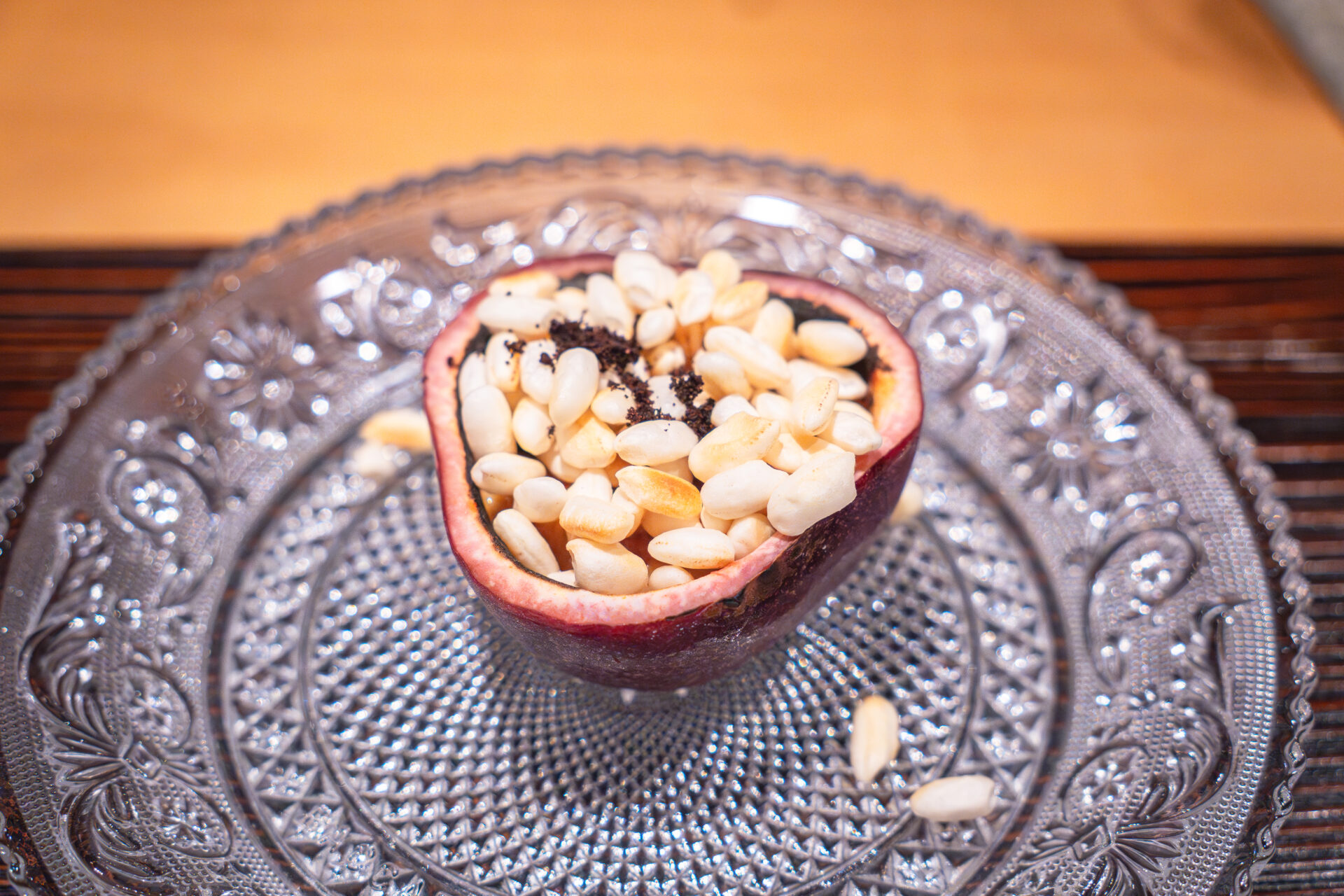
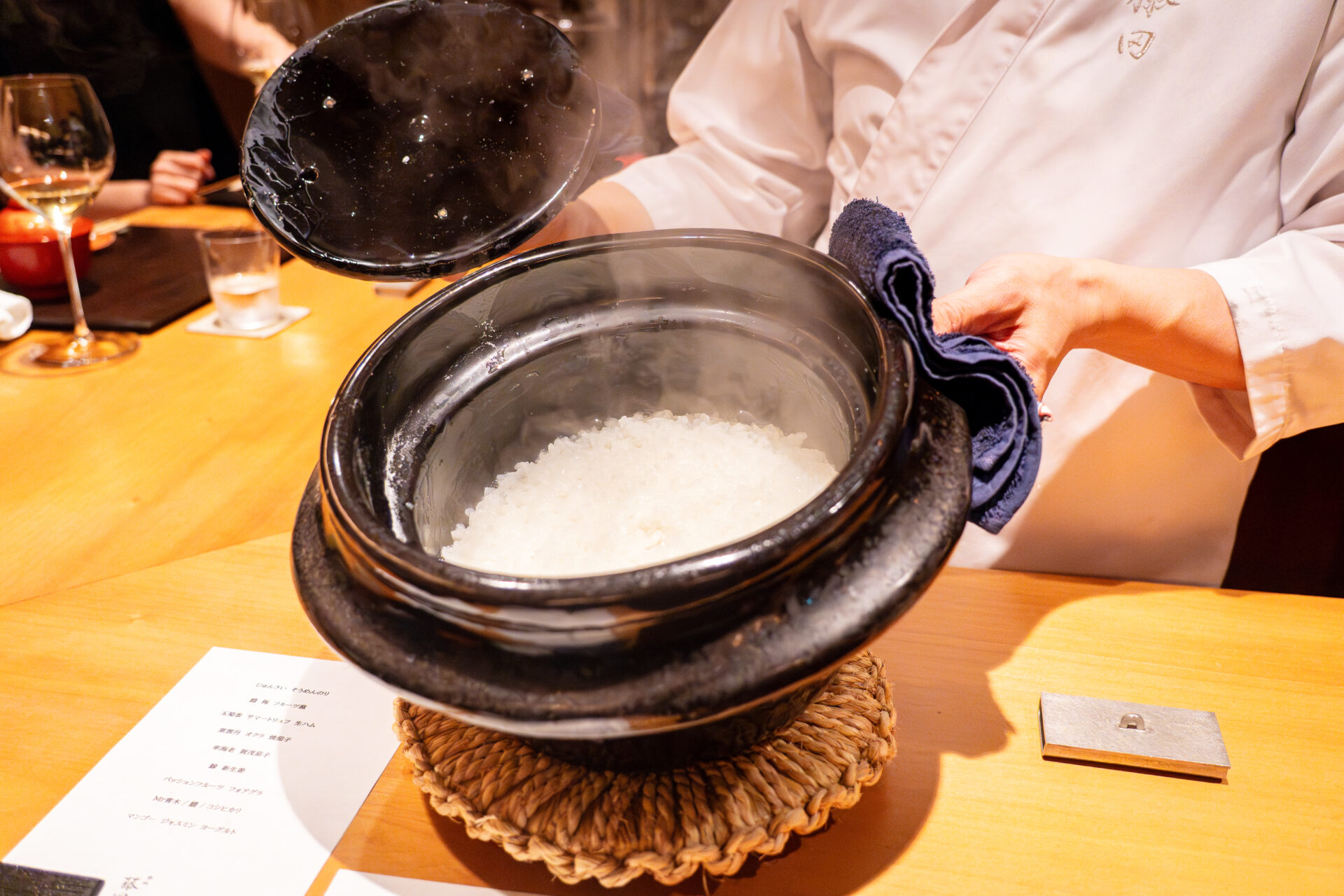
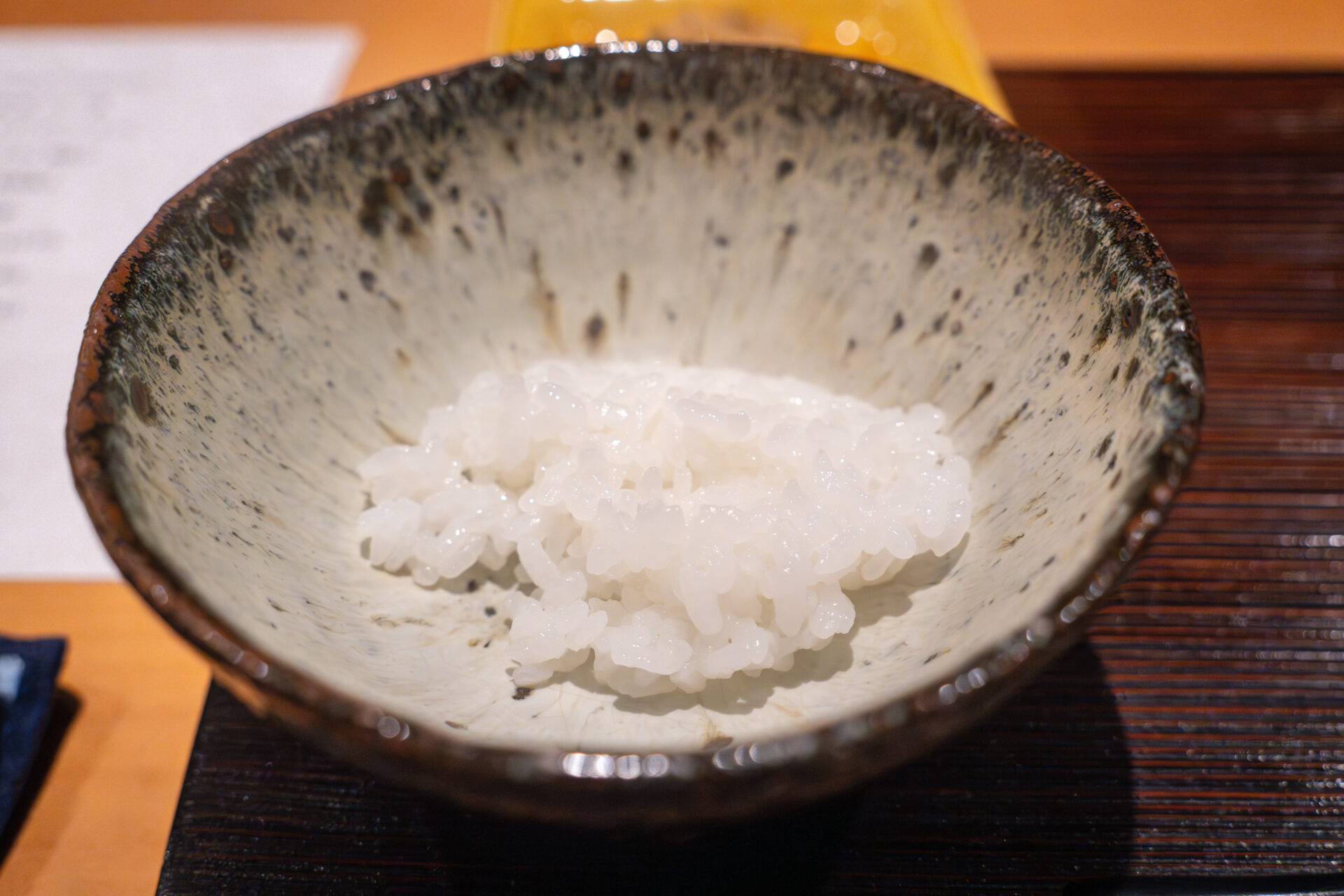
Uonuma Koshihikari Donabe Rice & Miso Soup
To close the course, steaming donabe rice is served.
The fragrance and steam that rise the moment the lid is opened and the beautiful grains of rice immediately put everyone at ease.
The rice used is Uonuma Koshihikari from Niigata, Japan’s most famous rice region.
Each grain is plump and full, and with every bite, the refined sweetness and aroma fill your mouth.
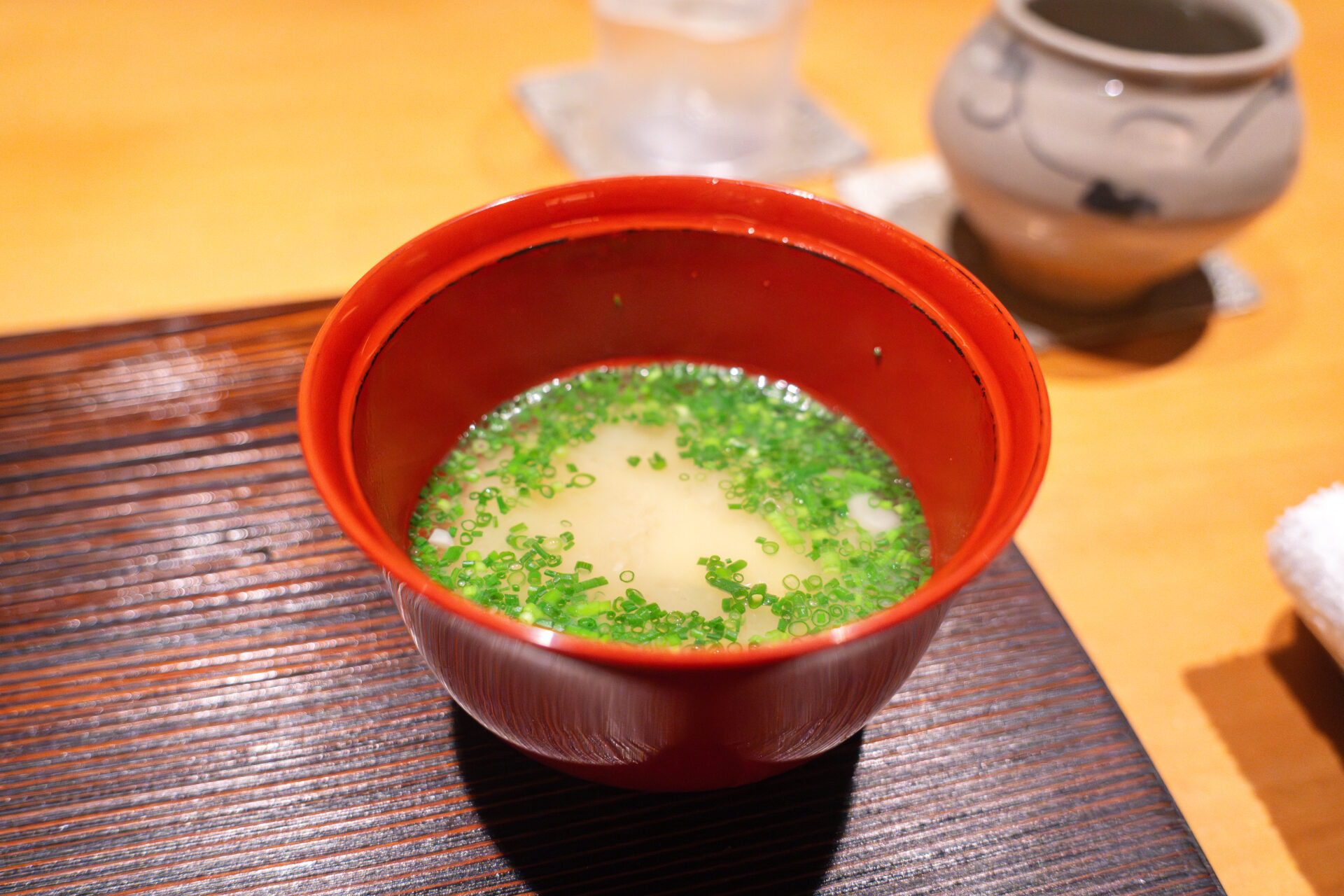
Served together is a warm miso soup.
A generous helping of finely chopped green onions floats in the broth, and the aroma of dashi creates a gentle taste that soaks into your body.
It was a quiet yet powerful finale, perfectly suited to the ingredient-focused cuisine of Fujita-san.
Mr. Aoki’s Ginger-Marinated Harami – A Luxurious Side for Donabe Rice
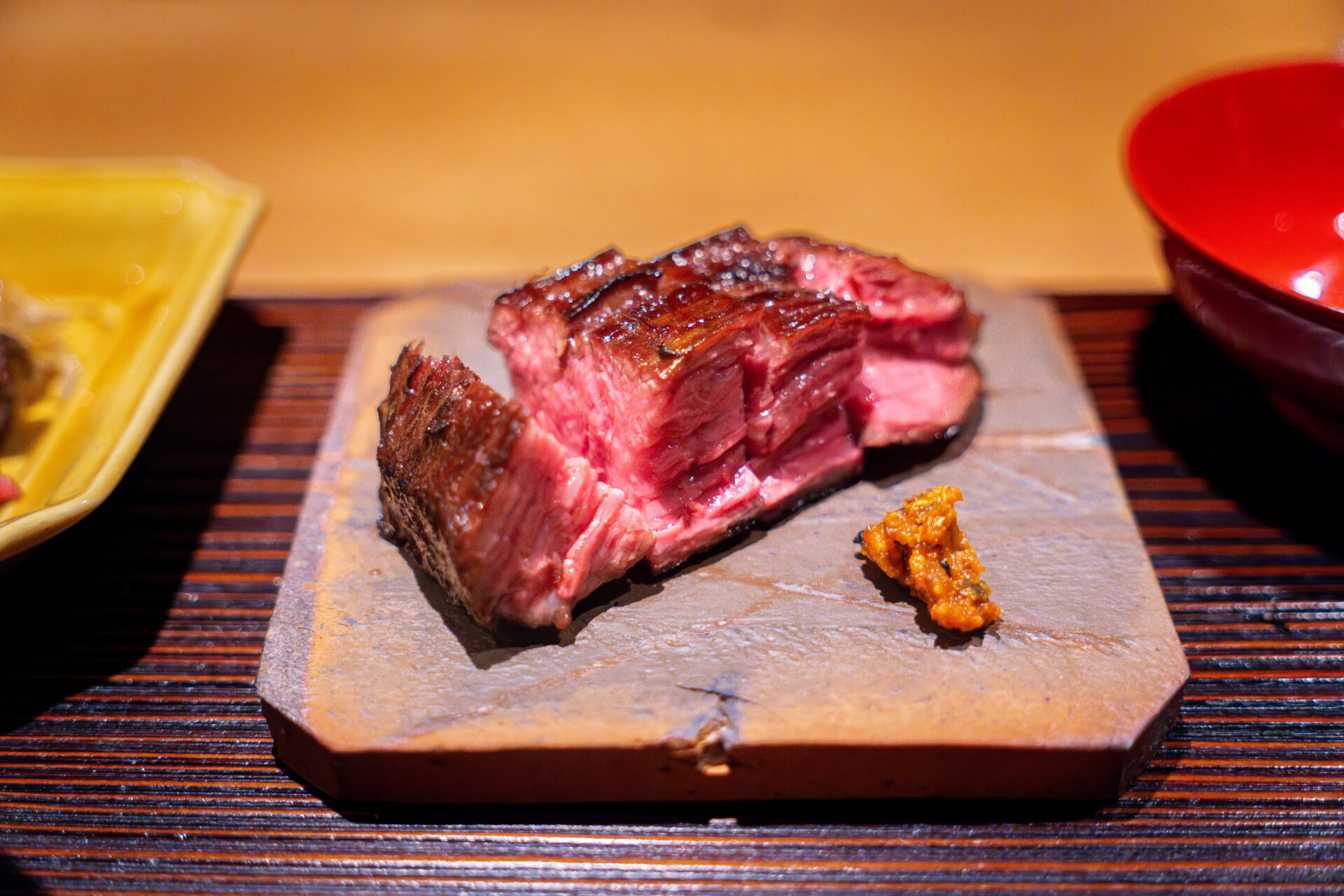
Served with the donabe rice is a special harami (skirt steak) ginger marinade by Mr. Aoki from Iizuka, Fukuoka.
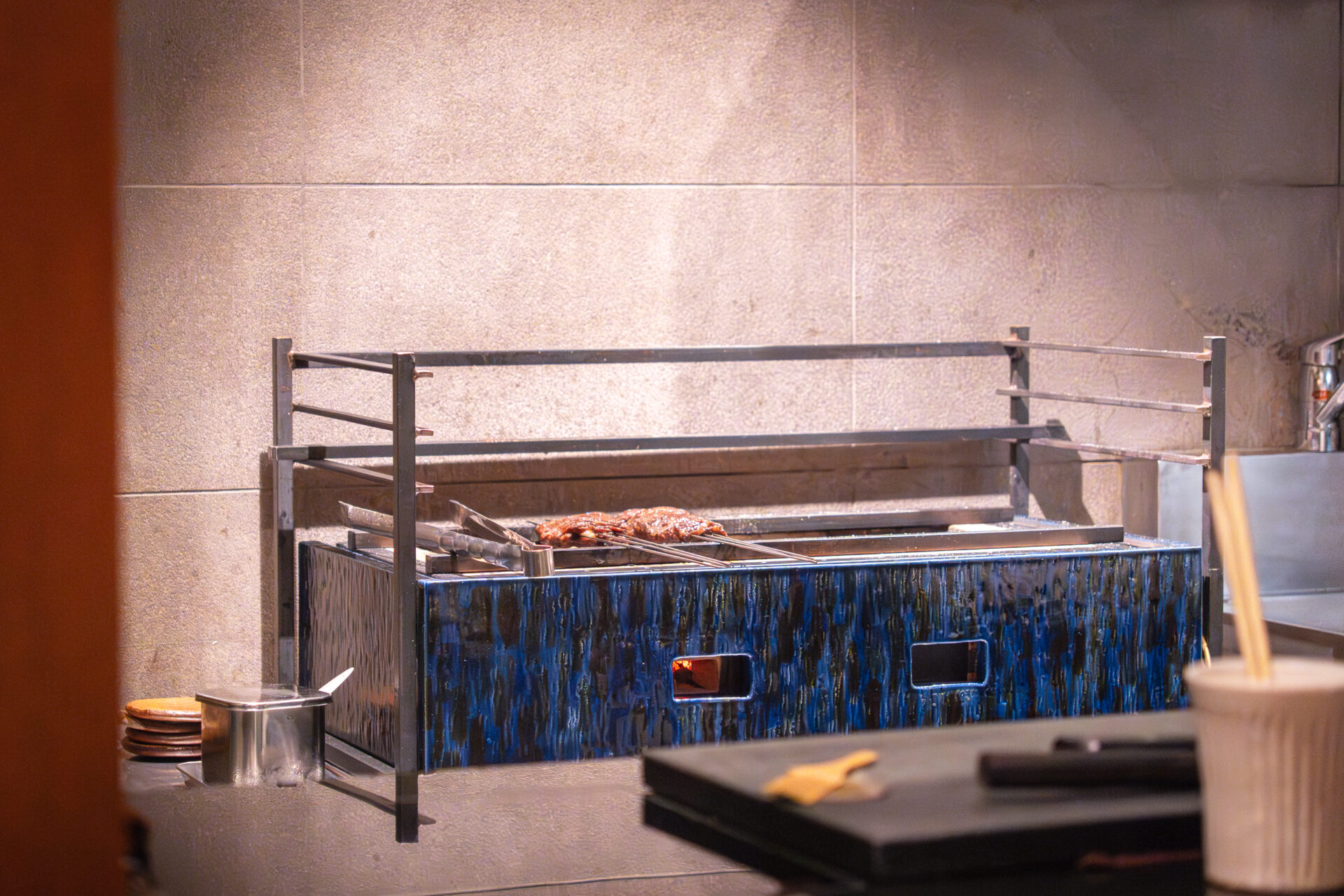
After carefully marinating, it is slowly grilled over charcoal.By letting it rest while cooking, the meat becomes astonishingly tender, releasing more flavor with every bite.
The surface is fragrant, while the inside remains slightly pink—perfectly cooked.
The ginger’s slight sweetness gently wraps the richness of the fat, and it’s a perfect match for the Uonuma Koshihikari rice.
A simple bowl of white rice elevated to a luxurious level by the ultimate side dish—a memorable course.
Three Types of Second Helpings: Egg Yolk, Ume Okaka, Hamo Katsu with Egg
“There’s still more rice,” the chef suggests, leading to a delightful second helping time.
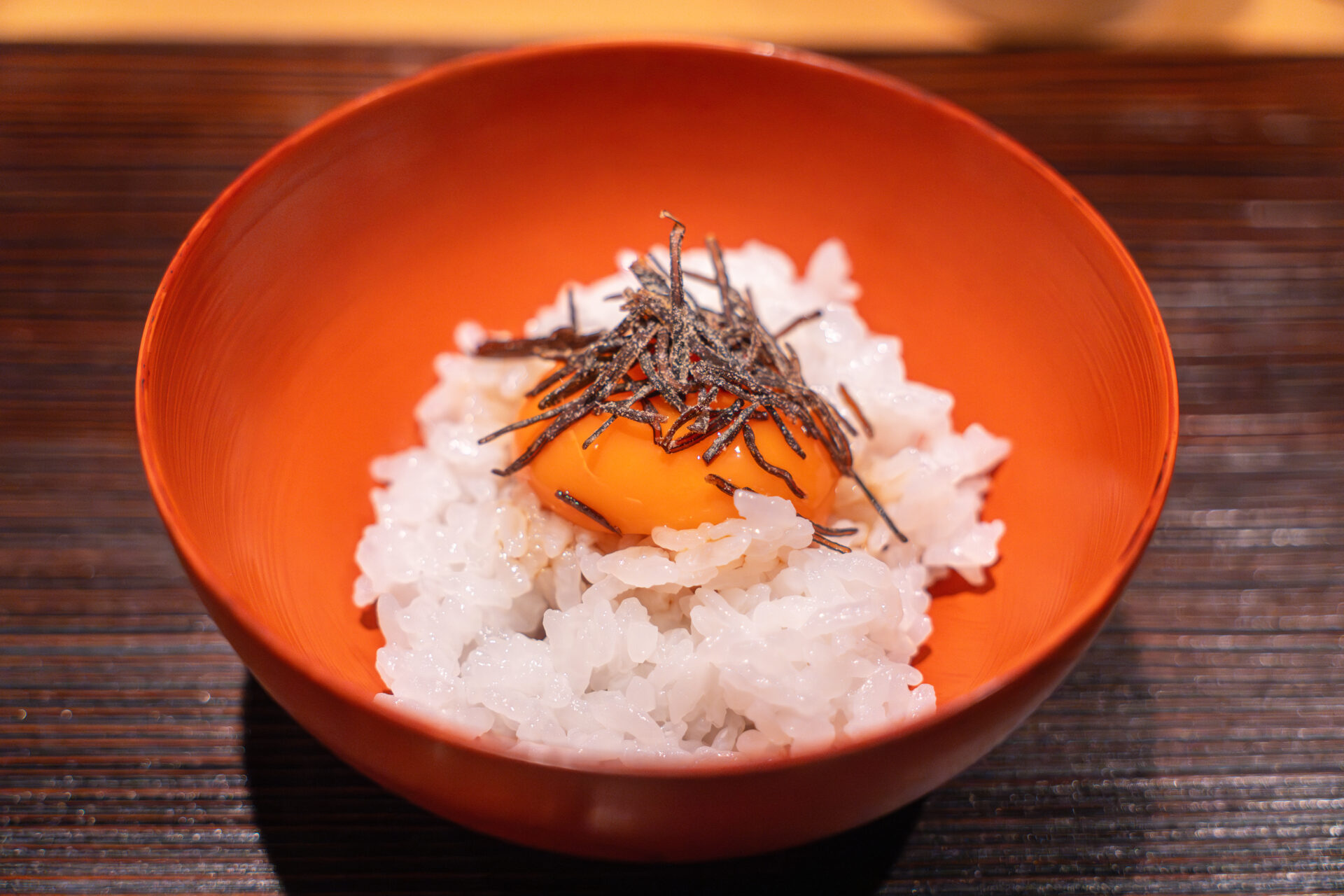
First, a simple bowl of freshly cooked donabe rice topped with rich egg yolk and shredded kombu.
The sweet, freshly cooked rice and the richness of the egg combine for a flavor you’ll want to eat again and again.
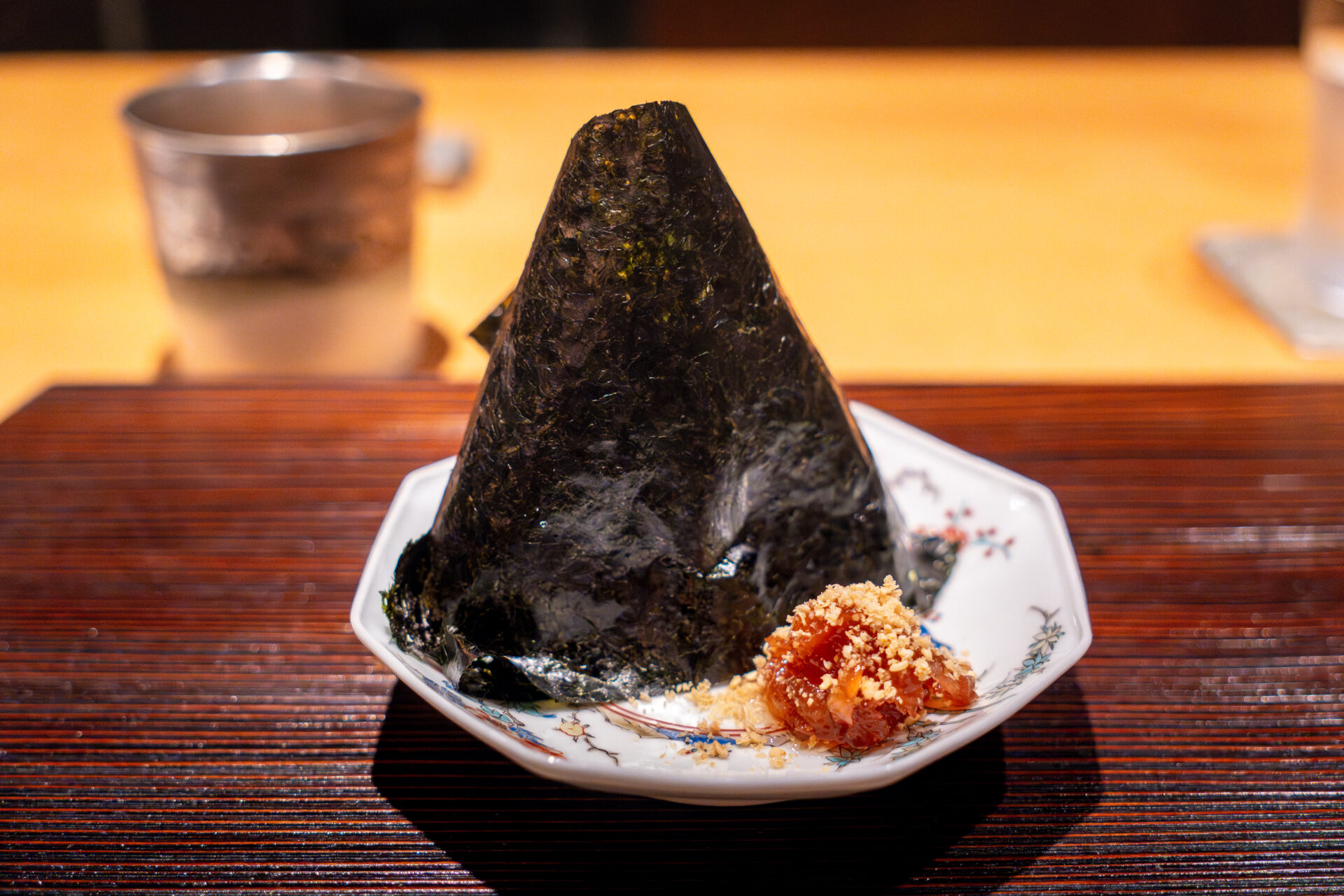
Next, a large onigiri (rice ball) filled with ume okaka (pickled plum and bonito flakes) with a fragrant aroma of dashi.
The aroma of nori, the tartness of ume, and the umami of bonito come together for a dish you’ll crave again.
This ume okaka left a memorable impression, making you want to eat it again.
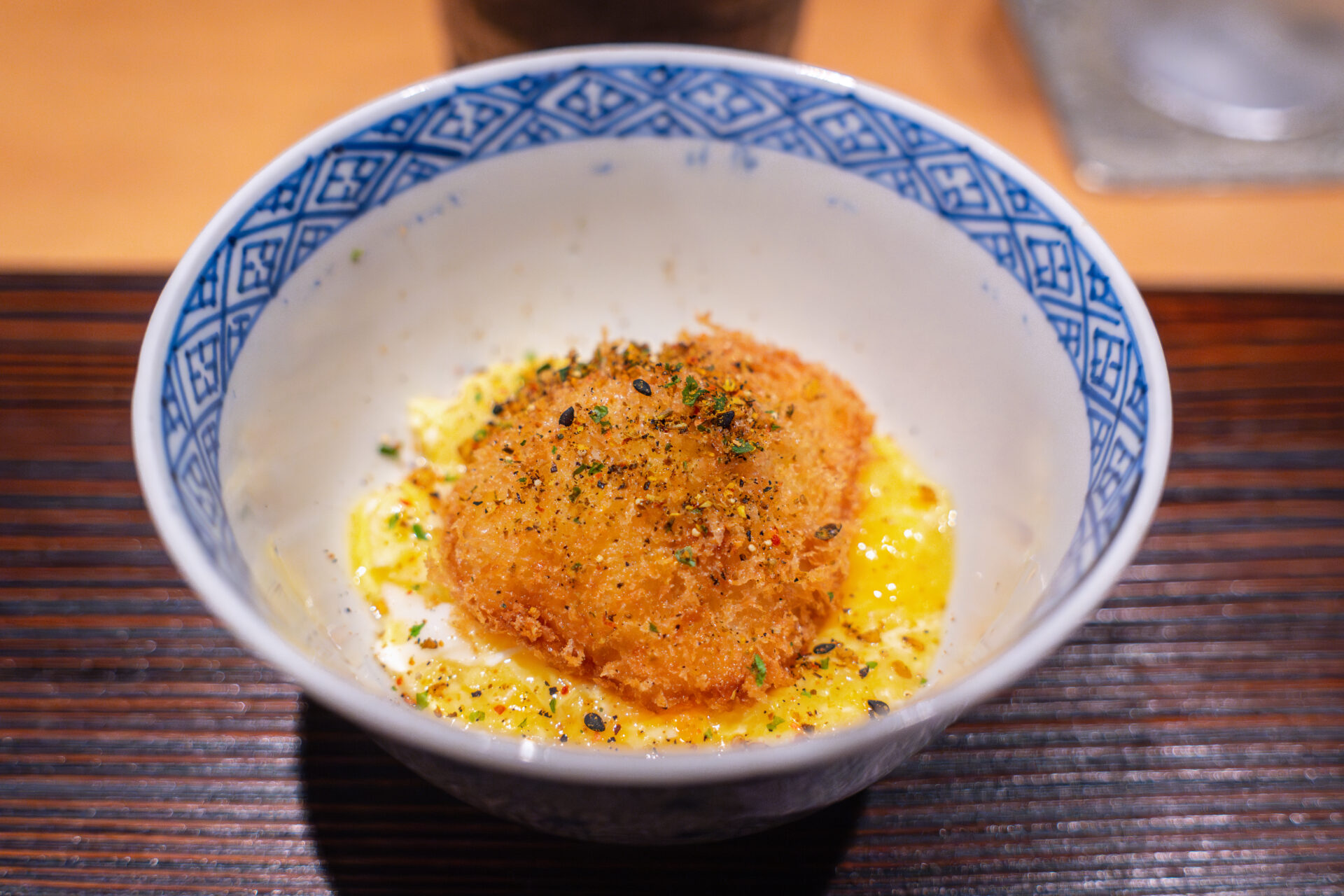
Finally, freshly fried hamo katsu (deep-fried pike conger) is topped with egg to make a luxurious, instant donburi.
The crispy katsu and the soft egg blend perfectly, and a sprinkling of shichimi (seven-spice) gently stimulates the appetite.
It wasn’t just a simple rice refill, but a playful and satisfying ending.
Dessert & Finale
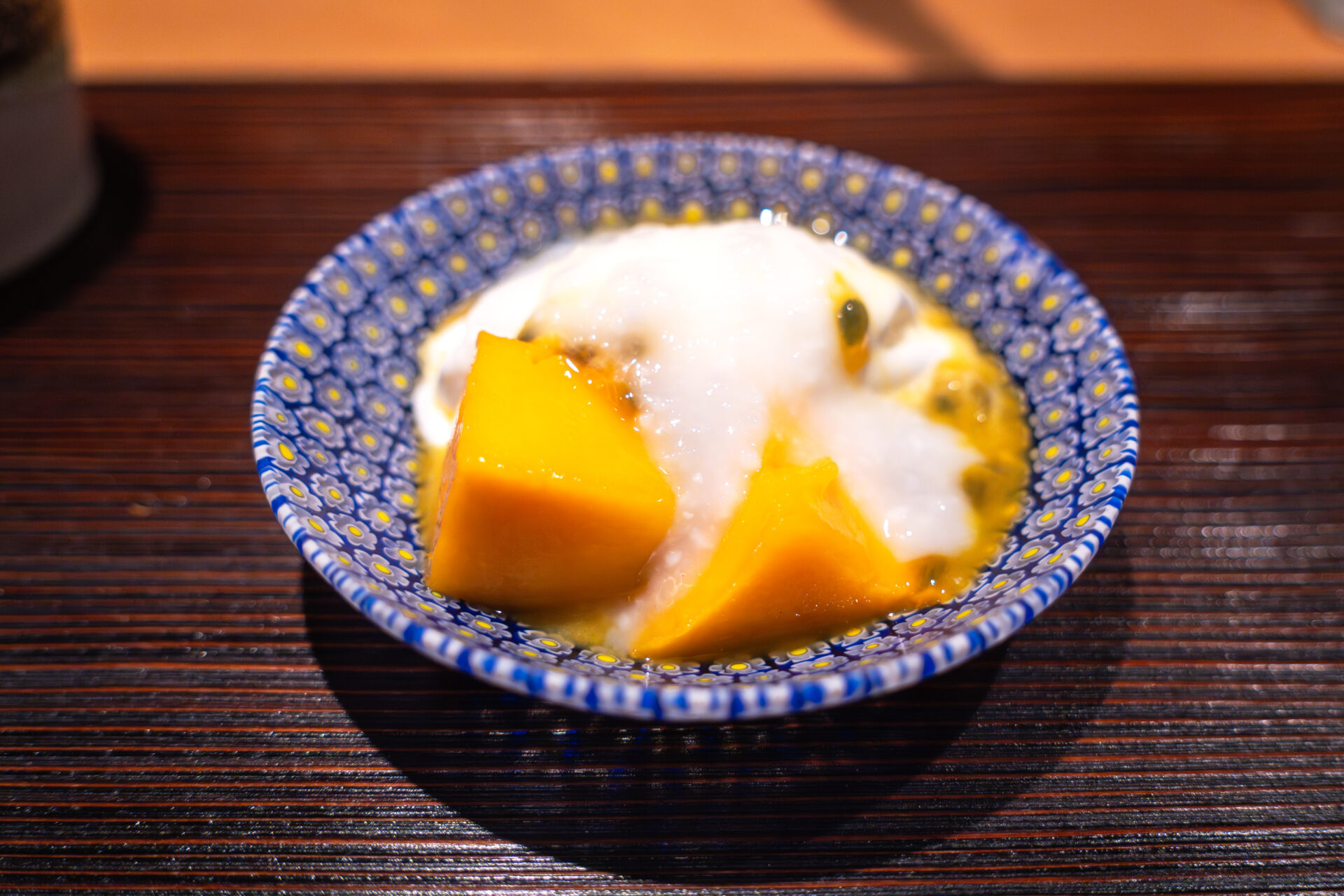
Mango and Passion Fruit Dessert – Topped with Kijoshu “Hinotori”
For dessert, ripe mango and passion fruit are served with a refreshing yogurt sauce.
The balance of fresh fruit’s sweetness and acidity finishes the meal beautifully.
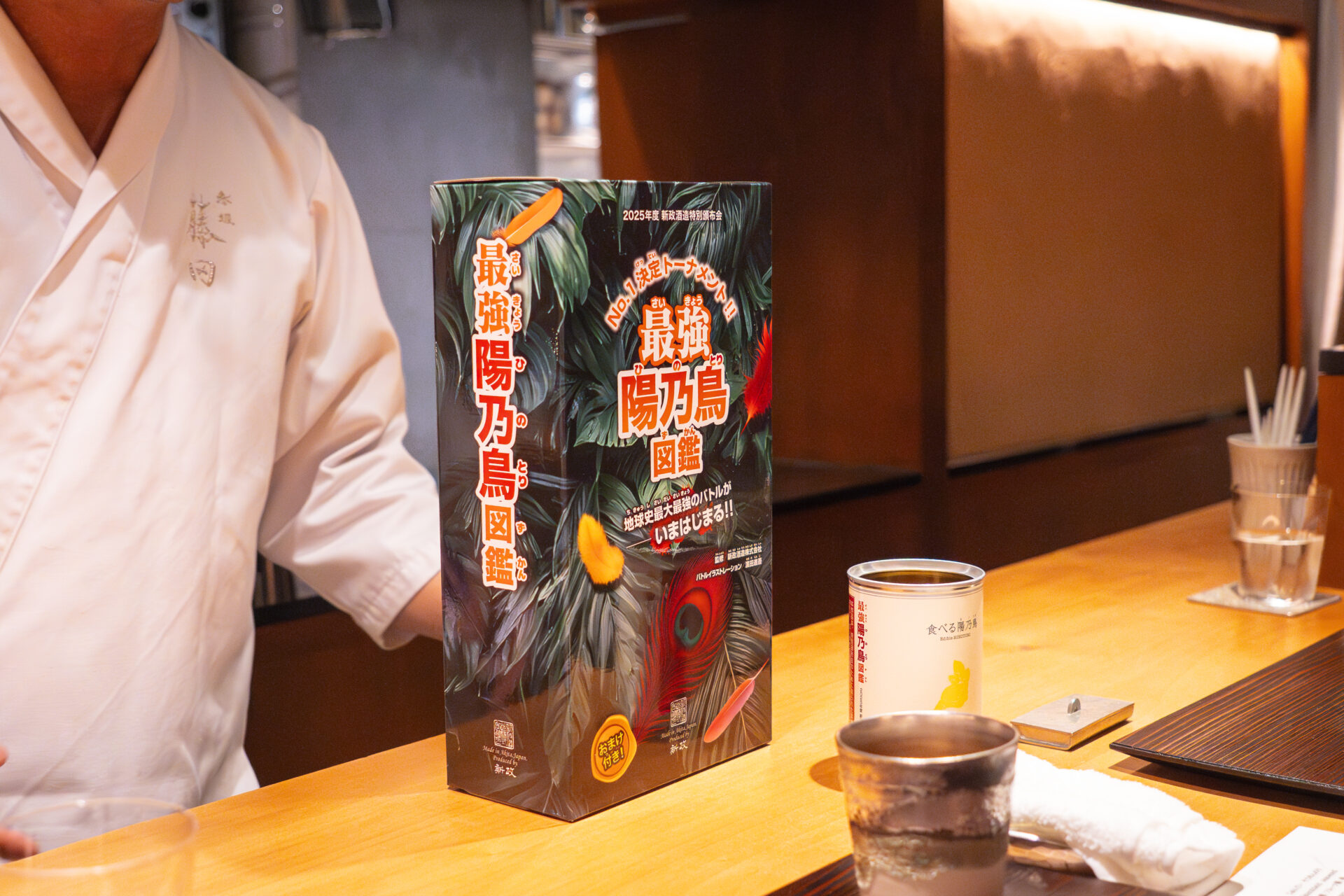
Specially served here is Aramasa Shuzo’s limited-distribution “Edible Hinotori Nigori Sake” poured over the dessert.
Rather than just a sake, it also has the nuance of amazake (sweet rice drink), providing a clean finish.
Normally, this sake is served as a drink, but here it’s elegantly poured over the dessert as a finishing touch.
Its mellow sweetness and umami enhance the flavor of the fruit and dairy, offering a luxurious dessert-sake experience.
Summary & Impressions
The level of ingredient selection and combinations was high, and the creativity in layering them left a strong impression.
While traditional techniques are at the core, every dish has a sense of surprise, and the overall course has its own unique rhythm.
Chef Fujita’s cuisine neither adds too much nor subtracts too much—only what’s necessary remains.
His explanations are precise, never leaving the guest behind, and this sense of balance runs through the entire experience.
Overall, there’s no flashy performance—the course quietly draws you in with its content and structure.
In a relaxed atmosphere, the strength of the cuisine shines through.
Reservations & Access Information
Access
-
Address: 1F, Bengoshi Building, 1-7-23 Akasaka, Chuo-ku, Fukuoka City
-
2-3 minutes walk from Akasaka Station (Subway Airport Line) Exit 2
Reservations
-
Course-only restaurant, reservation required. Reservations accepted via TableCheck or Ikyu.com
-
Reservations can be made directly by the guest only (no proxy reservations)
-
When booking, deposit information for all guests is required (payment at the restaurant on the day). Strict penalties apply for proxy reservations and no-shows.
-
Course price: 16,500 yen (tax included) (according to Ikyu and Tabelog)
Business Hours
-
[Lunch] Starts at 12:00 (lunch is only on Wednesdays and Sundays)
-
[Dinner] Starts at 18:00 or 19:30
-
Closing time is usually around 22:00
-
Irregular holidays (please check in advance)
- TAGS