
CONTENTS
About Tempura Tsuruhachi
Concept
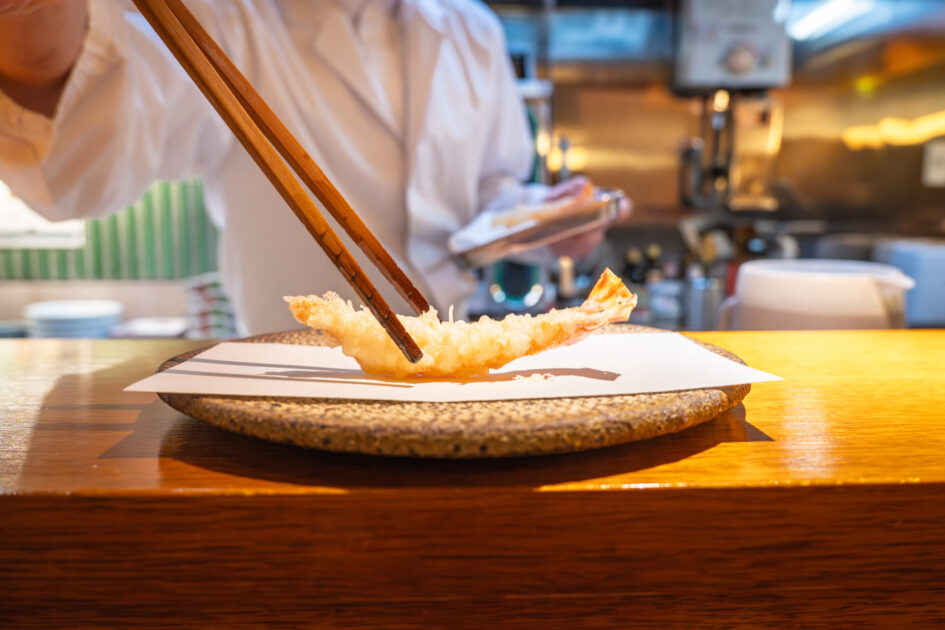
Tsuruhachi is known as one of the rare authentic high-end tempura restaurants in Kumamoto. While cherishing the traditions passed down from the first generation, the third-generation chef has added his own modern sensibilities, offering tempura that highlights the finest local ingredients.
The oil used for frying is an original blend of cottonseed oil, sunflower oil, and sesame oil, resulting in a light yet fragrant finish. The course menu changes according to the season and daily market availability, ensuring that only the freshest seasonal ingredients are featured.
About the Chef (Third Generation)
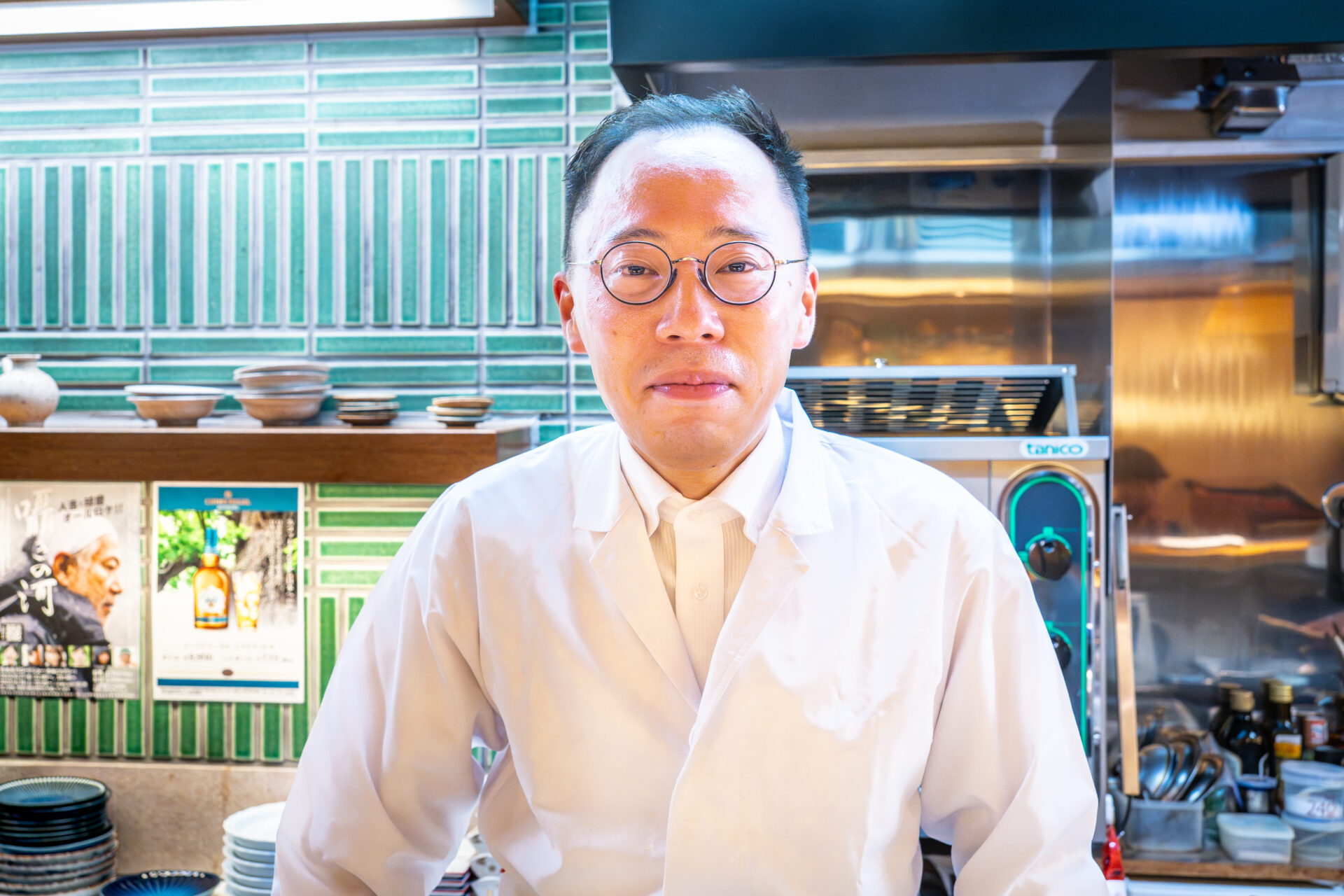
The current head chef is the third generation of Tsuruhachi. While preserving the legacy of his predecessors, he brings a contemporary touch to the art of tempura. With meticulous attention to the thickness of the batter and frying time, his tempura maximizes the natural flavors of each ingredient.
He is also dedicated to incorporating local Kumamoto ingredients, conveying the richness of the region through his cuisine.
Reputation
Tsuruhachi is a long-established restaurant that has earned acclaim for serving tempura crafted with the best of Kumamoto’s local ingredients. It has received numerous awards and consistently high praise.
Notably, Tsuruhachi was selected for Tabelog’s “Top 100 Tempura Restaurants” in 2022, 2023, and 2025.
It currently holds an impressive Tabelog rating of 3.98, ranking No.1 among all tempura restaurants in Kumamoto Prefecture.

Dining Prelude
Exterior & Entrance
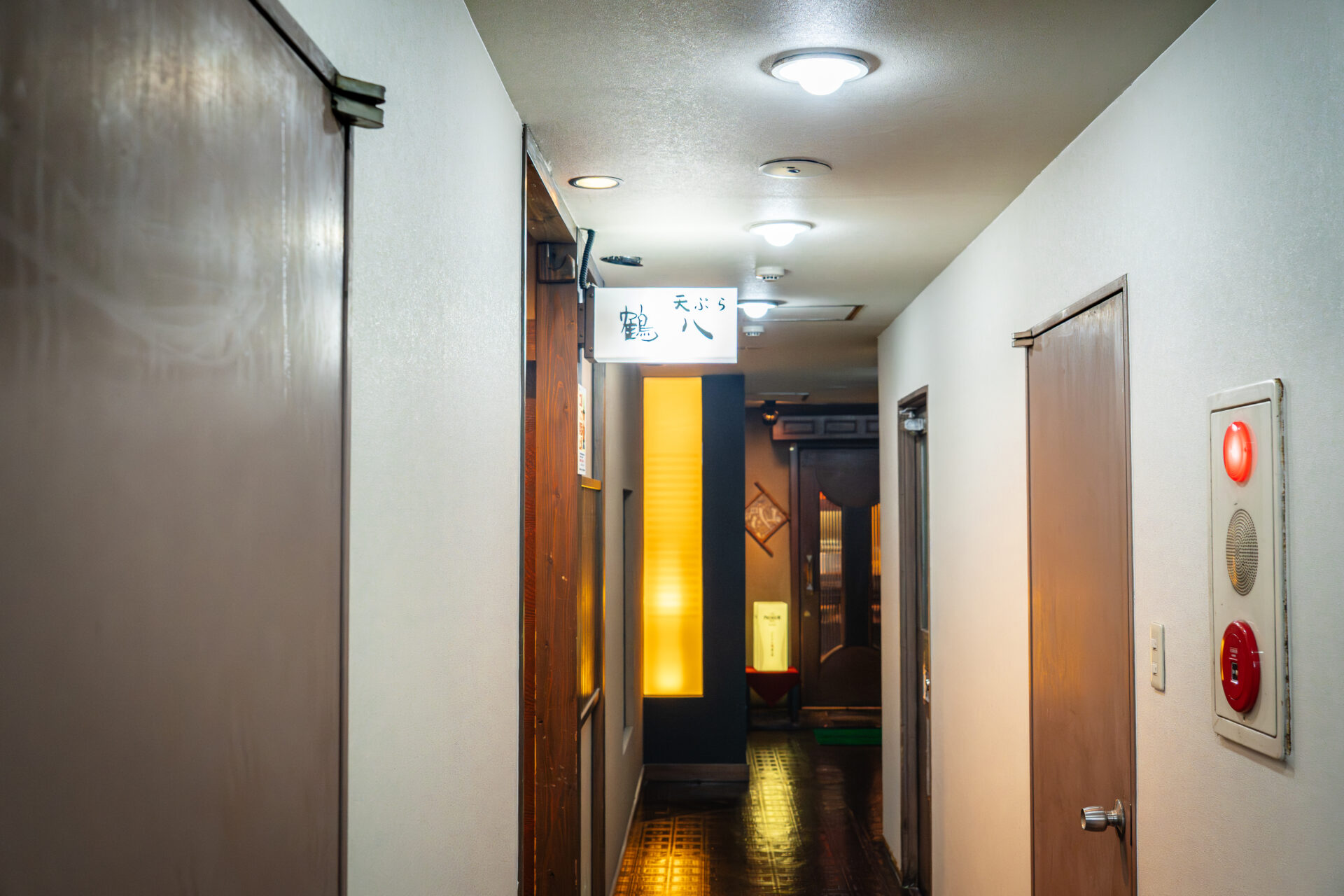
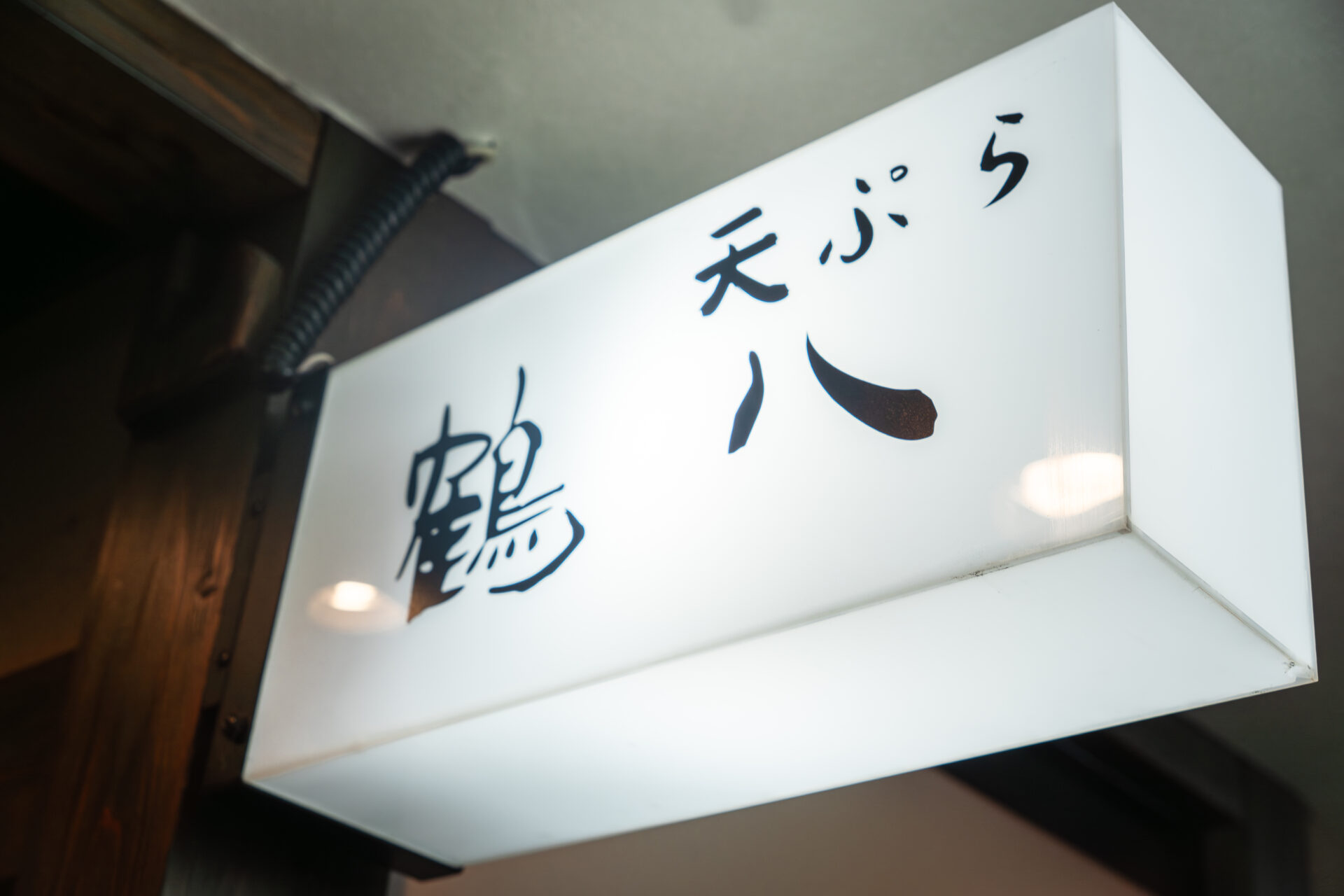
Tsuruhachi is located about a 2-minute walk from Karashimacho Station on the Kumamoto City Tram. The restaurant sits on the second floor of the Fujimoto Building in the bustling Shinshigai district. While the building’s exterior is simple and understated, the entrance exudes a quiet elegance. At the top of the staircase, guests are greeted by a traditional wooden sliding door, which sets the stage with a sense of Japanese refinement and anticipation.
Dining Space
Inside, Tsuruhachi is centered around an L-shaped counter with just nine seats. Guests can watch the chef at work right before their eyes, enjoying freshly fried tempura served piece by piece. The interior radiates a calm Japanese atmosphere, where the warmth of wood and the soft lighting create a serene and comfortable space. It is an ideal setting for special occasions or for those who wish to savor a leisurely dining experience.
Menu Presentation
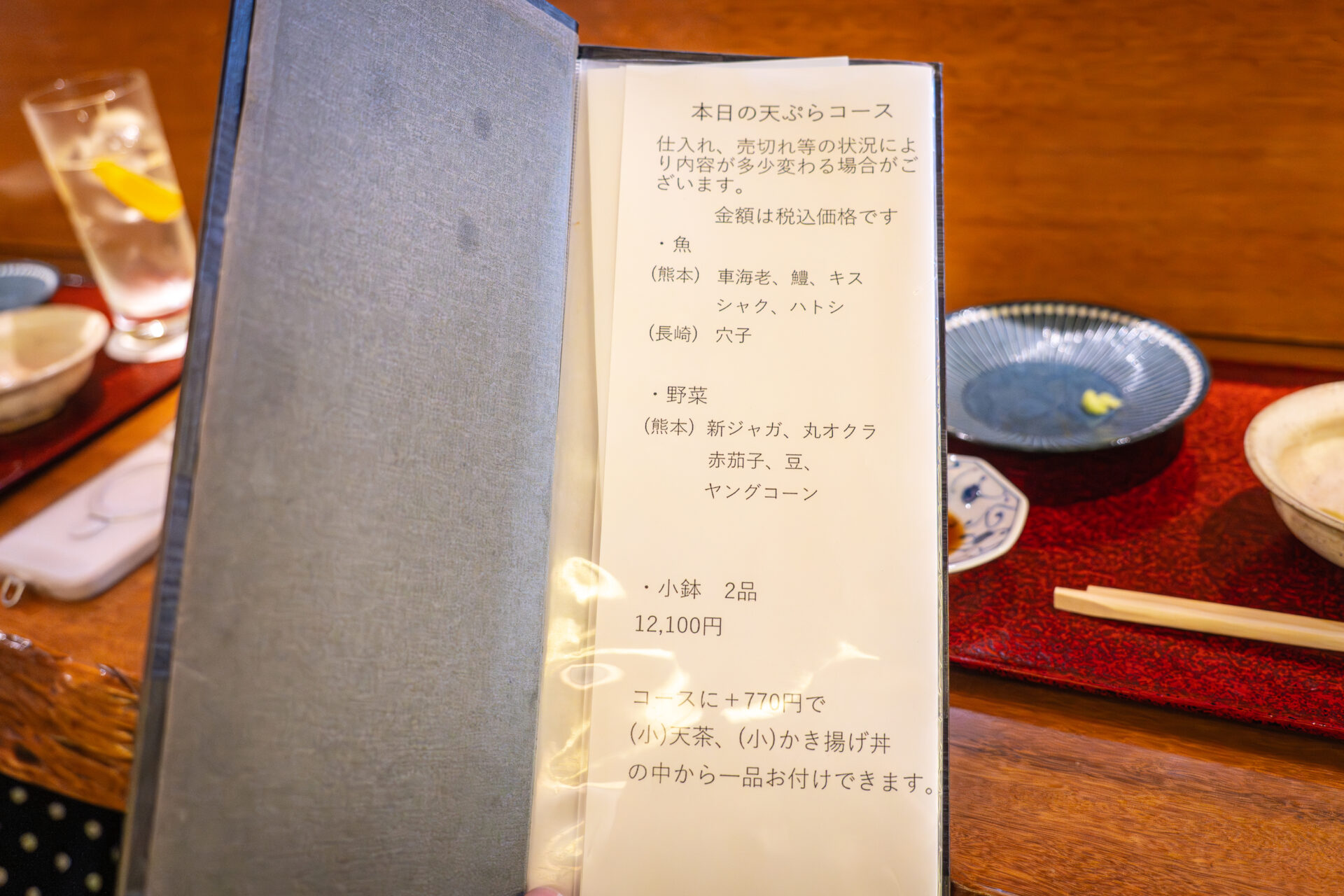
The course revolves around seasonal tempura featuring ingredients from Kyushu and Kumamoto. On this day, the lineup included Kumamoto’s prized kuruma-ebi (tiger prawns), hamo (pike conger), kisu (Japanese whiting), shaku (mantis shrimp), hatoshi (a Nagasaki specialty shrimp toast), along with anago (conger eel) delivered fresh from Nagasaki, and a variety of delicate white fish.
Vegetables, also sourced locally from Kumamoto, added to the seasonal ensemble: new potatoes, round okra, red eggplant, beans, and young corn, each bringing out the region’s flavors.
In addition, diners may order extras such as sashimi or additional tempura. A beautifully arranged platter of ultra-fresh sashimi is one example of the variety Tsuruhachi offers beyond tempura, showcasing its broad culinary appeal.
Toward the end of the course, guests can choose a finishing dish (+¥770) from mini ten-cha (tempura over rice with tea broth), a small kakiage-don (mixed tempura fritter rice bowl), or a simple rice bowl. These hearty yet elegant dishes ensure the meal ends with deep satisfaction, the crispness of freshly fried tempura carried right onto the rice.
Seated directly at the counter across from the tempura station, diners experience a true “live performance,” with each piece served in perfect sequence. The balance of classic precision with subtle creativity gives the meal both familiarity and freshness—leaving guests not only fulfilled but eager to return.
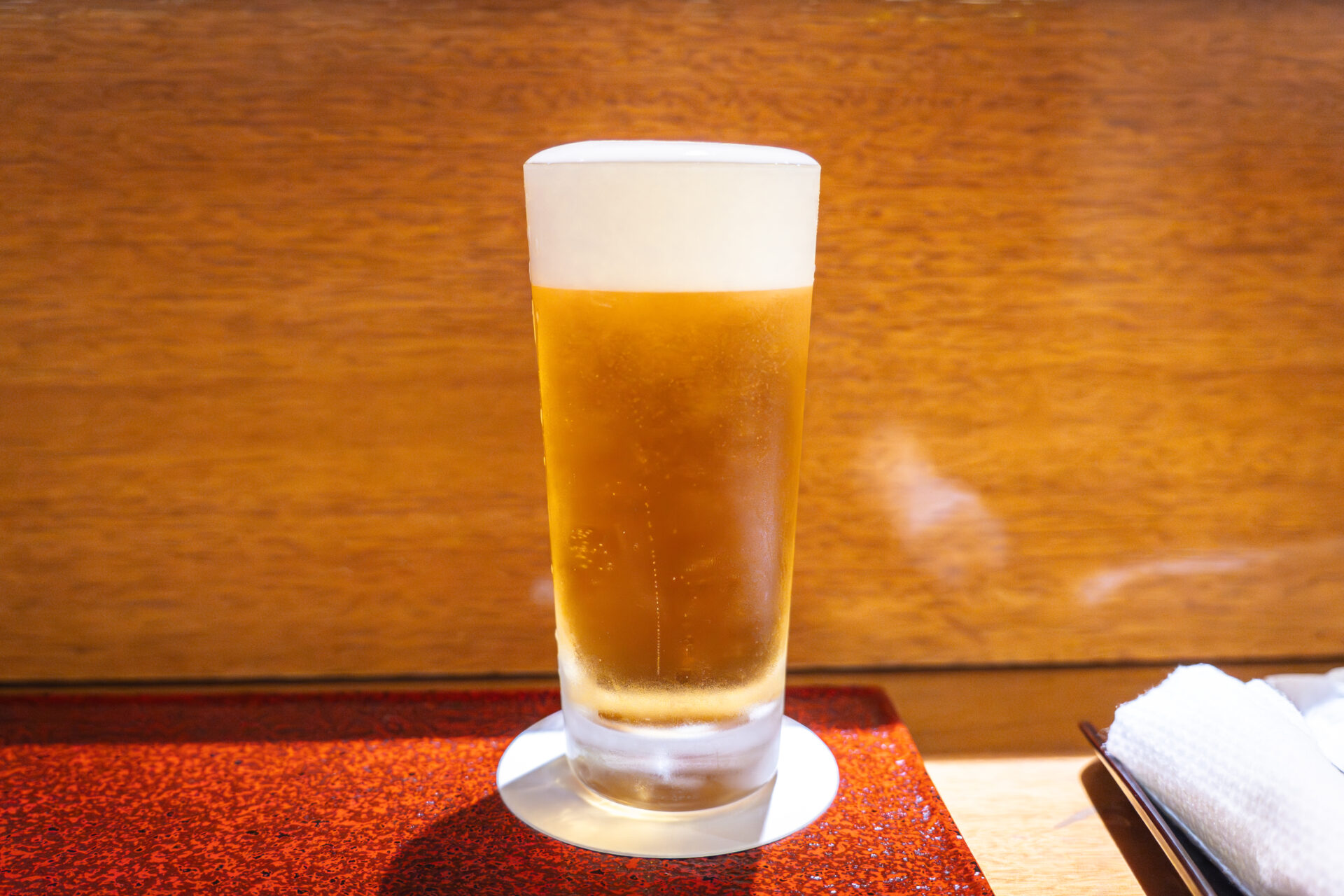
Starter Drink
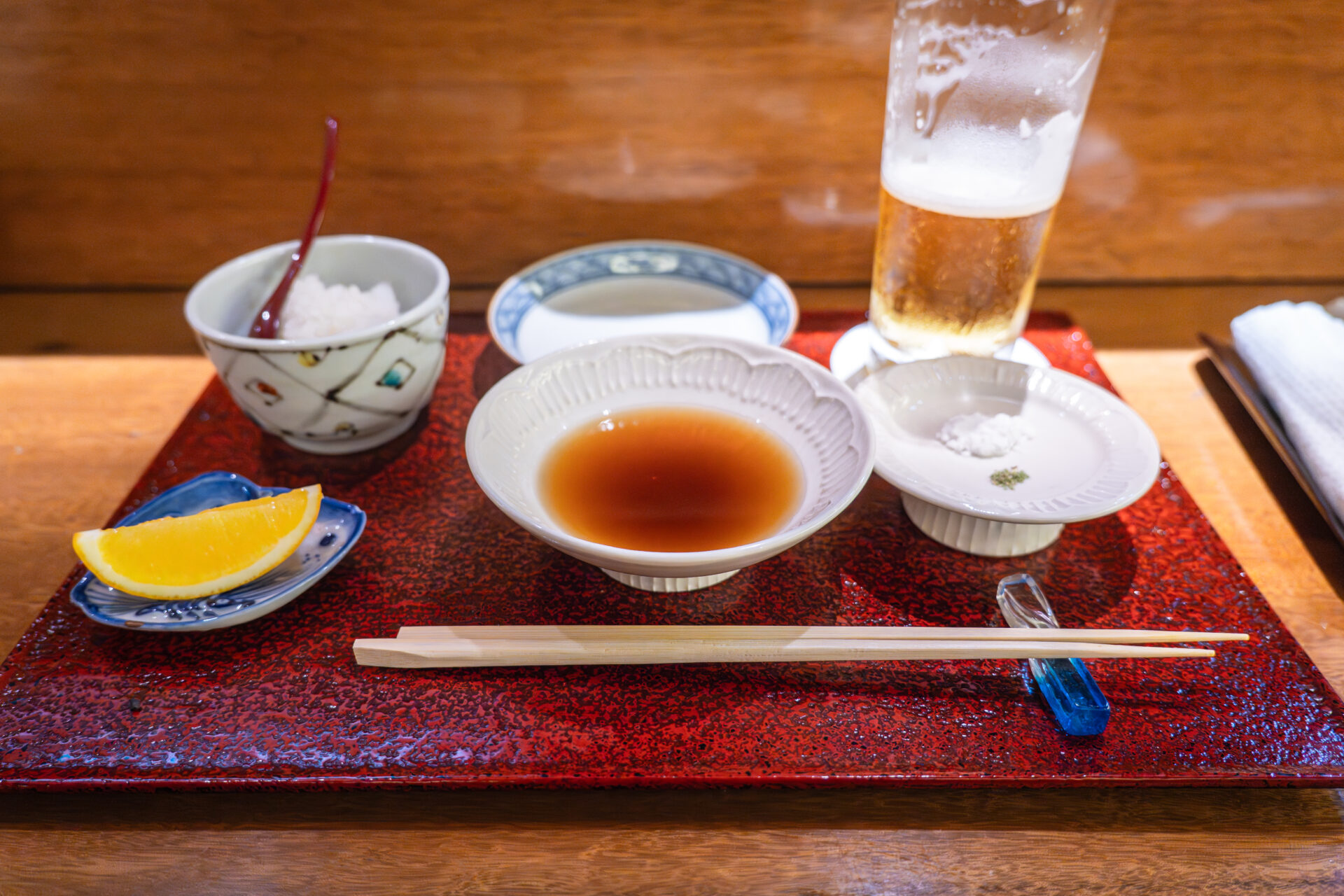
The experience begins with a chilled draft beer, its fine, creamy foam and crisp finish serving as the perfect prelude to the tempura course ahead.
Sipping slowly while listening to the gentle sound of tempura sizzling across the counter, guests find themselves naturally easing into the rhythm of the meal.
Dishes I Actually Tasted
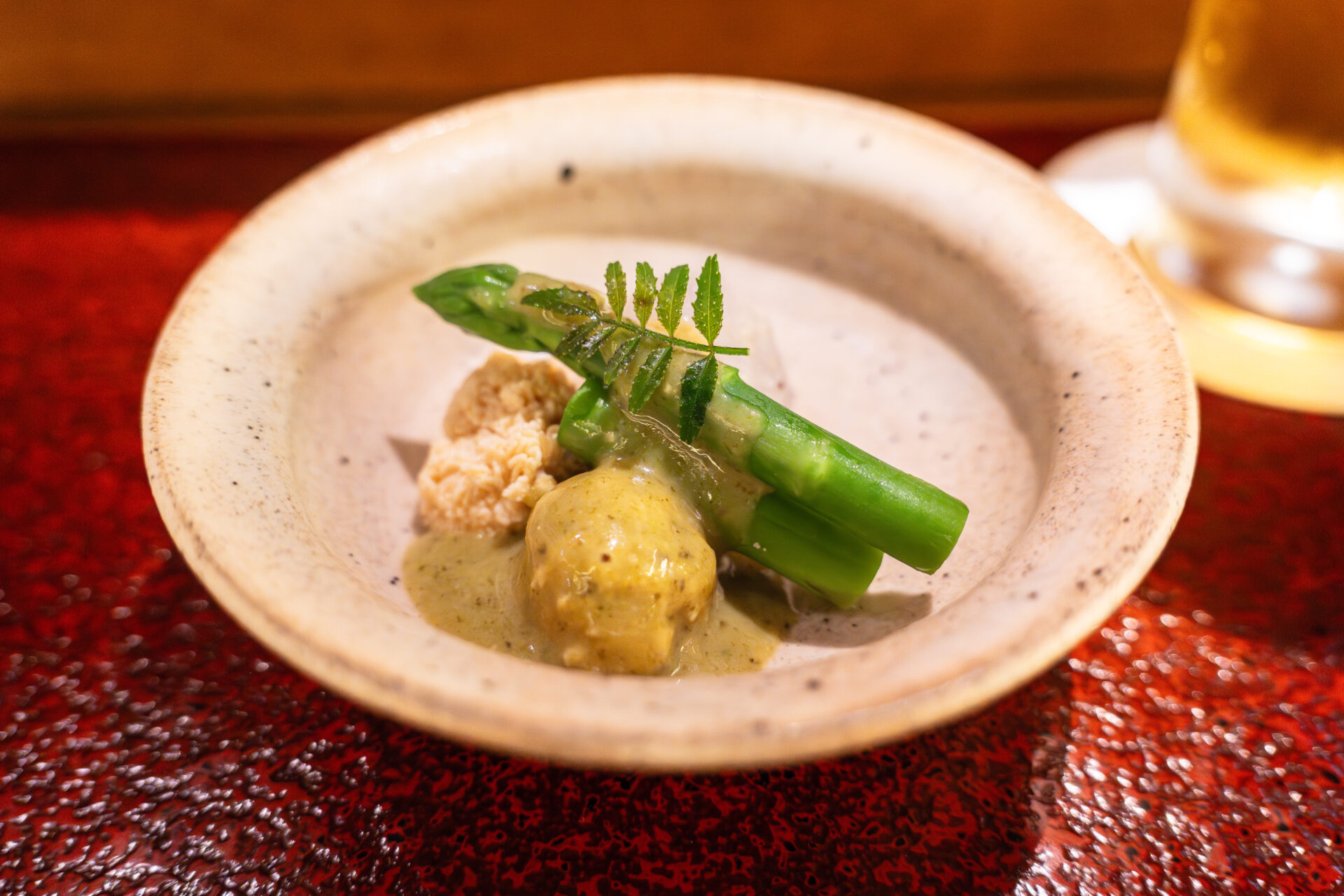
Kobachi (Small Starter Dish)
The course began with a small bowl featuring asparagus and satoimo (taro), paired with a ball of tai (sea bream).
The refreshing aroma of kinome miso (Japanese pepper leaf miso) enveloped the dish, while the crisp freshness of the asparagus, the earthy sweetness of the satoimo, and the delicate umami of the tai each highlighted their own character.
From the very first bite, a spring-like fragrance spread across the palate—a refreshing introduction that raised expectations for what was to follow.
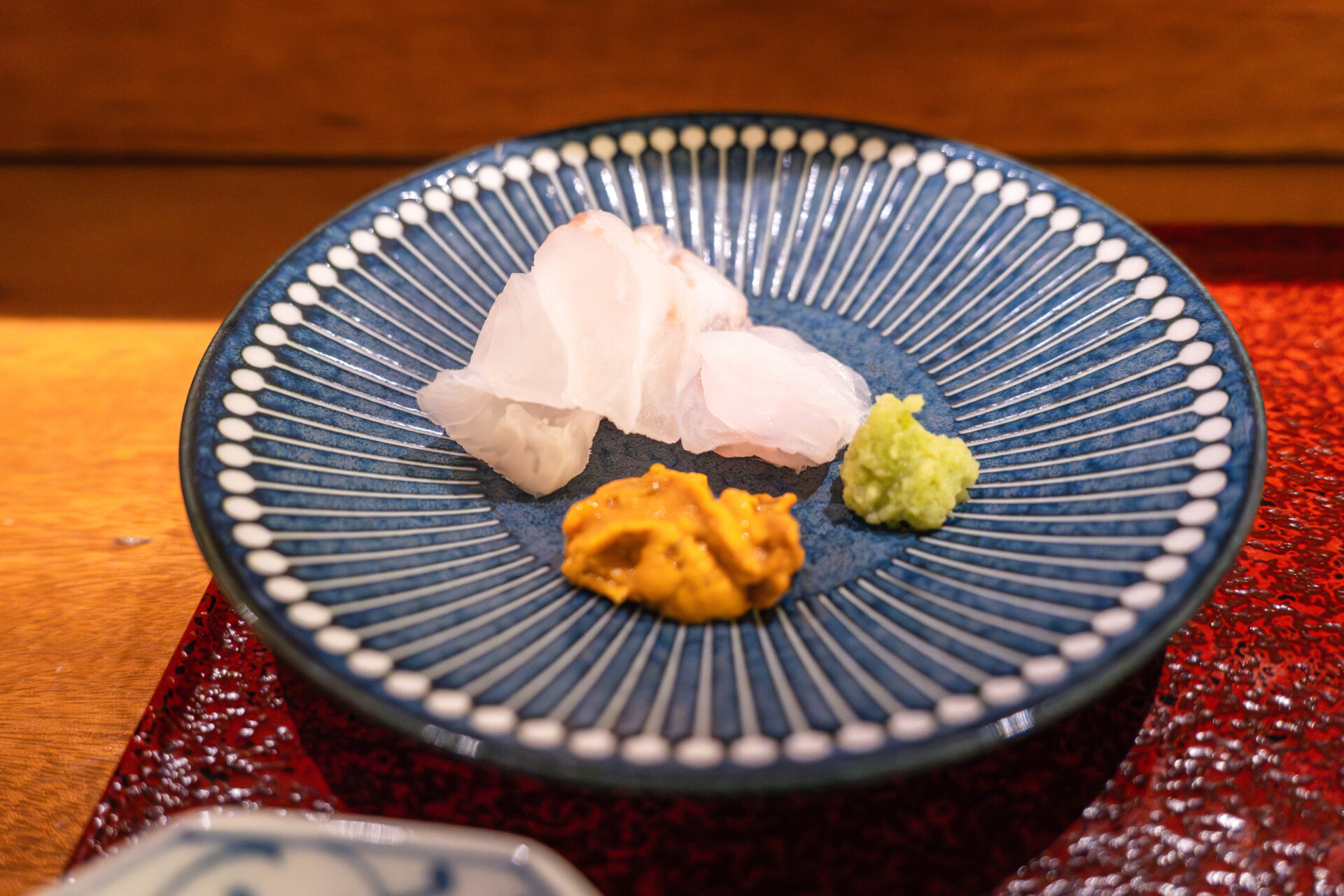
Kue and Murasaki Uni Sashimi
Tender slices of kue (longtooth grouper) sashimi were served with murasaki uni (purple sea urchin).
The kue was soft, moderately fatty, and released umami with every chew.
The murasaki uni carried both sweetness and depth, yet left behind a clean, refreshing finish.
Neither was overstyled; instead, the natural qualities of the ingredients were allowed to quietly shine.
A dish that seemed to reset the palate in preparation for the flow toward tempura.
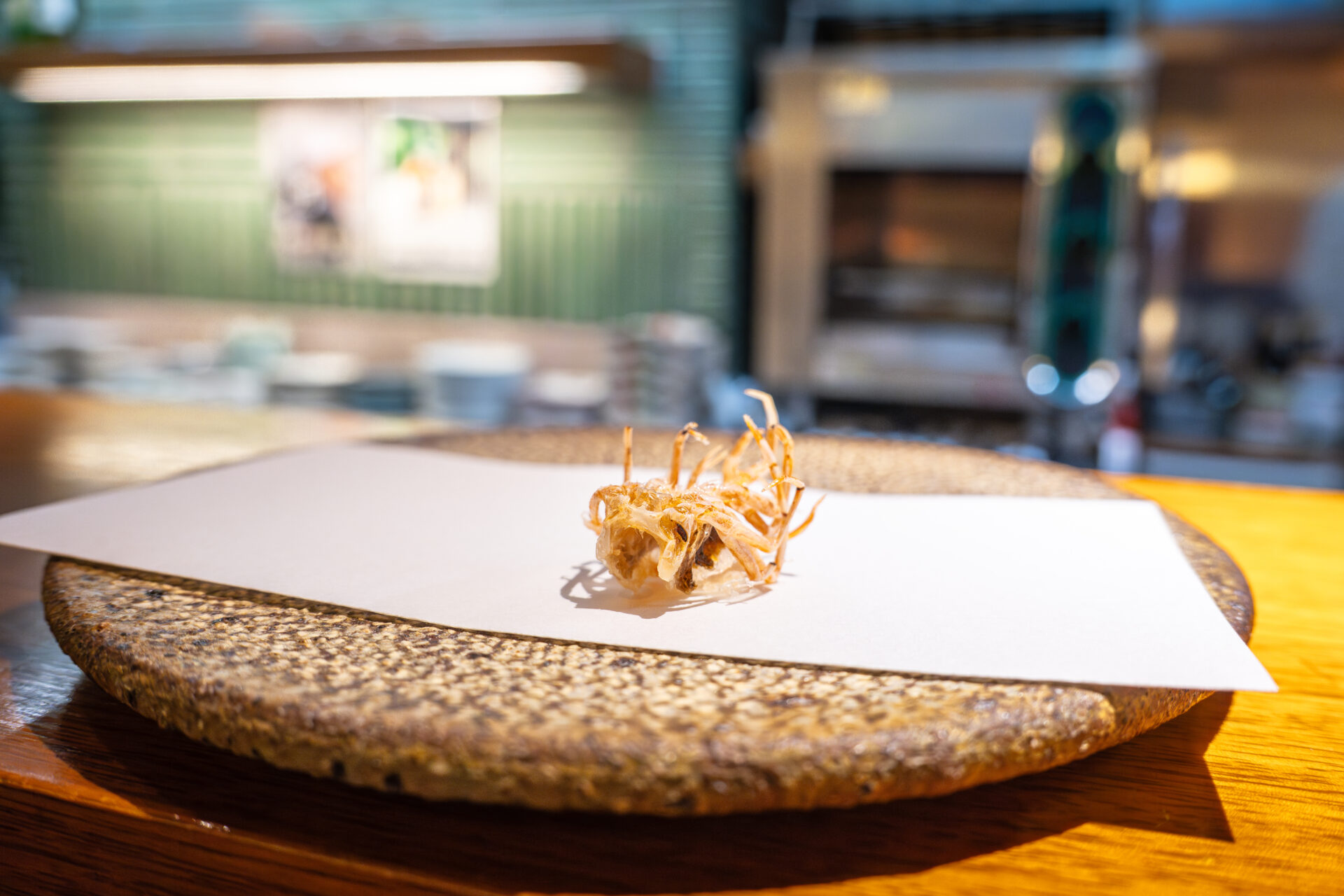
Amakusa Kuruma Ebi Head
The tempura sequence began with the head of a kuruma ebi (Japanese tiger prawn) from Amakusa.
As soon as the freshly fried piece was placed before me, a gentle fragrance of the shell rose up. The toasty aroma of the oil mingled with the faint sweetness of the prawn, instantly bringing a smile to my face.
The first bite delivered a crisp snap, releasing the fragrance throughout my mouth.
Perfectly balanced—neither overly toasty nor heavy—allowing the true flavor of the prawn to shine through.
It was more than just a “first item”; it was an opening that made me look forward to what was next.
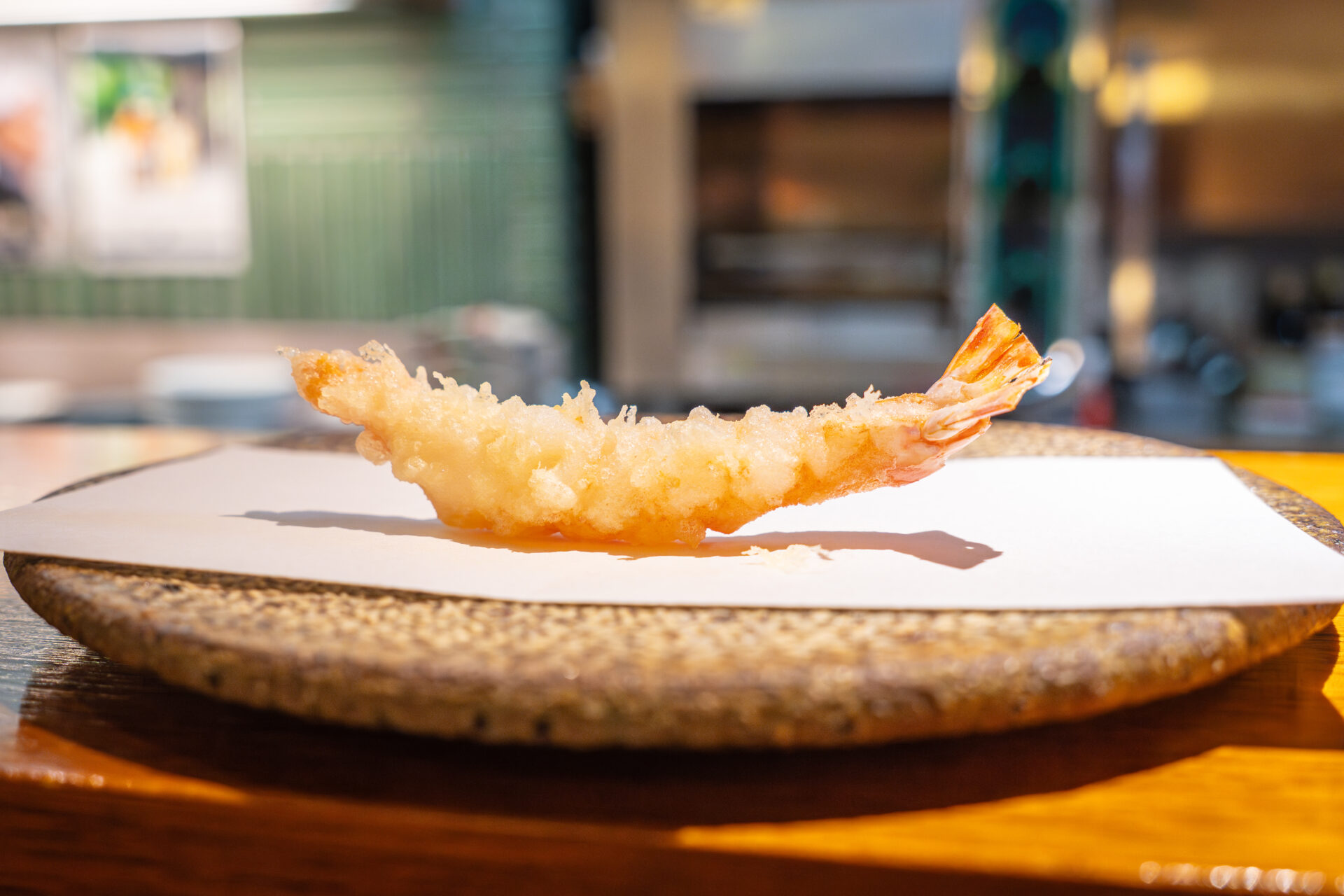
Amakusa Kuruma Ebi (Body)
Next came the body of the same kuruma ebi from Amakusa.
Its translucent whiteness was gently wrapped in the thinnest of batters, served piping hot.
In contrast to the crunchy head, the body had a plump, springy texture that released a gentle sweetness as I chewed.
The batter was so fine that there was no heaviness from the oil.
The sequence—from the fragrant shell to the subtle sweetness of the body—was beautifully orchestrated, showing how a single ingredient can reveal such different expressions.
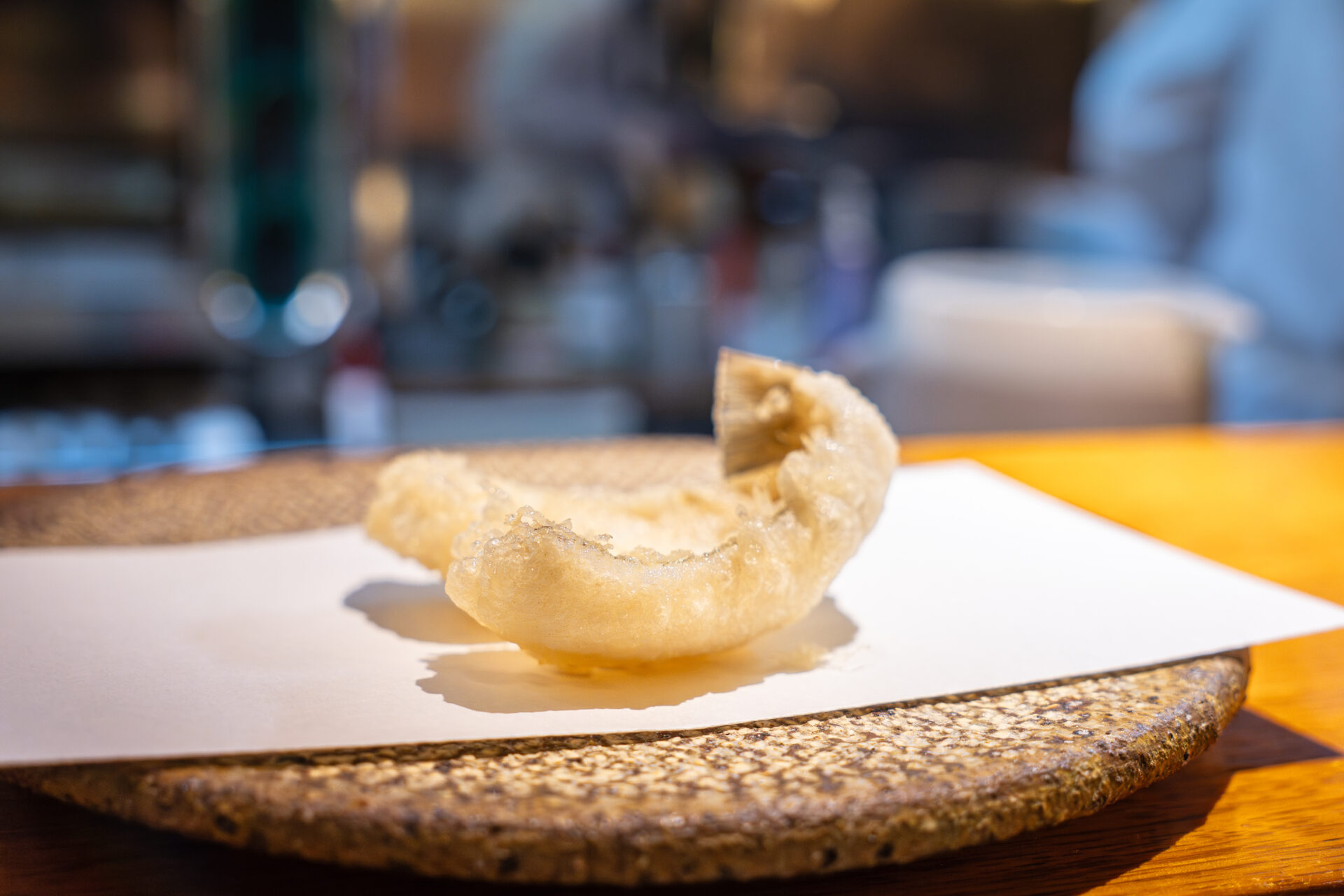
Amakusa Kisu (Japanese Whiting)
The kisu from Amakusa had a fine, delicate flesh with a refined sweetness.
To bring out this subtlety, it was coated in an ultra-thin batter and fried to a light crisp.
Upon biting, a gentle sweetness spread softly, followed by a clean ocean fragrance that lingered briefly.
A dish free from any heaviness of oil—only the pure, unadorned flavor of the fish rising to the fore.
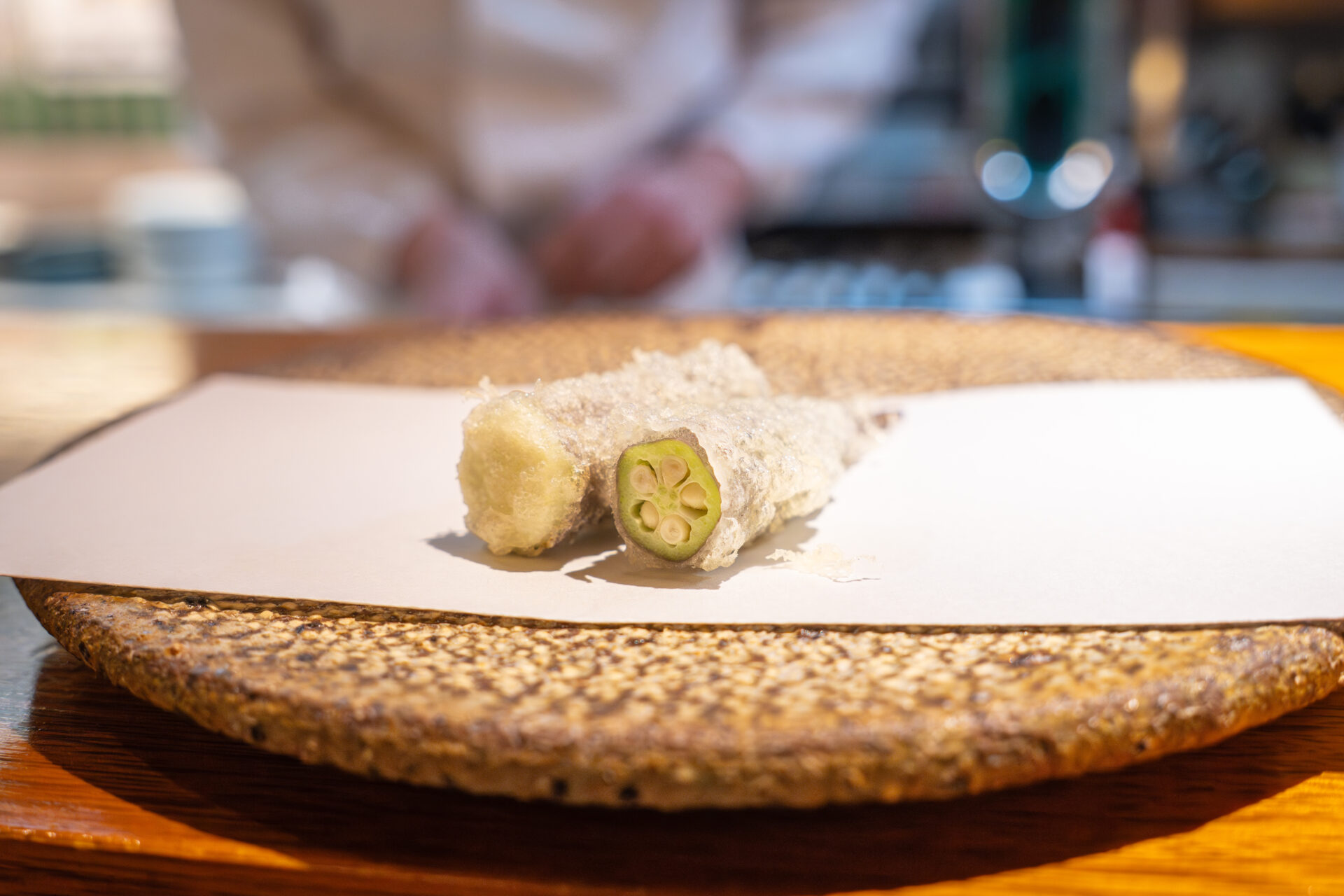
Kumamoto Maru Okra
Next was maru okra from Kumamoto. This is a local heirloom variety from southern Kyushu, distinguished by its round cross-section, tender texture, and mild sliminess.
Fried whole in a light batter, it was served cut cleanly in half—its beautiful cross-section immediately catching the eye.
In the mouth, gentle warmth spread along with a mild green note and a soft sweetness, while the tiny seeds popped pleasantly against the teeth.
A quintessential vegetable tempura dish, delivering the ingredient’s natural quality as it is.
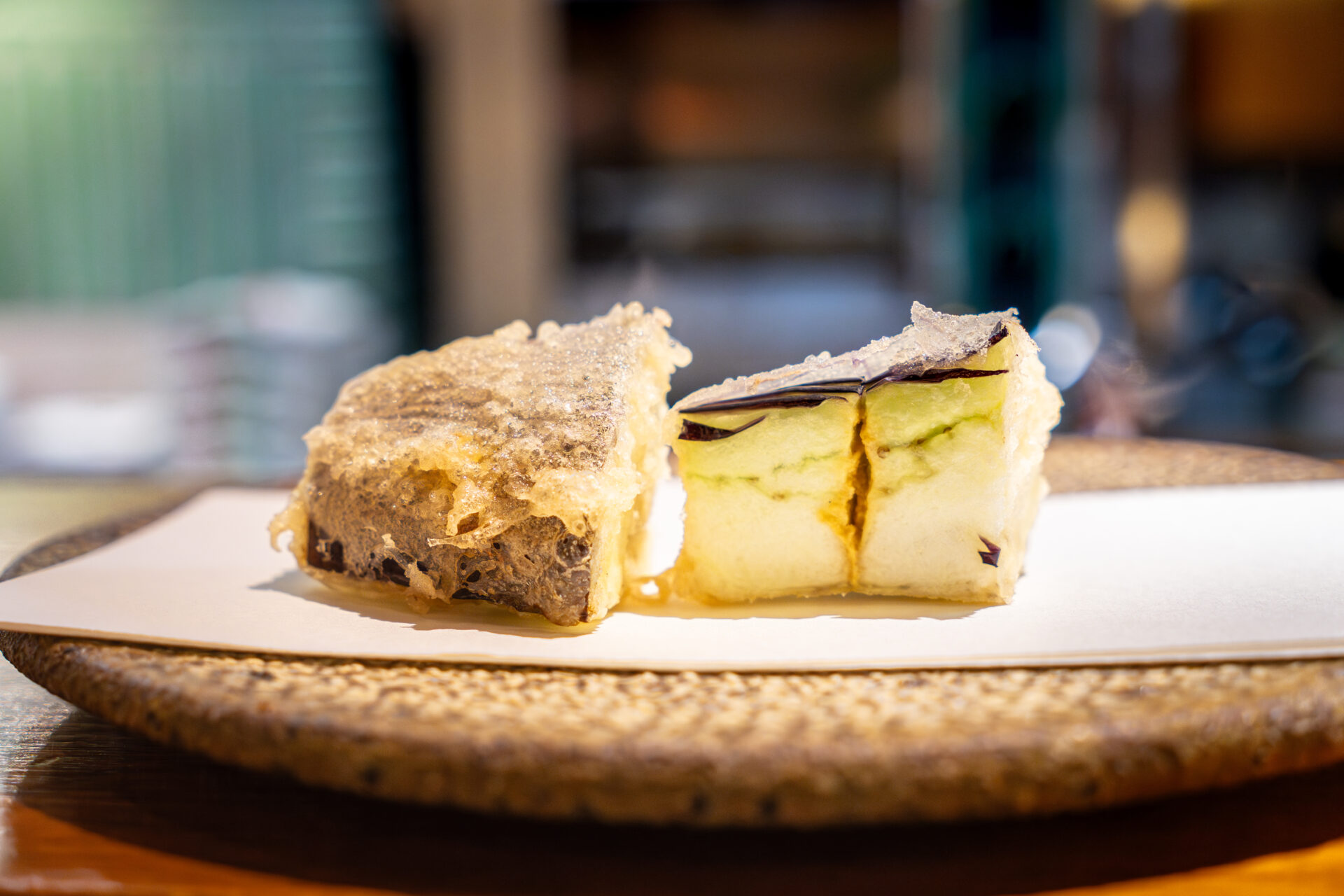
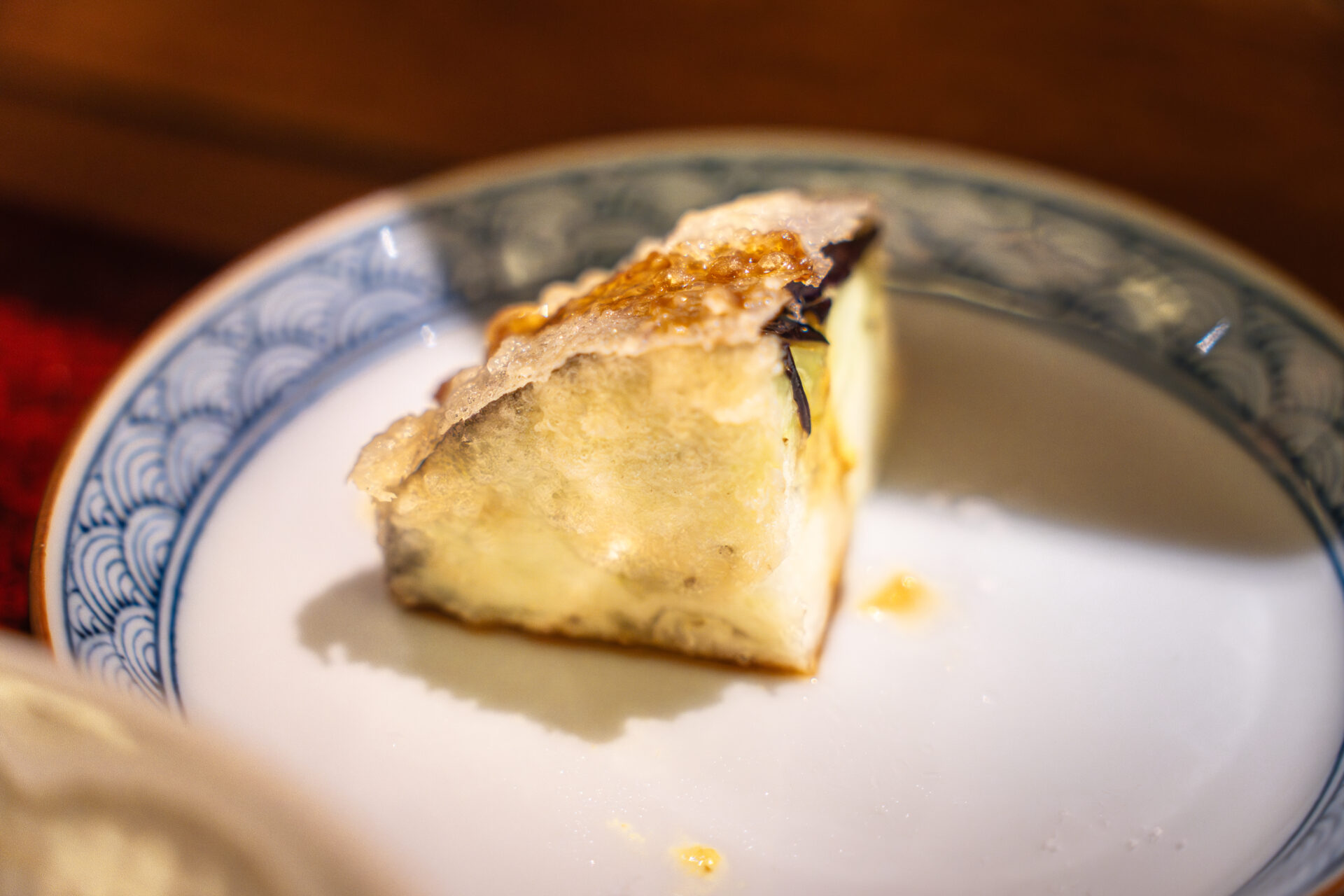
Kumamoto Eggplant (with Mustard)
This Kumamoto-grown eggplant stood out with its glossy purple skin and plump flesh. Before frying, the chef asked, “Shall I add mustard inside?”—I, of course, said yes.
The dish arrived sliced to reveal a beautiful cross-section. Steam rose softly as my chopsticks split open the batter, releasing the heat locked inside.
In the mouth, the eggplant’s melting sweetness and broth-like umami spread gently, while the mustard provided a fleeting yet striking accent.
Following the chef’s recommendation, I added a few drops of soy sauce—the saltiness lifted the sweetness astonishingly well.
From cooking and seasoning to presentation, the care in execution was evident in every detail of this dish.
Ariake Sea Shaku
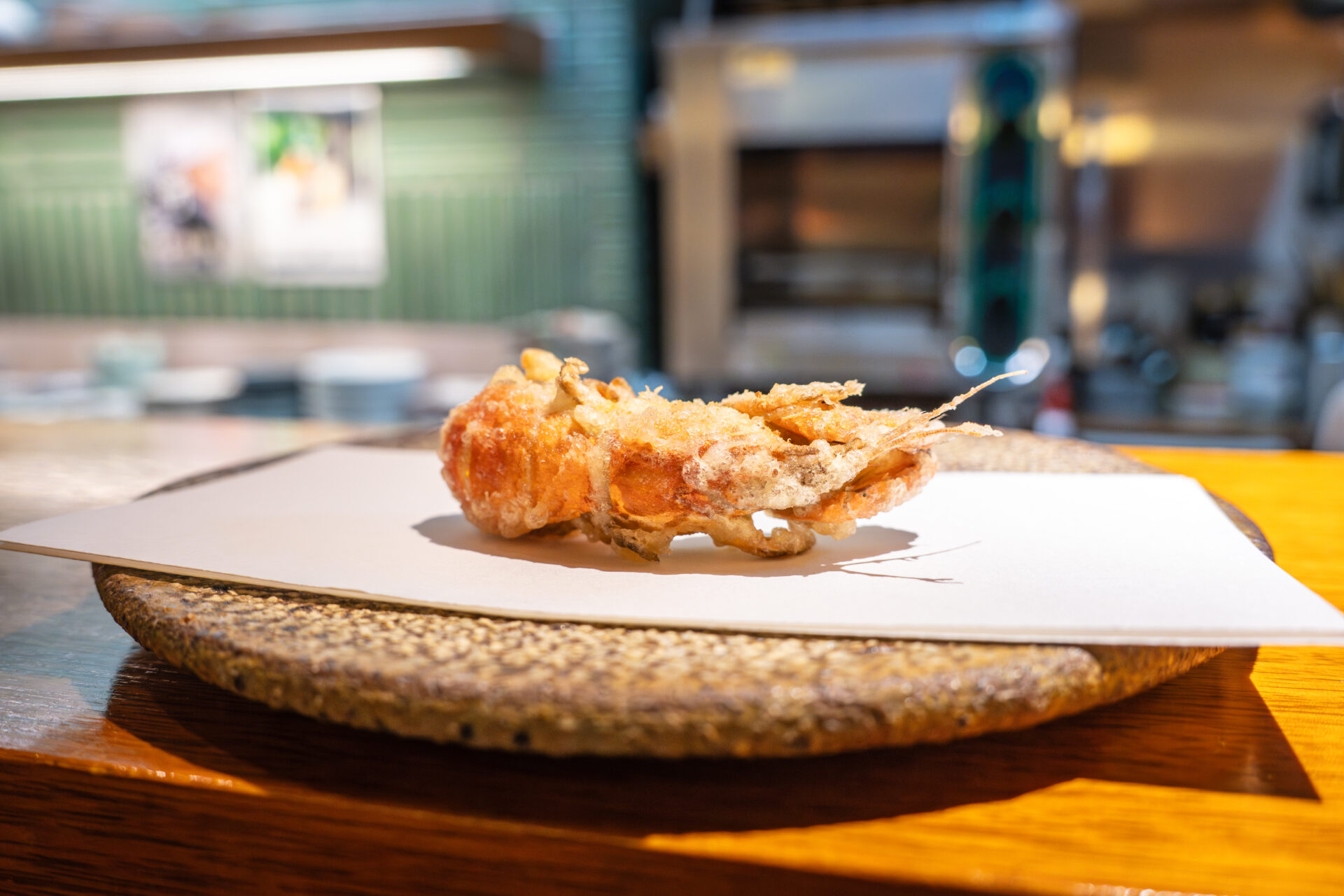
From the Ariake Sea came shaku (a species of prawn related to kuruma ebi), fried whole in its shell.
Its red, lightly battered form had striking presence. One bite released the toasty aroma of the shell, followed by a burst of rich miso and roe from the head.
The miso had depth without being overpowering, while the roe added a sticky richness, together creating a bold, ocean-driven flavor.
The body’s flesh was tender and fluffy, contrasting delightfully with the crisp shell.
Truly, shaku is meant to be eaten whole—an impactful and highly satisfying piece.
Kumamoto “Nankai Midori” Green Peas
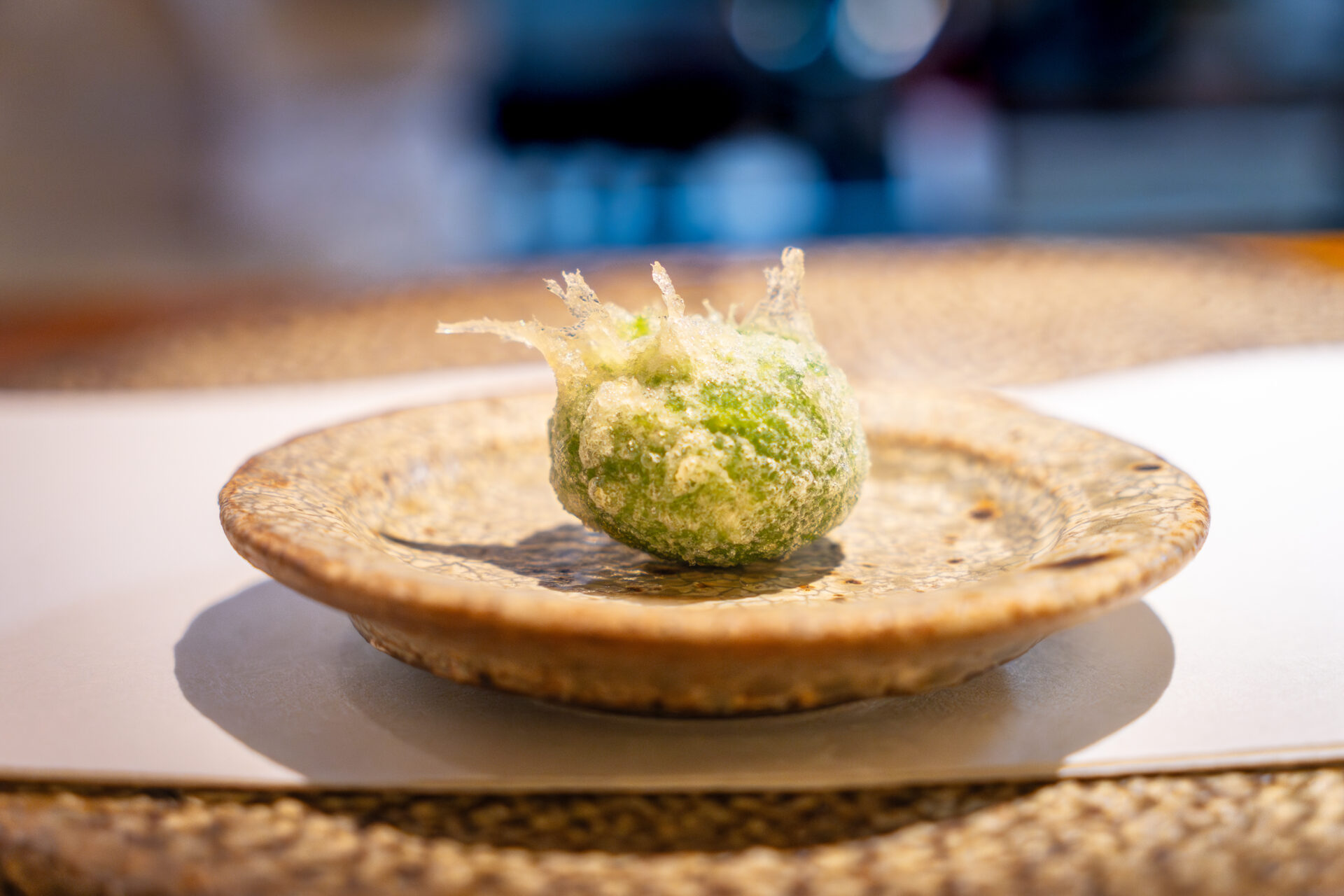
These green peas from Kumamoto’s “Nankai Midori” variety were first mashed, strained into a smooth paste, then reshaped into a ball and fried.
Served as plump little tempura spheres, they released a hot, vibrant green aroma when bitten into.
The natural sweetness and hearty umami of the peas were concentrated, showcasing the strength of the ingredient itself.
Hatoshi
Next was hatoshi, a local specialty of Nagasaki.
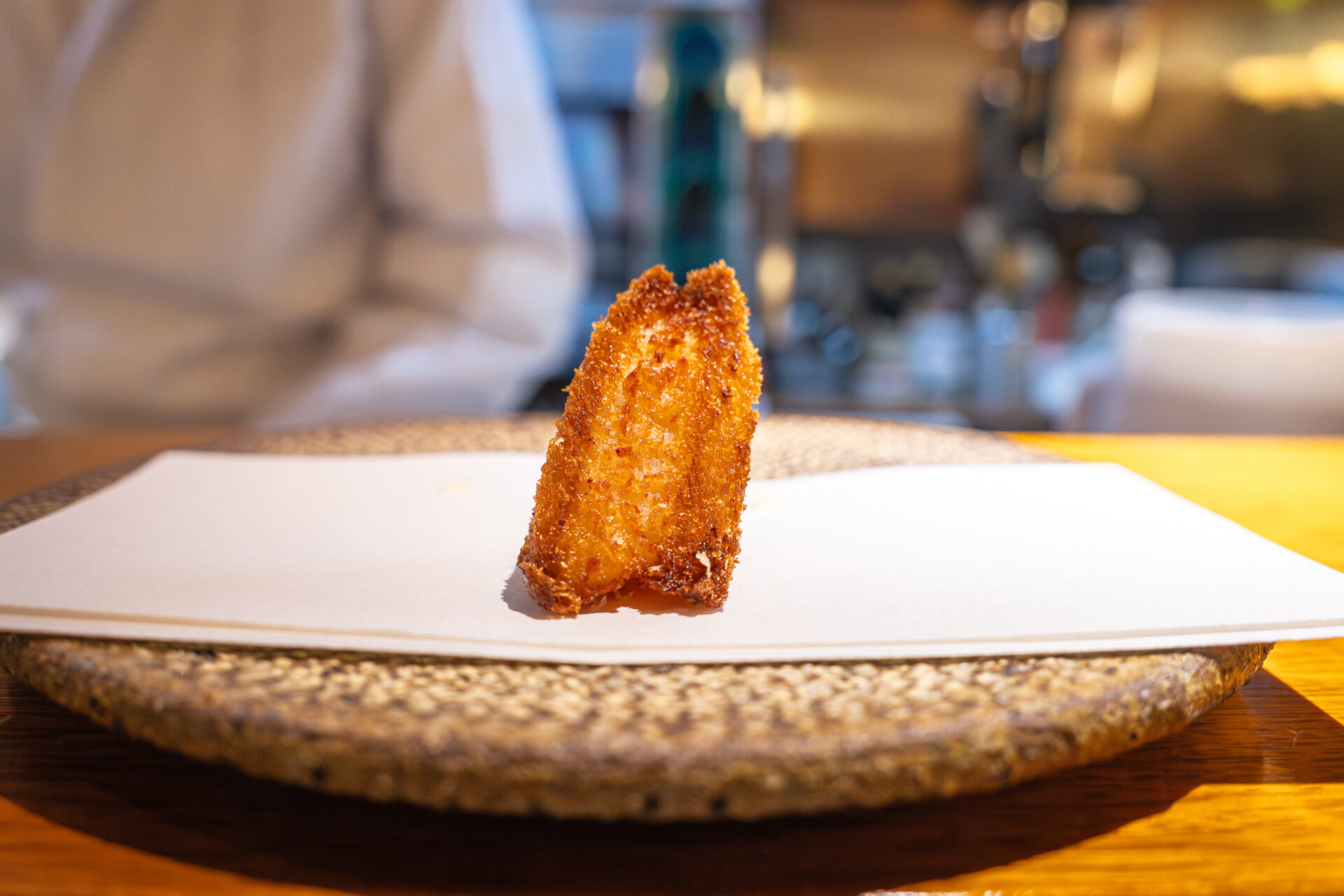
A fluffy shrimp paste sandwiched between slices of bread, then fried carefully.
What stood out was the technique—the chef did not serve it immediately after frying, but let it rest until the oil drained thoroughly.
Thanks to this, the crust was crisp and light, while the fragrance of the bread and the fluffiness of the shrimp paste were emphasized.
Biting in, the contrast was striking: crisp outside, juicy inside. The dish felt astonishingly light, without any greasiness.
From the ingredients and frying to the subtle “waiting time,” everything was calculated—a perfectly executed dish.
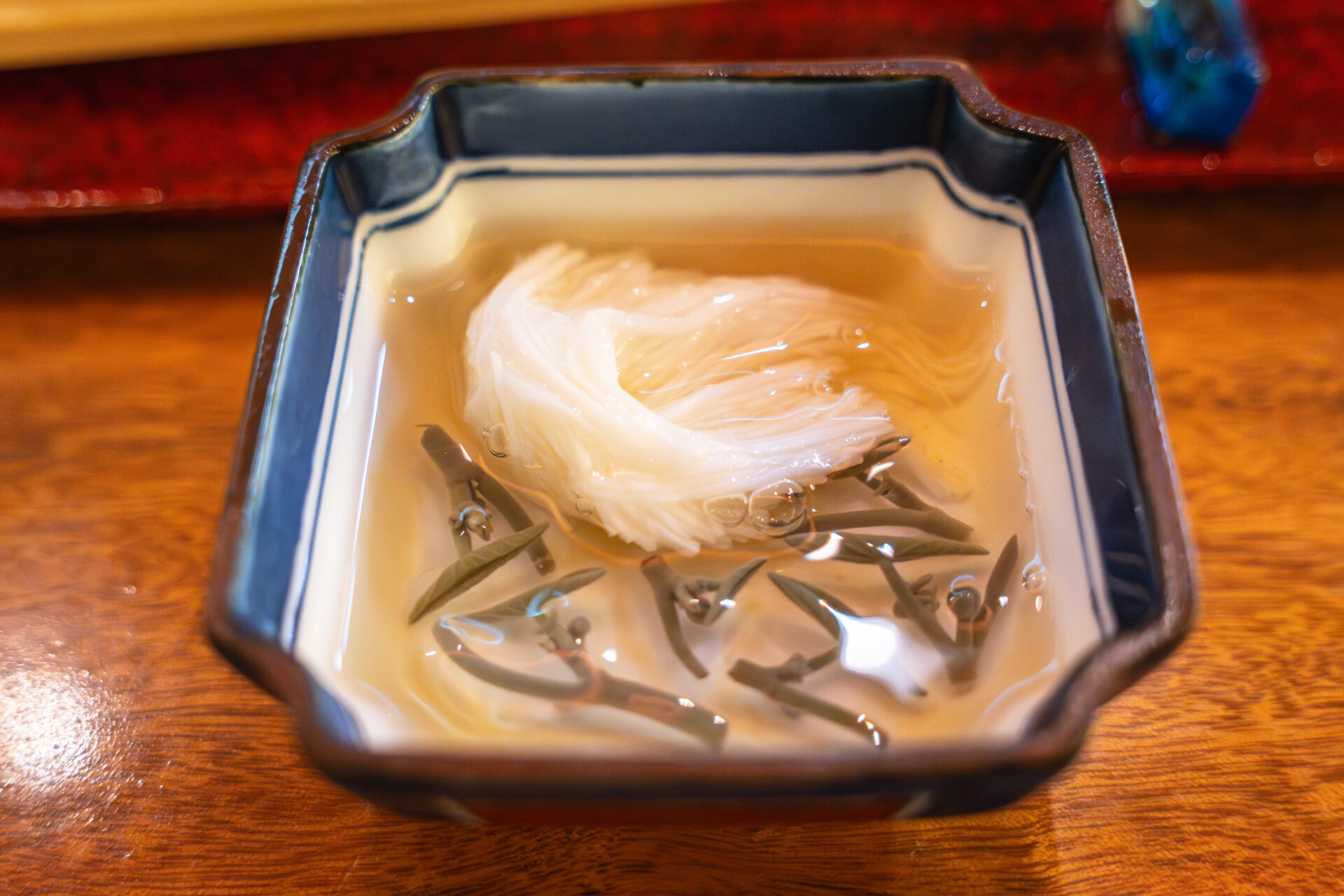
Julienned Yam with Junsai
Served in a glass-clear broth were slippery junsai (watershield plant) and thin julienne strips of yam.
The soft, jelly-like texture of the junsai and the crisp bite of the yam resonated quietly together.
On the palate, a refreshing coolness mingled with slight viscosity, leaving behind a vivid sense of summer.
A restrained yet serene dish, as if the cool essence of the ingredients had been directly reflected into the bowl.
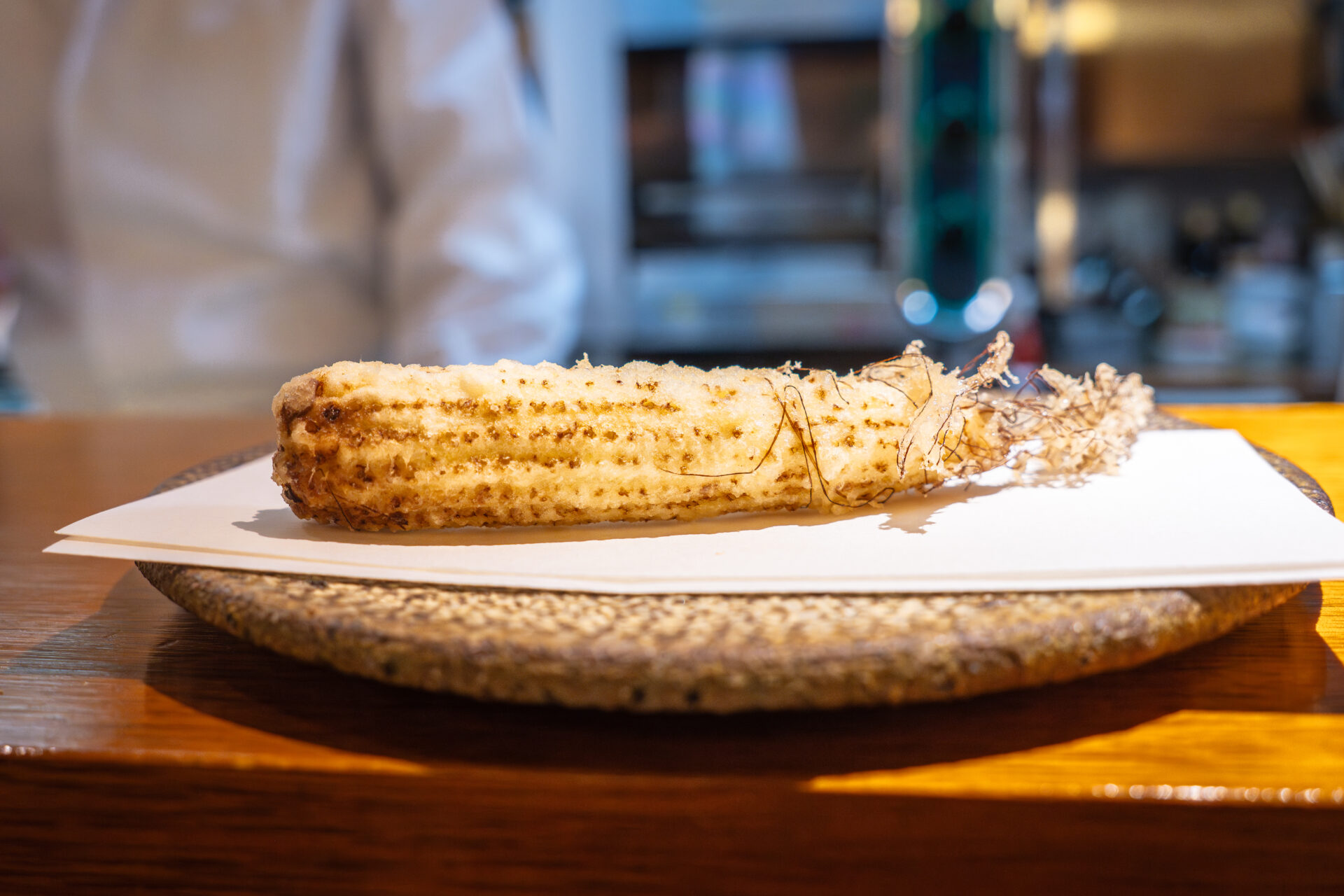
Ueki Town Young Corn (Kumamoto)
From Ueki Town in Kumamoto came young corn, served with husk and silk intact.
Fried whole, it combined the toasty fragrance of the batter with the fresh juiciness of the young kernels, highlighting the corn’s natural sweetness.
Even the silk was delicately fried, offering a crisp and playful texture.
The chef kindly cut it into bite-sized portions before serving, allowing me to enjoy it piping hot without losing any of the freshness—a thoughtful touch that added to the experience.
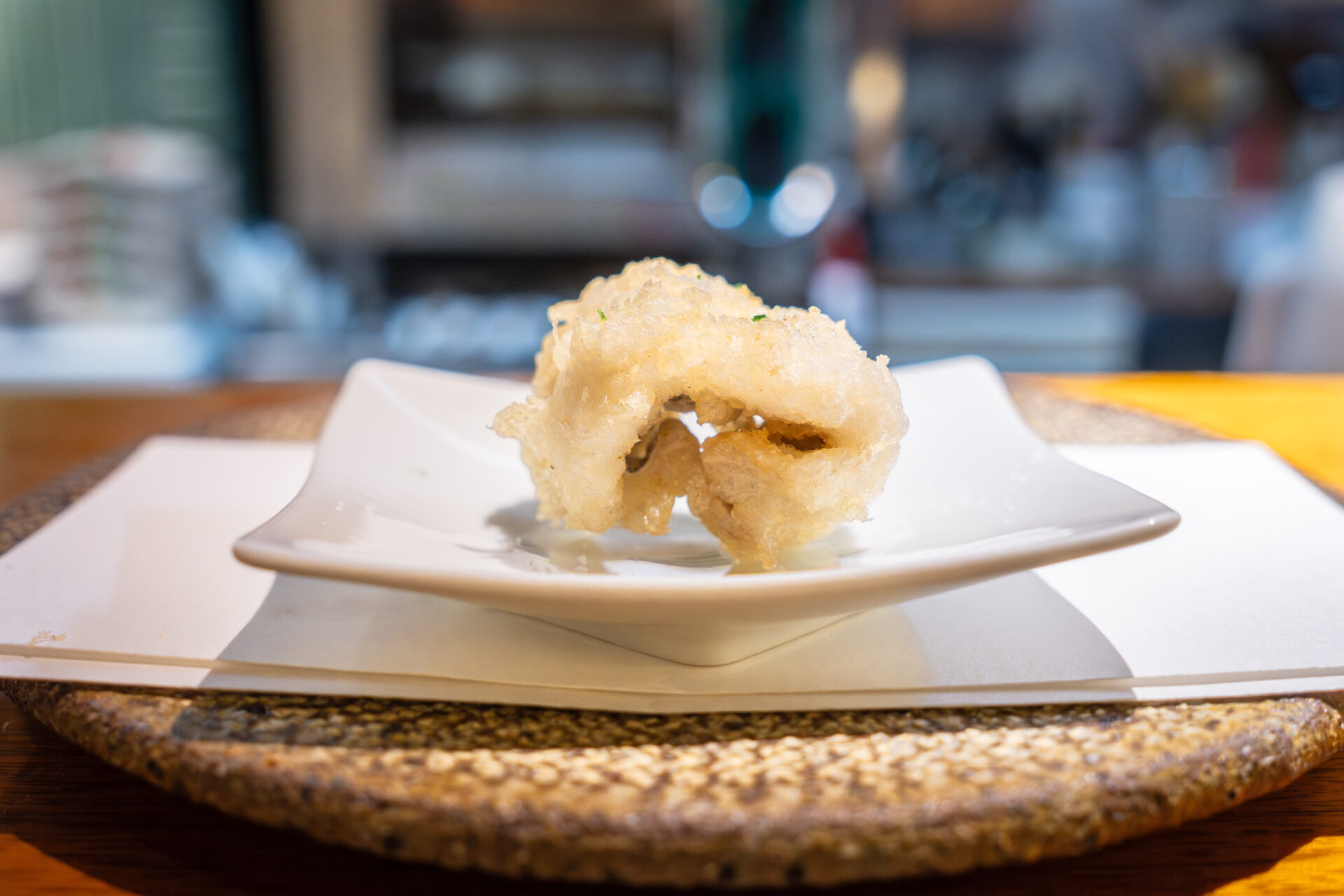
Hamo from Amakusa
The Hamo (pike conger) from Amakusa was encased in a delicate batter that sealed in its fluffy, tender flesh.
With each bite, a gentle sweetness from the fat spread across the palate.
A finishing sprinkle of salt and fresh ao-yuzu sharpened its richness, leaving behind a refreshing aftertaste.
Despite being fried, it remained light and airy—truly a dish that captured the essence of summer.
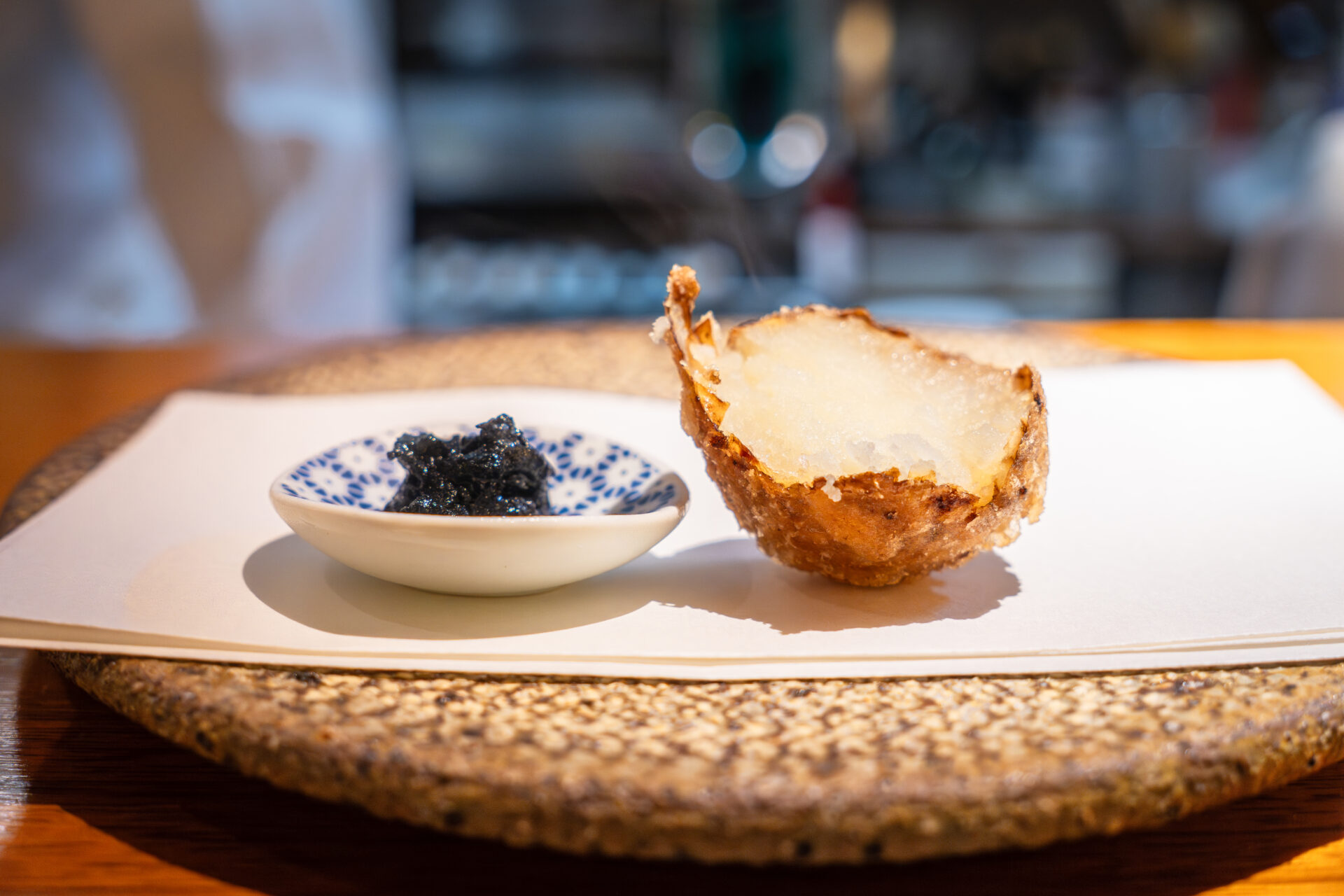
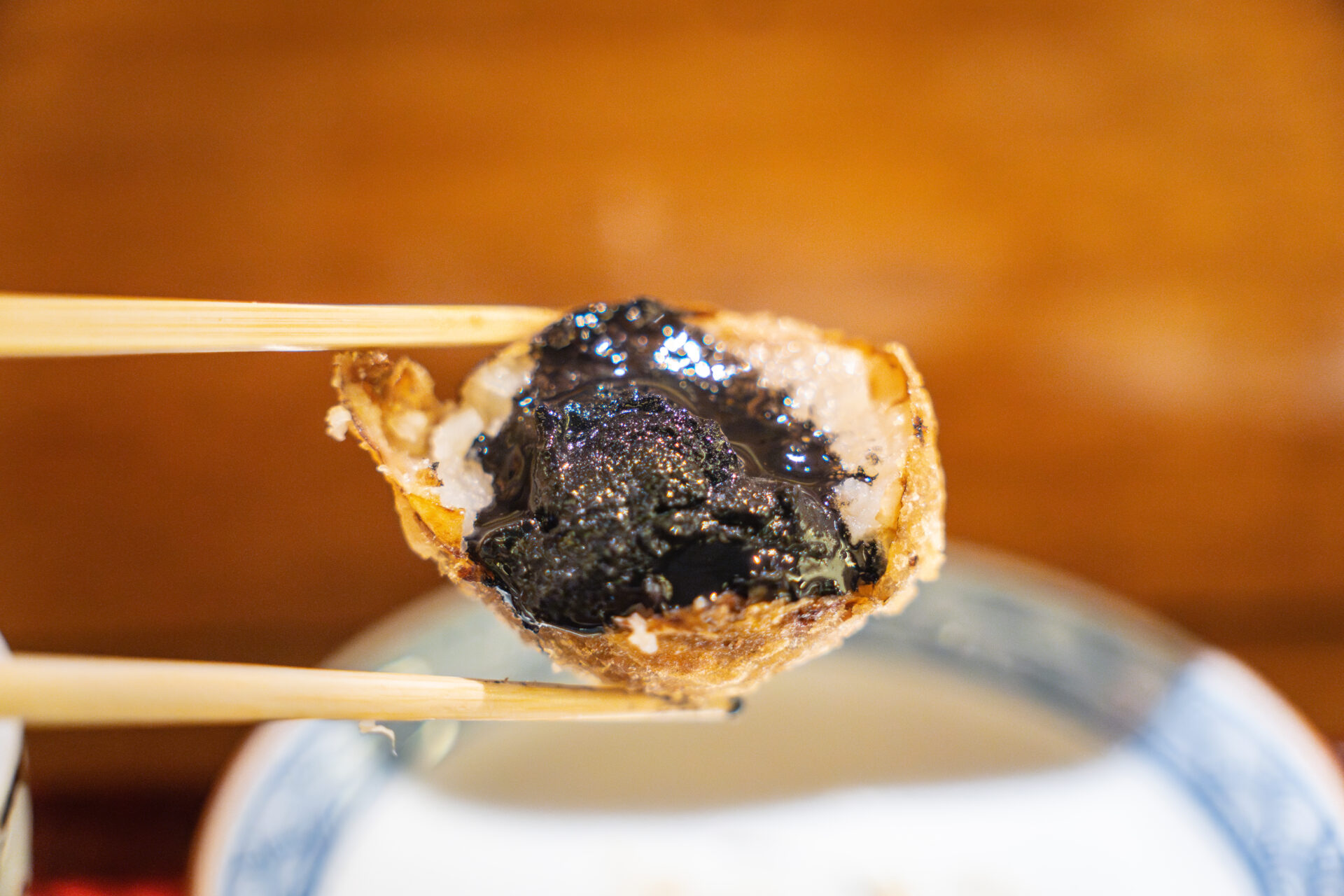
Amakusa New Potatoes × Squid Ink Shiokara Butter
The star here was freshly harvested Amakusa potatoes, fragrant and steaming hot.
Amazingly, they were cooked slowly for nearly an hour before being turned into tempura.
The inside was moist and fluffy, while the outside had a subtle crisp. The natural sweetness of the potato shone through.
Alongside it came a bold accompaniment: squid ink–infused shiokara butter.
The butter melted silkily, enriched with the umami of shiokara and the deep complexity of squid ink.
When paired with the potato, the sweetness, saltiness, and richness merged into an irresistible harmony.
Honestly, this butter alone could keep you drinking sake all night—it was that dangerously good, a flavor combination etched in memory.
Anago from Tsushima
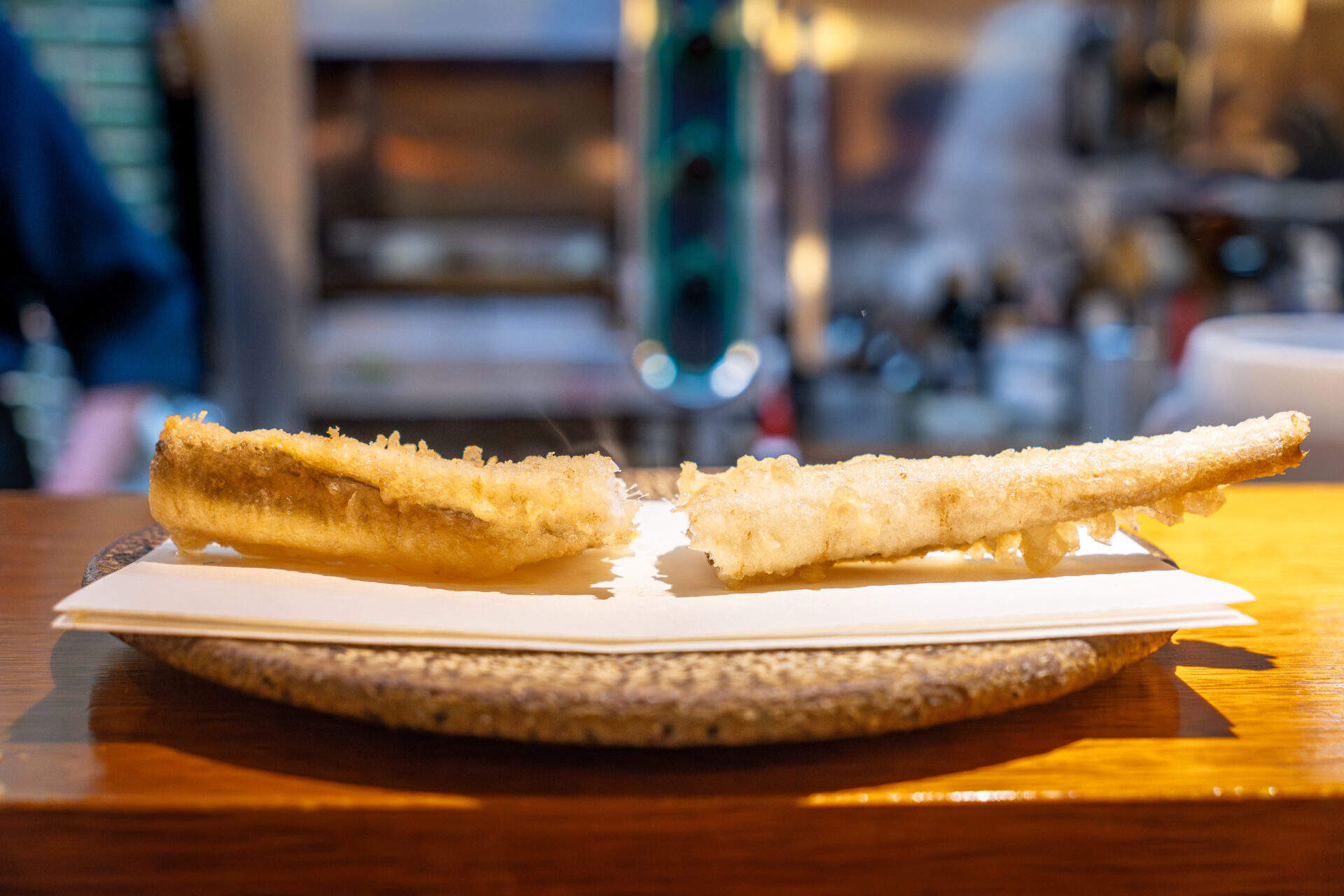
The final tempura was anago (conger eel) from Tsushima.
A whole piece, freshly fried, was cut right in front of us by the chef.
The moment it was sliced, steam and a savory aroma rose up, taking my breath away.
The batter was feather-light, while the flesh inside was soft and fluffy.
The balance of fat was perfect, allowing the umami to gently unfold even without seasoning.
The recommended ways of eating were simple yet refined:
-
A touch of soy sauce to highlight its sweetness, or
-
A squeeze of lemon for a refreshing finish.
Executed with precision, it was the perfect “closing anago”—a dish that embodied completeness.
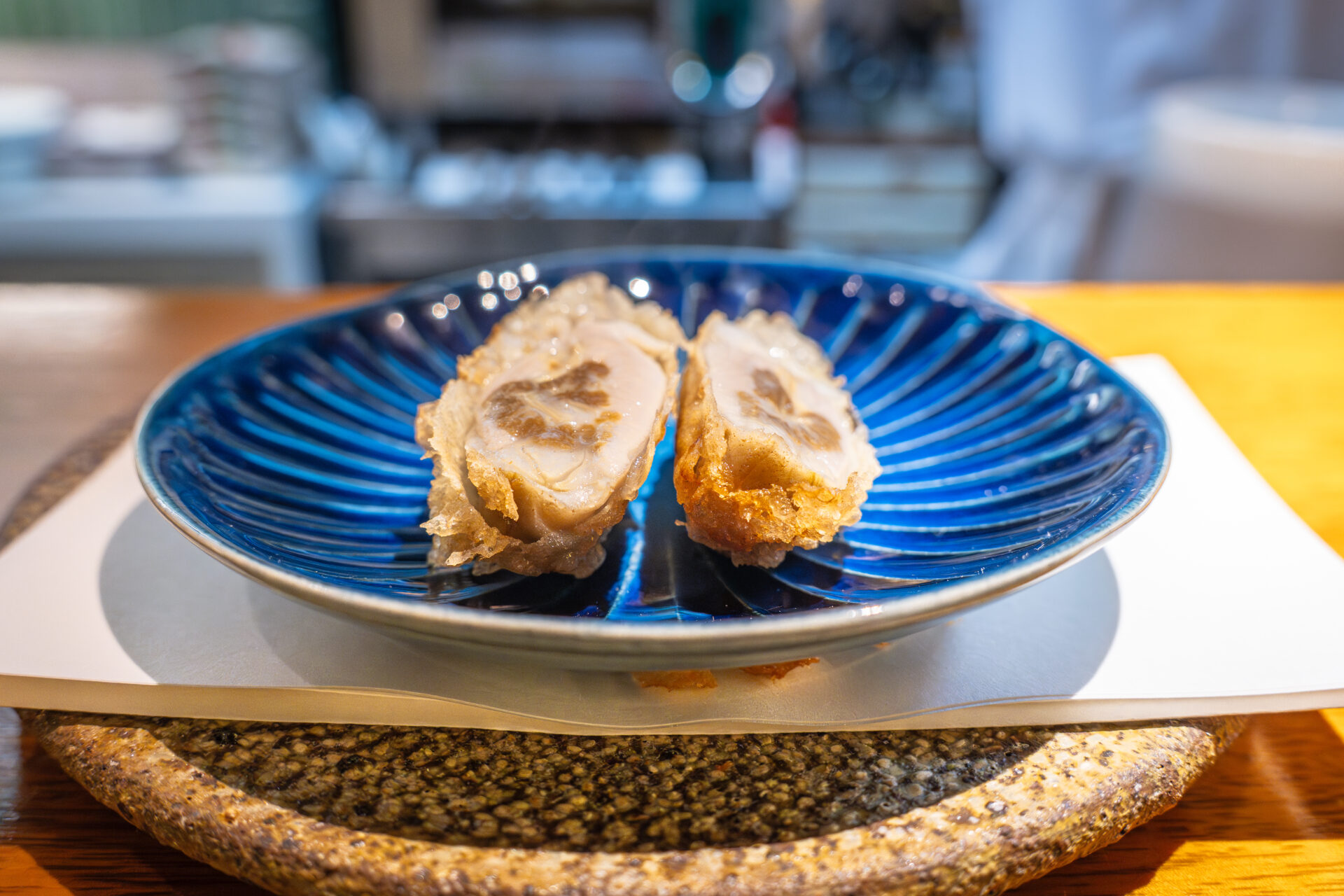
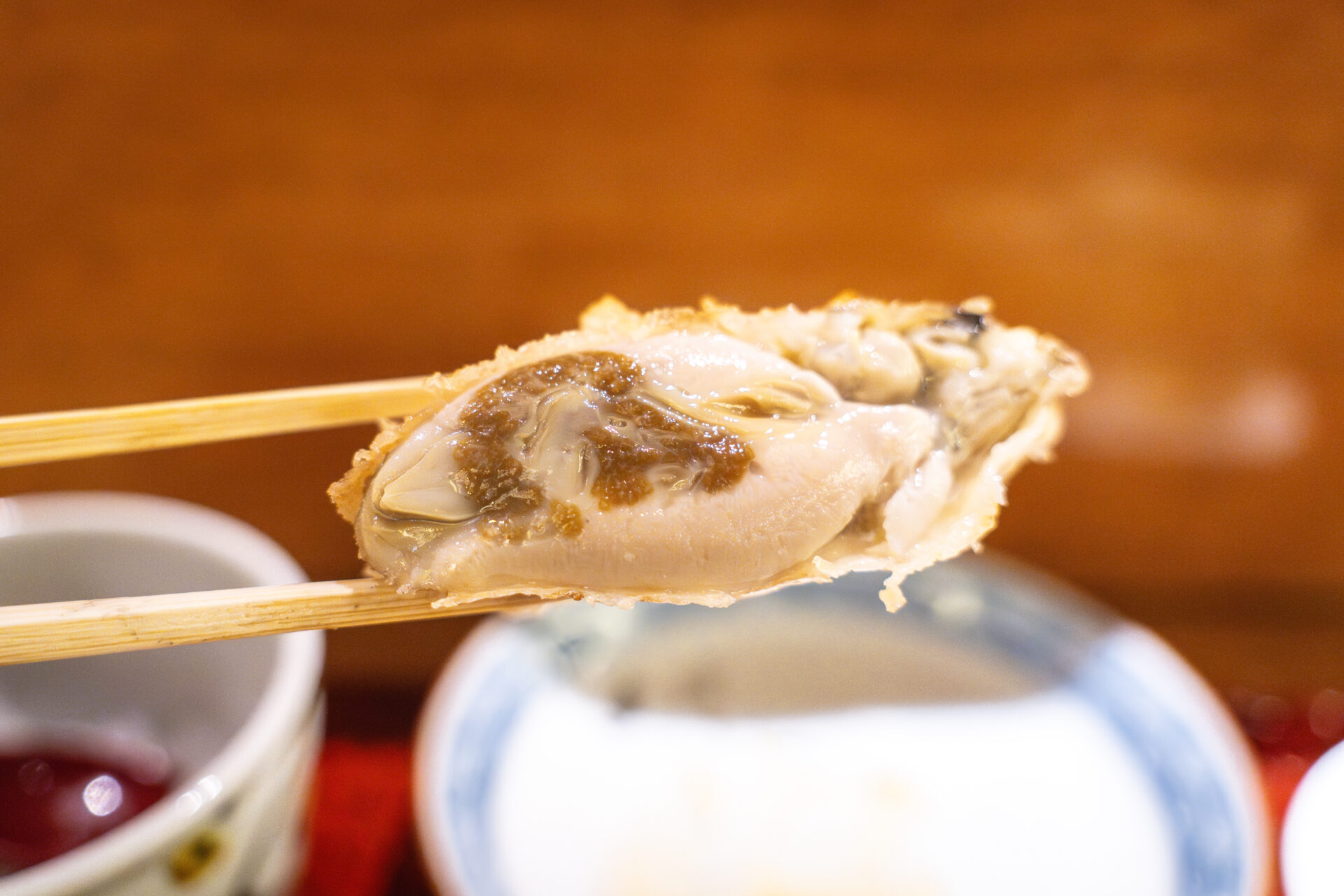
Rock Oyster from Kumamoto
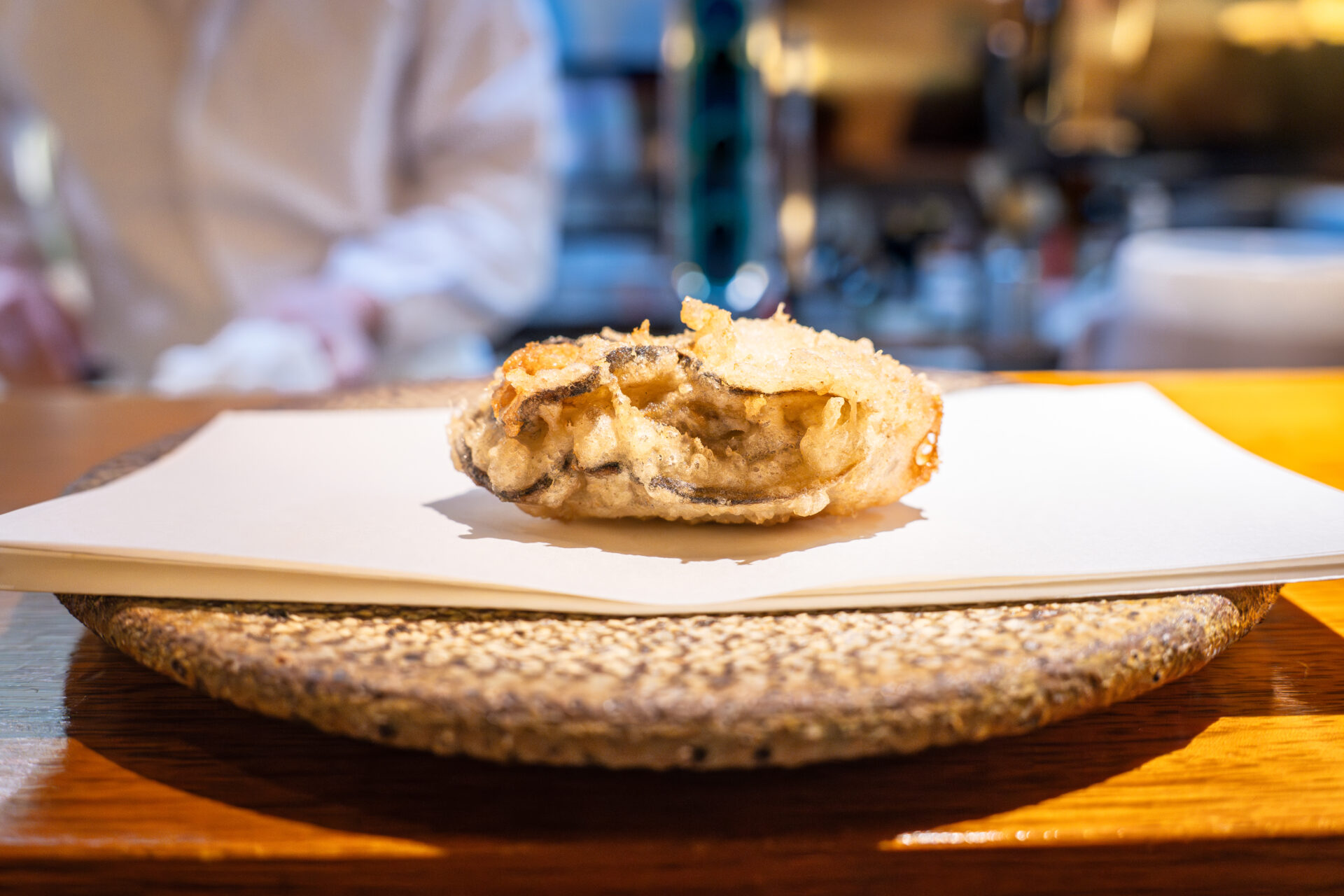
Served between the tempura courses was a Kumamoto rock oyster.
Large and plump, its weight was evident the moment it was lifted with chopsticks.
One bite released an explosion of briny minerals and creamy richness, as though the entire mouth was instantly filled with the sea.
Its mellow sweetness, subtle saltiness, and lingering finish needed almost no seasoning.
The sheer power of the ingredient spoke for itself.
It brought in another dimension of “ocean umami,” deepening the overall course in a striking way.
Mini Tendon (Tempura Rice Bowl)
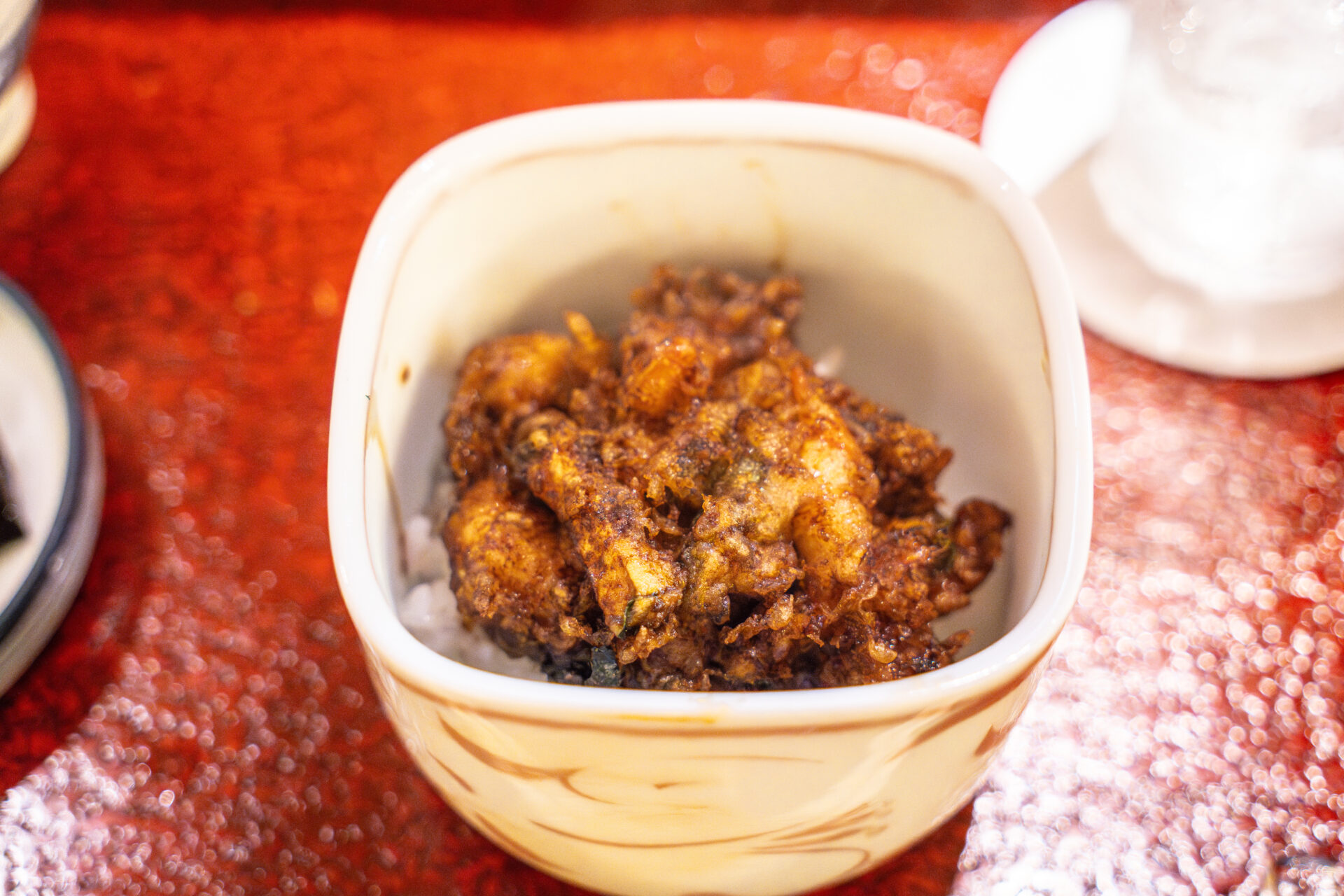
For the finale, I chose the small tendon.
In a petite bowl, lightly crisp tempura—centered on a kakiage fritter—was placed atop rice, finished with a drizzle of sweet-savory sauce.
Remarkably, it felt weightless, with no heaviness from the oil, and the pairing of crisp batter with rice was spot-on.
With each bite, the fragrance of the sauce and the aroma of the tempura spread warmly, delivering a sense of satisfaction worthy of the course’s conclusion.
Even the rice was cooked to perfection, showing attention to detail until the very end.
A modest bowl, yet one that lingered in memory—gently accompanying the afterglow of the meal.
Dessert & Finale
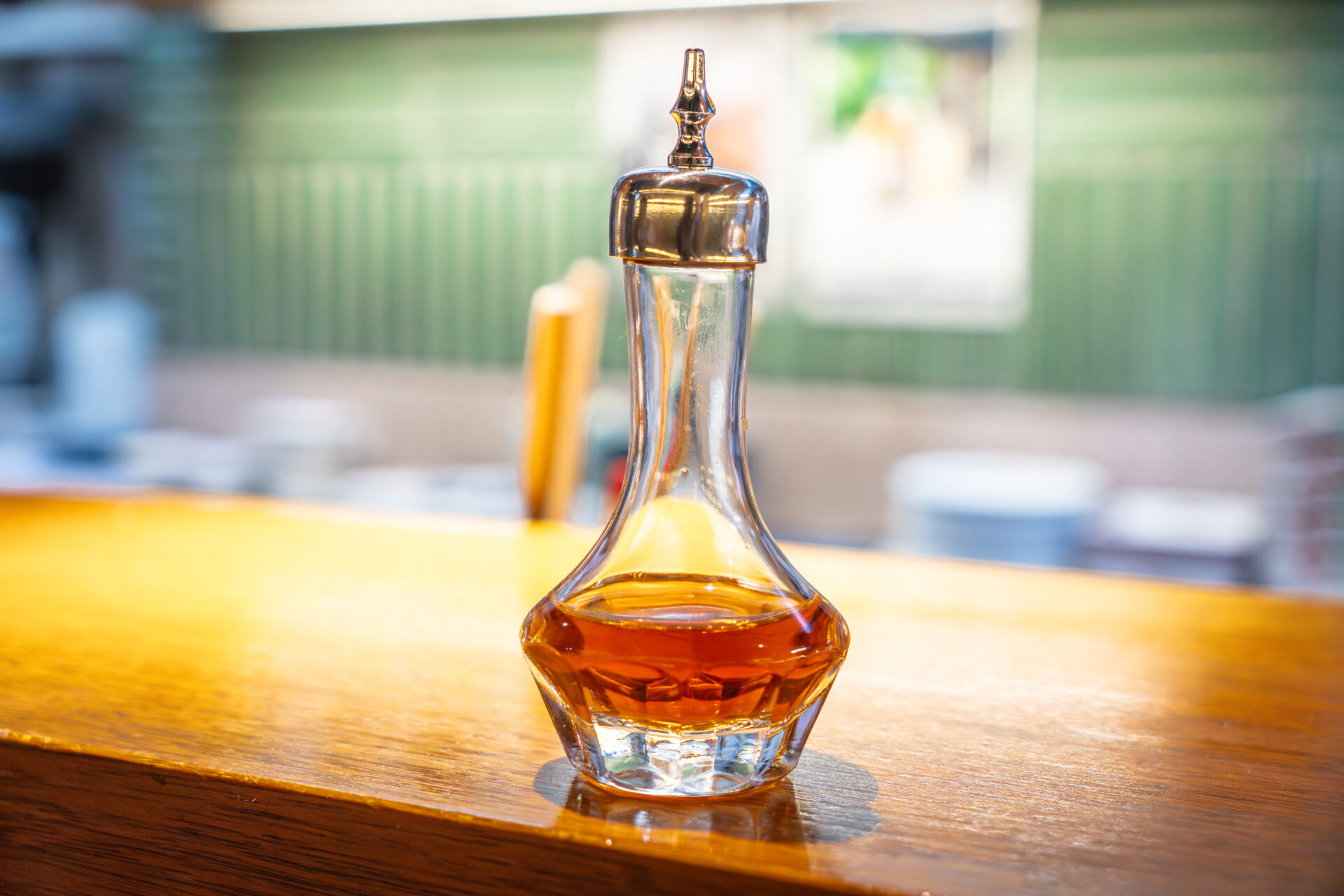
Kumamoto Aso Organic Sweet Potato Tempura × Brandy
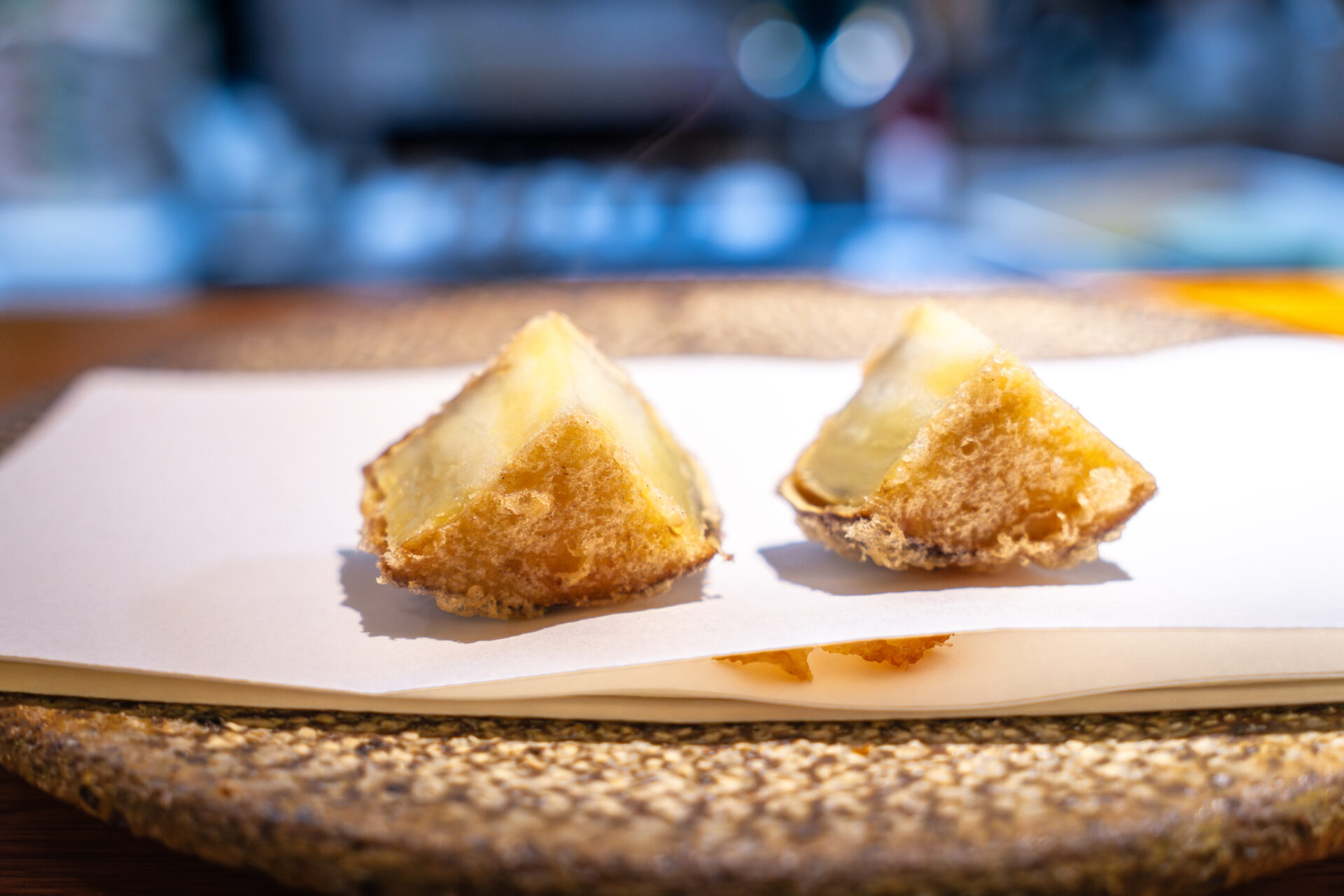
For the finale, a playful twist on dessert appeared: tempura made with organic sweet potatoes from Aso, Kumamoto.
Fried with the skin on, the sweet potato was crisp on the outside, while the inside revealed a dense, almost syrupy sweetness. The precise heat control brought out the natural honey-like nectar of the potato, leaving it lusciously rich.
Paired with this was a touch of aromatic brandy. Just a drizzle transformed the sweetness, adding depth and elegance, turning it instantly into a sophisticated “adult dessert.”
It worked beautifully both as the meal’s closing dish and as something that lingered like a digestif. From start to finish, the theme of frying and aroma was carried through with remarkable consistency.
Reflection & Impressions
Tucked away on the second floor of a modest building in Kumamoto’s Shinshigai district, this nine-seat counter-only tempura specialty restaurant feels like a hidden gem.
With a focus on ingredients from Amakusa and Aso, each piece of tempura is served freshly fried, in a style that speaks to the backbone of a long-standing establishment. The third-generation chef’s craft shows no excess—heat, aroma, and presentation are all handled with quiet precision and an unshakable confidence.
What left a strong impression was not only the respect for the natural flavors of each ingredient but also the chef’s willingness to explore new expressions. The Amakusa new potato paired with squid ink–salted-butter, or the sweet potato tempura enjoyed with brandy, both revealed a striking breadth of creativity.
The beauty of timing, the live performance of frying before your eyes, and the quiet intensity of the counter all combined to make the experience memorable beyond just taste. It was a special tempura journey, where Kumamoto’s terroir, generations of technique, and a flexible modern sensibility came together in perfect harmony.
Reservation & Access Information
Opening Hours
5:00 PM – 9:00 PM (last order at 9:00 PM)
Closed
Sundays
Reservation
Advance reservation only. Reservations can be made by phone or via restaurant booking sites such as Ikkyu.com.
(With just nine counter seats, early booking is highly recommended.)
Access
Approximately a 2-minute walk from Kumamoto City Tram Karashimacho Station.
Located on the 2nd floor of the Fujimoto Building. The understated exterior is easy to miss, so keep an eye out. The entrance is immediately to the left at the top of the stairs.
- TAGS