CONTENTS
About Shiro

Concept
“Shiro” is a restaurant opened by Chef Atsushi Takenaka in August 2024, in the Karasuma-Oike area of Kyoto. Chef Takenaka hails from Hamada City in Shimane Prefecture and is known for cuisine that showcases his native region’s ingredients. The name “shiro,” meaning “white,” evokes purity and innocence — a color that reflects the restaurant’s crisp, white-toned space and its plating philosophy of intentional negative space.
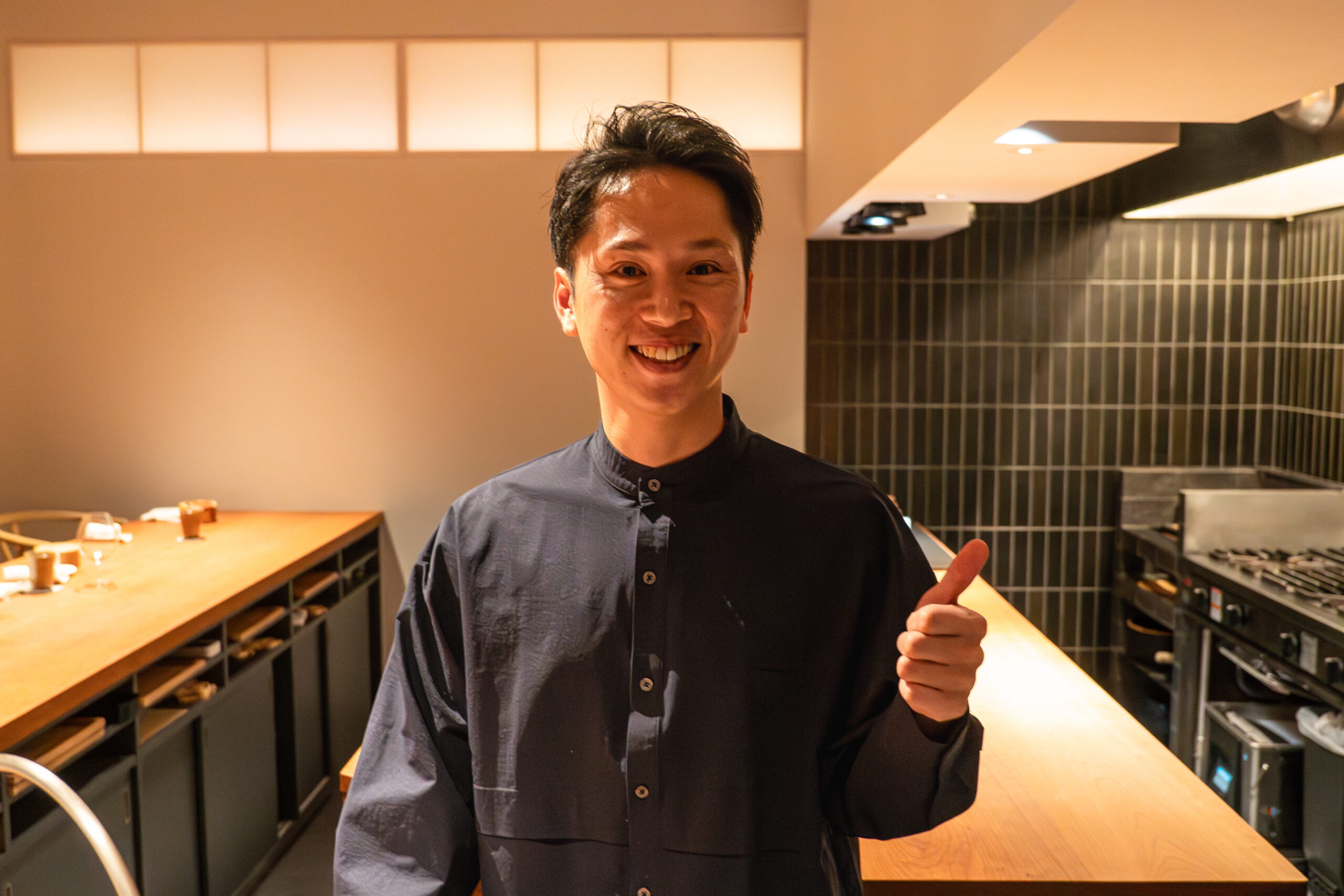
Chef Atsushi Takenaka
Chef Atsushi Takenaka has a distinctive career path: after graduating from university, he continued training in Italian cuisine while working a corporate job, before making a full transition into professional cooking at the age of 24.
He went on to open the Italian restaurant “Mia Paese” in Hamada City, Shimane Prefecture, where he earned high acclaim for his original dishes built around fresh, local ingredients.
In August 2024, seeking a new stage for his craft, he opened “Shiro” in the Karasuma-Oike district of Kyoto. The restaurant offers an omakase course that brings together carefully selected ingredients from both Shimane and Kyoto.
Chef Takenaka’s cuisine is genre-defying, rooted in Italian technique while incorporating elements of Japanese and French methods. His dishes place great importance on the natural character of each ingredient, pursuing depth of flavor through apparent simplicity.
He also serves as culinary supervisor for JR West’s luxury sleeper train “TWILIGHT EXPRESS Mizukaze,” where, under the theme of “hometown sophistication,” he creates dishes that draw on the natural bounty of the San’in region.
Restaurant Reviews
Both of Chef Atsushi Takenaka’s restaurants, “Mia Paese” and “Shiro,” have received high acclaim.
“Mia Paese,” formerly located in Hamada City, Shimane Prefecture, was selected as one of Tabelog’s Top 100 Italian Restaurants in Western Japan for 2023 and was also featured in the French restaurant guide “Gault & Millau.”
“Shiro,” which opened in Kyoto’s Karasuma-Oike area in August 2024, was named a “Selected Restaurant” in the Michelin Guide just three months later, in November of the same year — high praise for its original cuisine and refined space.

Dining Prelude
Exterior & Entrance
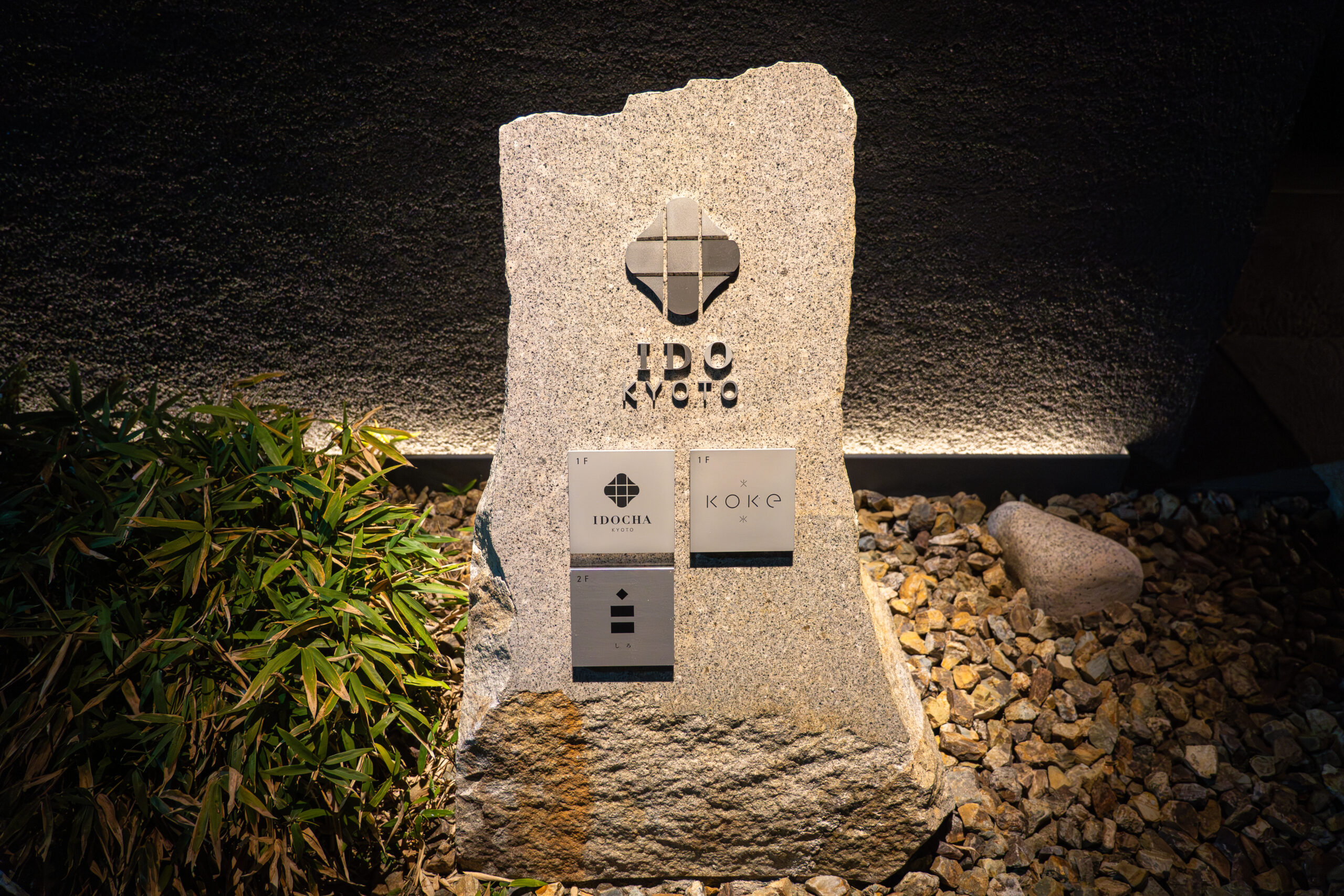
“Shiro” is located on the second floor of “IDO KYOTO,” a cultural complex in Nakagyo Ward, Kyoto. Its exterior carries the understated charm of a traditional Kyoto machiya townhouse, blending harmoniously with the surrounding streetscape. The entrance is simple yet refined, building anticipation for the tranquil, special space that awaits inside. The complex also features its own well, with each tenant restaurant using water drawn straight from the earth — a testament to the meticulous attention to detail found throughout.
The Dining Space
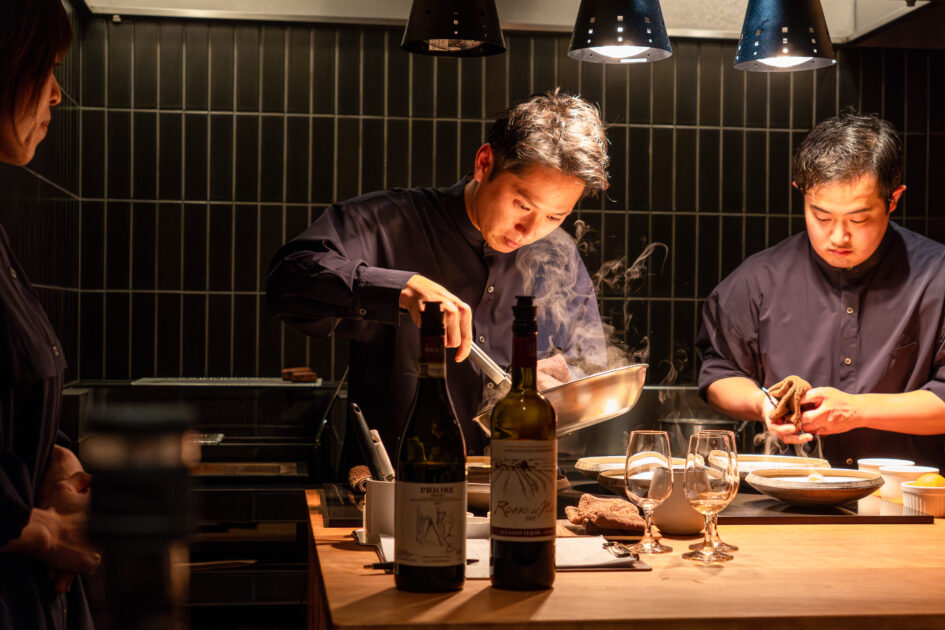
The dining space at “Shiro” is defined by a simple, sophisticated design built around a palette of white. Furnishings crafted from natural, unfinished materials lend the room a warm, inviting atmosphere. The six-seat counter wraps around a fully open kitchen, letting guests watch the chef’s work unfold live, right before their eyes.
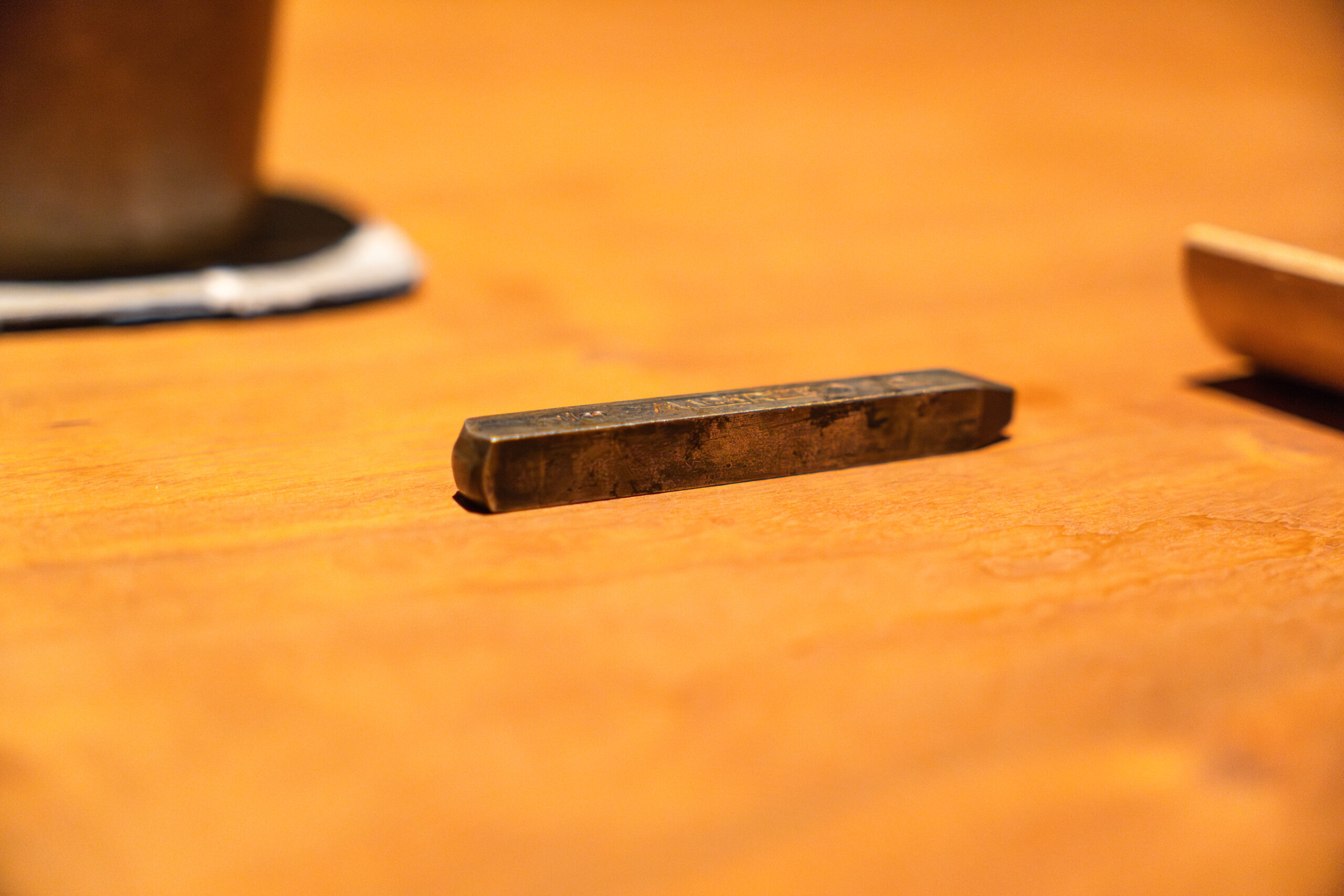
The metal rods used to hold the cutlery are, in fact, repurposed lead printing type from letterpress printing. The patina of long-used metal blends beautifully into the restaurant’s serene atmosphere.
The Menu Experience
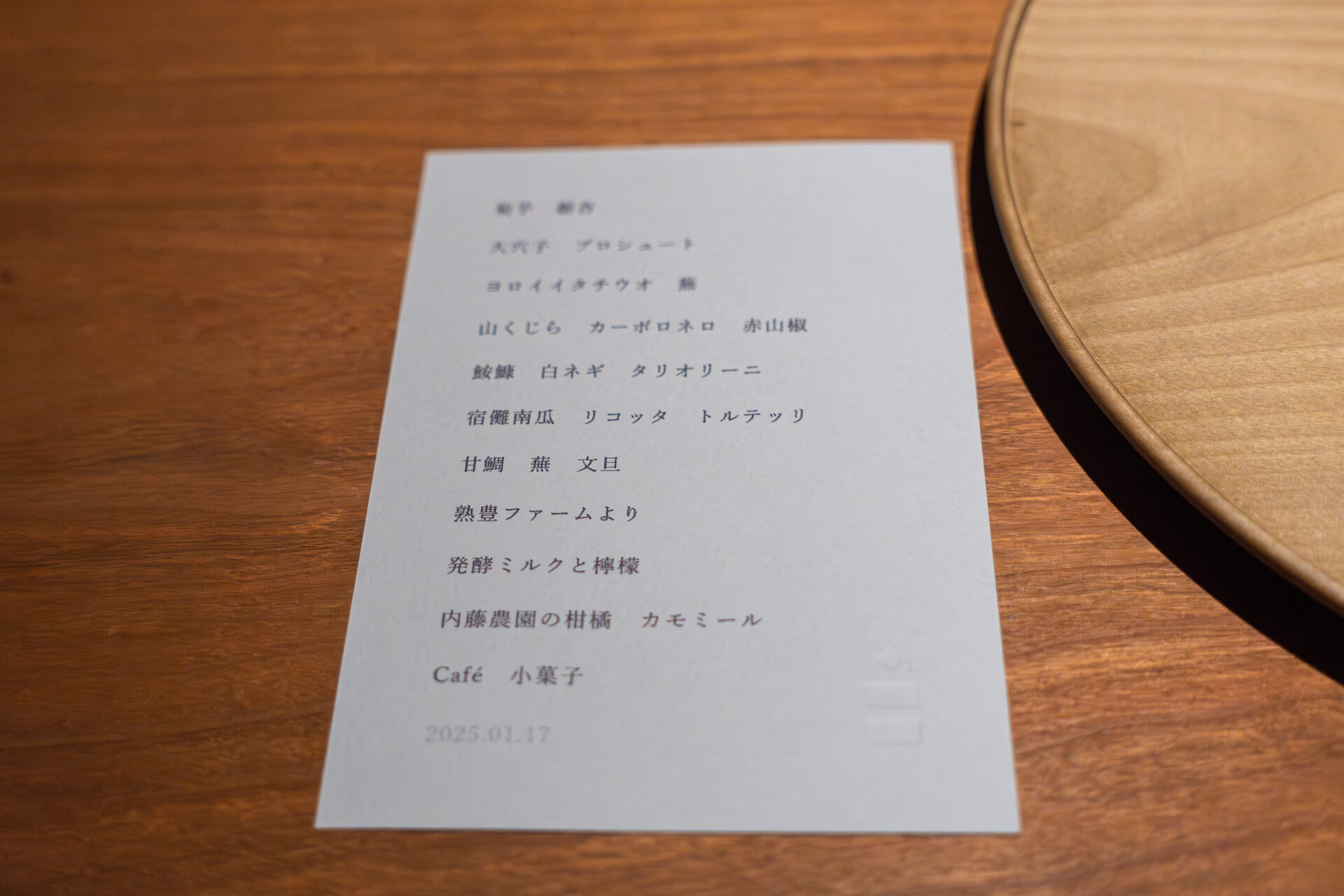
The menu features unusual ingredients such as yoroi-itachiuo (armored cusk-eel), yamakujira (“mountain whale,” a poetic name for wild boar), and Sukuna kabocha squash, accented by citrus fruits like buntan pomelo that lend a bright, wintry freshness.
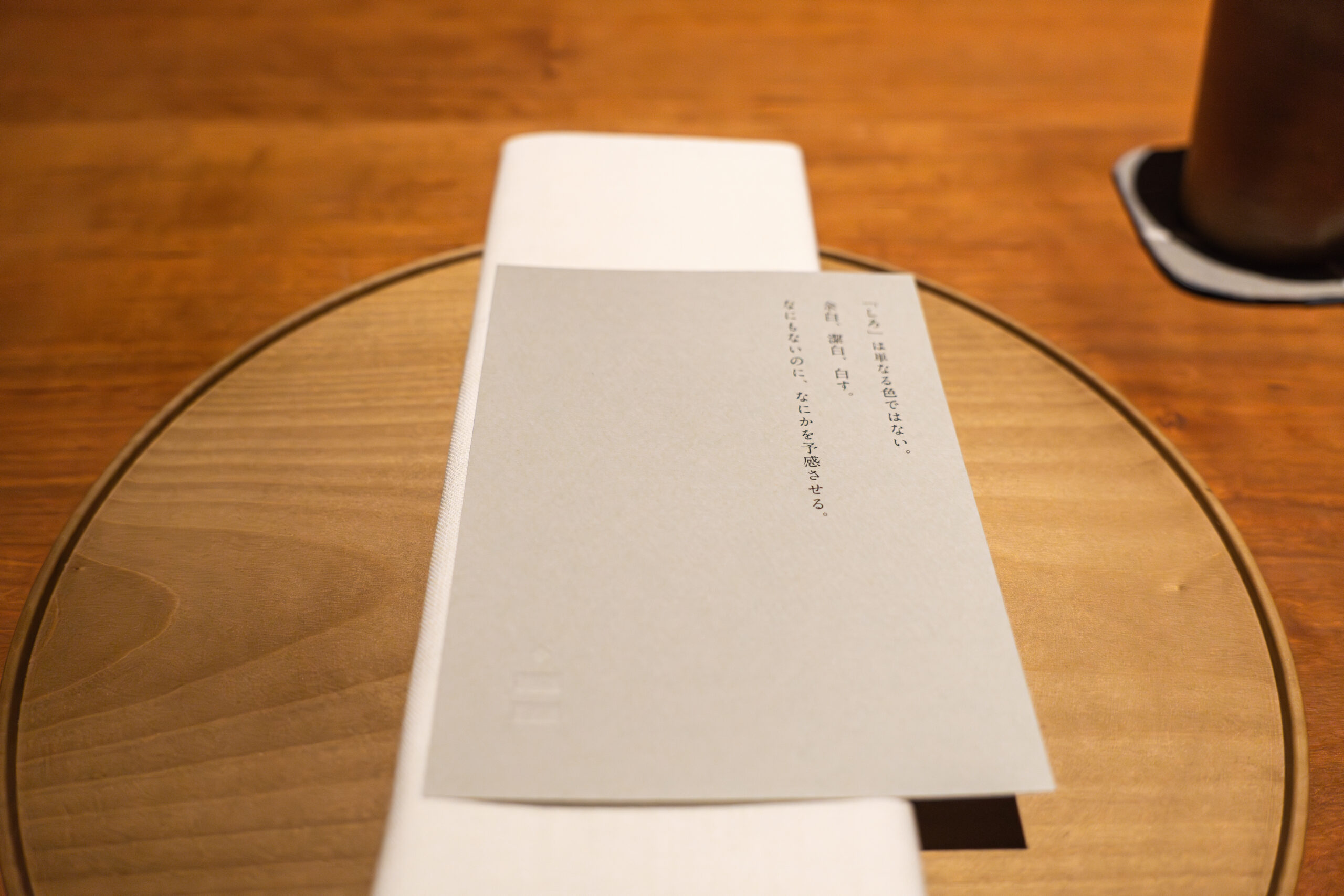
Dining at “Shiro” is not simply about enjoying the food — it’s a total experience that embraces the atmosphere and the lingering impression left behind. True to the idea that “nothing is there, and yet something is foretold,” each dish offers a moment to return to the essence of eating itself, discovering something new with every course.
Starting Drink
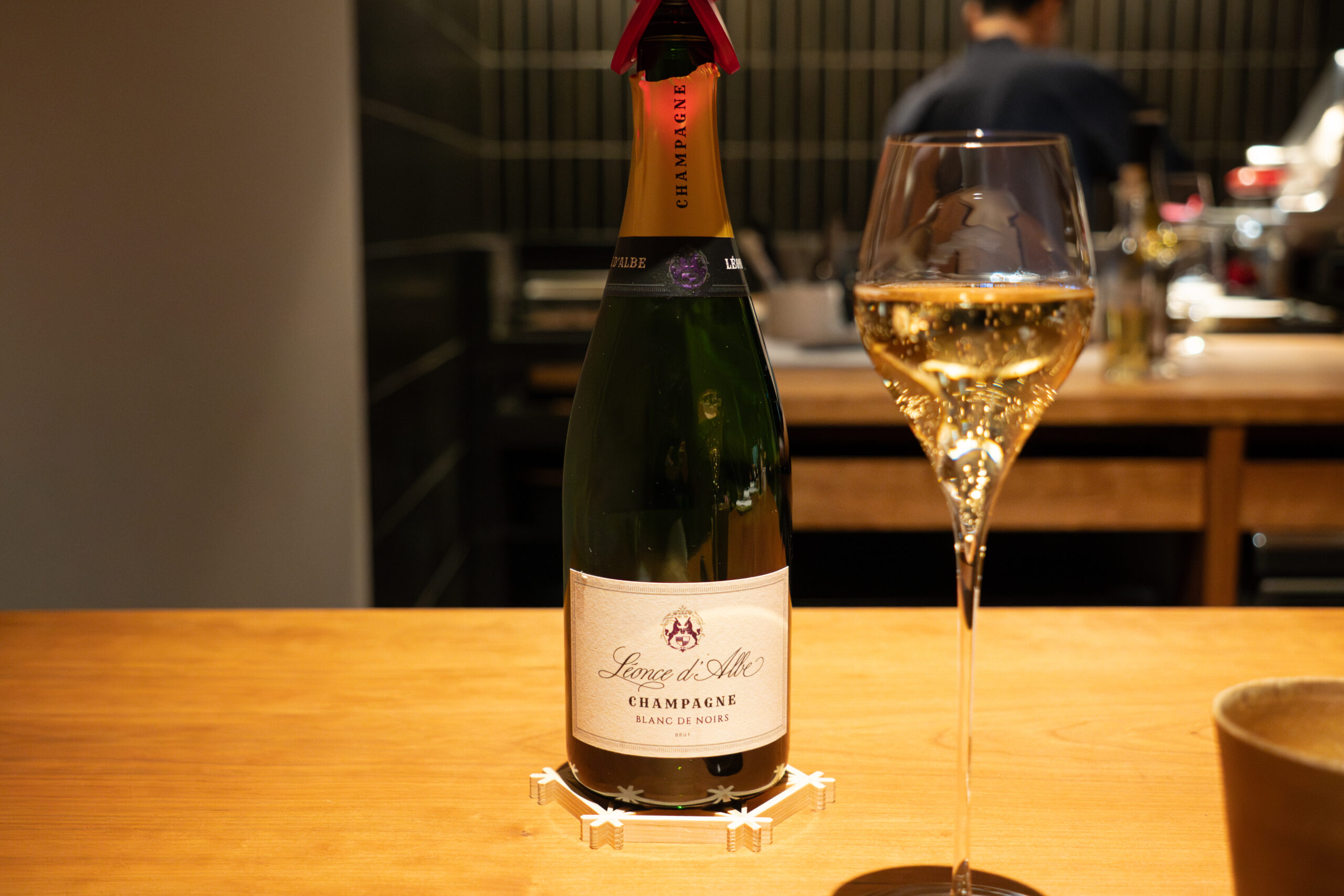
The meal opened with a glass of Leonce d’Albe Blanc de Noirs champagne.
The Dishes
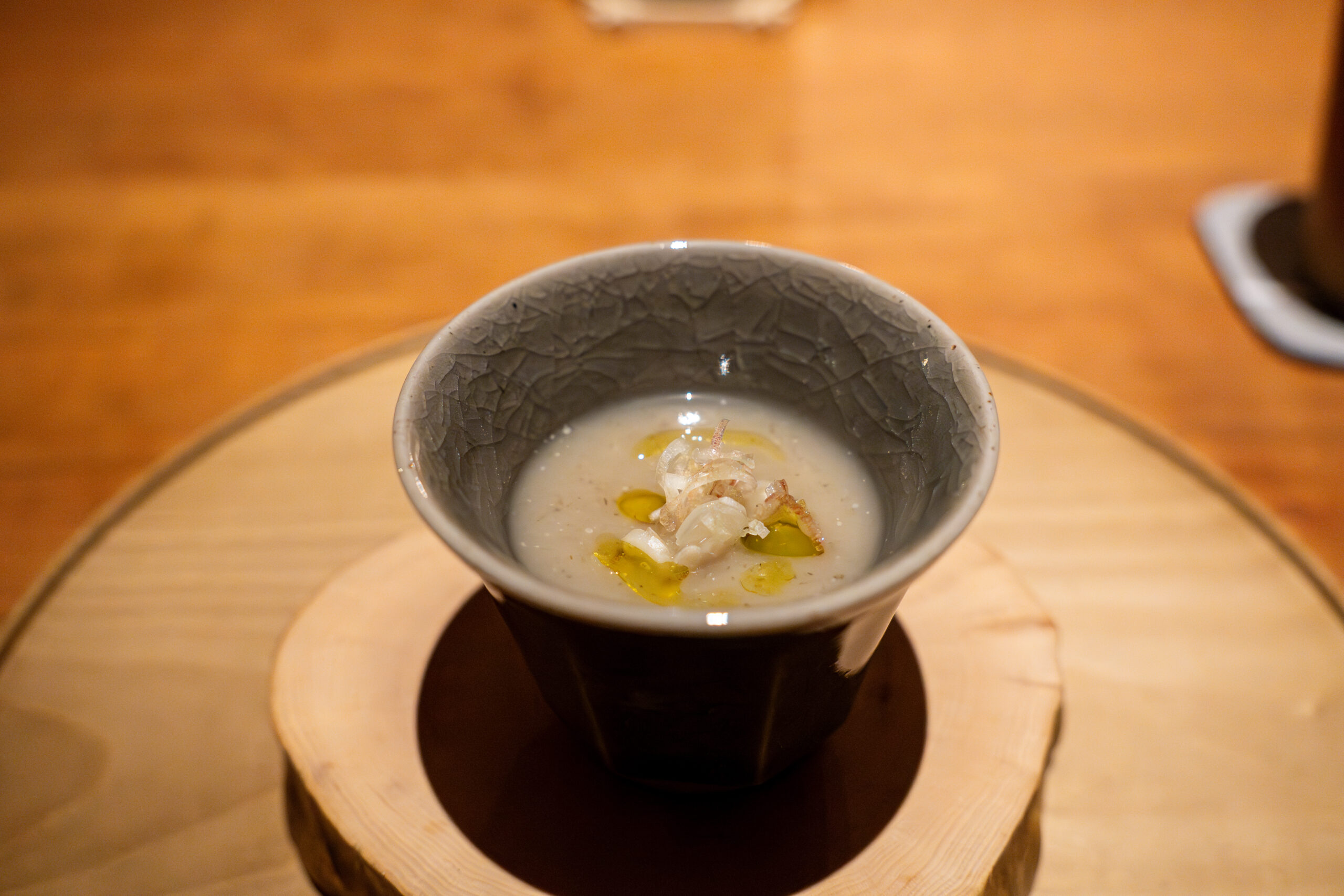
Jerusalem Artichoke and Ginkgo Nut
A soup that embodies the essence of “Shiro,” drawing out the pure flavor of its ingredients through remarkably simple composition, using groundwater drawn from beneath IDO KYOTO itself.
Made with katsuobushi (bonito flakes) from Makurazaki and two-year-aged ma-kombu from Hokkaido, the dashi is prepared using a distinctive method the kitchen calls “1.5-ban dashi” — a blend of first and second extraction — allowing the kombu’s umami and the bonito’s rich aroma to harmonize beautifully. This dashi forms the base for the dish, drawing out the deep, mellow sweetness of the Jerusalem artichoke against the gentle bitterness of the ginkgo nut.
Giant Conger Eel with Prosciutto
This dish, featuring giant conger eel from Oda Port in Shimane Prefecture, is a special preparation also served aboard the “TWILIGHT EXPRESS Mizukaze” luxury sleeper train in western Japan.
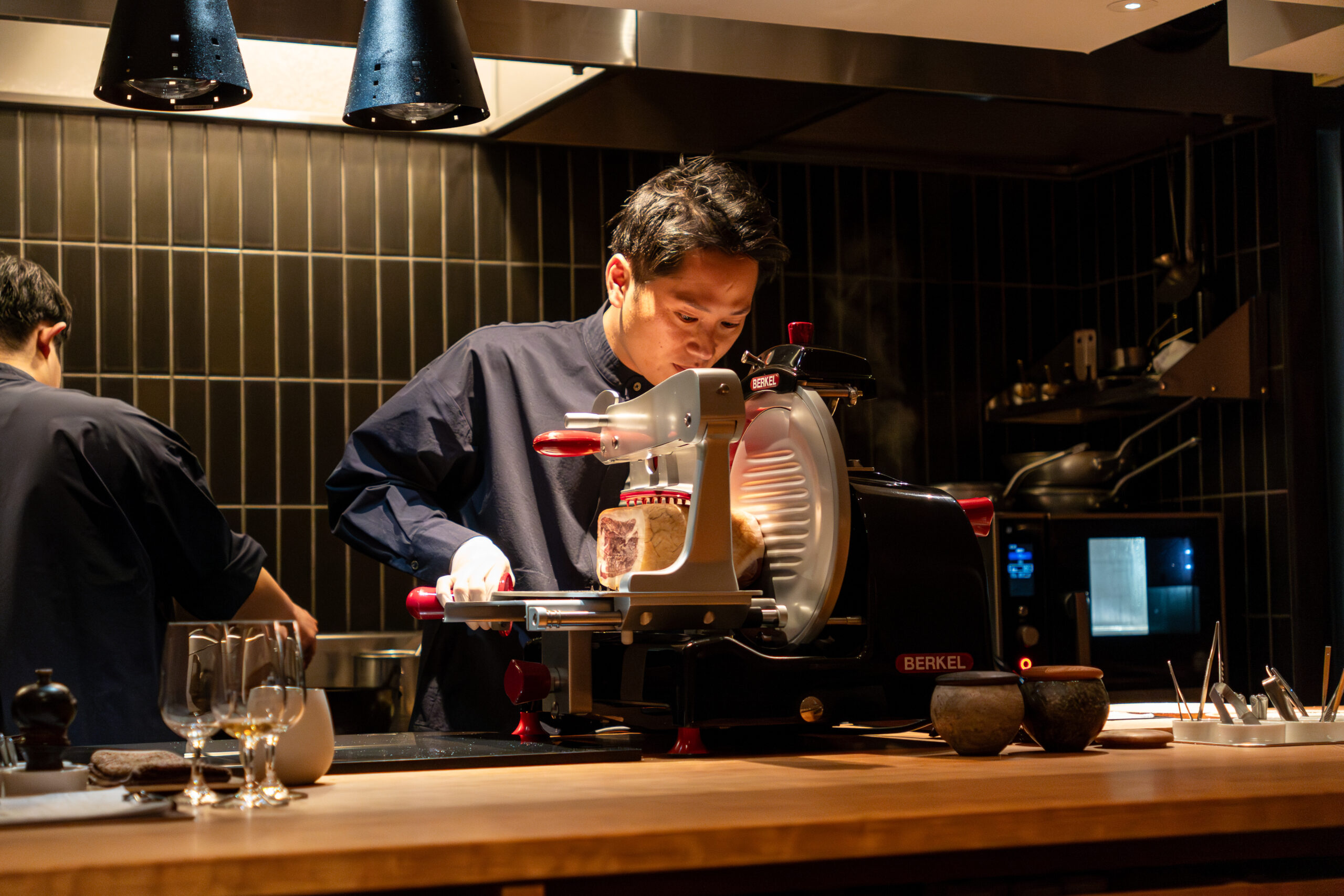
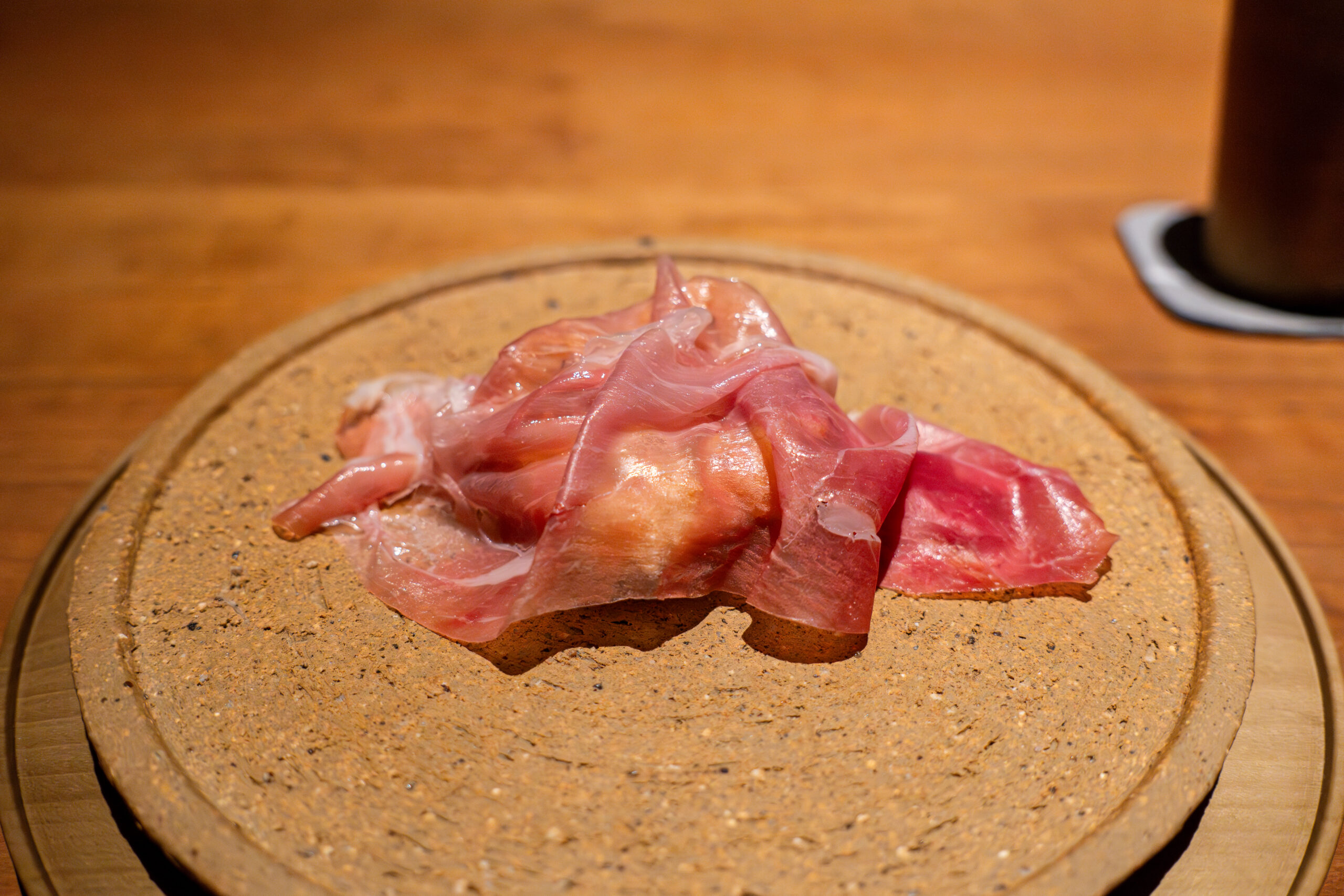
The conger eel’s fine bones are meticulously removed through honegiri, a delicate bone-cutting technique, resulting in a light, airy texture. It’s then topped with thinly sliced kurobuta prosciutto — the heat of the frying gently melts the ham’s fat, releasing its aroma and richness throughout the dish.
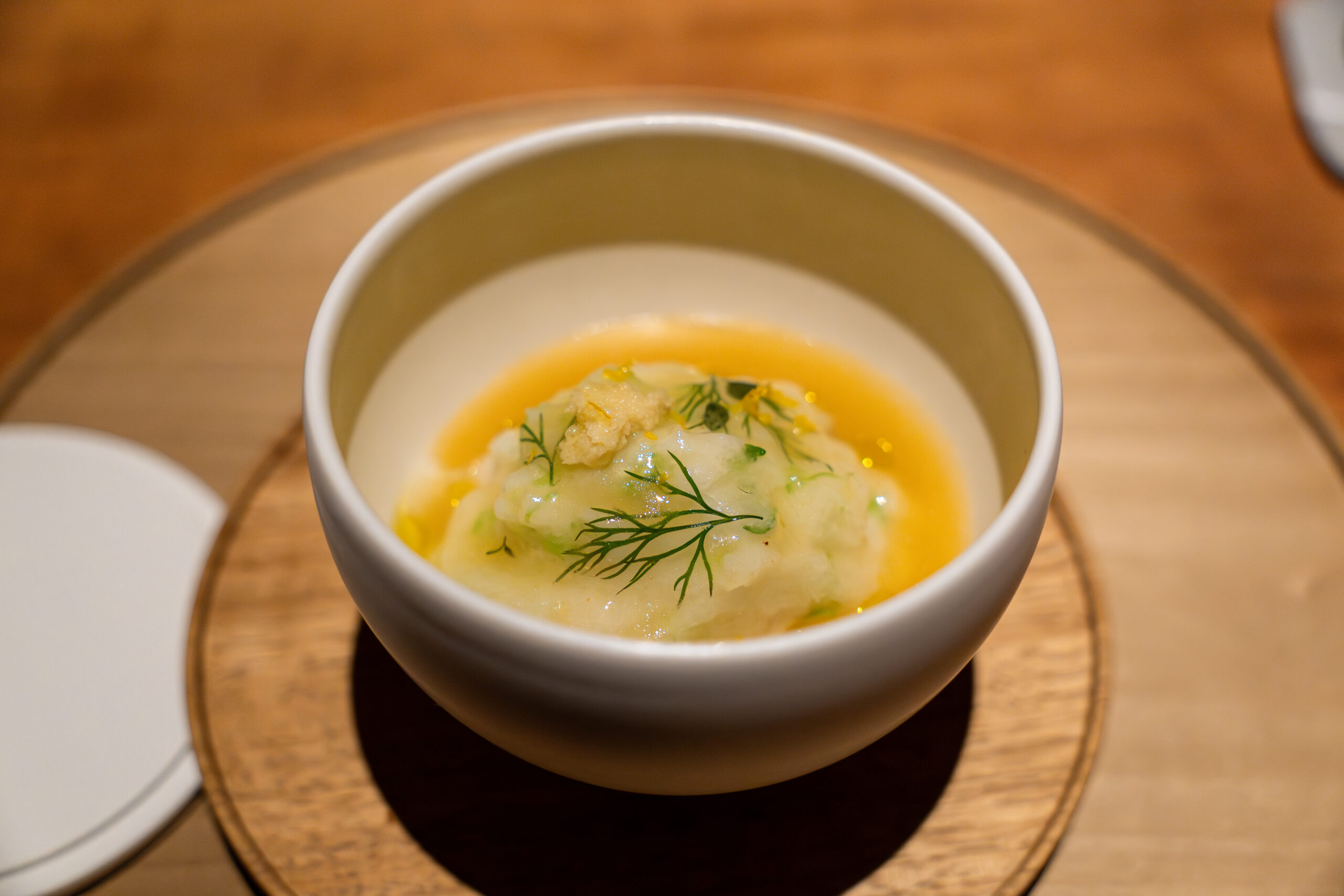
Armored Cusk-Eel and Turnip
Yoroi-itachiuo (armored cusk-eel) is a deep-sea fish notable for its tough, armor-like skin. Here, it is steamed together with Kyoto turnip, turnip greens, and fresh herbs, allowing the sweetness of the vegetables to meld with the umami of the fish.
The dish is a unique reinterpretation of Italy’s acqua pazza. Fish, shellfish, semi-dried tomatoes, garlic, olives, and capers are slowly simmered down, then strained to extract only their pure essence. This concentrated liquid is thickened into a sauce and poured over the dish at the finish, enveloping it in the deep, condensed umami of seafood.
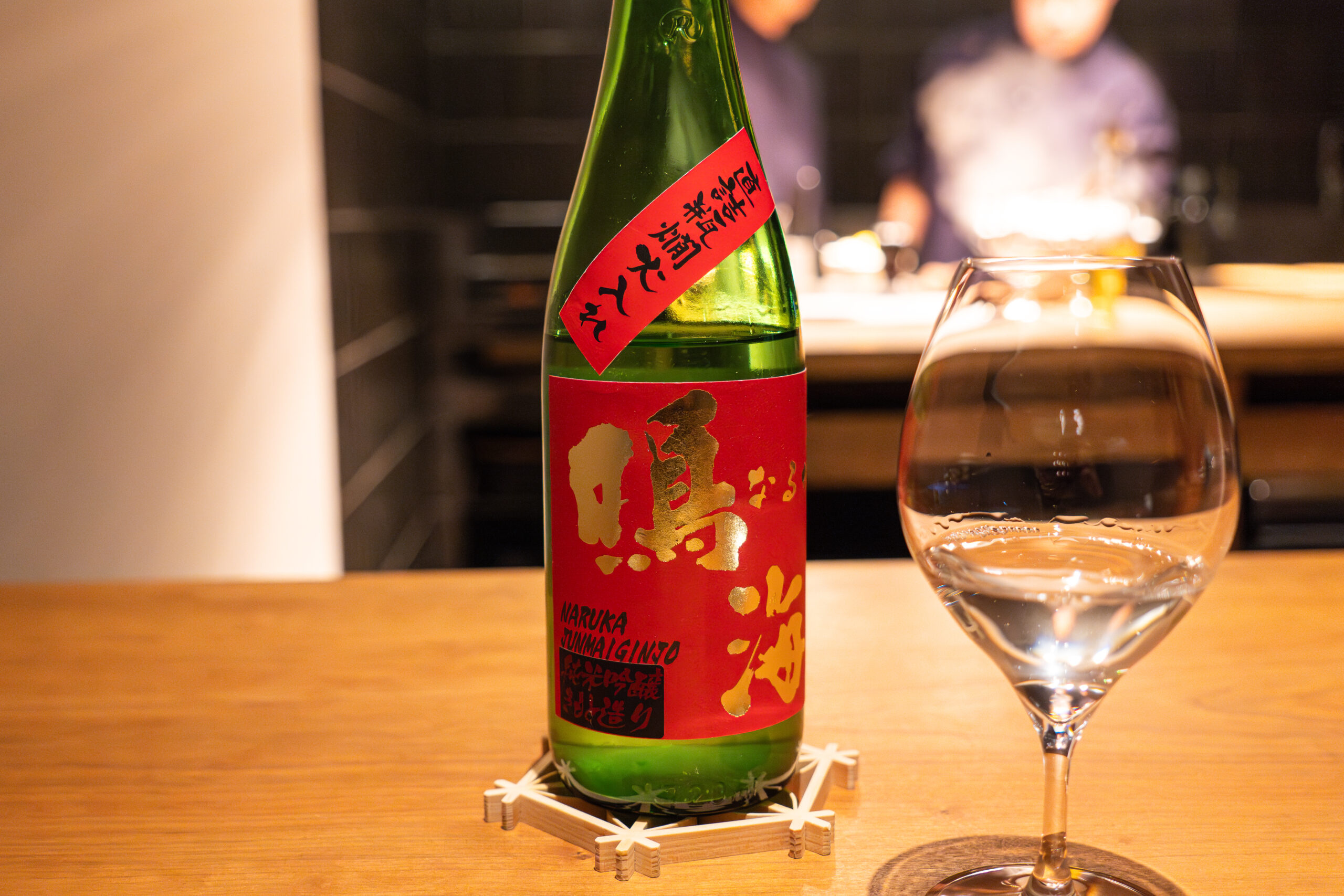
The wine pairing resumes here with a sake: “Naruka Junmai Ginjo Muroka Namagenshu,” brewed by Toganjo Jozo in Chiba Prefecture — a junmai ginjo known for its full-bodied character and fresh, vibrant flavor.
Wild Boar, Cavolo Nero, and Red Sansho Pepper
A dish that captures the bounty of winter, featuring wild boar — known poetically as yamakujira, or “mountain whale” — from Misato Town, Shimane Prefecture, slow-braised and infused with the aromas of vegetables and sansho pepper. The lingering warmth of the sansho lends a comforting finish, elevating each ingredient’s individual character into a refined, harmonious whole.
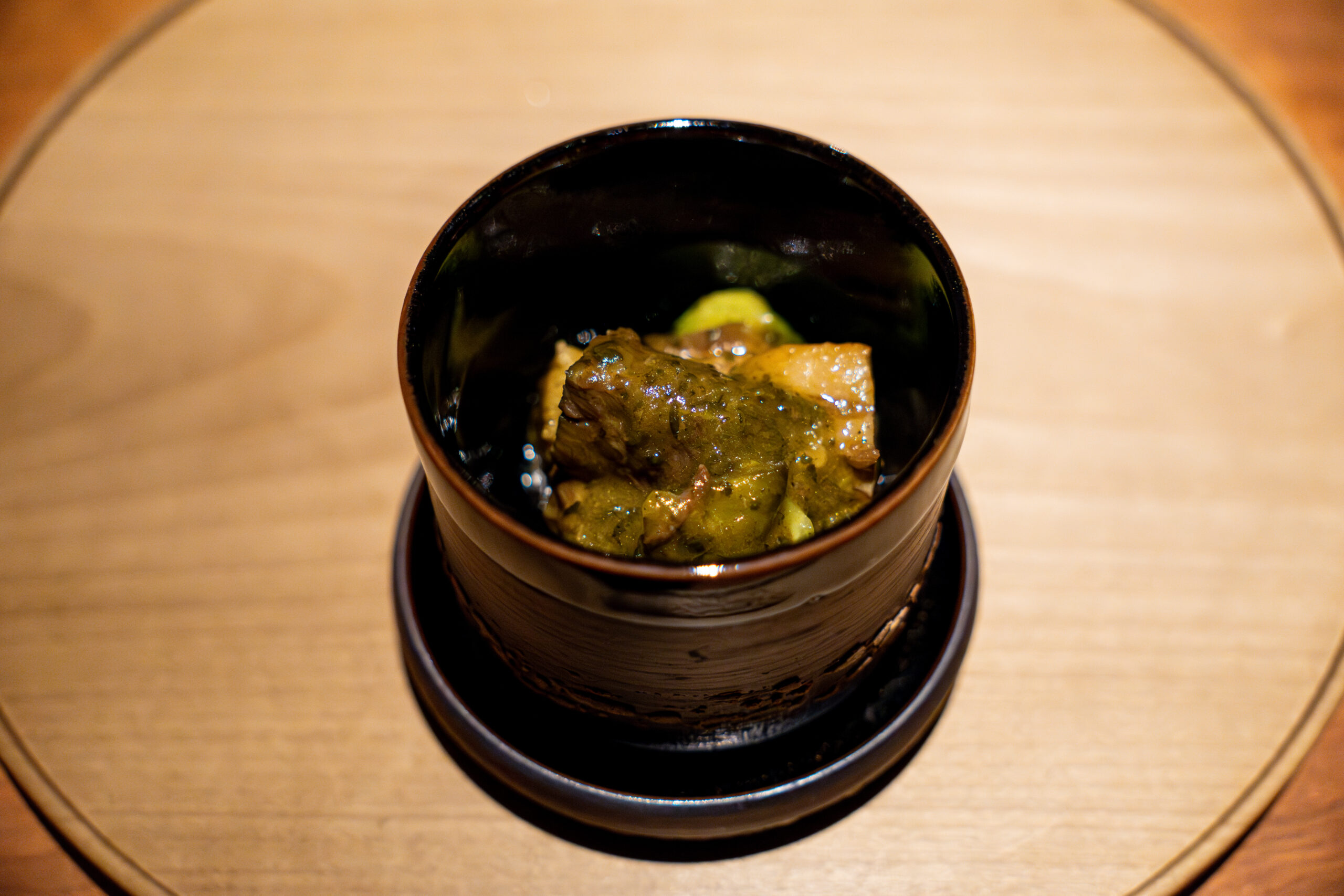
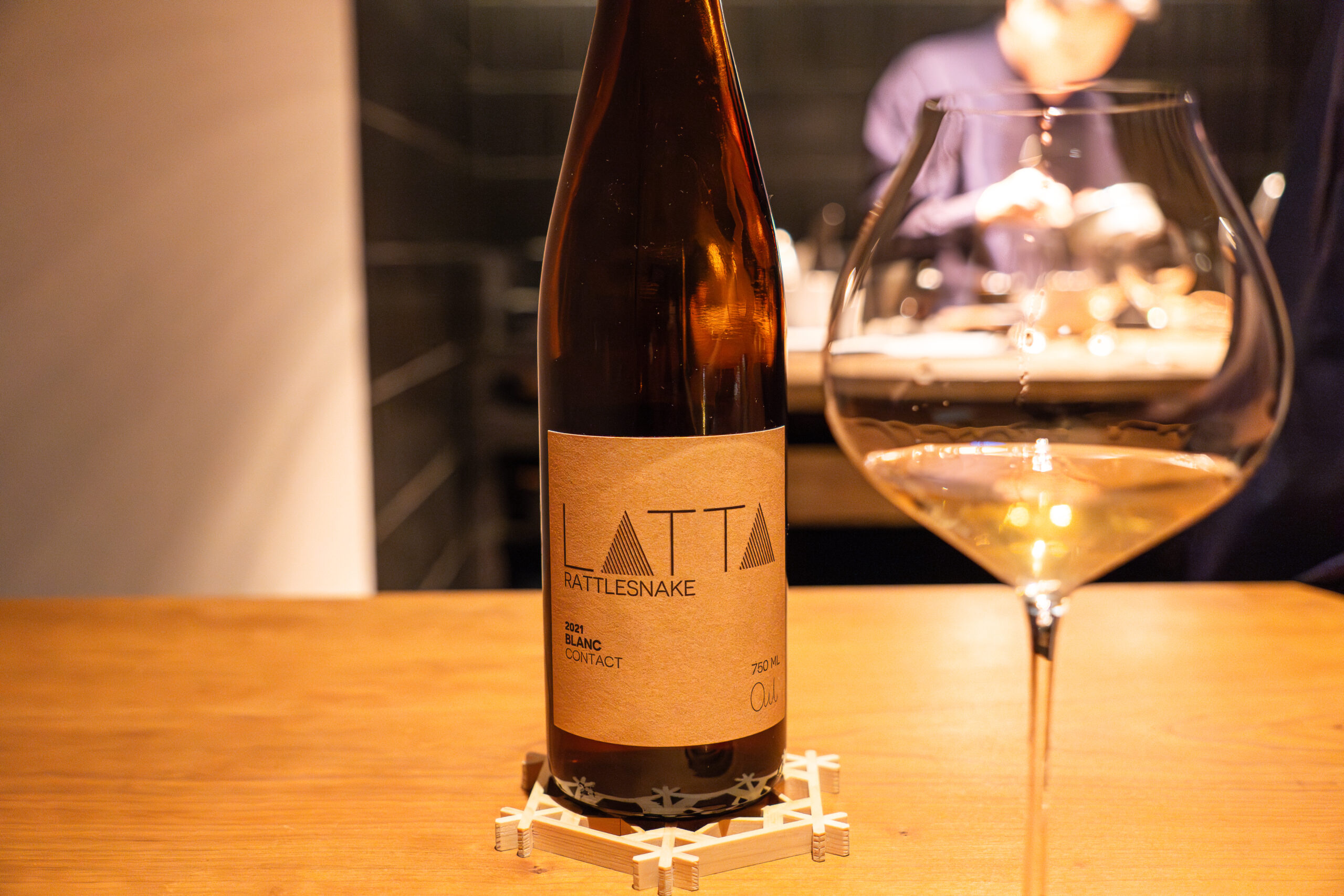
Paired with an Australian natural wine, “LATTA Rattlesnake Blanc Contact 2021” — the complex aromatics of this orange wine draw out the lingering warmth of the red sansho even further.
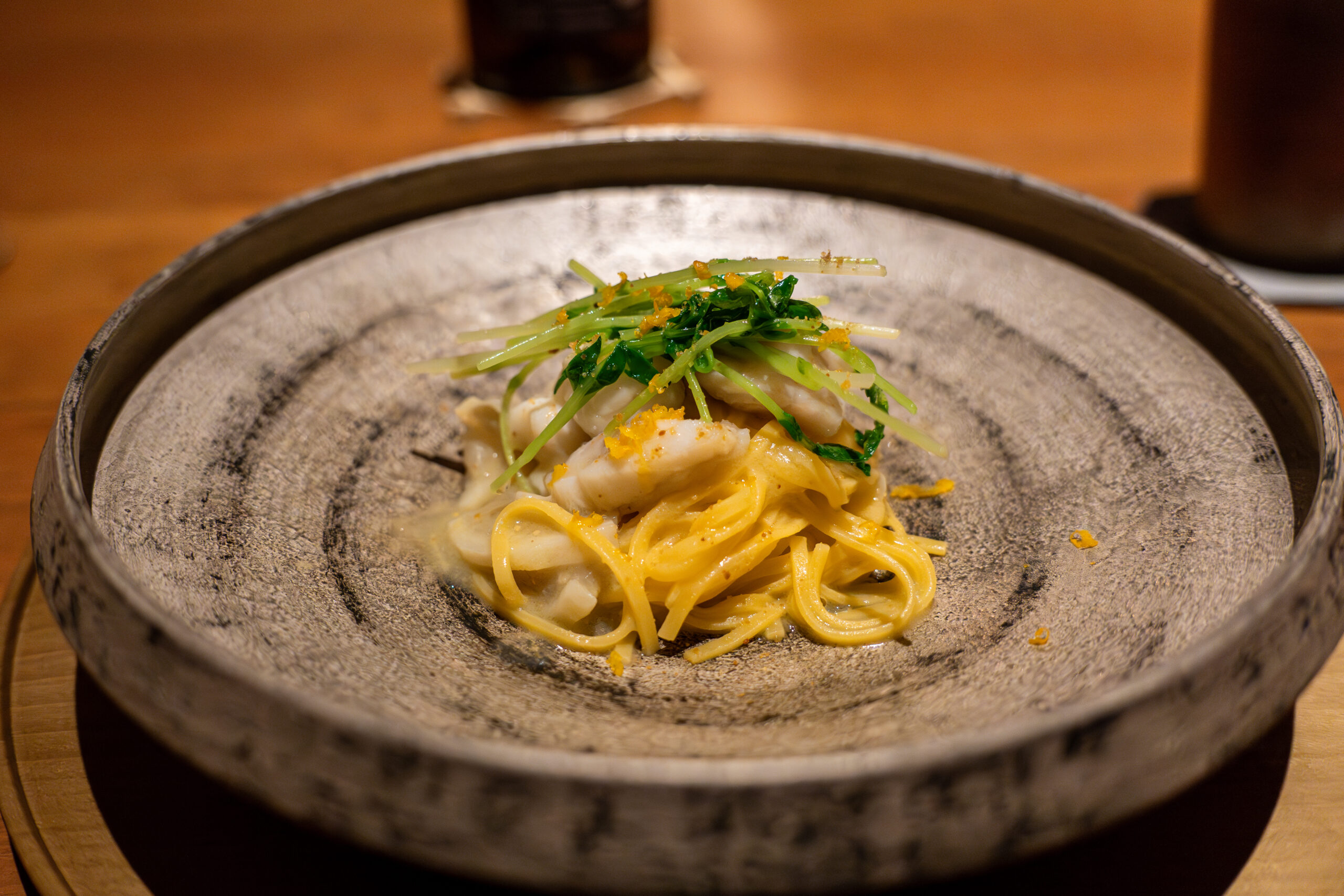
Monkfish, Leek, and Tagliolini
Tagliolini is a thin, hand-cut pasta whose shape allows sauce to cling beautifully to every strand.
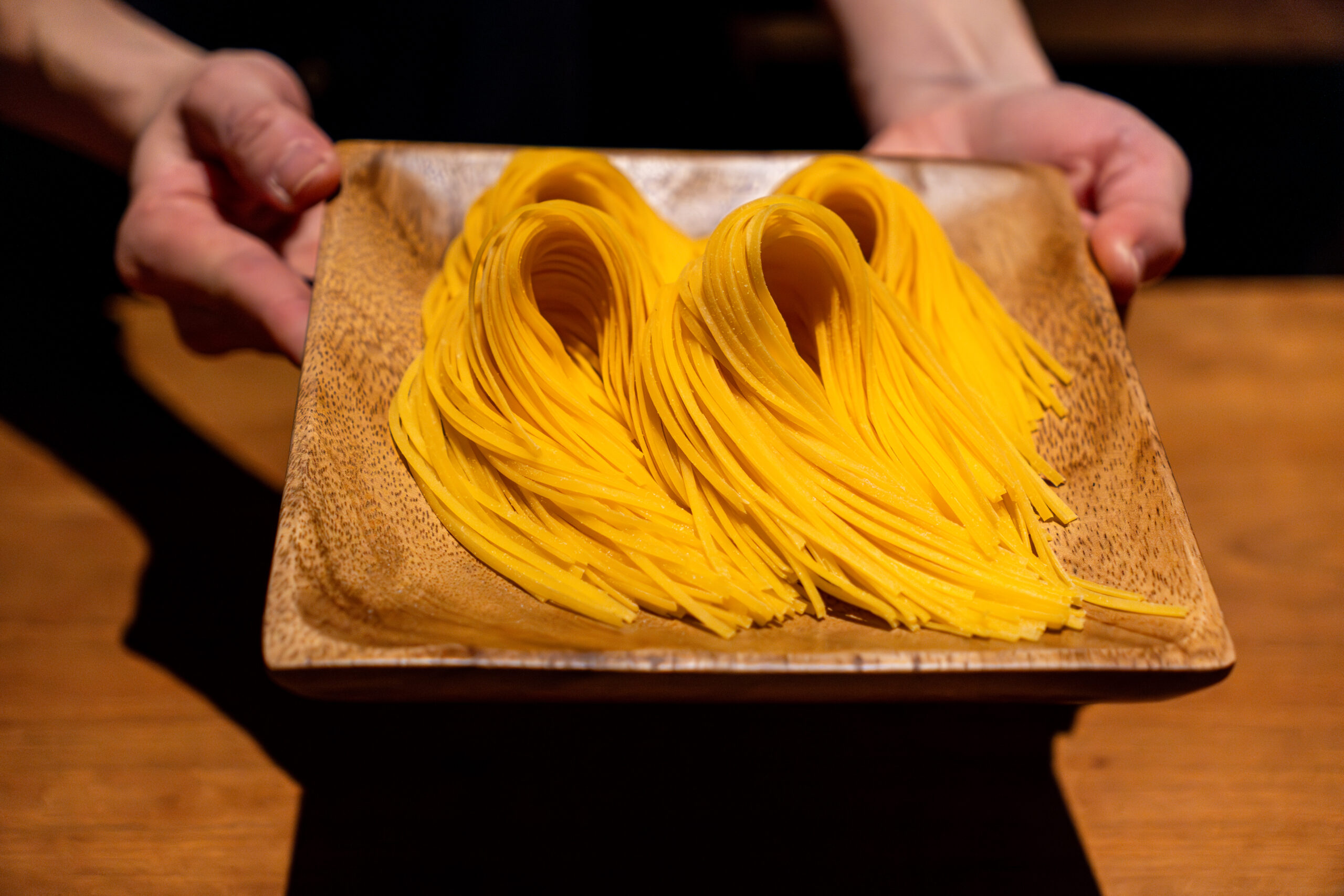
Gelatin-rich monkfish caught at Hamada Port in Shimane Prefecture is slow-cooked in a clam-based broth, then combined with white leeks from Kameoka and hand-cut tagliolini. The dish is finished with freshly grated, fully ripened sudachi from Hamada and a topping of fragrant, sautéed pea shoots, adding a refreshing aroma and an extra layer of depth.
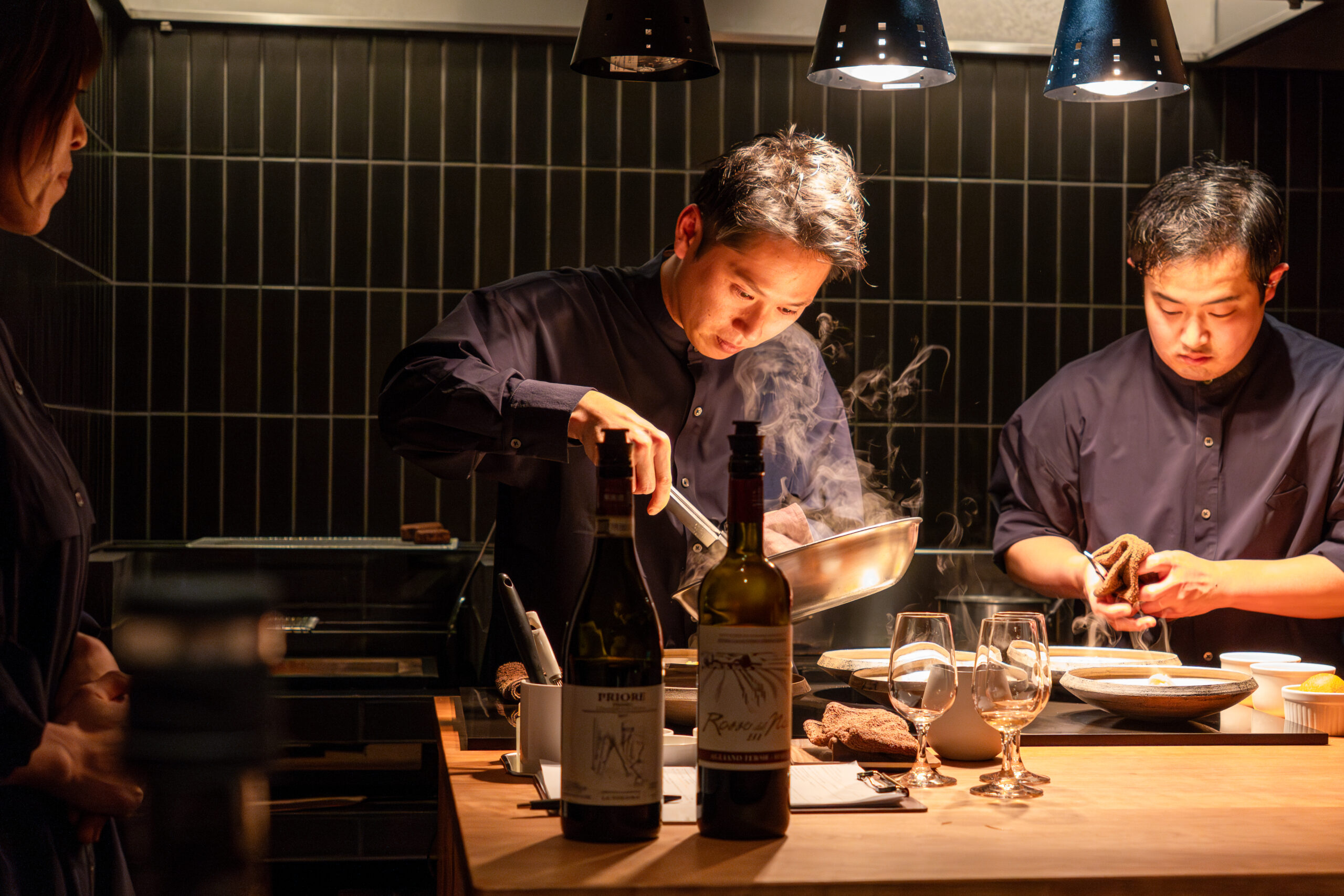
The contrast between the tender bite of the tagliolini and the fragrant crunch of the sautéed pea shoots adds another dimension, resulting in a dish that is simple on the surface yet leaves a deeply satisfying impression.
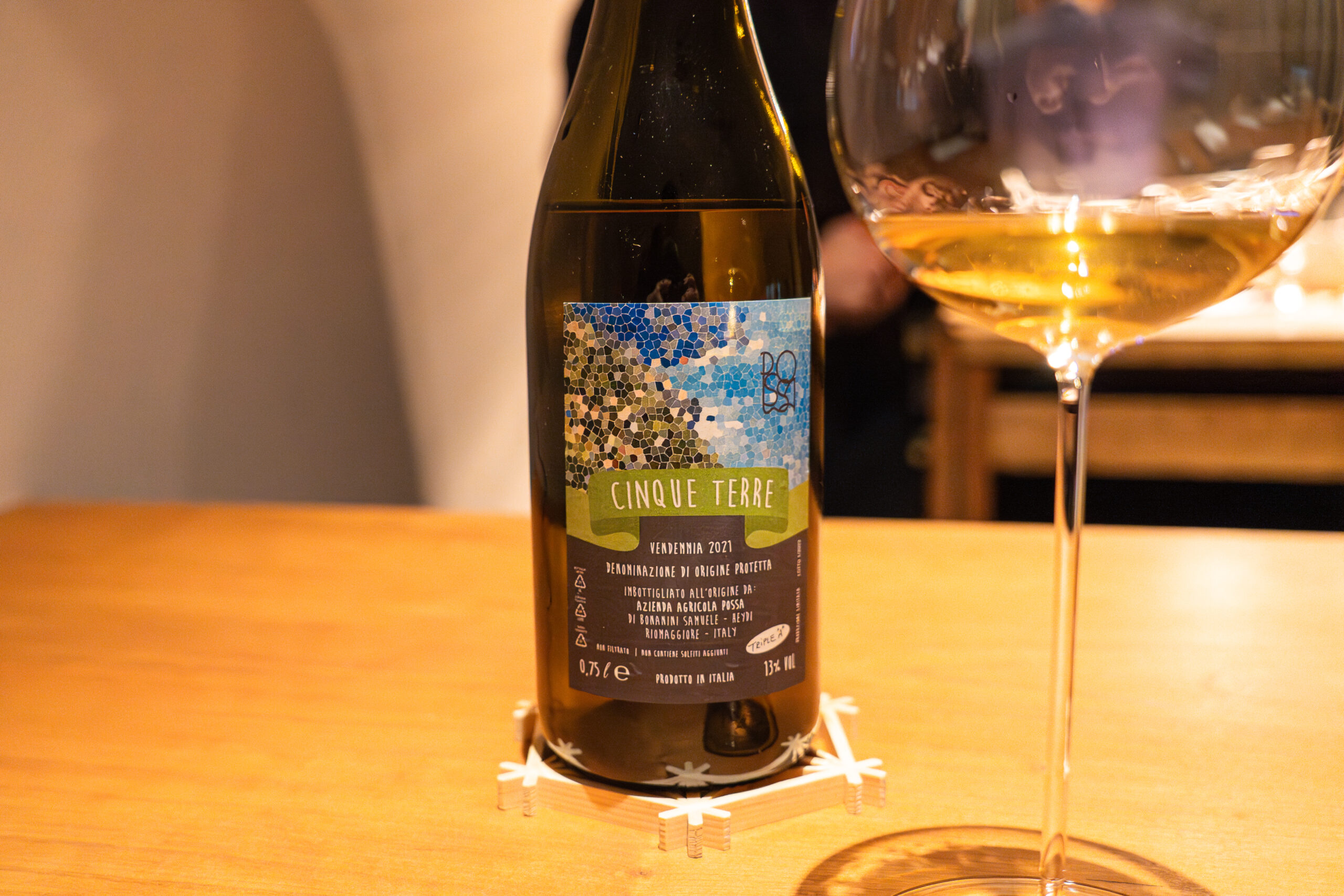
Paired with this dish is a Cinque Terre 2021 — a white wine from the coastal vineyards of Liguria, known for its pronounced minerality and refreshing acidity.
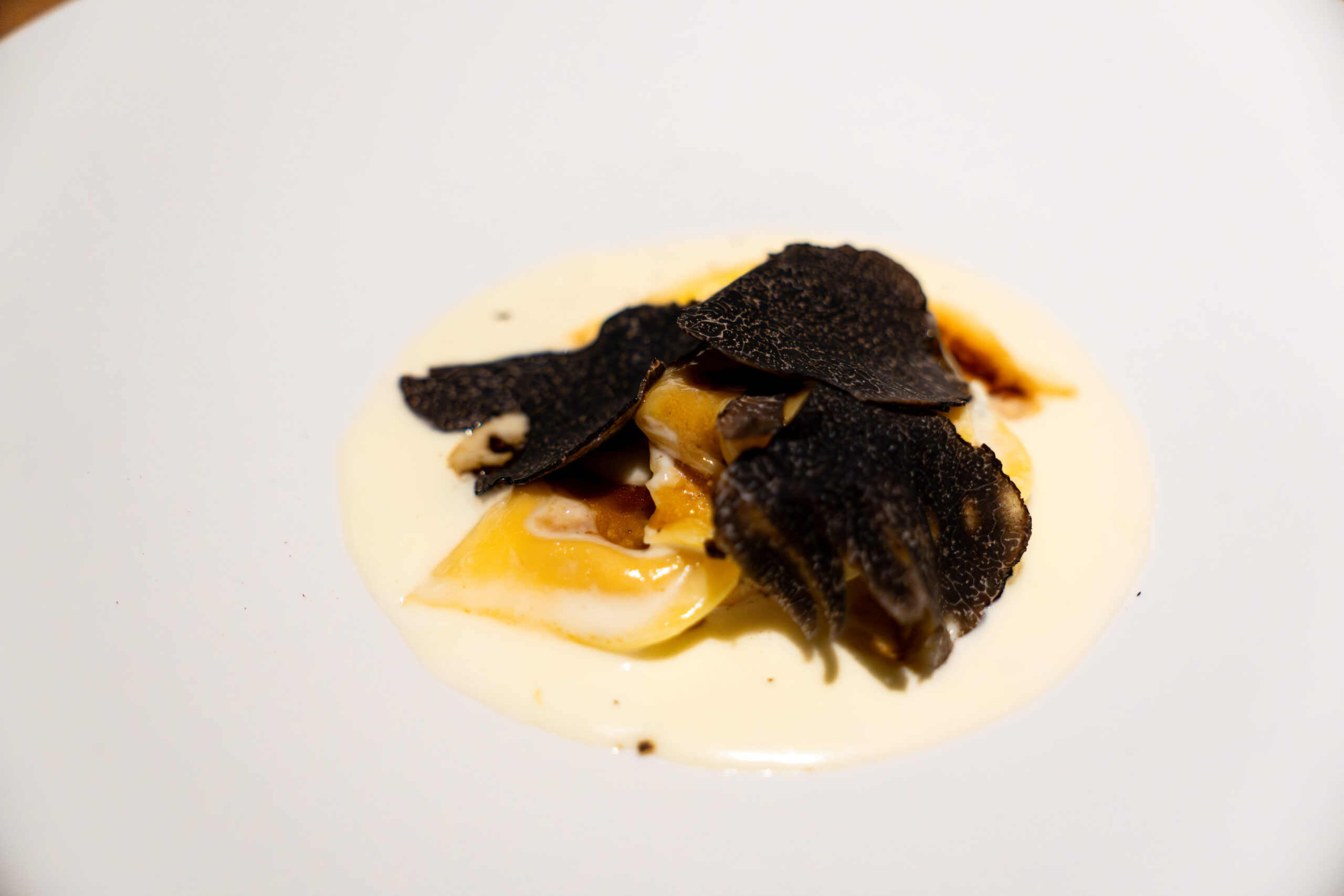
Sukuna Kabocha and Ricotta Tortelli
Naturally sweet Sukuna kabocha squash is roasted and combined with ricotta to fill delicate tortelli, layered with a creamy gorgonzola sauce and a rich, truffle-scented meat broth — a dish that builds layer upon layer of aroma and umami.
This was, without question, my favorite dish of the entire course.
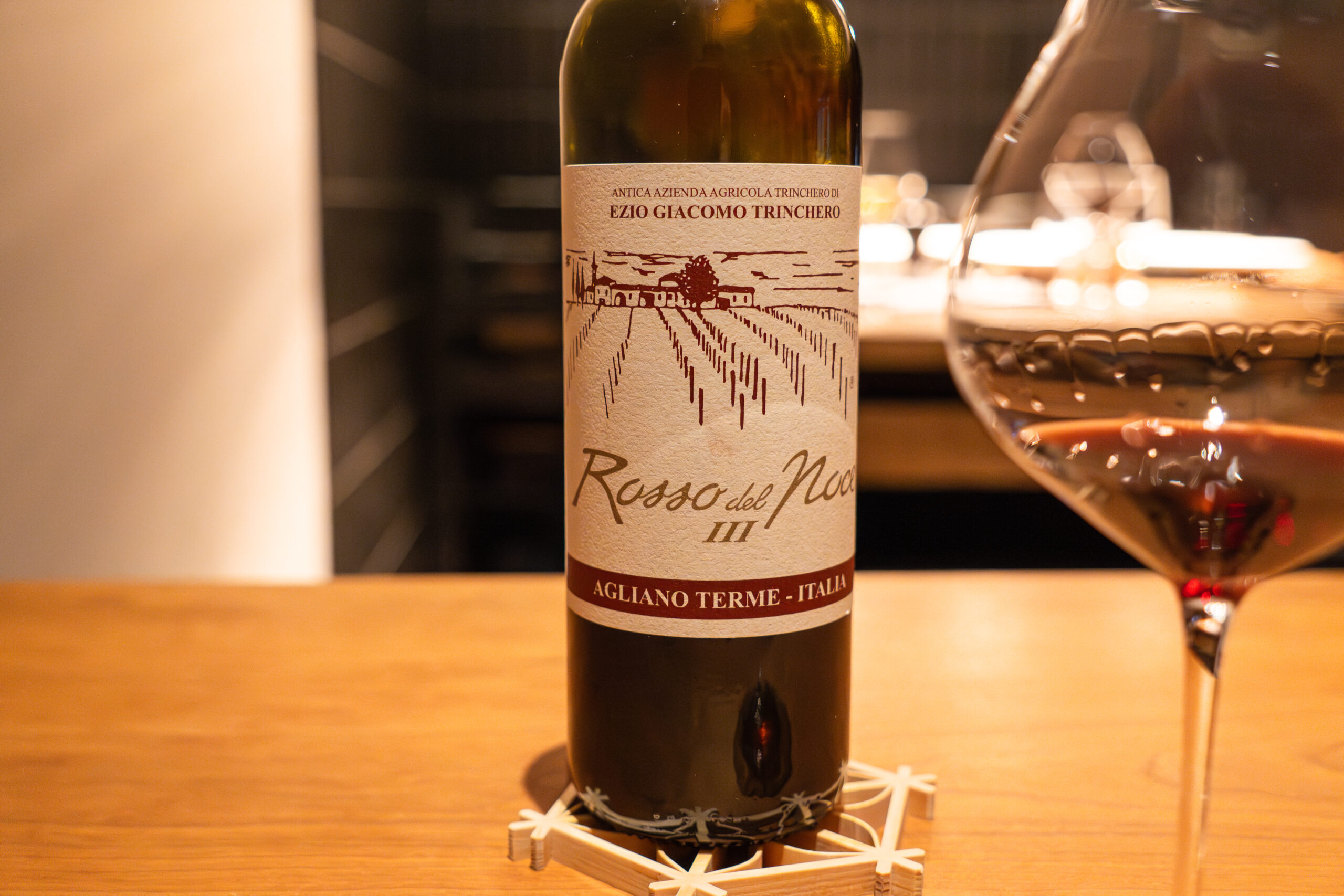
Paired with this dish is Ezio Trinchero’s “Rosso del Noce III,” a natural wine from Piedmont — a red wine defined by the sweetness of well-aged fruit, a touch of spice, and pleasant acidity.
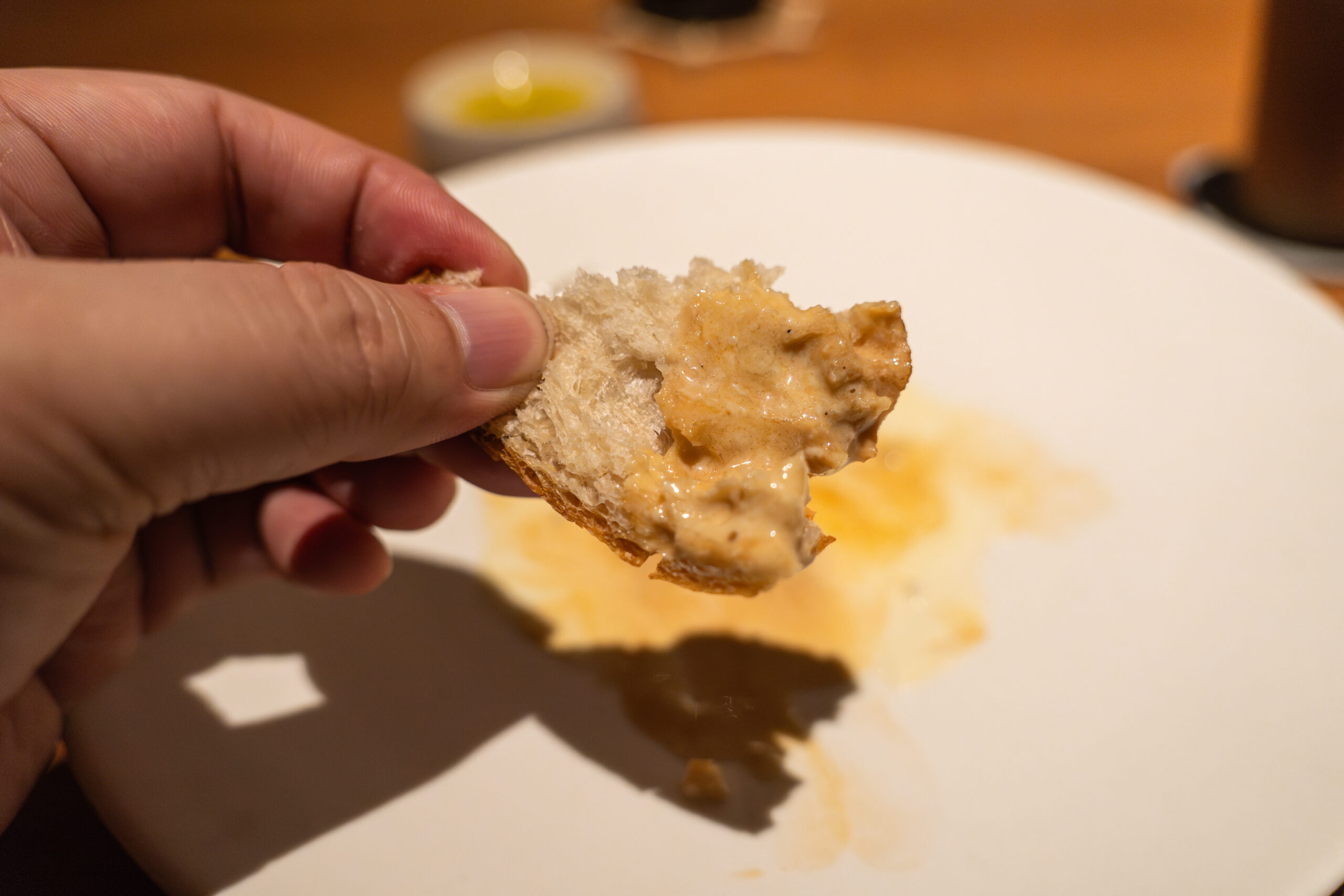
A vegan bread made without any animal fats, relying entirely on the strength of natural ingredients.

The sauce was so delicious I couldn’t stop scarpetta-ing (wiping the plate clean with bread).
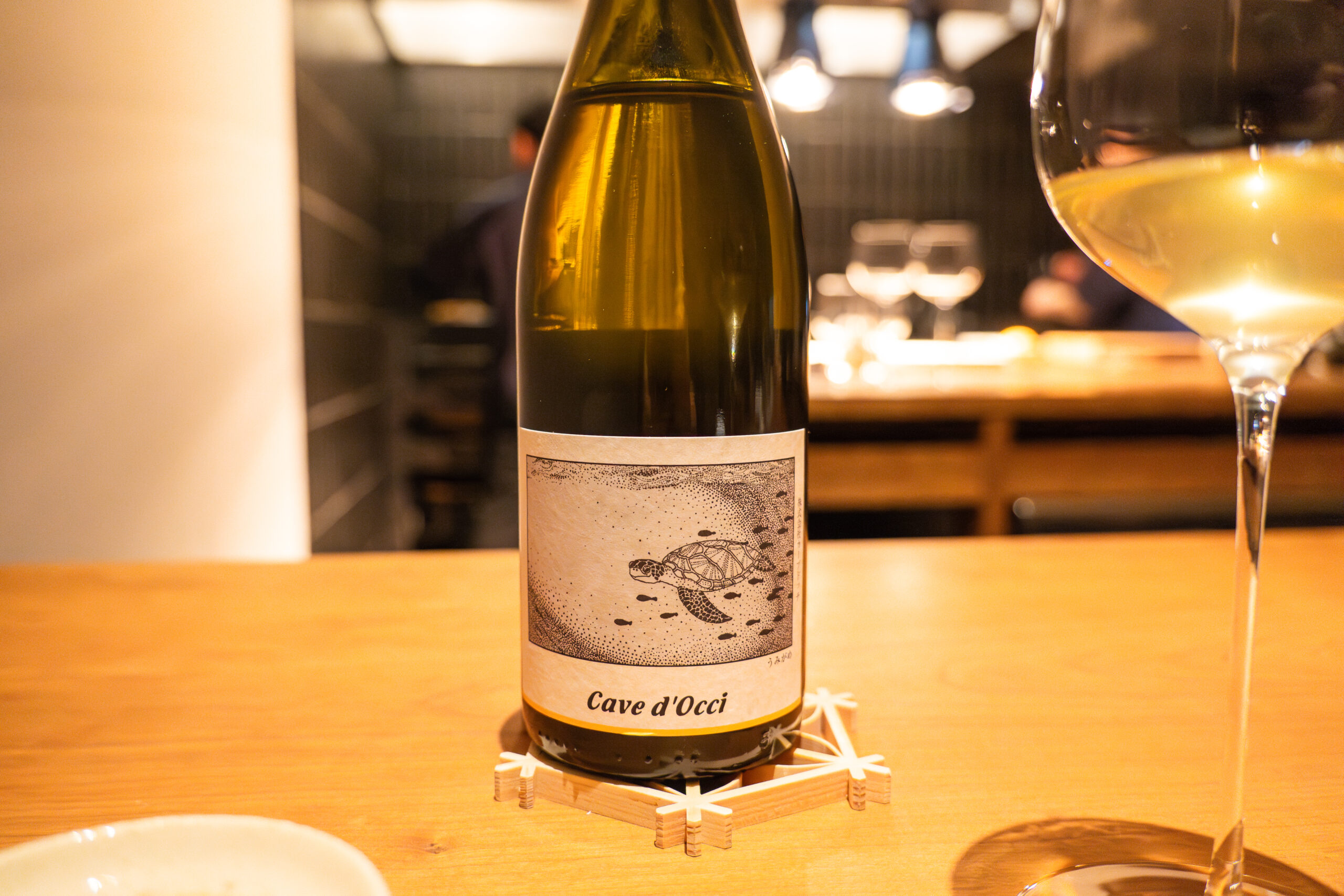
Tilefish, Turnip, and Buntan Pomelo
A delicate dish featuring line-caught tilefish from Hamada Port, finished with a scale-searing technique. The beautifully crisp, aromatic skin contrasts elegantly with the rare-cooked flesh beneath, while a sheet of turnip, a gently bittersweet buntan pomelo sauce, and Kujo scallion oil layer the dish with complementary textures, aromas, and flavors, resulting in a wonderfully balanced composition.

Paired with this dish is a white wine from Cave d’Occi, a winery in Niigata known for producing natural wines with a mineral-driven character and bright, fruity acidity.
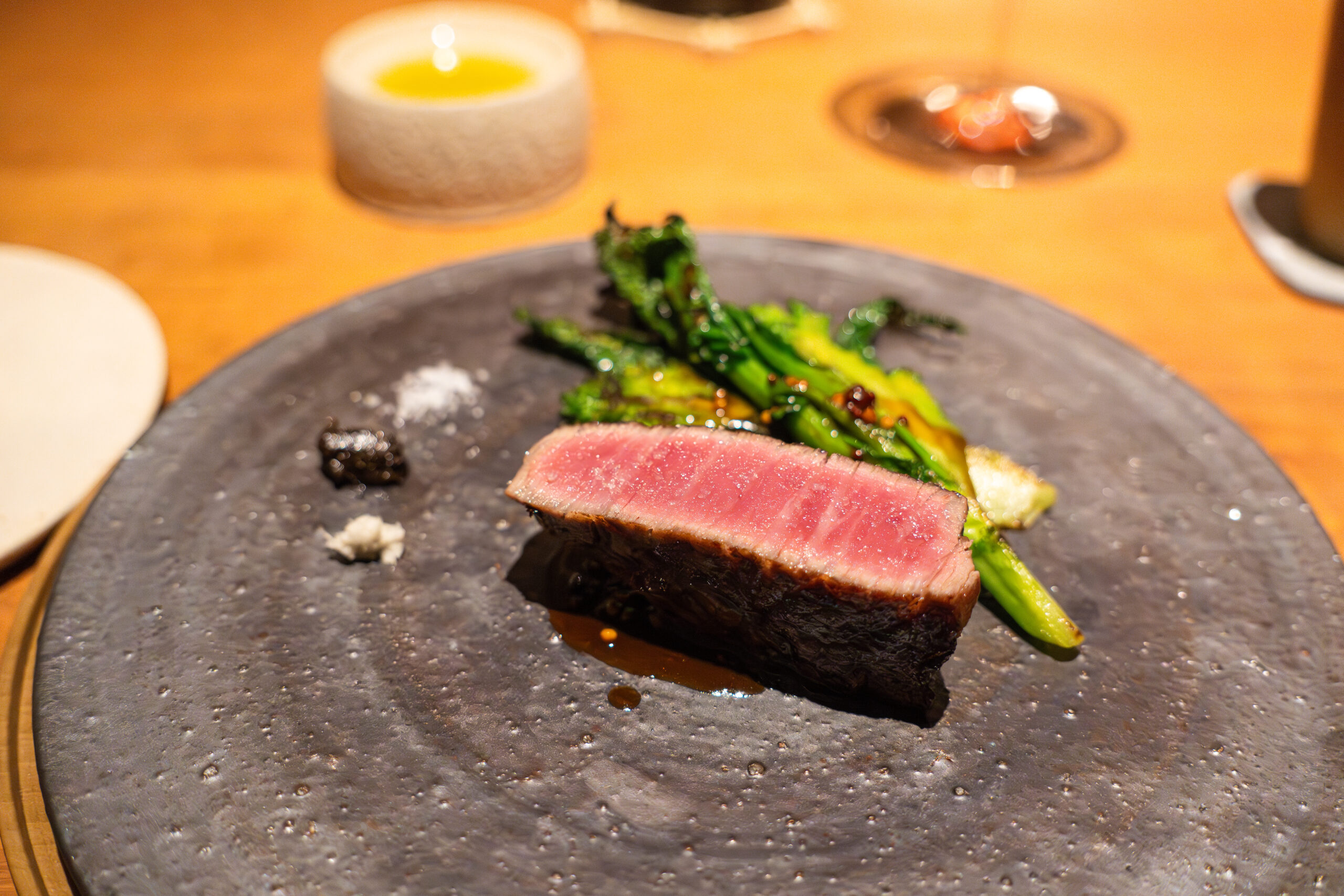
From Jukuho Farm
Filet from a retired breeding cow, sourced from Jukuho Farm’s “Sustainable Wagyu Juku” line, grilled over charcoal to a fragrant finish that draws out the meat’s inherent umami to its fullest through precise heat control. The accompanying sauce and garnishes are equally well thought out, weaving together spice, sweetness, aroma, and acidity into an alluring balance.
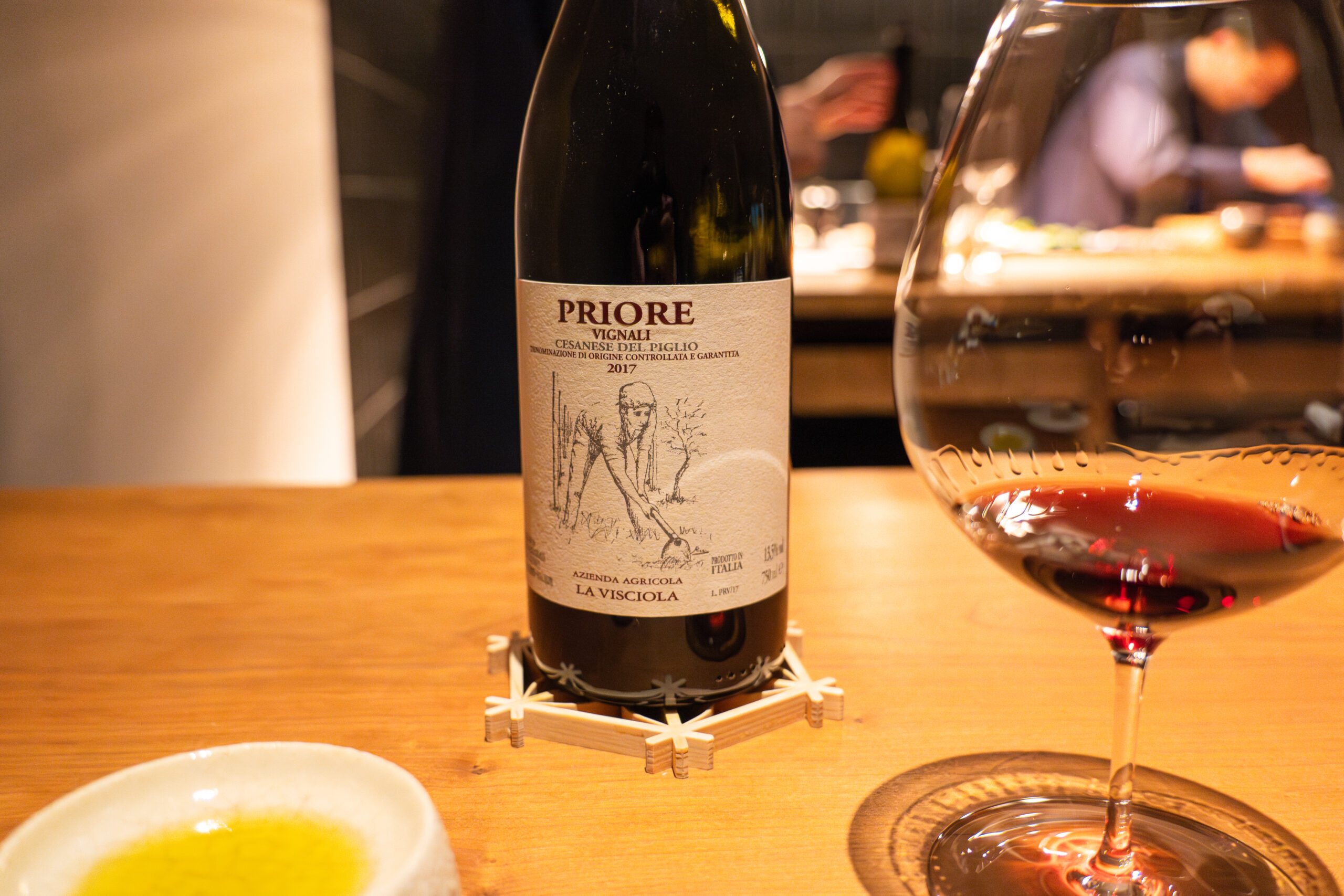
Paired with the charcoal-grilled retired cow filet is “Priore Vignali 2017,” made from Cesanese del Piglio, an indigenous grape variety from Lazio, Italy — a distinctive central Italian red defined by its balance of spice and acidity.
Dessert & Finale
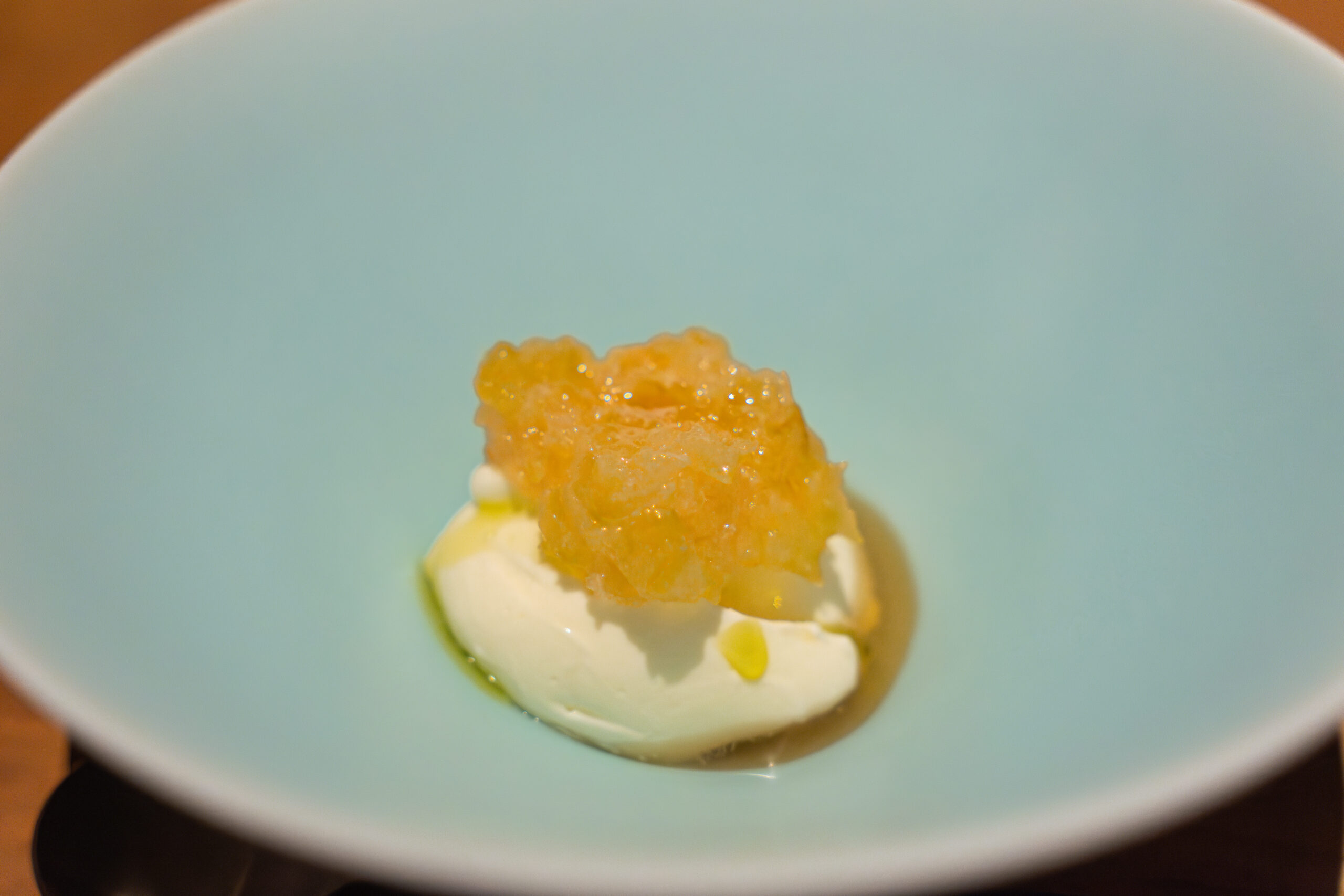
Fermented Milk and Lemon
A dessert built around the theme of fermentation, combining a panna cotta made with fermented milk, a fermented lemon jam, and a syrup made from Kameoka-grown feijoa — a refreshing dish with surprising depth.
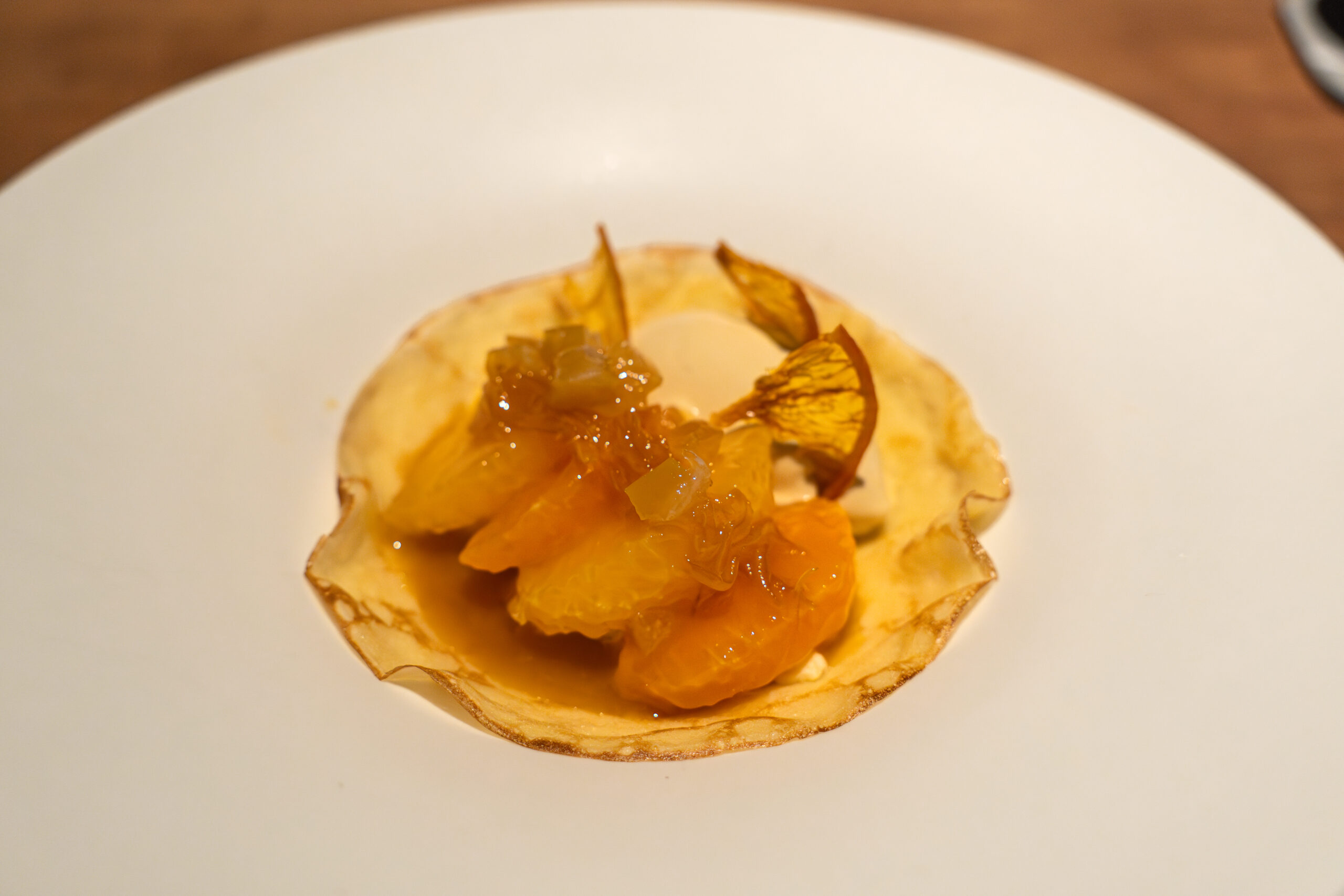
Naito Farm Citrus and Chamomile
The fragrant warmth of a freshly baked crêpe and the bright vibrancy of citrus enhance one another beautifully, while a warm orange liqueur sauce envelops the dish at the finish — a striking contrast of both flavor and temperature.
Café Petits Fours
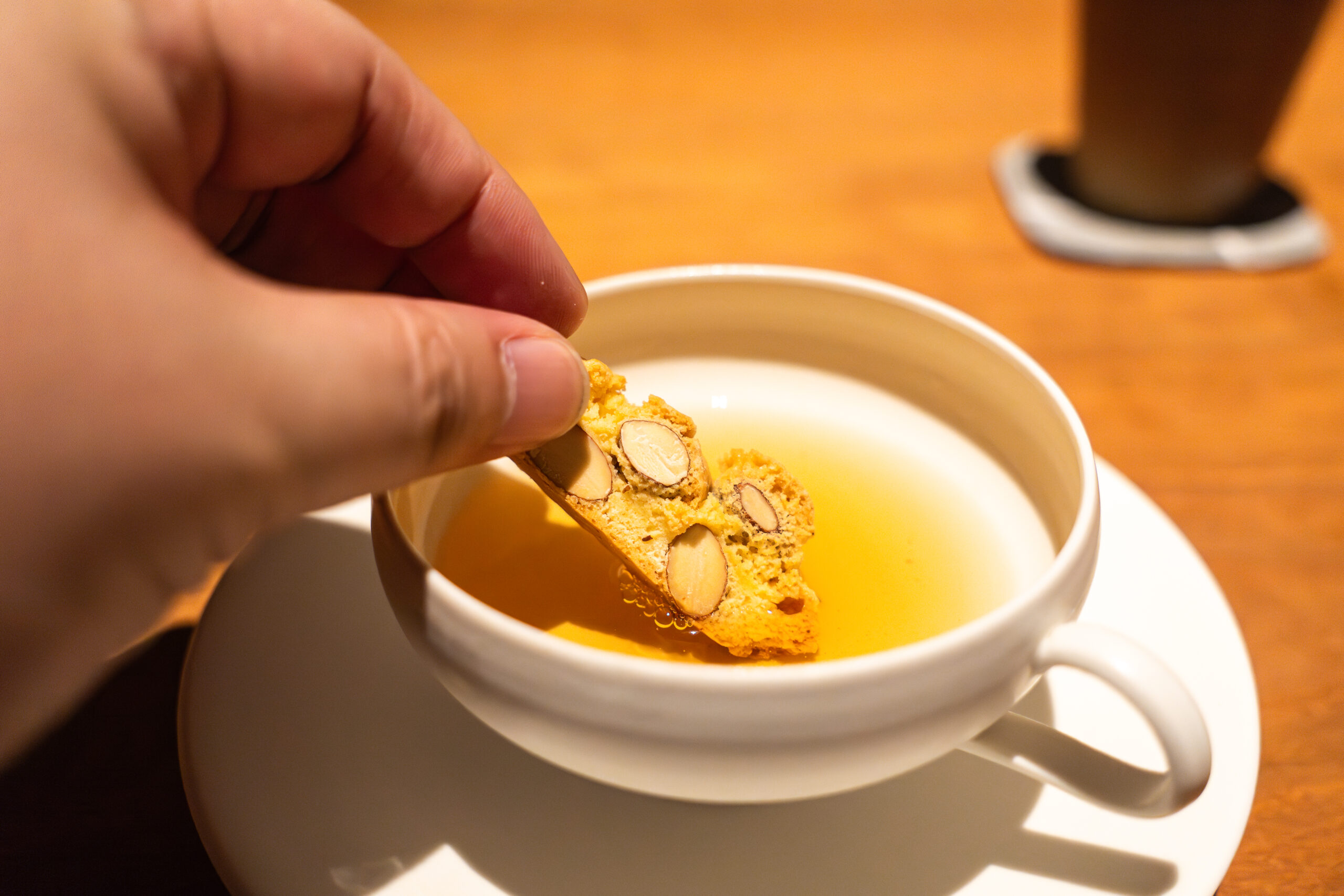
The course closes with a trio of petits fours: biscotti, polvorón, and sencha macarons.
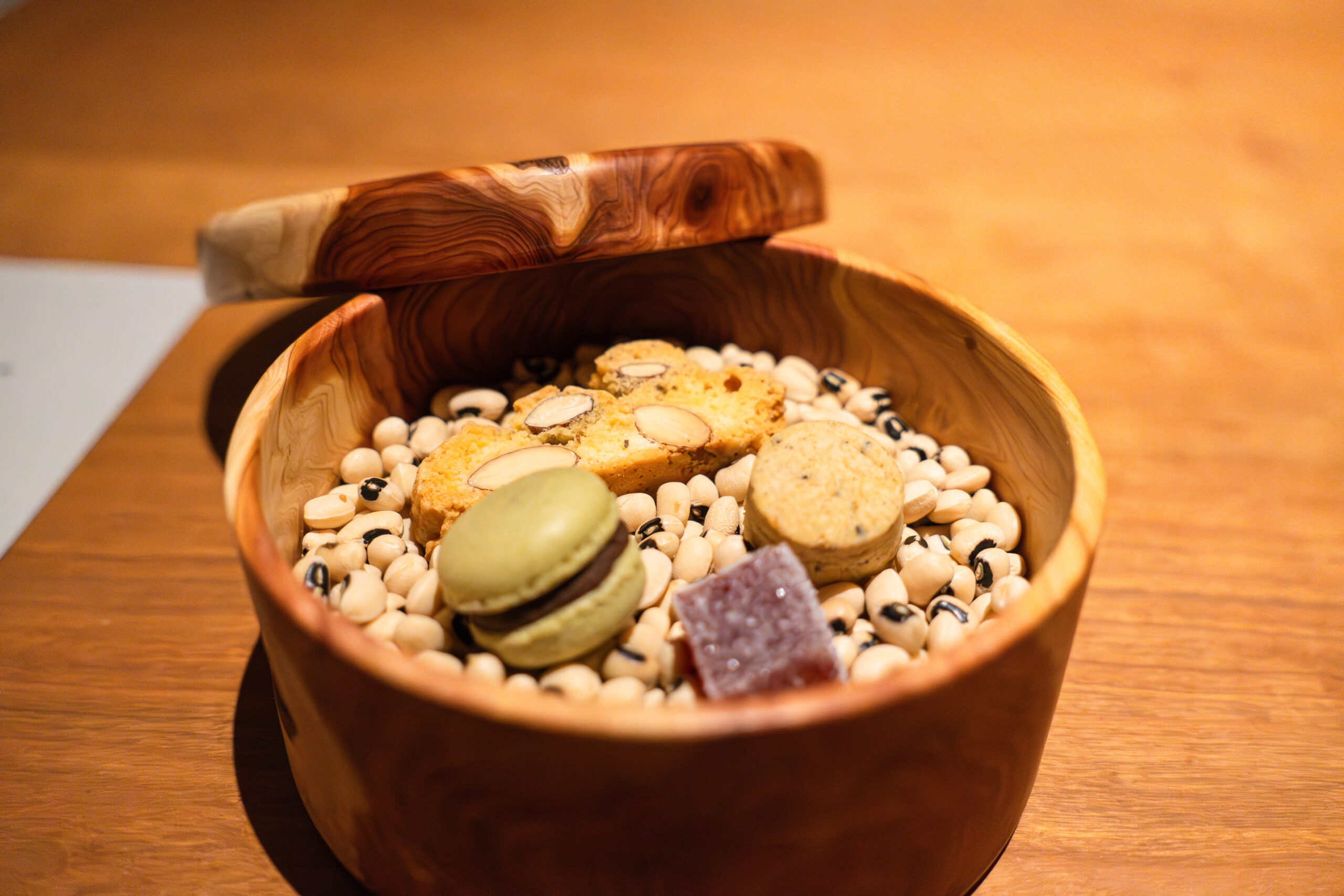
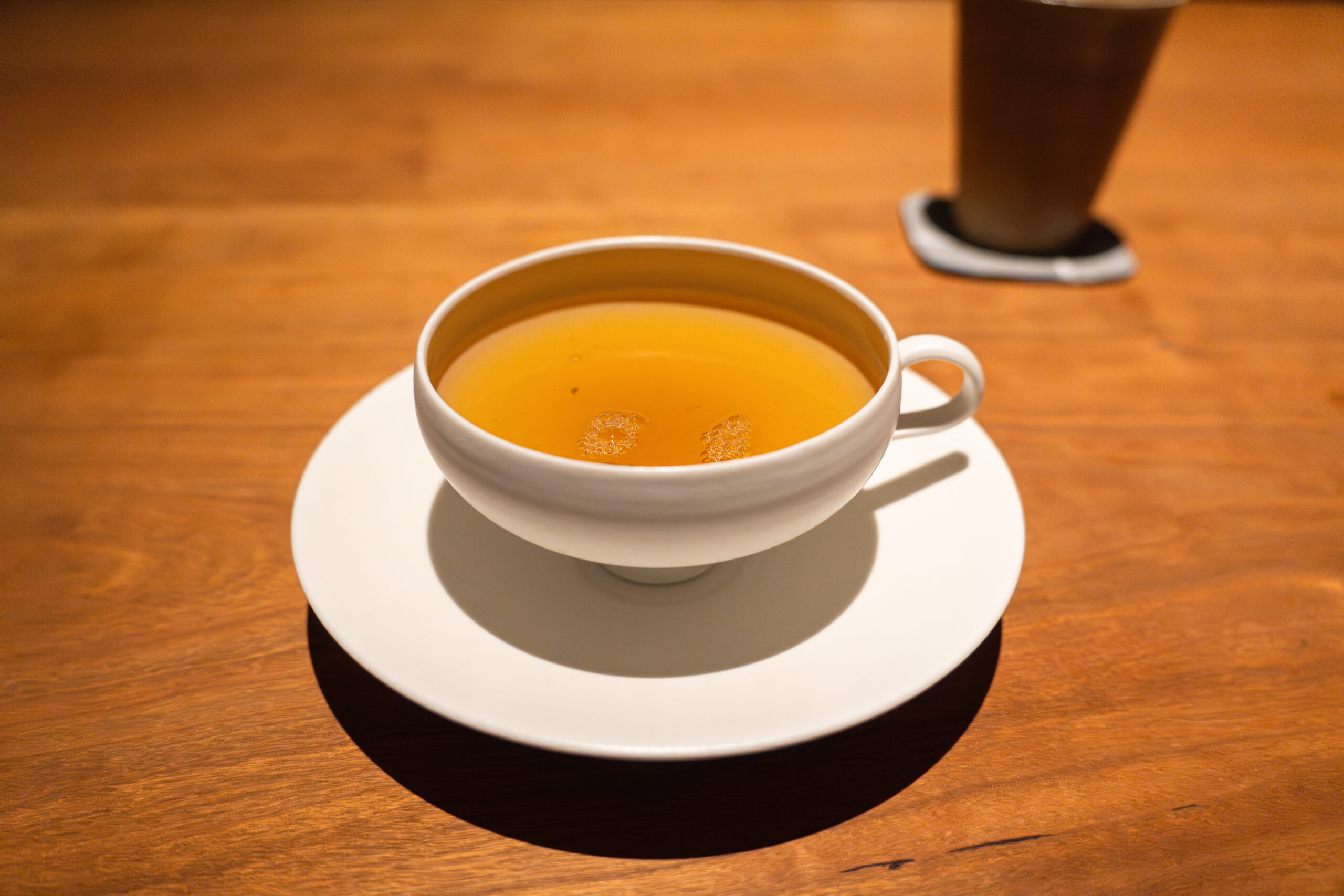
The slow-baked biscotti are quite hard on their own, but dipping them in tea or coffee softens them into a gentle, comforting bite — apparently a classic way to enjoy them in Italy as well.
Final Thoughts
The cuisine at “Shiro” is nothing less than Chef Takenaka’s next great challenge — carrying forward the rich ingredients and culture of Shimane while evolving them on the new stage of Kyoto.
Fresh seafood from Hamada Port in Shimane, retired breeding cow from Jukuho Farm, Kujo scallions and rapeseed blossoms from Kameoka — through deep relationships with local producers, Chef Takenaka creates cuisine that fully honors the inherent power of each ingredient, resulting in flavors that are simple on the surface yet remarkably profound underneath.
Elevating this cuisine further is the quiet, refined atmosphere of the IDO KYOTO space itself. Chef Takenaka’s move from Shimane to Kyoto, and his pursuit of new forms of expression along the way, only deepens the world that “Shiro” creates.
White is not the absence of color, but a color brimming with infinite possibility. By stripping away the unnecessary, it allows the true essence of each ingredient to shine through. What I felt most through this meal was precisely that: the beauty of negative space, and the quiet artistry of harmony.
Shimane’s ingredients × Kyoto’s space × Chef Takenaka’s new challenge. A quiet, refined culinary world that could only be born in this very place — leaving behind a lingering impression that makes you want to return.
Reservation & Access Information
Reservations:
For reservations, we recommend using the online booking systems via Tabelog, Ikyu, or TableCheck.
For parties of one, please inquire by email via the official website.
Access Information:
Address: IDO 2F, 287 Takoyakushi-cho, Muromachi-dori Nijo-sagaru, Nakagyo-ku, Kyoto
Nearest Station: Approximately a 3-minute walk from Karasuma-Oike Station on the Karasuma Subway Line
Hours:
Wednesday, Thursday, Friday: Single seating starting at 18:30 (doors open at 18:15)
Saturday, Sunday: Two seatings — 12:00 (doors open at 11:45) and 18:00 (doors open at 17:45)
Closed: Mondays and Tuesdays
Please Note:
All guests are served in a single, synchronized seating. If you arrive after the reservation time, the restaurant may not be able to serve all courses.
Because the menu is built around seasonal ingredients, requests to modify dishes due to allergies or food preferences generally cannot be accommodated.
As the menu uses ingredients at their seasonal peak, it evolves gradually over a two-month cycle. Guests concerned about repeat dishes are encouraged to book visits at least two months apart.
For the latest details, please check the official website.
- TAGS