CONTENTS
About Chinese Cuisine “Hasunomi”
Concept
Located in Heiwa-cho, Kita-ku, Okayama City, “Hasunomi” is a restaurant that centers its Chinese cuisine on the bounty of the local Okayama sea and mountains, paired with natural wine and sake.
Ingredients are carefully chosen through direct relationships with producers, and the course menu is built around the shifting seasons. Rather than flashy tricks, the food is built on the character of its ingredients and solid technique, with depth achieved through careful adjustment of aroma, temperature, and texture.
Behind the cooking is the sure aesthetic eye of a chef who also holds a sommelier qualification. Every dish is composed with wine or sake in mind, meticulously designed so that each course completes its own pairing.
Amid a quiet atmosphere, you can feel the land and seasons of Okayama. This is a restaurant that offers a true “dining experience.”
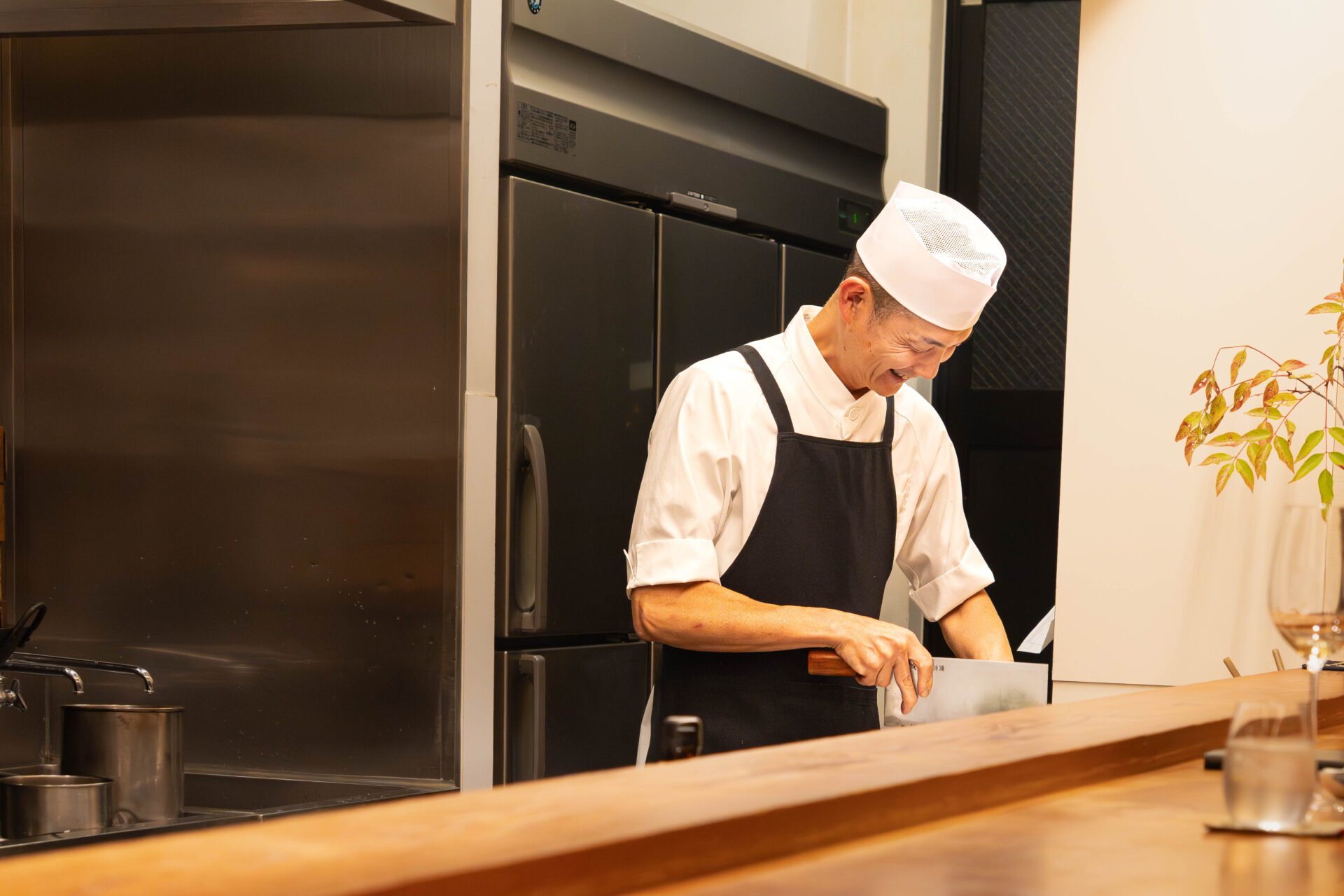
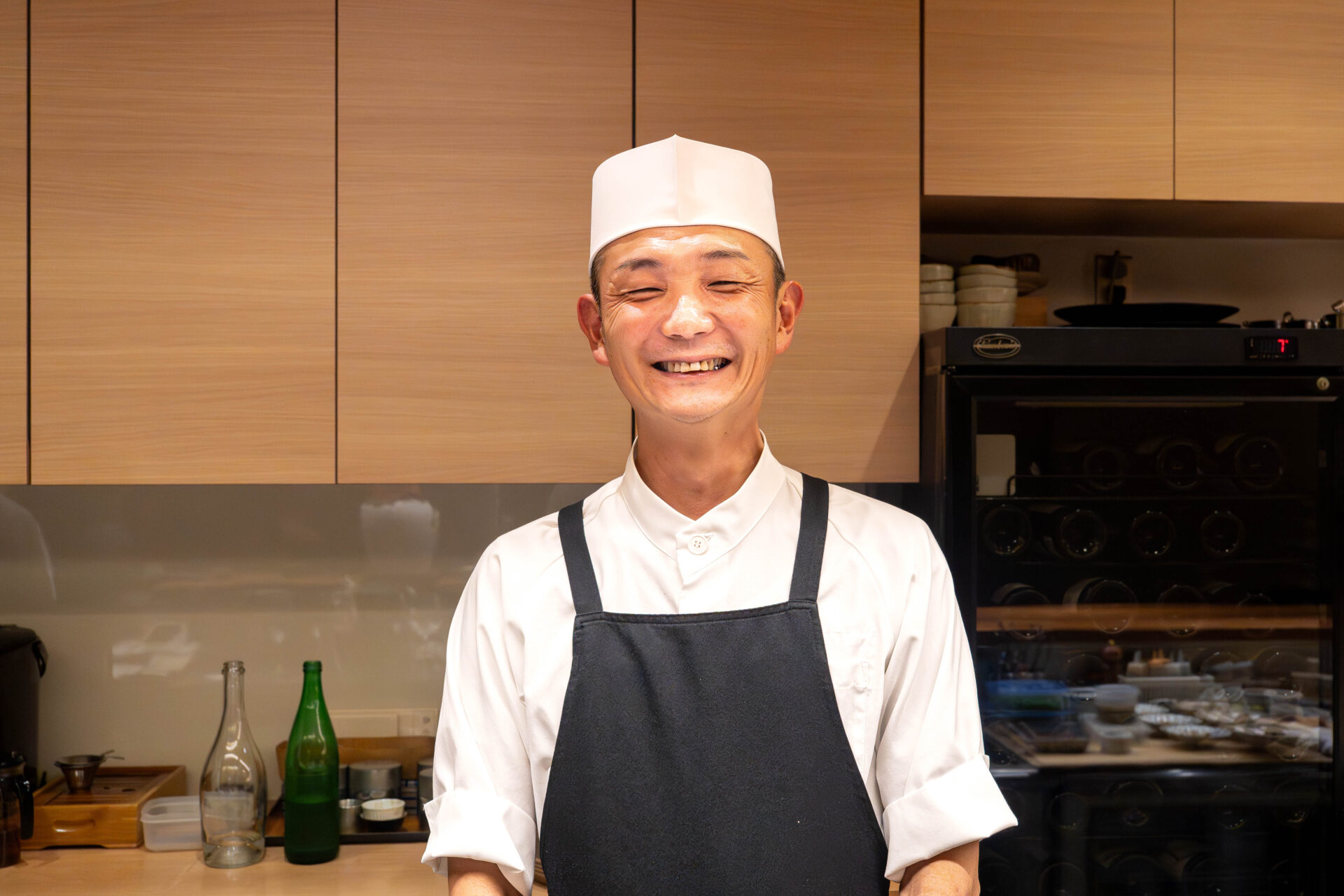
Chef Kentaro Kato
Leading the restaurant is Chef Kentaro Kato, a native of Kurashiki.
He first stood in the kitchen of a local Chinese restaurant as a junior high school student, and that experience set him on the path to becoming a chef. At 21, he joined the renowned “Azabu Chokou” in Azabu, Tokyo, where he spent the next 14 years training under his master, absorbing the theory of aroma, heat control, and seasoning into his very body.
After going independent, he returned to Okayama and opened “Hasunomi.” Working directly with local producers, sake breweries, and winemakers, he established a style that expresses Okayama’s ingredients through the techniques of Chinese cuisine.
He layers authentic Sichuan technique with local seasonality and Japanese sensibility. While his cooking is meticulous, his dishes carry a certain openness, as if he values the lingering resonance the ingredients themselves speak of.
Since spring 2025, he has served as culinary supervisor of Chinese cuisine for the sleeper train “Twilight Express Mizukaze.” From Okayama, he is quietly expanding his world nationwide.
Restaurant Reputation
“Hasunomi” has earned high acclaim both within and beyond the prefecture as a leading representative of Okayama’s Chinese cuisine scene.
It received a Bronze award at the Tabelog Awards 2025, and has also been selected for two consecutive years among the “Chinese Cuisine WEST Top 100 Restaurants,” cementing its standing at a nationally recognized level.
Chef Kentaro Kato himself received the 16th Bronze Award of the “Ryori Masters” program, hosted by the Ministry of Agriculture, Forestry and Fisheries, in recognition of his sustainable cooking using local ingredients.
The restaurant also earned a score of 14.5 in the Japan edition of the internationally recognized restaurant guide Gault&Millau. What draws even more attention than the score is the praise for its dish composition and pairing with natural wine and sake, described as “an establishment excelling in depth of flavor and the design of aroma.”
Online reviews frequently mention dishes rich in aroma and lingering finish, expressing surprise at encountering this level of quality in Okayama, and praising the harmony between natural wine and Chinese cuisine — with the thoughtfulness of the space and service also drawing high marks.
This is a restaurant that has quietly built up its excellence rather than relying on flashy presentation.
Its awards and critical acclaim are simply the result — in practice, the chef’s discerning eye and sensibility breathe through every ingredient, every application of heat, every aroma, and every piece of tableware.

Dining Prelude
Exterior & Entrance
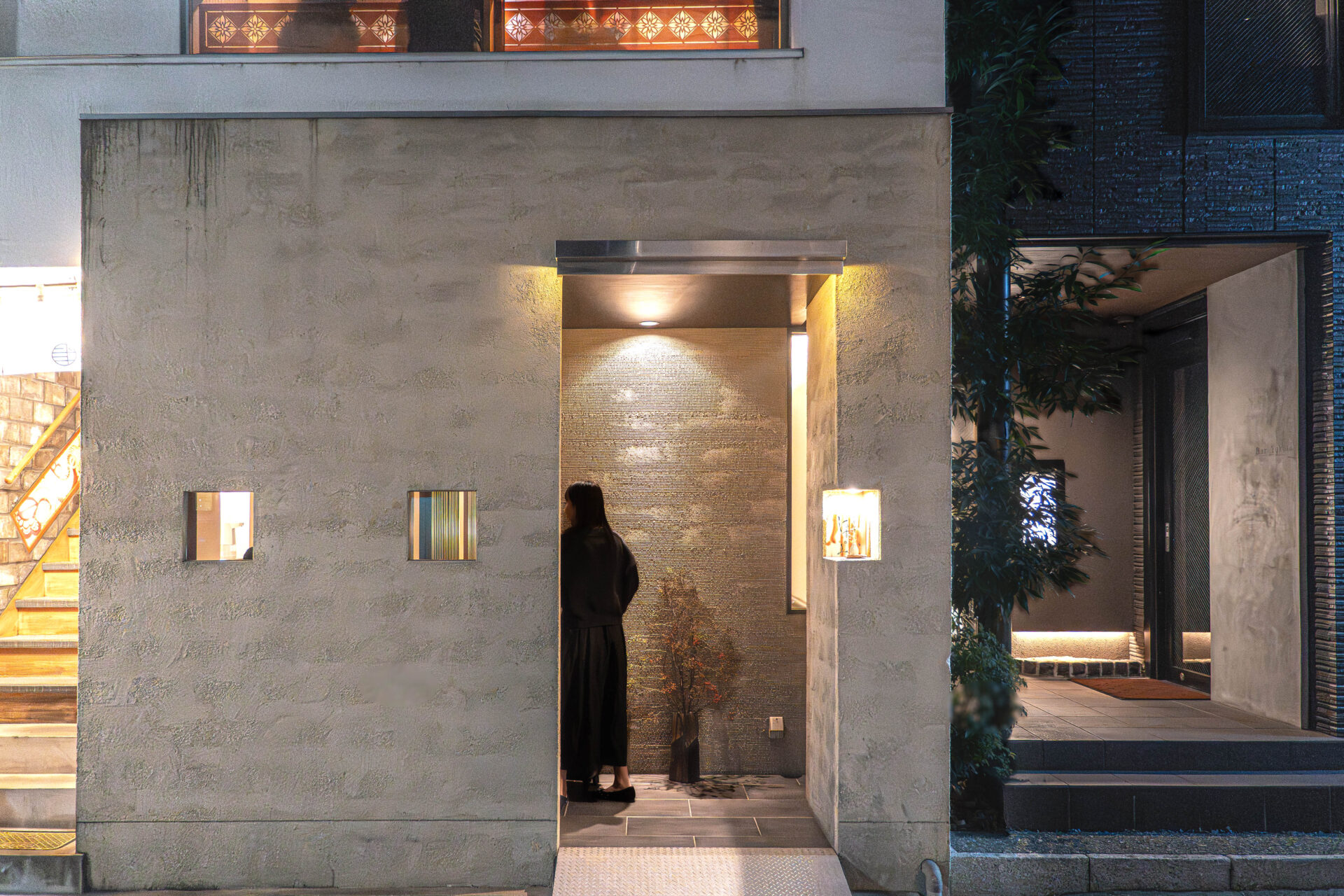
Located in Heiwa-cho, Kita-ku, Okayama City, “Hasunomi” doesn’t announce itself with a large sign facing the street — instead, its presence is felt through a calm, understated exterior.
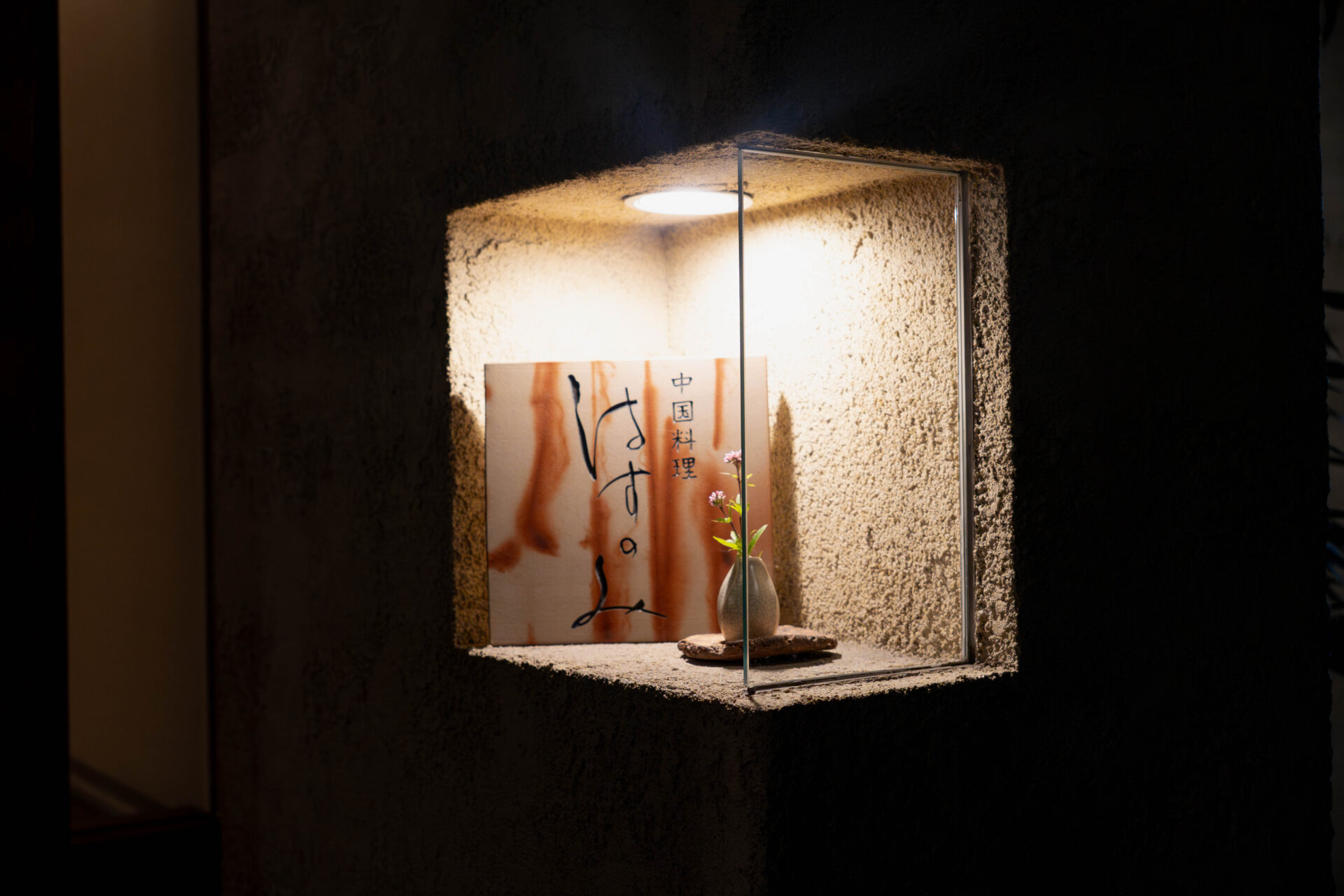
The entrance, too, is simple and unadorned, marked subtly by a Bizen-ware sign.
Despite standing in a bustling entertainment district, the storefront feels quietly set apart from the noise of the street.
Visitors expecting the look of a typical Chinese restaurant may be pleasantly surprised by the restrained, refined entryway.
It’s a quiet façade that naturally builds anticipation for the meal to come.
The Dining Space
The interior offers 16 seats in total — 8 at the counter and 8 at tables.
It’s precisely because the space is compact that guests feel close to the chef and staff, able to sense the dishes coming together as they’re prepared.
Centered around the counter, the space is finished in calm, muted tones without excessive decoration, designed so attention naturally settles on the food.
The lighting, too, is gentle, allowing guests to enjoy conversation while still finding it easy to focus on each individual dish.
With its limited seating, the restaurant carries a pleasant sense of tension without ever feeling stiff.
Beyond the food itself, the sounds and aromas drifting from the kitchen make dining here, in this particular place, an experience in itself.
Menu Presentation
At “Hasunomi,” the foundation is an omakase course built around seasonal ingredients — the sea, mountains, and fields of Okayama, expressed through the techniques of Chinese cuisine.
The course changes with the season, from appetizers to seafood, meat dishes, a rice or noodle course, and dessert, meaning each visit brings a different lineup of dishes. Many dishes draw on Seto Inland Sea seafood and Okayama-grown ingredients, built around showcasing what each ingredient does best.
The restaurant also places strong emphasis on natural wine and sake, allowing guests to enjoy not just the food but its pairing with drink — a defining feature of “Hasunomi.”
Built on a foundation of Chinese cuisine while incorporating seasonal ingredients and thoughtful pairings throughout, it’s a restaurant that builds anticipation for what dishes await, even before you arrive.
Starter Drink
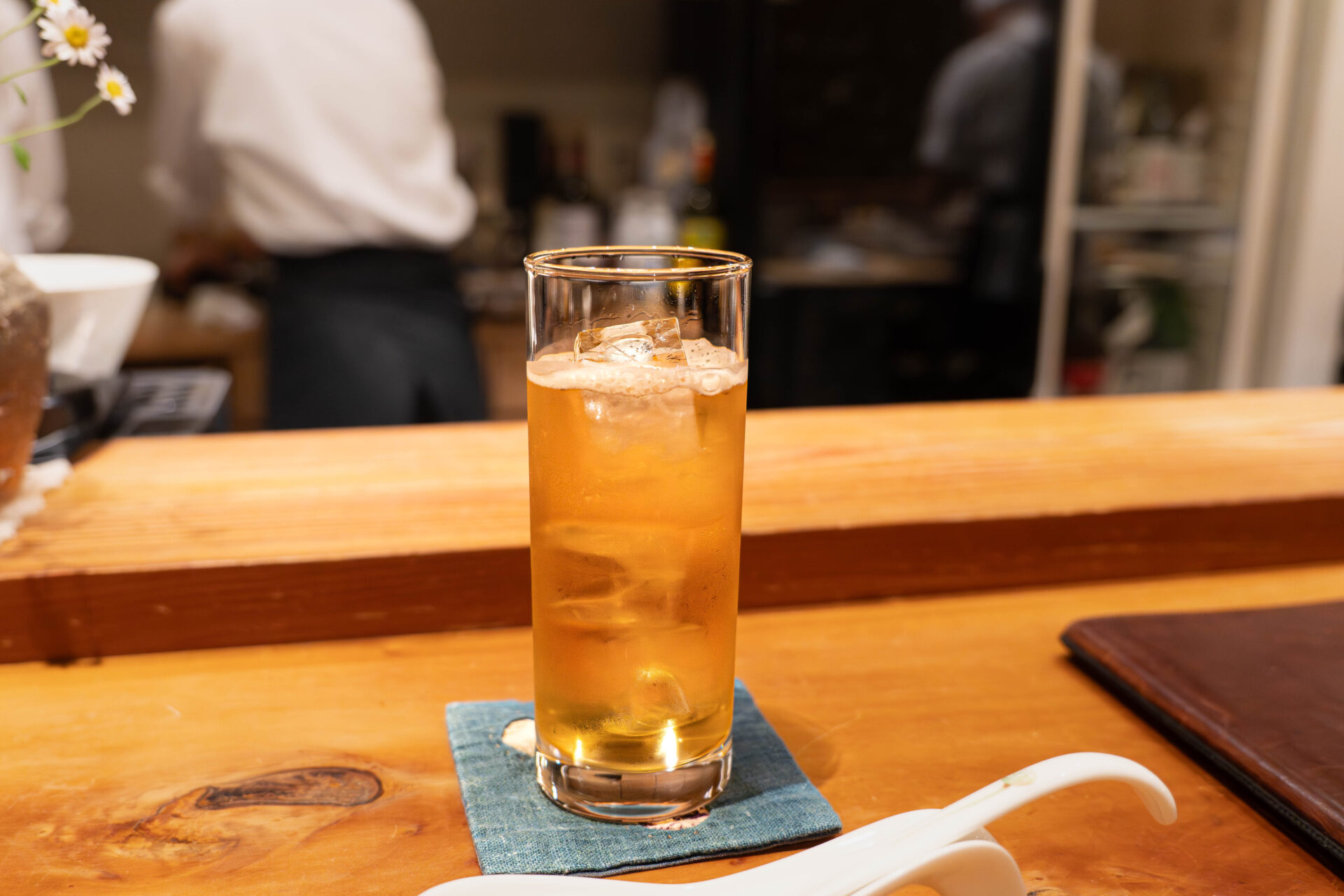
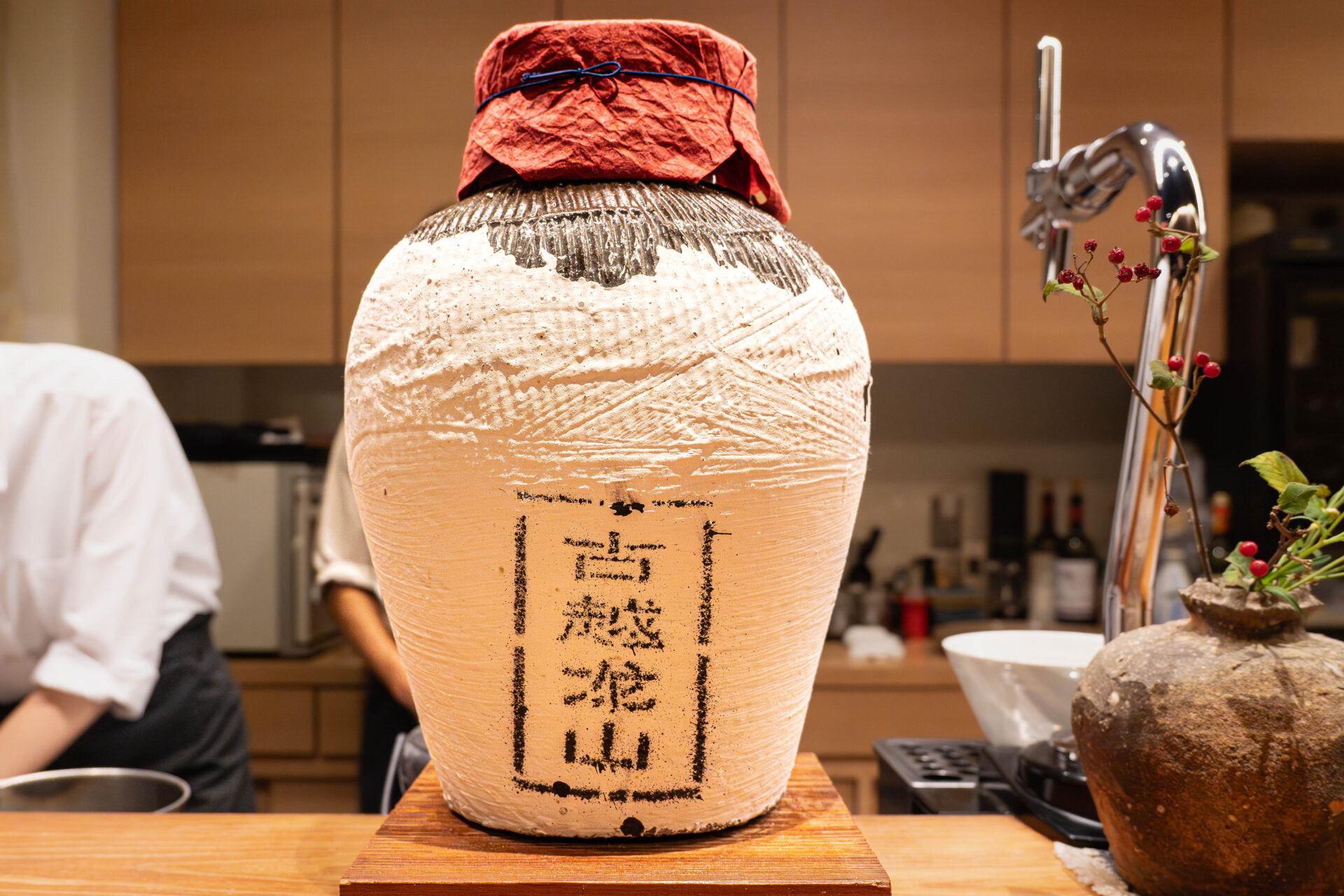
The starter drink is a “Dragon Highball” — Shaoxing wine, “Kokoshu Ryuzan,” cut with soda.
The rich depth and aroma characteristic of Shaoxing wine remain, lightened by the soda into an easy-drinking profile. It pairs well with what’s to come in the Chinese course ahead, making it a fitting way to begin the meal.
The Dishes We Tasted
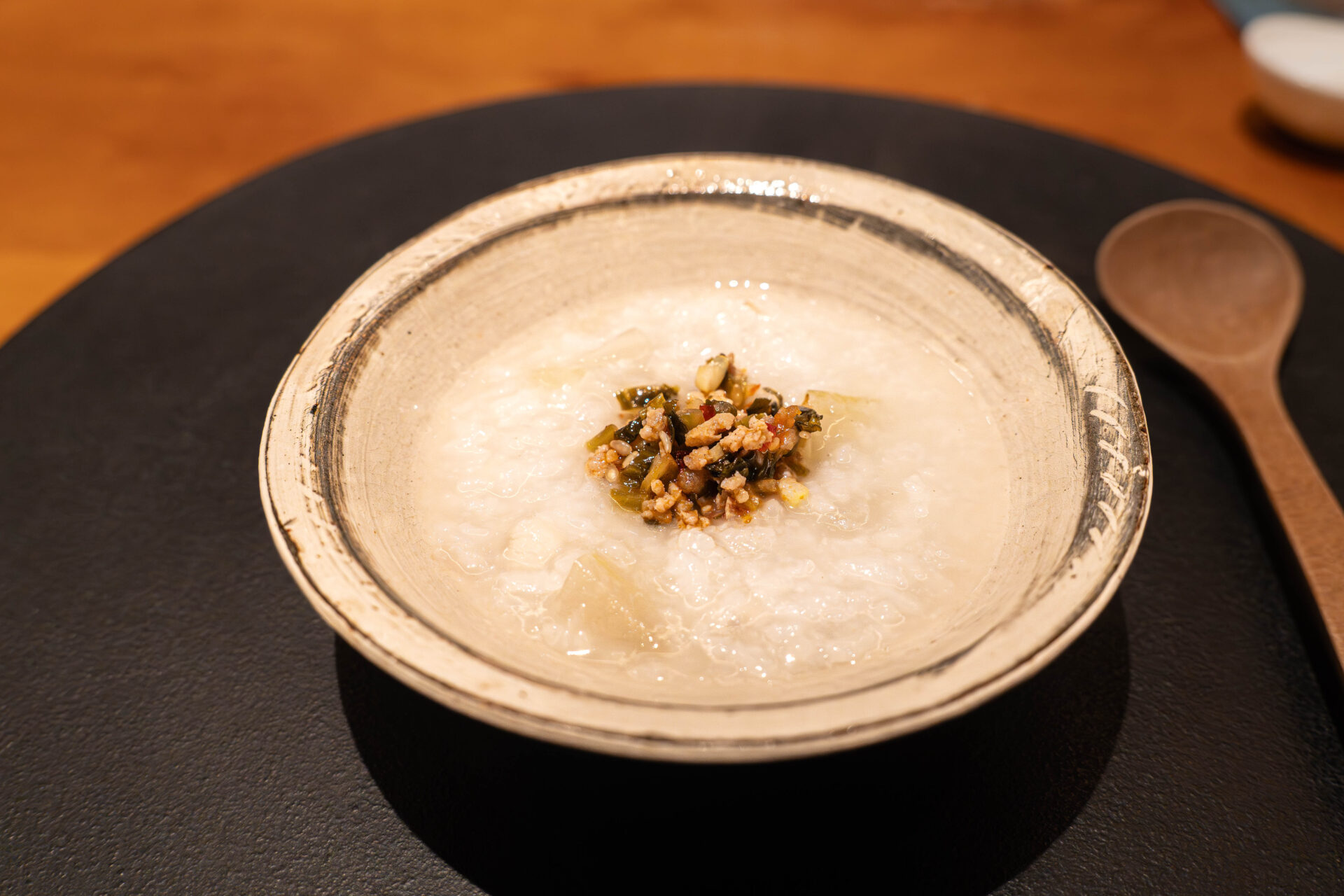
Winter Melon, Job’s Tears, and Yam Congee
Announcing the start of the course is a gentle bowl combining winter melon, Job’s tears (adlay), and yam.
Within the thickened congee, a faint sweetness from the grains mingles with the clean moisture of the winter melon. A garnish on top brings rhythm to this deeply nourishing dish.
Chef Kato explained that the dish is said to “moisten the lungs.” The influence of medicinal cuisine philosophy is present, yet never feels overly academic — instead it settles gently into the body’s core.
The seasoning is restrained, allowing the natural aroma of the ingredients, the stickiness of the grains, and the calm umami of the broth to come together in an ideal balance for opening the meal.
From the moment this bowl touches the lips, the body seems to settle gently, in harmony with the quiet rhythm of the space itself.
Before “tasting” the food, one first “settles.” A beginning dish that feels distinctly like Hasunomi.
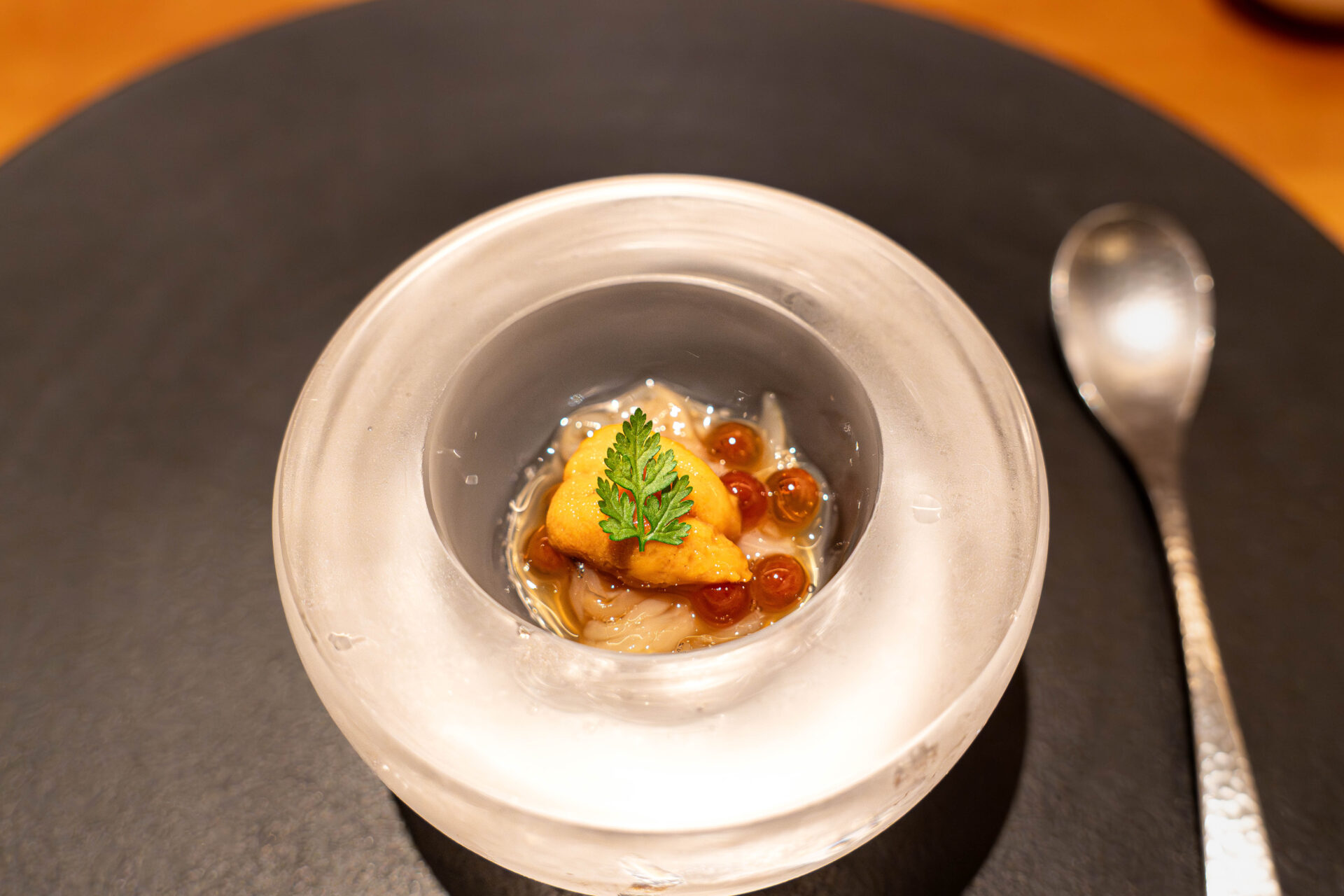
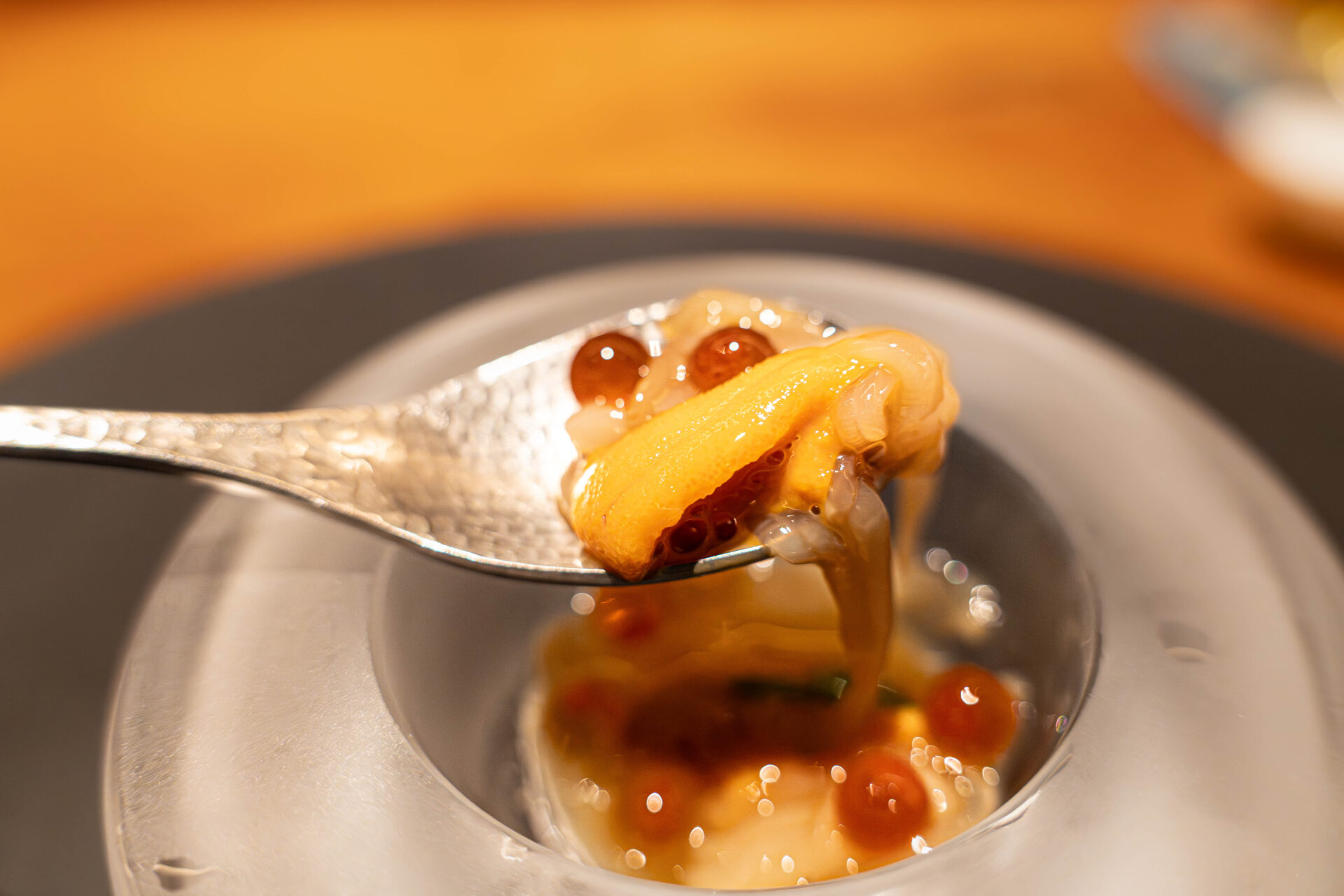
Squid and Salmon Roe Cured in Aged Wine, with Sea Urchin
Served as an appetizer, this dish layers squid and salmon roe cured in Chinese “laojiu” (aged wine), topped with sea urchin.
The squid’s rich, silky texture meets the mellow sweetness and aged aroma of the laojiu, while the salmon roe’s saltiness ties everything together.
The soft richness of the sea urchin melts into it all, with the layers of aroma shifting with every bite.
While the flavor of the wine is allowed to shine, the saltiness and umami are precisely calibrated to avoid excess — temperature, aroma, and texture are all gently balanced.
In its brief but lingering finish, one senses Chef Kato’s layered approach to aroma design and his delicate command of heat.
Lotus Root Dumplings
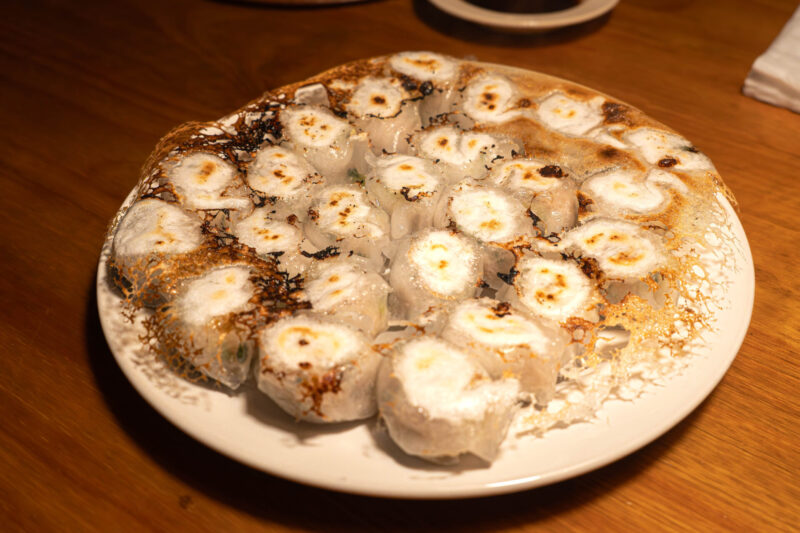
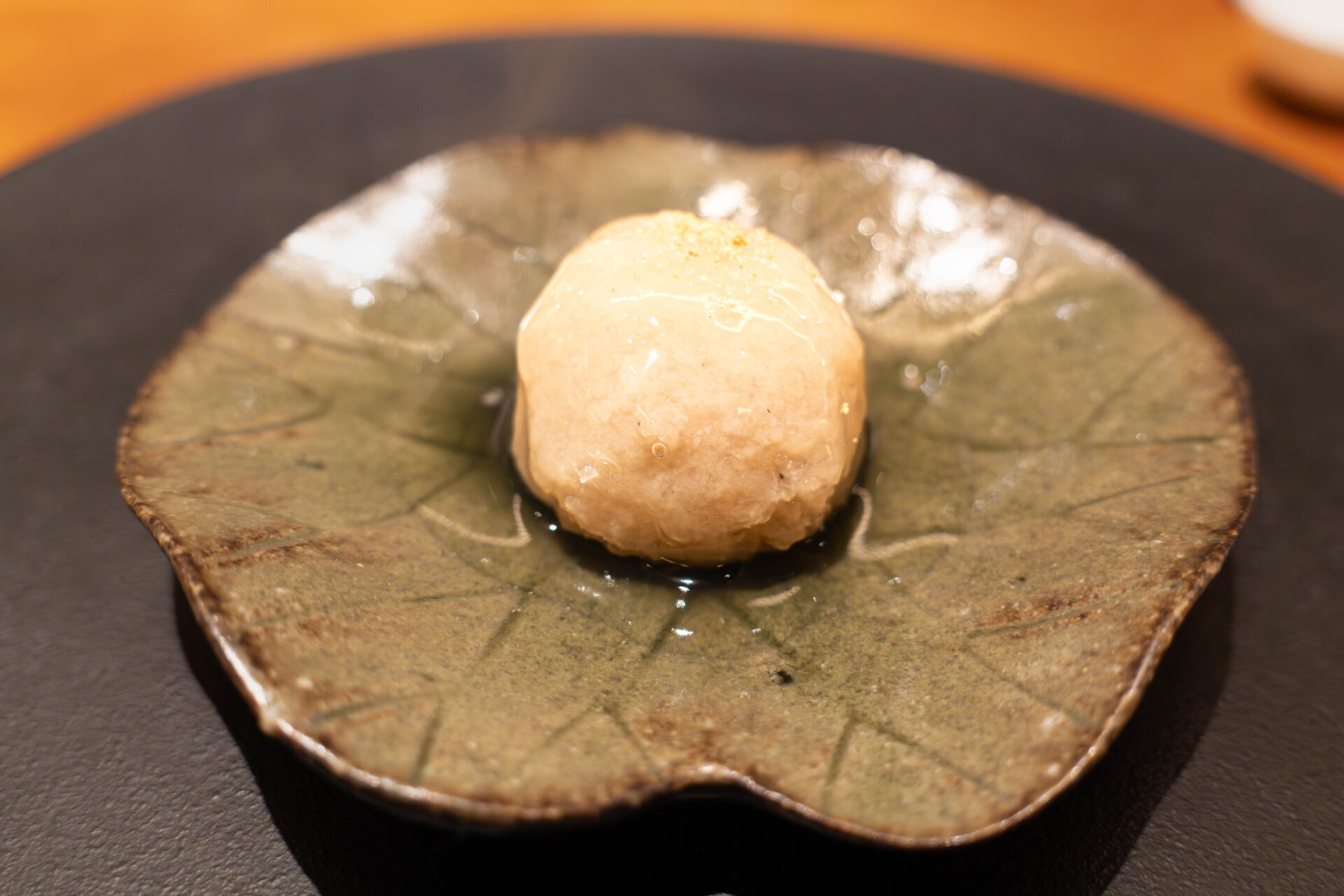
The next dish is a dumpling made from carefully worked, grated lotus root.
The surface carries a faint sheen, and cutting in reveals a soft, gently sticky interior. The more you chew, the more the lotus root’s aroma and natural sweetness unfold, gently embraced by the umami of the broth.
Without relying on extra spice, the dish reflects the earthy aroma and clean, watery character of the ingredient itself.
The gentle temperature, the lingering thickness on the tongue, the quietly rising aroma — everything is calmly composed, highlighting the “quiet beauty” that runs through Chef Kato’s cooking.
Nothing flashy here, but the careful handwork comes through clearly.
A dish that creates a gentle pause, restoring rhythm within the course.
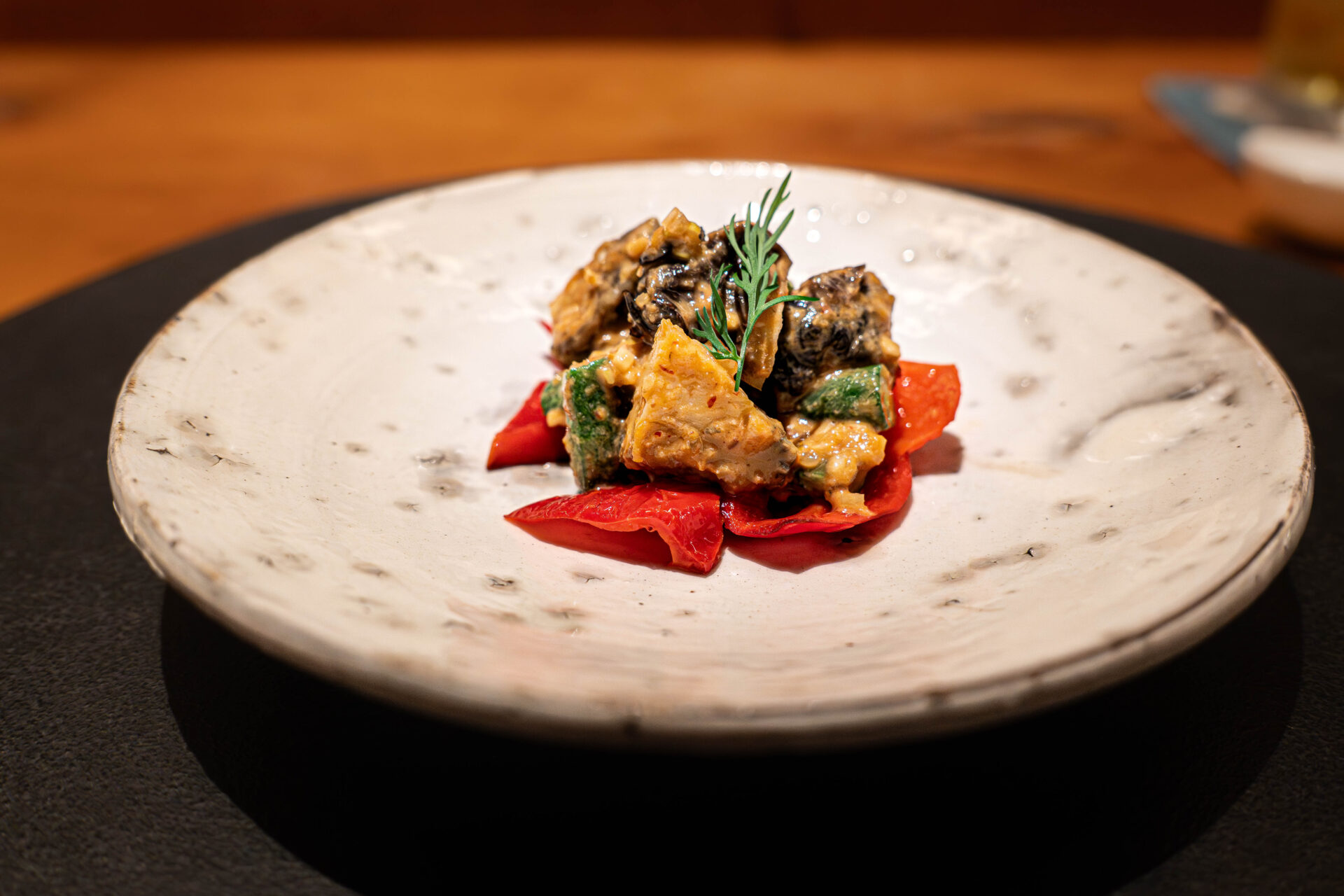
Seto Inland Sea Turban Shell with Spicy Sesame Sauce
A dish that puts Seto Inland Sea turban shell (sazae) center stage, with a striking contrast of aroma and texture.
The sazae is cooked just enough to remain tender while retaining its distinctive springiness. Paired with okra and bell pepper, it’s dressed in a fragrant sesame sauce, with the gentle heat of doubanjiang tying the dish together.
On the palate, the ocean aroma of the sazae meets the toasted fragrance of the sesame, followed slowly by a creeping warmth from the spice.
Aroma leads over heat, and there’s no heaviness from oil — a true showcase of Chef Kato’s “lightly composed Chinese cuisine.”
A composition that evokes both sea and field, elevating Seto Inland Sea ingredients beautifully within the context of Chinese cuisine.
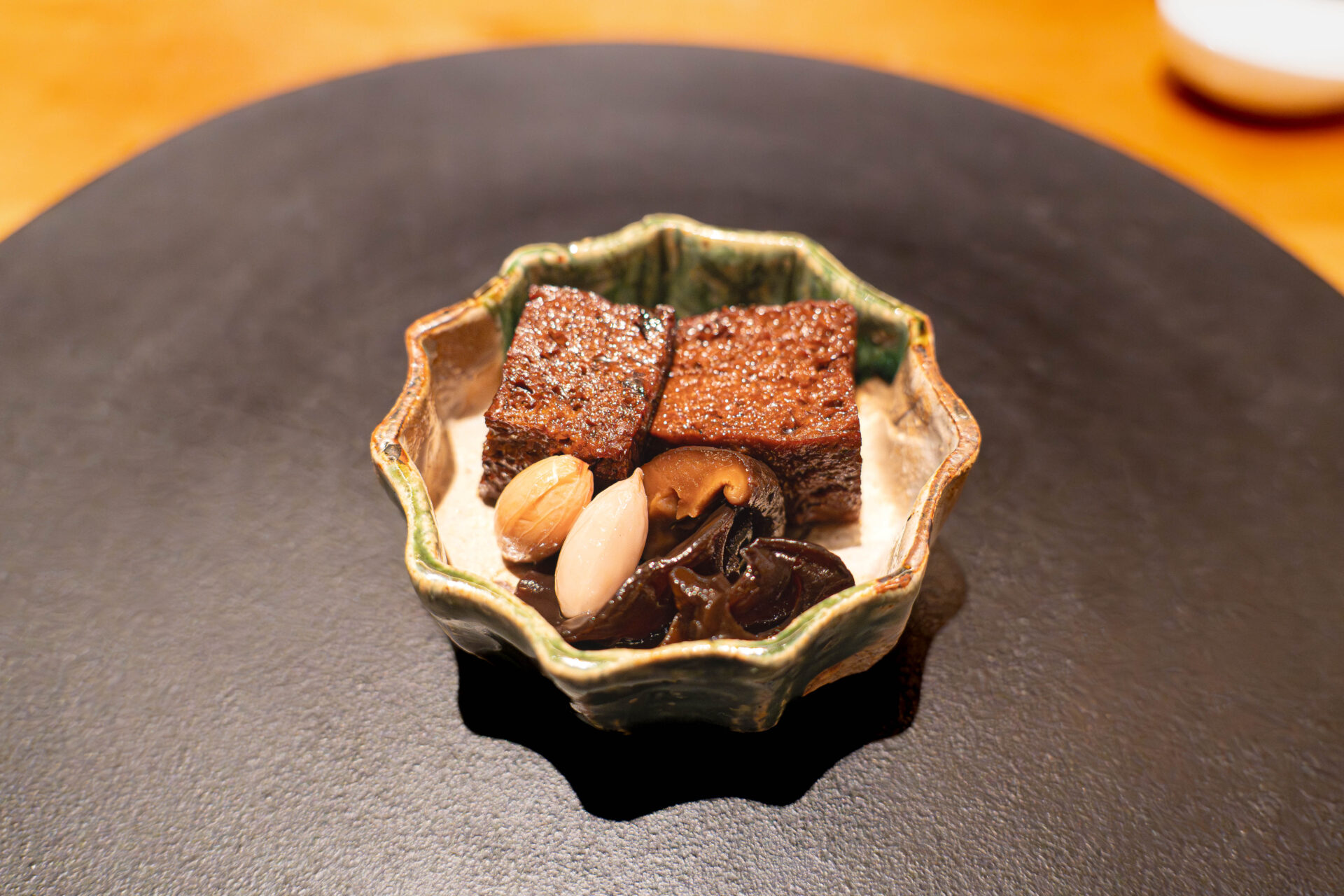
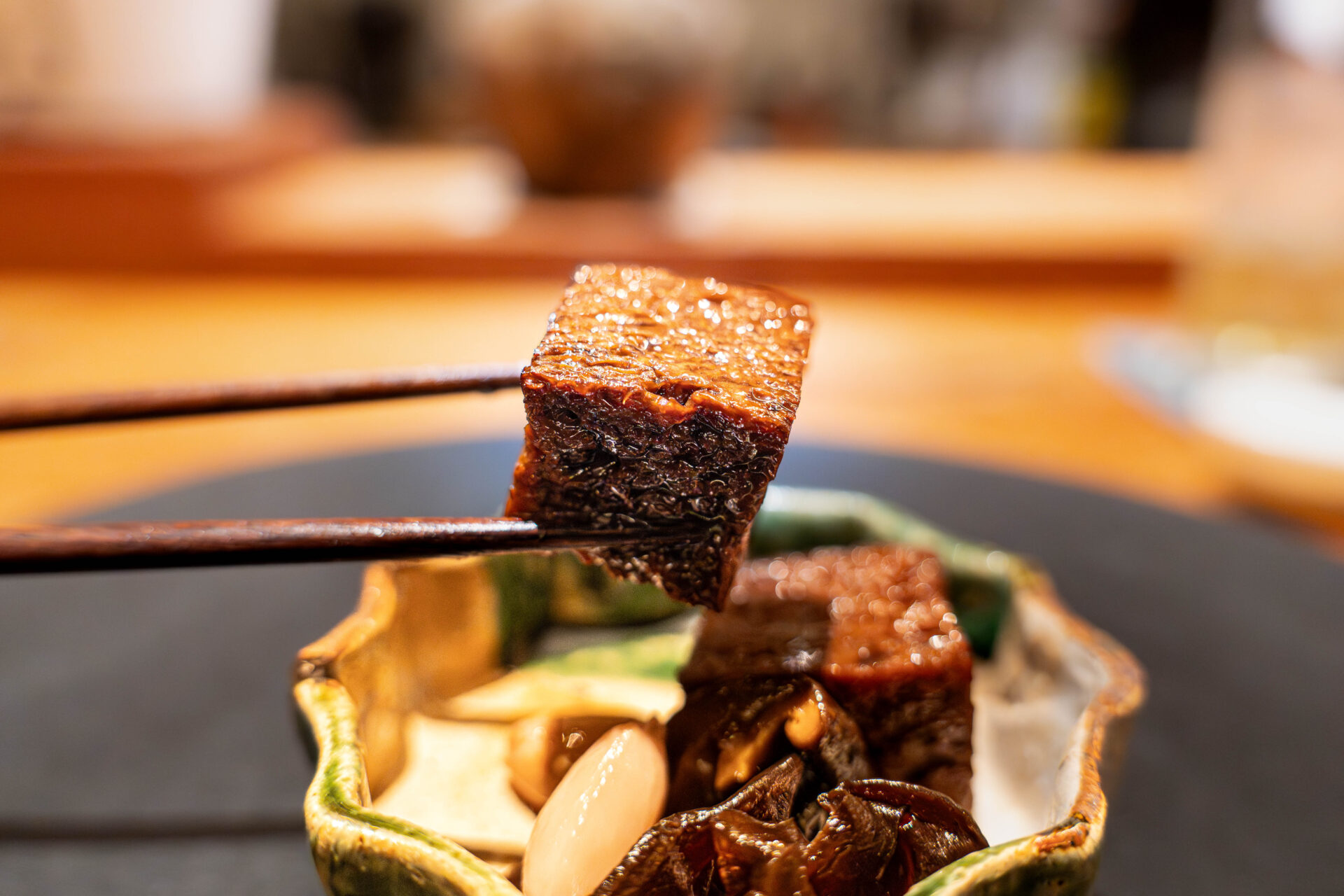
Shanghai-Style Braised Fried Wheat Gluten
A dish whose depth of flavor surprises given its simple appearance.
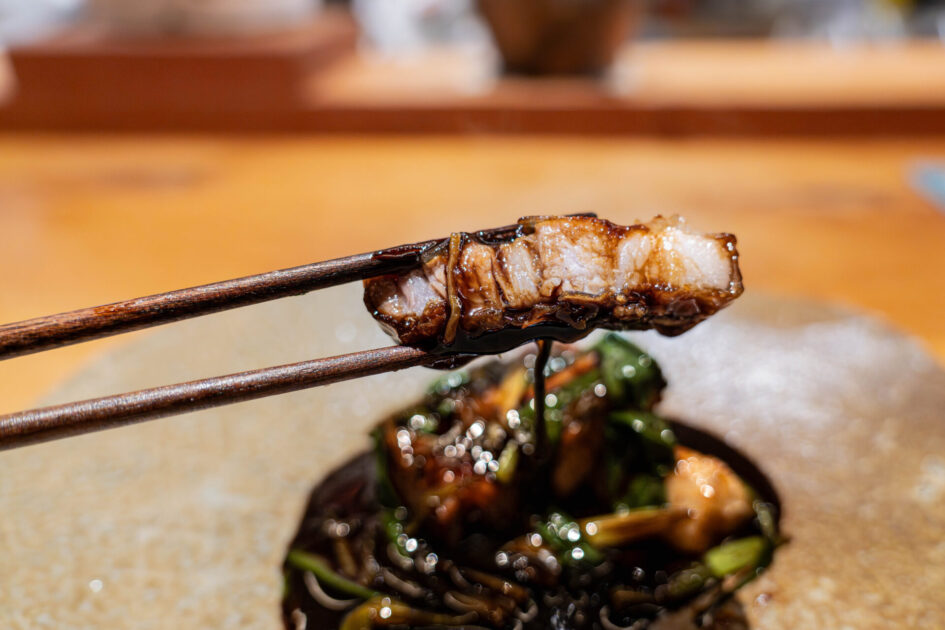
Wheat gluten, fried until firm, is slowly braised in a broth based on lao chou (aged soy sauce) and Shaoxing wine, allowing the umami to soak all the way through.
The outer crispness and the soft lightness within coexist in every bite, with the braising liquid’s umami seeping out with each chew.
Black fungus, ginkgo nuts, and shiitake mushrooms add depth of aroma and texture.
That such deep satisfaction can be achieved without meat speaks to the precision of ingredient handling and heat control.
Within this quiet dish, the rich essence of Shanghai cuisine and Chef Kato’s restrained sensibility coexist.
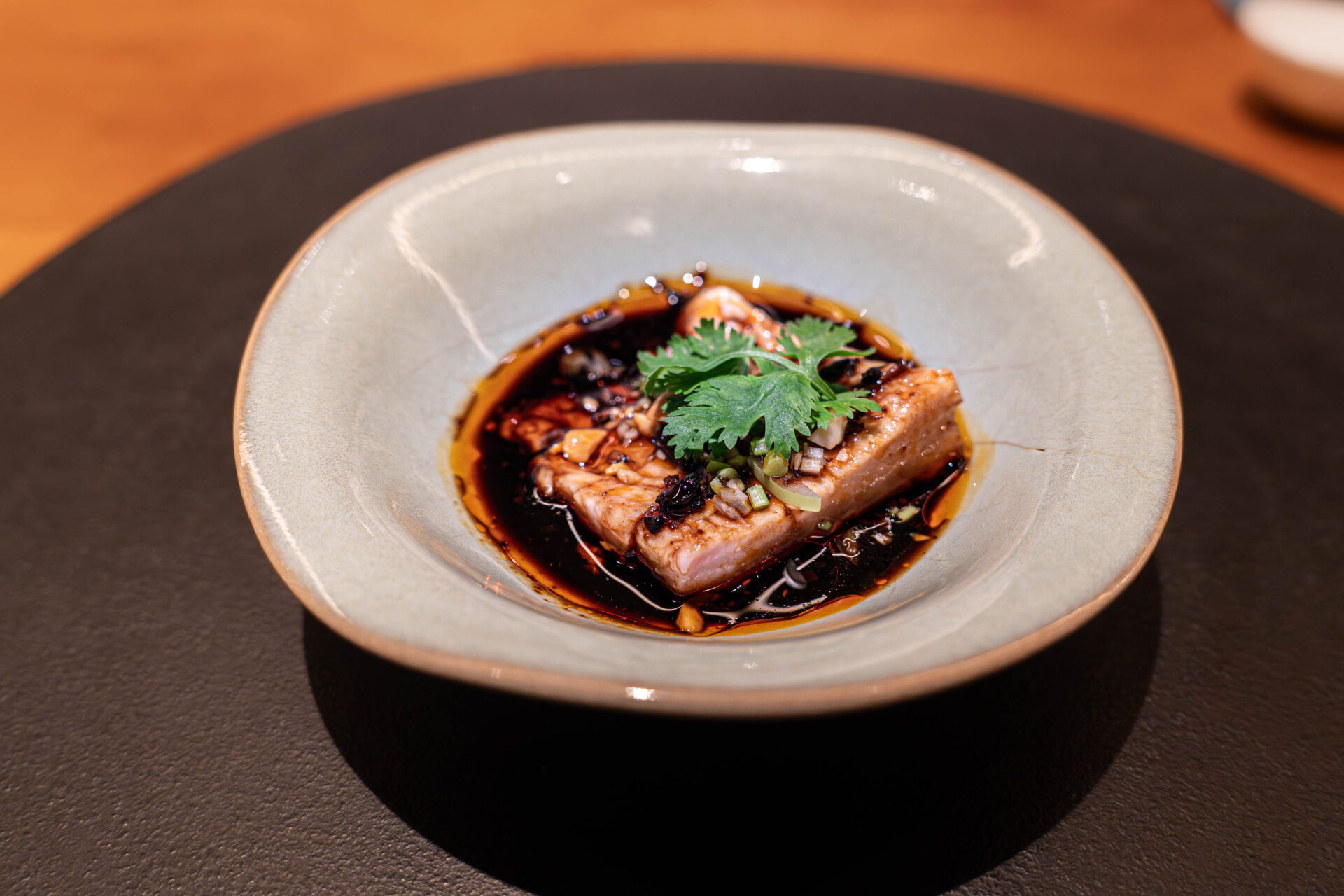
Steamed Chicken with Sichuan-Style Spice
Gently cooked chicken finished in a fragrant Sichuan-style sauce — a signature dish.
Built on the depth of black vinegar and soy sauce, layered with aromatic Sichuan peppercorn and house-made chili oil, the composition emphasizes aroma over pure heat.
The chicken is tender enough to pull apart with ease, its fatty sweetness melding with the richness of the sauce.
A thin layer of aromatic oil spreads across the surface, with the aroma shifting subtly with every bite.
Rather than leaning on spice, the dish impresses through a lingering balance of aroma and umami.
While staying within the framework of Sichuan cuisine, this is a dish that strips away excess — quintessentially “Hasunomi.”
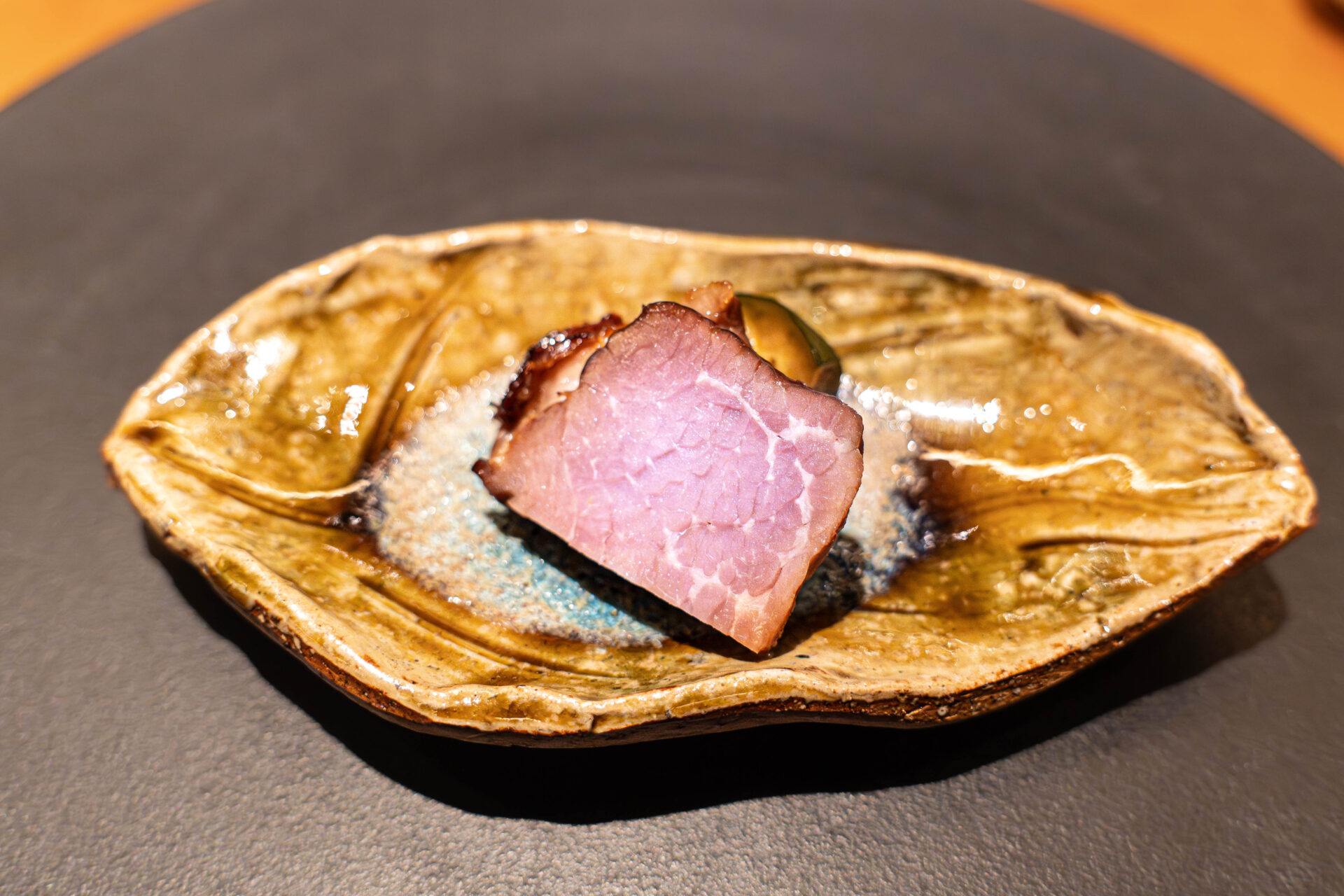
House-Made Char Siu (Peach Pork)
House-made char siu using “Peach Pork,” a branded pork from Okayama Prefecture.
Cooked at low temperature to render off excess fat while locking in the meat’s natural umami. The cross-section reveals a pale pink hue, with delicate sweetness released with every bite.
The aroma comes from a simple sauce based on star anise and soy sauce.
Restrained despite being firmly within the framework of Chinese cuisine, it offers a quiet presence — a bite between sips of wine that seems to reset the palate.
Not a dish that claims the spotlight within the course, but a “quiet cornerstone” supporting the overall flow.
Here too resides the balance of tension and openness that runs through Chef Kato’s cooking.
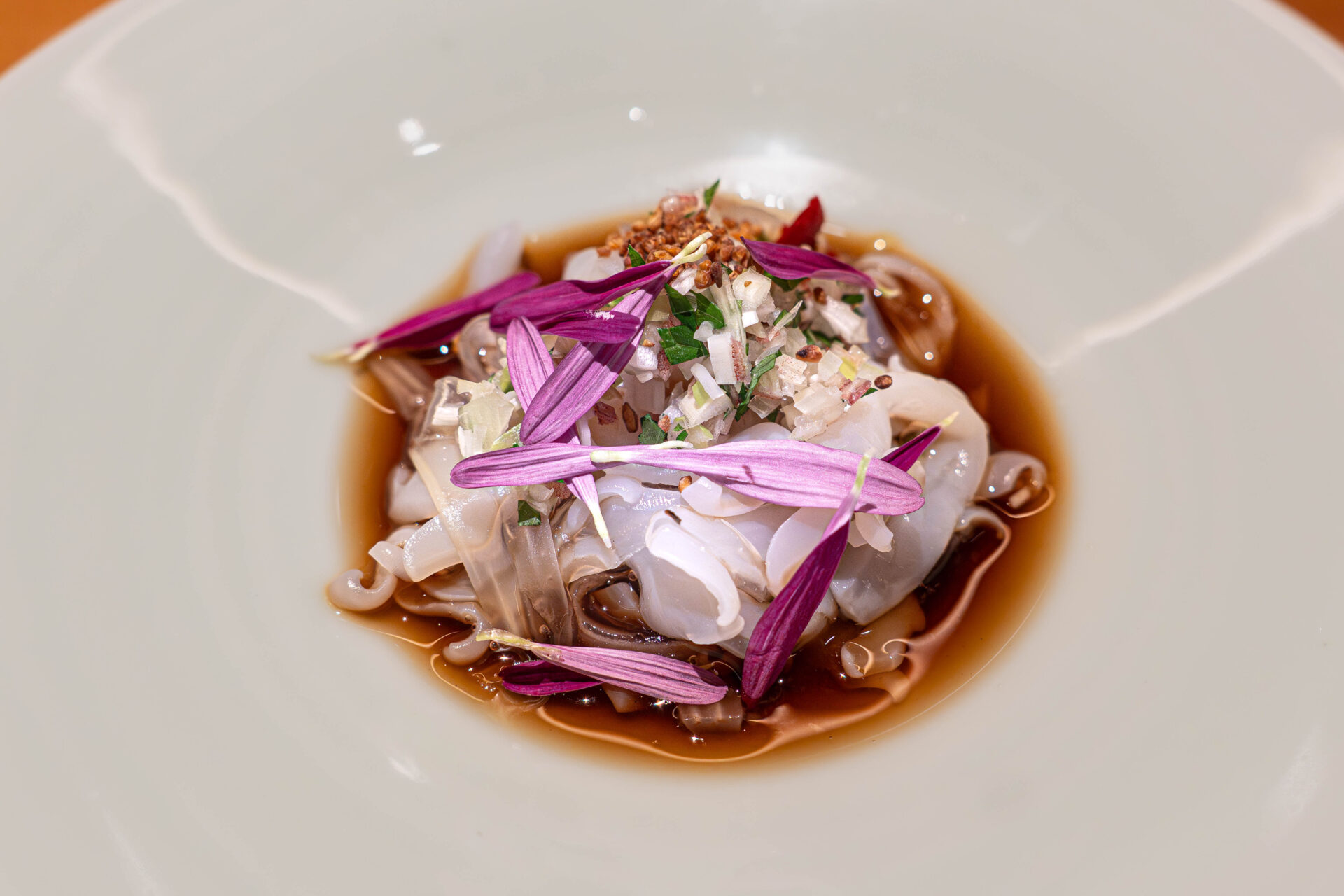
Seto Inland Sea Golden Cuttlefish with House-Made Squid Glass Noodles, in a Black Vinegar Broth
Golden cuttlefish caught in the Seto Inland Sea, paired with house-made squid-based glass noodles, brought together in a black vinegar-accented broth.
The cuttlefish is lightly blanched, its flesh translucent and tender, releasing a delicate sweetness with every bite.
The black vinegar’s acidity is gentle, layering with the broth’s umami to highlight the cuttlefish’s lingering finish.
Chopped aromatic herbs and chrysanthemum petals are scattered on top, giving the dish a light, fragrant appearance.
The freshness of the ingredients, the precision of heat, and the handling of acidity are all meticulously calculated.
With the first bite, the scent of the Seto Inland Sea and the passing of the season quietly rise up — a dish with a calm, resonant presence.
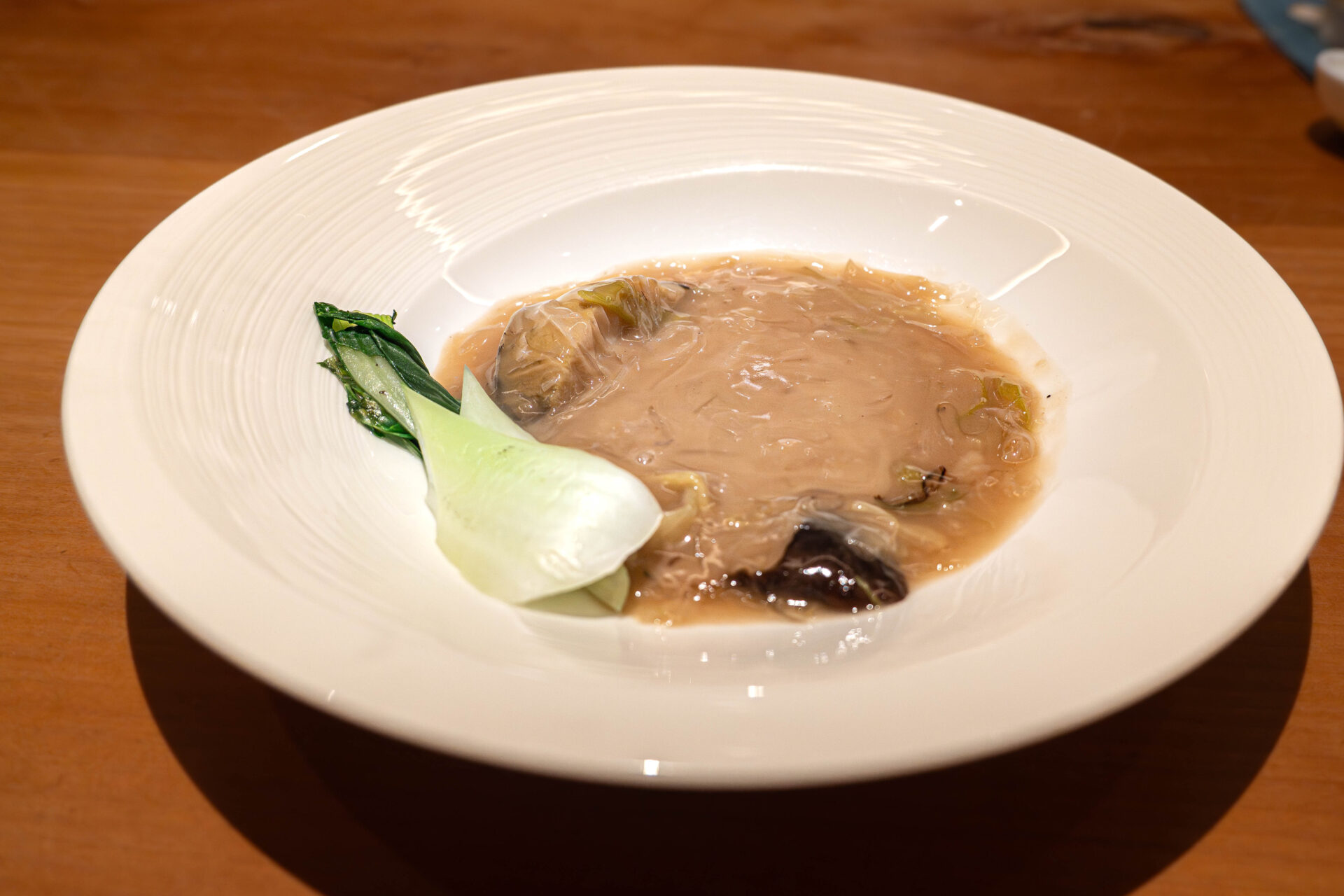
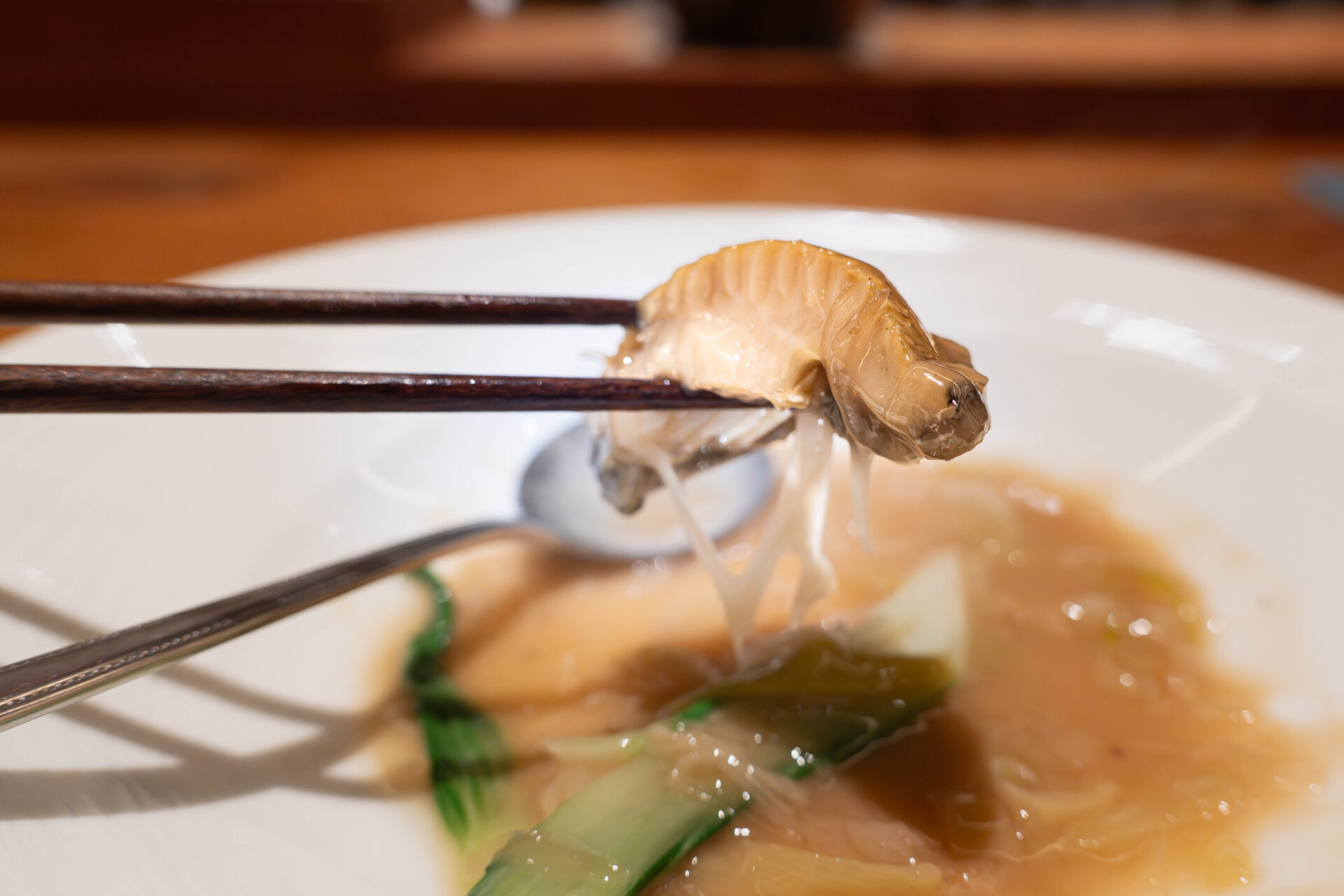
Braised Shark Fin and Abalone
A warm dish generously combining shark fin and abalone, wrapped in a deeply flavored thickened sauce.
The abalone, slow-cooked over a long period, yields easily to the bite, its umami spreading quietly through the mouth. The shark fin unravels beautifully in fine strands, blending seamlessly with the sauce for a silky texture.
The seasoning is understated, but the underlying broth — built from chicken and dried ingredients — runs deep, with a faint trace of Shaoxing wine lingering beneath.
The freshness of bok choy adds rhythm to each bite, lightening the dish overall.
A shark fin dish without heaviness or excess.
Built around the lingering resonance of umami, this dish reflects the quiet luxury that Chef Kato brings to his cooking.
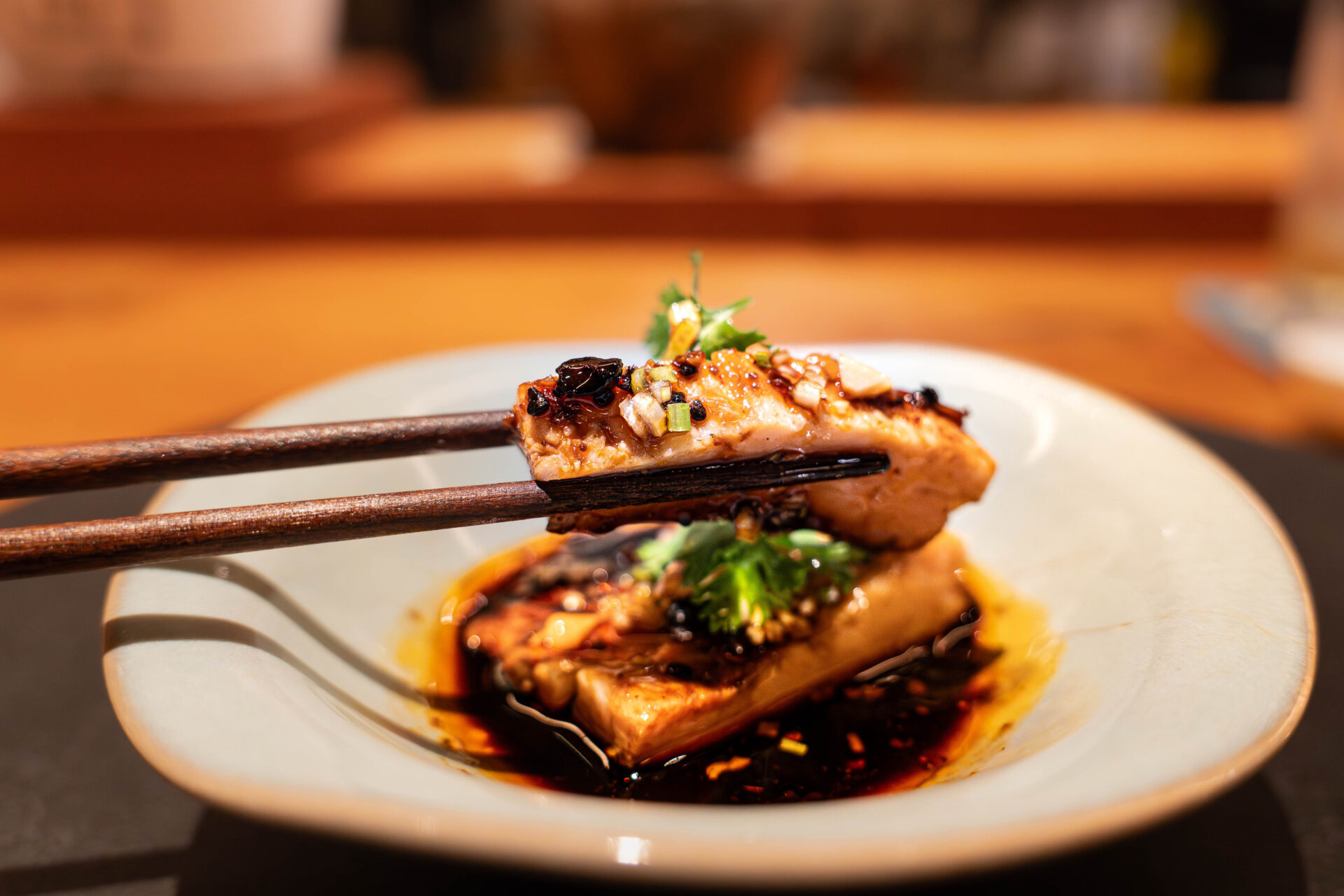
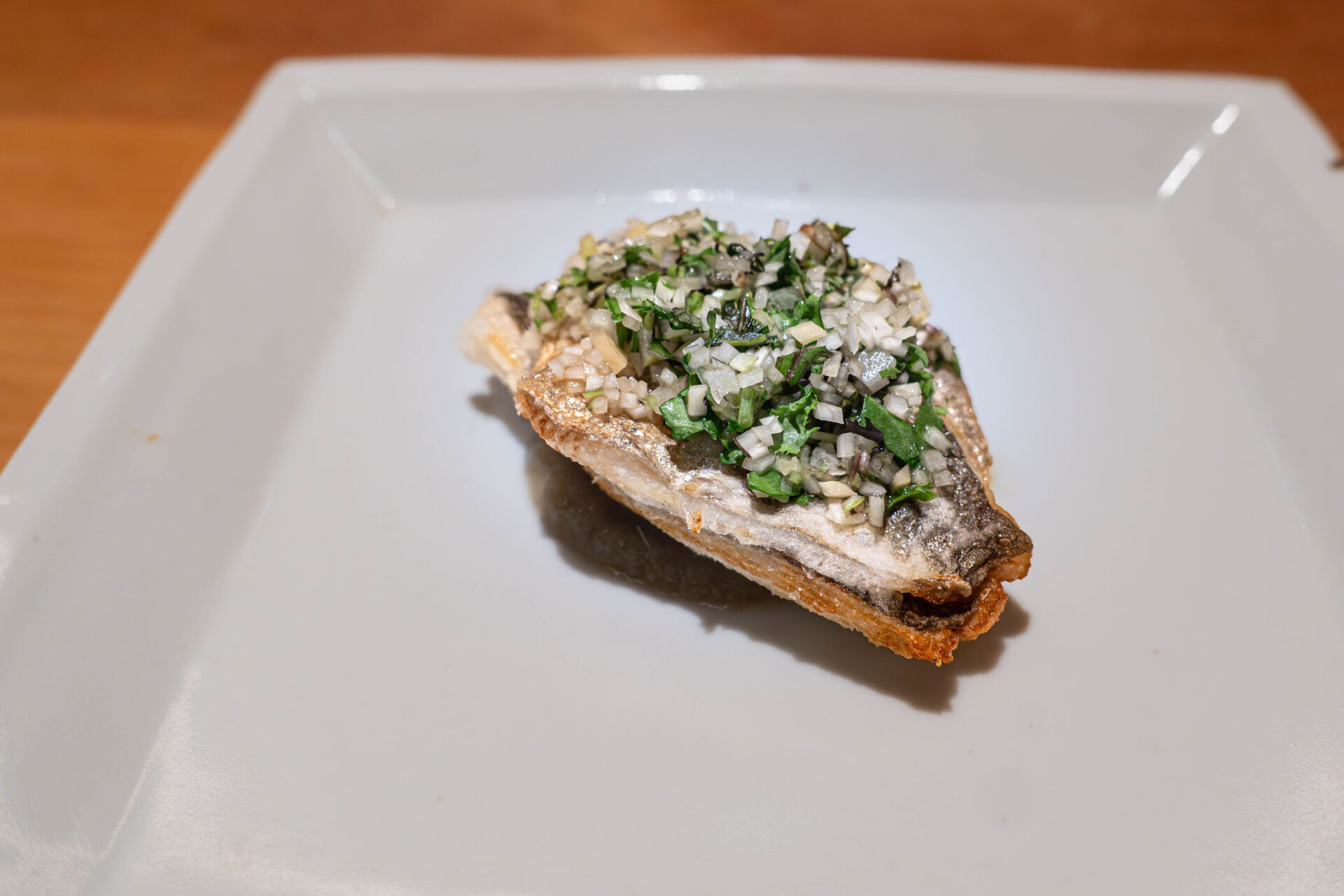
Fried Seto Inland Sea Butterfish
Butterfish caught in the Seto Inland Sea, lightly fried into a delicate dish.
The batter is thin, carrying the fragrance of the oil while keeping the flesh inside moist and tender. The aroma from the skin stands out, with the ocean’s sweetness expanding with every bite.
Chopped aromatic herbs are layered on top, finished with a gentle touch of acidity.
Despite being fried, the dish carries no heaviness — designed to be enjoyed through aroma and temperature rather than salt or oil.
The gentle sweetness of the fish’s natural fat and the refreshing quality of the herbs strike an impressive balance.
The chef’s deep familiarity with Seto Inland Sea fish comes through in every corner of the plate.
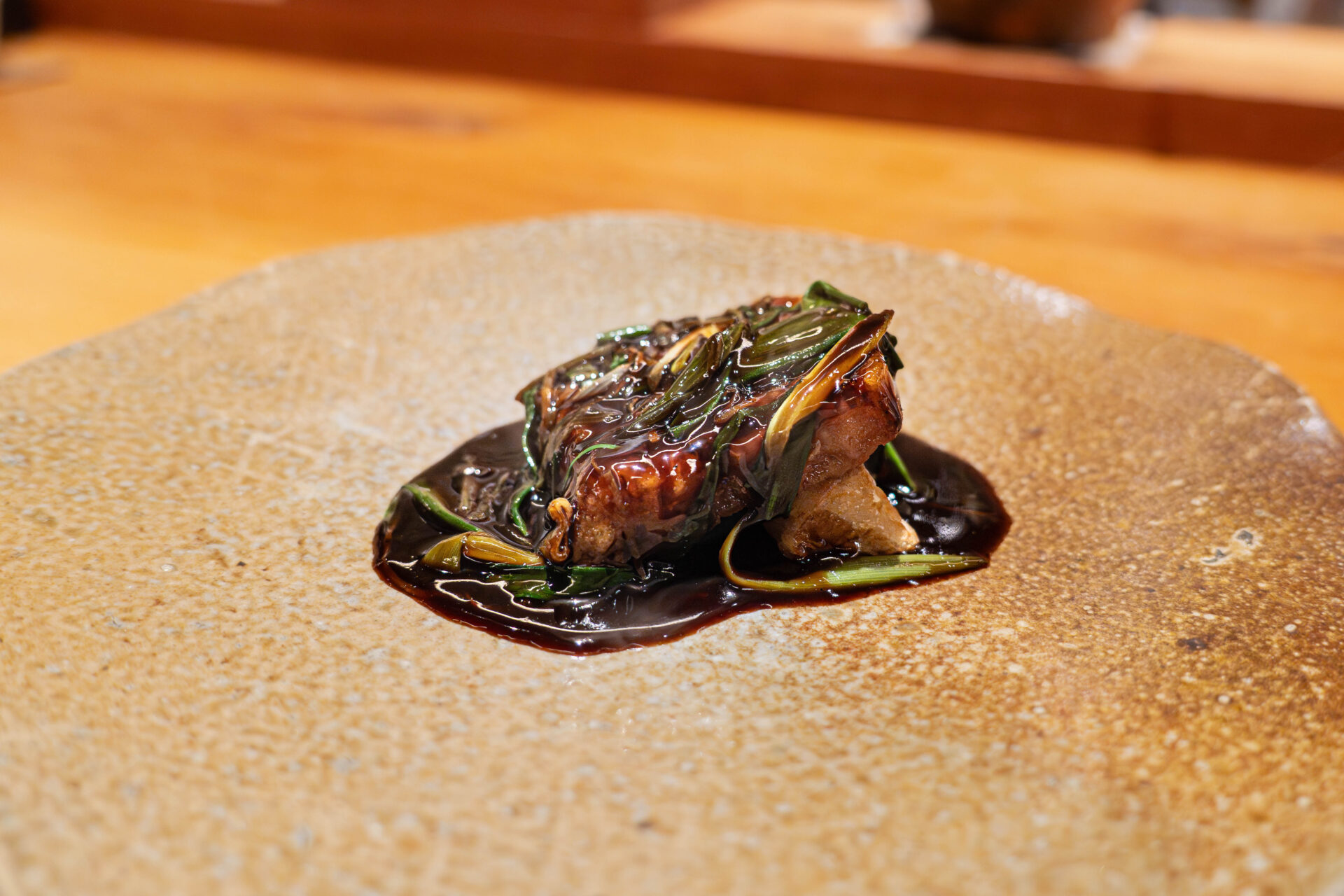
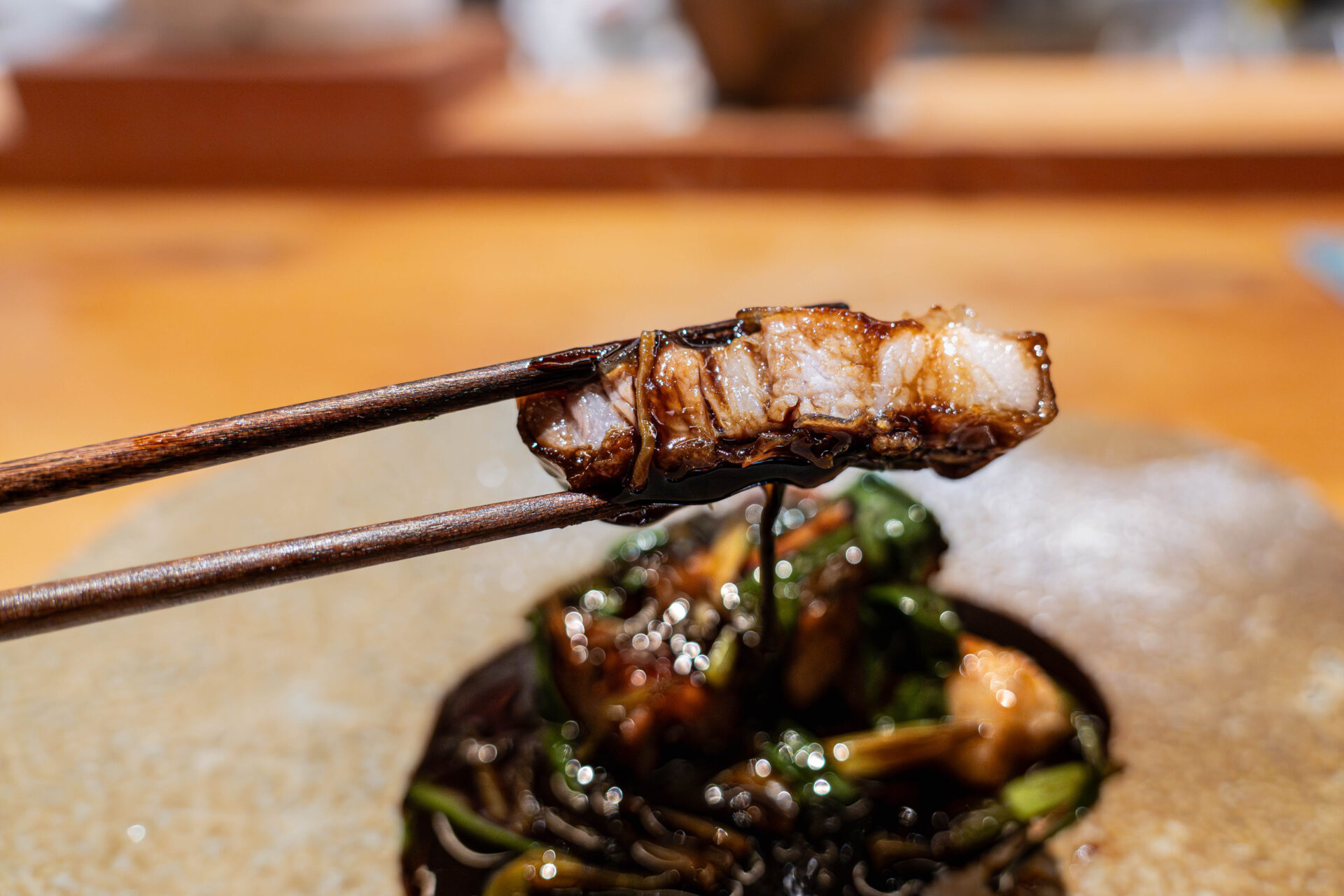
Main: Sweet and Sour Peach Pork with Black Vinegar
Taking center stage as the main course is sweet and sour pork made with Okayama’s branded “Peach Pork,” finished with black vinegar.
The pork, cut into cubes, is deep-fried until the outside is crisp while the inside remains moist and tender.
The sauce is built on black vinegar, with sugar and soy sauce kept restrained to let the umami shine through. The acidity is smooth, with a soft, aged aroma lingering behind it.
The sweetness of the meat, the depth of the black vinegar, and the refreshing quality of the aromatic vegetables come together as one, leaving a pleasant bitterness in the finish.
Within the traditional framework of sweet and sour pork, delicate elements of heat control and acid balance are layered in,
resulting in a dish that feels like “modern lightness within a classic.”
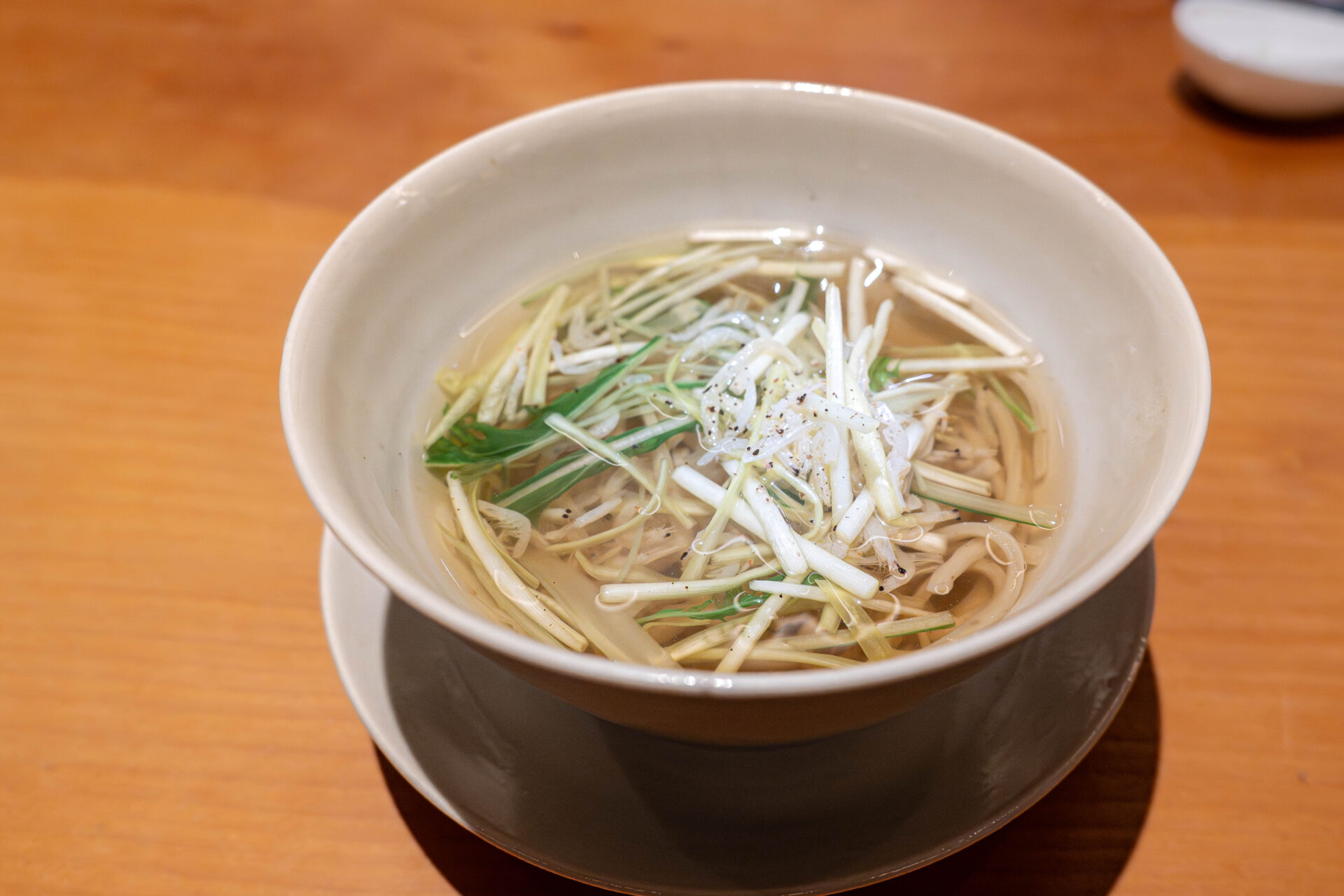
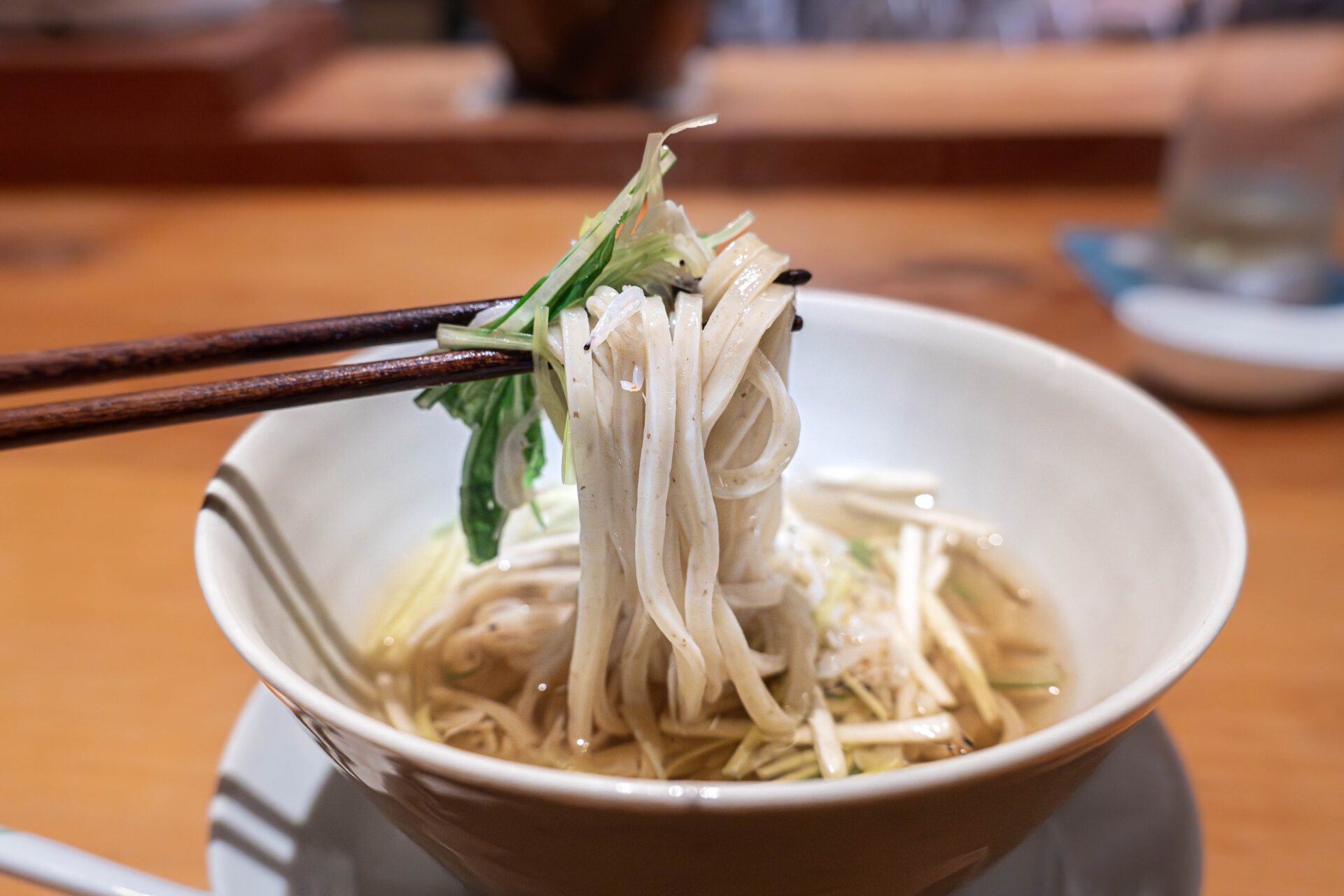
Light Noodles with Yellow Chives
Closing the savory portion of the meal is a light noodle dish generously topped with Okayama’s specialty yellow chives.
The clear broth is carefully drawn from chicken and dried ingredients, kept low in oil, letting the natural umami of the ingredients carry the flavor.
The noodles are slightly thick, with a supple springiness, releasing the aroma of wheat as you chew.
Layered with the delicate fragrance and sweetness of the yellow chives, the flavors unfold gently in the mouth.
A faint touch of black pepper at the finish leaves a clean, lingering note through the very last bite.
Less a “closing dish” and more a cup that “resets” the body after the meal.
A fittingly Hasunomi way to bring the course’s sense of openness to a beautiful close.
Dried Scallop Fried Rice
After the meal, we were offered an additional dish with the suggestion, “if you still have room.”
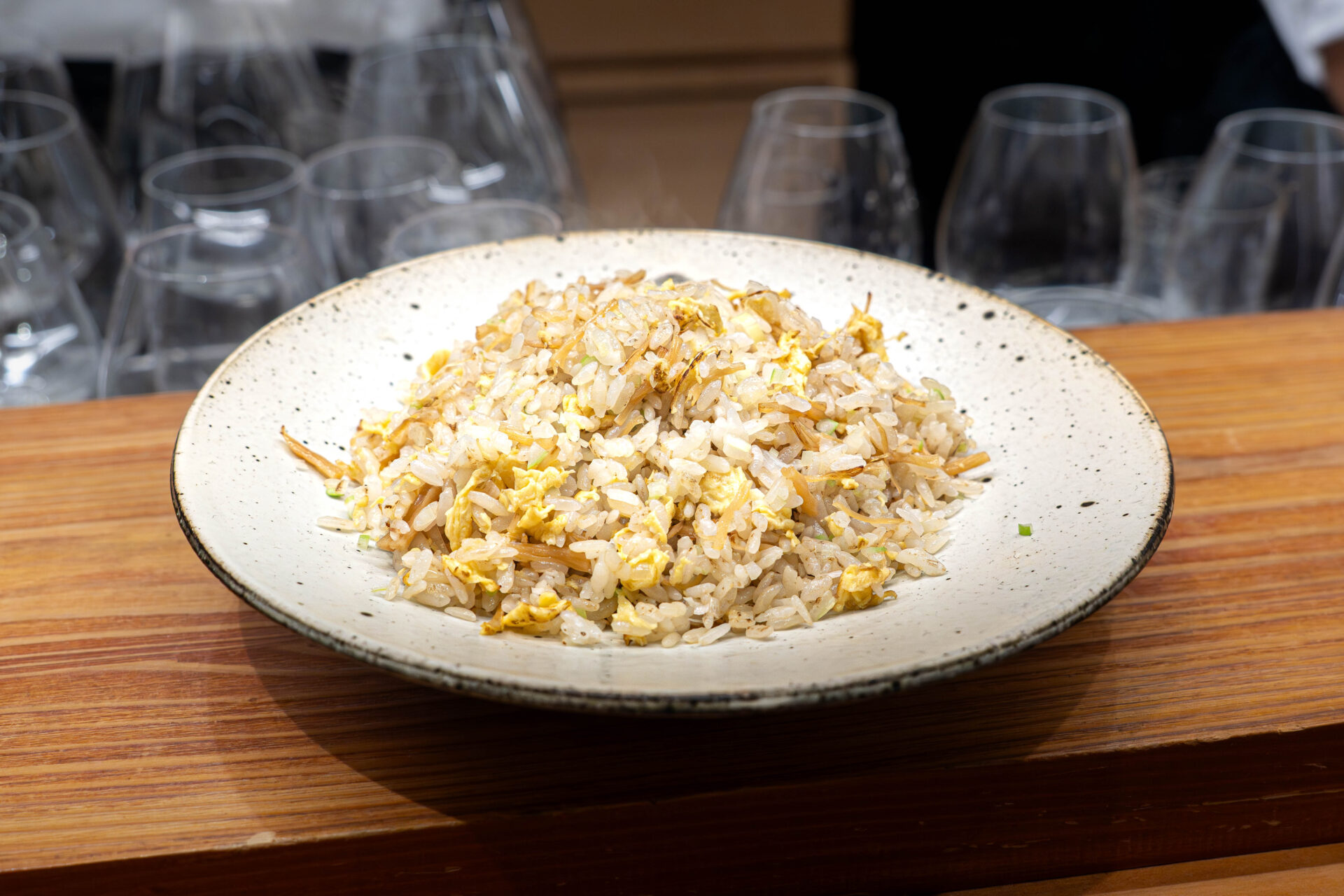
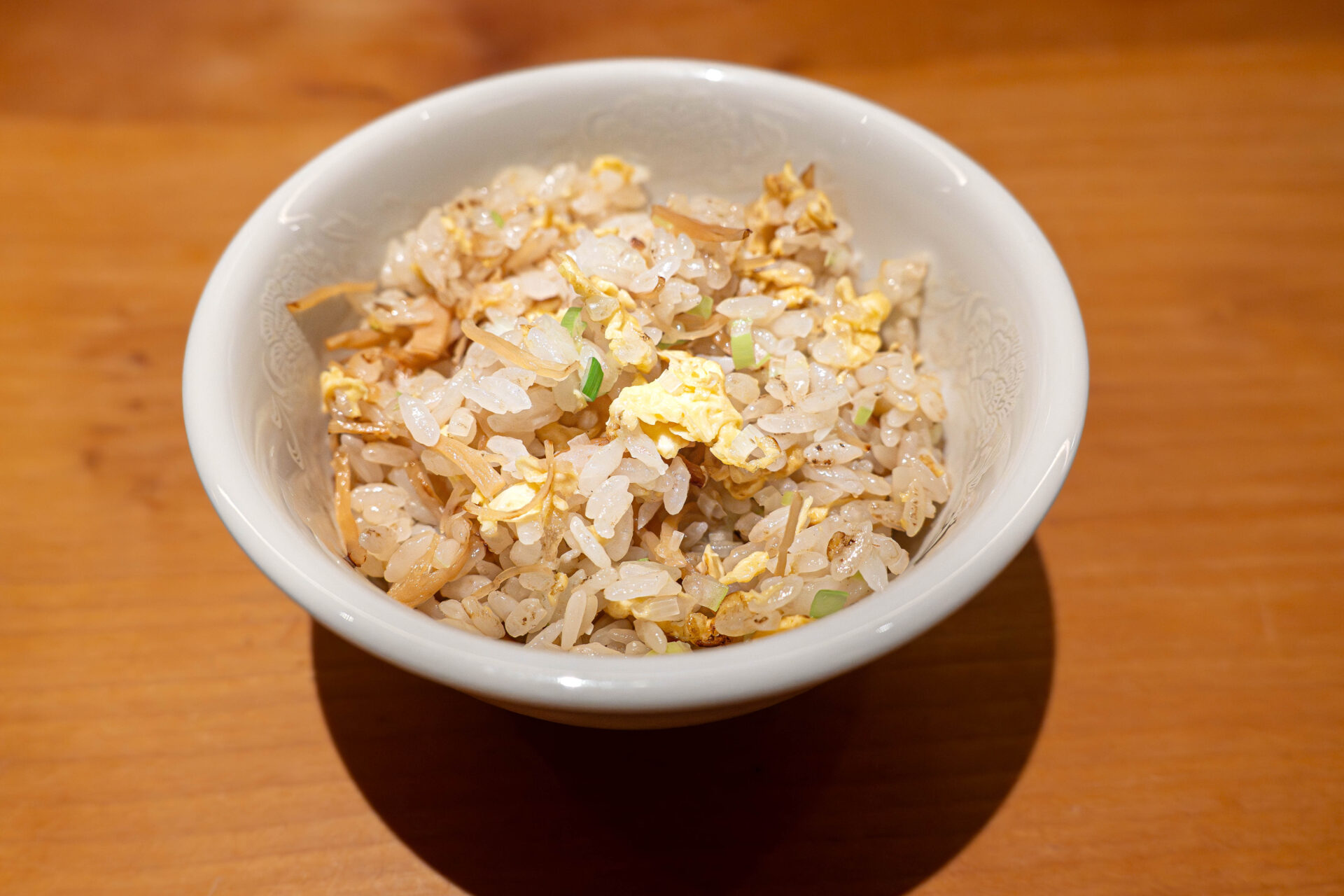
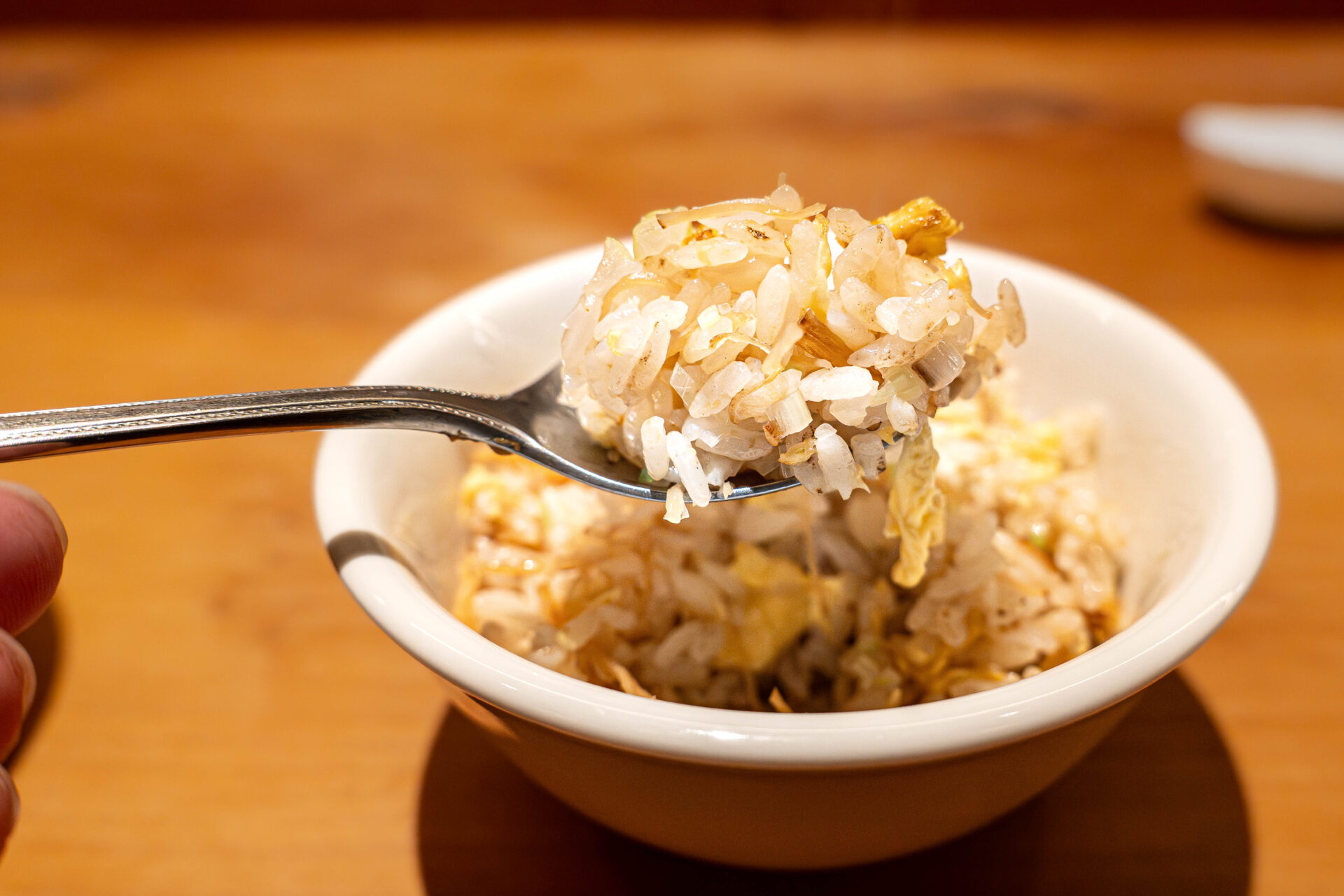
First was fried rice made with dried scallops.
Cooked without excessive heat, each grain of rice stands separate while remaining pleasantly moist.
Flakes of dried scallop are scattered throughout, releasing a gentle umami with every bite. The savory aroma of egg and the freshness of scallion combine for an elegant, understated finish.
Clean on the palate with a light finish after eating.
A dish that felt less “stir-fried” and more “aroma-drawn out” — a showcase of the chef’s technique.
Mapo Tofu
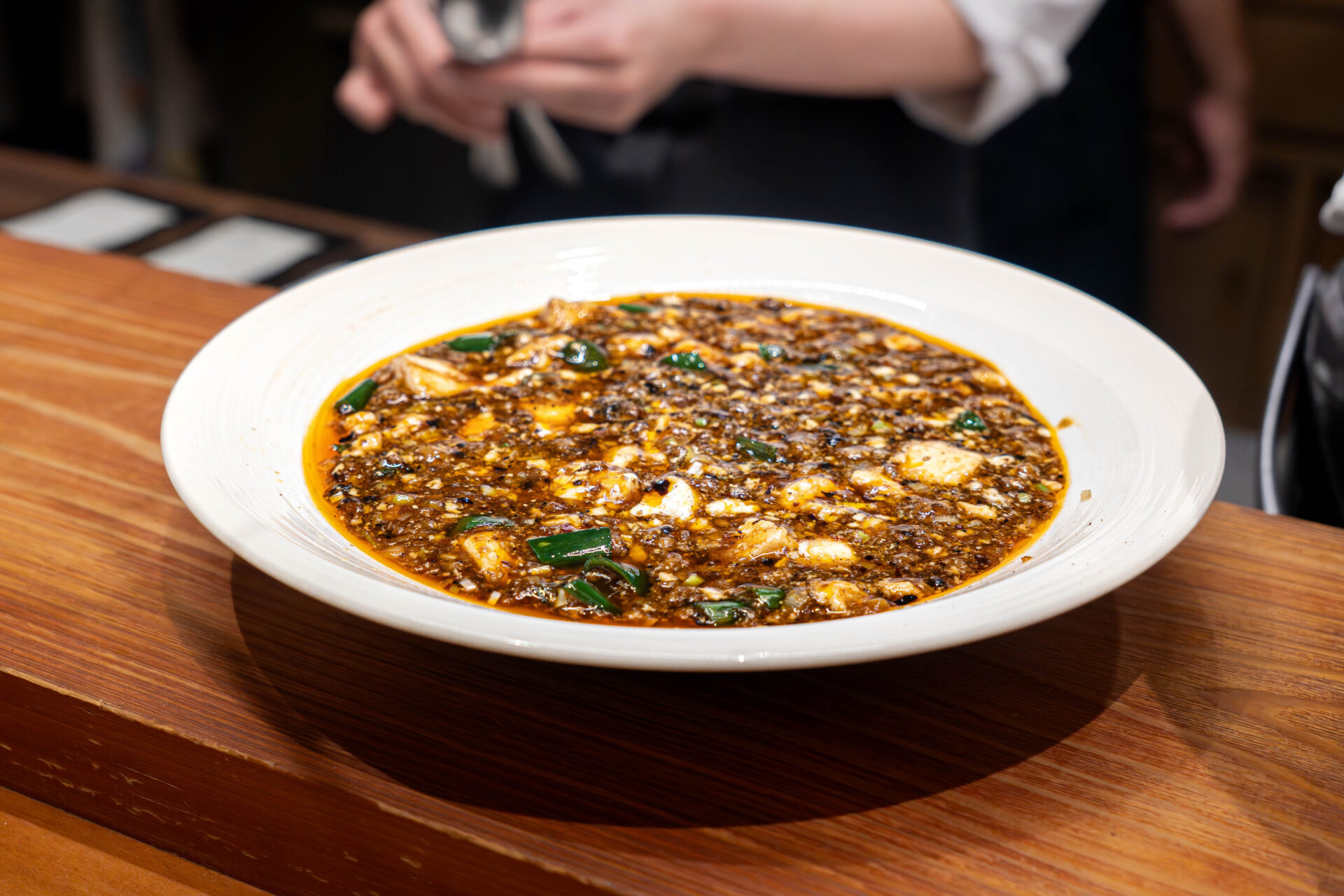
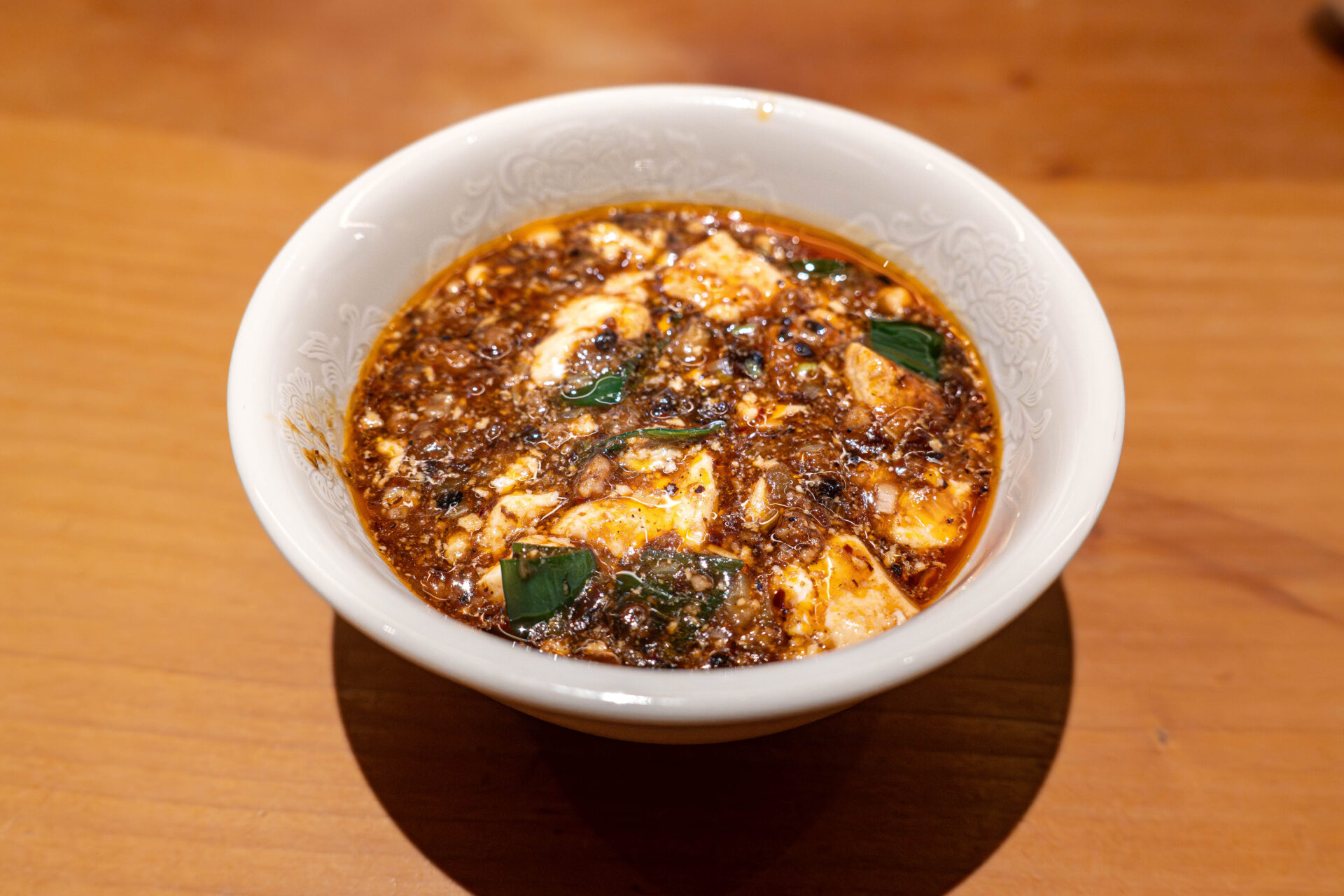
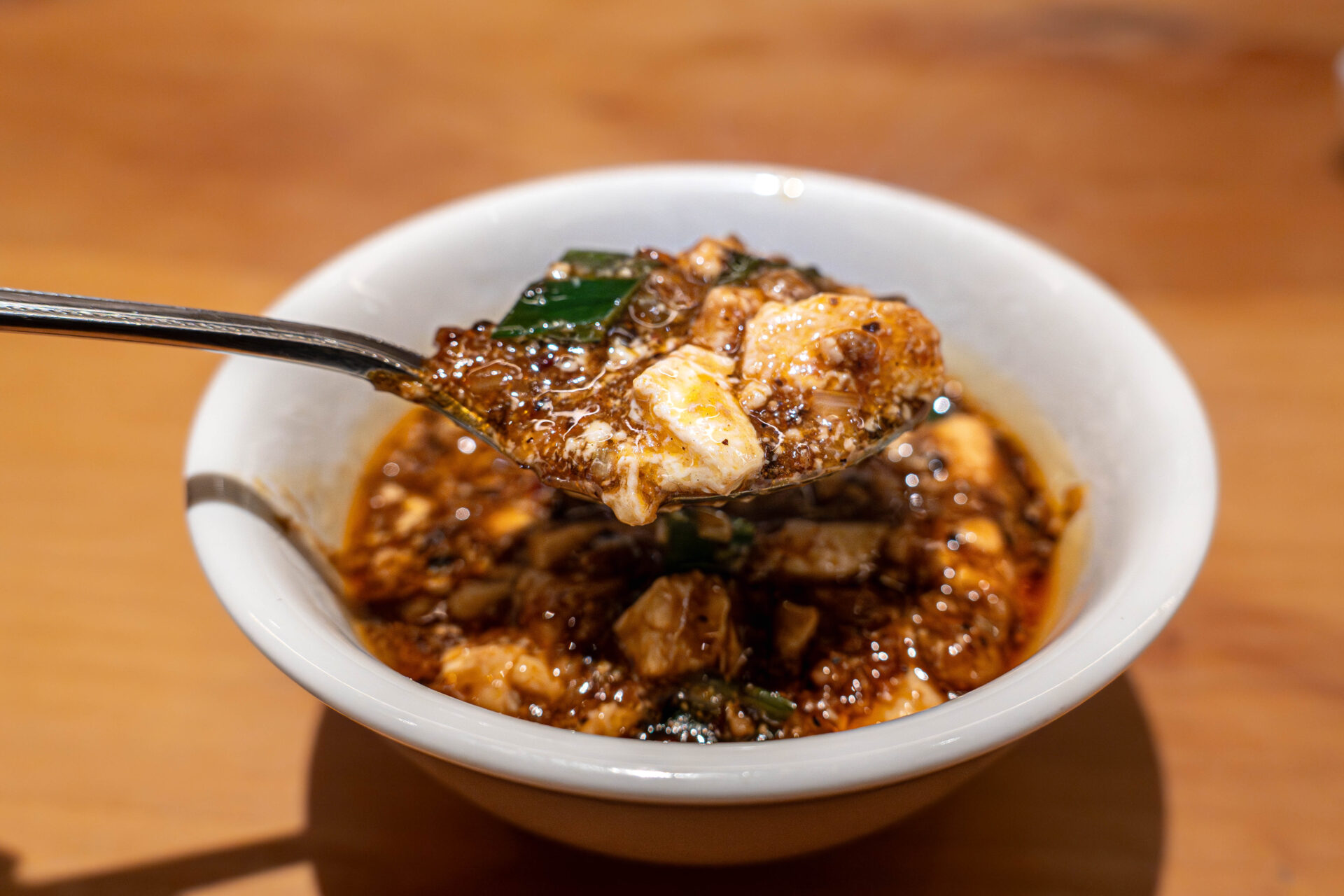
Following the fried rice was a Sichuan-style mapo tofu.
From the very first bite, the aroma of Sichuan peppercorn rises up, with fragrance arriving before heat. The depth of fermented black beans and the umami of the meat sauce come together for a layered, dimensional flavor.
The tofu is soft enough to break apart naturally with a spoon, coated well by the thickened sauce, leaving behind a faint bitterness and numbing sensation in the finish.
There’s no heaviness from oil at all — the whole dish is remarkably precise and well-composed.
A style of mapo tofu that draws you in through the “contours of aroma” rather than spice or intensity.
Here too, the balance of restraint and precision that runs through Chef Kato’s cooking comes through clearly.
Dessert & Finale
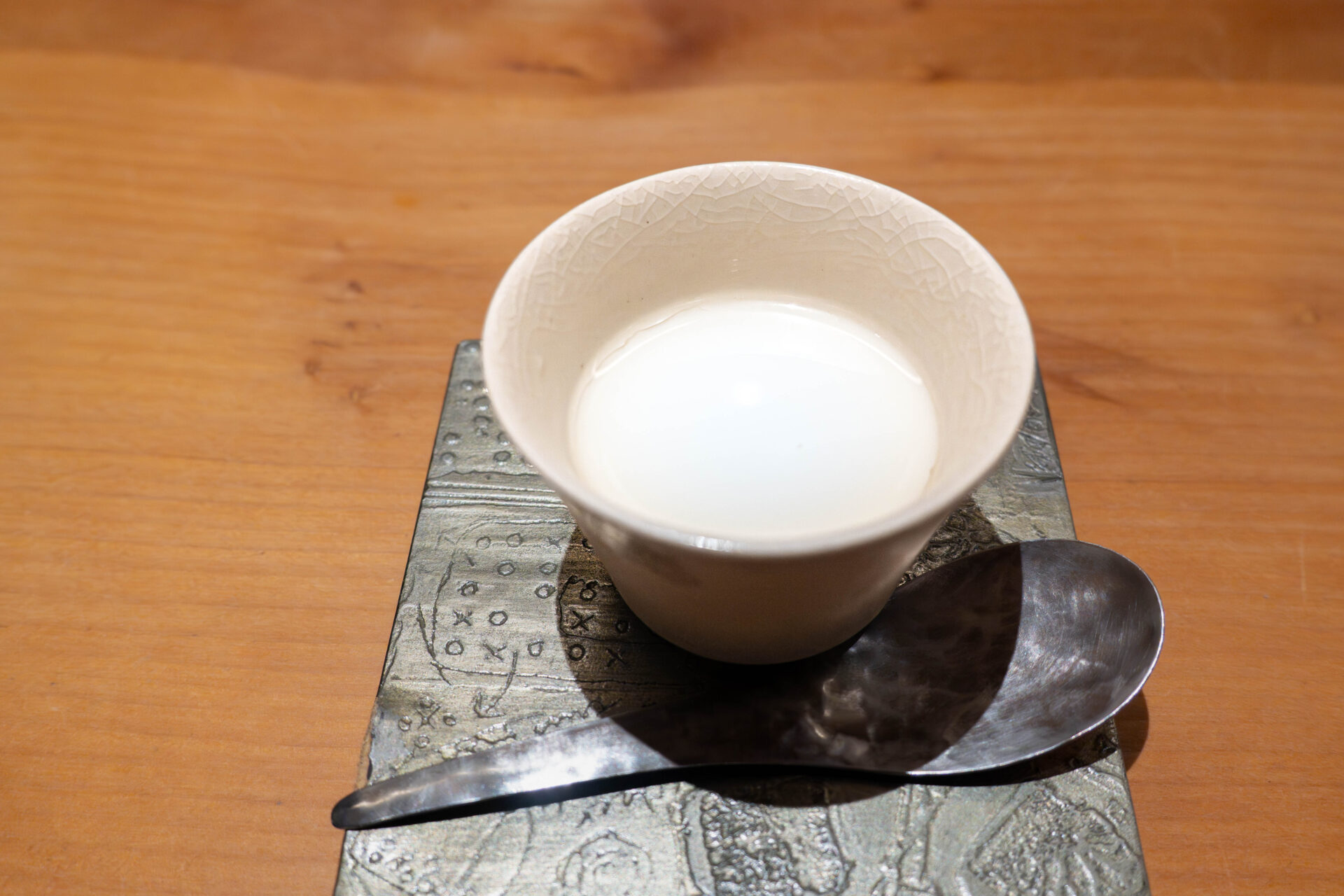
Almond Tofu
The course closes with a smooth almond tofu.
A spoon slips through it effortlessly, and the mouth is met with the gentle sweetness of milk and the calm aroma of almond.
Both the chill and the sweetness are kept understated, as if the dish itself is meant to settle the lingering resonance of the meal.
Right to the very end, the meal maintained a sense of quiet and elegance throughout its flow.
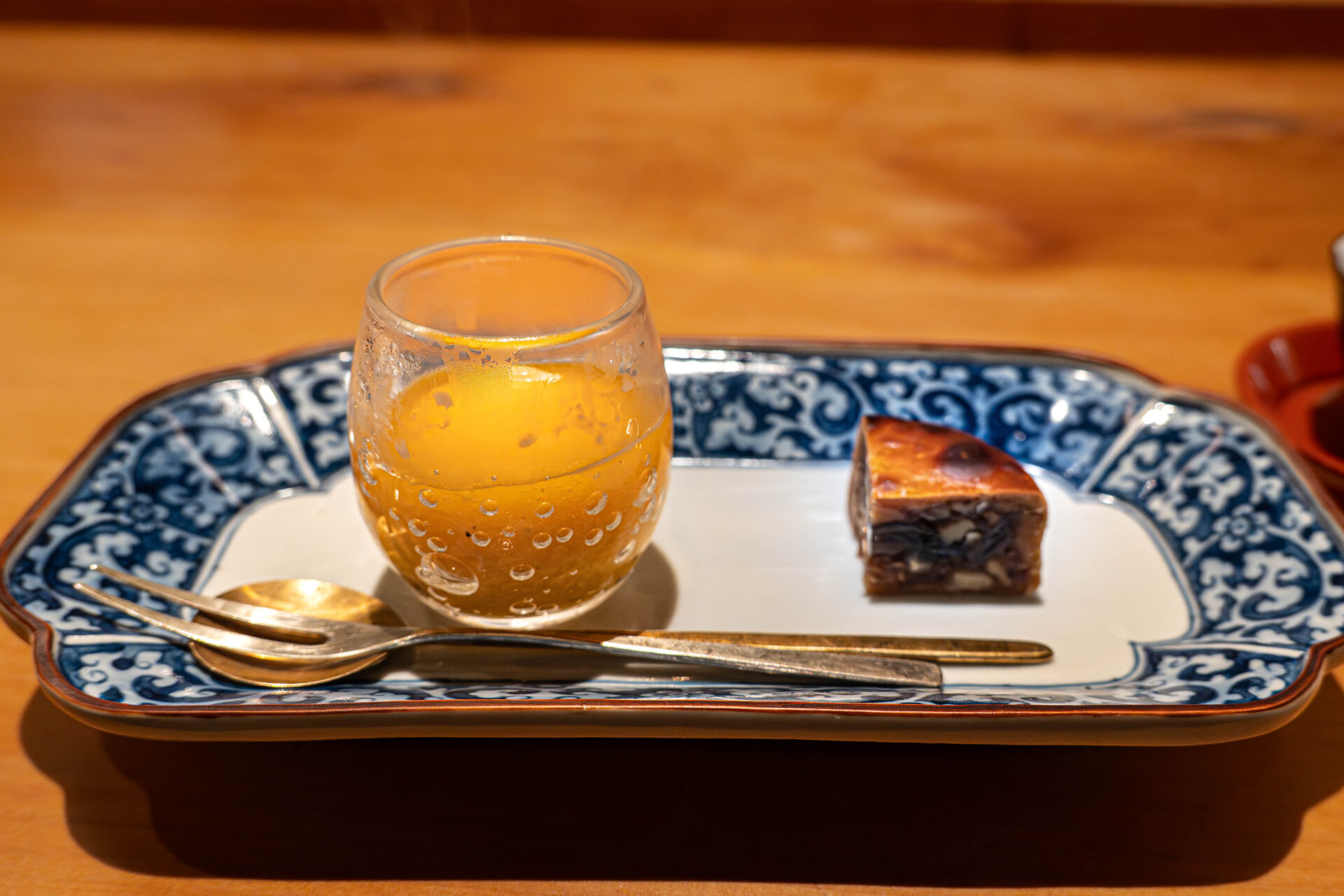
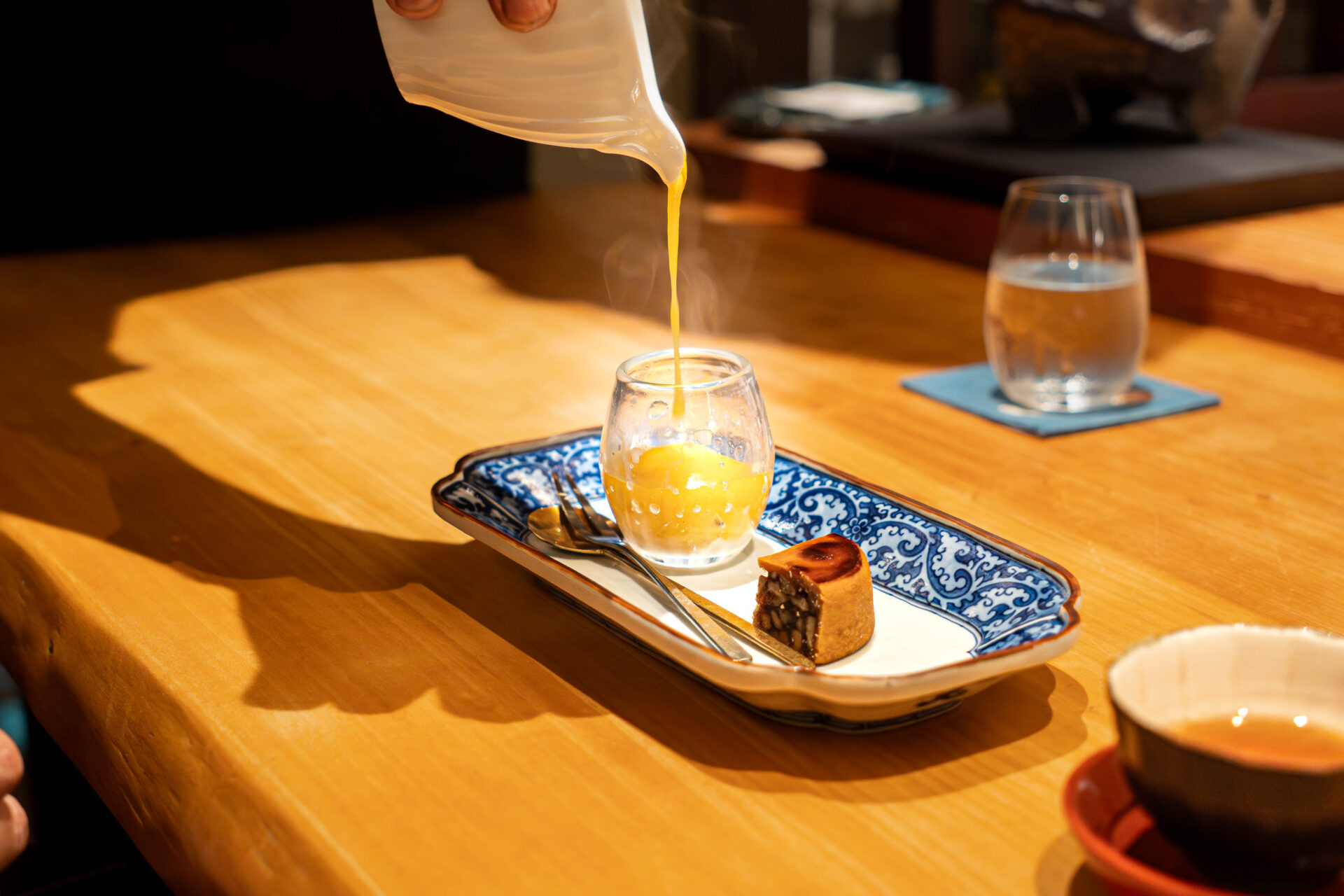
Fresh Ginger Ice Cream with Ripe Persimmon Sauce and Date-Filled Mooncake
Closing out the course is a dessert built around the interplay of temperature and aroma.
In the glass sits a refreshing fresh ginger ice cream. The chef then pours a steaming hot ripe persimmon sauce over it, right at the table.
As a wisp of steam rises and the cold ice cream begins to melt into the sauce, the sweetness of the persimmon and the sharpness of the ginger harmonize beautifully.
Alongside it sits a delicately baked date-paste mooncake, its refined sweetness and toasted aroma gently rounding off the hot-and-cold dessert.
A memorable finale that seemed to capture the passing of the season itself.
Summary & Impressions
A course built around Seto Inland Sea ingredients, where the techniques of Chinese cuisine intertwine with a delicate sensibility.
Rich and nourishing, each dish offered moments of surprise and moments of calm, carrying with it the bounty of the land and the breath of the season.
Built around a dialogue between aroma, temperature, and texture, the course unfolds like a story as it progresses.
Not through flashiness, but through a quiet power that draws out the voice of the ingredients themselves.
Within it lived the chef’s sure experience and a gentle sense of playfulness.
A calm resonance lingers after the meal, gently loosening the mind.
A beautiful stretch of time that naturally leaves you thinking, “I’d like to return again next season.”
Reservations & Access
How to Reserve
“Hasunomi” operates by reservation only, accepted by phone. According to currently available restaurant information, the reservation and inquiry number is 086-238-8403. As seating is limited to 16, it’s best to reserve early once you’ve decided to visit.
Access
The address is 1-11 Heiwa-cho, Kita-ku, Okayama City, Okayama Prefecture.
It’s about a 10-minute walk from JR Okayama Station, and just about a 1-minute walk from Nishigawa Ryokudo Koen Station — an easily reachable location from Okayama Station on foot. There is no dedicated parking lot, so those arriving by car will need to use a nearby coin-operated parking lot.
Business Hours
Business hours are 18:00–21:00, closed on Tuesdays. Note that consecutive holidays may occasionally fall around Tuesday, so it’s a good idea to confirm business days when making a reservation.
Please note that business hours and closing days are subject to change, so it’s recommended to check directly with the restaurant before visiting.
| Item | Details |
|---|---|
| Restaurant Name | Hasunomi |
| Address | 1-11 Heiwa-cho, Kita-ku, Okayama City, Okayama Prefecture |
| Access | 10-min walk from JR Okayama Station / 1-min walk from Nishigawa Ryokudo Koen Station |
| Reservations | By phone |
| Phone Number | 086-238-8403 |
| Business Hours | 18:00–21:00 |
| Closed | Tuesdays |
| Seating | 16 seats |
| Parking | No dedicated parking |
| Notes | Business hours and closing days may change, so it’s recommended to confirm when reserving |
- TAGS
 Plan Your Journey
We’ll create a journey tailored to your interests.